Engineering education has traditionally placed considerable emphasis on understanding materials, studying mechanical properties, learning design principles and applying theoretical knowledge to physical objects. Students explore concepts such as strength, elasticity, hardness, toughness, fatigue and thermal resistance through lectures, laboratory experiments and practical assignments. As they advance, they are introduced to physical prototypes, where they discover how engineering designs behave under real-world conditions. However, physical experimentation can be expensive, time-consuming and difficult to repeat, particularly when an experiment involves material damage, structural failure or potentially dangerous operating conditions. This creates an interesting opportunity for digital engineering education: could students first learn how materials fail inside simulated environments before working with physical prototypes?
The idea of Digital Material Failure Learning proposes that students should encounter the behaviour, limitations and failure mechanisms of engineering materials through computational models before moving into physical experimentation. Instead of beginning with a finished object and studying whether it works, learners could investigate what happens when a material is stretched, compressed, heated, bent, repeatedly loaded or exposed to environmental conditions. Digital environments could allow them to observe internal stress distributions, deformation, crack initiation and structural collapse in ways that are difficult to see during conventional laboratory activities.
For an education ecosystem such as EasyShiksha, this approach offers an opportunity to connect engineering courses with interactive simulations, quizzes, virtual experiments, practical projects, internships and career-oriented learning. Students could begin by understanding material properties, investigate simulated failure scenarios, compare alternative designs and eventually validate their observations through physical prototypes. The objective would not be to replace engineering laboratories with software. It would be to prepare students to use physical experimentation more intelligently by developing a deeper understanding of material behaviour beforehand.
What Is Digital Material Failure Learning?
Digital Material Failure Learning can be understood as an educational approach in which students investigate the failure of materials and engineering components through computational simulations before conducting corresponding physical experiments. It combines principles from materials science, mechanical engineering, computer-aided engineering, physics-based modelling and interactive learning. The central idea is to make failure itself an object of study rather than treating it only as an unwanted outcome that occurs when a prototype does not work.
In conventional engineering education, students may learn that metals can deform plastically, polymers can become brittle under certain conditions and composite materials can experience delamination. These explanations provide important theoretical foundations, but they do not always communicate how these processes develop. A student might memorise the definition of fatigue failure without understanding how repeated loading gradually produces damage. Digital simulations can make such processes more visible by showing how a component responds to changing loads over time.
A simulated material environment can allow learners to modify properties, alter geometric dimensions, change loading conditions and observe the resulting behaviour. They may investigate how a metal plate responds to tension, how a beam bends under an increasing load or how a polymer component behaves when exposed to changing temperatures. Each modification creates an opportunity to test a hypothesis and understand the relationship between material characteristics and engineering performance.
The educational value comes from the process of investigation. Students are not simply watching an animation of a component breaking. They are learning to identify the conditions that lead to failure, interpret the evidence produced by a model and evaluate whether a proposed design can withstand its intended operating environment.
Why Material Failure Should Be Taught Before Prototype Construction
Engineering students often encounter physical prototypes relatively late in the design process. They may spend considerable time developing a design, selecting materials and preparing technical drawings before discovering that the proposed structure cannot withstand the expected load. In some situations, the prototype fails because of an incorrect assumption about material behaviour. In others, the problem may involve geometry, manufacturing limitations, stress concentration or an unsuitable operating condition.
Such failures can provide valuable learning experiences, but they may also consume significant resources. Physical materials, laboratory equipment, manufacturing time and supervision are required to produce and test prototypes. Some experiments must be repeated several times before students can identify the reason for failure. This can restrict the number of design alternatives that learners are able to investigate.
Digital failure exploration offers a way to examine multiple possibilities before committing resources to physical construction. Students could compare different material choices, test several loading conditions and observe how changing a component's dimensions affects its response. They could identify potential weaknesses and revise their designs before manufacturing anything.
This does not mean that simulated results should be treated as proof that a physical design will succeed. Real materials contain imperfections, manufacturing variations and environmental influences that may not be fully represented in a computational model. Digital learning is most valuable when it helps students develop better questions, recognise possible weaknesses and prepare more carefully designed physical experiments.
Understanding Material Behaviour Through Digital Experiments
The first stage of Digital Material Failure Learning involves understanding how materials respond to external forces. Every engineering material has characteristics that influence its behaviour under different conditions. Metals, ceramics, polymers, composites and natural materials do not respond identically to mechanical or environmental stress.
A digital learning environment could introduce these differences through interactive experiments. Students might apply a gradually increasing tensile load to a virtual specimen and observe how its length changes. They could investigate the relationship between applied stress and resulting strain, identify the elastic region and observe what happens when the material moves beyond its elastic limit. The same experiment could then be repeated with another material to compare their responses.
Such activities can help students understand that material selection is not simply a matter of choosing the strongest available option. An engineering component must perform within a particular set of conditions. A material with high stiffness may be appropriate for one application but unsuitable for another where flexibility is important. A lightweight material may reduce the overall mass of a structure while introducing limitations in temperature resistance or long-term durability.
Digital experiments can make these trade-offs easier to explore. Students can change one variable at a time, compare the resulting behaviour and connect the observations with the theoretical properties studied in their courses. This creates a more meaningful relationship between scientific definitions and engineering decisions.
Simulating Tensile and Compressive Failure
Tensile and compressive loading are fundamental concepts in mechanical and structural engineering. Tension occurs when forces pull a material apart, while compression occurs when forces push it together. Although these concepts appear straightforward in textbooks, their practical consequences depend on material properties, component geometry and the conditions under which forces are applied.
A digital tensile experiment could allow students to observe how a specimen changes as the applied force increases. The simulation might display deformation, stress distribution and the development of plastic behaviour. Depending on the model, learners could investigate how different materials respond before reaching their predicted failure conditions.
Compressive experiments could introduce another dimension of understanding. A short specimen may crush under compression, while a slender structural member may buckle before the material reaches its compressive strength. This distinction is particularly important because engineering failure does not always occur through the material breaking directly. Structural instability can cause a component to lose its ability to carry a load even when the material itself has not reached its maximum strength.
Through digital experimentation, students could compare a short column with a longer one, change its cross-sectional dimensions and investigate how boundary conditions influence stability. These experiences can prepare learners to recognise the difference between material failure and structural failure when they eventually work with physical prototypes.
Fatigue Failure: Understanding Damage That Develops Over Time
One of the most important applications of digital failure learning involves fatigue. Fatigue failure occurs when repeated or fluctuating loading causes progressive damage in a material. A component may fail after experiencing many loading cycles, even when the individual loads remain below the level that would cause immediate failure in a single application.
This process can be difficult for beginners to understand because fatigue damage is not always visible during the early stages of operation. A component may appear normal while microscopic cracks develop and gradually grow. Eventually, the remaining material may become insufficient to withstand the applied load.
A digital fatigue simulation could allow students to investigate this gradual process. They might change the magnitude of repeated loading, alter the material's fatigue characteristics and observe how the predicted damage progression changes. The simulation could also demonstrate why a component exposed to frequent load variations may require a different design approach from one that experiences a relatively stable load.
For engineering students, this creates an opportunity to connect material science with product reliability. Components used in vehicles, aircraft, industrial machines and rotating equipment must often withstand repeated stresses throughout their operating lives. Understanding fatigue before constructing a physical prototype can help students recognise why a design that survives a short laboratory test may still be unsuitable for long-term use.
Fracture Mechanics and the Development of Cracks
Fracture mechanics examines how cracks develop and propagate within materials. It provides a framework for understanding why an existing defect can become a serious engineering problem, particularly when a component is exposed to repeated or sufficiently high stresses.
A digital learning environment could introduce students to the relationship between crack geometry, material properties and applied loading. Learners could observe how a small crack near a highly stressed region may influence the distribution of stress around its tip. They could also compare different crack orientations and investigate why certain defects are more dangerous under particular loading conditions.
This type of simulation can help students understand that material failure is not always determined by the average stress across an entire component. Localised conditions may be much more important. A small region can experience significantly different stresses from the surrounding material, creating the possibility of crack initiation or propagation.
For students studying mechanical engineering, aerospace engineering, civil engineering or manufacturing, this understanding is essential. It connects theoretical knowledge with the practical importance of inspection, material quality, maintenance and design safety. Digital exploration can introduce these ideas before students encounter destructive testing or real-world component failures.
Thermal Failure and Environmental Exposure
Materials are also affected by temperature and environmental conditions. Heating and cooling can produce expansion, contraction, changes in stiffness and variations in strength. Some materials may soften at elevated temperatures, while others may become more brittle under certain conditions. Moisture, corrosion and chemical exposure can introduce additional forms of degradation.
Digital material failure learning can incorporate these factors into virtual experiments. Students could investigate how a component responds when exposed to a temperature increase, compare the thermal expansion of different materials or examine the consequences of temperature differences across a structure. They might also explore how repeated heating and cooling can produce thermal stresses.
For example, a student designing a component for an industrial machine may initially focus on its mechanical strength. A thermal simulation could reveal that the selected material experiences substantial dimensional changes under operating temperatures. This could affect clearances, alignment or the performance of connected components.
Similarly, students studying civil engineering could investigate how environmental exposure affects construction materials. They could explore how moisture, temperature variations and chemical conditions may contribute to deterioration. The purpose is not to suggest that a digital model can reproduce every environmental process perfectly, but to help learners understand why engineering materials must be evaluated in relation to their intended operating conditions.
Digital Twins and the Connection Between Simulation and Physical Reality
The concept of a digital twin offers another important direction for engineering education. A digital twin is a digital representation of a physical asset or system that can be connected with information about its actual behaviour. Depending on the application, it may use design data, sensor measurements, operational records and simulation models to represent the condition or performance of a physical object.
In an educational setting, a simplified digital twin could connect a simulated engineering component with measurements collected from a physical experiment. Students might first predict how a component will behave under a specified load. They could then conduct a controlled laboratory experiment, record the measurements and compare the actual response with the digital prediction.
This comparison is particularly valuable because it reveals the limitations of models. Students may discover that the simulated component behaves differently from the physical specimen. They would then need to investigate possible reasons, such as manufacturing tolerances, material variability, measurement errors or simplified assumptions within the simulation.
For EasyShiksha, digital twin-based learning could become a conceptual bridge between online education and practical engineering experiences. A student could complete an introductory course, explore a simulated component, conduct a project involving measurable physical data and document the differences between predicted and observed performance. This would make the learning journey more connected and evidence-oriented.
Finite Element Analysis as a Learning Environment
Finite Element Analysis, commonly known as FEA, is a computational method used to estimate how physical structures and materials respond to forces, temperatures and other conditions. It divides a complex geometry into smaller elements connected through nodes. The mathematical relationships governing these elements are then used to approximate the behaviour of the overall structure.
FEA is widely associated with professional engineering analysis, but simplified versions can also provide educational value. Students could use virtual models to investigate how changing a component's geometry affects stress distribution. They might compare a solid plate with one containing a hole, examine the effect of different support conditions or observe how a beam responds to different loading arrangements.
These activities can introduce learners to the idea that engineering behaviour depends on more than the external force alone. Geometry, boundary conditions, material properties and the assumptions used in the model all influence the predicted result.
However, educational use of FEA must also teach students that a visually convincing simulation is not automatically a reliable engineering result. Mesh quality, element selection, boundary conditions, material models and numerical convergence can influence the output. Students should learn to question a simulation rather than accept every coloured stress map as evidence of accuracy.
Teaching Students to Recognise Simulation Limitations
A major risk in digital engineering education is that students may develop excessive confidence in computational models. Simulation software can produce detailed visualisations that appear precise, but the results depend on the quality of the underlying assumptions and input data.
If a material model does not represent the real behaviour of a specimen, the simulation may produce misleading predictions. If boundary conditions are unrealistic, the resulting stress distribution may not represent the physical situation. If a component contains defects that have not been included in the model, its predicted failure behaviour may differ significantly from reality.
For this reason, simulation literacy should become an important learning outcome. Students should understand what a model represents, what it excludes and under which conditions its predictions are meaningful. They should also learn to distinguish between a numerical result and a validated engineering conclusion.
A strong educational activity could deliberately provide learners with a model containing an unrealistic assumption. Students would investigate the results, identify inconsistencies and explain why the simulation requires improvement. This approach would encourage critical thinking and reduce the risk of treating computational outputs as unquestionable facts.
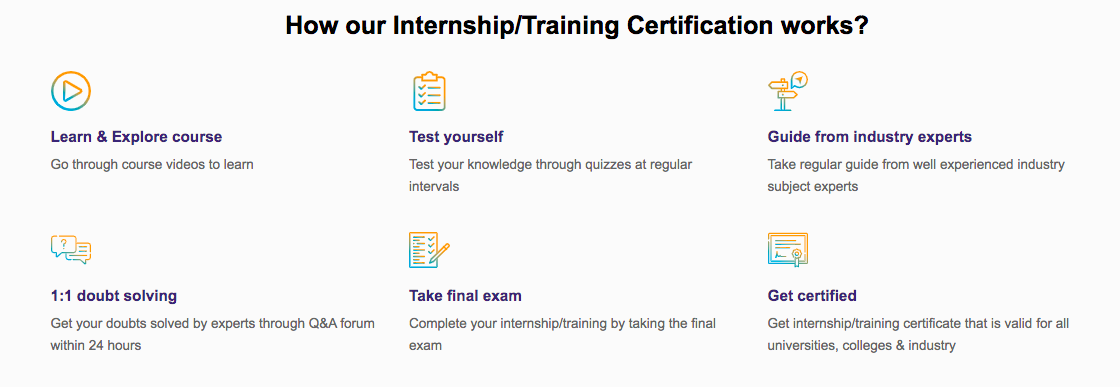
How EasyShiksha Internship/Training Program Works
Building an Engineering Learning Journey on EasyShiksha
EasyShiksha's broader learning ecosystem creates an opportunity to connect digital material failure exploration with different stages of engineering education. Online courses could introduce the foundational principles of materials science, mechanical behaviour, structural analysis and computational modelling. Quizzes could assess whether students understand concepts such as stress, strain, fatigue, fracture and thermal expansion before they begin more complex simulations.
After developing this foundation, learners could enter interactive digital experiments in which they investigate how materials behave under different conditions. They could compare virtual specimens, identify possible failure mechanisms and explain why certain design decisions produce different results. Projects could then require students to investigate a specific engineering problem and prepare a digital analysis supported by assumptions, observations and conclusions.
Internships and practical assignments could extend the experience into professional environments. Students might encounter computer-aided design workflows, testing documentation, quality-control processes or basic simulation activities. Certificates could document the learning completed, while career guidance could help learners understand how these experiences relate to opportunities in mechanical engineering, civil engineering, aerospace, automotive design, manufacturing and related fields.
The important opportunity is to connect these features into a progression rather than treating each one as an independent activity. Students would move from theoretical understanding to digital investigation, from digital investigation to physical validation and from practical experience to career preparation.
Designing Digital Failure Experiments for Different Engineering Disciplines
Digital material failure learning should not be restricted to mechanical engineering. Material behaviour influences a wide range of engineering disciplines, although the relevant failure mechanisms differ according to the systems being designed.
In civil engineering, students could investigate how beams, columns and structural connections respond to different loads. They might explore concrete cracking, reinforcement behaviour, buckling and the influence of material deterioration on structural performance. Such simulations could introduce the reasoning behind structural safety while preparing learners for supervised laboratory testing and practical design work.
In aerospace engineering, learners could study fatigue, fracture, lightweight materials and thermal stresses. Aircraft structures operate under complex combinations of loading and environmental conditions, making material reliability particularly important. Digital scenarios could help students understand why engineers consider both immediate strength and long-term durability.
In automotive engineering, students could investigate how vehicle components respond to impact, vibration, repeated loading and temperature changes. In manufacturing, digital simulations could introduce material deformation, forming processes, machining effects and defects. In electronics engineering, learners could explore thermal stresses in components, solder-joint reliability and material degradation under changing operating conditions.
The educational principle remains consistent across these fields. Students should understand the conditions that may cause a material or component to fail, examine the evidence produced by a model and recognise what must be tested in the physical world.
From Digital Failure to Design Improvement
The purpose of studying material failure is not simply to identify what goes wrong. Engineering education must also teach students how to respond to the evidence and improve their designs.
A digital experiment could begin with a component that fails under a particular loading condition. Students would investigate the failure location, examine the material properties and evaluate possible design changes. They might increase the thickness of a section, alter its geometry, choose a different material or change the way forces are distributed through the structure.
Each modification could produce a new simulation. Students would compare the results and determine whether the revised design improves performance under the specified conditions. They would also consider whether the modification introduces other disadvantages, such as additional weight, higher cost, manufacturing complexity or reduced flexibility.
This is important because engineering design involves trade-offs. A solution that improves one performance measure may negatively affect another. A stronger component may become heavier, while a lighter component may require more advanced manufacturing processes. Digital failure experiments can help students understand that design improvement is a process of balancing competing requirements rather than simply maximising strength.
The Role of Artificial Intelligence in Digital Material Failure Learning
Artificial intelligence could make digital engineering education more interactive by helping students interpret simulation results, explore alternative conditions and identify possible areas for further investigation. An AI-supported learning environment might explain why a particular region experiences high stress, suggest which material properties should be examined or generate follow-up questions based on a student's observations.
AI could also help students compare simulation outputs with theoretical expectations. If a learner predicts that a component will deform in a particular way, the system could encourage them to explain the reasoning behind the prediction before revealing the model's results. After the simulation, it could ask the learner to compare the expected and observed behaviour.
However, AI should not be treated as a replacement for engineering judgement or validated simulation software. A conversational system may explain a material concept incorrectly, misinterpret a numerical output or recommend an unsuitable modelling assumption. Students must therefore learn to verify technical explanations against appropriate engineering references, established methods and experimental evidence.
The most useful role for AI would be to support investigation and interpretation while keeping the learner responsible for evaluating the evidence. This would help students develop the habit of questioning results instead of accepting automated explanations without scrutiny.
Productive Failure as an Engineering Teaching Method
Digital material failure learning also introduces a different way of thinking about mistakes in engineering education. Students are often encouraged to produce correct answers and successful designs, but professional engineering requires an understanding of why systems fail and how those failures can be prevented.
A simulated environment can make failure safer to investigate. Students can test an unsuitable material, apply an excessive load or create a design with a structural weakness without damaging expensive laboratory equipment. They can then study the result, identify the underlying cause and revise their approach.
This creates a controlled environment for productive failure. Learners are not rewarded for producing incorrect designs, but they are encouraged to extract useful information from unsuccessful attempts. The experience can develop analytical thinking, experimental reasoning and a more realistic understanding of engineering uncertainty.
The approach also connects with EasyShiksha's broader emphasis on learning through courses, quizzes, games and practical projects. An engineering challenge could require students to predict a failure, test their prediction digitally, interpret the results and improve the design. The learning outcome would be measured not only by whether the final design succeeds, but also by the quality of the student's reasoning throughout the process.
Measuring Whether Students Are Actually Learning From Failure
A digital engineering platform should not measure learning only through the number of simulations completed or the time spent using software. Students may run many simulations without understanding the results. Meaningful assessment should examine whether they can explain the relationship between material properties, loading conditions and observed failure behaviour.
One approach could involve asking students to predict the outcome of a simulation before running it. Their predictions could then be compared with the resulting model. Another activity could provide a failure report and ask learners to identify the most plausible causes using the available evidence. More advanced assignments could require students to evaluate the assumptions behind a simulation and explain what physical experiment would be needed to validate its predictions.
Project assessment could also consider whether students can justify their material selection, interpret relevant measurements and recognise uncertainty. This would create a more comprehensive picture of engineering capability than a simple software-completion certificate.
For EasyShiksha, this approach could support the development of project-based learning records that demonstrate what students investigated and how they applied engineering principles. Such evidence could complement certificates and provide learners with stronger material for portfolios, internship applications and future employment discussions.
From Virtual Experiments to Physical Prototypes
Digital simulations are most valuable when they lead to better physical experimentation. After investigating a virtual material or component, students should have opportunities to test their predictions through appropriately supervised laboratory activities.
A learner who has studied tensile failure digitally could proceed to a physical tensile-testing experiment. They could compare the measured stress-strain response with the simulated prediction and investigate any differences. A student who has explored beam deformation could test a physical specimen under controlled loading and examine whether the observed deflection matches the expected behaviour.
This transition allows students to understand the relationship between theoretical models and real materials. Physical specimens may contain imperfections, dimensional variations and manufacturing inconsistencies. Measurement equipment may also introduce uncertainty. These factors can produce differences between the simulated and experimental results.
The comparison is not a reason to dismiss digital simulation. It is an opportunity to understand what models can and cannot predict. Students become better prepared to conduct experiments because they already have a hypothesis, know which measurements matter and understand what kind of evidence would support or challenge their assumptions.
Safety and Ethical Considerations
Digital material failure learning can improve access to certain engineering concepts, but it must be designed with appropriate safety and responsibility principles. Simulations should not encourage students to apply unverified design decisions to real structures, machines or safety-critical products.
Educational models should clearly distinguish between simplified demonstrations and professional engineering analysis. Students should understand that a classroom simulation is not sufficient evidence for approving a real component or certifying a structure. Physical testing, appropriate standards, professional supervision and validated engineering methods remain essential in real applications.
Data and software access also matter. Some advanced simulation tools require expensive licences and specialised hardware. An inclusive educational approach should therefore consider lightweight simulations, open educational resources and browser-based experiments where technically appropriate. Students should be able to learn fundamental principles without requiring access to expensive professional software from the beginning.
EasyShiksha could explore this area through introductory simulations, structured learning content and projects that progressively introduce more advanced tools. The emphasis should remain on conceptual understanding and responsible engineering practice rather than on creating the impression that software alone can guarantee a safe design.
Empower your team. Lead the industry
Get a subscription to a library of online courses and digital learning tools for your organization with
EasyShiksha
The Future of Engineering Education: Predict Failure Before Building
The relationship between digital simulation and physical prototyping is likely to become increasingly important as engineering tools develop. Computational modelling, digital twins, AI-supported analysis and advanced visualisation can help students investigate more complex systems before manufacturing physical components.
This does not mean that every engineering student will need to become a simulation specialist. However, basic simulation literacy may become an increasingly useful capability across engineering disciplines. Students should understand how models represent physical behaviour, how assumptions influence predictions and why experimental validation remains necessary.
Education platforms could support this development by making digital engineering experiences more accessible and connecting them with formal learning, practical assignments and industry exposure. A student might begin with a basic course on material properties, progress to an interactive failure simulation, complete a design-improvement project and then apply the same principles during a supervised internship or laboratory activity.
Such a progression could help reduce the gap between theoretical engineering education and practical problem-solving. It would also prepare students to participate more confidently in design reviews, testing discussions and engineering workflows where understanding failure is as important as understanding successful operation.
Conclusion: Learning Why Things Break Before Learning to Build Them
Engineering is not simply the science of designing objects that work. It is also the discipline of understanding why objects stop working, how materials respond to difficult conditions and what can be changed to improve reliability. Students who learn only the successful side of engineering may develop an incomplete understanding of the challenges involved in real design and manufacturing.
Digital Material Failure Learning offers a way to introduce these challenges before students begin working with physical prototypes. Through simulations of tensile failure, compression, fatigue, fracture, thermal degradation and structural instability, learners can investigate material behaviour in controlled environments. They can test assumptions, compare design alternatives, interpret results and understand the limitations of computational models.
For EasyShiksha, the concept creates an opportunity to connect engineering courses with quizzes, virtual experiments, practical projects, internships, certificates and career guidance. Students could move from theoretical foundations to digital investigation and then to physical validation, developing a more complete understanding of engineering practice along the way.
The most important outcome would not be the ability to operate simulation software or produce visually impressive engineering models. It would be the ability to reason about material behaviour, identify possible failure mechanisms, question uncertain results and make evidence-based design decisions.
Students should not have to wait for a physical prototype to fail before they begin understanding failure. By learning through digital material failure first, they can approach physical engineering with better questions, stronger reasoning and a clearer understanding of what they are trying to build.
Anshika Jain is an Engineer, Developer, and Educational Content Author known for her dedication to technology and knowledge sharing. With a strong analytical mindset and a passion for innovation, she has consistently contributed to creating meaningful digital solutions and insightful educational articles.
Her ability to simplify complex technical concepts into engaging and easy-to-understand content makes her work valuable for students and learners across various platforms. Along with her technical expertise, Anshika is admired for her creativity, professionalism, and commitment to continuous learning.
She represents a perfect blend of technical excellence and impactful communication, inspiring others through both her development work and educational contributions.