Educational research continuously explores ways to improve how students learn. Researchers investigate whether interactive lessons improve understanding, whether quizzes strengthen knowledge retention, whether personalised feedback increases engagement, and whether project-based learning develops stronger practical capabilities. Schools, universities and digital education platforms introduce new teaching methods with the expectation that they will improve learning outcomes. However, every proposed intervention requires time, resources and careful evaluation before its effectiveness can be established.
The difficulty is that educational researchers cannot test every possible teaching intervention. A university may have several teaching strategies it wants to evaluate, while a digital learning platform may have hundreds of possible changes to its course structure, assessment design and recommendation system. Each experiment requires participants, instructional resources, data collection and analysis. Testing an ineffective intervention can consume resources that could have been used to investigate a more promising approach.
This creates an important research question: how can educational researchers decide which teaching intervention is worth testing next, particularly when evidence about different approaches is incomplete?
Bayesian Experimental Design offers a mathematical framework for making this decision. Instead of treating every experiment as an isolated investigation, it uses existing evidence and uncertainty to determine which experiment is likely to provide the most useful information. Researchers can begin with what is already known, represent uncertainty about possible outcomes and select experiments that are expected to improve their understanding.
The approach is particularly interesting for modern education because learning environments generate increasingly diverse forms of evidence. Quiz results, course engagement, assessment performance, project submissions and internship feedback can reveal different aspects of student development. These sources can help researchers investigate whether particular interventions are effective for specific learners and under particular conditions.
For EasyShiksha, Bayesian Experimental Design presents an opportunity to think beyond introducing new learning features and towards systematically investigating which educational improvements deserve attention. Online courses, quizzes, projects, internships, certificates and career guidance could become part of a research-informed learning ecosystem in which new interventions are selected, tested and improved using accumulated evidence.
The central idea is simple but powerful: educational research should not only ask whether a teaching intervention works. It should also ask which experiment would be most valuable to conduct next.
What Is Bayesian Experimental Design?
Bayesian Experimental Design combines Bayesian statistics with the principles of experimental planning. Bayesian statistics provides a framework for updating beliefs when new evidence becomes available, while experimental design determines how an investigation should be structured to answer a research question.
In conventional experimental planning, researchers often begin with a hypothesis, select a sample, define an intervention and decide how outcomes will be measured. They then collect data and analyse whether the results support the hypothesis. This approach remains essential, but the choice of what to investigate next is not always guided by a formal calculation of how much information an experiment could provide.
Bayesian Experimental Design introduces this additional consideration. Researchers begin with an existing understanding of the possible outcomes, represented through prior probability distributions. They then evaluate alternative experiments according to the information they are expected to generate.
For example, an educational researcher may be uncertain whether personalised hints improve student performance more effectively than immediate answer explanations. Existing studies might suggest that both approaches have potential benefits, but the available evidence may not establish which is more effective for a particular student group.
The researcher could design an experiment comparing the two methods. Bayesian Experimental Design can help determine how the experiment should be structured and whether it is likely to reduce the uncertainty that matters most.
The approach is not about replacing scientific judgement with mathematical automation. It provides a disciplined method for deciding how to use limited research resources when several possible investigations compete for attention.
Understanding Bayesian Reasoning in Education
Bayesian reasoning is based on updating the probability assigned to a hypothesis after observing new evidence. A researcher begins with a prior belief, collects relevant data and then calculates a posterior belief that incorporates the evidence.Here, (H) represents a hypothesis, (D) represents observed data, (P(H)) is the prior probability of the hypothesis, (P(D\mid H)) is the likelihood of observing the data if the hypothesis is true, and (P(H\mid D)) is the posterior probability after considering the evidence.
Consider a researcher investigating whether short retrieval quizzes improve knowledge retention. Before conducting a new experiment, the researcher may have evidence from previous studies suggesting that retrieval practice can be beneficial. That evidence contributes to the prior understanding of the hypothesis.
The researcher then conducts a study involving students who receive different learning experiences. Their later assessment results provide new evidence. The Bayesian model updates the probability associated with different possible effects of the intervention.
The resulting posterior distribution does not simply produce a yes-or-no answer. It represents what the evidence currently suggests and how uncertain that conclusion remains.
This is valuable because educational interventions rarely produce identical results across all students. Their effectiveness may depend on subject difficulty, prior knowledge, learning format, student age and other contextual factors.
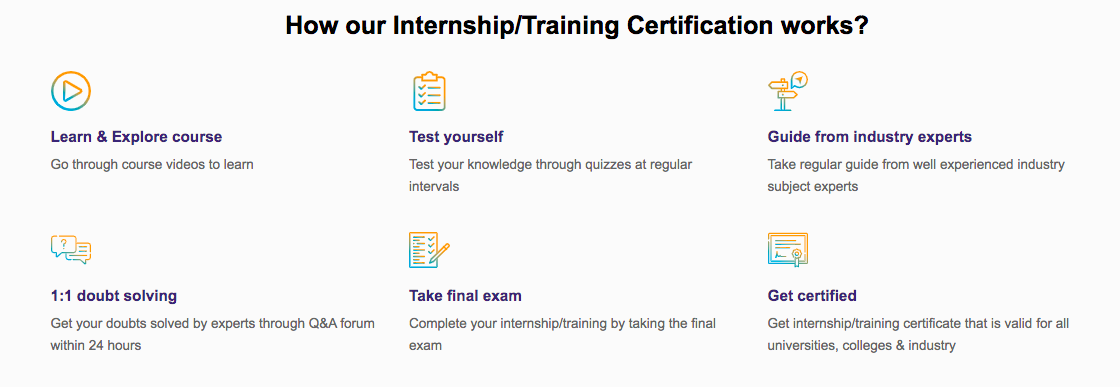
How EasyShiksha Internship/Training Program Works
Why Educational Researchers Need Better Experiment Selection
Educational research is constrained by practical limitations. Universities cannot repeatedly reorganise entire programmes to test every teaching strategy, and digital platforms cannot introduce every possible interface or instructional change to every learner simultaneously.
An experiment may require substantial preparation. Researchers must define the intervention, obtain appropriate approvals, recruit participants, develop assessment materials and ensure that the study can produce interpretable results. Even a relatively small experiment can require significant coordination.
These limitations make experiment selection an important part of research quality. Choosing a question that is unlikely to produce useful evidence may waste resources, while overlooking a highly informative experiment can delay improvements.
For example, a platform may be considering several possible changes to its learning experience. It could introduce adaptive quizzes, personalised hints, spaced revision, progress visualisations or project-based assessments. Each intervention may be promising, but the organisation may not have enough resources to test all of them simultaneously.
Bayesian Experimental Design can help compare these options according to the uncertainty they address, the potential value of the findings and the practical cost of conducting each experiment.
The most valuable experiment may not be the one with the most exciting feature. It may be the one that resolves an important uncertainty that influences several future educational decisions.
The Expected Information Gain Principle
One of the central ideas in Bayesian Experimental Design is Expected Information Gain. It measures how much an experiment is expected to reduce uncertainty about a hypothesis or parameter.
An experiment is informative when its possible outcomes are likely to change what researchers currently believe. If an experiment is almost certain to produce a result that the researcher already expects, it may provide limited new information.
Consider a study comparing two feedback methods. Existing evidence may strongly suggest that both methods produce similar outcomes for experienced learners. Testing the same comparison again with a very similar group may add relatively little information.
However, researchers may have substantial uncertainty about how these methods affect beginners who struggle with foundational concepts. An experiment involving that group could reveal a previously unknown difference.
Expected Information Gain allows researchers to formalise this idea. It can be expressed through the expected reduction in uncertainty, often measured using information-theoretic quantities such as entropy or expected information gain based on Kullback–Leibler divergence.
The general principle is that the best experiment may be the one expected to teach researchers the most about the question they need to answer.
This does not mean that the experiment with the greatest information gain should always be selected. Its relevance, cost, ethical implications and potential impact on educational practice must also be considered.
Using Entropy to Measure Research Uncertainty
Entropy is a mathematical measure of uncertainty associated with a probability distribution. When a researcher considers several possible explanations for an educational outcome, entropy can describe how uncertain the current state of knowledge remains.
Suppose researchers are investigating whether a new teaching intervention produces a small, moderate or large improvement in student understanding. If the available evidence assigns similar probabilities to all three possibilities, uncertainty is relatively high.
If previous studies strongly support one particular outcome, uncertainty is lower. A new experiment may still be useful, but its expected contribution should be evaluated in relation to what is already known.
Bayesian Experimental Design can estimate how much an experiment is expected to reduce this uncertainty. It considers the possible results of the proposed study and calculates how those results could change the current probability distribution.
For example, researchers may be uncertain whether adaptive quizzes are especially effective for students with weak foundational knowledge. A carefully designed experiment could compare learning outcomes across different prior-knowledge groups. Its findings might help clarify whether the intervention should be offered to everyone or targeted towards learners who need additional support.
Entropy provides a mathematical language for describing uncertainty, but it does not determine which educational question matters most. Researchers must still identify the decisions that the evidence is intended to support.
Choosing Between Competing Teaching Interventions
The practical value of Bayesian Experimental Design becomes clearer when several interventions compete for limited research resources.
Imagine that an online education platform is considering whether to introduce personalised explanations, adaptive question difficulty, spaced revision or collaborative learning activities. Each approach may improve some aspect of learning, but the organisation has limited time to evaluate them.
A conventional decision might prioritise the intervention that appears easiest to implement or has received the most attention. A Bayesian approach could begin by defining the uncertainties associated with each option.
The existing evidence for each question can be represented through prior distributions. Researchers can then estimate how much a new experiment would reduce uncertainty about each intervention.
However, the experiment selection process should also consider the consequences of the decision. An intervention that could improve learning across a large student population may deserve attention even if another experiment offers slightly greater information gain.
The purpose is not simply to maximise information. It is to generate information that improves educational decisions.
Bayesian Experimental Design and Adaptive Learning
Adaptive learning systems modify educational experiences according to student progress. They may adjust question difficulty, recommend additional explanations or provide different learning activities based on assessment results.
These systems create several research opportunities. Researchers can investigate which adaptation strategies work best, which student characteristics influence their effectiveness and under what conditions personalisation improves learning.
For example, an adaptive platform may recommend easier questions after repeated incorrect answers. Another strategy may preserve the difficulty level while providing hints. A third may identify a missing prerequisite and temporarily recommend foundational material.
Each approach reflects a different theory of how students respond to difficulty. Rather than choosing one approach permanently, researchers could compare the strategies through carefully designed experiments.
Bayesian methods can help update estimates of their effectiveness as evidence accumulates. They may also support sequential experimentation, in which researchers review incoming evidence at planned stages and determine whether additional data collection is useful.
This creates a connection between Bayesian Experimental Design and adaptive education. The learning system adjusts the experience for students, while the research system adjusts its understanding of which interventions deserve further investigation.
Personalised Interventions Require More Than Average Results
A teaching intervention may have different effects across student groups. An approach that helps beginners may provide little benefit to advanced learners. A strategy that works well in self-paced online courses may be less effective in a classroom environment.
This creates a problem for experiments that focus only on average treatment effects. A single overall result can hide important differences between learners.
Bayesian hierarchical models can help researchers examine variation across groups while allowing information to be shared appropriately between them. For example, a study may estimate the effect of personalised feedback across different subjects, learner levels or course formats.
The model can estimate an overall effect while also representing group-specific differences. This can help researchers investigate whether an intervention should be implemented universally or adapted to particular learning conditions.
For EasyShiksha, this distinction is important because students using the platform may have different educational backgrounds, academic goals and levels of prior knowledge. A recommendation system should not assume that the same teaching intervention will produce identical results for every learner.
Research that examines variation can help identify which strategies are useful for which students, rather than simply asking whether an intervention works on average.
Sequential Experiments and Continuous Research
Traditional educational studies often follow a fixed structure. Researchers decide the sample size, intervention and analysis plan before data collection begins. The study then proceeds according to the approved protocol.
Bayesian research can also use fixed designs, but its framework is particularly compatible with sequential learning when the design and analysis plan are carefully specified. Researchers may evaluate evidence at planned intervals and determine whether the study should continue, stop or move towards a different research question.
For example, a platform testing two revision strategies might collect data in several stages. After each planned stage, researchers could update their estimates of the strategies' effectiveness and uncertainty.
If the evidence becomes sufficiently informative for the decision at hand, continuing the experiment may not be necessary. If uncertainty remains substantial, further data collection may be justified.
This approach can help researchers allocate resources more efficiently. However, sequential designs require appropriate statistical planning. Repeatedly examining results without accounting for the design can create misleading conclusions.
The value of sequential experimentation lies in making the research process responsive to evidence while maintaining methodological discipline.
The Role of A/B Testing in Digital Education
Digital education platforms can conduct controlled experiments by comparing different versions of a learning experience. This is commonly known as A/B testing.
For example, one group of students may receive immediate explanations after incorrect quiz answers, while another receives progressive hints. Researchers can compare subsequent performance, retention and other predefined outcomes.
A Bayesian approach can estimate the probability that one version performs better than another and how large the difference might be. It can also represent uncertainty around the estimated effect.
This is useful when platforms are continuously improving instructional design. Instead of relying only on click-through rates or course completion, researchers can investigate whether interface changes actually improve learning.
However, digital A/B testing must be designed carefully. Students may differ in prior knowledge, course difficulty and engagement. The groups must be assigned appropriately, outcomes must be defined before the experiment and the evaluation must account for relevant sources of variation.
Most importantly, a higher engagement rate does not automatically mean better learning. A feature may increase the time students spend on a platform without improving understanding or retention.
Bayesian analysis can help estimate differences, but the educational meaning of the outcomes must be defined by researchers.
Selecting Experiments According to Their Practical Value
An experiment may provide substantial information but still be difficult to implement. It may require specialist instructors, expensive assessment tools or a long observation period.
This means that experiment selection should consider both information value and practical cost. Researchers could estimate the expected information gain of each proposed experiment and compare it with the resources required.
For example, a study involving a small change to quiz feedback may be relatively inexpensive, while an experiment involving a redesigned semester-long university programme may require considerable coordination.
The larger study may be important, but the smaller experiment could help resolve a foundational question before the institution commits to a major intervention.
A practical decision framework might therefore consider expected information gain, implementation cost, educational impact, participant burden and ethical risk. These criteria can be combined through a decision model, although the selected weights and assumptions should remain transparent.
The goal is to identify experiments that offer meaningful research value relative to the resources and risks involved.
Bayesian Experimental Design and Research Prioritisation
Educational institutions often have more research questions than they can investigate. Departments may want to evaluate different assessment formats, digital tools, teaching methods and student-support strategies.
Bayesian Experimental Design could help create a structured research-prioritisation process. Each proposed experiment would be associated with a hypothesis, existing evidence, relevant uncertainty and a set of possible outcomes.
Researchers could then examine which experiment is most likely to improve decisions across the institution. A study investigating foundational learning difficulties may be more valuable than a narrow experiment involving a minor interface preference if its findings could influence several programmes.
This introduces a strategic dimension to educational research. Instead of selecting experiments only according to immediate interest, institutions could identify the uncertainties that have the greatest consequences for teaching quality and student progression.
For an education ecosystem such as EasyShiksha, this could support a more systematic approach to evaluating new learning features. Researchers and product teams could prioritise interventions according to the educational questions they address rather than introducing changes simply because they are technologically attractive.
Connecting Courses, Quizzes and Projects to Experimental Research
Different learning activities provide different opportunities for educational experimentation. Courses can be used to compare instructional structures, quizzes can test assessment and feedback strategies, while projects can help investigate practical skill development.
For example, researchers may want to understand whether students learn programming concepts more effectively through guided demonstrations or through project-based exploration. They could compare different instructional sequences and assess not only immediate quiz results but also the quality of independent project work.
Similarly, a course may introduce a new revision strategy. Researchers could investigate whether it improves delayed assessment performance rather than relying exclusively on immediate post-course scores.
Projects can provide evidence about knowledge transfer. A student who performs well in a quiz may still struggle to apply the concepts in an unfamiliar task. An experiment could compare whether different teaching interventions improve the ability to use knowledge in practical situations.
EasyShiksha could potentially connect these activities through a research-informed learning architecture. The platform's educational resources would not simply deliver content; they could also support carefully evaluated improvements in instructional design.
Internships as an Environment for Evaluating Professional Learning
Internships introduce a different set of research questions because students encounter workplace expectations, collaboration, professional tools and real tasks.
Researchers may want to investigate whether a particular preparation course improves internship readiness, whether project-based learning strengthens workplace performance or whether structured reflection helps students learn more effectively from professional experience.
These questions are more complex than comparing quiz scores because workplace performance depends on multiple factors. The quality of supervision, task difficulty, organisational environment and individual experience can influence outcomes.
Bayesian models can represent uncertainty and variation across different internship environments, provided that the research design collects appropriate evidence. Structured supervisor feedback, project evaluations and student reflections may contribute to the analysis.
The purpose should be to understand how educational interventions prepare students for professional environments, not to reduce internship performance to a simplistic numerical ranking.
For EasyShiksha, this creates a potential connection between online courses, projects, internships and career readiness research. Evidence from one stage could help identify which educational interventions deserve testing at the next stage.
The Importance of Prior Evidence
Bayesian Experimental Design depends on prior information, which makes the quality of existing evidence particularly important.
Researchers may draw on previous experiments, published studies, institutional records or earlier platform evaluations. These sources can help estimate plausible outcomes before a new experiment begins.
However, prior evidence should not be accepted uncritically. A study conducted with university students in a classroom may not directly apply to school learners using an online platform. A teaching strategy that works in one subject may produce different results in another.
Researchers must therefore consider how closely the previous evidence matches the new research context. They may use broader or more conservative prior distributions when the available studies are less comparable.
Sensitivity analysis can also examine whether conclusions change significantly under different reasonable prior assumptions. If a result depends heavily on one particular prior, researchers should communicate that limitation.
The Bayesian framework provides a formal method for incorporating prior knowledge, but it does not guarantee that the prior knowledge is accurate or unbiased.
Avoiding Confirmation Bias in Experimental Selection
A potential risk of Bayesian Experimental Design is that researchers may unintentionally select experiments that reinforce existing expectations.
If the prior beliefs are too strong, a model may favour investigations that appear likely to confirm the current understanding. This could reduce attention to alternative explanations or unexpected outcomes.
Responsible experimental design should therefore preserve the possibility that an intervention may perform differently from what researchers expect. Prior distributions should reflect genuine uncertainty rather than encode desired conclusions.
Researchers should also consider experiments that distinguish between competing explanations. For example, if a new teaching method improves quiz performance, the improvement may result from better conceptual understanding, increased practice time or greater familiarity with the assessment format.
An experiment designed to distinguish these explanations may be more valuable than one that simply measures another overall score.
The purpose of research is not to protect existing educational theories. It is to improve them through evidence, including evidence that challenges established assumptions.
Ethical Considerations in Educational Experimentation
Educational experiments involve students whose learning opportunities and academic progress may be affected by research decisions. This creates ethical responsibilities that cannot be reduced to statistical calculations.
Researchers must ensure that experimental participation is appropriate, privacy is protected and students are not exposed to unreasonable educational disadvantage. A new teaching intervention should not deprive participants of essential instruction merely to create a comparison group.
Where possible, studies should use designs that preserve educational access while allowing meaningful evaluation. Researchers may compare alternative forms of support, use carefully planned crossover designs or evaluate interventions without withholding established teaching resources.
Data protection is also essential. Learning records, assessment results and internship feedback can contain sensitive information. Students should understand how their information is used, and access should be restricted to legitimate purposes.
Bayesian Experimental Design can help determine which experiments are informative, but ethical review must remain an independent requirement. An experiment that offers high information gain is not automatically appropriate to conduct.
Limitations of Bayesian Experimental Design
Although Bayesian Experimental Design offers a powerful framework, it has limitations. Its results depend on the assumptions used to define hypotheses, probability distributions and possible experimental outcomes. If the model does not represent the educational situation accurately, the selected experiment may not address the most important uncertainty.
Educational environments are also complex. Students differ in prior knowledge, motivation, access to resources and learning conditions. Teaching interventions may interact with these factors in ways that are difficult to model.
Another limitation is that information gain is not the same as educational improvement. An experiment may produce highly informative findings without identifying an intervention that improves student outcomes. Researchers must distinguish between learning more about a question and making progress towards a practical educational goal.
The method also requires statistical expertise and reliable data. Poorly designed experiments, incomplete records and biased samples can produce misleading conclusions regardless of the sophistication of the Bayesian model.
For these reasons, Bayesian Experimental Design should complement educational expertise, careful research methods and practical evaluation. It is a decision-support framework, not an automatic solution to every research problem.
A Possible Bayesian Research Framework for EasyShiksha
A future research framework for EasyShiksha could begin by identifying an educational question connected to an existing learning experience. For example, researchers might investigate whether progressive hints improve problem-solving more effectively than immediate explanations in online quizzes.
The research team would define the learner group, intervention, comparison condition and outcomes. Existing research and platform evidence could inform prior distributions about the possible effects. The team could then compare different experimental designs according to their expected information gain, practical cost and educational relevance.
After the experiment begins, collected evidence would update the model. The results could indicate whether the intervention appears beneficial, whether its effect varies across learner groups and whether further investigation is justified.
The findings could then inform the next research question. If progressive hints appear useful for beginners but less effective for advanced learners, a subsequent experiment might investigate how the timing and depth of hints should be personalised.
This would create a continuous research process in which each experiment informs the selection of the next one. Online courses, quizzes, projects and internships could provide different settings for investigating learning interventions, while career guidance could help connect research findings to broader student-development goals.
The framework would need appropriate consent, data protection, transparent analysis and independent evaluation. Its purpose would be to improve educational decisions through evidence rather than simply generate more platform data.
Empower your team. Lead the industry
Get a subscription to a library of online courses and digital learning tools for your organization with
EasyShiksha
From Random Innovation to Evidence-Driven Educational Development
Education technology organisations often face pressure to introduce new features quickly. Artificial intelligence tools, adaptive interfaces, gamified activities and personalised recommendations can appear attractive because they demonstrate technological progress.
However, introducing a feature does not establish that it improves learning. A system may become more sophisticated without producing better educational outcomes.
Bayesian Experimental Design offers a different development philosophy. Instead of asking which feature should be built next, an organisation can ask which uncertainty about learning should be investigated next. This changes innovation from a process driven primarily by assumptions into a process guided by research priorities.
A platform may discover that improving feedback quality matters more than introducing another gamification feature. Another investigation may show that students need better prerequisite guidance before they benefit from advanced courses. A third may reveal that practical projects provide stronger evidence of capability than additional completion assessments.
These findings can influence product development, course design and student support. The result is a more disciplined relationship between educational innovation and measurable learning needs.
Conclusion: The Best Next Experiment May Be More Valuable Than the Most Exciting New Intervention
Bayesian Experimental Design offers educational researchers a systematic way to decide which teaching intervention is worth testing next. By combining prior evidence, probability models and expected information gain, it helps researchers identify experiments that are likely to reduce important uncertainties. Instead of treating every proposed intervention as equally deserving of attention, researchers can compare alternatives according to their information value, educational relevance, practical cost and ethical implications.
The approach is particularly valuable in modern education, where learning environments generate evidence through courses, quizzes, projects, internships and digital interactions. These sources can help researchers investigate not only whether an intervention works, but also which students benefit, under what conditions and through which learning mechanisms.
For EasyShiksha, the opportunity lies in connecting educational innovation with systematic experimentation. Online courses, quizzes, projects, internships, certificates, university programmes and career guidance could form part of a research-informed ecosystem in which teaching methods are continuously evaluated and improved. Rather than introducing features based only on assumptions, the platform could investigate which changes are most likely to improve understanding, practical capability and career readiness.
The most important shift is from testing whatever idea appears interesting to selecting experiments that resolve the most meaningful educational uncertainties. Research resources are limited, but the questions worth investigating are numerous. Bayesian Experimental Design can help ensure that each experiment contributes to a more informed decision about what education should try next.
The future of educational research may depend not on conducting the largest number of experiments, but on choosing the experiments that teach us the most about how students learn.
Anshika Jain is an Engineer, Developer, and Educational Content Author known for her dedication to technology and knowledge sharing. With a strong analytical mindset and a passion for innovation, she has consistently contributed to creating meaningful digital solutions and insightful educational articles.
Her ability to simplify complex technical concepts into engaging and easy-to-understand content makes her work valuable for students and learners across various platforms. Along with her technical expertise, Anshika is admired for her creativity, professionalism, and commitment to continuous learning.
She represents a perfect blend of technical excellence and impactful communication, inspiring others through both her development work and educational contributions.