For many students, one of the most difficult parts of entering the professional world is the requirement to have experience before securing their first job. Employers often look for candidates who understand workplace expectations, can complete practical tasks, communicate effectively, use professional tools and solve problems under real-world conditions. Yet students who have spent years studying academic subjects may have had limited opportunities to demonstrate these capabilities. They are expected to be experienced enough to contribute professionally, even though obtaining that experience often requires an opportunity they have not yet received.
Traditional internships and workplace placements help address this challenge, but they are not equally accessible to everyone. Students may live far from major employment centres, lack the financial resources to relocate, face restrictions on working hours or struggle to find organisations willing to accept beginners. Some opportunities also require physical attendance, making them difficult to combine with education or family responsibilities. As a result, capable learners can miss opportunities to develop professional skills simply because they cannot access the right environment.
What if work experience did not have to begin inside an office, laboratory, studio or company premises? What if students could practise realistic professional tasks, work with simulated clients, manage projects, use industry tools and receive structured feedback before entering a conventional workplace?
This possibility introduces a new model of career preparation: work experience without mandatory workplace entry. It combines realistic simulations, project-based learning, remote assignments, digital apprenticeships and guided professional challenges to help learners develop capabilities associated with real jobs. Instead of treating the workplace as the only place where professional learning can happen, this model separates the experience of performing meaningful work from the physical location in which it occurs.
For EasyShiksha, this concept offers an opportunity to connect online courses, practical projects, internships, certificates and career guidance into a more accessible route towards employment readiness. Students could move from learning a concept to applying it in a realistic work environment, building evidence of their capabilities and preparing for actual professional opportunities. The goal would not be to pretend that simulated work is identical to employment. It would be to help students arrive at their first workplace better prepared to contribute.
What Does Work Experience Mean Beyond a Physical Workplace?
Work experience is commonly associated with spending time inside an organisation, reporting to a supervisor and participating in daily professional activities. These experiences are valuable because they expose learners to organisational culture, team communication, deadlines, workplace tools and responsibilities that cannot always be reproduced in a classroom.
However, physical presence is only one component of professional experience. Much of the work performed across technology, marketing, research, design, finance, content development and business operations consists of tasks that can be practised through digital environments. A student can build a website, analyse a dataset, prepare a marketing strategy, develop a financial report or create a user interface without being physically present in a company office.
The more important question is whether the learner is performing a meaningful task under conditions that develop relevant professional capabilities. A realistic assignment with a defined objective, constraints, expected deliverables and evaluation criteria can provide valuable preparation even when the student works remotely or in a simulated environment.
For example, a learner studying digital marketing could analyse a campaign brief, identify an audience, recommend suitable channels and prepare a performance measurement plan. A programming student could work on a fictional client's website, investigate a bug and document the solution. A finance learner could examine a sample dataset, prepare financial summaries and explain the assumptions behind the analysis.
These activities do not automatically constitute employment or a formal internship. Nevertheless, they can provide structured opportunities to practise professional tasks, understand workplace expectations and produce evidence of learning. The distinction matters because credible career preparation should accurately represent what the student has done rather than presenting every learning exercise as actual industry experience.
Why Traditional Routes to Work Experience Exclude Some Students
Access to professional experience is influenced by more than academic performance. Location, finances, networks, available time and recruitment practices can determine which students obtain opportunities. Learners studying outside major business and technology centres may have fewer nearby organisations offering internships in their chosen fields. Moving to another city can introduce accommodation, transport and living expenses that students cannot easily afford.
The competition for entry-level opportunities creates another barrier. Employers may receive applications from large numbers of students and prioritise candidates who already have projects, previous internships or familiarity with professional tools. This creates a difficult cycle: students need experience to access opportunities, but they need opportunities to gain experience.
There is also a difference between obtaining an internship and receiving meaningful professional exposure. Some placements provide substantial responsibility and feedback, while others offer limited practical work. The title of an internship alone does not reveal whether the student developed relevant capabilities.
An alternative experience model could help address these limitations by allowing learners to prepare through structured, accessible activities before competing for workplace opportunities. Students could build practical skills, understand the expectations of their target roles and create a portfolio that helps them communicate their readiness.
For EasyShiksha, the opportunity is to make early career preparation less dependent on geography and personal connections. A learner should be able to begin developing job-related capabilities while studying, even if a formal internship or physical workplace placement is not immediately available.
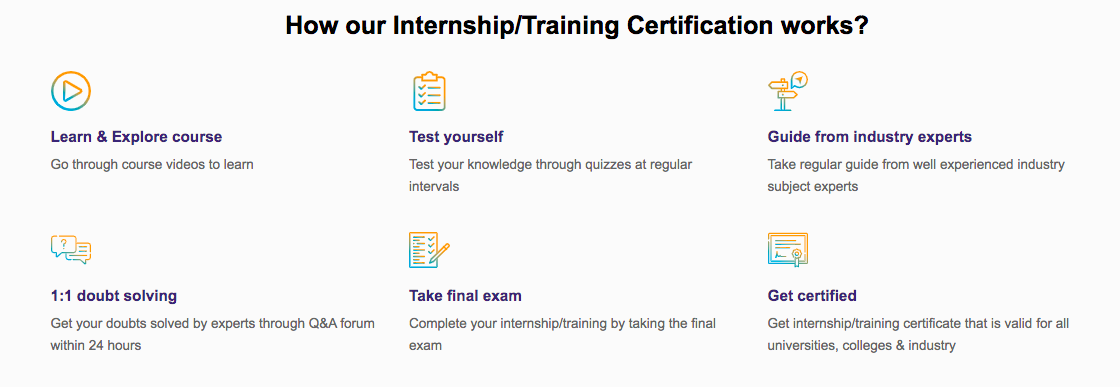
How EasyShiksha Internship/Training Program Works
The Rise of the Simulated Workplace
A simulated workplace is a structured learning environment designed to reproduce selected aspects of professional work. It can include realistic tasks, project requirements, deadlines, changing instructions, communication scenarios and evaluation criteria. Unlike a conventional lesson, where the objective is often to understand a particular concept, a workplace simulation requires the learner to apply knowledge to achieve a defined outcome.
Imagine a student entering a digital marketing simulation in which they are assigned responsibility for improving the online visibility of a fictional business. The student receives background information, a limited budget, a target audience and a set of business objectives. They must research relevant keywords, develop a content plan, select suitable channels and explain how success will be measured.
During the exercise, the simulated client might change the target audience or reduce the available budget. The learner must reconsider the original strategy, explain the implications and adjust the plan. This creates an experience that resembles professional decision-making more closely than answering isolated questions about marketing terminology.
A similar environment could be created for software development, accounting, graphic design, customer support, data analytics and project management. Each simulation would reproduce the important decisions and constraints associated with a particular type of work without requiring a physical workplace.
Such simulations would not reproduce every dimension of professional life. They cannot fully replace the social dynamics, organisational politics, legal responsibilities or unpredictable relationships that arise in real employment. Their value lies in allowing students to practise selected professional capabilities in a controlled environment before facing higher-stakes situations.
From Online Courses to Professional Tasks
Online courses can introduce knowledge efficiently, but learning becomes more useful when students have opportunities to apply it. A course may explain how to build a responsive website, analyse business data or develop a marketing campaign. However, students need practical activities to determine whether they can use that knowledge to solve a problem.
A work-experience model can create a direct connection between course content and realistic professional tasks. After completing a learning module, students could receive an assignment designed around the competencies introduced in that module. The assignment would require them to produce a deliverable rather than simply recall information.
For example, after studying frontend development, a learner might receive a website brief requiring a responsive layout, accessible navigation and interactive elements. The student would interpret the requirements, implement the interface, test the result and document important decisions. Feedback could identify strengths, missing requirements and areas for improvement.
This approach creates a progression from knowledge to application. Students do not need to wait until an employer gives them their first assignment to discover whether they can use their skills practically. They can begin developing those capabilities during their education.
Within EasyShiksha, courses and practical challenges could be connected through structured learning pathways. A student could complete a lesson, apply the relevant concepts in a simulated assignment, receive feedback and move towards more complex tasks. Over time, the learner would build a record of practical work that demonstrates development beyond course completion.
Digital Apprenticeships Without Mandatory Office Attendance
An apprenticeship traditionally involves learning through supervised work. The learner performs tasks, receives guidance, improves through feedback and gradually takes on greater responsibility. This principle can be adapted to digital environments, creating what might be called a digital apprenticeship.
In a digital apprenticeship, students work through a sequence of increasingly demanding professional tasks under the guidance of a mentor, instructor or appropriately designed learning system. The activities are organised around a real occupational skill rather than a disconnected collection of exercises. Each stage prepares the learner for the next, while feedback helps identify weaknesses before they become persistent habits.
A beginner web developer, for instance, might start by fixing simple interface issues, then build reusable components, integrate data from an API and finally deliver a small application against a project brief. Each stage would require the learner to apply earlier knowledge while developing additional capabilities. A mentor could review the work, explain technical trade-offs and suggest improvements.
Digital apprenticeships could be particularly useful for students who cannot attend a workplace regularly. They would offer structured practice and feedback while allowing learners to work from their existing location. However, the term apprenticeship should be used carefully. A simulated or educational programme should not be represented as a formal employment apprenticeship unless it meets the relevant requirements and has the appropriate arrangements.
For EasyShiksha, digital apprenticeship pathways could complement conventional internships by helping learners build foundational competence before entering an organisation. They could also support students who are preparing for remote internships or seeking their first project-based professional opportunity.
Realistic Client Projects Before the First Job
One of the strongest ways to prepare students for professional work is to give them tasks modelled on the problems that clients and organisations actually face. A realistic project requires more than technical execution. Students must understand requirements, identify constraints, select an approach, manage time and explain their decisions.
Consider a learner studying graphic design. Instead of completing another isolated poster exercise, the student could receive a simulated brief from a fictional business preparing to launch a new product. The brief might specify the target audience, brand identity, communication objective and required formats. The student would create the design assets, explain the design choices and revise the work in response to structured feedback.
The same principle applies to other disciplines. A business student could prepare a market-entry recommendation, a data analytics student could investigate declining sales in a sample dataset, and a cybersecurity student could analyse a controlled scenario involving suspicious system activity. Each project would connect subject knowledge with a problem that resembles professional work.
Project realism depends on more than the appearance of the task. The assignment must have meaningful constraints, clear objectives and evaluation criteria. It should also allow students to make decisions rather than simply follow a predetermined set of instructions.
EasyShiksha could potentially develop project-based pathways in which students progress from guided exercises to more open-ended assignments. The resulting work could become part of a student portfolio, with clear labels explaining the project context, the learner's contribution and whether the task was simulated or completed for an actual client.
Remote Collaboration as a Professional Skill
Work experience involves more than producing individual deliverables. Many professional tasks require collaboration, written communication, coordination and the ability to respond constructively to feedback. These capabilities can be difficult to develop through independent online lessons alone.
A digital work-experience environment could introduce collaborative assignments in which students work together to complete a shared project. They might divide responsibilities, agree on requirements, manage deadlines and combine individual contributions into a final deliverable. The project could also require them to document decisions and communicate progress.
For example, a team of students could develop a small digital product. One learner might focus on interface design, another on frontend development, and another on research or testing. The team would need to coordinate these contributions and resolve disagreements about implementation, priorities or design choices.
Such activities can expose students to common collaboration challenges without requiring everyone to be physically present in the same location. They can also help learners practise professional communication through digital tools.
However, collaboration should not be assessed only by whether a team submits a completed project. Evaluators should consider individual contributions, communication quality and how responsibilities were handled. A shared outcome does not necessarily demonstrate that every participant developed the same capabilities.
For EasyShiksha, collaborative projects could create an additional bridge between learning and work. Students would gain opportunities to practise teamwork while developing technical or domain-specific skills, helping them prepare for both remote and office-based roles.
AI as a Simulated Client, Manager or Mentor
Artificial intelligence could make digital workplace simulations more interactive by allowing students to respond to changing instructions and ask questions within a realistic scenario. Instead of working through a fixed worksheet, learners could interact with simulated clients, project managers, customers or technical mentors.
A student working on a business analysis task might receive an initial request from a simulated client who has an unclear problem. The learner would need to ask relevant questions, clarify the objective and determine what information is required. As the project progresses, the simulated client could introduce new constraints or challenge an assumption in the proposed solution.
In a software development simulation, an AI-assisted project manager might provide requirements, respond to clarification requests and introduce a change request. The learner would then need to evaluate the impact on scope, implementation and delivery time.
AI could also provide feedback on communication, identify missing requirements or explain why a proposed solution does not satisfy the brief. When used carefully, this could give students repeated opportunities to practise professional conversations that might otherwise be difficult to access.
However, AI simulations must not be mistaken for real client relationships or actual employment. Their purpose is to provide guided practice, not to create a false impression that the student has worked for a company. Assessment standards must also account for the possibility that AI feedback may be incomplete or incorrect.
EasyShiksha could explore AI-powered workplace scenarios as a complement to human mentorship and project review. The combination could offer learners more opportunities to practise while preserving the importance of accurate feedback and credible evaluation.
Building a Work Evidence Portfolio
Students often finish courses and practical exercises without organising their work into a coherent professional portfolio. They may have created several projects, solved technical problems or completed assessments, yet struggle to explain what those activities demonstrate about their capabilities.
A work evidence portfolio would bring these experiences together. Rather than serving as a gallery of completed assignments, it would connect each project with its objective, the skills involved, the learner's contribution and the outcome achieved. Where appropriate, it could also include feedback, assessment results and evidence of revisions made after review.
A student learning frontend development might include a responsive website, a debugging task and a small application that uses an external API. Each entry could explain the requirements, the implementation choices and the limitations of the work. The portfolio would distinguish between guided exercises, independent projects, simulations and tasks completed for real organisations.
This distinction would strengthen credibility. A simulated client project can demonstrate useful skills, but it should not be presented as paid client work. Similarly, a course assignment should not be described as professional employment. Accurate labelling allows students to demonstrate their progress without exaggerating their experience.
For EasyShiksha, a portfolio-oriented approach could connect course certificates with project evidence and internship outcomes. Students could build a professional profile gradually, allowing each completed learning experience to contribute something meaningful to their career preparation.
The answer depends on what is meant by experience. If experience means formal employment, paid work or participation in an actual organisation, a simulated project does not automatically qualify. If experience refers to practising professional tasks, applying knowledge and developing relevant capabilities, simulations and structured projects can provide meaningful forms of preparation.
This distinction should remain clear throughout the student journey. A student who has completed several workplace simulations may have strong practical preparation but still lack direct experience of organisational processes, real customers, production systems or team accountability. These are important dimensions of work that simulations cannot fully reproduce.
Nevertheless, a lack of formal employment does not mean a student has nothing useful to demonstrate. A well-designed project can show that a learner understands requirements, uses relevant tools, produces a deliverable and responds to feedback. These achievements can help employers make more informed decisions about whether the student is ready for an interview, technical assessment or supervised entry-level role.
The strongest model would therefore treat simulated work as a distinct category of experience rather than either dismissing it entirely or equating it with employment. Students would gain a credible way to demonstrate preparation while understanding what they still need to learn.
For EasyShiksha, this could become an important principle of transparent career development: help students build practical evidence before employment, but represent that evidence honestly.
Preparing Students for Remote and Hybrid Careers
The expansion of remote and hybrid work has increased the relevance of digital collaboration, written communication, independent task management and online project delivery. These capabilities can be practised without entering a physical workplace, making digital work-experience pathways particularly relevant for students interested in technology, design, marketing, research and other digitally deliverable roles.
A remote-work simulation could require a learner to receive a task through a project management system, clarify requirements in writing, provide progress updates, submit the completed work and respond to review comments. The student would practise not only the technical task but also the communication surrounding it.
For example, a content marketing student could receive a brief, conduct research, prepare an article, respond to editorial feedback and submit a revised version. A junior developer could work through an issue tracker, explain the proposed fix and document the testing process. These exercises would help learners understand the habits that make remote collaboration effective.
Remote work is not simply office work performed from home. It often requires greater clarity in written communication, deliberate coordination and the ability to manage tasks without constant direct supervision. Students who practise these behaviours early may be better prepared for remote internships and distributed teams.
EasyShiksha could integrate these capabilities into project-based learning pathways, helping students understand the professional routines associated with remote work while building evidence of their task performance.
Measuring Competence Rather Than Time Spent
A major advantage of a structured digital work-experience model is the opportunity to focus assessment on demonstrated capability rather than simply counting hours. Traditional placements often record duration, but time spent in a workplace does not necessarily indicate how much a student learned or what tasks they performed.
A more evidence-oriented approach would evaluate the work itself. Did the learner understand the requirements? Was the deliverable functional? Could the student explain important decisions? Did they respond appropriately to feedback? Could they repeat the task or apply the same principles to a different problem?
These questions create a stronger picture of learning than duration alone. They also make it easier to identify where additional practice is needed.
However, competence should not be inferred from a single successful submission when the claim requires broader evidence. A learner may complete one task successfully with substantial assistance but struggle to reproduce the result independently. Repeated tasks, different scenarios and appropriate assessments can provide a more reliable indication of capability.
EasyShiksha could potentially use defined rubrics and competency-based assessments to support this process. Students would receive feedback on the quality of their work and understand what they need to demonstrate before progressing to more advanced tasks. Certificates could recognise learning achievements where appropriate, while practical evidence would clarify the specific capabilities assessed.
The Role of Human Mentors and Industry Reviewers
Technology can make workplace simulations accessible, but human feedback remains important. Experienced practitioners can recognise practical details that automated systems may overlook, explain industry conventions and help students understand why one solution may be more suitable than another.
A mentor reviewing a student's project might identify that the solution works but is difficult to maintain, that the design is inaccessible to some users or that the analysis overlooks a critical business assumption. Such feedback helps learners move beyond producing an acceptable result towards understanding professional quality.
Industry reviewers could also help ensure that simulated tasks remain relevant to current tools and workplace expectations. Their involvement would be especially useful for assignments intended to prepare students for specific occupational roles.
Not every project needs intensive individual mentoring. A scalable model could combine automated feedback for routine checks, structured peer review for selected tasks and human evaluation for complex or high-stakes assessments. The appropriate balance would depend on the task, the learner's level and the claims being made about the outcome.
For EasyShiksha, partnerships with mentors and industry professionals could potentially strengthen the relevance of simulated work-experience pathways. Their involvement would help bridge the gap between educational exercises and the standards students may encounter in actual professional environments.
How EasyShiksha Could Build a Workplace-Without-Walls Learning Pathway
A potential EasyShiksha model could begin with a target job role or competency area. The learner would explore the required skills through structured courses, use quizzes to check foundational understanding and then enter a simulated workplace containing tasks related to the selected role.
At the beginning, the tasks could be highly guided, with clear instructions and examples. As the student gains confidence, the scenarios could become less predictable and require more independent decisions. The learner might then complete a practical project, receive feedback, revise the work and add the final deliverable to a portfolio.
The next stage could introduce collaborative tasks, simulated client interactions or mentor-reviewed projects. Where suitable opportunities exist, students could move into remote internships or supervised assignments with real organisations. This would create a pathway from controlled practice towards actual workplace exposure without making physical attendance a prerequisite for every stage.
Certificates could recognise course completion or assessed learning outcomes, while project records could document what the learner demonstrated. Career guidance could help students identify suitable entry-level roles and understand the difference between their current capabilities and the expectations of the target position.
This pathway would not guarantee employment, and simulated work would not replace every benefit of a real internship. Its purpose would be to make preparation more accessible, structured and evidence-based, allowing students to pursue workplace opportunities with stronger practical foundations.
Empower your team. Lead the industry
Get a subscription to a library of online courses and digital learning tools for your organization with
EasyShiksha
Challenges and Safeguards in a Digital Work-Experience Model
Creating credible simulated work experiences requires careful design. If tasks are too simple, students may complete them without developing meaningful capabilities. If scenarios are too complicated or poorly explained, learners may become confused for reasons unrelated to the skills being assessed. The challenge is to create activities that are realistic enough to encourage professional thinking while remaining appropriate for the student's level.
Assessment quality is equally important. A completed deliverable should not automatically be treated as proof of competence if the learner received extensive assistance or if the task did not test the intended capability. Clear rubrics, appropriate supervision and transparent records can help address this problem.
The model must also avoid turning unpaid simulated work into a substitute for legitimate employment. Organisations should not use student exercises to obtain commercially valuable labour while presenting the arrangement as education. When real organisations contribute project briefs, the programme should clarify ownership, permitted use, confidentiality, supervision and whether the activity is educational or commercial.
Privacy is another consideration. Student submissions may contain personal information, and workplace-style simulations can involve realistic business data. Platforms should use suitable fictional or authorised datasets and explain how submitted work and assessment records will be stored and shared.
Finally, students should understand the limits of the experience they have gained. A portfolio of simulations can demonstrate preparation, but it should not be marketed as equivalent to several years of professional employment. Trust depends on making the distinction clear.
The Future of Career Preparation: Work Before the First Job
The future of career preparation may involve a more gradual transition from education to employment. Instead of expecting students to move directly from theoretical learning into a professional role, education systems could offer a series of increasingly realistic experiences that prepare them for the demands of work.
Students could begin with foundational lessons, move into guided exercises, complete practical projects and participate in simulated teams. They could then demonstrate their abilities through assessments, build a portfolio and pursue internships or entry-level roles with stronger evidence of their capabilities.
This approach would be particularly valuable in fields where meaningful tasks can be reproduced digitally. It could help students practise professional routines, develop confidence and identify knowledge gaps before those gaps affect an actual workplace assignment.
Artificial intelligence, interactive simulations and digital collaboration tools could make these experiences more adaptive. Students could encounter different scenarios, receive targeted feedback and repeat tasks until they demonstrate the intended capabilities. Human mentors and industry reviewers could add contextual judgment where automated evaluation is insufficient.
For EasyShiksha, this represents a potential evolution from delivering learning content towards coordinating a wider journey of career preparation. Courses would establish knowledge, practical tasks would develop application, simulations would introduce workplace complexity, and portfolios would help communicate what learners have demonstrated.
Conclusion: The Workplace Can Be a Destination, Not the Starting Point
Students should not have to wait until they enter a physical workplace before they begin developing professional capabilities. Real employment and internships remain important because they provide access to actual teams, organisational responsibilities, clients and consequences. Yet many of the skills required for these environments can be practised earlier through realistic projects, digital apprenticeships, workplace simulations and supervised remote assignments.
The key is to distinguish preparation from employment. A simulated client project is not the same as working for a real client, and a digital apprenticeship exercise is not automatically a formal apprenticeship. Nevertheless, these experiences can help students learn to interpret requirements, use professional tools, solve problems, collaborate and produce evidence of their abilities.
For EasyShiksha, the opportunity lies in connecting courses, quizzes, projects, simulations, internships, certificates and career guidance into a continuous pathway. Students could begin learning a skill, practise it through realistic assignments, receive feedback, build a portfolio and use that evidence when pursuing actual workplace opportunities. This would make career preparation more accessible to learners who cannot immediately enter a conventional workplace.
The ultimate objective is not to create a world in which students never need real work experience. It is to ensure that they do not arrive at their first job without having had meaningful opportunities to practise. By moving some professional learning into accessible digital environments, education platforms could help reduce the gap between knowing a subject and being prepared to apply it.
The workplace does not have to be where a student's professional development begins. It can be where the capabilities developed through learning, practice and simulated experience are finally put to work.
Anshika Jain is an Engineer, Developer, and Educational Content Author known for her dedication to technology and knowledge sharing. With a strong analytical mindset and a passion for innovation, she has consistently contributed to creating meaningful digital solutions and insightful educational articles.
Her ability to simplify complex technical concepts into engaging and easy-to-understand content makes her work valuable for students and learners across various platforms. Along with her technical expertise, Anshika is admired for her creativity, professionalism, and commitment to continuous learning.
She represents a perfect blend of technical excellence and impactful communication, inspiring others through both her development work and educational contributions.