Education systems have become increasingly capable of measuring what students do. Digital platforms can record course completion, quiz scores, assignment submissions, time spent on lessons and participation in learning activities. These signals provide useful information about progress, but they do not necessarily reveal the full state of a student's understanding. A learner may answer a question correctly without understanding the underlying concept, while another may answer incorrectly despite possessing much of the knowledge required to solve the problem. More importantly, students themselves are not always aware of the gaps in their understanding.
This creates a fundamental challenge for intelligent education: can a learning system identify not only what a student knows, but also what the student does not know, does not realise they do not know, or incorrectly believes they understand?
The question goes beyond conventional assessment. A quiz can identify an incorrect answer, but understanding the reason behind that answer requires deeper analysis. A student may lack a prerequisite concept, confuse two related ideas, remember a rule without knowing when to apply it or hold a misconception that makes an incorrect explanation appear reasonable. In some cases, the student may not even recognise that a particular area of knowledge exists.
These hidden gaps can influence everything that follows. A student learning JavaScript may attempt to study React without understanding functions, arrays or asynchronous behaviour. A learner studying finance may memorise accounting terminology without understanding how financial statements relate to one another. A student preparing for a professional internship may complete several courses while remaining unaware of the practical skills required to perform a realistic workplace task.
For EasyShiksha, this challenge creates an opportunity to explore a more advanced model of educational intelligence. By connecting online courses, quizzes, projects, educational games, internships, certificates and career guidance, the platform could potentially help students discover gaps that conventional completion records and scores do not reveal.
The objective would not be to claim that an AI system can perfectly inspect a student's mind. No assessment can provide complete access to everything a learner understands. Instead, an intelligent education system could gather evidence from different learning activities, identify likely gaps, communicate uncertainty and help students investigate what they may need to learn next.
The future of personalised education may depend not only on knowing what students have completed, but also on understanding what remains unclear, unrecognised or insufficiently demonstrated.
What Does It Mean to Know What a Student Does Not Know?
At first glance, identifying missing knowledge may appear straightforward. If a student answers a question incorrectly, the system could conclude that the learner does not understand the tested concept. However, this conclusion is often too simple because the same incorrect answer can arise from several different causes.
A student may not remember a definition, may misunderstand the wording of a question, may lack a prerequisite skill or may understand the concept but fail to apply it in an unfamiliar context. A learner may also make an accidental mistake despite having a sound understanding of the underlying principle. These situations require different educational responses.
A more useful model distinguishes between observed performance and inferred understanding. Observed performance includes what the learner actually does during an assessment or practical task. Inferred understanding is the system's best-supported interpretation of what that performance suggests about the learner's knowledge.
For example, a student who repeatedly confuses JavaScript promises with ordinary return values may have a conceptual misunderstanding of asynchronous programming. A student who answers one promise-related question incorrectly may simply have made a mistake. The system needs additional evidence before deciding whether the learner requires foundational instruction, targeted practice or only a brief clarification.
This distinction is central to the concept of a Knowledge Gap Intelligence System. Such a system would not treat every incorrect response as proof of ignorance or every correct response as proof of mastery. It would examine patterns across questions, tasks, explanations and repeated attempts to estimate which concepts the learner understands, which remain uncertain and which may be misunderstood.
For EasyShiksha, this could create a more meaningful connection between assessment and personalised learning. Instead of reacting only to scores, the platform could potentially use evidence from multiple activities to determine which learning support is most appropriate.
The Difference Between Missing Knowledge and Hidden Knowledge Gaps
Not all knowledge gaps are equally visible. Some students know that they have not learned a particular subject. A beginner who has never studied database design generally understands that the topic is unfamiliar. This is a visible knowledge gap because the learner recognises the absence of knowledge.
More difficult gaps occur when students believe they understand something but cannot apply it correctly. A learner may confidently explain a concept using an inaccurate mental model, or may answer familiar questions correctly while failing when the same concept appears in a different context. The student may not seek help because the misunderstanding remains invisible to them.
Consider a learner who believes that JavaScript executes every operation strictly in the order in which it appears in the source code. This assumption may seem reasonable after working with simple examples. However, it can create confusion when the learner begins working with promises, timers and asynchronous events. The student may repeatedly encounter unexpected output without recognising that the underlying mental model needs revision.
A conventional assessment might identify individual incorrect answers. A more sophisticated system could examine the pattern and infer that the learner may hold a broader misconception. It could then present a carefully chosen task that helps distinguish between a missing fact and an incorrect conceptual model.
This distinction matters because the right response differs. A missing fact may require explanation and practice, while a misconception often requires the learner to compare their expectations with evidence and reconstruct their understanding.
An education system designed for deeper learning should therefore investigate not only whether a student knows a concept, but also whether the student’s understanding is sufficiently accurate to support future learning.
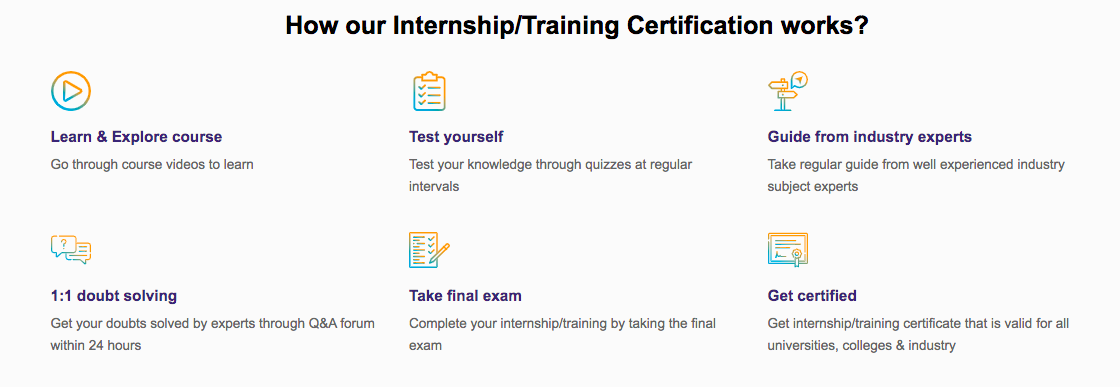
How EasyShiksha Internship/Training Program Works
Why Traditional Scores Cannot Reveal the Entire Learning State
Scores are useful indicators, but they compress complex learning behaviour into a relatively small amount of information. A score of 70 percent may show that a student answered seven out of ten questions correctly, but it does not automatically explain which concepts were understood, why the remaining questions were answered incorrectly or whether the student can apply the knowledge independently.
Two students can receive identical scores while having very different learning needs. One may understand most concepts but struggle with a single difficult topic. Another may have superficial knowledge across several topics but lack a strong foundation in any of them. Treating both students in exactly the same way would overlook important differences.
The format of the assessment also influences what the score represents. Multiple-choice questions can test recognition and conceptual discrimination, but they may not fully establish whether students can construct a solution independently. Practical tasks provide different evidence, while written explanations may reveal reasoning that is not visible in a selected answer.
A learner may also perform well because the assessment resembles a practice exercise they have recently completed. That performance is useful, but it does not necessarily establish that the student can transfer the knowledge to an unfamiliar problem.
For EasyShiksha, this suggests that quiz scores should be treated as one source of evidence rather than a complete description of student understanding. Connecting quizzes with courses, projects and simulations could potentially provide a broader view of learning. A student’s knowledge would be interpreted through multiple observations instead of being reduced to a single result.
Building a Student Knowledge Map
One possible foundation for identifying hidden knowledge gaps is a Student Knowledge Map. This is a structured representation of the concepts, skills and relationships that a learner is expected to understand within a particular subject.
A knowledge map can show how foundational ideas support more advanced concepts. In programming, for example, understanding variables and functions contributes to the ability to work with arrays, objects, events and asynchronous operations. Those capabilities can then support more complex development tasks. Similar relationships exist in mathematics, finance, marketing, science and other fields.
When a student struggles with an advanced concept, the system can examine its prerequisites. The difficulty may originate in the current lesson, or it may be connected to a foundational idea that the student never fully understood. Without these relationships, the platform may repeatedly recommend additional practice on the advanced topic while leaving the underlying cause unresolved.
A knowledge map would help the system investigate these relationships. If a learner struggles with a React component, the platform might examine evidence of JavaScript functions, object handling and state-related concepts before recommending a solution. It could then determine whether the learner needs a targeted explanation, a prerequisite refresher or a more challenging practical exercise.
For EasyShiksha, knowledge maps could potentially connect lessons, quizzes and projects across a course pathway. The map would not need to assume that every student follows the same route. Instead, it would help explain how different concepts relate to one another and identify where additional evidence may be useful.
How AI Could Detect What Is Missing
Artificial intelligence can help identify patterns in student performance that are difficult to interpret through individual scores alone. By analysing responses across related questions, attempts over time and performance on different task formats, an AI-supported system could estimate which concepts are well understood and which require further investigation.
For example, a student may repeatedly answer questions about JavaScript arrays correctly when asked to identify syntax but struggle when asked to manipulate data in a practical exercise. This pattern could suggest that the student recognises familiar syntax but has difficulty applying it. Another learner may complete practical exercises successfully while giving inconsistent explanations of the underlying concept, indicating that additional evidence is needed to understand the depth of their knowledge.
The system could use these patterns to recommend diagnostic questions, practical exercises or targeted explanations. It could also compare a learner’s performance across tasks that test the same competency in different ways.
However, AI should not treat these interpretations as certain facts. A model may misinterpret an error, overlook a valid alternative solution or draw an incorrect conclusion from a small number of observations. Its role should be to generate evidence-based hypotheses about learning gaps and identify useful ways to test those hypotheses.
Within EasyShiksha, AI could potentially help organise evidence from quizzes, courses and projects into a more informative picture of student understanding. The system could explain why it suspects a particular gap and allow students to test or challenge that interpretation.
Diagnostic Questions: Finding the Cause Behind an Incorrect Answer
When a student answers a question incorrectly, the next step should not always be to provide the correct answer and move on. Sometimes the more valuable response is a diagnostic question designed to understand the source of the difficulty.
Suppose a learner incorrectly answers a question about percentage calculations. The system could provide a second question that tests the underlying arithmetic, followed by another that examines the relationship between the percentage and the original value. These questions would help determine whether the difficulty involves basic calculation, interpretation or the specific context of the original problem.
The same approach applies to programming. If a student produces an incorrect result while working with an array, the platform could ask the learner to predict what happens at a particular step, interpret the value of a variable or explain how the loop changes the data. The answers may reveal whether the student misunderstood indexing, iteration or the overall problem.
Diagnostic questions should be carefully selected. If every incorrect answer triggers a long sequence of questions, learning can become exhausting. The system should use the smallest amount of additional assessment needed to distinguish between plausible explanations.
EasyShiksha could potentially use diagnostic quiz sequences that adapt according to student responses. Instead of simply repeating the same question, the platform could explore the underlying concept and then recommend a learning activity that addresses the most likely source of confusion.
Detecting Misconceptions, Not Just Incorrect Answers
A misconception is more difficult to address than a forgotten fact because it can influence how students interpret many different problems. If the misconception remains uncorrected, learners may continue producing incorrect answers even after memorising individual explanations.
A sophisticated educational system could look for recurring error patterns associated with common misconceptions. For example, a student may repeatedly interpret correlation as proof of causation when analysing data. Another learner may assume that a higher advertising click-through rate necessarily means a campaign has become more profitable. In programming, a student may confuse the completion of an asynchronous operation with the immediate return of a function.
These patterns can suggest that the learner is using an inaccurate model to interpret information. The system could then introduce contrasting examples that expose the limits of the misconception. It might ask the student to predict an outcome, compare that prediction with the actual result and explain the difference.
This process helps learners revise their reasoning rather than simply memorise the correction. It also provides additional evidence about whether the misunderstanding has been resolved.
For EasyShiksha, quizzes and educational games could potentially be designed to reveal common misconceptions through carefully structured tasks. The system could then connect those results to targeted course content or practical exercises, helping students strengthen the conceptual foundations required for more advanced learning.
Understanding the Difference Between Confidence and Competence
Students do not always know how accurate their own understanding is. Some may feel confident because they recognise familiar explanations, while others may underestimate their ability because they find a subject difficult. This creates a gap between perceived understanding and demonstrated performance.
An intelligent learning system could help investigate this gap by asking students to indicate their confidence before receiving feedback. The platform could then compare confidence with actual performance across multiple activities. Repeated high confidence combined with incorrect answers might suggest a misconception or a need for more careful self-checking. Low confidence alongside consistently strong performance could indicate that the student needs help recognising what they already understand.
These patterns should be interpreted cautiously. Confidence can change with context, task difficulty and personal circumstances, and a single response cannot establish a stable characteristic. The purpose is not to label learners as overconfident or underconfident but to help them calibrate their judgments over time.
For EasyShiksha, confidence checks could potentially be incorporated into selected quizzes, practice tasks and reflection activities. Students could learn to distinguish between recognising a familiar answer and being able to explain or apply a concept independently.
The long-term objective would be to help learners become more accurate judges of their own knowledge. When students can recognise both their strengths and their uncertainties, they are better equipped to choose appropriate learning activities and seek help when necessary.
The Role of Practical Projects in Revealing Knowledge Gaps
Projects can reveal learning gaps that remain hidden during conventional assessments. A student may answer individual questions correctly but struggle when several concepts must be combined to solve a realistic problem. Projects require learners to decide which knowledge is relevant, organise their work, identify errors and adapt their approach when the initial solution fails.
Consider a learner who has completed several web development courses. The student may understand HTML, CSS and JavaScript individually but struggle to combine them into a functional application. The problem may involve data flow, event handling, debugging or the ability to break a complex task into manageable steps.
A project-based learning environment can provide evidence about these difficulties. The platform may observe which stages the learner completes, where errors repeatedly occur and whether the student can resolve problems after receiving feedback. It should not rely on completion time alone, because students work at different speeds and may use different valid approaches.
Projects can also reveal strengths that conventional quizzes overlook. A learner may demonstrate strong problem decomposition, persistence or creative problem-solving even when their theoretical assessment scores are moderate. These strengths should become part of the broader understanding of the learner’s development.
EasyShiksha could potentially connect course assessments with practical projects so that students can apply concepts in realistic contexts. Project evidence would help the platform identify gaps between knowing individual concepts and using them together, creating a more useful basis for personalised learning recommendations.
An important capability of an intelligent education system is recognising when it does not have enough information to make a reliable judgment. If a student has completed only one short quiz, the platform may have insufficient evidence to determine whether the learner has mastered a subject.
The system should distinguish between a demonstrated lack of knowledge and an absence of evidence. These are not the same. A student who has not yet completed a diagnostic task may possess the required skill, but the platform cannot confidently claim that the skill has been demonstrated.
This distinction prevents educational systems from making overly strong conclusions. It also creates a more transparent learning experience. Instead of declaring that a learner does not understand a concept, the system could explain that the available responses suggest a possible gap and recommend a short activity to investigate it.
Evidence may also become outdated. A student who struggled with a concept several months ago may have improved through independent practice or related coursework. The platform should allow new performance to update its understanding rather than permanently treating the earlier result as definitive.
For EasyShiksha, an uncertainty-aware learning model could potentially show students which competencies appear well supported, which need further practice and which have not yet been adequately assessed. This would make recommendations more honest and reduce the risk of treating incomplete records as complete descriptions of a learner.
The Knowledge Gap Graph: Connecting Errors Across Subjects
Some knowledge gaps affect only one topic, while others influence several areas of learning. A Knowledge Gap Graph could help represent these relationships by connecting observed difficulties with the concepts and competencies that may depend on them.
For example, weak understanding of fractions and ratios may affect later work in algebra, probability, finance and data interpretation. Difficulty with functions may influence programming, mathematical modelling and spreadsheet analysis. Problems with interpreting evidence can affect scientific reasoning, business decisions and research-based assignments.
A graph-based system would help identify these shared foundations. If a student repeatedly struggles with several tasks that depend on the same underlying concept, the platform could investigate whether a foundational gap is contributing to the broader pattern.
This approach could reduce unnecessary repetition. Rather than recommending separate remedial lessons for every affected topic, the system might identify a common prerequisite and offer targeted instruction that supports several learning goals at once.
The graph should not assume that every error has a single cause. Students may make different mistakes for different reasons, and relationships between concepts can be complex. The system should use the graph to guide further investigation rather than treat it as a definitive explanation of every difficulty.
For EasyShiksha, such a model could potentially connect learning across courses and skill pathways, helping students understand how foundational knowledge supports their broader educational progress.
Personalised Learning Based on the Type of Knowledge Gap
Once an education system has identified a likely gap, the next challenge is choosing an appropriate response. A generic recommendation to repeat the entire course may waste the learner’s time, while providing a short definition may be insufficient for a deeper misunderstanding.
Different gaps require different forms of support. A student who has forgotten a fact may benefit from retrieval practice. A learner who misunderstands a concept may need a contrasting explanation and examples. Someone who understands the concept but cannot apply it may need guided practice followed by an independent task. A student who lacks prerequisite knowledge may need to revisit an earlier topic before progressing.
AI could potentially help select among these responses by examining the evidence associated with the difficulty. It could recommend a short lesson, a diagnostic quiz, a practical challenge or a more detailed explanation. After the student completes the activity, the system could gather new evidence to determine whether the intervention helped.
For EasyShiksha, this could make the connection between courses and quizzes more purposeful. Students would not simply receive additional content whenever their scores fall below a threshold. They could receive targeted support designed around the likely reason for the difficulty.
The system should also allow students to influence the process. A learner may prefer a video explanation, a written example or a practical task. Giving students reasonable control over how they investigate a gap can improve the learning experience while preserving their independence.
From Knowledge Gaps to Career Readiness
Understanding missing knowledge becomes particularly important when students prepare for internships and employment. A learner may complete a course in digital marketing but lack the ability to interpret campaign data. Another may study frontend development but struggle to debug an unfamiliar application. A student interested in finance may understand definitions but have limited experience applying them to realistic business scenarios.
These gaps matter because professional tasks often require combinations of knowledge, judgment and practical execution. A student may have the foundational knowledge required for a role but still need experience with the tasks that define the work.
A capability-oriented education system could compare a learner’s demonstrated skills with the requirements of a chosen internship or entry-level role. It could identify areas with supporting evidence, areas that need more practice and areas where the system lacks enough information to make a judgment.
The purpose would not be to exclude learners automatically. Instead, the system could help them prepare more effectively by recommending relevant courses, projects or practice tasks. It could also explain which requirements are essential and which may be developed through training.
EasyShiksha could potentially connect knowledge-gap detection with its internship and career guidance ecosystem. Students would be able to identify what they need to strengthen before applying for opportunities, while their learning journey would remain focused on their own goals rather than on a generic definition of employability.
Protecting Student Privacy and Avoiding Unfair Labels
An education system that analyses learning behaviour must handle student information responsibly. Quiz responses, repeated mistakes, confidence ratings and project performance can provide useful evidence, but they can also be misinterpreted if stored or used without appropriate safeguards.
A student’s difficulty with a subject should not become a permanent label. Struggling with mathematics at one stage does not mean that a learner lacks mathematical potential. Repeated errors may reflect poor instruction, unfamiliar language, limited access to practice or temporary circumstances rather than an inherent inability.
The system should therefore treat knowledge-gap estimates as temporary and revisable. Students should be able to see the basis for important recommendations, receive explanations that do not stigmatise them and demonstrate improvement through new evidence. Data collection should remain proportionate to the educational purpose, and access to learning records should be controlled appropriately.
Fairness also requires attention to differences in educational opportunity. Students who have access to high-quality devices, stable internet connections or additional tutoring may perform differently from those who do not. An AI system should avoid interpreting every performance difference as a difference in ability.
For EasyShiksha, responsible knowledge-gap intelligence would mean using learner data to improve support rather than rank students unfairly. The objective should be to make learning more accessible and effective while respecting privacy, uncertainty and each learner’s capacity to improve.
Empower your team. Lead the industry
Get a subscription to a library of online courses and digital learning tools for your organization with
EasyShiksha
Implementing a Knowledge Gap Intelligence System at EasyShiksha
A practical implementation could begin with a limited set of courses and clearly defined learning outcomes. Each course would identify its core concepts, prerequisite relationships and suitable ways to demonstrate understanding. Quizzes could then be mapped to specific concepts, while projects and practical exercises could provide additional evidence of application.
The platform could analyse student responses to identify recurring patterns and recommend short diagnostic activities when the source of a difficulty remains unclear. If the evidence suggests a missing prerequisite, the learner could receive a targeted refresher. If the student appears to understand the concept but struggles to apply it, the system could recommend a practical task. If the evidence is insufficient, the platform could communicate that uncertainty and invite the student to complete another activity.
The process would be iterative. Students would learn, demonstrate understanding, receive targeted support and attempt new tasks. Each new activity would provide evidence that could update the platform’s understanding of the learner’s progress.
Implementation should begin with transparent rules and carefully evaluated recommendations rather than assuming that a complex AI model will automatically produce reliable educational judgments. Educators should review the quality of diagnostic questions, and student feedback should be used to identify confusing explanations or inappropriate recommendations.
EasyShiksha could potentially use this model to connect online courses, quizzes, projects and internships through a shared approach to learning evidence. Over time, the system could help students understand not only what they have completed but also which concepts they have strengthened, where uncertainty remains and which learning experiences may be most useful next.
Conclusion: Intelligent Education Must Understand the Limits of Its Knowledge
Can an education system know what a student does not know? It cannot inspect a learner’s mind directly or determine every gap with complete certainty. However, it can collect meaningful evidence, identify patterns, test possible explanations and estimate where understanding may be incomplete.
The most important shift is from treating student performance as a final verdict to treating it as evidence that supports further investigation. Incorrect answers may reveal missing knowledge, misconceptions or difficulties applying a concept. Correct answers may demonstrate understanding, but additional tasks may be needed to establish whether that understanding is reliable and transferable.
For EasyShiksha, this approach could create stronger connections between courses, quizzes, projects, educational games, internships and career guidance. AI could help identify likely learning gaps, recommend targeted practice and explain why particular activities may be useful. Students could then build a more accurate understanding of their own knowledge while receiving support that reflects their individual needs.
The system must remain transparent about uncertainty, avoid permanent labels and respect student privacy. Its purpose should not be to classify learners as capable or incapable, but to help them discover what they understand, investigate what remains unclear and develop the skills required for their chosen goals.
Ultimately, the most intelligent education system will not be the one that claims to know everything about a student. It will be the one that recognises the limits of its evidence, asks better questions and helps learners turn hidden gaps into opportunities for growth.
Education becomes more intelligent when it can identify not only what a student has learned, but also what remains uncertain, why that uncertainty matters and how the learner can move forward.
Anshika Jain is an Engineer, Developer, and Educational Content Author known for her dedication to technology and knowledge sharing. With a strong analytical mindset and a passion for innovation, she has consistently contributed to creating meaningful digital solutions and insightful educational articles.
Her ability to simplify complex technical concepts into engaging and easy-to-understand content makes her work valuable for students and learners across various platforms. Along with her technical expertise, Anshika is admired for her creativity, professionalism, and commitment to continuous learning.
She represents a perfect blend of technical excellence and impactful communication, inspiring others through both her development work and educational contributions.