






872
Articles published




Join thousands of students achieving their dreams with expert-led courses.
Join free and unlock everything on EasyShiksha.
Takes less than 3 seconds — no password needed
Please enter a valid email address.
Checking your email…
Almost done — just verify your number so we can send course updates and certificates.
Used only for verification & updates
Incorrect OTP. Please try again.
Takes less than 10 seconds
Please select your country.
Please select your state.


Auditing projects help commerce students understand how financial records are examined, how business procedures are reviewed and how evidence supports conclusions. They connect accounting concepts with practical activities such as checking invoices, reviewing transaction records, examining internal controls and documenting discrepancies.
For students exploring B.Com programmes on EasyShiksha, an auditing project can provide an opportunity to apply classroom knowledge to a defined business or accounting question. The project may involve a case study, an analysis of published financial statements, a review of a documented accounting process or an approved investigation using sample records.
A good project does not need access to confidential company accounts. Students can use publicly available financial reports, simulated transactions or authorised anonymised records, depending on their objectives and university guidelines. The essential requirements are a clear research question, a consistent method, reliable evidence and a report that explains how the conclusions were reached.
Auditing involves examining financial information, records or processes against relevant criteria. Depending on the assignment, a student project may focus on the accuracy of transaction documentation, the design of internal controls, the reconciliation process or the presentation of financial information.
An academic project should distinguish between studying an audit procedure and conducting a formal professional audit. A student reviewing sample invoices, for example, can identify documentation gaps within the selected sample, but should not claim to have certified an organisation's financial statements.
Students can explore EasyShiksha's Commerce programme domain and Accounting programme domain to learn more about related academic areas.
Select a topic that is specific enough to investigate within the available time and resources. The chosen subject should match the course requirements and allow the student to collect or access appropriate evidence.
Possible project topics include:
Internal control procedures: Examine how a documented process separates responsibilities and authorises transactions.
Invoice verification: Study whether sample invoices contain the information required by a defined checklist.
Bank reconciliation: Analyse a sample reconciliation statement and investigate differences between records.
Inventory documentation: Review how stock movements are recorded and supported by source documents.
Expense verification: Examine sample expense claims against an established documentation policy.
Financial statement analysis: Review published financial statements and explain selected accounting relationships.
Audit documentation: Evaluate whether a simulated working-paper file clearly records procedures, evidence and conclusions.
Cash-handling controls: Assess a documented cash-handling procedure for authorisation, recording and reconciliation steps.
These are illustrative ideas, not guaranteed project approvals. Confirm the topic with the supervisor and establish which data sources and methods are acceptable.
A broad topic such as “auditing in business” may be difficult to complete meaningfully. A more focused question could be: “What documentation gaps are present in a selected sample of expense claims when assessed against a defined checklist?”
This question identifies the material to examine and provides a basis for setting objectives, selecting a method and presenting findings.
The methodology explains how the student will investigate the chosen question. It should identify the information required, the source of that information and the criteria used to evaluate it.
Depending on the project, suitable sources may include published annual reports, publicly available company disclosures, simulated transactions, authorised internal documents or interviews approved by the institution.
Record where the information came from and the period it covers. When using published financial statements, distinguish between information presented by the organisation and the student's own analysis.
If the project examines transactions, specify the period, transaction category and selection method. A sample of invoices from one period cannot automatically establish that every transaction in an organisation is accurate or compliant.
Explain any restrictions on data access and why the selected material is appropriate for the research question. Where a small or convenience sample is used, acknowledge that limitation.
Before reviewing records, identify the criteria against which they will be assessed. These may come from the assignment brief, a documented organisational procedure or an appropriate accounting or auditing framework specified by the supervisor.
Do not invent mandatory audit requirements or assume that one checklist applies to every organisation. The criteria must be relevant to the transaction type and the scope of the project.
Internal controls are procedures and practices intended to help organisations manage risks, maintain reliable records and support appropriate authorisation of activities.
An auditing project can examine whether a selected process includes clear responsibilities, supporting documentation, approval steps and reconciliation procedures.
Consider whether the process identifies who can approve a transaction, who records it and who reviews the resulting information. Separating duties can reduce certain risks, although the appropriate arrangement depends on the organisation's size and circumstances.
Look for evidence that transactions are supported by relevant documents and recorded consistently. Where applicable, review whether records are reconciled with independent statements or other supporting information.
A missing document should be recorded as a documentation gap. It should not automatically be described as fraud, because further evidence may be needed to understand why the document is unavailable.
A control may exist on paper but not operate consistently. Conversely, a small organisation may use alternative procedures that achieve a similar purpose. Students should describe what they actually observed and avoid assuming that a procedure is effective merely because it appears in a written policy.
Audit evidence is information used to support an assessment or conclusion. In a student project, evidence might include invoices, receipts, ledger extracts, reconciliation statements, approval records or relevant published disclosures.
Ask whether the evidence directly addresses the research question. A purchase invoice may support the details of a purchase, while a bank statement may help verify a corresponding payment. Different documents support different claims.
Consider the source, completeness and consistency of the information. If two records disagree, document the difference and investigate it within the project's scope rather than choosing whichever figure appears more convenient.
Create a structured working-paper table with fields such as reference number, record description, procedure performed, observation and conclusion. Use anonymised identifiers where appropriate.
For example, a simulated expense review might record whether a claim includes an amount, date, supporting receipt and required approval. The student can then summarise which criteria were met and which were not evidenced in the sample.
A discrepancy is a reason for further investigation, not automatic proof of misconduct. Similarly, a small sample without identified exceptions does not establish that a complete accounting system is free from error.
Use precise language such as “the selected records did not contain the required approval evidence” rather than making an unsupported allegation about an employee or organisation.
Once the evidence has been organised, summarise the results in a way that directly addresses the project objectives.
For a checklist-based study, students might calculate the number or percentage of reviewed records that met each criterion. State the sample size and explain how missing or incomplete records were treated.
Tables and charts can make patterns easier to understand, but they should not exaggerate the significance of small differences. Each result should be interpreted within the limits of the evidence.
Recommendations should be linked to observed findings. If a sample reveals inconsistent approval documentation, a possible recommendation could be to standardise the approval checklist and define where records should be retained.
Explain why the recommendation addresses the finding and how its implementation might be reviewed. Present it as a proposed improvement rather than a guaranteed solution.
Follow the report format prescribed by the university or supervisor. A general project structure may include:
Title page: State the project title and required academic details.
Abstract: Summarise the objective, method, key findings and main recommendation.
Introduction: Explain the topic, research problem, objectives and scope.
Review of literature: Discuss relevant textbooks, academic sources and credible professional publications.
Research methodology: Describe the data source, sample, evaluation criteria and procedures followed.
Findings and analysis: Present the observations, calculations, tables and supporting evidence.
Discussion: Explain what the findings mean in relation to the research question and relevant concepts.
Recommendations: Suggest realistic improvements based on the evidence.
Conclusion: Summarise the results and acknowledge the limitations of the investigation.
References and appendices: Cite sources consistently and include supporting material where appropriate.
Keep working papers organised and ensure that every reported conclusion can be traced to a documented observation or reliable source.
Financial documents can contain sensitive business and personal information. Students should use only material they are authorised to access and follow institutional requirements for consent, confidentiality and research ethics.
Avoid placing account numbers, signatures, customer details, employee identifiers or other confidential information in a report unless there is a clear, authorised reason. Anonymise examples and use simulated records when real data is unnecessary.
Do not alter evidence to make the findings look better, fabricate transactions or present another person's analysis as original work. Explain missing information honestly and distinguish verified facts from assumptions.
Students should also recognise the limits of their role. An academic exercise does not authorise them to issue a professional audit opinion or make allegations of fraud.
Auditing is connected to accounting, taxation, financial reporting and broader business studies. Students may compare related academic options through the B.Com programme category, Commerce domain and Accounting domain.
The complete EasyShiksha programme directory can also help students explore other qualification types and academic levels.
When comparing programmes, check each individual listing for eligibility, duration, curriculum, learning mode and admission requirements. These details can vary by university and qualification.
A strong B.Com auditing project combines a focused research question, appropriate evaluation criteria, reliable evidence and clear documentation. Students should examine records systematically, distinguish documentation gaps from proven misconduct and make recommendations that follow directly from their findings.
The final report should explain what was reviewed, how the evidence was assessed and what the results support. By acknowledging limitations and maintaining an organised evidence trail, students can demonstrate their understanding of auditing concepts and develop careful analytical and reporting habits.
A B.Com auditing project is an academic investigation of audit procedures, internal controls, financial documentation or related accounting practices. It may use a case study, published financial statements, simulated transactions or authorised records, depending on the topic and university guidelines.
Possible topics include internal controls, bank reconciliation, invoice verification, inventory documentation, expense claims and audit working papers. Choose a focused question that can be investigated with suitable evidence and approved by the project supervisor.
Not necessarily. Some projects can use published financial statements, simulated transactions or publicly available information. If internal records are required, obtain appropriate permission and follow confidentiality and research requirements.
Internal control refers to procedures and practices intended to help an organisation manage risks, maintain reliable records and support appropriate authorisation. A project may examine how such procedures are designed or documented within a defined process.
Audit evidence is information used to support an assessment or conclusion. Depending on the task, it may include invoices, receipts, statements, ledger records or other relevant documentation. Evidence should be appropriate to the question being investigated.
Record the item, the expected criterion, the observed difference and any follow-up performed. Avoid assuming that a discrepancy proves fraud or misconduct. Explain what the available evidence supports and identify any unresolved questions.
Yes, if they are relevant to the research question and permitted by the assignment guidelines. Cite the source and reporting period, explain the calculations performed and distinguish information from the report from your own interpretation.
A typical report includes an abstract, introduction, literature review, objectives, methodology, findings, analysis, recommendations, conclusion and references. The exact structure should follow the university's instructions.
Link each recommendation to a specific observation, explain how the proposed action addresses the issue and consider practical implementation. Do not present an untested recommendation as a proven solution.
Start with the B.Com programme category, then explore the Commerce domain and Accounting domain. Review individual programme details before applying.
More News Click here










Discover thousands of colleges and courses, enhance skills with online courses and internships, explore career alternatives, and stay updated with the latest educational news..

Gain high-quality, filtered student leads, prominent homepage ads, top search ranking, and a separate website. Let us actively enhance your brand awareness.
Download EasyShiksha Mobile Apps from Android Play Store, Apple App Store, Amazon App Store, and Jio STB.
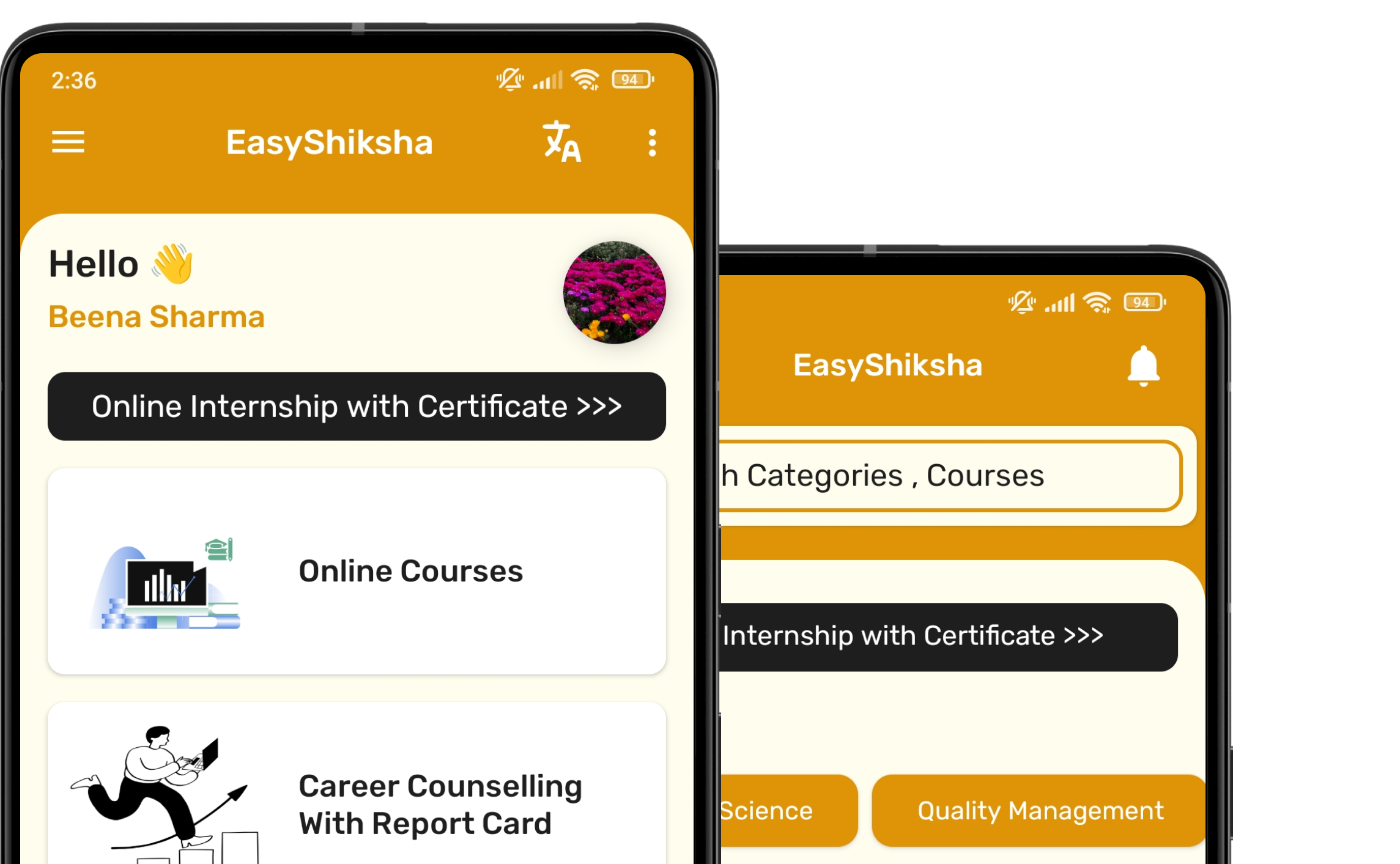


1 million+ learned on the EasyShiksha App
Trusted by Standards & Global Compliance Frameworks





Built under internationally recognized standards for quality, information security, educational excellence and business continuity.
ISO 9001:2015 | ISO/IEC 27001:2022 | ISO 21001:2018 | ISO 22301:2019 | DPIIT Recognized Startup | MSME Registered