

















M.Voc in Culinary Arts
Program Overview
The M.Voc in Culinary Arts is a postgraduate vocational programme offered by the Institute of Vocational Studies, Mangalayatan University. The curriculum focuses on advanced culinary techniques, international cuisines, gastronomy, baking and pastry arts, culinary presentation, food science, culinary business and sustainable kitchen management. The programme is designed around both academic knowledge and skill-oriented culinary training.
The curriculum is structured across four semesters, with 24 credits in each semester and 96 total programme credits. Semester I covers advanced kitchen techniques, gastronomy and culture, communication and kitchen safety, food science and costing, and entrepreneurship. Semester II progresses into advanced European and Asian culinary, international breads and boulangerie arts, advanced baking and international pastry arts, culinary sculptures and culinary concept development.
Semester III introduces advanced presentation and professional culinary applications through modern plating, pastillage and confectionery centerpieces, menu engineering, food styling and photography, Asian and European theme lunches, and sustainable culinary management. The curriculum includes areas such as molecular gastronomy techniques, food photography, menu profitability, food waste auditing, local sourcing and sustainable menu design.
Semester IV is strongly practical and includes Industrial Exposure Training in Kitchen, Project Report, Presentation & Viva, and Internship Evaluation & Log Book Assessment, carrying 12, 6 and 6 credits respectively. These components provide structured practical exposure, project-based assessment and internship evaluation as specified in the curriculum.
Eligibility Criteria
The minimum eligibility for admission to the M.Voc program is a relevant undergraduate degree or equivalent qualification from a recognized institution, subject to the university's admission requirements.
Approval Details
MHRD, Government of India and UGC
Curriculum
Semester I carries 24 credits and establishes the foundation for advanced culinary practice. Students study professional kitchen organisation, modern cooking techniques, gastronomy, communication, food safety, nutrition, costing and culinary entrepreneurship.
1. Introduction to Advanced Kitchen Techniques
This subject develops advanced professional kitchen skills, covering kitchen organisation, fabrication, modern cooking methods, culinary science and practical efficiency.
Key Topics:
- Kitchen hierarchy and brigade system
- Station setup and kitchen staff responsibilities
- Work sequencing and mise en place management
- Knife maintenance and meat, fish and poultry fabrication
- Portion control and yield management
- Sous-vide, low-temperature and vacuum cooking
- Rational ovens, Thermomix and combi-ovens
- HACCP and food safety integration
- Emulsions, foams and reductions
- Fermentation and curing principles
- Molecular gastronomy tools such as siphon, dehydrator and centrifuge
- Mise en place drills, speed tests and quality benchmarking
2. Gastronomy and Culture
This subject examines food as a cultural and social phenomenon and explores the historical development of cuisines and gastronomic practices.
Key Topics:
- History and evolution of gastronomy
- Global cuisines
- Indian regional cuisines and cultural roots
- Food, religion and ritual
- Religious dietary customs
- Cultural symbolism of food
- Trade routes, migration and culinary diffusion
- Colonial influence on regional cuisines
- Culinary anthropology
- Food as a social and cultural artifact
- Molecular gastronomy
- Spherification, gelification and emulsification
- Food, identity and globalization
3. Communication Skills & Kitchen Safety
This subject develops communication and professional interpersonal skills alongside essential kitchen safety and emergency-response knowledge.
Key Topics:
- Hospitality English
- Kitchen terminology
- Verbal communication
- Non-verbal communication
- Digital communication
- Leadership and teamwork
- Conflict management
- Food safety and hygiene
- FSSAI and ISO 22000
- Fire safety
- First aid
- Emergency response
4. Food Science, Nutrition & Costing
This subject connects food science and nutrition with dietary planning, production control and culinary costing.
Key Topics:
- Food composition and nutrients
- Functional foods
- Impact of cooking on nutrition
- Vegan dietary planning
- Keto dietary planning
- Gluten-free dietary planning
- Recipe costing
- Food production control
- Menu pricing
- Profitability
5. Entrepreneurship & Culinary Business
This subject introduces the business and entrepreneurial aspects of the culinary sector.
Key Topics:
- Culinary business models and structures
- Licensing and FSSAI
- Legal framework
- Branding and marketing
- Digital promotion
- Vendor management
- Inventory management
- Financial management
- Business plan development project
Download Syllabus
Semester II carries 24 credits and focuses on international culinary practices, breads and boulangerie, advanced pastry arts, culinary sculptures and the development of themed culinary concepts.
1. Advanced European & Asian Culinary
This subject develops advanced knowledge of European and Asian culinary traditions, with emphasis on major regional cuisines and contemporary global dining.
Key Topics:
- French and Italian advanced cuisine
- Spanish culinary traditions
- German culinary traditions
- Nordic culinary traditions
- Southeast Asian cuisine
- Thai cuisine
- Vietnamese cuisine
- Malaysian cuisine
- Japanese culinary artistry
- Korean culinary artistry
- Indian fusion
- Contemporary global dining
2. International Breads & Boulangerie Arts
This subject explores bread science and international bread-making traditions, including European and Asian breads and advanced dough techniques.
Key Topics:
- Fundamentals of bread science
- French breads
- Italian breads
- German breads
- Flatbreads of Asia
- Middle Eastern flatbreads
- Laminated doughs
- Enriched doughs
- Long fermentation
- Starters
- Display design
3. Advanced Baking and International Pastry Arts
This subject develops advanced baking and pastry skills through sugar work, chocolate, French pastry, plated desserts and alternative pastry applications.
Key Topics:
- Sugar art
- Chocolate techniques
- French pastry classics
- Modern pastry variants
- Plated dessert design
- Textural contrast
- Vegan pastries
- Gluten-free pastries
- Artisan patisserie
- Artisan Patisserie Boutique Project
4. Advanced Culinary Sculptures
This subject develops artistic and decorative culinary skills through edible modelling, carving and themed showpieces.
Key Topics:
- Vegetable carving
- Salt dough modelling
- Ice sculpture techniques
- Chocolate sculpture techniques
- Pastillage structures
- Marzipan structures
- Sugar flowers
- Edible artistry
- Thematic display project
5. Culinary Concept
This subject develops conceptual thinking and the ability to create themed culinary experiences through planning, storytelling and visual presentation.
Key Topics:
- Conceptual thinking
- Theme menu design
- Culinary storytelling
- Culinary narrative
- Mood boards
- Visual planning
- Pop-up event planning
- Pop-up event execution
- Concept presentation
- Concept review
- Creation of unique and themed culinary experiences
- Project-based evaluation
Semester III carries 24 credits and advances students into modern food presentation, confectionery arts, menu engineering, culinary photography, themed culinary events and sustainable culinary management.
1. Modern Plating Techniques
This subject develops advanced food presentation skills by combining visual design, texture, temperature, colour and modern culinary components.
Key Topics:
- Visual design principles in plating
- Texture, temperature and colour harmony
- Molecular components in plating
- Dramatic presentation
- Minimalist presentation
- Food photography
- Media styling
2. Pastillage Arts & Confectionery Centerpieces
This subject focuses on decorative confectionery and the creation of large-format edible centrepieces.
Key Topics:
- Pastillage fundamentals
- Royal icing
- Sugar casting
- Decorative applications
- Theme-based cake structures
- Fondant figurine modelling
- Final confectionery showpiece project
3. Menu Engineering, Food Styling & Photography
This subject combines menu planning and profitability with professional food styling and photography.
Key Topics:
- Menu psychology
- Consumer behaviour
- Food costing
- Profitability
- Principles of food styling
- Food photography techniques
- Photography editing
- Personal Culinary Media Kit Project
4. Culinary Specialization: Asian and European Theme Lunches
This subject provides focused experience in developing and executing themed Asian and European lunch concepts.
Key Topics:
- Event menu development
- Role distribution
- Ingredient sourcing
- Ingredient preparation
- Live lunch execution
- Service coordination
- Thematic décor
- Guest experience
- Feedback
- Reflection
- Continuous improvement
5. Sustainable Culinary Management
This subject introduces sustainable approaches to culinary operations and kitchen management.
Key Topics:
- Food waste auditing
- Composting
- Farm-to-fork practices
- Local sourcing
- Energy efficiency in kitchens
- Water efficiency in kitchens
- Sustainable menu design
- Green certifications
- Compliance
Semester IV carries 24 credits and is centred on practical professional exposure, project work and internship assessment. The semester consists of three practical components: Industrial Exposure Training in Kitchen, Project Report, Presentation & Viva, and Internship Evaluation & Log Book Assessment.
1. Industrial Exposure Training in Kitchen
Industrial Exposure Training in Kitchen is a 12-credit practical component designed as part of the programme's final-semester professional exposure. The curriculum lists it specifically as a practical component.
2. Project Report, Presentation & Viva
Project Report, Presentation & Viva is a 6-credit practical component in Semester IV. It involves project reporting, presentation and viva-based assessment.
3. Internship Evaluation & Log Book Assessment
Internship Evaluation & Log Book Assessment is a 6-credit practical component that assesses internship-related learning through evaluation and log-book assessment.
Fee Structure
Admission Process
Students can apply for the M.Voc Culinary Arts programme through EasyShiksha. The complete application process is designed to make admission simple and convenient for eligible students.
Step 1: Click on Apply Now
Click the Apply Now button on the M.Voc Culinary Arts programme page and begin your application through EasyShiksha.
Step 2: Complete Personal Information
Fill in the required personal, contact and academic details accurately in the application form.
Step 3: Upload Required Documents
Upload the required documents for eligibility and admission verification as specified during the application process.
Step 4: Pay Application Fee
Pay the applicable application fee through the available online payment options to submit your application and initiate the admission process.
Step 5: Application Review
The EasyShiksha team reviews your application and submitted documents to verify your eligibility and ensure that the required information and documents have been provided.
Step 6: University Enrollment
Once the application is successfully reviewed and the student is found eligible, EasyShiksha facilitates the enrollment process with Mangalyatan University.
Step 7: LMS Access
After successful enrollment, the student is provided access to the Learning Management System (LMS) to begin their academic journey and access the available learning resources.
Start Your Application
Ready to begin your journey in Software Development? Click Apply Now to submit your application through EasyShiksha.
Career & Placements
The M.Voc in Culinary Arts curriculum covers advanced kitchen techniques, international cuisines, baking and pastry, culinary presentation, food styling, menu engineering, food photography, culinary business and sustainable management. Depending on their skills and interests, graduates can explore professional opportunities across culinary production, food presentation, bakery and pastry, culinary business and related areas.
Culinary & Kitchen Roles
- Culinary Professional – Apply advanced kitchen techniques, modern cooking methods and professional kitchen workflow knowledge.
- Advanced Kitchen Professional – Work with professional kitchen organisation, mise en place, fabrication and contemporary cooking techniques.
- Cuisine Specialist – Explore culinary roles involving European, Asian and contemporary global cuisines.
Bakery & Pastry Roles
- Baking Professional – Apply advanced baking techniques and knowledge of international pastry practices.
- Pastry Professional – Work with French pastry, plated desserts, alternative pastries and artisan patisserie concepts.
- Boulangerie Professional – Explore bread production using international breads, laminated and enriched doughs, starters and long-fermentation methods.
Culinary Presentation & Food Styling
- Food Styling Professional – Apply food styling, plating, colour harmony, texture and visual presentation techniques.
- Culinary Presentation Professional – Work with modern, dramatic and minimalist plating approaches.
- Food Photography Professional – Explore food photography and media styling based on the programme's photography curriculum.
Culinary Business & Entrepreneurship
- Culinary Entrepreneur – Explore independent culinary business opportunities using knowledge of business models, branding, marketing and financial management.
- Culinary Business Professional – Apply costing, inventory, vendor, pricing and business-planning knowledge.
- Culinary Brand & Promotion Professional – Work with branding, marketing and digital promotion activities.
Culinary Events & Concept Development
- Culinary Concept Developer – Develop themed culinary experiences, menu concepts and visual plans.
- Culinary Event Professional – Apply knowledge of pop-up events, theme lunches, service coordination and guest experience.
- Culinary Display Professional – Work with edible displays, culinary sculptures, confectionery centrepieces and thematic presentation.
Sustainable Culinary Management
- Sustainable Culinary Management Professional – Apply food-waste auditing, local sourcing, energy and water efficiency and sustainable menu principles.
- Sustainable Food Operations Professional – Explore culinary operations with a focus on resource efficiency and sustainable practices.
Mangalayatan University, Aligarh
Mangalayatan University is a UGC-recognized private university located in Aligarh, Uttar Pradesh, India. Known for its strong industry connections, cutting-edge curriculum, and commitment to technology-driven education, Mangalayatan University has established itself as one of central India's premier higher education institutions.
The university's vision is to foster academic excellence, industry readiness, and global competitiveness among its graduates — making it an ideal partner for EasyShiksha's mission of accessible, quality online education.
EasyShiksha has signed an MoU with Mangalayatan University to facilitate applications for various university programs and jointly offer B.Voc programs. All degrees and certifications under these programs will be awarded by Mangalayatan University. The EasyShiksha team will provide complete assistance and support throughout the admission and program process.
Mangalayatan University, Uttar Pradesh
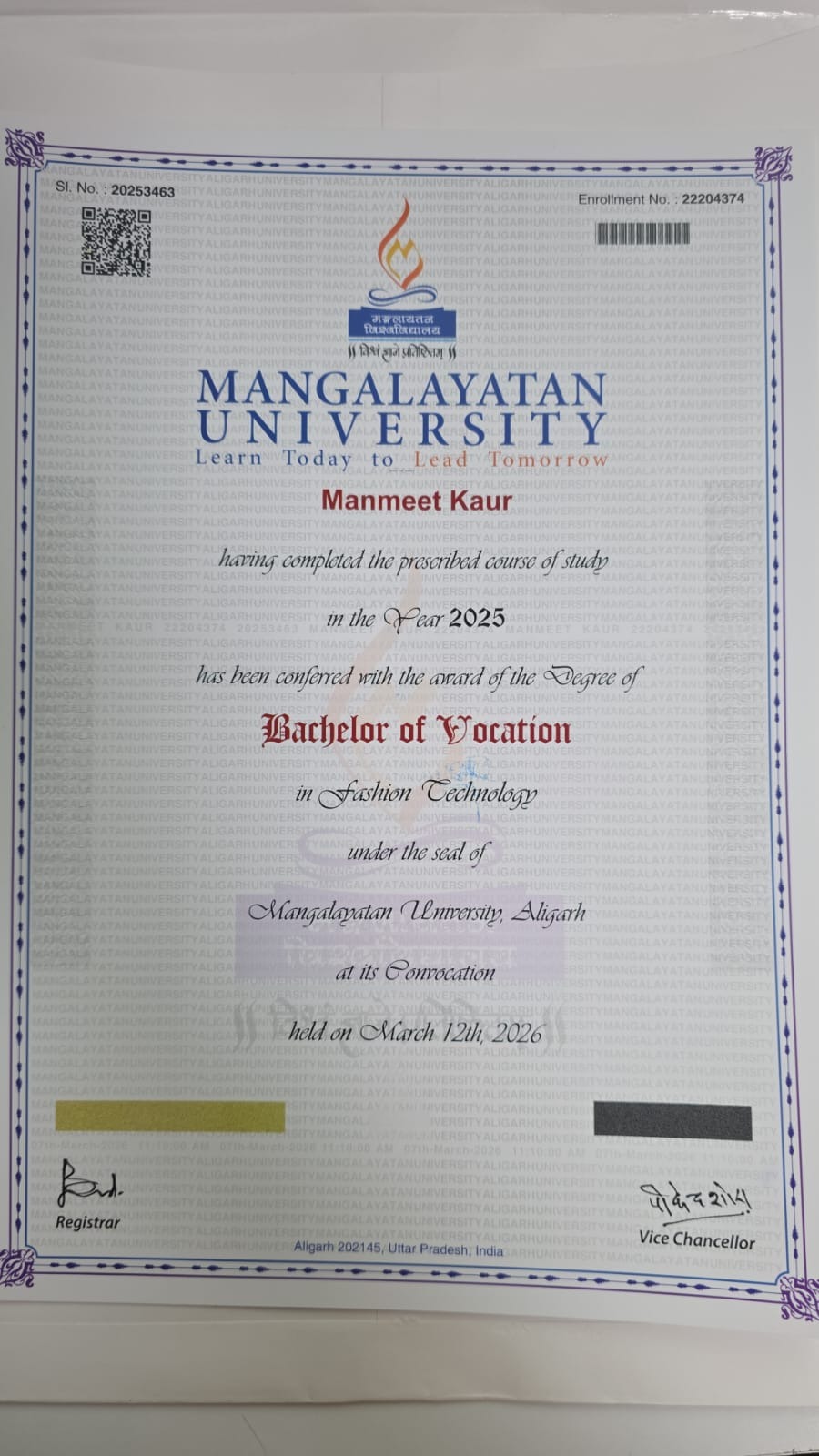
Sample Degree
Documents
Media Gallery
Frequently Asked Questions
Mangalayatan University is located at 33rd Milestone, Aligarh-Mathura Highway, Beswan, Aligarh, Uttar Pradesh, India. The campus is situated in close proximity to the Yamuna Expressway and the cities of Aligarh and Mathura.
Mangalayatan University was established in 2006 under the Mangalayatan University, Uttar Pradesh Act, 2006. The University states that it has the right to confer degrees under Sections 2(f) and 22(1) of the UGC Act.
Yes. Mangalayatan University states that it is recognized by the University Grants Commission (UGC) and was established through an Act of the Uttar Pradesh State Legislature. The University also lists NAAC A+ accreditation among its recognitions.
Yes. The University states that it is recognized by UGC-DEB for Open and Distance Learning (ODL) and is entitled by the UGC to offer online degree programmes. It also states that its online programmes are approved by AICTE.
Mangalayatan University offers programmes across multiple academic levels, including UG, PG, Diploma, PG Diploma and PhD. Its programme portfolio covers areas such as Engineering & Technology, Computer Applications, Management, Agriculture, Biotechnology, Pharmacy, Physiotherapy, Nursing, Journalism & Mass Communication and other disciplines.
Depending on the programme, applicants may be required to provide Class 10 and Class 12 certificates and marksheets, graduation/post-graduation marksheets where applicable, competitive examination rank card where applicable, migration/transfer certificate and recent passport-size photographs. Original documents may be required for verification.
Yes. The University states that students can apply for an education loan through banks, subject to the bank's eligibility criteria.
Mangalayatan University has a 70+ acre campus in Aligarh, Uttar Pradesh.
Mangalayatan University holds an A+ accreditation grade from the National Assessment and Accreditation Council (NAAC).
Yes. Mangalayatan University carries AICTE approval for its technical programmes.
The degree certificate is issued and signed directly by Mangalayatan University, rather than by EasyShiksha or another third-party platform.
The degree certificate is personalised with the student's name, programme, and completion date and carries the university's official signature and seal.
Yes. The university's campus hosts optional immersion sessions associated with select Executive and Hybrid-mode programmes.
Students can select a Mangalayatan University programme, submit their personal details and required documents, pay the application fee, and proceed through the university's application review process.
Yes. Applications submitted through EasyShiksha can be monitored through the dashboard, where applicants can view status updates such as Under Review and Accepted along with their reference ID.
The M.Voc in Culinary Arts is a postgraduate vocational programme at Mangalayatan University focused on advanced culinary techniques, international cuisines, baking and pastry arts, culinary presentation, food science, culinary business and sustainable culinary management. The programme has four semesters and a total of 96 credits.
The curriculum includes subjects such as Introduction to Advanced Kitchen Techniques, Gastronomy and Culture, Communication Skills & Kitchen Safety, Food Science, Nutrition & Costing, Entrepreneurship & Culinary Business, Advanced European & Asian Culinary, International Breads & Boulangerie Arts, Advanced Baking and International Pastry Arts, Advanced Culinary Sculptures, Culinary Concept, Modern Plating Techniques, Menu Engineering, Food Styling & Photography, Culinary Specialization: Asian and European Theme Lunches, and Sustainable Culinary Management.
Yes. The syllabus specifically includes practical and project-oriented components. Semester IV includes Industrial Exposure Training in Kitchen, Project Report, Presentation & Viva, and Internship Evaluation & Log Book Assessment. Several earlier subjects also contain projects, such as the Business Plan Development Project, Artisan Patisserie Boutique Project, Thematic Display Project, Personal Culinary Media Kit Project and other project-based work. The syllabus does not list a separate dissertation or research component.
Students can develop skills in advanced kitchen techniques, international cuisine, bread and boulangerie arts, pastry, culinary sculpture, modern plating, food styling, food photography, menu engineering, food costing, culinary entrepreneurship, kitchen safety and sustainable culinary management. The curriculum also covers professional communication, leadership, teamwork and conflict management.
Depending on their skills and professional interests, graduates can explore opportunities in culinary operations, international cuisine, baking and pastry, food styling, culinary presentation, food photography, culinary event and concept development, culinary business and sustainable food operations. The programme's curriculum also provides practical exposure through industrial training and internship evaluation.