








B.Voc in Hotel Management
Program Overview
The B.Voc in Hotel Management at Mangalayatan University is a three-year vocational degree program designed around the operational, managerial and professional aspects of the hotel, hospitality and tourism sectors. The curriculum is spread across six semesters and carries 152 credits, with the initial semesters establishing core competencies in food production, food and beverage service, front office operations, housekeeping, computer fundamentals and communication skills.
Students progressively develop knowledge of hotel operations, accounting, travel and tourism, event management, human resource management, consumer behaviour, resort management, food and beverage management and tour operations. The curriculum also includes laboratory components such as Food Production, Food and Beverage Services, Front Office Operations, Housekeeping, Public Relations and Communication, Food and Beverage Management, and Hotel and Resort Management.
At the advanced level, students study international hospitality management, tourism product development, tourism and hospitality law, financial management, tourism marketing, airport and airline operations, hospitality financial systems, hotel and resort operations, hospitality and tourism technology, destination management and crisis management. The curriculum also addresses ethics, corporate social responsibility, strategic management, customer relationship management and sustainable tourism.
The final semester includes Internship/Industry Training and a Project/Dissertation, providing structured exposure to departmental operations, customer service, teamwork, industry practices, reporting, research methodology, data collection and presentation. Overall, the curriculum develops operational, communication, customer-service, management, technology, financial, research and entrepreneurial skills relevant to hotel, resort, tourism and hospitality environments.
Eligibility Criteria
The minimum eligibility for admission in B.Voc is 10+2 (in any stream) or equivalent or a two-year ITI Diploma after Class 10th or a three-year Polytechnic Diploma after Class 10th.
Approval Details
MHRD, Government of India and UGC
Curriculum
The first semester introduces students to the fundamental operational areas of hospitality. Students learn the basics of food production, food and beverage service, front office and housekeeping, supported by computer and communication skills. The semester includes both theoretical and laboratory components and carries 26 credits.
1. Foundation in Food Production-I
This subject introduces students to professional standards in food handling, food commodities, nutrition basics, kitchen equipment, cooking fuels and fundamental food-preparation techniques.
Key Topics:
- Personal and kitchen hygiene
- HACCP and food safety
- Food commodities and nutritional basics
- Kitchen equipment and cooking fuels
- Food cleaning, preparation and cutting techniques
2. Foundation in Food Production-I Laboratory
The laboratory component provides practical exposure to foundational food-production activities, including handling commodities, using kitchen equipment and applying basic preparation and hygiene practices.
Key Topics:
- Kitchen equipment handling
- Food commodity preparation
- Cutting and pre-preparation
- Kitchen hygiene
- Safe food-handling practices
3. Foundation in Food and Beverage Service-I
Students are introduced to the food and beverage service industry, departmental organization, service equipment, menu planning, service styles and basic sales-control procedures.
Key Topics:
- Food and beverage establishments
- F&B department organization
- Cutlery, crockery and glassware
- Menu planning and meal types
- Service styles
- KOT, billing and cash handling
4. Foundation in Food and Beverage Service-I Laboratory
This practical component develops familiarity with food and beverage service equipment, layouts, preparation and service procedures.
Key Topics:
- Service equipment
- Mise-en-scène and mise-en-place
- Table and service preparation
- Basic service procedures
- Service workflow
5. Foundation in Front Office Operations-I
Students develop an introductory understanding of front office tools, reservations, check-in procedures, guest handling and professional service standards.
Key Topics:
- Front office equipment
- Reservations
- Check-in procedures
- Luggage handling and guest communication
- Grooming and etiquette
6. Foundation in Front Office Operations-I Laboratory
The laboratory uses practical activities and role-play simulations to develop procedural fluency in front office operations.
Key Topics:
- Front desk equipment
- Reservation simulations
- Check-in practice
- Guest communication
- Customer-centric service
7. Foundation in House Keeping Operations-I
This subject introduces housekeeping equipment, room-cleaning routines, scheduling, control-desk activities, hygiene and safety procedures.
Key Topics:
- Cleaning equipment
- Guest-room cleaning
- Turndown service
- Linen and bathroom upkeep
- Housekeeping scheduling
- Hygiene and safety
8. Foundation in House Keeping Operations-I Laboratory
The laboratory provides practical exposure to housekeeping tools, room servicing, public-area maintenance, scheduling and safety practices.
Key Topics:
- Manual and mechanical cleaning tools
- Room cleaning routines
- Linen handling
- Housekeeping records
- Pest-control and safety basics
9. Computer Fundamentals
Students learn basic computer systems, internet usage, email and office productivity applications relevant to professional work.
Key Topics:
- Computer hardware and software
- Types of computers
- Internet and web browsers
- Email and online communication
- MS Word, MS Excel and MS PowerPoint
10. Computer Fundamentals Laboratory
The laboratory develops practical familiarity with computer applications and office productivity tools.
Key Topics:
- Document creation
- Spreadsheet operations
- Formulas and charts
- Presentation creation
- Internet and email usage
11. Communication Skills
This subject develops verbal, written and non-verbal communication skills needed in professional hospitality environments.
Key Topics:
- Communication fundamentals
- Written communication
- Business letters and emails
- Oral communication
- Presentation skills
- Pronunciation and non-verbal communication
Download Syllabus
Semester II builds on the operational foundation of the first semester and introduces accounting, advanced food production, food and beverage services, front office, housekeeping, travel and tourism, and event management. The semester carries 30 credits.
1. Fundamentals of Accounting
Students learn practical accounting procedures relevant to business and hospitality operations, including journals, ledgers, subsidiary books, final accounts and computerized accounting.
Key Topics:
- Double-entry bookkeeping
- Journals and ledgers
- Cash books and subsidiary books
- Bank reconciliation
- Trial balance and final accounts
- Tally-based accounting
2. Food Production-II
This subject advances culinary knowledge through larder operations, bakery and confectionery, regional and international cuisine, menu planning and volume food production.
Key Topics:
- Larder operations
- Pâtés, mousses and related preparations
- Bakery and confectionery
- Indian and international cuisine
- Menu planning
- Quantity cooking and large-scale catering
3. Food Production-II Laboratory
The practical component reinforces advanced food-production techniques and preparation methods.
Key Topics:
- Larder preparation
- Bakery and confectionery techniques
- Regional cuisine
- International cuisine
- Large-scale food production
4. Food and Beverage Services-II
Students develop more advanced food and beverage service capabilities, including table setup, billing, guest handling and service sequence.
Key Topics:
- Table setup
- Buffet and room service
- Mise-en-place
- KOT and billing
- Guest handling
- Dining etiquette
5. Food and Beverage Services-II Laboratory
This laboratory provides practical training in service setup, transaction handling and guest-service procedures.
Key Topics:
- Table preparation
- Service flow
- KOT handling
- Billing and cash transactions
- Guest interaction
6. Front Office Operations-II
Students study room selling, tariff structures, guest cycles, reservations, check-in, guest services and front-office coordination.
Key Topics:
- Tariff structures
- Room selling
- Guest cycle
- Reservation systems
- Check-in and profile maintenance
- Guest complaints and coordination
7. Front Office Operations-II Laboratory
The practical component applies front-office procedures through operational exercises and guest-service simulations.
Key Topics:
- Reservation handling
- Guest registration
- Front-office profiles
- Guest services
- Complaint handling
- Departmental coordination
8. Housekeeping Operations-II
This subject advances housekeeping knowledge through guest-room cleaning, public-area cleaning, laundry and linen operations, control-desk activities, hygiene and pest control.
Key Topics:
- Guest-room cleaning
- Public-area cleaning
- Periodic cleaning
- Laundry and linen management
- Housekeeping records
- Safety and pest control
9. Housekeeping Operations-II Laboratory
The laboratory provides hands-on exposure to advanced housekeeping procedures and operational record management.
Key Topics:
- Room-status-based cleaning
- Public-area maintenance
- Linen-room procedures
- Scheduling and control desk
- Hygiene and safety
10. Travel and Tourism Management
Students are introduced to tourism concepts, tourism resources, travel agencies, tour operations, tourism marketing and tourism organizations.
Key Topics:
- Types and forms of tourism
- Tourism resources
- Travel agencies and tour operators
- Travel documentation
- Tourism marketing
- Sustainable tourism and technology
11. Basics of Event Management
This subject introduces event planning, event marketing, event operations, logistics, risk management, legal requirements and ethics.
Key Topics:
- Types of events
- Event planning
- Feasibility and SWOT analysis
- Event promotion and sponsorship
- Venue and logistics management
- Safety, legal and ethical considerations
Semester III expands the curriculum into management-oriented hospitality and tourism subjects. Students study event management, public relations, F&B and hotel/resort operations alongside human resource management, consumer behaviour, resort management, food and beverage management and tour operations. The semester carries 24 credits.
1. Event Management in Tourism and Hospitality
Students learn how events are planned and managed within tourism and hospitality settings, including destination events and MICE activities.
Key Topics:
- Hospitality and tourism events
- Event planning
- MICE tourism
- Destination events
- Event marketing
- Safety and legal considerations
2. Public Relations and Communication Laboratory
This practical subject develops communication and public-relations capabilities applicable to hospitality and tourism settings.
Key Topics:
- Professional communication
- Public relations activities
- Guest and stakeholder interaction
- Presentation skills
- Communication practice
3. Food and Beverage Management Laboratory
The laboratory provides practical exposure to food and beverage management activities and operational procedures.
Key Topics:
- F&B operations
- Service management
- Operational procedures
- Guest service
- Management practices
4. Hotel and Resort Management Laboratory
Students gain practical exposure to hotel and resort operations and departmental coordination.
Key Topics:
- Hotel operations
- Resort operations
- Departmental coordination
- Guest services
- Operational management
5. Human Resource Management
This subject introduces HR planning, recruitment, performance management, industrial relations and employee development.
Key Topics:
- HR planning
- Job analysis and design
- Recruitment and selection
- Training and development
- Performance appraisal
- Industrial relations
6. Consumer Behavior
Students examine consumer decision-making and the psychological, social and cultural factors influencing hospitality and tourism consumers.
Key Topics:
- Consumer behavior concepts
- Decision-making process
- Motivation and perception
- Family and social influences
- Culture and online influence
- Emerging consumer trends
7. Resort Management
This subject covers resort development, infrastructure, specialized resort types, financial challenges, marketing, branding and recreation management.
Key Topics:
- Resort planning and development
- Resort infrastructure
- Mountain, golf and health resorts
- Feasibility and financial planning
- Resort marketing and branding
- Recreation management
8. Food and Beverage Management
Students develop management-level knowledge of beverages, bar operations, wines, beverage costing, stock control and emerging F&B practices.
Key Topics:
- Beverage production and classification
- Bar operations
- Wine regions and types
- Beverage costing
- Stock control
- Sustainable F&B practices
9. Tour Operations and Travel Agency Management
This subject examines travel-agency structures, tour planning, itinerary preparation, marketing, sales, legal requirements and ethical practices.
Key Topics:
- Travel agencies and tour operators
- Travel-agency setup
- Tour-package planning
- Itinerary design
- Marketing and sales
- Travel regulations and professional bodies
Semester IV develops advanced competencies in international hospitality, tourism product development, tourism law, financial management, tourism marketing and airport and airline operations. It carries 24 credits and includes laboratory-based learning.
1. International Hospitality Management
Students explore global hospitality operations, cultural diversity, international service standards, global marketing, technology, legal issues and sustainability.
Key Topics:
- International hospitality industry
- Cross-cultural management
- International hotel operations
- Global hospitality branding
- Hospitality technology
- Sustainability and crisis management
2. Sustainable Tourism Laboratory
The practical component focuses on applying principles and practices associated with sustainable tourism.
Key Topics:
- Sustainable tourism practices
- Environmental considerations
- Responsible tourism
- Community involvement
- Sustainable destination practices
3. Tourism Product Development Laboratory
Students apply tourism product-development concepts through practical activities related to tourism resources, product design and promotion.
Key Topics:
- Tourism resources
- Product concepts
- Product planning
- Tourism branding
- Promotion
- Sustainability considerations
4. Airport and Airline Operations Laboratory
This practical subject develops familiarity with airport and airline operational processes.
Key Topics:
- Passenger handling
- Check-in and boarding
- Baggage operations
- Airline procedures
- Airport safety
- Technology in aviation
5. Tourism Product Development
Students study the creation, planning, marketing and sustainable development of tourism products.
Key Topics:
- Tourism product concepts
- Natural and cultural resources
- Product development process
- Market research
- Branding and promotion
- Sustainable product development
6. Tourism and Hospitality Law
This subject introduces legal principles and regulations applicable to tourism and hospitality operations.
Key Topics:
- Tourism and hospitality law
- Contracts and licensing
- Food safety regulations
- Labour laws
- Tourism legislation
- Travel and aviation laws
- Data protection and privacy
7. Financial Management for Tourism and Hospitality
Students learn financial planning, budgeting, financial analysis, investment decisions and working-capital management within tourism and hospitality contexts.
Key Topics:
- Financial management
- Sources of finance
- Budgeting
- Financial statements
- Ratio and break-even analysis
- Capital budgeting
- Working capital
8. Tourism Marketing
This subject covers tourism consumer behaviour, segmentation, product development, marketing mix, branding and digital marketing.
Key Topics:
- Tourism marketing fundamentals
- Tourist behavior
- Segmentation and targeting
- Tourism product development
- 8Ps of tourism marketing
- Digital marketing and SEO
- Promotional strategies
9. Airport and Airline Operations
Students learn about aviation, airport infrastructure, passenger handling, airline operations, safety regulations, customer service and aviation technology.
Key Topics:
- Aviation industry
- Airport operations
- Passenger handling
- Airline operations
- Aviation safety and regulations
- Customer service
- Aviation technology
Semester V focuses on hotel and resort operations, hospitality finance, technology, destination management, crisis management and corporate social responsibility. The semester carries 24 credits and includes multiple practical components.
1. Hospitality Financial System
Students learn how financial systems support hospitality businesses, including accounting, budgeting, forecasting, cost control and technology-enabled financial management.
Key Topics:
- Hospitality financial management
- Financial and management accounting
- USALI
- Budgeting and forecasting
- Cost control
- Financial analysis
- PMS/POS and ERP systems
2. Hotel and Resort Operations Laboratory
The practical component develops hands-on understanding of operational activities across hotel and resort departments.
Key Topics:
- Front office operations
- Housekeeping
- F&B services
- Guest relations
- Resort operations
- Departmental coordination
3. Crisis Management in Hospitality and Tourism Laboratory
Students practically examine crisis-preparedness, response, communication, safety and recovery procedures.
Key Topics:
- Crisis identification
- Risk assessment
- Crisis preparedness
- Emergency response
- Communication
- Recovery and continuity
4. Hospitality and Tourism Technology Laboratory
This laboratory develops practical familiarity with technology used in hospitality and tourism operations.
Key Topics:
- PMS and CRS
- Booking systems
- Digital payments
- Hospitality technology
- Automation
- Data security
5. Hotel and Resort Operations
Students study the integrated functioning of hotels and resorts, covering front office, housekeeping, F&B, recreation, events and guest relations.
Key Topics:
- Hotel and resort classification
- Front office
- Housekeeping
- F&B operations
- Recreation and events
- Guest relations
- Sustainability
6. Hospitality and Tourism Technology (PMS/CRS)
This subject focuses on property management systems, computer reservation systems, digital booking, automation and cybersecurity.
Key Topics:
- PMS fundamentals
- Front office and housekeeping modules
- CRS
- GDS integration
- Online booking systems
- AI and automation
- Data privacy and security
7. Destination Management and Marketing
Students learn to plan, develop, brand and market tourism destinations while considering sustainability and stakeholder participation.
Key Topics:
- Destination management
- Destination planning
- Carrying capacity
- Destination branding
- Tourism markets
- Digital marketing
- Smart destinations
8. Crisis Management in Hospitality and Tourism
This subject covers crisis identification, risk assessment, preparedness, response, recovery and resilience in tourism and hospitality.
Key Topics:
- Crisis types
- Risk assessment
- Crisis management plans
- Emergency response
- Business continuity
- Crisis communication
- Resilient tourism
9. Ethics and Corporate Social Responsibility in Hospitality
Students examine ethical decision-making and CSR practices in hospitality, including environmental sustainability, employee welfare and responsible tourism.
Key Topics:
- Professional ethics
- Ethical decision-making
- CSR
- Environmental sustainability
- Local sourcing
- Employee welfare
- SDGs and responsible tourism
The sixth semester brings together strategic, technological, customer-management, economic, sustainable and entrepreneurial aspects of tourism and hospitality. It includes Internship/Industry Training and Project/Dissertation, along with advanced management subjects, for a total of 24 credits.
1. Strategic Management in Tourism and Hospitality
Students study strategic planning and decision-making in tourism and hospitality organizations, from environmental analysis through strategy formulation, implementation and evaluation.
Key Topics:
- Strategic management
- SWOT and PESTEL analysis
- Porter's Five Forces
- Competitive advantage
- Strategy formulation
- Strategy implementation
- Performance evaluation
2. Internship / Industry Training
The internship provides structured industry exposure, allowing students to observe and participate in departmental activities while developing customer-service, communication, teamwork and professional skills.
Key Topics:
- Organization orientation
- Departmental operations
- Hands-on industry exposure
- Customer service
- Teamwork and communication
- Sustainable industry practices
- Industry reporting and evaluation
3. Project / Dissertation
Students undertake a research-based project in tourism and hospitality, covering problem identification, research methodology, data collection, analysis, dissertation writing and presentation.
Key Topics:
- Research problem identification
- Objectives and hypotheses
- Literature review
- Research design
- Data collection
- Data analysis
- Dissertation writing
- Viva/presentation
4. Customer Relationship Management (CRM)
This subject focuses on customer insights, CRM systems, personalization, loyalty, service recovery and the measurement of CRM performance in tourism and hospitality.
Key Topics:
- CRM concepts
- Customer segmentation
- Customer data management
- CRM technology
- PMS and CRS integration
- Customer loyalty
- Complaint handling
- CRM KPIs
5. Tourism Economics and Policy
Students study tourism demand and supply, economic impacts, policy frameworks and contemporary economic issues affecting tourism.
Key Topics:
- Tourism economics
- Demand and supply
- Tourism multipliers
- Economic impact
- Tourism policy
- Government and PPPs
- Economic resilience
6. Tourism Development and Sustainable Practices
This subject examines tourism development, sustainability, community participation, environmental assessment, sustainable policies and emerging tourism practices.
Key Topics:
- Tourism development
- Tourism Area Life Cycle
- Sustainable tourism
- Carrying capacity
- Community-based tourism
- Environmental impact assessment
- Sustainable tourism policies
7. Entrepreneurship in Tourism and Hospitality
Students learn how to identify business opportunities, evaluate ideas, develop business plans and manage tourism and hospitality ventures.
Key Topics:
- Entrepreneurship concepts
- Business opportunity identification
- Market research
- Feasibility analysis
- Business-model development
- Financial planning
- Venture management
- Sustainable entrepreneurship
Fee Structure
Admission Process
Students can apply for the B.Voc Hotel Management programme through EasyShiksha. The complete application process is designed to make admission simple and convenient for eligible students.
Step 1: Click on Apply Now
Click the Apply Now button on the B.Voc Hotel Management programme page and begin your application through EasyShiksha.
Step 2: Complete Personal Information
Fill in the required personal, contact and academic details accurately in the application form.
Step 3: Upload Required Documents
Upload the required documents for eligibility and admission verification as specified during the application process.
Step 4: Pay Application Fee
Pay the applicable application fee through the available online payment options to submit your application and initiate the admission process.
Step 5: Application Review
The EasyShiksha team reviews your application and submitted documents to verify your eligibility and ensure that the required information and documents have been provided.
Step 6: University Enrollment
Once the application is successfully reviewed and the student is found eligible, EasyShiksha facilitates the enrollment process with Mangalyatan University.
Step 7: LMS Access
After successful enrollment, the student is provided access to the Learning Management System (LMS) to begin their academic journey and access the available learning resources.
Start Your Application
Ready to begin your journey in Software Development? Click Apply Now to submit your application through EasyShiksha.
Career & Placements
The B.Voc in Hotel Management curriculum covers hotel operations, food production, F&B service, front office, housekeeping, tourism, events, resort management, hospitality technology, finance, marketing, customer relationship management, sustainability and entrepreneurship. Based on these curriculum areas, graduates can explore opportunities across hotel, resort, tourism, travel, event and hospitality-related operations.
Hotel Operations
- Front Office Executive – Supports reservations, registration, check-in/check-out and guest-service activities.
- Housekeeping Executive – Works with room servicing, linen, cleaning schedules, hygiene and housekeeping coordination.
- Hotel Operations Executive – Supports coordinated operations across major hotel departments.
- Guest Relations Executive – Handles guest interactions, service requirements and complaints.
Food & Beverage
- Food and Beverage Executive – Supports F&B service operations, guest service and departmental procedures.
- Food Production Professional – Can explore culinary and food-production environments based on training in food preparation and kitchen operations.
- F&B Supervisor – May pursue supervisory responsibilities involving service, staff coordination and operational control.
- Banquet Operations Executive – Can work in event and banquet environments involving food service and guest management.
Front Office and Guest Services
- Front Office Executive – Applies knowledge of reservations, tariff structures, guest cycles and check-in procedures.
- Reservation Executive – Works with reservation processes, booking channels and guest profiles.
- Guest Service Executive – Supports in-stay services, guest communication and service recovery.
Tourism and Travel
- Tour Operations Executive – Supports tour planning, itinerary preparation and package operations.
- Travel Agency Executive – Can work in travel-agency operations, bookings and customer services.
- Destination Management Executive – Can explore roles involving destination planning, promotion and tourism development.
- Tourism Marketing Executive – Applies tourism marketing, branding and digital-promotion knowledge.
Events and MICE
- Event Executive – Supports planning, coordination and execution of events.
- Event Operations Coordinator – Works with scheduling, logistics, venue operations and event staffing.
- MICE Operations Executive – Can explore conference, exhibition and incentive-tourism operations.
Hospitality Technology
- PMS/CRS Operations Executive – Works with hospitality reservation and property-management systems.
- Hospitality Technology Support Executive – Can explore operational roles involving digital booking, hospitality technology and related systems.
Management, Finance and Business
- Hospitality Operations Supervisor – Can pursue supervisory opportunities after developing relevant operational experience.
- Hospitality Finance Executive – Applies accounting, budgeting, forecasting and cost-control knowledge.
- Revenue/Financial Operations Executive – Can explore roles involving hospitality financial systems and operational analysis.
- Entrepreneurship and Business Development – The curriculum supports exploration of independent tourism and hospitality ventures through its entrepreneurship component.
Mangalayatan University, Aligarh
Mangalayatan University is a UGC-recognized private university located in Aligarh, Uttar Pradesh, India. Known for its strong industry connections, cutting-edge curriculum, and commitment to technology-driven education, Mangalayatan University has established itself as one of central India's premier higher education institutions.
The university's vision is to foster academic excellence, industry readiness, and global competitiveness among its graduates — making it an ideal partner for EasyShiksha's mission of accessible, quality online education.
EasyShiksha has signed an MoU with Mangalayatan University to facilitate applications for various university programs and jointly offer B.Voc programs. All degrees and certifications under these programs will be awarded by Mangalayatan University. The EasyShiksha team will provide complete assistance and support throughout the admission and program process.
Mangalayatan University, Uttar Pradesh
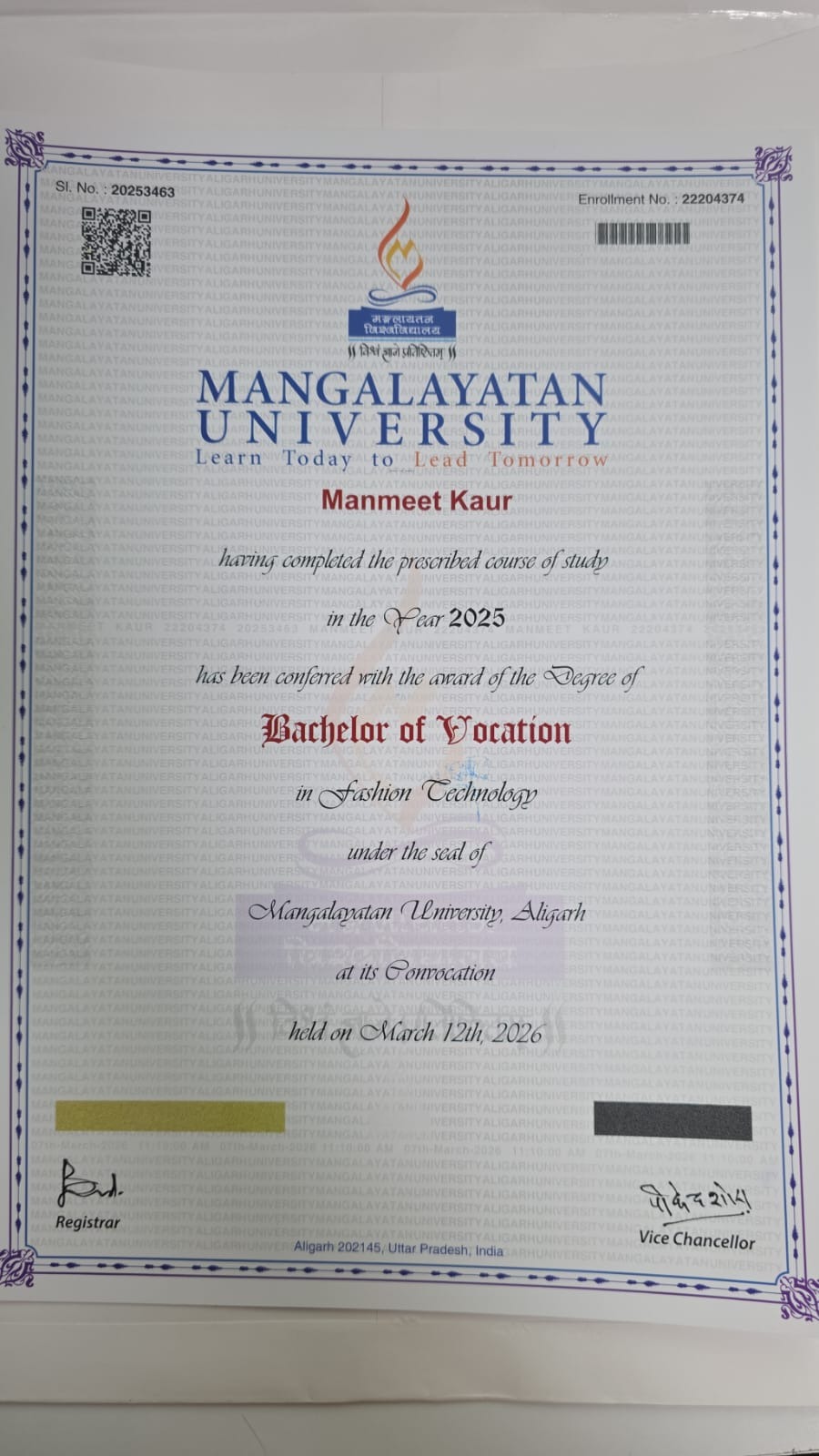
Sample Degree
Documents
Media Gallery
Frequently Asked Questions
Mangalayatan University is located at 33rd Milestone, Aligarh-Mathura Highway, Beswan, Aligarh, Uttar Pradesh, India. The campus is situated in close proximity to the Yamuna Expressway and the cities of Aligarh and Mathura.
Mangalayatan University was established in 2006 under the Mangalayatan University, Uttar Pradesh Act, 2006. The University states that it has the right to confer degrees under Sections 2(f) and 22(1) of the UGC Act.
Yes. Mangalayatan University states that it is recognized by the University Grants Commission (UGC) and was established through an Act of the Uttar Pradesh State Legislature. The University also lists NAAC A+ accreditation among its recognitions.
Yes. The University states that it is recognized by UGC-DEB for Open and Distance Learning (ODL) and is entitled by the UGC to offer online degree programmes. It also states that its online programmes are approved by AICTE.
Mangalayatan University offers programmes across multiple academic levels, including UG, PG, Diploma, PG Diploma and PhD. Its programme portfolio covers areas such as Engineering & Technology, Computer Applications, Management, Agriculture, Biotechnology, Pharmacy, Physiotherapy, Nursing, Journalism & Mass Communication and other disciplines.
Depending on the programme, applicants may be required to provide Class 10 and Class 12 certificates and marksheets, graduation/post-graduation marksheets where applicable, competitive examination rank card where applicable, migration/transfer certificate and recent passport-size photographs. Original documents may be required for verification.
Yes. The University states that students can apply for an education loan through banks, subject to the bank's eligibility criteria.
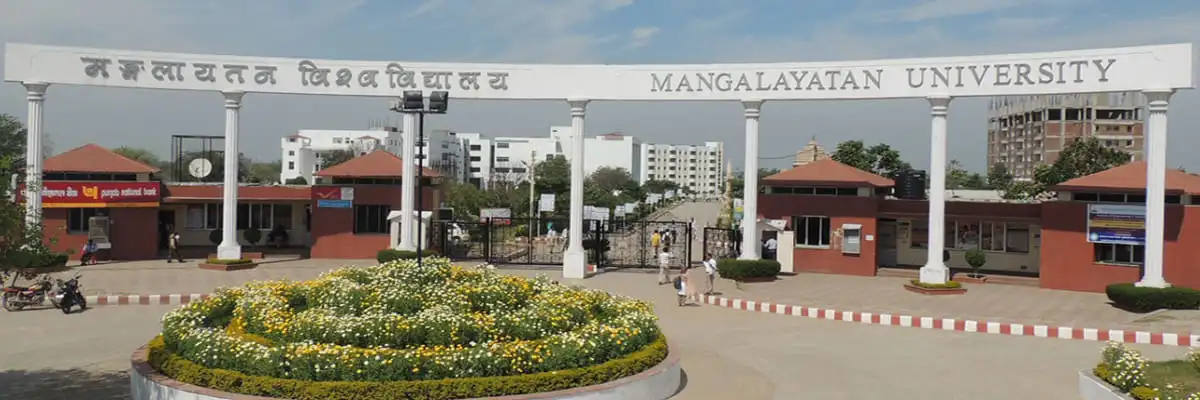
Mangalayatan University has a 70+ acre campus in Aligarh, Uttar Pradesh.
Mangalayatan University holds an A+ accreditation grade from the National Assessment and Accreditation Council (NAAC).
Yes. Mangalayatan University carries AICTE approval for its technical programmes.
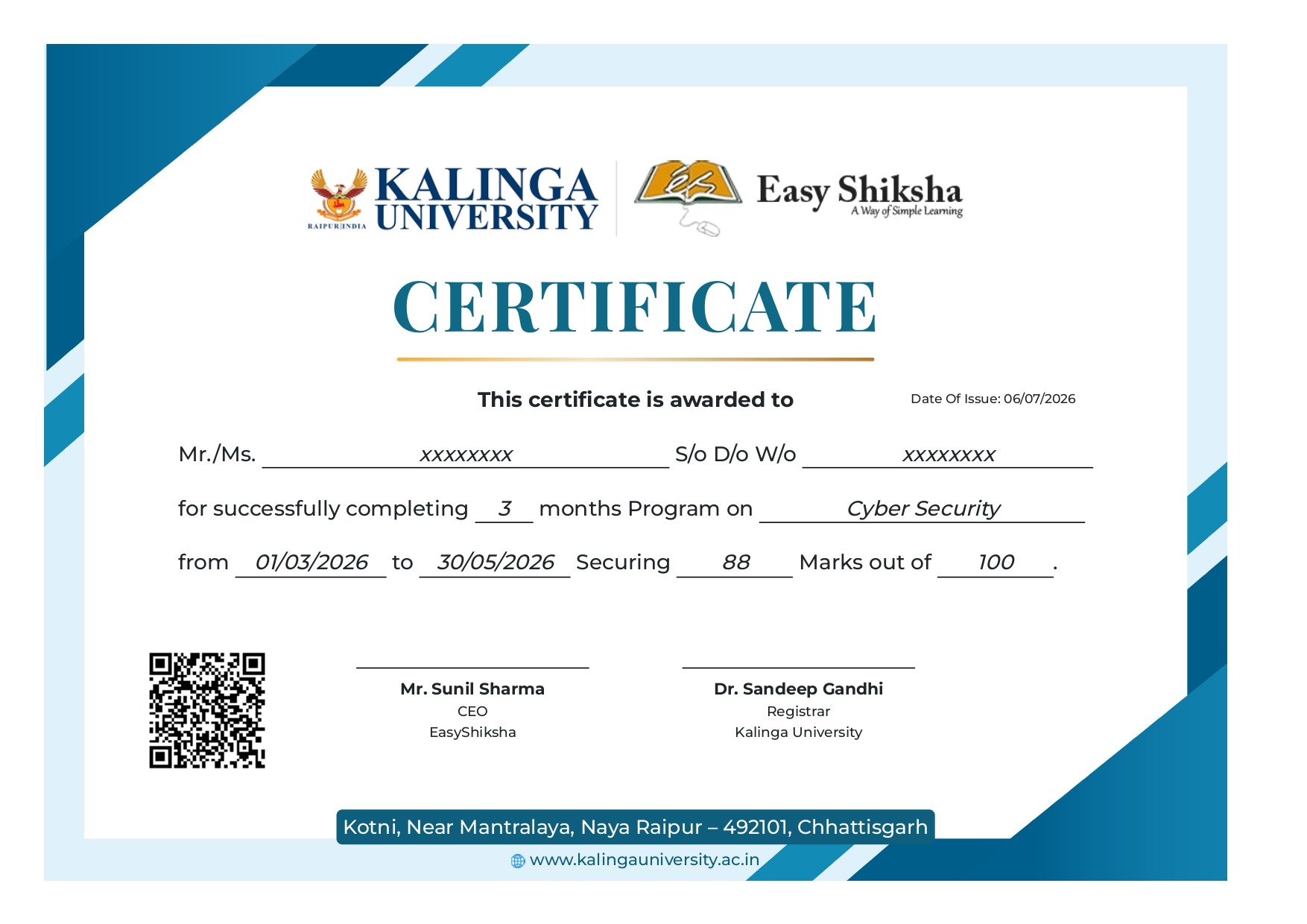
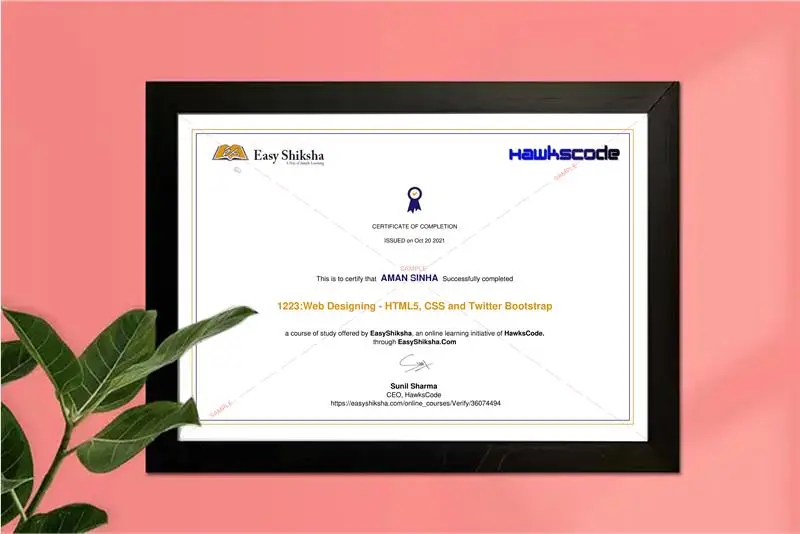
The degree certificate is issued and signed directly by Mangalayatan University, rather than by EasyShiksha or another third-party platform.
The degree certificate is personalised with the student's name, programme, and completion date and carries the university's official signature and seal.
Yes. The university's campus hosts optional immersion sessions associated with select Executive and Hybrid-mode programmes.
Students can select a Mangalayatan University programme, submit their personal details and required documents, pay the application fee, and proceed through the university's application review process.
Yes. Applications submitted through EasyShiksha can be monitored through the dashboard, where applicants can view status updates such as Under Review and Accepted along with their reference ID.
The B.Voc in Hotel Management is a three-year, six-semester vocational degree program at Mangalayatan University. The curriculum carries 152 credits and covers hotel operations, food production, food and beverage service, front office, housekeeping, tourism, events, hospitality technology and management.
The program covers subjects such as Foundation in Food Production, Food and Beverage Service, Front Office Operations, Housekeeping Operations, Fundamentals of Accounting, Travel and Tourism Management, Event Management, Human Resource Management, Resort Management, Tourism Marketing, Hospitality and Tourism Technology, Crisis Management, Strategic Management, Customer Relationship Management and Entrepreneurship in Tourism and Hospitality.
Yes. The curriculum contains several laboratory subjects throughout the six semesters. Semester VI specifically includes Internship/Industry Training and Project/Dissertation. The internship covers industry orientation, departmental operations, customer service, teamwork, industry practices and reporting, while the project covers research design, data collection, analysis and dissertation presentation.
The curriculum supports development of practical hospitality operations, food-production, F&B service, front-office, housekeeping, communication, customer-service, accounting, tourism-management, event-management, technology, marketing, strategic-management, research and entrepreneurial skills.
Graduates can explore career areas in hotel and resort operations, front office, housekeeping, food and beverage, tourism and travel, event management, destination management, hospitality technology, customer relationship management, hospitality finance and entrepreneurship, depending on their skills and experience