
















B.A in Arts
Program Overview
The Bachelor of Arts (BA) program at Amity University is designed to provide academic depth along with versatile career-oriented learning. Students can choose from in-demand specializations such as Sociology, Political Science, English, and Economics, allowing them to build knowledge in their preferred discipline while developing a broader understanding of society, governance, language, and economic systems.
The program focuses on developing essential skills such as critical thinking, research, communication, problem-solving, and practical application. Students can learn through engaging video lessons, visual explainers, interactive practice exercises, and real-world applications. The learning experience is designed to help students understand concepts deeply, retain knowledge effectively, and apply their learning in practical contexts.
Students also get opportunities to work on real business problems, collaborate with industry experts, gain hands-on experience, and develop project-based certifications that can strengthen their professional portfolios. With AMI 3.0, AI-driven support, instant summaries, assignment guidance, built-in note-taking, and AI Fundamentals certification, the program provides a flexible and technology-enabled learning environment designed to support students throughout their academic journey.
Eligibility Criteria
10+2 pass candidates aspiring for careers in Economics, Sociology, English, or Political Science. Basic proficiency in English is required. Non English medium applicants must have completed at least 3 years of education in English medium.
Approval Details
MHRD, Government of India and UGC
Curriculum
-
Economics
- Micro Economics I – Introduces the fundamental concepts and principles of microeconomics.
- Fundamentals of Macro Economics I – Covers the basic concepts and foundations of macroeconomic analysis.
- Economic History of India (1857 to 1947) – Focuses on major economic developments in India during the period from 1857 to 1947.
- Business Communication – Develops essential communication skills relevant to academic and professional settings.
English
- History of English Literature – Provides an understanding of the development and major periods of English literature.
- Drama From Elizabethan to Restoration Age – Explores drama produced during the Elizabethan and Restoration periods.
- English Poetry From Chaucer to Blake – Covers the development of English poetry from Chaucer through Blake.
- Business Communication – Builds communication abilities for professional and workplace contexts.
Political Science
- Nationalism in India – Examines the development and significance of nationalism in India.
- Introduction to Politics I – Introduces fundamental concepts and ideas associated with politics.
- Political Science I (Political Theory) – Provides foundational knowledge of political theory.
- Indian Political Thought I – Introduces major ideas and traditions in Indian political thought.
- Business Communication – Develops professional communication skills.
Sociology
- Indian Social Structure and Process – Examines the structure and processes shaping Indian society.
- Business Communication – Develops communication skills for academic and professional use.
- Kinship, Marriage and Family – Explores major social relationships and family structures.
- Social Institutions – Introduces the role and functioning of important social institutions.
- Introduction to Sociology – Establishes the basic concepts and perspectives of sociology.
-
Economics
- Environmental Studies – Introduces environmental concepts and awareness.
- Statistical Methods in Economics I – Covers fundamental statistical methods used in economics.
- Micro Economics II – Builds upon the concepts introduced in Micro Economics I.
- Fundamentals of Macro Economics II – Extends the study of fundamental macroeconomic concepts.
English
- English Poetry From Wordsworth to Tennyson – Studies English poetry associated with Wordsworth through Tennyson.
- 20th Century Indian English Poetry – Explores major developments in Indian English poetry during the twentieth century.
- 20th Century Indian English Novel – Introduces significant developments in the Indian English novel.
- Environmental Studies – Develops understanding of environmental issues and concepts.
Political Science
- Indian Political Thought II – Continues the study of major traditions and thinkers in Indian political thought.
- Political Science II – Builds on foundational concepts of political science.
- Constitutional History of India – Examines the development of India's constitutional framework.
- Introduction to Politics II – Continues the foundational study of politics.
- Environmental Studies – Introduces key environmental concepts and concerns.
Sociology
- Population and Society – Examines the relationship between population and social processes.
- Classical Sociological Thinkers I – Introduces major classical thinkers and their sociological ideas.
- Social Movements in India – Explores significant social movements in the Indian context.
- Environmental Studies – Develops awareness of environmental concepts and issues.
- Research Methods I – Introduces fundamental approaches and methods used in sociological research.
-
Economics
- International Economics I – Introduces fundamental concepts related to international economic relations.
- Statistical Methods in Economics II – Extends the study of statistical methods used in economics.
- Introduction to Demography – Introduces demographic concepts and the study of population.
- Behavioural Science – Develops an understanding of behavioural aspects relevant to individuals and society.
English
- Introduction to Literary Criticism – Introduces key concepts and approaches to literary criticism.
- English Novel – Explores the development and characteristics of the English novel.
- Behavioral Sciences – Introduces concepts related to human behaviour and social interaction.
- Creative Writing in English – Develops creative writing skills in English.
Political Science
- Public Administration I – Introduces the fundamental concepts and principles of public administration.
- Comparative Government and Politics I – Examines government and political systems from a comparative perspective.
- Contemporary Diplomacy – Introduces contemporary diplomatic practices and concepts.
- Behavioural Science – Examines behavioural dimensions relevant to individuals and society.
Sociology
- Research Methods II – Extends the study of research methods in sociology.
- Behavioural Science – Introduces behavioural perspectives relevant to social understanding.
- Sociology of Deviance – Examines deviance and its relationship with society.
- Social Stratification – Studies social inequalities, divisions, and patterns of stratification.
-
Economics
- International Economics (Applied) II – Develops an applied understanding of international economics.
- Fundamentals of Research Methodology in Economics – Introduces research methodology relevant to economic studies.
- Comparative Economic Development [1850 to 1950] – Examines comparative patterns of economic development between 1850 and 1950.
- Economic Environment for Business – Explores economic factors influencing the business environment.
- Industrial Economics – Introduces economic concepts related to industries and industrial activity.
English
- Modern Drama – Explores major developments and themes in modern drama.
- Classical Indian Literature in Translation – Studies classical Indian literary works through translated texts.
- Introduction to Literary Theory – Introduces important concepts and approaches in literary theory.
- Introduction to Sociolinguistics – Examines the relationship between language and society.
- Literature and Secularism – Explores the relationship between literature and secular perspectives.
Political Science
- Comparative Government and Politics II – Continues the comparative study of governments and political systems.
- Dynamics of Contemporary Global Concerns – Examines contemporary global concerns and their political dimensions.
- General Studies: India and The World – Explores India's position and relationship within the wider world.
- Public Policy and Analysis – Introduces public policy concepts and approaches to policy analysis.
- Indian Government and Politics I – Examines key aspects of India's government and political system.
- Psephology and Data Analysis – Introduces the study of elections and the use of data in political analysis.
Sociology
- Political Sociology – Examines the relationship between society, power, and politics.
- Sociology of Change and Development – Studies social change and processes of development.
- Sociology of Gender – Examines gender as a social category and its relationship with society.
- Urban Sociology – Explores social structures and processes within urban settings.
- Indian Social Thinkers – Introduces significant Indian thinkers and their contributions to social thought.
-
Economics
- Economic Growth Models – Introduces models and concepts used to understand economic growth.
- Regional Economics – Examines economic activities and development across different regions.
- Basics of Health Economics – Introduces fundamental economic concepts applied to health and healthcare.
- Fundamentals of Behavioural Economics – Explores basic concepts connecting economic decision-making with human behaviour.
- Labour Economics – Studies economic aspects of labour, employment, and labour markets.
- Fundamentals of Environmental Economics – Introduces economic approaches to environmental issues and resources.
English
- History an Introduction – Introduces the study of history and its foundational concepts.
- Modern English Poetry – Explores major developments and characteristics of modern English poetry.
- American Drama – Studies American drama and its literary development.
- African Literature – Introduces important themes and developments in African literature.
- Professional Ethics – Examines ethical principles relevant to professional contexts.
Political Science
- International Law – Introduces fundamental concepts and principles of international law.
- Western Political Thought I – Examines major ideas and thinkers in Western political thought.
- India's Foreign Policy I – Introduces the foundations and key aspects of India's foreign policy.
- Indian Political System – Studies the structure and functioning of India's political system.
- Constitution of India – Examines the foundational framework and provisions of the Indian Constitution.
Sociology
- Sociology of Health – Examines health and illness from a sociological perspective.
- Industrial Sociology – Studies social relationships and processes within industrial settings.
- Sociology of Aging – Explores aging as a social process and its implications for society.
- Sociology and Law – Examines the relationship between social structures and law.
- Globalization and Society – Studies the social effects and processes associated with globalization.
- Sociology of Marginalized Communities – Examines the social experiences and conditions of marginalized communities.
-
Economics
- Fundamentals of Operation Research – Introduces fundamental concepts and approaches used in operations research.
- Major Project – Provides an opportunity to undertake a major academic project.
- Application of Growth Models and Planning – Focuses on the application of economic growth models and planning concepts.
- Economic System and Society – Examines the relationship between economic systems and society.
- Fundamentals of Money and Financial Markets – Introduces basic concepts related to money and financial markets.
English
- Modern English Novel – Explores major developments and characteristics of the modern English novel.
- Modern European Drama – Studies major developments in modern European drama.
- American Poetry – Introduces important developments and works in American poetry.
- Elementary Sociology I – Introduces fundamental sociological concepts and perspectives.
- Dissertation – Provides an opportunity for advanced academic study and research in the discipline.
Political Science
- India's Foreign Policy II – Continues the study of India's foreign policy.
- Modern Government and Politics – Examines modern systems of government and political processes.
- Legislative Support and Budget Analysis – Introduces legislative support functions and budget analysis.
- Major Project – Provides an opportunity to undertake a major academic project.
- Western Political Thought II – Continues the study of major ideas and thinkers in Western political thought.
Sociology
- History An Introduction – Introduces foundational concepts and perspectives in the study of history.
- Sociology of Religion – Examines religion and its relationship with society.
- Economic Sociology – Studies the relationship between economic activities and social structures.
- Environment Sociology – Examines interactions between society and the environment.
- Major Project – Provides an opportunity to undertake a major academic project.
Fee Structure
Admission Process
Students can apply for the Amity University programme through EasyShiksha. The complete application process is designed to make admission simple and convenient for eligible students.
Step 1: Click on Apply Now
Click the Apply Now button on the programme page and begin your application through EasyShiksha.
Step 2: Complete Personal Information
Fill in the required personal, contact, and academic details accurately in the application form.
Step 3: Upload Required Documents
Upload the required documents for eligibility and admission verification as specified during the application process.
Step 4: Pay Application Fee
Pay the applicable application fee through the available online payment options to submit your application.
Step 5: Application Review
The EasyShiksha team reviews your application and submitted documents to verify your eligibility and required information.
Step 6: University Enrollment
Once successfully reviewed and found eligible, EasyShiksha facilitates the enrollment process with Amity University.
Step 7: LMS Access
After successful enrollment, students receive access to the Learning Management System (LMS) to begin their academic journey and access available learning resources.
Start Your Application
Ready to begin your academic journey? Click Apply Now to submit your application through EasyShiksha.

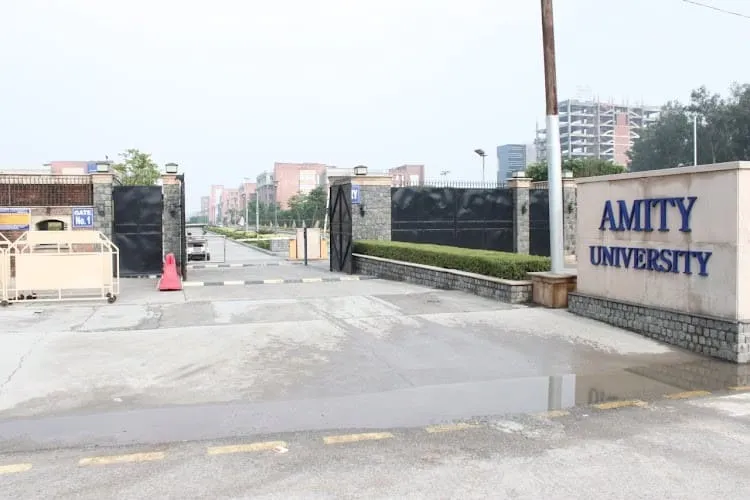
Amity University, Noida
Amity University is a UGC-recognized private university located in Noida, Uttar Pradesh, India. Known for its strong industry connections, cutting-edge curriculum, and commitment to technology-driven education, Amity University has established itself as one of central India's premier higher education institutions.
The university's vision is to foster academic excellence, industry readiness, and global competitiveness among its graduates — making it an ideal partner for EasyShiksha's mission of accessible, quality online education.
EasyShiksha has signed an MoU with Amity University to facilitate applications for various university programs and jointly offer B.Voc programs. All degrees and certifications under these programs will be awarded by Amity University. The EasyShiksha team will provide complete assistance and support throughout the admission and program process.
Amity University, Uttar Pradesh
Sample Degree

Documents
Media Gallery
Frequently Asked Questions
Yes. Amity University offers undergraduate and postgraduate degree programs through its online education division.
Yes. Amity University is recognized by the UGC, and its eligible online degree programs are offered under the applicable UGC online education regulations.
Yes. Amity University Uttar Pradesh is accredited with NAAC A+ grade.
Amity Online offers programs including MBA, MCA, BCA, BBA, B.Com and BA, along with multiple specialization options.
Amity University offers undergraduate programmes in engineering, management, commerce, computer applications, law, biotechnology, sciences, humanities, design, and other disciplines. Programme availability and specialisations may vary by campus and mode.
Amity University offers postgraduate programmes in management, engineering, computer applications, commerce, sciences, biotechnology, law, humanities, and other disciplines. Available programmes and specialisations depend on the selected campus and programme.
Yes. Amity University offers MBA programmes in various management areas. Students can explore specialisations such as finance, marketing, human resources, international business, and business analytics, depending on the programme and campus.
Yes. Amity University offers BCA programmes for students interested in computer applications and information technology. The programme covers areas related to programming, software, databases, and IT, with specific structure depending on the programme.
Amity University offers different academic and professional programmes across undergraduate and postgraduate levels. Students should check the individual programme details to understand its specific programme type, qualification, structure, and academic level.
Amity University covers domains including engineering and technology, management, computer applications, commerce, sciences, biotechnology, law, humanities, social sciences, and design. The available domains depend on the programme and campus.
Students can find specialisations across management, engineering, computer applications, commerce, sciences, law, and other disciplines. Available specialisations vary by programme and campus, so students should check the current programme details before applying.
Eligibility depends on the selected programme and academic level. Undergraduate programmes generally require the relevant qualifying examination, while postgraduate programmes usually require a suitable bachelor's degree. Some programmes may have additional requirements.
Students can apply through the applicable Amity University admission process by selecting their programme, completing the application form, submitting required information and documents, and following the programme-specific admission requirements.
Document requirements vary by programme. Students may generally need academic records, identification details, photographs, and other documents specified during application. Applicants should follow the official document checklist for their selected programme.
Programme duration varies according to the academic level, discipline, and programme structure. Students should check the individual programme details for the officially specified duration rather than assuming the same duration for every programme.
The BA program offers specializations in Sociology, Political Science, English, and Economics.
Students can develop critical thinking, research, communication, problem-solving, and practical application skills through the program.
Yes. The learning experience includes real-world application, practical exercises, hands-on experience, and opportunities to work on real business problems.
AMI 3.0 provides AI-driven academic support such as assignment guidance, instant doubt resolution, AI summaries, motivation, and other learning assistance.
Depending on their specialization and skills, graduates can explore career opportunities in areas such as public policy, media, education, research, and corporate roles.