For a long time, a student’s educational identity could be understood through a relatively small collection of documents. A marksheet showed academic performance, a degree represented formal education, and certificates documented additional courses or achievements. A resume later brought some of these experiences together when the student entered the professional world. However, this traditional system does not always capture the complete journey of a modern learner.
Students today can learn through schools, colleges, universities, online courses, digital platforms, internships, quizzes, projects, workshops, career counselling, professional communities, and independent practice. A student may complete a degree while simultaneously learning another skill online, participating in an internship, preparing for competitive examinations, building projects, and exploring different career options. These experiences can become scattered across different platforms and documents, making it difficult for students to see their own progress as one connected journey.
This raises an important question: what if a student’s entire education journey could live in one digital profile?
A digital education profile could become more than an online resume. It could act as a continuously developing record of what a student has explored, learned, practised, completed, and experienced. Instead of representing education as a collection of disconnected certificates, the profile could show the progression from curiosity to learning, from learning to practice, and from practice to experience.
This concept fits naturally into the broader evolution of digital education. Platforms such as EasyShiksha bring together online courses, online degrees, quizzes, internships, certificates, career counselling, games, and educational discovery. When such experiences are connected, students can begin to see education not as a series of isolated activities but as one continuous journey.
The Problem With a Scattered Education Journey
A modern student may interact with many educational resources during a single academic year. They might attend a college or school, enrol in an online course, participate in a quiz, complete a certification programme, join an internship, prepare for an examination, and explore universities or career options. Each activity can generate different records, accounts, documents, and certificates.
The problem is not the availability of these opportunities. The challenge is that they often remain disconnected.
A student may remember completing a course but struggle to remember when it was completed, what skills were developed, or how it relates to other experiences. An internship certificate may exist in an email, while a project may be stored on a separate platform. Quiz performance may remain inside a learning application, and information about career interests may exist only in notes or conversations with a counsellor.
As the number of learning experiences increases, students can find it difficult to organise their educational identity. This can also affect how they communicate their abilities to others. A resume may provide a short summary, but it cannot always show the complete development process behind a skill.
A digital education profile can address part of this fragmentation by creating a central space where learning experiences are organised and connected. Instead of asking students to repeatedly reconstruct their educational history, the profile can develop alongside them.
What Is a Digital Education Profile?
A digital education profile can be understood as a structured representation of a learner’s educational journey. It may contain academic information, courses completed, certificates earned, quizzes attempted, projects created, internships undertaken, interests explored, and skills developed.
The most useful profile would not simply store information. It would provide context.
For example, instead of displaying only that a student completed a digital marketing course, the profile could connect that course with relevant quiz performance, a practical project, and an internship. This creates a clearer picture of the learner’s progression from theoretical knowledge to practical application.
Similarly, a student interested in computer science could have a profile showing introductory courses, programming practice, project work, relevant quizzes, internships, and career interests. Over time, this profile could reveal how an initial interest developed into a more defined area of study.
The profile should also remain dynamic. Education does not stop when a student receives a degree. New courses, professional certifications, internships, projects, and learning experiences can continue to be added throughout a person’s career.
In this sense, a digital education profile is not a final document. It is a living learning record.
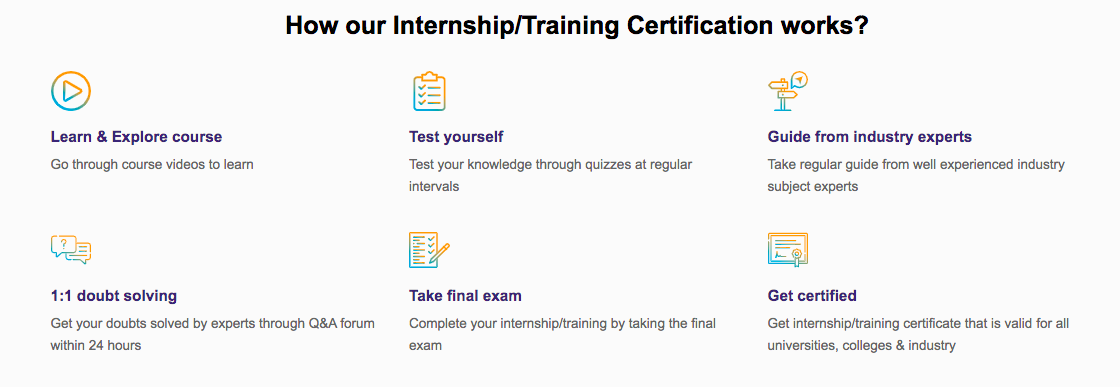
How EasyShiksha Internship/Training Program Works
From Marksheets to a Broader Learning Identity
Marks and academic qualifications remain important parts of education. They provide formal evidence of performance and achievement. However, they represent only one dimension of a student’s development.
Two students with similar academic scores may have very different interests and experiences. One may have completed multiple projects, while another may have gained internship experience. One may have developed communication skills through public speaking activities, while another may have explored artificial intelligence through online courses.
A broader digital profile can provide space for these differences.
This does not mean replacing academic records. Instead, it means placing academic achievements within a larger learning context. A student’s education identity can include formal qualifications alongside skills, practical experiences, interests, and continuous learning.
For students preparing for careers, this broader representation can be particularly useful. Employers and internship providers often need to understand not only what a candidate studied but also what they can demonstrate. Projects, internships, practical tasks, and relevant courses can provide additional evidence.
The digital profile therefore has the potential to shift the conversation from “What qualification do you have?” towards “What have you learned, practised, and experienced?”
The First Layer: Educational Discovery
A digital profile can begin developing even before a student completes a formal course.
Education is often shaped by discovery. Students explore subjects before deciding what they want to study in depth. A learner may start with an interest in technology, healthcare, business, design, finance, or another field without knowing exactly which career path fits that interest.
Digital quizzes and introductory learning resources can help students explore these possibilities. A quiz may introduce a student to a subject, while an introductory course can provide a deeper understanding of what the field involves.
If these activities are recorded within a digital profile, they can become part of the student’s learning story.
For example, a student may initially explore several technology fields through quizzes and introductory courses. Over time, the profile may show increasing engagement with data science and programming. The student can then choose more advanced courses or seek an internship in a related area.
This does not mean that a digital system should decide a student’s career. Instead, it can provide a record that helps the student reflect on their own interests and development.
EasyShiksha’s combination of quizzes, courses, career guidance, and educational discovery can support this early stage of the journey. The profile becomes more valuable when it begins with exploration rather than only recording final achievements.
Courses Become Building Blocks of the Profile
Online courses are likely to remain an important part of digital education. They allow students to develop knowledge in specific subjects and can complement formal academic programmes.
When course information is connected to a digital profile, students can see how individual learning experiences contribute to broader goals. A course in Python may become part of a programming pathway. A digital marketing course may support a marketing internship. A communication course may complement technical education by developing professional communication abilities.
This creates a more meaningful representation of learning.
A profile should ideally record more than a course title. It can include the subject studied, completion status, relevant skills, assessments, practical activities, and associated projects where appropriate. This gives the student a clearer understanding of what the course contributed to their development.
EasyShiksha’s online course ecosystem can fit into this model by allowing students to make learning activities part of a wider education journey. Rather than collecting courses simply for the sake of accumulation, learners can connect them with their interests and future objectives.
The emphasis should remain on meaningful learning. Completing a large number of courses does not automatically indicate strong capability. The quality, relevance, depth, and application of learning remain important.
Quizzes Can Show Learning in Progress
Certificates often show that a student completed something. Quizzes can show how a learner interacted with the material during the learning process.
Digital assessments can become useful milestones within a student profile. A learner might complete a quiz before starting a course, attempt another assessment after studying the material, and continue testing their understanding as they progress.
This creates a record of active learning rather than passive participation.
For example, a student learning finance might use quizzes to practise concepts such as budgeting, accounting principles, investment basics, or financial terminology. The profile could show the areas explored and the learner’s progression through different levels of understanding.
Quizzes should not become permanent labels attached to students. A low score on one assessment should not define a learner’s ability. The purpose of recording assessment activity should be to support learning, reflection, and progress.
EasyShiksha’s quiz functionality can therefore become an important part of a connected digital learning experience. When quizzes are associated with courses and practical activities, they can help students understand how their knowledge is developing.
Projects Turn Learning Into Evidence
One of the strongest additions to a digital education profile can be project-based evidence.
A course certificate indicates completion, but a project can demonstrate application. Students can use projects to show that they have attempted to solve a problem, created something, analysed information, designed a solution, or applied a particular skill.
A project section within a digital profile could become a portfolio of learning. A student studying web development might include a website they created. A data science learner might document an analysis project. A digital marketing student could present a sample campaign strategy. An electronics learner could document a practical prototype.
Projects also demonstrate learning progression. Early projects may be simple, while later work may become more complex. The profile can therefore show development over time.
For EasyShiksha learners, connecting courses with projects can reinforce the principle that education should move from knowledge to application. A student does not have to wait until graduation to start building evidence of practical capability.
The project record should ideally explain the purpose of the work, the skills involved, and the learner’s contribution. This makes it more useful than simply displaying a project title.
Internships Add Real-World Experience
Internships represent another important layer of a digital education profile. They provide students with opportunities to experience professional environments and apply knowledge beyond coursework.
An internship entry can show the organisation or programme, area of work, duration, responsibilities, and relevant skills. Where appropriate, students can also document projects completed during the experience.
This helps transform the internship from a certificate into a richer representation of professional exposure.
For a student, seeing courses, projects, and internships together can reveal a clear progression. A learner may complete a course in content writing, create sample articles, and later participate in a content-related internship. The profile connects these activities and makes the journey easier to understand.
EasyShiksha’s focus on internships alongside online courses creates an opportunity to encourage this transition. Students can move from learning concepts to practising them and then gaining exposure to real-world tasks.
The broader lesson is that experience should be integrated into education rather than treated as something that begins only after graduation.
Career Counselling Can Give the Profile Direction
A digital profile can contain a large amount of information, but information alone does not automatically create direction. Students may still need help interpreting their interests, identifying gaps, and deciding what to explore next.
Career counselling can provide that human element.
A student may have completed several courses but remain uncertain about which field to pursue. A counsellor can help the learner examine the relationship between interests, educational background, skills, and career options.
When career guidance is connected to a learning profile, counselling conversations can become more informed. Students can discuss their actual learning activities rather than relying entirely on memory.
EasyShiksha’s career counselling services can support this aspect of the digital ecosystem. The profile can serve as a starting point for reflection, while counselling provides guidance for future decisions.
Importantly, a digital profile should never be treated as a prediction of a student’s future. Interests and goals can change. Career guidance should help students explore possibilities rather than place them into permanent categories.
A digital education profile can also bring formal and informal learning closer together.
Online degrees provide structured academic education, while short-term courses can support specialised skill development. Internships can add professional exposure, and quizzes can reinforce learning. When these experiences are recorded together, the student’s education becomes easier to understand as a whole.
For example, a learner pursuing an online degree in business may simultaneously complete courses in digital marketing, data analysis, or communication. An internship may provide practical exposure to one of these areas. The profile can bring these experiences together without suggesting that one replaces the other.
This is particularly relevant as students increasingly combine different forms of education. Formal qualifications remain important, but supplementary learning can help learners develop specialised skills and explore interests beyond their primary programme.
EasyShiksha’s online degree and course ecosystem can support this broader approach by giving students access to different educational pathways within a connected digital environment.
Games Can Make the Learning Journey Visible
Education profiles do not have to be purely administrative. Learning can also be engaging.
Educational games can encourage students to practise concepts, solve problems, and maintain consistency. When game-based learning is connected to a broader profile, students can see their progress through learning activities rather than only through examination results.
A learner might progress through levels while studying a subject, complete challenges, earn achievements, or unlock new learning activities. These features can make progress more visible and encourage continued participation.
However, gamification should support educational outcomes rather than replace them. Points and badges are not equivalent to skills. A digital profile should distinguish between engagement indicators and meaningful evidence of learning.
EasyShiksha’s inclusion of games alongside educational resources demonstrates how learning can become more interactive. When used thoughtfully, games can complement courses and quizzes while keeping students engaged with their learning journey.
One Profile Can Connect School, College, and Career Exploration
A student’s educational journey often begins before higher education. School students may already be exploring subjects, careers, colleges, and universities. Later, they may select degree programmes, develop professional skills, and seek internships.
A connected digital profile could evolve across these stages.
At the school level, the profile might reflect interests and exploratory activities. During higher education, it could expand to include academic qualifications, courses, quizzes, projects, and internships. As the learner enters professional life, additional certifications and experiences could be added.
This continuity can make educational planning more coherent.
EasyShiksha’s focus on helping users discover schools, colleges, and universities alongside courses, degrees, career counselling, and internships reflects the broader idea of connecting different stages of education.
The benefit is not simply convenience. A continuous profile can help learners understand that their choices are connected. The subject they explore in school may influence a later course. A course may lead to a project. A project may support an internship. An internship may influence a career decision.
Education becomes a story of development rather than a collection of unrelated events.
A Digital Profile Can Encourage Better Learning Decisions
When students can see their learning journey clearly, they may become more conscious of what they are doing and why.
A learner might notice that they have completed several introductory courses but have little practical experience. Another student may discover that they have explored multiple subjects without developing depth in any one area. Someone else may realise that they have strong academic knowledge but need more professional communication practice.
These observations can help students make better-informed learning decisions.
The profile can become a reflection tool. Instead of asking only, “What course should I take next?” students can ask, “What is missing from my current learning journey?”
This shift can reduce random course accumulation and encourage purposeful development.
EasyShiksha can support such an approach by connecting learning resources across courses, quizzes, internships, career guidance, and other educational activities. The goal is to help students move from content consumption to intentional learning.
The Digital Profile as a Bridge to Opportunities
A well-organised digital education profile can eventually become a bridge between learning and opportunities.
Students applying for internships may need to demonstrate relevant skills. Graduates applying for jobs may need to explain projects and practical experiences. Learners applying for further education may need to present academic and extracurricular achievements.
A digital profile can bring relevant information together in one place.
However, students should have control over what they share. A profile intended for a specific internship may not need to include every activity the learner has ever completed. Students should be able to present information that is relevant to the opportunity while maintaining control over their personal data.
The profile should also prioritise authenticity. Digital records are valuable only when the information accurately represents the learner’s achievements.
This makes verification important. Where possible, course completions, certificates, projects, or internships can be linked to reliable records. At the same time, students should have opportunities to describe independent projects and learning activities honestly.
Privacy and Ownership Must Remain Central
The idea of a single digital education profile raises important questions about privacy and data ownership.
A student’s educational history can contain valuable personal information. It may include academic performance, interests, career preferences, assessment activity, certificates, and professional experiences. This information should not be treated as ordinary public content.
Students should understand what information is being collected, why it is being stored, and who can access it. They should have appropriate control over sharing and visibility.
A responsible digital profile should also avoid turning student activity into an automatic ranking system. Not every learner has the same access to technology, time, financial resources, or opportunities. A student who has completed fewer online courses may have valuable experiences that are not visible through simple activity counts.
The purpose of a digital profile should be to support the learner, not to reduce education to a numerical score.
EasyShiksha and other digital education platforms can build trust by keeping transparency, security, and learner control at the centre of digital profile development.
What the Digital Student Profile Could Look Like in the Future
The future digital education profile may become more dynamic than a traditional resume. Instead of a static document, it could function as an evolving learning identity.
A student might begin with a basic profile during school and gradually add courses, academic achievements, quizzes, projects, internships, certificates, interests, and career experiences. As the learner progresses, the profile could help organise information and identify possible next learning steps.
Artificial intelligence may eventually help students organise their records, identify related learning resources, or explain gaps in their development. However, automated recommendations should remain transparent and should not make important educational decisions on behalf of students.
The future profile could also become more portable. Students may want to carry their verified learning records between educational platforms, institutions, and professional opportunities. This would make the digital identity more useful across different stages of life.
The most important feature will not be technological complexity. It will be relevance. The profile should answer simple but important questions: What has the student learned? What have they practised? What have they experienced? What are they interested in? What might they want to explore next?
Frequently Asked Questions
Q. How can I apply for an internship with EasyShiksha?
You can apply by visiting our website, browsing available internships, and following the application instructions provided.
Q. What types of internships are available through EasyShiksha?
EasyShiksha offers a wide range of internships across technology, business, marketing, healthcare, and more.
Q. Will I receive a certificate upon completing an internship?
Yes, upon successful completion, you will receive a certificate recognizing your participation and achievements.
Q. Are EasyShiksha's certificates recognized?
Yes, the certificates are recognized by universities, colleges, and employers worldwide.
Q. When can I start the course?
You can choose any course and start immediately without delay.
Q. What are the course and session timings?
These are fully online courses. You can learn at any time and pace that fits your schedule.
Q. What will happen when my course is over?
After completion, you will have lifetime access to the course for future reference.
Q. Can I download the notes and study material?
Yes, you can access and download course materials and have lifetime access for future reference.
Q. What software/tools would be needed?
All necessary software/tools will be shared during the training as needed.
Q. I’m unable to make a payment. What should I do?
Try using a different card. If the problem persists, email us at info@easyshiksha.com.
Q. Do I get the certificate in hard copy?
No, only a soft copy is provided, which can be downloaded and printed if required.
Q. The payment got deducted but shows “failed”?
The deducted amount will be returned to your account in 7-10 working days automatically.
Q. Payment successful but dashboard shows ‘Buy Now’?
Reflection may take 30 mins. If longer, email info@easyshiksha.com with your screenshot.
Q. What is the refund policy?
Refunds are available for technical issues. No refunds once a certificate is generated.
Q. Can I enroll in a single course?
Yes, select any course, complete the details, and start learning immediately.
Q. Need further help?
Contact us at info@easyshiksha.com for any other questions.
EasyShiksha and the One-Profile Learning Ecosystem
The idea of one digital education profile closely aligns with the broader ecosystem approach of EasyShiksha. Instead of treating courses, quizzes, internships, online degrees, certificates, games, career counselling, and educational discovery as completely separate services, they can be understood as different parts of a student’s learning journey.
A learner may discover a subject through a quiz, take an online course to understand it, complete assessments to reinforce the concepts, develop a project to apply the knowledge, and then pursue an internship to gain practical exposure. Career counselling can help the learner evaluate future options, while an online degree can provide a structured academic pathway.
When these experiences are connected, the student can see how individual actions contribute to a larger objective.
This is where a digital profile becomes more than a storage system. It becomes a reflection of learning.
For EasyShiksha, the opportunity lies in creating an experience where students do not simply collect certificates or complete isolated activities. Instead, they can build a meaningful digital education journey that reflects exploration, learning, practice, experience, and development.
Such an ecosystem can also help students understand the relationship between education and career preparation from an earlier stage. The journey towards professional readiness can begin with curiosity and gradually develop through structured learning and practical exposure.
Conclusion: One Profile, Many Stages of Learning
What if a student did not have to search through emails, certificates, different platforms, and old documents to understand their own education journey? What if their learning experiences could grow together inside one digital profile?
The result could be a more connected understanding of education.
A digital education profile can bring together academic achievements, online courses, quizzes, certificates, projects, internships, interests, career exploration, and other learning experiences. It can help students reflect on their progress, identify gaps, organise achievements, and prepare for future opportunities.
The value of such a profile does not come from the number of activities recorded. A student with hundreds of certificates is not automatically more skilled than a learner with fewer but more meaningful experiences. The profile should focus on context, evidence, development, and authenticity.
The future of education is increasingly becoming a combination of formal education, digital learning, practical experience, and continuous exploration. Students may move between schools, colleges, universities, online courses, internships, projects, and professional learning throughout their lives.
Platforms such as EasyShiksha are positioned within this changing environment by bringing online courses, online degrees, quizzes, internships, certificates, games, career counselling, and educational discovery together. The next step in digital education may be connecting these experiences even more closely around the learner.
A student’s education journey should not disappear into disconnected certificates once a course ends. It can become a living record of growth that continues to evolve as the student learns, practises, explores, and gains experience.
Anshika Jain is an Engineer, Developer, and Educational Content Author known for her dedication to technology and knowledge sharing. With a strong analytical mindset and a passion for innovation, she has consistently contributed to creating meaningful digital solutions and insightful educational articles.
Her ability to simplify complex technical concepts into engaging and easy-to-understand content makes her work valuable for students and learners across various platforms. Along with her technical expertise, Anshika is admired for her creativity, professionalism, and commitment to continuous learning.
She represents a perfect blend of technical excellence and impactful communication, inspiring others through both her development work and educational contributions.