University programmes provide students with structured academic knowledge, recognised qualifications, and opportunities to develop expertise in a chosen discipline. However, completing a degree does not always mean that a student has acquired every practical skill required for a particular career specialisation. Two students enrolled in the same university programme may have very different professional ambitions, technical interests, and skill requirements. A computer science student may want to specialise in artificial intelligence, while another may be interested in cybersecurity, cloud computing, or frontend development. Although their academic foundation may be similar, the additional knowledge and practical experience required for each career direction can differ considerably.
Traditional university programmes generally follow predefined curricula. Students complete prescribed subjects, examinations, assignments, and projects according to an academic structure. While elective subjects and optional training opportunities provide some flexibility, students are often responsible for identifying which additional courses, certifications, and internships would help them prepare for their preferred specialisation. This can become difficult when learners do not fully understand industry requirements or cannot determine which skills are missing from their academic preparation.
An emerging educational model could address this problem by connecting university programmes with intelligent skill-recommendation systems. Under this approach, a student's university programme would automatically identify relevant online courses and internships according to the learner's academic background, chosen specialisation, existing competencies, and career objectives. Instead of presenting students with a large collection of unrelated learning opportunities, the system would recommend specific educational resources that address identifiable skill requirements.
For example, a student pursuing a Bachelor of Computer Applications may select data science as a preferred specialisation. The system could analyse the university curriculum, identify the technical competencies already covered, and determine which additional abilities may be necessary. It could then recommend online courses in Python, statistics, SQL, data visualisation, and machine learning, followed by suitable projects or internships that allow the student to apply these skills.
For EasyShiksha, this concept presents an opportunity to connect university programmes, online courses, internships, quizzes, educational games, practical projects, and career guidance through a more coordinated learning experience. The objective would be to move beyond course discovery and create a system in which every recommended learning activity has a clear purpose in the student's academic and professional development.
Understanding the Specialisation-Specific Skill Gap
A skill gap exists when a learner's current abilities do not fully match the competencies required for a particular academic or professional objective. In university education, this gap can develop because degree curricula are designed to establish broad subject knowledge, while specialised career roles often require more focused technical and practical abilities.
A student studying business administration may receive an introduction to marketing, finance, human resources, accounting, and organisational management. However, choosing digital marketing as a specialisation may require additional knowledge of search engine optimisation, paid advertising, campaign analytics, content strategy, and marketing automation. A general management curriculum may not provide enough depth in all these areas.
Similarly, an information technology student may study programming, databases, operating systems, and computer networks. A student who wants to enter cloud engineering may need additional experience with cloud platforms, infrastructure management, deployment pipelines, containerisation, and system monitoring. Another student from the same programme who wants to pursue cybersecurity may need network security, vulnerability assessment, incident response, and security analysis.
The challenge is that students may not know which skills are already covered by their university programme and which competencies require additional preparation. They may enrol in online courses because they are popular rather than because those courses address an actual gap. They may also apply for internships without understanding whether they possess the required foundational knowledge.
An intelligent recommendation system could make this relationship clearer by comparing academic learning outcomes with specialisation-specific competency requirements. It would help students identify the difference between what they have studied, what they can demonstrate, and what they still need to learn.
Why University Programmes Need an Intelligent Learning Connection
University programmes and online learning platforms often operate as separate educational environments. Universities provide structured degrees, while online platforms offer courses, certificates, quizzes, and practical learning resources. Internship providers may operate independently, with their own eligibility requirements and application processes.
Students are expected to navigate these environments themselves. They must identify relevant courses, compare their content, evaluate internship opportunities, and decide which activities are worth their time. This creates a significant decision-making burden, especially for learners who are still exploring their professional interests.
An intelligent learning connection could reduce this fragmentation. The university programme would provide the academic foundation, while the recommendation system would identify additional learning resources that support a student's selected specialisation. Instead of treating online courses and internships as unrelated opportunities, the system would connect them to specific competencies and academic outcomes.
Such a model would also help students avoid unnecessary duplication. If a university subject already covers introductory programming, the system should not automatically recommend another beginner programming course. It should examine the student's demonstrated knowledge and suggest a more appropriate next step, such as data structures, application development, or a specialisation-specific programming project.
The purpose is not to replace university curriculum planning or academic guidance. It is to make the relationship between formal education and additional skill development more visible, organised, and relevant.
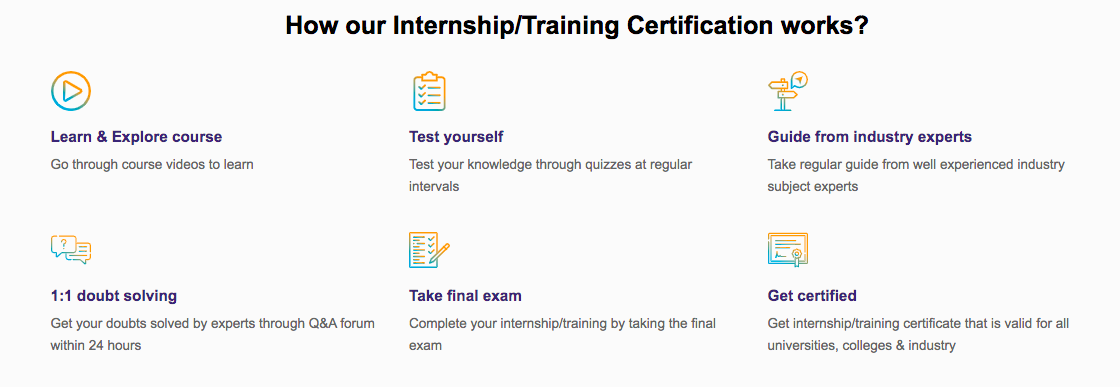
How EasyShiksha Internship/Training Program Works
How an Automated Skill Identification System Could Work
The foundation of this model would be a structured representation of the student's academic programme. The system would need access to relevant information about subjects, course descriptions, learning outcomes, assessment methods, practical assignments, and available specialisations. It would use this information to understand which competencies are expected to develop during each stage of the degree.
The next stage would involve creating a specialisation-specific skill framework. Each specialisation would be associated with a collection of technical, analytical, practical, and professional competencies. These requirements could be informed by university departments, subject experts, industry partners, professional standards, and current job-role expectations.
When a student selects a specialisation, the system would compare its competency framework with the learning outcomes of the university programme. It would identify areas that are already covered, areas that receive only introductory attention, and areas that require additional learning.
The system would then evaluate suitable resources from connected educational platforms. These could include online courses, quizzes, worksheets, simulations, educational games, practical projects, and internships. Each resource would need to be associated with clear learning objectives, prerequisite knowledge, difficulty levels, and expected outcomes.
Finally, the system would generate a personalised learning pathway. This pathway would show students which competencies they should develop, which resources could help them, and how they can demonstrate their progress. Recommendations would change as students complete activities and acquire new skills.
The most important feature would be the continuous relationship between learning and evidence. The system should not assume that completing a course automatically establishes competence. It should also consider assessment performance, project quality, and practical experience before recommending the next stage.
Mapping University Subjects to Career Specialisations
A major challenge in building this system would be translating academic subjects into practical competencies. University syllabuses are generally organised around disciplines and topics, whereas professional specialisations are often defined through tasks, tools, and expected workplace abilities.
A subject such as database management, for example, may support several career directions. It is relevant to data analysis, software development, database administration, business intelligence, and backend engineering. However, each specialisation uses database knowledge differently. A data analyst may need advanced querying and data interpretation, while a backend developer may require database integration, performance optimisation, and application-level data management.
The recommendation system would therefore need to understand relationships between academic subjects and professional skills rather than relying only on matching keywords. It should identify the depth of coverage and the context in which a concept is taught.
Consider a university programme that includes introductory statistics. For a student specialising in data science, this subject may provide a foundation for probability, hypothesis testing, and predictive modelling. The system could recommend additional courses in statistical programming and machine learning. For a student specialising in financial analysis, the same academic subject may lead to courses in financial modelling, forecasting, and quantitative analysis.
This approach would allow one university subject to support multiple learning pathways. It would also help students understand how their existing academic knowledge can be transferred into different professional directions.
Identifying Skill Requirements for Different Specialisations
Artificial Intelligence and Machine Learning
Students selecting artificial intelligence as a specialisation may need competencies in programming, mathematics, statistics, data preparation, machine learning algorithms, model evaluation, and responsible AI development. A general computer science programme may introduce some of these areas, but students may require more specialised learning before working on practical AI assignments.
An intelligent system could first identify whether the student has sufficient knowledge of Python, mathematical foundations, and basic data handling. If these competencies are not demonstrated, it could recommend appropriate beginner or intermediate courses. Once the student establishes the foundation, it could introduce supervised learning, neural networks, model evaluation, and practical machine learning projects.
Internship recommendations could become relevant after the learner has developed sufficient preparation. Suitable opportunities might involve dataset analysis, model testing, AI application development, or research assistance under appropriate supervision. The system should distinguish between beginner-friendly tasks and internships that require advanced technical experience.
Cybersecurity
Cybersecurity specialisation requires more than general knowledge of computers and networks. Students may need to understand network protocols, operating systems, authentication, security principles, vulnerability management, risk assessment, and incident response.
A university programme may cover computer networks and operating systems, but practical security analysis may require additional preparation. The recommendation system could identify this gap and suggest courses covering network security, secure system configuration, ethical security testing, and defensive monitoring.
Practical challenges could help students apply these concepts in controlled environments. An educational game might present simulated security incidents, while a worksheet could require learners to identify weaknesses in a fictional network configuration. A later project could involve developing a basic security assessment report. Internship recommendations should focus on appropriate supervised activities and must not encourage unauthorised access to real systems.
Data Science and Business Analytics
Students interested in data science may require knowledge of statistics, Python, SQL, data cleaning, visualisation, data interpretation, and predictive techniques. A business analytics specialisation may additionally require knowledge of business performance indicators, reporting, and decision-making.
The system could examine the student's university subjects and identify which of these areas have already been covered. If the learner has studied basic statistics but lacks practical SQL experience, it could recommend a database course and related exercises rather than repeating the statistics foundation.
After foundational learning, students could complete projects involving sales analysis, customer segmentation, business forecasting, or dashboard development. Suitable internships could provide opportunities to work with realistic datasets and reporting requirements.
Digital Marketing
Digital marketing requires a combination of communication, creativity, analytical thinking, and technical knowledge. Students may need to understand search engine optimisation, paid advertising, social media strategy, content planning, audience research, campaign analytics, and conversion measurement.
A university marketing subject may explain consumer behaviour and promotion principles without covering every digital tool used in professional campaigns. The recommendation system could connect academic knowledge with relevant online courses in SEO, social media marketing, digital advertising, and analytics.
Students could then complete a practical campaign-planning project or a simulated advertising challenge. An internship recommendation might involve content research, campaign reporting, keyword analysis, or social media coordination, depending on the learner's preparation.
Finance and Financial Technology
Students pursuing finance or financial technology may need competencies in accounting, financial analysis, spreadsheets, financial modelling, data interpretation, risk assessment, and digital financial systems.
The system could identify whether the university programme provides enough practical experience with financial data and analytical tools. Where gaps exist, it could recommend courses in advanced spreadsheets, financial modelling, business analytics, or relevant financial technology concepts.
Practical assignments might involve analysing a company's financial performance, preparing a budget model, or evaluating a fictional financial scenario. More advanced learners could explore risk analysis, financial data systems, and supervised projects related to financial technology.
Creating a Personalised Online Course Recommendation Engine
Once the system identifies skill gaps, it needs a reliable method for recommending online courses. A large course catalogue can be difficult to navigate, particularly when several courses appear to cover similar subjects. Course recommendations should therefore be based on the competencies students need rather than popularity or general subject similarity.
Each online course would require structured information about its learning outcomes, syllabus, difficulty level, prerequisites, duration, tools covered, assessment methods, and practical components. This information would allow the system to determine whether a course is suitable for a particular student.
For example, a student who wants to specialise in frontend development may already understand HTML and CSS but have limited JavaScript knowledge. The system should recommend an appropriate JavaScript course rather than a complete beginner web development programme. After the student demonstrates sufficient JavaScript knowledge, it could recommend React, component-based development, API integration, and frontend project work.
Course sequencing is equally important. Students should not be directed towards advanced topics before acquiring the necessary foundations. A recommendation engine should understand dependencies between skills and arrange learning activities in a logical order.
It should also avoid unnecessary recommendations. Enrolling in multiple courses covering the same introductory concepts can consume time without improving competence. A good system would identify overlap and recommend the most suitable resource based on the student's current level and learning objectives.
Connecting Course Recommendations With Internship Opportunities
Online courses can help students acquire knowledge, but internships provide opportunities to apply that knowledge in professional or simulated workplace settings. Connecting these two resources is one of the most important features of an intelligent university learning system.
Traditional internship searches often require students to compare job descriptions with their own abilities. Many learners apply for opportunities without understanding the technical requirements or the level of experience expected. Others avoid suitable opportunities because they assume they are not qualified.
A connected recommendation system could analyse internship descriptions and identify the skills required for each opportunity. It could compare those requirements with the student's academic background, completed courses, assessment results, and project experience.
Suppose an internship requires basic Python, SQL, and data visualisation. A student who has completed Python and SQL courses but has not demonstrated data visualisation skills may receive a recommendation to complete a relevant course or project before applying. Another student who already possesses the required competencies could be directed towards the internship application process.
This approach would make internship recommendations more meaningful. Instead of displaying opportunities based only on the student's degree title, the system would consider the actual competencies required by the assignment.
It could also distinguish between internships suitable for beginners and those requiring more advanced preparation. This would reduce mismatches and help students approach professional opportunities with greater confidence.
Introducing a Continuous Skill Development Cycle
An intelligent recommendation system should not produce a fixed list of courses and internships at the beginning of a degree. Student interests, academic performance, and professional requirements change over time. A recommendation that is appropriate during the first semester may become unnecessary after the student completes additional learning activities.
A continuous skill development cycle would update recommendations whenever new evidence becomes available. At the beginning of a programme, the system could establish a basic academic and competency profile. As students complete subjects, quizzes, projects, and courses, their profiles would become more detailed.
If a student performs well in programming assessments but struggles with debugging practical applications, the system could recommend additional problem-solving exercises. If another student demonstrates strong technical abilities but has difficulty presenting project findings, communication courses or presentation activities may be more useful.
The cycle would continue as the student progresses through the degree. After completing an online course, the learner might receive a practical project recommendation. After completing that project, the system could identify suitable internships or advanced specialisation courses.
This creates a relationship between learning, assessment, application, and professional development. Students are not simply collecting certificates. They are progressing through a sequence of activities intended to develop and demonstrate specific abilities.
The Role of Quizzes, Worksheets, and Educational Games in Skill Verification
An important weakness in many course recommendation systems is their reliance on enrolment or completion information. A student may complete a course without fully understanding its content. If the system treats course completion as proof of mastery, it may recommend advanced internships before the learner is adequately prepared.
Quizzes, worksheets, and educational games can provide additional evidence. Quizzes can test conceptual understanding, while worksheets can evaluate structured reasoning and practical problem-solving. Educational games can introduce interactive situations in which students make decisions and respond to changing conditions.
For example, a student learning cybersecurity may complete an online course about authentication. A quiz could assess the student's understanding of authentication methods, while a game could present simulated login scenarios requiring the learner to identify suspicious behaviour. A worksheet could ask the student to analyse a fictional security policy.
The system could use the results to determine whether the student is ready for a more advanced assignment. If the learner performs well in conceptual assessments but struggles with practical scenarios, it could recommend additional application-based exercises.
This approach makes recommendations more accurate because they are supported by different forms of learning evidence. It also helps distinguish between knowledge exposure and demonstrated understanding.
Building a Specialisation-Specific Learning Pathway
A personalised learning pathway should show students how their university programme, online courses, projects, and internships fit together. It should provide a clear progression rather than presenting an unconnected collection of recommendations.
Consider a student enrolled in a Bachelor of Business Administration who selects business analytics as a specialisation. The system may identify that the university programme already introduces business fundamentals, accounting, statistics, and management. It may then determine that the student needs additional practice in spreadsheet analysis, SQL, data visualisation, and business reporting.
The pathway could recommend an introductory spreadsheet course, followed by structured exercises and a practical reporting assignment. Once the student demonstrates competence, the system could introduce SQL and dashboard development. A later project might involve analysing a fictional company's sales performance and preparing recommendations based on the findings.
After these activities, the student could receive recommendations for internships involving reporting, business analysis, or data support. The pathway would therefore connect academic study with additional knowledge and practical exposure.
A similar pathway could be created for a student pursuing artificial intelligence, digital marketing, finance, cybersecurity, or software development. The resources would change according to the specialisation, but the underlying structure would remain consistent.
How Artificial Intelligence Can Improve Skill Recommendations
Artificial intelligence can support the recommendation process by analysing large amounts of academic and learning information. It can compare university syllabuses with competency frameworks, identify relationships between subjects and professional skills, and evaluate the relevance of online courses and internship descriptions.
Natural language processing could help interpret course descriptions and internship requirements. For example, an internship may request experience in data reporting, spreadsheet analysis, and business communication without using the exact terminology found in a university syllabus. AI systems could identify these relationships and connect the opportunity with relevant academic subjects and learning resources.
Machine learning models could also analyse student performance patterns. If learners with similar academic backgrounds repeatedly struggle with a particular skill, the system may identify a need for additional preparation in that area. It could recommend resources that have helped students develop the relevant competency.
Another useful application is adaptive recommendation. Instead of assigning every student the same course sequence, the system could adjust learning pathways according to demonstrated ability. A student who already possesses a particular skill may skip introductory material after completing an appropriate assessment. Another student may receive additional foundational practice.
However, AI recommendations should remain explainable. Students should be able to understand why a particular course or internship has been recommended and which skill requirement it addresses. Academic advisers should also be able to review recommendations and correct inaccurate mappings. AI can support decisions, but it should not become an unquestionable authority over a student's academic or career direction.
Creating a Unified Student Skill Profile
A unified student skill profile would provide the information required to generate relevant recommendations. Instead of relying only on the student's degree title or selected specialisation, the system would consider academic subjects, completed courses, assessment results, projects, internships, and demonstrated competencies.
The profile should distinguish between different levels of evidence. A skill mentioned in a student's self-reported interests is not equivalent to a skill demonstrated through a project. Similarly, completing a course does not necessarily establish the same level of competence as passing a practical assessment.
A student may have studied database management at university, completed an SQL course, passed related quizzes, and developed a database-backed project. These activities provide different types of evidence about the learner's progress. A structured profile could connect them and provide a more complete picture.
Such a profile would also help students identify transferable skills. Communication, research, analytical reasoning, teamwork, and problem-solving are relevant across several specialisations. A learner who develops these abilities in one academic context may be able to apply them in another.
For EasyShiksha, a unified skill profile could connect online course certificates, quiz performance, worksheets, projects, and internship records. This would help students understand how their learning activities contribute to their chosen specialisation and career objectives.
Keeping Recommendations Updated With Changing Industry Requirements
One of the most difficult aspects of specialisation-based education is that professional skill requirements change over time. New technologies emerge, existing tools evolve, and employers adjust their expectations. A course that was relevant several years ago may no longer provide sufficient preparation for a particular role.
An intelligent recommendation system must therefore update its understanding of industry requirements. It could analyse current job descriptions, professional competency frameworks, technology documentation, and feedback from industry partners. Subject experts would review these findings before they influence university-related recommendations.
For example, students specialising in frontend development may need to understand current JavaScript frameworks, accessibility practices, application performance, and API integration. Students entering data science may need to work with changing analytical tools and responsible AI practices. The exact technologies may evolve, but the underlying competencies should remain clearly defined.
The system should also distinguish between temporary tool familiarity and long-term professional capabilities. Learning a particular software platform may be useful, but problem-solving, analytical reasoning, technical understanding, and the ability to learn new tools remain valuable across changing environments.
Regular content review would help prevent outdated recommendations. If a course no longer reflects current practices, the system should be able to identify it for revision or replacement. This is especially important when online courses are connected directly to university specialisation requirements.
Preventing Over-Personalisation and Recommendation Bias
Personalised recommendations can improve educational decision-making, but excessive automation may create new problems. If a system relies too heavily on past performance, it may repeatedly recommend similar activities and prevent students from exploring unfamiliar areas.
For example, a student who performs well in accounting assessments may continuously receive finance-related recommendations, even if they want to explore business analytics or financial technology. The system should recognise that a student's interests and career goals are important alongside their previous results.
Recommendation bias may also arise when the system relies on incomplete industry data. If its internship database contains more opportunities from one sector or geographical region, it may overrepresent those options. Students could receive limited exposure to emerging specialisations or alternative career paths.
A responsible system should provide students with the ability to select, change, and review their career interests. It should explain the basis of recommendations and allow academic advisers to intervene when necessary. Students should not be forced into a particular specialisation simply because an algorithm predicts that it matches their existing performance.
Privacy is another important requirement. Academic records, assessment results, and career preferences should be handled transparently, with appropriate access controls and consent. Universities and learning platforms must explain how student information is used and avoid collecting unnecessary personal data.
Implementing the Model Through EasyShiksha
EasyShiksha can support this concept by connecting its educational resources around the specific skill requirements of university students. The platform's online courses, internships, quizzes, worksheets, educational games, university programmes, certificates, and career guidance resources can contribute to a coordinated development pathway.
The process could begin when a student selects a university programme and identifies a preferred specialisation. The system would examine the programme's academic structure and compare it with a competency framework for that specialisation. It could then identify which skills are already addressed through the degree and which areas require additional preparation.
Relevant EasyShiksha courses could be recommended according to the student's current knowledge. Quizzes and worksheets could help verify foundational understanding, while educational games could provide interactive practice. Practical projects could help students demonstrate application before they progress towards internships.
For example, a student enrolled in an information technology programme who selects cloud computing could receive recommendations for networking fundamentals, Linux, cloud infrastructure, and deployment concepts, depending on what the university curriculum already covers. After completing the relevant learning activities, the student could attempt a practical deployment project and then explore suitable internship opportunities.
A student specialising in digital marketing could follow a different pathway involving SEO, content strategy, analytics, advertising, and campaign planning. The system would connect each course with a practical task and eventually recommend relevant internship opportunities.
EasyShiksha could also provide a student dashboard showing the relationship between university subjects, additional courses, completed assessments, projects, and internship readiness. This would help learners understand not just what they should study next, but why that activity is relevant to their chosen direction.
The platform's role would be to support academic and professional development rather than replace university decisions. Universities would continue to define degree requirements, while students and academic advisers would retain control over specialisation choices and learning pathways.
Empower your team. Lead the industry
Get a subscription to a library of online courses and digital learning tools for your organization with
EasyShiksha
Measuring the Effectiveness of Automated Skill Recommendations
An intelligent recommendation system should be evaluated according to whether it helps students develop relevant competencies and make better educational decisions. The number of courses recommended or completed is not sufficient to establish success.
One important measure is skill-gap reduction. The system should be able to determine whether students have improved in the competencies that were initially identified as missing. This can be assessed through quizzes, practical assignments, projects, and other suitable evaluation methods.
Another measure is recommendation relevance. Students should receive courses and internships that match their academic level, selected specialisation, and existing abilities. Repeated recommendations for skills they have already demonstrated may indicate that the system is not interpreting learning evidence correctly.
Practical performance is equally important. If students complete recommended courses but continue to struggle with related projects, the system may need to improve the connection between instruction and application. Internship participation and successful completion of assigned tasks can provide further evidence, although internship outcomes also depend on supervision and workplace conditions.
Student feedback can reveal whether recommendations are understandable and useful. Learners should be able to explain why they selected a course, how it relates to their university programme, and what they expect to gain from an internship. This encourages active participation rather than passive acceptance of automated suggestions.
Universities and platforms can use these findings to improve competency frameworks, course descriptions, internship matching, and recommendation logic over time.
The Future of University Education as a Connected Skill Ecosystem
The future of higher education may involve stronger connections between university curricula, digital learning platforms, industry requirements, and individual career pathways. Rather than expecting students to discover every additional learning opportunity independently, universities may increasingly provide structured access to relevant courses, projects, and internships throughout a degree.
In such an environment, the university programme would become the academic foundation of a broader skill ecosystem. Students could identify a specialisation, understand its competency requirements, and receive recommendations that complement their formal education. Their learning pathways could adapt as they complete assessments and demonstrate new abilities.
Artificial intelligence may make this system more responsive by identifying changing skill requirements, evaluating resource relevance, and suggesting suitable next steps. Digital competency profiles could help students connect their academic achievements with practical evidence. Industry partners could contribute projects and internship opportunities that reflect emerging professional needs.
For EasyShiksha, this model represents an opportunity to connect education with career preparation through a structured recommendation experience. Online courses would fill identified knowledge gaps, quizzes and worksheets would support assessment, games would encourage interactive practice, and internships would provide opportunities for professional application.
The broader shift would be from searching for educational resources to receiving a reasoned pathway based on what a student already knows, what a specialisation requires, and what the learner needs to demonstrate next.
Conclusion
A university degree provides an important academic foundation, but students pursuing different specialisations often require additional skills and practical experience beyond the prescribed curriculum. Identifying those requirements can be difficult when online courses, internships, university subjects, and career opportunities exist in separate educational environments.
An automated skill recommendation system could connect these resources by analysing university programmes, identifying specialisation-specific competencies, detecting skill gaps, and recommending relevant online courses and internships. By incorporating quizzes, worksheets, projects, and practical assessments, the system could also evaluate whether students have developed the abilities required for their chosen direction.
For EasyShiksha, this approach offers an opportunity to connect university programmes with online courses, educational games, certificates, projects, internships, and career guidance. Students would receive more than a list of learning opportunities. They could follow a structured pathway in which each recommended activity addresses a specific skill requirement and prepares them for the next stage of development.
The future of personalised higher education will depend not only on providing more courses but also on helping students identify which learning experiences are genuinely relevant to their academic and professional goals. When university programmes become connected to intelligent skill development, students can make better decisions, build practical capabilities, and approach their chosen careers with stronger preparation.
Anshika Jain is an Engineer, Developer, and Educational Content Author known for her dedication to technology and knowledge sharing. With a strong analytical mindset and a passion for innovation, she has consistently contributed to creating meaningful digital solutions and insightful educational articles.
Her ability to simplify complex technical concepts into engaging and easy-to-understand content makes her work valuable for students and learners across various platforms. Along with her technical expertise, Anshika is admired for her creativity, professionalism, and commitment to continuous learning.
She represents a perfect blend of technical excellence and impactful communication, inspiring others through both her development work and educational contributions.