Non-technical certifications focus on professional competencies that are applicable across industries and job roles. These certifications help individuals develop skills related to leadership, communication, project management, marketing, human resources, business strategy, customer service, and personal effectiveness. Unlike technical qualifications that are often limited to specific professions, non-technical certifications offer versatility and can benefit students, graduates, entrepreneurs, managers, and working professionals alike.
The modern workplace values employees who can collaborate effectively, communicate clearly, solve problems, manage teams, and adapt to changing business environments. As organizations increasingly prioritize soft skills and business competencies, non-technical certifications provide a structured pathway for developing these capabilities.
Online learning platforms have played a major role in making professional certifications more accessible than ever before. Platforms such as EasyShiksha offer learners the opportunity to acquire industry-relevant skills through flexible online courses and certification programs. By pursuing non-technical certifications through EasyShiksha and similar educational platforms, individuals can strengthen their resumes, improve employability, and accelerate career growth.
This article explores the importance of non-technical certifications, examines some of the most valuable certifications available today, and explains how they contribute to long-term professional success.
The Growing Importance of Non-Technical Skills
The workplace has evolved significantly over the past few decades. Technological advancements have transformed business operations, but human-centered skills remain essential for organizational success.
Employers consistently report that communication, leadership, teamwork, adaptability, and problem-solving abilities are among the most desirable qualities in employees. While technical expertise may help individuals perform specific tasks, non-technical skills often determine career progression and leadership potential.
Professionals frequently advance into supervisory and management roles where interpersonal skills become more important than technical abilities alone. The ability to manage people, communicate effectively, resolve conflicts, and make strategic decisions is critical for long-term success.
Non-technical certifications help individuals develop these competencies in a structured and measurable manner.
Why Certifications Matter in Modern Careers
Certifications serve as evidence of professional development and commitment to learning.
They demonstrate that an individual has invested time and effort into acquiring specialized knowledge and skills. Employers often view certifications as indicators of initiative, discipline, and career motivation.
In addition to enhancing resumes, certifications help learners stay current with industry trends and best practices.
They provide structured learning experiences that combine theoretical understanding with practical applications.
For students and professionals seeking career growth, certifications can improve credibility, increase confidence, and open doors to new opportunities.
As lifelong learning becomes increasingly important, certifications have become valuable assets in professional portfolios.
Leadership is one of the most sought-after competencies in today's business environment.
Organizations need individuals who can inspire teams, manage resources, make decisions, and guide projects toward successful outcomes.
Leadership certifications focus on essential management principles, organizational behavior, strategic thinking, and team development.
These programs help learners understand how to motivate employees, communicate effectively, resolve conflicts, and create productive work environments.
Leadership certifications are particularly valuable for aspiring managers, supervisors, entrepreneurs, and professionals seeking advancement into leadership positions.
Developing leadership capabilities early in one's career can significantly enhance future opportunities.
Project Management Certifications
Project management is a critical function across industries.
Whether in healthcare, education, finance, manufacturing, marketing, or technology, organizations rely on effective project management to achieve objectives efficiently.
Project management certifications teach learners how to plan, organize, execute, monitor, and evaluate projects.
Participants develop skills related to scheduling, budgeting, resource allocation, risk management, and stakeholder communication.
These competencies are highly transferable and applicable in a wide range of professional settings.
Project management knowledge improves organizational effectiveness and increases an individual's ability to lead complex initiatives successfully.
Digital Marketing Certifications
Digital marketing has become one of the most important business functions in the modern economy.
Organizations rely on digital channels to reach customers, build brands, and drive growth.
Digital marketing certifications provide knowledge in areas such as content marketing, social media strategy, search engine optimization, email marketing, online advertising, and customer engagement.
These certifications are valuable not only for marketing professionals but also for entrepreneurs, business owners, and individuals seeking versatile career opportunities.
Digital marketing skills are increasingly relevant across industries and contribute significantly to professional growth.
Communication Skills Certifications
Communication is often described as one of the most important skills in the workplace.
Strong communication abilities support collaboration, leadership, negotiation, customer relationships, and organizational effectiveness.
Communication certifications help learners improve verbal communication, written communication, presentation skills, public speaking, and interpersonal interactions.
Professionals who communicate effectively are often better equipped to influence others, build relationships, and achieve organizational objectives.
Communication training enhances confidence and contributes to success across virtually all career paths.
As workplaces become more collaborative and globally connected, communication skills continue to grow in importance.
Human Resource Management Certifications
Human resources play a vital role in organizational success.
HR professionals are responsible for talent acquisition, employee engagement, performance management, workplace culture, and compliance.
Human resource management certifications provide knowledge about recruitment strategies, employee development, labor relations, organizational behavior, and workforce planning.
These certifications are valuable for individuals pursuing careers in HR as well as managers responsible for leading teams.
Understanding human resource principles contributes to better leadership and organizational effectiveness.
The ability to manage people effectively remains one of the most valuable professional competencies.
Business Management Certifications
Business management certifications offer a comprehensive understanding of organizational operations and strategic decision-making.
These programs typically cover topics such as business planning, financial management, operations, marketing, leadership, and organizational strategy.
Business management knowledge is valuable for professionals across industries because it provides insights into how organizations function and achieve objectives.
Individuals with strong business acumen often make more informed decisions and contribute more effectively to organizational success.
Business management certifications are particularly beneficial for aspiring entrepreneurs and future executives.
Customer Relationship Management Certifications
Customer satisfaction is a key driver of business success.
Organizations increasingly recognize the importance of building strong relationships with customers and delivering exceptional service experiences.
Customer relationship management certifications focus on customer engagement, service excellence, communication strategies, and relationship-building techniques.
Professionals who understand customer needs and expectations contribute significantly to organizational growth and reputation.
These certifications are particularly valuable in sales, marketing, customer support, hospitality, and retail sectors.
Strong customer relationship skills often lead to improved business outcomes and career opportunities.
Sales and Negotiation Certifications
Sales and negotiation skills are valuable across numerous professions.
Even individuals who do not work directly in sales benefit from understanding persuasion, relationship-building, and negotiation strategies.
Sales certifications teach principles related to customer engagement, consultative selling, communication, and business development.
Negotiation certifications focus on conflict resolution, decision-making, agreement formulation, and value creation.
These competencies support career growth by enhancing an individual's ability to influence outcomes and build productive professional relationships.
Strong negotiation skills are especially important for managers, entrepreneurs, and business leaders.
Entrepreneurship Certifications
Entrepreneurship has become an attractive career path for many individuals seeking independence and innovation.
Entrepreneurship certifications provide insights into business planning, market research, financial management, startup development, and growth strategies.
Learners gain practical knowledge that helps them transform ideas into viable business ventures.
Entrepreneurial thinking is valuable even within traditional employment settings because it encourages creativity, initiative, and problem-solving.
Organizations increasingly appreciate employees who demonstrate entrepreneurial mindsets and innovative thinking.
Entrepreneurship certifications support both business ownership and professional advancement.
Personal Development Certifications
Career success is influenced not only by professional competencies but also by personal effectiveness.
Personal development certifications focus on areas such as time management, productivity, emotional intelligence, goal setting, adaptability, and self-leadership.
These skills contribute to workplace performance and overall well-being.
Professionals who manage their time effectively, maintain emotional resilience, and pursue continuous improvement often achieve stronger long-term outcomes.
Personal development certifications provide practical strategies for maximizing individual potential.
Investing in personal growth supports both career advancement and life satisfaction.
Emotional Intelligence Certifications
Emotional intelligence has become increasingly recognized as a critical factor in leadership and workplace success.
Individuals with strong emotional intelligence understand their emotions, manage stress effectively, empathize with others, and build positive relationships.
Emotional intelligence certifications help learners develop self-awareness, emotional regulation, empathy, and interpersonal communication skills.
These competencies contribute to effective teamwork, leadership, and conflict resolution.
Organizations often value emotional intelligence because it enhances collaboration and supports healthy workplace cultures.
Professionals with high emotional intelligence frequently demonstrate stronger leadership potential.
Business Communication Certifications
Business communication differs from general communication because it focuses on professional interactions and organizational objectives.
Business communication certifications teach learners how to write professional emails, prepare reports, deliver presentations, conduct meetings, and communicate effectively within corporate environments.
These skills improve workplace efficiency and support professional credibility.
Strong business communication abilities are essential for career progression, particularly in leadership and management roles.
Professionals who communicate clearly and professionally often gain greater visibility and influence within organizations.
Event Management Certifications
The event management industry continues to grow across corporate, entertainment, educational, and social sectors.
Event management certifications provide knowledge related to planning, coordination, budgeting, logistics, marketing, and stakeholder management.
These programs help learners understand the complexities involved in organizing successful events.
Event management skills are applicable in a variety of professional contexts and support strong organizational capabilities.
The ability to manage large-scale projects and coordinate diverse teams contributes to career versatility.
Corporate Training and Learning Development Certifications
Organizations invest heavily in employee development and training initiatives.
Corporate training certifications focus on instructional design, adult learning principles, training delivery, and performance improvement.
Professionals in learning and development roles help organizations enhance workforce capabilities and productivity.
These certifications are valuable for educators, trainers, HR professionals, and managers responsible for employee growth.
As continuous learning becomes increasingly important, expertise in training and development remains highly relevant.
Career Counseling Certifications
Career guidance is an important service that helps individuals make informed educational and professional decisions.
Career counseling certifications provide knowledge about career planning, assessment methods, counseling techniques, and workforce trends.
Professionals in this field support students, graduates, and working individuals in identifying suitable career paths.
Career counseling contributes to workforce development and educational success.
These certifications are valuable for educators, counselors, coaches, and HR professionals.
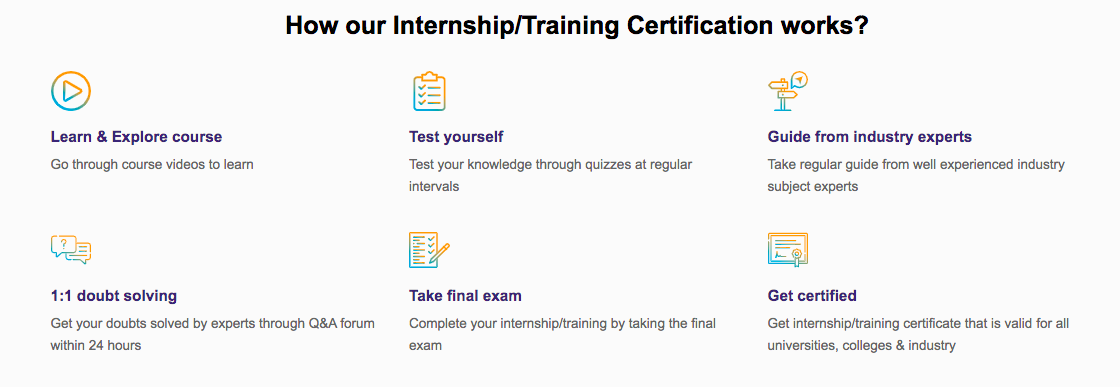
How EasyShiksha Internship/Training Program Works
The Role of EasyShiksha in Professional Certification
EasyShiksha has emerged as a valuable platform for students and professionals seeking accessible, career-oriented learning opportunities.
The platform offers a diverse range of online courses and certification programs that support both technical and non-technical skill development.
Through flexible learning formats, EasyShiksha enables learners to acquire new competencies while balancing academic, professional, and personal commitments.
Certification programs available through EasyShiksha help individuals strengthen their resumes, enhance employability, and demonstrate commitment to continuous learning.
The platform's focus on practical knowledge and professional development aligns closely with the needs of modern learners and employers.
For students seeking to build competitive profiles, EasyShiksha provides an effective pathway toward meaningful career growth.
Choosing the Right Certification
Selecting an appropriate certification requires careful consideration of personal goals, career aspirations, and industry requirements.
Individuals should identify skills that align with their desired career paths and evaluate certifications based on relevance, credibility, and practical value.
The most effective certifications are those that complement existing strengths while addressing areas for development.
Career growth often results from strategic learning decisions rather than simply accumulating credentials.
Students and professionals should focus on certifications that support long-term objectives and provide opportunities for meaningful skill enhancement.
Thoughtful certification choices contribute significantly to professional success.
Future Trends in Non-Technical Certifications
The importance of non-technical certifications is expected to increase as organizations place greater emphasis on human-centered skills.
Automation and artificial intelligence may transform many technical functions, but leadership, communication, creativity, emotional intelligence, and strategic thinking will remain essential.
Future certification programs are likely to focus increasingly on adaptability, collaboration, innovation, and lifelong learning.
Digital learning platforms will continue expanding access to professional development opportunities worldwide.
As workplace expectations evolve, individuals who invest in non-technical skill development will remain highly competitive and resilient.
The future belongs to professionals who combine technical expertise with strong interpersonal and business competencies.
Conclusion
Non-technical certifications have become powerful tools for career growth in today's dynamic and competitive professional landscape. While technical skills remain important, employers increasingly value leadership, communication, emotional intelligence, project management, business understanding, and other transferable competencies that support organizational success.
Certifications in areas such as leadership, project management, digital marketing, human resources, communication, entrepreneurship, customer relationship management, and personal development provide valuable opportunities for professional advancement. These credentials demonstrate commitment to continuous learning and help individuals build versatile skill sets applicable across industries.
Platforms like EasyShiksha play an important role in making quality education and certification programs accessible to learners worldwide. Through flexible online learning opportunities, EasyShiksha empowers students and professionals to develop relevant competencies, strengthen their resumes, and pursue meaningful career growth.
Ultimately, career success is built on a combination of knowledge, skills, adaptability, and continuous improvement. By investing in non-technical certifications and embracing lifelong learning, individuals can position themselves for long-term achievement, leadership opportunities, and professional excellence in an ever-changing world.
Anshika Jain is an Engineer, Developer, and Educational Content Author known for her dedication to technology and knowledge sharing. With a strong analytical mindset and a passion for innovation, she has consistently contributed to creating meaningful digital solutions and insightful educational articles.
Her ability to simplify complex technical concepts into engaging and easy-to-understand content makes her work valuable for students and learners across various platforms. Along with her technical expertise, Anshika is admired for her creativity, professionalism, and commitment to continuous learning.
She represents a perfect blend of technical excellence and impactful communication, inspiring others through both her development work and educational contributions.