For decades, education has been organised around courses. A student selects a subject, enrols in a programme, attends lessons, completes assignments, passes examinations, receives a certificate or degree, and eventually moves toward employment. Even digital learning platforms have largely followed this structure. They have transformed the delivery of education from classrooms to screens, but the fundamental unit of learning has often remained the same: the course.
The course is useful because it provides structure. It gives learners a defined subject, a sequence of lessons, assessments, and an identifiable outcome. However, the modern educational journey is becoming too complex to be represented through courses alone. Students increasingly learn from multiple platforms, combine academic programmes with online courses, acquire skills through projects, participate in internships, use simulations and quizzes, and continuously adapt their goals according to changes in technology and employment.
This creates an important question for the future of education: what if education were designed not merely as a collection of courses, but as a digital infrastructure that connects every major component of a student's learning and career journey?
A learning infrastructure layer would represent a fundamental change in how education technology is designed. Instead of treating courses, assessments, projects, internships, credentials, career guidance, and employment preparation as independent products, the infrastructure would connect them into a persistent system around the learner. The student would no longer move from one disconnected educational experience to another. Each experience could become part of a larger learning identity.
For a platform such as EasyShiksha, this concept offers an opportunity to think beyond course delivery. Online courses, quizzes, internships, certificates, career guidance, projects, university programmes, games, and job-readiness resources can become interconnected components of a broader learning infrastructure.
What Is a Learning Infrastructure Layer?
A learning infrastructure layer can be understood as the digital foundation that connects different educational experiences and allows them to work together. It is not simply another learning platform or a larger course marketplace. Its purpose is to provide continuity between the different activities through which a student learns and develops professionally.
Imagine a student beginning with a basic course in programming. The learning infrastructure could connect that course with diagnostic assessments, practice activities, projects, related skills, internship opportunities, certificates, and potential career pathways. If the student later develops an interest in data analytics, the infrastructure could use the student's previous learning to identify relevant next steps.
The key idea is continuity.
A traditional course marketplace primarily answers the question, “What can you learn?” A learning infrastructure layer asks a broader question: “How can everything you learn, practise, experience, and achieve contribute to your long-term development?”
This changes the role of technology from content distribution to learning coordination.
Why the Course-Centric Model Is Becoming Limited
The course-centric model was designed for a world in which educational pathways were relatively predictable. Students typically selected a field, completed a programme, and entered an associated profession. Today, that assumption is increasingly difficult to maintain.
A student studying commerce may learn data analysis. An engineering student may move toward product management. A computer science graduate may develop an interest in cybersecurity, artificial intelligence, entrepreneurship, or technical communication. A working professional may return to education several years after graduation to acquire an entirely new set of skills. These journeys cannot easily be represented by a linear sequence of courses.
The problem is not that courses are becoming irrelevant. The problem is that courses alone do not explain how learning accumulates. A student might complete ten courses but still struggle to understand how those courses collectively contribute to a career. Another student might complete only a few courses but gain substantial practical capability through projects and internships. Education therefore needs a layer that connects learning activity with capability development.
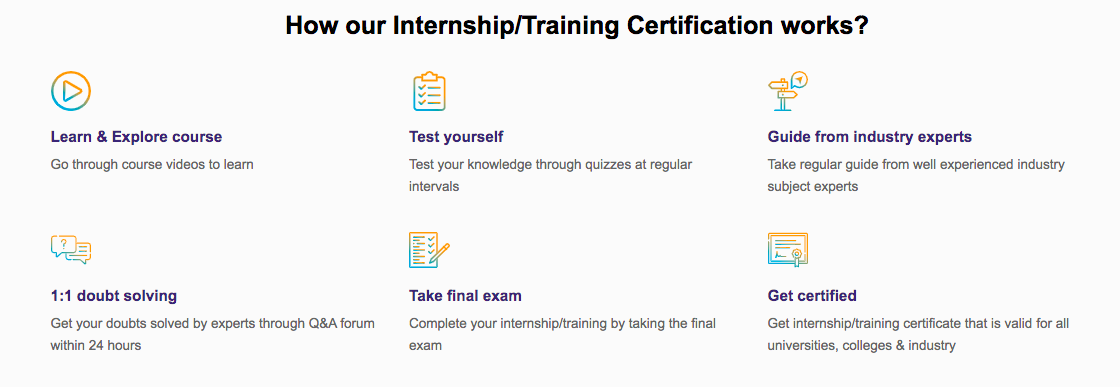
How EasyShiksha Internship/Training Program Works
From Content Platforms to Learning Infrastructure
The evolution of digital education can be viewed as a progression. The first stage focused on putting educational content online. The next stage introduced interactive lessons, assessments, certificates, and structured programmes. The emerging stage can focus on infrastructure.
A content platform primarily delivers information. A learning platform organises courses and learning activities. A learning infrastructure layer connects learning with assessment, practice, experience, credentials, identity, and career development. This distinction is important because infrastructure is designed to support many activities rather than one activity.
A student may use one system to learn a concept, another to complete a degree, another to participate in an internship, and another to search for employment. A learning infrastructure layer can potentially connect these experiences so that the learner's development does not become fragmented across separate digital environments.
The Student Becomes the Centre of the System
Traditional educational systems often place the institution at the centre. Universities, colleges, training providers, and employers maintain separate records, platforms, and processes. Students move between these systems. A learning infrastructure model reverses this structure by placing the student at the centre.
The student's learning identity becomes the continuous element that connects different educational experiences. Courses may change. Institutions may change. Career goals may change. Employers may change. The learner remains the constant.
This student-centred infrastructure could maintain an evolving understanding of skills, completed learning, assessments, projects, internships, credentials, interests, and career objectives. The purpose is not to create a surveillance system for students. It is to create continuity for learners.
A Digital Learning Identity
A major component of learning infrastructure could be a persistent digital learning identity. Instead of treating every course completion as a separate achievement, the system can connect learning experiences to an evolving student profile.
A student's profile could gradually demonstrate how knowledge and practical capabilities develop over time. Completing an introductory course could establish foundational knowledge. A quiz could provide evidence of understanding. A project could demonstrate practical application. An internship could add workplace experience. A certificate could document structured completion. Together, these experiences create a much richer educational record than a simple list of certificates.
For EasyShiksha, this concept can strengthen the relationship between courses, internships, quizzes, projects, certificates, and career guidance. Each feature can contribute to a connected learning identity instead of functioning as an isolated service.
Learning Infrastructure and the Skill Graph
A powerful learning infrastructure would not only record courses. It could understand the skills associated with those courses. This can be represented through the concept of a digital skill graph. A skill graph connects capabilities to learning resources, assessments, projects, career roles, and professional opportunities.
For example, communication skills might connect to public speaking courses, writing activities, presentation projects, internships, and career roles that require communication. Similarly, data analysis might connect to statistics, spreadsheets, Python, data visualisation, analytics projects, and business intelligence roles.
The student can therefore see relationships between what they learn and where those capabilities can be applied. This creates a more meaningful form of educational navigation.
Assessment Becomes Part of the Infrastructure
Assessment is often treated as the final stage of a course. A learning infrastructure approach can transform assessment into a continuous source of information. Quizzes can reveal foundational understanding. Practical assessments can evaluate application. Projects can demonstrate capability. Internship experiences can provide evidence of workplace performance.
The purpose is not to measure students constantly. Instead, assessment can help personalise learning and identify gaps.
For example, if a student performs strongly in theoretical concepts but struggles with practical application, the system can recommend additional projects or practice activities. If another learner already demonstrates strong foundational knowledge, the platform can help them move toward advanced learning. This makes assessment a navigation mechanism rather than simply a pass-or-fail checkpoint.
Projects as Infrastructure for Demonstrating Skills
One of the biggest weaknesses in traditional education is the separation between learning and evidence. Students often study concepts for examinations but have limited opportunities to demonstrate how those concepts can be used. Projects create a bridge between knowledge and capability.
A learning infrastructure layer can connect courses directly with practical projects. After completing a course, students can apply their knowledge in a structured environment. The resulting work becomes evidence that can contribute to their learning profile.
For example, a student completing a digital marketing course could create a campaign strategy, analyse performance data, develop content, or optimise a simulated marketing project. The learning experience therefore becomes more than course completion. This project-backed approach is particularly valuable when students enter competitive job markets where employers increasingly want evidence of practical capability.
Internships as Part of the Learning System
Internships are another area where education often becomes disconnected from learning platforms. Students may complete an online course on one platform and search for internships somewhere else. A learning infrastructure layer can connect these experiences.
When a student completes relevant coursework and demonstrates foundational knowledge, the system can guide them toward suitable practical experiences. Internship participation can then become another component of their learning record. This creates a continuous pathway from knowledge to practice.
The broader concept can be expressed as a connected journey: discover a subject, learn the fundamentals, test understanding, practise through projects, gain workplace exposure, document achievements, and identify the next capability to develop. This is closely aligned with the Learn, Practice, Intern model that can define a platform such as EasyShiksha.
Certificates Become Evidence Within a Larger System
Certificates remain useful in education because they provide formal evidence that a learner completed a particular programme. However, certificates become more meaningful when they exist within a larger learning record.
A certificate can show what a student completed, but it may not fully demonstrate what the student can do. A project can provide practical evidence. An assessment can provide evidence of understanding. An internship can provide evidence of experience.
A learning infrastructure layer can connect these forms of evidence. This creates a shift from certificate accumulation toward evidence-based learning identity. Students can still earn certificates, but the certificate becomes part of a larger story of capability.
Career Guidance as an Infrastructure Function
Career guidance is often treated as a separate service that students access when they are uncertain about their future. A learning infrastructure model can make career guidance continuous. The system can observe learning patterns, interests, assessment performance, completed projects, internship experiences, and stated goals. These signals can help generate more contextual guidance.
Suppose a student repeatedly chooses courses related to artificial intelligence but has a background in business. The system could introduce career possibilities where those interests intersect, such as AI product management, business analytics, technology consulting, or AI-enabled entrepreneurship.
The objective is not to tell the student which career to choose. Instead, the infrastructure can reveal pathways the learner may not have considered.
AI as the Intelligence Layer
Artificial intelligence can become the intelligence layer of learning infrastructure. However, its most useful role may not be generating content. It can also help interpret the relationships between different learning experiences.
An AI system could analyse learning progress and identify patterns. It could detect that a student is repeatedly struggling with a particular concept, recommend practice, identify related skills, or suggest projects that reinforce learning. AI could also support career exploration by comparing a student's developing capabilities with changing job requirements.
This creates a more adaptive education environment. The platform would not simply say, “Here is another course.” It could ask a more meaningful question: “Based on what you already know, what capability would create the greatest value for your next goal?”
Personalised Learning Without Creating Silos
Personalisation is often associated with recommending individual courses. However, true personalisation should operate across the entire learning journey.
A student should receive recommendations based not only on what they clicked or purchased but also on what they understand, what they have practised, what projects they have completed, what internships they have experienced, and where they want to go next.
This requires connected infrastructure. Without an underlying learning layer, personalisation remains fragmented. With one, recommendations can become more contextual. The student receives a pathway rather than a list.
The traditional education system separates learning from employment. Students study first and search for jobs later. A learning infrastructure layer can reduce this separation.
If skills, projects, assessments, and internships are connected to career roles, students can begin understanding employability during their learning journey rather than waiting until graduation.
Employers could eventually interact with verified skill profiles, project evidence, and relevant experience rather than relying entirely on traditional resumes. This does not mean replacing degrees. Instead, it creates additional evidence that complements formal qualifications.
The Resume Could Become a Dynamic Learning Record
The conventional resume is a static document. It captures selected information about education and experience at a particular point in time. A digital learning infrastructure can create something more dynamic.
A student's learning profile could evolve continuously as new courses, projects, assessments, internships, and credentials are completed. Instead of manually rewriting a resume after every achievement, the underlying learning record can remain current.
The student could choose which parts of that record to share with universities, employers, internship providers, or professional networks. This could eventually create a portable education and skills identity that follows the learner across different stages of life.
Supporting Lifelong Learning
Learning infrastructure becomes even more important after formal education ends. Traditional education often assumes that graduation marks the completion of learning. Modern careers make that assumption increasingly unrealistic.
Professionals need to reskill as technologies change. Entrepreneurs need new knowledge as businesses evolve. Employees may move between industries. Students may become professionals and later return to education. A persistent learning infrastructure allows the learning journey to continue.
The same educational identity created during school or university could potentially evolve through professional courses, certifications, projects, internships, and new career transitions. Education becomes a lifelong system rather than a temporary phase.
The Role of Universities in an Infrastructure-Based Model
A learning infrastructure layer does not necessarily compete with universities. Instead, it can complement them. Universities provide deep academic education, faculty expertise, research opportunities, credentials, and social learning environments. Digital platforms can provide additional flexibility, practical learning, skills development, internships, and continuous education.
The future may therefore involve greater interoperability between formal and digital education.
A student's university degree could coexist with online courses, industry certifications, project evidence, and internship experience within a broader learning identity. This creates a more complete representation of education.
From Fragmented Learning to Connected Learning
The greatest promise of learning infrastructure is reducing fragmentation.
Today, students may have one academic record, several course certificates, a separate internship record, a resume, a portfolio, and accounts across multiple learning platforms. Each represents a part of their development, but the connections between them may remain invisible. Infrastructure can provide the missing layer.
It can connect knowledge to skills, skills to projects, projects to experience, experience to credentials, and credentials to career possibilities. The result is not simply more data. It is more meaningful continuity.
Designing Infrastructure Around the Student's Future
The most important principle of learning infrastructure is that it should be designed around the student's evolving needs rather than the structure of a particular institution or platform.
Students should be able to explore without losing progress. They should be able to change goals without discarding previous learning. They should be able to demonstrate capabilities through projects and experiences. They should be able to understand where their skills can lead. This requires a system that is flexible enough to support multiple pathways.
The future learner may not have one degree, one career, or one educational platform. Their journey may cross universities, online courses, internships, professional programmes, projects, and workplace learning. Infrastructure provides the continuity that makes this fragmented environment feel like one journey.
EasyShiksha as a Connected Learning Environment
The broader potential of EasyShiksha can be understood through this infrastructure perspective. Its courses can provide structured knowledge, quizzes can support assessment, projects can create practical evidence, internships can provide workplace exposure, certificates can document achievement, and career guidance can help learners make informed decisions. When these components are connected, they can support a much broader educational experience.
A student could discover a subject through a course, test understanding through quizzes, strengthen skills through practice, apply knowledge through a project, gain exposure through an internship, earn a certificate, and then explore a related career pathway.
The learning experience becomes continuous.This is more powerful than simply offering a large catalogue of courses because the value of a learning platform increasingly depends on how well it helps students move from one stage to the next.
The Education Operating Layer of the Future
If this concept develops further, learning infrastructure could become an underlying operating layer for education.
Just as digital infrastructure enables different applications to communicate and function together, an education infrastructure layer could allow courses, assessments, universities, projects, internships, credentials, employers, and career services to interact around the learner. This would represent a major shift in educational technology.
The platform would no longer be judged only by the number of courses it offers. It would also be evaluated by how effectively it connects learning experiences and helps students convert education into capabilities and opportunities. The infrastructure itself becomes the product.
Challenges in Building Learning Infrastructure
Creating such a system would not be simple. Education involves different institutions, standards, credentials, technologies, privacy requirements, and definitions of skills. Universities may maintain different systems, employers may evaluate candidates differently, and learning platforms may use different data structures. Interoperability would therefore become essential.
There are also significant privacy considerations. Students should have meaningful control over their educational data. Recommendations should be transparent, and sensitive information should not be used irresponsibly.
Another challenge is avoiding excessive automation. Education is not purely a data problem. Mentors, teachers, peers, employers, and communities continue to play important roles. Technology should connect and enhance these relationships rather than attempting to eliminate them.
Empower your team. Lead the industry
Get a subscription to a library of online courses and digital learning tools for your organization with
EasyShiksha
What Happens When Education Becomes Infrastructure?
If education becomes infrastructure, the meaning of learning changes.
A course is no longer an isolated destination. It becomes a component within a larger system. A quiz is not simply an examination. It becomes a signal about understanding. A project is not merely an assignment. It becomes evidence of capability. An internship is not only work experience. It becomes part of the learning journey. A certificate is not the final achievement. It becomes one verified element of a broader educational identity.
This creates an ecosystem in which every meaningful learning experience can contribute to future opportunities. The student does not have to start from zero every time a new goal appears.
Conclusion: From Course Catalogue to Learning Infrastructure
The future of education may not be defined by how many courses a platform can offer. It may be defined by how effectively the platform connects everything a student does with what they can become.
A learning infrastructure layer represents this transition. It connects courses with skills, quizzes with understanding, projects with evidence, internships with experience, certificates with credentials, and learning with careers. It creates continuity across an educational journey that is increasingly flexible, nonlinear, and lifelong.
For students, this can mean less fragmentation and greater control over their development. They can explore new fields without losing the value of previous learning. They can build practical evidence alongside academic knowledge. They can understand how individual learning experiences contribute to broader career possibilities.
For platforms such as EasyShiksha, the opportunity is to move beyond being viewed simply as an online course provider. By connecting online learning, quizzes, internships, certificates, projects, career guidance, university pathways, and job-readiness resources, the platform can participate in a larger vision of connected education.
The ultimate goal is not to create the biggest catalogue of learning content. It is to create a system in which learning remains useful after the course ends.
Anshika Jain is an Engineer, Developer, and Educational Content Author known for her dedication to technology and knowledge sharing. With a strong analytical mindset and a passion for innovation, she has consistently contributed to creating meaningful digital solutions and insightful educational articles.
Her ability to simplify complex technical concepts into engaging and easy-to-understand content makes her work valuable for students and learners across various platforms. Along with her technical expertise, Anshika is admired for her creativity, professionalism, and commitment to continuous learning.
She represents a perfect blend of technical excellence and impactful communication, inspiring others through both her development work and educational contributions.