Online education has transformed the way students acquire knowledge, develop technical skills, and prepare for professional opportunities. Through digital learning platforms, students can access structured courses in programming, business management, digital marketing, finance, artificial intelligence, cybersecurity, design, and numerous other disciplines. Many courses provide recorded lectures, reading materials, quizzes, assignments, practical exercises, and certificates that help learners demonstrate their academic progress. However, completing a course does not necessarily mean that a student understands how to apply the acquired knowledge in a professional environment. Between knowing a subject and performing a real workplace responsibility lies an important but frequently overlooked educational gap known as the hidden curriculum problem.
The hidden curriculum refers to the professional knowledge, workplace behaviours, practical judgement, communication habits, and informal expectations that individuals are expected to understand but are not always explicitly taught. Traditional education often concentrates on formal subject knowledge, while professional environments require additional capabilities that develop through observation, collaboration, experience, and exposure to real situations. An online course may teach students how to write a programming function, analyse financial statements, design a website, or create a marketing campaign, but it may not explain how to handle an unclear client requirement, communicate a technical limitation, document a decision, respond to feedback, or manage an unexpected project delay.
This gap creates a challenge for students, fresh graduates, and professionals who rely on online education to improve their employability. They may complete several courses and earn certificates but still feel unprepared when they encounter actual workplace responsibilities. The problem does not necessarily arise because the courses contain incorrect information. Instead, it often occurs because professional knowledge is distributed across formal training, workplace experience, team interactions, organisational practices, and industry-specific expectations. If online learning platforms want to prepare students for meaningful careers, they must examine not only what their courses teach but also what learners are expected to discover independently.
For an education ecosystem such as EasyShiksha, this issue presents an opportunity to connect online courses, quizzes, practical projects, educational games, internships, worksheets, certificates, and career guidance into a more complete learning experience. Rather than treating course completion as the final measure of readiness, educational platforms can identify the professional capabilities that remain unaddressed and create structured opportunities for students to develop them.
Understanding the Hidden Curriculum in Professional Education
The hidden curriculum is different from the official curriculum because it includes knowledge and expectations that are not always mentioned in course objectives, lesson descriptions, or assessment criteria. A formal curriculum might specify that students will learn JavaScript, database management, project planning, or financial analysis. The hidden curriculum includes understanding how to work with other people, make decisions when information is incomplete, communicate uncertainty, follow professional standards, and take responsibility for the consequences of a task.
In educational institutions, students frequently encounter informal expectations through classroom participation, relationships with teachers, group assignments, academic competition, and institutional culture. In professional environments, these expectations become more complex because employees must work within organisational structures, communicate with different departments, follow deadlines, manage competing priorities, and produce outcomes that affect other people. These capabilities are often learned gradually through workplace exposure rather than through formal instruction.
Online education can unintentionally reproduce this gap. A course creator may design an excellent technical curriculum but assume that learners already understand how to behave in a professional environment. A programming course may explain syntax, functions, objects, and frameworks without demonstrating how developers collaborate through code reviews or manage changes to an existing application. Similarly, a digital marketing course may teach search engine optimisation techniques without explaining how to communicate performance limitations to a client or justify a campaign strategy using measurable evidence.
The hidden curriculum therefore represents a difference between educational knowledge and professional operating knowledge. Both are important, but they serve different purposes. Subject knowledge helps students understand what needs to be done, while professional knowledge helps them determine how, when, why, and under what conditions a task should be completed. A comprehensive learning experience must develop both.
Why Online Courses Accidentally Leave Out Professional Knowledge
One major reason professional knowledge remains outside online courses is the pressure to organise education around clearly defined learning outcomes. Course creators generally need to describe what learners will understand after completing a programme. These outcomes are easier to communicate when they involve identifiable concepts, technical procedures, or measurable assessments. A course can promise that students will learn spreadsheet formulas, build a website, understand financial ratios, or create a machine learning model. However, explaining that learners will develop professional judgement, handle difficult conversations, or recognise organisational risks is considerably more complicated.
Another reason is the difficulty of standardising workplace knowledge. Technical concepts can often be taught through repeatable examples and structured exercises. Professional situations, however, depend on context. The correct way to respond to a project delay may depend on the client's expectations, the team's responsibilities, the importance of the deadline, and the availability of alternative resources. There is rarely one universal answer that applies to every organisation. Consequently, course developers may avoid these subjects because they require realistic scenarios, contextual explanations, and assessments that evaluate decision-making rather than simple factual recall.
The separation between academic content and industry practice also contributes to the problem. Some online courses are created primarily by subject specialists who understand the technical discipline but have limited experience designing workplace simulations. Others are developed around industry tools and practical demonstrations but do not explain the broader professional responsibilities associated with using those tools. Without a connection between educators, employers, and experienced practitioners, important workplace expectations can remain invisible.
Finally, online education often emphasises convenience and flexible learning. Students can watch lectures at their own pace, complete assessments independently, and access resources from different locations. This flexibility is valuable, but it can reduce exposure to situations in which learners must coordinate with others, explain their reasoning, negotiate responsibilities, or respond to unexpected changes. When education focuses mainly on individual progress, collaborative professional capabilities may receive insufficient attention.
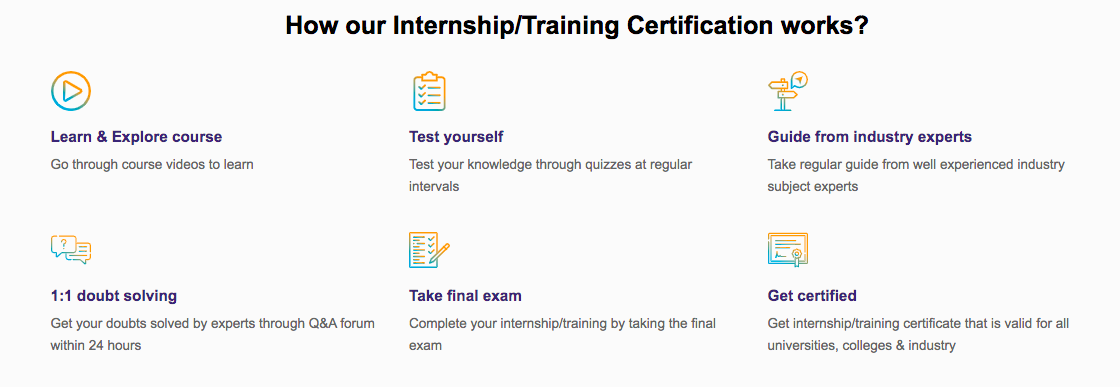
How EasyShiksha Internship/Training Program Works
The Missing Ability to Work With Ambiguous Requirements
One of the most important forms of hidden professional knowledge is the ability to work with incomplete or ambiguous requirements. Educational exercises generally provide clearly defined questions and expected outcomes. Students are told what information is available, what task must be completed, and sometimes which method should be used. Real professional assignments rarely provide the same level of clarity.
A software developer might receive a request to improve website performance without being told which pages are most important, what performance target is expected, or whether the existing infrastructure can support major changes. A marketing professional might be asked to increase customer engagement without receiving a clear definition of engagement or access to complete historical data. An analyst may be expected to explain a decline in revenue even when the available information does not reveal a single obvious cause.
Professionals must learn to identify missing information, ask useful questions, establish assumptions, and clarify what success should look like. They must also recognise when proceeding without clarification could create unnecessary risks. These activities require judgement and communication, not simply subject knowledge.
Online courses can address this gap by introducing assignments that begin with incomplete briefs. Instead of giving learners a fully prepared problem, a course can provide a realistic project description containing missing details, conflicting expectations, and uncertain constraints. Students can then practise identifying what they need to know before starting the task. Assessment can evaluate the quality of their questions, assumptions, and proposed approach rather than only the final output.
For EasyShiksha, this could become a practical learning feature across technical and non-technical courses. Students enrolled in web development, business management, marketing, or data analytics programmes could receive simulated client requirements and learn how to convert unclear requests into structured project plans. Such exercises would introduce professional problem interpretation before students enter internships or employment.
Communication Skills That Technical Courses Often Overlook
Communication is frequently described as an important workplace skill, yet it is not always integrated into the technical subjects where it is most needed. A student may understand how to develop an application but struggle to explain why a particular technology was selected. A finance learner may calculate business performance indicators correctly but find it difficult to communicate their meaning to a non-financial audience. A cybersecurity student may identify a vulnerability but lack experience explaining its potential business impact to management.
Professional communication involves more than speaking confidently or writing grammatically correct sentences. It includes presenting evidence, explaining decisions, adapting technical information to different audiences, documenting work, asking for clarification, reporting problems, and communicating limitations. It also requires understanding when information should be shared, who needs to receive it, and how much detail is appropriate.
For example, a developer reporting a software defect to another team must provide enough information for the issue to be reproduced and investigated. A project coordinator communicating a delay must explain the reason, expected consequences, and possible alternatives. An analyst presenting research findings must distinguish between verified conclusions, assumptions, and areas requiring further investigation.
These responsibilities can be taught through subject-specific exercises rather than being separated into a generic communication course. A programming assignment could require students to prepare a short technical explanation for a client. A data analytics project could include an executive summary that translates numerical findings into business implications. A design course could ask learners to present their decisions and respond to stakeholder feedback.
EasyShiksha can connect such communication activities with course projects, worksheets, and assessments. This approach would help students practise explaining what they have learned while demonstrating how they can communicate their knowledge in professional situations.
Documentation, Reporting, and Knowledge Transfer
Documentation is another area where professional expectations frequently exceed what formal courses teach. Students may complete assignments by submitting code, presentations, spreadsheets, or project reports, but workplace documentation serves a broader purpose. It helps other people understand how a system works, why a decision was made, what limitations exist, and how future changes should be handled.
In software development, documentation may include installation instructions, application architecture, API specifications, troubleshooting procedures, and change histories. In research, it can include experimental methods, data sources, assumptions, and limitations. In business operations, it may involve process descriptions, meeting decisions, compliance records, and performance reports.
The ability to produce useful documentation is not simply a matter of writing more information. Professional documentation must be accurate, organised, understandable, and relevant to the people who will use it. It should also remain useful when the original creator is unavailable. This introduces an important workplace principle: knowledge must be transferable rather than remaining dependent on one individual's memory.
Online courses often treat documentation as a final submission requirement instead of an ongoing professional activity. Students may be asked to write a report after completing a project, but they do not always practise maintaining records while the work is progressing. As a result, they may not understand how documentation supports collaboration, troubleshooting, accountability, and long-term maintenance.
A more effective educational approach would require learners to document project decisions, record changes, explain technical dependencies, and prepare instructions for another student to continue their work. This would make documentation an integral part of the learning process.
Feedback Literacy and the Ability to Improve Work
Receiving feedback is a normal part of professional life, but the ability to interpret and use feedback is not always taught explicitly. In academic settings, feedback may be communicated through grades, comments, or corrections. Students often focus on whether their answers are right or wrong without examining how the feedback can improve their reasoning or working methods.
Professional feedback can be more complex. A manager may request a different approach because of business priorities. A client may reject a design that technically meets the original brief. A colleague may identify problems in a report that the author considered complete. These situations require individuals to separate personal reactions from the practical information contained in feedback.
Feedback literacy involves understanding the purpose of a comment, evaluating whether it is supported by evidence, identifying the necessary changes, and deciding how to apply the information. It also includes the ability to request clarification when feedback is vague or contradictory.
Online courses can develop this capability by introducing revision-based assignments. Instead of allowing students to submit a project only once, courses can provide structured feedback and require learners to revise their work. The assessment can consider how effectively students respond to feedback, explain their revisions, and identify what they learned from the process.
Peer review can also contribute to this development. Students can examine each other's projects, identify strengths, explain potential improvements, and practise receiving different perspectives. This creates a learning environment in which feedback becomes a professional activity rather than simply a method of grading.
Time Management, Prioritisation, and Responsibility
Time management is often mentioned in career guidance, but its practical meaning can be underestimated in online education. Completing lessons according to a timetable is different from managing multiple professional responsibilities that compete for attention. Employees may need to handle urgent requests, long-term projects, meetings, revisions, administrative tasks, and unexpected problems simultaneously.
The hidden curriculum includes knowing how to prioritise work according to urgency, importance, dependencies, and consequences. A professional must understand that completing every task immediately is not always possible. They must communicate realistic deadlines, identify blockers, estimate effort, and inform relevant people when priorities need to change.
For instance, a web developer may be assigned a new feature while also being responsible for fixing a serious security issue. A marketing professional may need to respond to a campaign problem while preparing a scheduled performance report. A student who has only practised isolated assignments may find it difficult to manage these competing responsibilities.
Educational platforms can introduce realistic project schedules in which students work with several connected tasks. Some tasks may depend on earlier activities, while others may change in priority because of new information. Learners can practise planning their work, estimating completion time, identifying dependencies, and explaining delays.
These exercises would also help students understand accountability. Professional responsibility involves more than completing an assigned task. It includes communicating progress, reporting problems honestly, taking ownership of mistakes, and ensuring that others are not left unaware of important changes.
Collaboration and the Informal Rules of Teamwork
Many online courses encourage students to study independently, but professional work is rarely an entirely individual activity. Even roles that involve specialised technical responsibilities usually require coordination with managers, colleagues, clients, or other departments. Collaboration therefore includes a set of informal expectations that learners may not encounter through individual assessments.
Effective teamwork requires individuals to understand responsibilities, share information, respect different perspectives, manage disagreements, and coordinate activities. It also involves recognising that other people may have different priorities or levels of technical knowledge. A developer, designer, project manager, and client may all view the same project from different perspectives.
Students who have completed individual assignments may understand their subject but lack experience integrating their work into a shared outcome. They may not know how to divide responsibilities, manage overlapping tasks, resolve conflicting suggestions, or communicate when another person's work affects their own progress.
Online education can introduce collaborative learning environments that reproduce some of these professional conditions. Students can work in small teams on a shared project, maintain responsibility for separate components, and coordinate their contributions through structured milestones. The project can include changing requirements so that learners must discuss adjustments and negotiate responsibilities.
Educational games can provide another way to develop collaboration. A team-based simulation could require students to manage a business, resolve a technical incident, or deliver a project with limited resources. Each participant could receive different information, making communication essential for reaching a successful outcome.
Ethical Judgement and Professional Decision-Making
Ethical knowledge is another important component of the hidden curriculum. Students may learn formal rules, legal principles, or professional standards, but they do not always practise applying them when different responsibilities conflict. Professional decisions can involve privacy, fairness, accuracy, transparency, intellectual property, accessibility, and the responsible use of technology.
For example, a data analyst may have access to personal information that is not necessary for a particular report. A developer may discover a security weakness that could affect users. A marketing professional may be asked to present results in a way that creates an exaggerated impression of campaign performance. An artificial intelligence learner may need to consider whether a dataset contains bias or whether an automated output should be reviewed by a human.
These situations require more than memorising ethical principles. Individuals must recognise potential consequences, consider affected stakeholders, examine relevant rules, and justify their decisions. Ethical judgement also involves understanding when a situation should be escalated to a supervisor or specialist.
Online courses can integrate ethical decision-making into ordinary subject assignments. A cybersecurity course could include a scenario involving responsible vulnerability disclosure. A data science programme could ask learners to examine privacy risks in a dataset. A business course could introduce a conflict between short-term performance targets and transparent reporting.
EasyShiksha could strengthen this approach by incorporating ethical scenarios into quizzes, worksheets, games, and practical projects. This would help learners understand that professional competence includes not only the ability to produce results but also the responsibility to produce them appropriately.
Empower your team. Lead the industry
Get a subscription to a library of online courses and digital learning tools for your organization with
EasyShiksha
Understanding Workplace Tools, Processes, and Organisational Culture
Another hidden area of professional knowledge involves the systems and processes through which organisations operate. Online courses often teach popular software tools, but knowing how to use an application does not automatically prepare someone to work within an organisation's operational environment.
A student may learn a project management tool but not understand how teams use it to assign responsibilities, record decisions, monitor dependencies, and report progress. A learner may know how to create a spreadsheet but not understand how an organisation manages data validation, version control, access permissions, and approval processes. Similarly, knowing how to use a design application does not necessarily explain how design files move through review, approval, and production.
Organisational culture also influences professional behaviour. Different companies may have different communication styles, reporting structures, decision-making processes, and expectations around independence. Employees must understand how to operate within these systems without losing the ability to question inefficient or inappropriate practices.
Online education can introduce organisational simulations in which students work within a fictional company structure. They could receive project assignments, interact with simulated stakeholders, submit progress updates, and follow approval procedures. These activities would help learners understand the relationship between individual tasks and larger organisational systems.
Such learning experiences are particularly valuable for students entering their first internship or employment opportunity because they reduce the uncertainty associated with unfamiliar workplace processes.
Commercial Awareness: Understanding Why Professional Work Matters
Professional knowledge also includes understanding the business or organisational purpose behind a task. A student may be able to build a website, create a presentation, or analyse a dataset without understanding how that work contributes to customer experience, revenue, operational efficiency, risk reduction, or organisational strategy.
Commercial awareness does not mean that every learner must become a business expert. It means understanding that professional work operates within constraints and serves specific objectives. A technically impressive solution may still be unsuitable if it is too expensive, difficult to maintain, inaccessible to users, or inconsistent with the organisation's priorities.
For example, a developer may prefer an advanced technology because it offers greater flexibility, but a business may need a simpler solution that can be maintained by its existing team. A marketing professional may recommend an expensive campaign, but its financial value must be evaluated against expected returns. A data analyst may identify an interesting pattern that has little practical relevance to the organisation's decision-making needs.
Courses can address this gap by adding business context to technical assignments. Students could be asked to explain the cost, benefits, risks, maintenance requirements, and expected impact of their proposed solutions. These activities would connect subject knowledge with professional judgement.
For EasyShiksha, this could become an important feature of advanced courses and internship preparation. A learner should not only demonstrate that they can complete a task but also explain why the task matters and how the result could be used in a real organisational setting.
Learning to Handle Mistakes, Failure, and Unexpected Outcomes
Traditional assessments often reward correct answers and successful outcomes. Although this is useful for measuring understanding, it can unintentionally create the impression that professional work should proceed according to a predictable sequence. In reality, projects frequently involve mistakes, failed experiments, unexpected results, and incorrect assumptions.
Professionals must know how to recognise errors, investigate their causes, communicate their consequences, and prevent similar problems in the future. They must also understand the difference between an individual mistake, a process failure, and a problem caused by insufficient information or unrealistic expectations.
A student who receives a low score on a quiz may simply memorise the correct answer before attempting another assessment. A professional facing a failed project must perform a deeper investigation. They may need to examine the original requirements, review decisions, analyse dependencies, identify communication failures, and determine whether the process itself needs improvement.
Online courses can introduce failure analysis through practical exercises. Students could receive an incomplete software project, an inaccurate business report, or a scientific experiment with unexpected results. Their task would be to investigate what happened and recommend corrective action.
Educational games can make this process more engaging by introducing decisions whose consequences become visible over time. Students could experience how an early planning mistake affects later project stages, how poor communication creates operational delays, or how an incorrect assumption influences a business decision.
This approach would encourage learners to see mistakes as opportunities for investigation rather than simply as evidence of failure.
The Role of Internships in Making Hidden Knowledge Visible
Internships are particularly valuable because they expose students to professional situations that are difficult to reproduce completely through lectures or standardised assessments. During an internship, learners may observe how employees communicate, manage deadlines, respond to supervisors, document tasks, and coordinate with colleagues. These experiences reveal professional expectations that may not appear in formal course material.
However, internships do not automatically solve the hidden curriculum problem. Some internships provide limited responsibilities, repetitive assignments, or insufficient guidance. Students may spend time observing workplace activities without understanding why particular decisions are made. Others may receive tasks without structured feedback or clear learning objectives.
A more effective internship model should connect practical responsibilities with explicit learning outcomes. Students should understand what professional capability they are expected to develop, how their work will be reviewed, and what evidence will demonstrate their progress. Mentors should explain not only what needs to be completed but also why the task matters, which constraints influence it, and how the result fits into the organisation's operations.
EasyShiksha can support this process by connecting online courses with structured internship experiences. A student completing a web development course, for example, could progress to an internship involving website maintenance, issue reporting, documentation, testing, and communication with a project supervisor. The internship would reinforce technical learning while introducing the professional practices that are difficult to acquire through isolated lessons.
How EasyShiksha Can Integrate the Hidden Curriculum Into Online Learning
The hidden curriculum problem presents an opportunity for EasyShiksha to move beyond conventional course delivery and develop a connected learning environment that prepares students for professional responsibilities. Instead of treating technical knowledge, workplace skills, assessments, and internships as separate educational products, the platform can connect them through shared learning objectives.
An online course could begin by identifying the technical capabilities learners must acquire alongside the professional capabilities required to apply them. A web development course, for instance, could include coding concepts, website development, version control, documentation, requirement clarification, testing, and communication. Students would gradually encounter these capabilities through lessons and assignments rather than receiving them as unrelated topics.
Quizzes could assess whether learners understand professional situations and can identify appropriate responses. Unlike conventional factual questions, scenario-based assessments could ask students to evaluate conflicting project requirements, recognise documentation problems, identify ethical risks, or select an appropriate communication approach. These questions would help measure professional awareness alongside subject knowledge.
Worksheets could introduce structured exercises that require students to prepare project briefs, document decisions, analyse errors, estimate task duration, and evaluate feedback. Such activities would provide opportunities to practise professional processes in a controlled learning environment. They would also produce evidence that instructors could use to understand how students approach practical responsibilities.
Educational games could introduce dynamic workplace simulations. Students might manage a project with limited resources, respond to changing customer requirements, coordinate team responsibilities, or investigate an operational problem. The consequences of their decisions could influence later stages of the simulation, helping learners understand that professional judgement involves considering both immediate and long-term outcomes.
Internships could then extend these experiences into practical work. Students would apply their technical skills while developing communication, accountability, collaboration, documentation, and workplace awareness. Structured mentor feedback would help them understand which capabilities they have demonstrated and which require further development.
Certificates could also become more meaningful when they reflect a broader range of demonstrated capabilities. Instead of indicating only that a student completed a course, a certificate or associated learning record could describe the subject knowledge, practical projects, and professional competencies that were assessed. This would provide students with a clearer account of what they can do and help employers understand the nature of their learning experience.
Measuring Professional Readiness Beyond Course Completion
One of the biggest challenges in addressing the hidden curriculum is deciding how to measure it. Technical knowledge can often be evaluated through tests, practical exercises, and project submissions. Professional capabilities are more complex because they involve behaviour, judgement, communication, and the ability to adapt to different situations.
A single multiple-choice quiz cannot fully measure whether a learner can collaborate effectively or communicate a project delay responsibly. Similarly, a completed assignment does not necessarily demonstrate that a student can respond appropriately to feedback or manage competing priorities. Professional readiness must therefore be evaluated through multiple forms of evidence.
A stronger assessment framework could combine scenario-based quizzes, project documentation, practical assignments, peer reviews, simulations, and internship feedback. Each method would reveal a different aspect of a learner's capabilities. A project might demonstrate technical competence, while a written decision record could show reasoning and documentation skills. A collaborative simulation could reveal communication and coordination abilities, while an internship review could provide evidence of performance in a workplace setting.
The purpose of this approach should not be to create an unrealistic numerical score for every professional behaviour. Some capabilities are context-dependent and require human interpretation. Instead, the platform should build a more complete picture of learner development through observable evidence, clear assessment criteria, and constructive feedback.
For EasyShiksha, this could support a competency-based learning model in which students progress from introductory knowledge to practical application and then to workplace experience. Course completion would remain important, but it would become one part of a larger demonstration of readiness.
Frequently Asked Questions
Q. How can I apply for an internship with EasyShiksha?
You can apply by visiting our website, browsing available internships, and following the application instructions provided.
Q. What types of internships are available through EasyShiksha?
EasyShiksha offers a wide range of internships across technology, business, marketing, healthcare, and more.
Q. Will I receive a certificate upon completing an internship?
Yes, upon successful completion, you will receive a certificate recognizing your participation and achievements.
Q. Are EasyShiksha's certificates recognized?
Yes, the certificates are recognized by universities, colleges, and employers worldwide.
Q. When can I start the course?
You can choose any course and start immediately without delay.
Q. What are the course and session timings?
These are fully online courses. You can learn at any time and pace that fits your schedule.
Q. What will happen when my course is over?
After completion, you will have lifetime access to the course for future reference.
Q. Can I download the notes and study material?
Yes, you can access and download course materials and have lifetime access for future reference.
Q. What software/tools would be needed?
All necessary software/tools will be shared during the training as needed.
Q. I’m unable to make a payment. What should I do?
Try using a different card. If the problem persists, email us at info@easyshiksha.com.
Q. Do I get the certificate in hard copy?
No, only a soft copy is provided, which can be downloaded and printed if required.
Q. The payment got deducted but shows “failed”?
The deducted amount will be returned to your account in 7-10 working days automatically.
Q. Payment successful but dashboard shows ‘Buy Now’?
Reflection may take 30 mins. If longer, email info@easyshiksha.com with your screenshot.
Q. What is the refund policy?
Refunds are available for technical issues. No refunds once a certificate is generated.
Q. Can I enroll in a single course?
Yes, select any course, complete the details, and start learning immediately.
Q. Need further help?
Contact us at info@easyshiksha.com for any other questions.
The Challenges of Teaching Informal Professional Knowledge Online
Although integrating the hidden curriculum into online education offers significant benefits, it also creates design challenges. The first challenge is variation across industries. Communication expectations in software development may differ from those in healthcare administration, financial services, design, or hospitality. A universal professional skills module may introduce useful principles, but it cannot cover every situation in sufficient depth.
The second challenge is assessment reliability. Professional judgement cannot always be measured through standardised answers because different approaches may be appropriate under different circumstances. Course designers must develop realistic evaluation criteria that recognise reasoning, context, and responsible decision-making rather than rewarding only one expected response.
Another challenge is the availability of authentic industry examples. Educational platforms need realistic scenarios that reflect actual professional responsibilities without exposing confidential business information. Collaboration with industry professionals, internship mentors, and experienced educators can help create credible learning activities.
There is also a risk of overwhelming students with too many additional requirements. If every course introduces extensive communication reports, documentation tasks, simulations, and reflection exercises, learners may experience unnecessary workload. The solution is to integrate professional capabilities into existing subject activities rather than adding disconnected assignments. A project can assess technical knowledge and documentation simultaneously, while a presentation can evaluate both subject understanding and professional communication.
Artificial intelligence may help generate variations of practice scenarios, provide initial feedback, and adapt learning activities to different skill levels. However, AI-generated feedback should not replace human judgement in complex professional situations. Instructors and industry mentors remain important for evaluating context, ethical reasoning, and the quality of real-world performance.
The Future of Online Education: From Content Delivery to Professional Capability Development
The future of online education will increasingly depend on whether platforms can demonstrate that learning leads to meaningful capabilities. Access to information is becoming easier, and students can find tutorials, recorded lectures, and technical explanations across numerous digital services. The greater challenge is helping learners convert information into reliable performance.
This shift requires a broader definition of educational success. A student should not be evaluated only by how many lessons they have watched or how many certificates they have earned. The learning experience should also reveal whether they can solve unfamiliar problems, work with incomplete information, communicate decisions, collaborate with others, and respond responsibly to changing circumstances.
Future learning platforms may use adaptive systems to identify missing professional capabilities alongside subject knowledge. If a student demonstrates strong programming skills but struggles with documentation, the platform could recommend targeted exercises. If another learner performs well in individual assignments but experiences difficulty in collaborative simulations, the system could introduce team-based activities and communication practice.
Learning records could also become more detailed. Instead of presenting course completion as a single achievement, platforms could maintain evidence of projects, practical assessments, internship responsibilities, and demonstrated professional behaviours. This would help students communicate their capabilities more clearly when applying for jobs or further educational opportunities.
EasyShiksha can contribute to this development by creating a connected structure in which courses establish knowledge, quizzes measure understanding, worksheets develop practical reasoning, games simulate professional decisions, projects demonstrate application, and internships introduce workplace experience. This would help transform online education from a collection of learning resources into a more comprehensive professional development environment.
Conclusion: Teaching What Students Need to Know but Courses Often Leave Unsaid
The hidden curriculum problem reveals an important limitation in conventional online education. Students may complete courses, pass assessments, and earn certificates while remaining unfamiliar with the informal knowledge required to operate effectively in professional environments. Ambiguous requirements, communication, documentation, collaboration, feedback, accountability, ethical judgement, commercial awareness, and workplace processes are all essential capabilities, yet they are not always taught explicitly.
These gaps should not be interpreted as evidence that online education is ineffective. Instead, they demonstrate that professional readiness requires a broader educational design. Technical knowledge must be connected with practical decision-making, realistic scenarios, structured feedback, and opportunities to experience workplace responsibilities. When these elements are integrated, students gain a clearer understanding of how their learning can be applied beyond the course environment.
For EasyShiksha, addressing the hidden curriculum problem means connecting courses, quizzes, worksheets, games, projects, internships, and certificates through a shared focus on professional capability development. Students should be able to understand a concept, apply it to a realistic task, explain their decisions, learn from feedback, and demonstrate their progress through practical evidence. This integrated approach can help reduce the gap between completing an online course and becoming prepared for professional responsibilities.
Ultimately, the most valuable online education does not only teach students what they are expected to know. It also makes visible the professional knowledge they might otherwise be expected to discover on their own. By teaching these overlooked capabilities deliberately, online learning platforms can help students move from possessing information to demonstrating competence, confidence, and workplace readiness.
Anshika Jain is an Engineer, Developer, and Educational Content Author known for her dedication to technology and knowledge sharing. With a strong analytical mindset and a passion for innovation, she has consistently contributed to creating meaningful digital solutions and insightful educational articles.
Her ability to simplify complex technical concepts into engaging and easy-to-understand content makes her work valuable for students and learners across various platforms. Along with her technical expertise, Anshika is admired for her creativity, professionalism, and commitment to continuous learning.
She represents a perfect blend of technical excellence and impactful communication, inspiring others through both her development work and educational contributions.