For many students, the transition from education to employment is one of the most significant changes in their lives. Years of classroom learning, examinations, assignments and academic projects can provide valuable knowledge, but entering a professional environment introduces a different set of expectations. Employers may expect graduates to communicate with colleagues, solve practical problems, use professional tools, analyze information, manage deadlines and make decisions in situations that do not always have a single correct answer.
This creates a familiar gap between knowing something and being able to use it.
A student may understand the principles of digital marketing but have limited experience developing a campaign. A computer science student may know programming concepts but have never worked within a development workflow. A finance student may understand financial statements but may not have experienced the process of analyzing a company's financial data. A management student may study business strategy but rarely experience the pressure of making a decision with incomplete information.
This is where the concept of a Career Simulation Lab becomes relevant.
A Career Simulation Lab can provide students with controlled, realistic environments where they practise tasks similar to those performed in real jobs. Instead of learning only through lectures and theoretical assignments, students can interact with simulated workplace situations, make decisions, solve problems, complete projects and receive feedback.
For EasyShiksha, this concept connects naturally with an education ecosystem that combines online courses, quizzes, games, internships, certificates, career guidance, university programs and job-oriented learning. The Career Simulation Lab can become another bridge between learning and experience, helping students understand not only what a profession involves but also what it feels like to perform the work.
What Is a Career Simulation Lab?
A Career Simulation Lab is a digital learning environment designed to recreate selected tasks, decisions and situations that students may encounter in professional roles.
The objective is not to perfectly reproduce an entire workplace. That would be difficult because real organizations contain unpredictable human interactions, changing priorities and complex organizational cultures. Instead, simulations can reproduce meaningful parts of professional work.
A student interested in digital marketing might be given a fictional business, a target audience, a limited budget and campaign objectives. The student could then develop a marketing plan and evaluate the results.
A future software developer might receive a simulated project with requirements, bugs and deadlines. The student could prioritize tasks, debug code and prepare the project for review.
A finance learner might analyze a fictional company's financial statements and prepare a recommendation based on the available information.
These experiences create a learning environment in which students do more than consume information. They make decisions and observe consequences.
Why Traditional Learning May Not Fully Prepare Students for Work
Traditional education is designed to develop knowledge, academic understanding and disciplinary foundations. These remain essential. However, professional work often requires students to combine knowledge from different areas at the same time.
In a classroom, a question may provide all the necessary information and ask for a specific answer. In a workplace, the problem may be unclear.
A manager may need to decide which project should receive priority. A marketer may need to determine why a campaign is underperforming. A developer may need to identify the cause of a software issue. A business analyst may need to interpret incomplete data.
The challenge is therefore not always knowing the answer. It is knowing how to approach the problem.
Career simulations can introduce this uncertainty into the learning process.
Instead of asking students only to recall information, simulations can ask them to interpret a situation, identify priorities, make decisions and explain their reasoning.
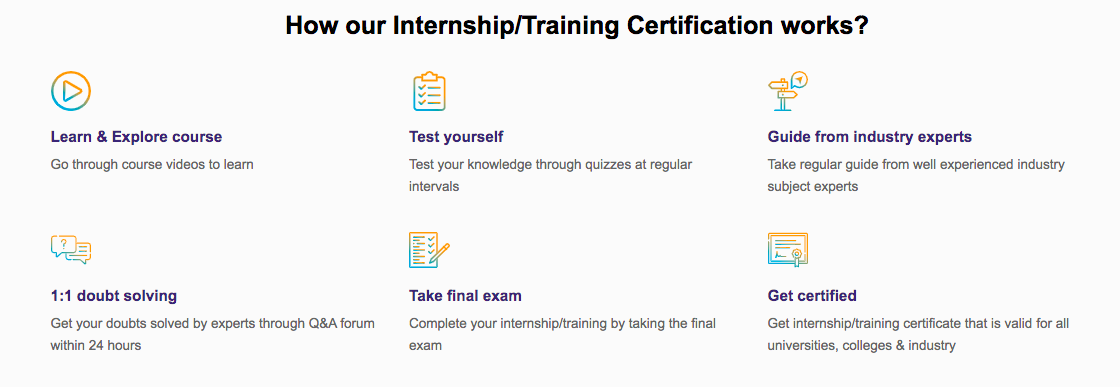
How EasyShiksha Internship/Training Program Works
From Classroom Assignments to Workplace Scenarios
Traditional assignments often begin with a clearly defined question.
Imagine a student receiving a simulated message from a fictional company saying that website traffic has fallen by 25 percent over the previous month. The student is given access to sample analytics data, previous campaign information and customer feedback.
The student now needs to investigate the situation.
There may not be one immediate answer. Several factors could be responsible. The student must examine the information, identify possible causes and decide what should be investigated first.
This kind of activity encourages analytical thinking.
The same principle can be applied across industries. The scenario changes, but the educational objective remains similar: help students practise applying knowledge in realistic contexts.
Career Simulation as a Bridge Between Courses and Internships
Courses and internships serve different purposes.
Courses provide structured knowledge and guided learning. Internships provide practical exposure in real organizations.
A Career Simulation Lab can sit between these experiences.
Students who are not yet ready for an internship can begin by practising simulated workplace tasks. This can help them understand professional expectations before entering a real organization.
For example, a student might complete a digital marketing course and then enter a simulated marketing environment. After gaining confidence through several simulated tasks, the student can explore an internship.
This creates a progression from knowledge to practice to real-world experience.
For EasyShiksha, this progression can strengthen the relationship between online courses, quizzes, games, internships and career guidance.
A Simulated First Day at Work
One potential application of the Career Simulation Lab is a simulated first day at work.
Students could enter a digital environment representing a fictional organization. They might receive an introduction to their role, access workplace tools, receive messages from team members and be given initial tasks.
The purpose would not be to overwhelm students but to introduce them to professional workflows.
A student might need to review an email, organize tasks, attend a simulated meeting, respond to a customer request or complete a short assignment.
These experiences can help students understand that professional work involves communication, prioritization and collaboration in addition to technical knowledge.
Practising Job-Specific Tasks
The strongest Career Simulation Labs would be connected to specific job roles.
A student should be able to understand what a particular role actually involves.
For a data analyst, the simulation could involve cleaning a dataset, identifying patterns and presenting findings.
For a digital marketer, it could involve creating campaign content, analyzing performance and adjusting a strategy.
For a customer support professional, the simulation could involve responding to different customer situations.
For a human resources learner, the simulation could involve reviewing job applications, preparing interview questions or responding to workplace scenarios.
For a software developer, the simulation could involve debugging, code review, feature development and project prioritization.
The goal is to transform abstract career descriptions into practical experiences.
The Importance of Decision-Making
Real jobs frequently require decisions.
Students may be comfortable answering questions when the correct answer is clearly defined, but professional environments often require judgment.
A Career Simulation Lab can deliberately introduce decision points.
A student might have limited time and several competing tasks. They may need to decide what to prioritize. Another simulation might provide conflicting customer feedback and require the student to determine which issue should be addressed first.
The system can then provide feedback explaining the consequences of different choices.
This allows students to learn from decisions without facing real-world professional consequences.
Learning From Mistakes Without Real-World Risk
One of the major advantages of simulation is the ability to make mistakes safely.
A student learning finance could make an incorrect recommendation in a simulated environment and examine what went wrong. A student learning project management could underestimate the time required for a task and observe how the simulated schedule changes.
Mistakes become part of the learning process.
In a real workplace, some mistakes can have financial, operational or reputational consequences. In a simulation, students can experiment and learn without exposing a real organization to those risks.
This makes simulation particularly useful for beginners.
The Role of AI in Career Simulation
Artificial intelligence can make career simulations more dynamic.
Instead of every student receiving exactly the same scenario, AI can potentially adapt the difficulty based on previous performance.
A beginner might receive a relatively straightforward task. As the student demonstrates competence, the simulation can introduce more complex situations.
AI can also create realistic interactions.
A simulated customer could ask questions. A fictional manager could provide changing instructions. A simulated colleague could request additional information. Students could practise communication as well as technical tasks.
However, AI-generated scenarios should be designed carefully. Students need to know when an interaction is simulated and should not assume that generated responses represent universal workplace behavior.
The value comes from structured practice, not from pretending that an AI system is an exact replica of a human workplace.
Multimodal Career Simulations
Modern digital learning environments can use multiple forms of interaction.
A Career Simulation Lab could combine text-based instructions, dashboards, charts, audio conversations, video scenarios, interactive interfaces and game-like environments.
This can make professional situations more realistic.
A student might receive a video message from a fictional manager, inspect a data dashboard, respond to a customer through a simulated chat and then present the final recommendation.
This type of multimodal learning can create a richer experience than a traditional written assignment.
For EasyShiksha, this also connects with the growing role of educational games and interactive learning experiences.
Gamification Without Turning Work Into a Game
Career simulation can use gamification, but the purpose should remain learning.
Students can receive progress indicators, levels, challenges or achievement markers as they complete increasingly complex tasks.
However, professional work should not be reduced to points.
The educational value comes from the quality of the task and the student's reflection on the outcome.
A student should understand why a decision worked or failed rather than simply seeing a score.
Gamification can increase engagement, but meaningful feedback should remain at the center.
Connecting Career Simulations With Quizzes
Quizzes can provide a useful preparation layer before a simulation.
A student learning digital marketing might complete a course followed by quizzes on SEO, advertising, analytics and content strategy. Once the student demonstrates foundational understanding, the Career Simulation Lab can introduce a practical scenario.
The simulation then tests application rather than simple recall.
This creates a stronger learning sequence.
Students learn the concepts, test their understanding and then apply those concepts in a realistic environment.
For EasyShiksha, the connection between courses, quizzes and simulations can strengthen the learning journey by giving students multiple ways to interact with the same knowledge.
Career Simulations and Projects
Projects are already an important part of practical learning, but simulations can provide a different experience.
A traditional project may give students several days or weeks to complete an assignment. A simulation can introduce time-sensitive decisions and changing circumstances.
For example, a student managing a simulated marketing campaign may receive new customer data halfway through the exercise. The student must then modify the strategy.
A project can therefore become more dynamic when simulation elements are introduced.
This can help students practise adaptability, which is often difficult to teach through static assignments.
Preparing Students for Internships
Internships can be intimidating for students who have never worked in a professional environment.
Career simulations can provide an intermediate stage.
Before beginning an internship, students could experience simulated tasks related to the role. They can learn how to interpret instructions, manage deadlines, communicate professionally and apply technical skills.
The simulation does not replace the internship.
Instead, it can help students enter the internship with a better understanding of what professional work may require.
For EasyShiksha, this creates a natural relationship between online courses, simulations and internships.
Career Discovery Before Choosing a Degree
Career simulation can also be useful before students choose academic programs.
Many students select degrees without having a clear understanding of what careers connected to those degrees actually involve.
A student may know the name of a profession but have little exposure to its daily responsibilities.
Short career simulations can provide a practical introduction.
A student considering data science could try a simplified data analysis scenario. Someone considering digital marketing could work through a campaign exercise. A student interested in finance could analyse a fictional company's financial position.
These experiences do not predict whether a student will enjoy a profession, but they can provide additional information for career exploration.
This makes career simulation a useful complement to career guidance.
The Career Simulation Lab as a Career Navigation Tool
Career guidance traditionally focuses on information, counselling and recommendations.Simulation adds experience.
Instead of only reading about a career, students can attempt a small version of its work.
This can help students ask more specific questions about themselves. Do they enjoy analytical tasks? Do they prefer communication-heavy work? Do they enjoy solving technical problems? Are they comfortable making decisions with incomplete information?
The simulation does not need to provide a final answer.Its purpose is to help students explore.This approach supports the idea that career development should be an ongoing process rather than a single decision made at the end of school.
How EasyShiksha Internship/Training Program Works
Measuring Progress Through Demonstrated Skills
Career simulations can also change how student progress is represented.
Instead of measuring only course completion, platforms can track demonstrated abilities within specific simulated tasks.
A student may successfully complete several data analysis scenarios. Another may demonstrate strong communication skills in customer-service simulations.
This information can become part of a broader student profile.
For EasyShiksha, such evidence can complement certificates, quiz results, projects and internship experiences.
The student's profile becomes more comprehensive because it represents both what the student studied and how they applied it.
Building an Evidence-First Career Profile
Employers often need more information than a list of qualifications.
A student can say that they completed a digital marketing course. A stronger profile can show that they also completed campaign simulations, created projects and gained internship exposure.
The Career Simulation Lab can become another evidence layer.
A student might complete a series of simulations related to a specific role and receive a structured record of the tasks completed.
These records should not be treated as equivalent to real professional experience. A simulation is still simulated.
However, it can demonstrate that the student has practised certain types of tasks before entering the workforce.
That distinction should remain clear.
Personalised Difficulty and Adaptive Learning
Not every student begins at the same level.
A Career Simulation Lab can potentially adapt to individual learners.
A beginner may receive structured instructions and smaller tasks. An intermediate learner may receive more complex scenarios with fewer instructions. Advanced learners can encounter ambiguity, conflicting priorities and time constraints.
This creates a progression from guided practice to independent decision-making.
AI can support this adaptation by analyzing previous performance and adjusting future scenarios.
The goal is not to make the simulation artificially difficult. The goal is to ensure that students continue learning rather than repeating tasks they have already mastered.
Reflection as Part of Simulation
One important feature of professional learning is reflection.
After completing a simulation, students should be able to understand what they did, why they made certain decisions and what they could improve.
A simulation can therefore conclude with reflective questions.
Students might explain why they selected a particular strategy or why they prioritized one task over another.
This transforms the simulation from an interactive game into a learning experience.
Reflection also helps students develop the ability to communicate their reasoning, which is valuable in professional environments.
Collaboration and Team-Based Simulations
Real workplaces rarely operate entirely through individual tasks.
Teams collaborate, communicate and negotiate.
Career Simulation Labs can therefore eventually include team-based scenarios.
Students could work together on a simulated project, divide responsibilities and respond to changing requirements.
One student might manage analysis while another handles communication and another manages project coordination.
The system can provide feedback on both task outcomes and collaboration processes.
This type of experience can help students understand that professional success often involves working effectively with other people.
Simulating Professional Communication
Technical knowledge alone is rarely enough.
Students need to communicate with managers, colleagues, clients and customers.
A Career Simulation Lab can introduce communication tasks.
Students might write a professional email, respond to a customer complaint, present findings to a fictional manager or explain a technical concept to a non-technical audience.
These activities can help students practise communication in context.
For EasyShiksha, career guidance and job-readiness resources can be strengthened by connecting communication practice with role-specific simulations.
The Role of Realistic Constraints
Real work includes constraints.
Budgets are limited. Deadlines exist. Information may be incomplete. Priorities can change.
Simulations become more valuable when they include realistic constraints.
A student working on a simulated marketing campaign may have a limited advertising budget. A project manager may need to complete a task before a deadline. A business analyst may need to make a recommendation based on incomplete data.
These constraints encourage students to think beyond ideal solutions.
The best theoretical answer may not always be possible in a constrained environment. Students therefore practise balancing priorities.
Building a Simulation Library Across Careers
An education platform can eventually create a broad library of career simulations.
Students could explore technology, finance, marketing, management, design, engineering, healthcare-related administrative roles, education, entrepreneurship and other fields through role-specific scenarios.
The library can also include different difficulty levels.
A student does not have to commit to a career before trying a simulation. Exploration can happen gradually.
This supports a more flexible approach to career discovery.
A simulation that is too simple may provide little value. A simulation that is too complex may overwhelm beginners.
The content must also remain relevant as professional tools and workflows change.
There is another challenge: simulations can never perfectly reproduce real workplaces.
Professional environments involve relationships, organizational politics, unexpected events and human behavior that are difficult to model accurately.
Therefore, simulations should be presented as practice environments rather than exact predictions of professional life.
Their purpose is to build familiarity and transferable skills, not to guarantee that students will perform perfectly in real jobs.
Avoiding False Confidence
Another important consideration is student confidence.
Completing a simulation successfully does not mean that a student is fully prepared for a professional role.
Real jobs involve greater complexity, accountability and uncertainty.
A responsible Career Simulation Lab should therefore communicate what the student has practised and what remains to be learned.
The goal is confidence through preparation, not confidence without evidence.
Career Simulation and Internship Readiness
The combination of simulation and internship can create a powerful learning pathway.
Students can begin with structured courses. They can test their knowledge through quizzes. They can practise realistic tasks through simulations. They can then enter internships with a clearer understanding of professional expectations.
The internship provides real-world exposure that the simulation cannot reproduce.
After the internship, students can return to learning and identify new areas for development.
This creates a continuous loop of learning and experience.
For EasyShiksha, such a loop fits naturally with the broader concept of Learn, Test, Practise and Experience.
The Future: A Digital Career Practice Environment
As online education becomes more interactive, career preparation may move beyond watching lessons and downloading certificates.
Students may increasingly expect opportunities to practise.
A future learner could open EasyShiksha and choose a career area. Instead of only seeing courses, the student could explore introductory simulations, complete quizzes, practise professional tasks, build projects and discover relevant internships.
The platform would become a place where students can experiment with career possibilities before making major educational decisions.
This could be particularly valuable for students who have limited access to professional networks or workplace exposure.
Empower your team. Lead the industry
Get a subscription to a library of online courses and digital learning tools for your organization with
EasyShiksha
EasyShiksha and the Transition From Learning to Experience
EasyShiksha's broader ecosystem of courses, quizzes, internships, certificates, university programs, online degrees, games and career guidance creates several components of the student journey.
The Career Simulation Lab can connect these components.
A student can learn through a course, test knowledge through a quiz, practise through a simulation, create evidence through a project and gain real exposure through an internship.
Each stage serves a different purpose.
The simulation is particularly important because it occupies the space between theoretical learning and professional experience.
It allows students to practise before the stakes become real.
Conclusion: Practise the Career Before Starting the Career
The transition from education to employment does not have to be a sudden jump from classroom theory into an unfamiliar professional environment.
Career Simulation Labs offer a way to create an intermediate space where students can practise.
They can make decisions, solve problems, communicate, manage priorities and work with realistic constraints. They can experience the structure of professional tasks without the risks associated with making those mistakes in a real workplace.
For EasyShiksha, this concept can strengthen the connection between online courses, quizzes, games, projects, internships, certificates and career guidance. The goal is not simply to help students complete more learning activities. It is to help them understand how knowledge becomes practical capability.
A course can teach the concept. A quiz can test understanding. A simulation can provide practice. A project can create evidence. An internship can provide real-world exposure.
Together, these experiences create a more connected transition from education to employment.
The Career Simulation Lab therefore represents more than another feature in an online learning platform. It represents a different approach to career preparation.
Anshika Jain is an Engineer, Developer, and Educational Content Author known for her dedication to technology and knowledge sharing. With a strong analytical mindset and a passion for innovation, she has consistently contributed to creating meaningful digital solutions and insightful educational articles.
Her ability to simplify complex technical concepts into engaging and easy-to-understand content makes her work valuable for students and learners across various platforms. Along with her technical expertise, Anshika is admired for her creativity, professionalism, and commitment to continuous learning.
She represents a perfect blend of technical excellence and impactful communication, inspiring others through both her development work and educational contributions.