Traditional education often presents learning as a sequence of chapters, lectures, assignments, examinations and grades. Students are expected to complete a syllabus, remember information, submit assignments and eventually demonstrate their understanding through assessments. While this structure provides an organized academic framework, it does not always make the learning journey feel connected to a meaningful objective.
Digital education creates an opportunity to rethink that structure.
Instead of presenting learning as a collection of lessons, an education platform can organize academic development around goals and missions. Students can be given meaningful challenges that require them to learn concepts, test their understanding, practise skills and complete tasks before progressing to the next stage. This approach can be described as the Quest-Based Education Model.
The concept draws inspiration from quest systems commonly found in games, but its purpose is educational rather than purely recreational. A quest gives learners a clear objective, a reason to complete a sequence of activities and a visible sense of progress. A student does not simply watch a lesson because it is next in a course. The student learns something because that knowledge is required to complete a meaningful challenge.
For EasyShiksha, this model connects naturally with an ecosystem that includes online courses, quizzes, games, internships, certificates, university programs, online degrees and career guidance. These features can become stages within a larger learning journey in which students move from discovering a goal to completing missions that gradually develop knowledge, practical skills and career readiness.
The result can be a learning experience that feels less like completing isolated educational tasks and more like progressing through a structured academic and career journey.
What Is Quest-Based Education?
Quest-Based Education is a learning approach in which academic objectives are transformed into structured challenges or missions that students complete through a combination of learning, assessment and practical activities.
A traditional course might tell a student that they need to complete ten chapters. A quest-based course might instead present a challenge such as developing a basic marketing campaign, building a simple application, analyzing a dataset or preparing a business recommendation.
The student then discovers what knowledge is required to complete the mission.
This changes the relationship between learning and purpose.
Instead of learning first and asking later where the knowledge can be applied, students can encounter a goal that creates a reason to learn.
The quest itself becomes the organizing structure.
This does not mean that traditional lectures, textbooks or structured lessons disappear. They become resources that support the mission.
Why Academic Learning Can Feel Disconnected
One of the challenges students face is that academic content can sometimes appear disconnected from real objectives.
A student may study several chapters of mathematics without understanding how those concepts connect to future work. A programming student may learn syntax and theory without immediately understanding how those concepts contribute to software development. A business student may study marketing concepts without experiencing how a campaign is actually planned.
The issue is not necessarily the quality of the content.
The issue can be context.
Students are more likely to understand the purpose of learning when they can see how knowledge contributes to an outcome.
Quest-based education introduces this context by placing academic content inside a challenge.
If a student must complete a business simulation, for example, financial concepts suddenly have a practical purpose. If a student needs to analyze a dataset, statistics becomes part of a larger mission.
The syllabus has traditionally been one of the main structures of education.
It tells students what they are expected to study, but it does not always explain why each topic matters in the broader journey.
Quest-based education can add another layer to the syllabus.
The curriculum remains important because students need systematic knowledge. However, the learning path can be organized around missions that require students to apply that knowledge.
A student might complete several lessons and quizzes before unlocking the next mission. The mission then asks the student to use what they learned.
This creates a cycle of learning and application.
The student is not simply moving from Chapter 3 to Chapter 4. They are moving from one capability to another.
The Quest as a Learning Narrative
A quest can also provide a narrative structure.
Consider a student learning digital marketing. Instead of being told to complete a series of unrelated modules, the student could enter a fictional business scenario.
The business has a problem. Website traffic is declining. The student must understand the target audience, analyze existing content, research keywords, develop a content strategy and evaluate campaign performance.
Each stage of the quest requires specific knowledge.
The student learns SEO concepts because the mission requires search visibility. The student studies analytics because campaign performance must be measured. The student learns content strategy because the fictional company needs a new approach.
The narrative gives the student a reason to move through the learning material.
Academic Quests Can Exist at Different Levels
Not every quest needs to be a large project.
A quest can be as small as completing a set of practice questions or as complex as completing a multi-stage project.
A beginner quest might introduce a concept through a short challenge. An intermediate quest could require the learner to combine several concepts. An advanced quest might involve a complex scenario with multiple decisions.
This allows the model to operate across different levels of education.
For EasyShiksha, small quests could be integrated into courses and quizzes, while larger quests could connect multiple courses, projects and internships.
The system can therefore support both micro-learning and long-term development.
The Connection Between Courses and Quests
Online courses provide structured knowledge.Quests provide context.These two elements can work together.
A student may begin with a course that introduces the fundamentals of artificial intelligence. After completing the relevant lessons and quizzes, the student could receive a mission requiring them to identify an appropriate AI approach for a fictional business problem.
The quest does not replace the course.It gives the course a destination.This can make learning feel more purposeful because students understand what they are preparing to accomplish.
Quizzes as Quest Challenges
Quizzes can become more meaningful when they are connected to missions.
A quiz is often presented as an assessment at the end of a lesson or chapter. In a quest-based model, quizzes can function as checkpoints.
A student may need to demonstrate sufficient understanding before progressing to the next stage.
For example, a cybersecurity quest could introduce basic security concepts and then present a quiz. Students who demonstrate understanding can move into a simulated security scenario.
The quiz becomes part of the journey rather than an isolated test.
This approach also creates opportunities for immediate feedback. If students struggle with a particular concept, the platform can recommend additional learning before they continue.
Games as Learning Missions
Educational games can become another component of quest-based learning.
Games naturally use objectives, challenges, progression and feedback. These elements can be adapted for academic purposes.
A student learning programming might solve increasingly complex coding puzzles. A student studying finance might navigate a simulated budgeting challenge. A student learning business strategy might manage a fictional company.
The important distinction is that educational games should support learning objectives.
The objective is not simply to keep students engaged. The game should require them to apply knowledge or practise skills.
For EasyShiksha, the existing role of games can be expanded by connecting them to broader learning missions.
The Importance of Clear Goals
Every effective quest needs a clear objective.
Students should understand what they are trying to accomplish.
A vague goal such as “learn digital marketing” can be difficult to translate into action. A more specific mission such as “develop a basic digital marketing strategy for a fictional local business” gives the learner a clearer destination.
The goal also helps determine which resources are relevant.
Students can identify why they need to study a particular topic because the knowledge contributes directly to completing the mission.
This can reduce the feeling that students are learning information simply because it appears in a syllabus.
A beginner can start with foundational missions. As knowledge and skills develop, the missions become more complex.
For example, a programming learner may begin by completing simple coding challenges. The next stage could involve debugging. Later, the student may build a small application. Eventually, a more advanced quest could require integrating multiple concepts.
This creates a visible progression from basic understanding to practical application.
The student can see that each completed mission contributes to the next stage.
The Quest Map as a Learning Interface
A digital platform can represent learning progress through a quest map.
Instead of displaying only a list of courses, the student could see different learning paths.
One path might focus on data science. Another might lead toward digital marketing. Another might focus on cybersecurity or artificial intelligence.
Within each path, students can see completed missions, current challenges and upcoming learning objectives.
This can make complex education pathways easier to understand.
The interface should remain simple. A visually appealing quest map is useful only when students can quickly understand where they are and what they should do next.
Personalised Quests for Different Students
Students do not all begin with the same level of knowledge.
A quest-based system can therefore support personalization.
One student may already understand basic programming concepts and require a more advanced mission. Another may need foundational lessons before attempting the same challenge.
The platform can use assessments and previous learning activity to adjust the journey.
For EasyShiksha, a student's course history, quiz performance and previous activities could help determine which missions are appropriate.
Personalization should not mean creating completely different education for every student. It can mean providing different levels of support and challenge while maintaining the same broader learning objectives.
AI as a Quest Designer and Learning Guide
Artificial intelligence can make quest-based education more adaptive.
An AI learning assistant could help students understand mission requirements, explain concepts and provide hints when they are stuck.
AI could also help generate variations of scenarios so that students practise the same skill in different contexts.
For example, a student learning business analytics could encounter multiple fictional datasets rather than solving the same problem repeatedly.
AI can also analyze performance and suggest areas for additional practice.
However, the system should avoid completing the entire quest for the student. If AI provides every answer, the learner may finish the mission without developing the intended skill.
The purpose of AI should be to support learning, not remove the need for learning.
The Difference Between Hints and Answers
A well-designed quest system should provide support without eliminating productive struggle.
When students become stuck, the platform can provide hints, examples or explanations.
For example, instead of revealing the answer to a programming problem, the system could explain which concept the student should reconsider.
Instead of giving a marketing strategy directly, it could ask the student to examine the target audience or campaign data again.
This preserves the student's role as the problem solver.
The challenge remains meaningful because the student still needs to make the final decision.
Quest-Based Education and Career Exploration
One of the most powerful applications of the model is career exploration.
Students often learn about careers through descriptions, videos and counselling sessions. These resources are useful, but they do not always provide direct experience.
Career quests can provide small-scale practical exposure.
A student interested in digital marketing might complete a campaign-planning quest. Someone exploring data analysis might complete a data interpretation mission. A student considering software development might build a simple application.
These experiences do not determine whether a student should choose a particular career.
Instead, they provide information that students can use to understand their interests and preferences.
This turns career exploration into an active process.
Connecting Quests With Internships
Quest-based education can also create a bridge to internships.
A student may complete a series of introductory missions before becoming ready for a practical internship.
For example, an EasyShiksha learner might complete a digital marketing course, pass relevant quizzes, finish several marketing quests and then explore an internship opportunity.
The quests become preparation for real-world experience.
The internship then provides a new level of challenge.
After the internship, students can return to learning with a better understanding of the skills they need to strengthen.
This creates a continuous cycle of learning and experience.
Quests and the Evidence-First Student Profile
Modern education increasingly needs to demonstrate what students can actually do.
Certificates show that a learner completed a program. Quest completion can provide additional evidence of applied learning.
A student who completes a series of structured missions has demonstrated engagement with specific tasks.
When combined with projects, assessments and internships, these records can contribute to a richer student profile.
For EasyShiksha, this can support an evidence-first approach in which student profiles represent not only certificates but also learning activities, practical challenges and demonstrated skills.
The objective is not to replace academic credentials.
It is to provide more context around them.
Quest-Based Learning and Digital Credentials
Quest completion can also contribute to a broader digital credential system.
Instead of issuing a credential only after completing an entire course, platforms can potentially recognize smaller achievements.
A student might demonstrate foundational knowledge in a subject, complete an intermediate practical mission and later finish an advanced project.
These milestones can form a structured record of development.
The challenge is ensuring that credentials remain meaningful. If every small activity generates a badge, students may accumulate large numbers of achievements without meaningful differentiation.
Credentials should therefore reflect genuine learning milestones.
The Psychology of Progress
Visible progress can influence how students perceive their learning journey.A large academic goal can feel distant. Breaking that goal into missions can make progress more visible.
A student preparing for a difficult examination, for example, may feel overwhelmed by the entire syllabus. A quest-based approach can organize preparation into smaller objectives, such as mastering a topic, completing practice questions, reviewing mistakes and completing a timed challenge.
Each completed stage provides evidence of progress.The goal is not to make education artificially easy.It is to make progress easier to see.
A quest-based model should also make failure educational.
Students may not complete every mission successfully on the first attempt.
Instead of treating failure only as a negative score, the system can provide feedback and opportunities to retry.
This is especially useful for practical tasks.
A student might make an incorrect decision in a business simulation and then examine the consequences. The next attempt allows the student to apply what they learned.
Failure becomes part of the learning cycle.
This is one of the strongest connections between game-inspired systems and education. Games often allow players to retry challenges, learn from mistakes and gradually improve.
Education can use a similar structure while maintaining academic rigor.
The Role of Reflection
Completing a quest should not always be the final step.
Reflection can help students understand what they learned.
After finishing a mission, students can be asked to explain their decisions, identify difficulties and describe what they would do differently next time.
This can strengthen metacognition.
Students become more aware of how they learn and solve problems.
Reflection also provides useful information for career development because students can begin identifying the types of tasks they enjoy and the areas in which they need further practice.
Building Long-Term Learning Journeys
Quest-based education becomes especially powerful when missions connect across time.
A student should not feel that every quest is an isolated challenge.
Early quests can establish foundational knowledge. Later quests can require students to combine those concepts.
For example, a student learning data science might begin with basic data interpretation, progress to spreadsheet analysis, move into visualization and eventually complete a larger analytical project.
Each mission contributes to the next.
This creates a learning architecture in which knowledge accumulates rather than disappearing after an assessment.
Quest-Based Competitive Exam Preparation
The model can also be applied to examination preparation.
Competitive exams often involve large syllabi and repeated practice.
A quest structure can divide preparation into meaningful learning missions.
Students can complete concept missions, practice missions, revision missions and timed challenge missions. Quiz results can determine which topics require additional attention.
This can make preparation more interactive without reducing academic seriousness.
For EasyShiksha, where quizzes and government examination preparation can be part of the wider learning ecosystem, quest-based preparation offers a way to connect practice with visible progress.
Quest-Based Learning for Younger Learners
The model can also be adapted for children.
Younger learners often respond well to stories, challenges and interactive activities.
A science learning quest might ask children to complete a sequence of experiments or solve problems to progress through a story. A mathematics quest could use puzzles to practise calculations.
The educational objectives remain central.
The story simply provides a context that makes the learning journey more engaging.
This can connect with EasyShiksha's broader interest in children's digital learning and educational games.
Avoiding the “Everything Must Be Gamified” Problem
Quest-based education should not mean turning every academic activity into a game.
Some subjects require deep reading, sustained writing, careful research and serious reflection.
Not every learning activity needs points, badges or animated rewards.
The quest model should be used where it genuinely improves clarity, motivation or practical application.
A serious research project can still be part of a quest. The quest simply defines the larger objective and progression.
The educational experience should remain professional and academically meaningful.
Designing Quests Around Skills
A strong quest should be designed around what students should be able to do after completing it.
This is different from designing a quest only around content.
For example, a quest may require students to analyze information, communicate findings, solve a problem or build something.
The content becomes the material through which the skill is developed.
This approach aligns with the growing emphasis on skills and practical evidence in education.
For EasyShiksha, it can also connect course learning with internships and career development.
From XP to Capability
Game systems often use experience points to represent progress.
Education can borrow the idea of visible progression without reducing learning to arbitrary numbers.
A student's progress should ultimately represent capability.
Instead of simply showing that a student has earned 5,000 points, a platform can show that the learner has completed foundational, intermediate and advanced tasks in a particular skill area.
The distinction is important.
Numbers can motivate, but demonstrated capability provides more meaningful educational information.
A Possible EasyShiksha Quest Journey
Imagine a student entering EasyShiksha with an interest in artificial intelligence.
The platform introduces an exploration quest that helps the student understand different AI domains. The student then begins a foundational course and completes quizzes after each learning section.
After developing basic knowledge, the student enters a practical quest. The mission involves identifying an AI solution for a fictional business problem.
The student then completes a larger project and receives structured feedback.
After completing several related missions, the platform introduces relevant internship opportunities and career guidance resources.
The student eventually develops a profile that includes courses, quiz results, completed quests, projects, certificates and internship experience.
The platform has not simply provided content.
It has organized a journey.
Frequently Asked Questions
Q. How can I apply for an internship with EasyShiksha?
You can apply by visiting our website, browsing available internships, and following the application instructions provided.
Q. What types of internships are available through EasyShiksha?
EasyShiksha offers a wide range of internships across technology, business, marketing, healthcare, and more.
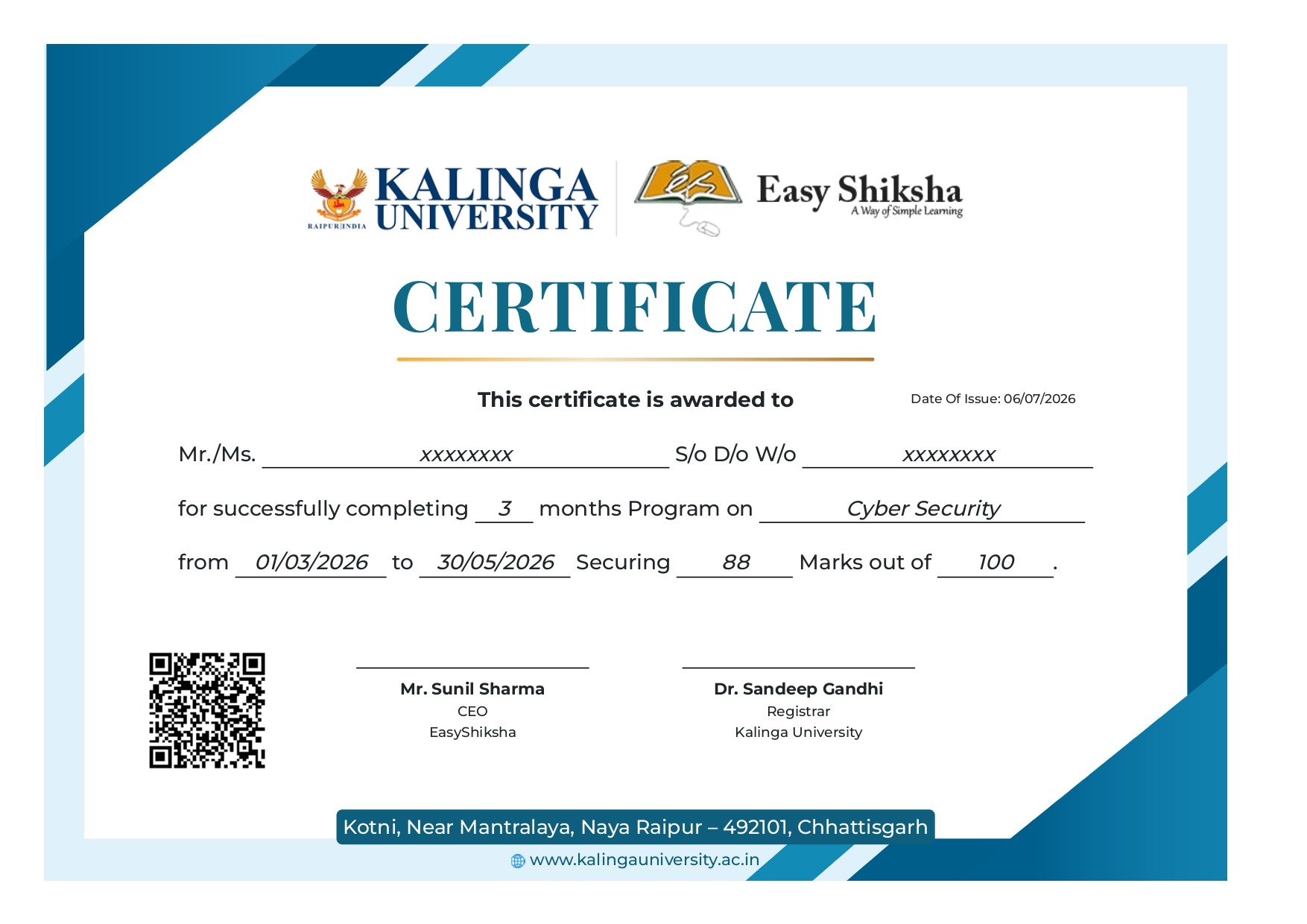
Q. Will I receive a certificate upon completing an internship?
Yes, upon successful completion, you will receive a certificate recognizing your participation and achievements.
Q. Are EasyShiksha's certificates recognized?
Yes, the certificates are recognized by universities, colleges, and employers worldwide.
Q. When can I start the course?
You can choose any course and start immediately without delay.
Q. What are the course and session timings?
These are fully online courses. You can learn at any time and pace that fits your schedule.
Q. What will happen when my course is over?
After completion, you will have lifetime access to the course for future reference.
Q. Can I download the notes and study material?
Yes, you can access and download course materials and have lifetime access for future reference.
Q. What software/tools would be needed?
All necessary software/tools will be shared during the training as needed.
Q. I’m unable to make a payment. What should I do?
Try using a different card. If the problem persists, email us at info@easyshiksha.com.
Q. Do I get the certificate in hard copy?
No, only a soft copy is provided, which can be downloaded and printed if required.
Q. The payment got deducted but shows “failed”?
The deducted amount will be returned to your account in 7-10 working days automatically.
Q. Payment successful but dashboard shows ‘Buy Now’?
Reflection may take 30 mins. If longer, email info@easyshiksha.com with your screenshot.
Q. What is the refund policy?
Refunds are available for technical issues. No refunds once a certificate is generated.
Q. Can I enroll in a single course?
Yes, select any course, complete the details, and start learning immediately.
Q. Need further help?
Contact us at info@easyshiksha.com for any other questions.
The Future of Education as a Mission-Based Experience
As digital learning continues to evolve, students may increasingly expect education to provide more than passive content consumption.
They may want clear goals, interactive practice, meaningful challenges and visible evidence of progress.
Quest-based education can provide a framework for delivering these experiences.
It can connect academic knowledge with practical tasks, transform career exploration into active experimentation and create stronger connections between courses, quizzes, games, projects and internships.
The technology behind the experience can range from simple progress tracking to advanced AI-powered simulations. What matters most is the educational design.
A quest should have a meaningful objective, require relevant learning and provide useful feedback.
Conclusion: Turning Learning Into a Journey of Purpose
The Quest-Based Education Model offers a way to rethink how students experience academic learning.
Instead of seeing education as a long sequence of chapters, students can experience learning as a series of meaningful missions. Each mission provides a goal. Each goal creates a reason to learn. Each challenge provides an opportunity to apply knowledge.
For EasyShiksha, this model can connect many existing elements of the education ecosystem. Online courses can provide knowledge. Quizzes can test understanding. Games can create interactive challenges. Projects can provide practical application. Internships can provide real-world experience. Career guidance can help students understand where their developing skills may lead.
The quest becomes the connecting structure.
This approach does not require traditional education to disappear. Lectures, textbooks, examinations, degrees and formal academic programs remain important. Quest-based learning simply adds another layer that can make the relationship between knowledge and action more visible.
The most important shift is from asking students only to complete educational activities toward helping them accomplish meaningful learning objectives.
A student should be able to see not only what they are studying but why they are studying it, what they can do with it and what challenge they can attempt next.
Anshika Jain is an Engineer, Developer, and Educational Content Author known for her dedication to technology and knowledge sharing. With a strong analytical mindset and a passion for innovation, she has consistently contributed to creating meaningful digital solutions and insightful educational articles.
Her ability to simplify complex technical concepts into engaging and easy-to-understand content makes her work valuable for students and learners across various platforms. Along with her technical expertise, Anshika is admired for her creativity, professionalism, and commitment to continuous learning.
She represents a perfect blend of technical excellence and impactful communication, inspiring others through both her development work and educational contributions.