For decades, higher education has followed a relatively familiar structure. Students enrol in a degree programme, attend lectures, complete assignments, prepare for examinations, receive their grades, and eventually graduate with a qualification that represents several years of academic study. The degree remains an important academic credential, but the expectations surrounding it are changing. Students are increasingly asking a more practical question: what can I actually do after completing this degree?
The question becomes particularly relevant in online higher education. Digital learning has made it possible for students to access university programmes, professional courses, certifications, assessments, quizzes, internships, and career resources from different locations. Yet access to learning content alone does not automatically create professional readiness. A student may understand theoretical concepts without having experienced the process of applying those concepts to an authentic project, collaborating with others, solving an unfamiliar problem, or producing something that can be demonstrated to an employer.
This is where the idea of a career-integrated degree becomes significant. Instead of treating internships and practical projects as optional activities that students complete separately from their academic programme, a career-integrated model places application, experimentation, and professional exposure closer to the centre of the learning journey.
The objective is not to replace academic knowledge with employment training. Rather, it is to connect academic knowledge with practical experience so that students gradually develop the ability to use what they learn. In such a model, a degree can become more than a record of completed subjects. It can become a structured pathway through which students learn concepts, practise skills, complete projects, gain workplace exposure, document achievements, and prepare for professional opportunities.
For platforms such as EasyShiksha, which bring together online learning, quizzes, internships, certificates, university programmes, career guidance, and job-oriented learning experiences, this model represents an important evolution in how digital education can be designed.
From Degree Completion to Career Readiness
Traditional higher education often separates academic learning from professional experience. A student may spend several semesters studying subjects before encountering a situation that requires them to apply those concepts outside the classroom. Internships may occur during vacations, projects may be assigned toward the end of a programme, and career preparation may begin only when graduation approaches.
The career-integrated degree proposes a different sequence. Academic learning and professional application can develop simultaneously throughout the student's journey.
A student studying computer science, for example, should not have to wait until the final semester to discover how software development works in a real project environment. The student can learn programming concepts, practise them through quizzes and exercises, build small applications, participate in guided projects, collaborate on larger assignments, complete an internship, and gradually develop a portfolio that demonstrates increasing capability.
The same principle can apply to business, finance, digital marketing, engineering, data science, cybersecurity, design, healthcare administration, and other disciplines. The specific activities may differ, but the underlying structure remains similar: learn something, apply it, receive feedback, improve it, and demonstrate what has been achieved.
This creates a shift from a completion-oriented model toward a capability-oriented model. Completing a course remains important, but the deeper question becomes whether the learner can demonstrate meaningful understanding and application.
Why Practical Experience Matters in Online Higher Education
Online education has removed many geographical and logistical barriers to learning. A student can access lectures, recorded classes, digital resources, assessments, and university programmes without necessarily relocating to a campus. This flexibility is one of the major strengths of digital education.
However, online learning also creates a responsibility to design meaningful opportunities for application. Watching lectures or reading digital material can introduce knowledge, but professional capability develops through repeated interaction with problems.
Practical projects create that interaction. A learner studying digital marketing can develop a campaign strategy rather than only reading about marketing funnels. A data science student can analyse a dataset instead of only studying statistical terminology. A cybersecurity learner can work through controlled practical scenarios rather than relying entirely on theoretical descriptions. A business student can prepare market research, financial analysis, or a business case.
These experiences make learning more active. They also give students something tangible to discuss when applying for internships or jobs.
The importance of this approach becomes even clearer when students come from different educational and professional backgrounds. An online degree may bring together fresh graduates, working professionals, career changers, and learners returning to education after a break. Their academic needs may be different, but practical learning can give each learner opportunities to build evidence of capability at an appropriate level.

The Internship as an Academic Learning Layer
Internships have traditionally been viewed as a bridge between education and employment. In a career-integrated degree, however, the internship can become part of the learning architecture itself.
Instead of treating an internship as an isolated experience that happens outside the academic programme, institutions and learning platforms can connect internships with what students are studying at a particular stage.
Imagine a learner studying data analytics. During an early stage, the student may learn spreadsheets and basic data interpretation. The next stage could introduce SQL, followed by data visualisation and reporting. A practical internship can then allow the learner to work with realistic datasets and reporting requirements.
The internship becomes more meaningful because it follows a progression of learning. At the same time, the academic programme becomes more meaningful because students understand why particular concepts matter in professional situations.
The relationship can work in both directions. Academic learning prepares the student for practical experience, while practical experience exposes gaps in understanding that can guide subsequent learning.
This creates a feedback loop between education and application.
Projects as Evidence of Capability
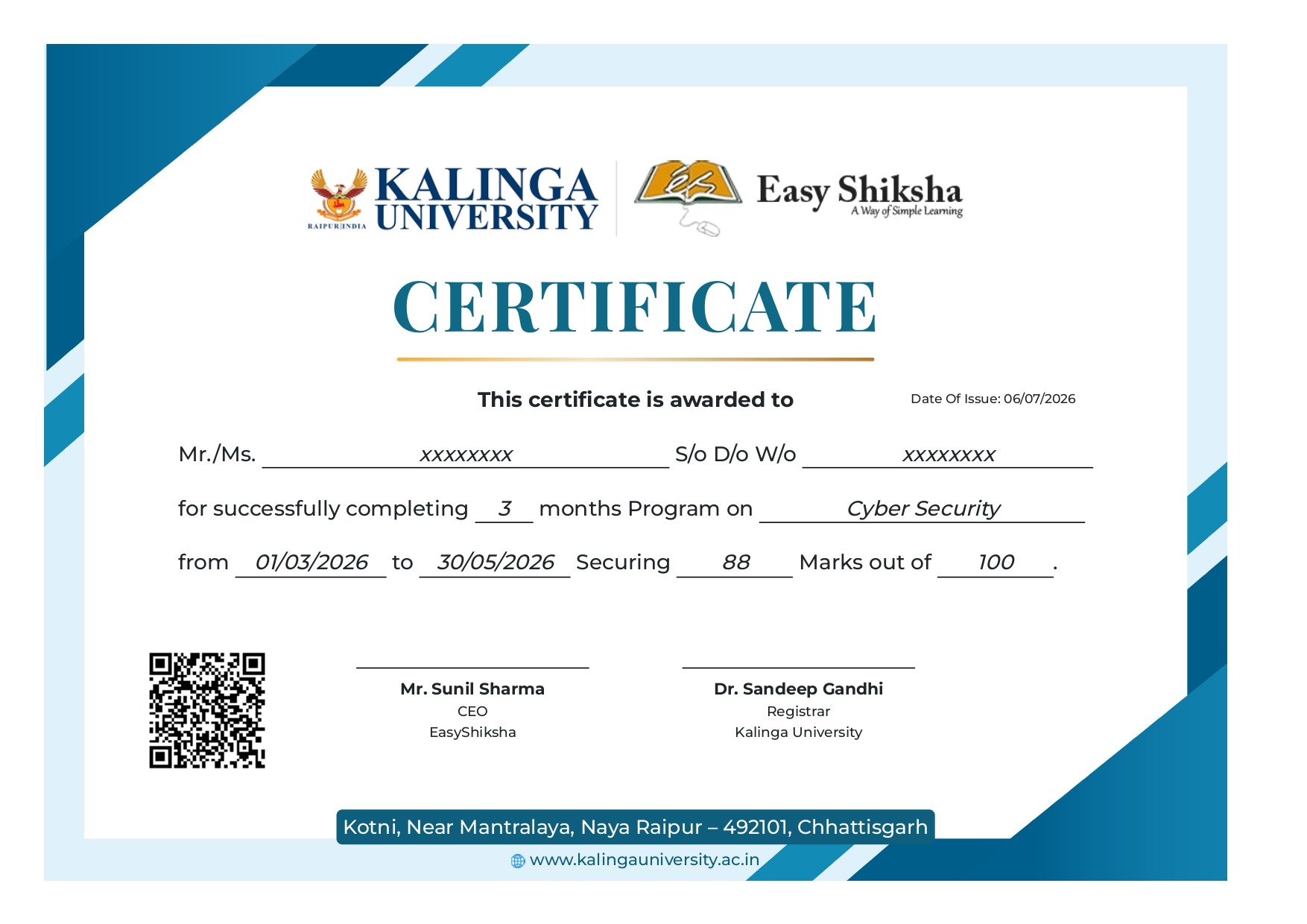
A certificate confirms that a learner completed a particular learning experience. A project can demonstrate what the learner was able to create, analyse, solve, or implement during that experience.
This distinction is becoming increasingly relevant in a digital learning environment.
Consider two students who have completed the same online course. Both may possess the same certificate, but one student may also have developed a website, analysed a dataset, created a marketing campaign, built an application, designed a business proposal, or completed an industry-oriented case study.
The project does not automatically prove professional mastery, but it provides additional evidence that can be examined and discussed. It gives learners a concrete story about what they worked on, what problems they encountered, what decisions they made, and what they learned.
This is why the project-backed certificate can become an important component of career-integrated education. The certificate represents structured learning, while the project provides evidence of application.
For an education platform, connecting these two elements can create a more complete learning record. Instead of simply displaying that a course was completed, the learner's profile can potentially show the course, assessment performance, practical project, internship exposure, skills developed, and related achievements.
From Certificates to Demonstrable Skills
Certificates continue to have value as records of participation and learning. However, the modern learner increasingly needs a broader form of evidence.
The problem is not that certificates are irrelevant. The challenge is that certificates alone may not communicate the depth of a learner's practical experience.
A career-integrated learning model can therefore connect certificates with demonstrations of learning. A learner who completes a course in artificial intelligence might receive a certificate, but the same learning experience could also involve developing a small machine-learning project. A cybersecurity learner could document a practical exercise. A digital marketing learner could prepare a campaign plan. An engineering learner could complete a design or simulation project.
The resulting learning profile becomes richer.
This approach also supports the idea of a digital learning identity. Instead of presenting education as a list of disconnected qualifications, students can gradually build a structured record containing courses, quizzes, projects, internships, certificates, university programmes, skills, and career-oriented achievements.
Such a record can become particularly useful when students transition between learning and employment.
The Role of Quizzes in Career-Integrated Learning
Quizzes may appear fundamentally different from internships and projects, but they can serve an important role within the same learning architecture.
A quiz can provide rapid feedback on conceptual understanding. Projects can then test whether that understanding can be applied to a practical situation.
For example, a learner studying digital marketing may complete quizzes covering SEO, keyword research, audience segmentation, content strategy, and analytics. After building foundational understanding, the learner can apply those concepts to a practical campaign project.
Similarly, a programming quiz can test syntax and fundamental concepts, while a project can determine whether the learner can use those concepts to build something functional.
This creates a progression from knowledge to practice.
For an ecosystem such as EasyShiksha, quizzes can therefore function as an important preparation layer between course content and practical application. They can help learners identify areas that require additional study before they enter a project or internship environment.
The University Programme and the Learning Platform
A career-integrated degree does not necessarily mean that universities become less important. In many cases, the opposite may be true. Universities can provide academic structure, curriculum, faculty guidance, formal assessment, and recognised qualifications.
Digital education platforms can complement that structure by connecting learning with additional experiences.
A student may pursue a university degree while simultaneously using online courses to strengthen specific skills, quizzes to test understanding, projects to build practical evidence, internships to gain professional exposure, and career guidance to understand possible career paths.
This creates a broader educational ecosystem around the degree.
The future of online higher education may therefore involve stronger connections between formal university programmes and digital learning environments. Instead of operating as separate systems, academic education, skills development, practical learning, career discovery, and employment preparation can increasingly become interconnected parts of one learner journey.
What Would a Career-Integrated Degree Look Like?
A career-integrated degree could begin with foundational academic learning. Students would study the theoretical concepts required by their programme while simultaneously receiving opportunities to test their understanding through digital assessments and quizzes.
As students progress, practical projects could become increasingly complex. Early projects might focus on individual skills, while later projects could require students to integrate multiple areas of knowledge.
Internships could then be introduced as structured professional experiences connected to the student's academic development. Rather than simply completing a fixed number of internship hours, learners could be encouraged to document the problems they worked on, the skills they used, and the outcomes they produced.
By the later stages of the programme, students could have developed a portfolio containing multiple examples of practical work. Career guidance could help them interpret these experiences and identify suitable roles, additional learning requirements, or potential career directions.
The final outcome would still be a degree, but the degree would exist within a larger evidence-based learning journey.
The Importance of Progressive Project Complexity
One of the weaknesses of poorly designed project-based learning is that projects can become disconnected assignments. A student may complete a project simply because it is required, without understanding how it relates to future capabilities.
A stronger model would introduce progressive complexity.
An introductory project might teach students how to use a particular tool. A later project might require them to combine several tools. An advanced project could involve an ambiguous problem where there is no single predefined answer.
This progression mirrors professional development. Real workplace problems rarely arrive as perfectly structured examination questions. Professionals often need to understand the problem, identify relevant information, select appropriate tools, evaluate alternatives, and communicate their conclusions.
Career-integrated degrees can begin developing these capabilities before graduation.
AI and the Changing Nature of Practical Learning
Artificial intelligence is also changing how practical education can be delivered.
AI tools can support learners by providing explanations, generating practice scenarios, offering feedback, assisting with research, and helping students explore alternative approaches. However, the availability of AI also makes genuine application and evidence increasingly important.
If a student can generate a basic answer instantly, educational value shifts toward the ability to evaluate, adapt, verify, implement, and improve that answer.
This makes practical projects particularly important. Instead of asking learners only to produce an answer, educators can ask them to demonstrate how they approached a problem, explain their decisions, test their work, identify limitations, and improve the result.
In this environment, the role of education may gradually move from information delivery toward capability development.
For digital learning platforms, this opens opportunities to combine AI-enabled learning assistance with quizzes, simulations, projects, internships, and career guidance.
Insights from Internship Students: Testimonials
Building a Student Career Portfolio
A career-integrated degree can naturally lead to the development of a student career portfolio.
The portfolio can bring together academic achievements and practical evidence in one place. A learner could gradually document completed courses, university subjects, quiz performance, projects, internship experiences, certificates, skills, competitions, and other relevant achievements.
This is different from simply uploading a resume at the end of graduation.
The portfolio develops throughout the educational journey.
For a first-year student, the portfolio may contain introductory projects and foundational courses. During the second year, it may include more advanced projects and specialised certifications. Later, internship experience and larger projects can be added.
By graduation, the student has a structured record of development rather than a document created at the last moment.
This model aligns closely with the broader movement from credentials toward evidence.
Career Guidance as a Continuous Process
Career guidance is often treated as something students seek when they are close to graduation. A career-integrated degree can move career exploration much earlier.
Students do not always enter university with a fixed career destination. Their interests can change as they encounter new subjects, technologies, industries, and experiences.
Career guidance can therefore become a continuous process.
A learner may begin with a broad interest in technology and gradually discover an interest in data analysis, cybersecurity, software development, artificial intelligence, or cloud computing. Practical projects and internships can help the learner understand these areas more realistically than theoretical descriptions alone.
Online platforms can support this process through career-oriented quizzes, skill assessments, learning recommendations, practical activities, and structured guidance.
The purpose is not to prescribe one career path but to help students understand the relationship between their learning choices and possible professional directions.
The Role of EasyShiksha in a Career-Integrated Learning Model
The career-integrated degree concept fits naturally within an ecosystem that connects learning, practice, assessment, credentials, and career development.
EasyShiksha can be positioned within this broader learning journey by connecting online courses with quizzes, internships, practical projects, certificates, university programmes, games, career guidance, and job-oriented preparation.
In such an ecosystem, each component can perform a different function. Courses can provide structured knowledge. Quizzes can reinforce and assess understanding. Projects can create practical evidence. Internships can provide professional exposure. Certificates can document completed learning experiences. University programmes can provide formal academic pathways. Games and interactive experiences can support engagement and exploration. Career guidance can help learners understand possible directions, while job-oriented resources can support the transition toward employment.
The important idea is the connection between these components.
A learner should not experience them as unrelated features. They can become stages within a continuous journey from learning to application and eventually toward professional opportunity.
Learning, Practice and Internship as a Continuous Cycle
The strongest career-integrated models are likely to move away from the idea that learning happens first and work happens later.
Instead, learning and application can form a continuous cycle.
A learner encounters a concept through a course, tests understanding through a quiz, applies it through a project, receives feedback, improves the work, and eventually uses related skills in an internship. The experience then reveals new questions, which lead back into further learning.
This cycle makes education dynamic.
It also recognises that professional development does not end when a student receives a degree. Skills continue to evolve throughout a career, particularly as technologies and industries change.
An education platform can therefore serve not only as a place where students prepare for a first job but also as a long-term learning environment.
Challenges in Making Degrees More Career-Integrated
The transition toward career-integrated education is not without challenges.
One major challenge is quality. Not every project provides meaningful learning, and not every internship provides substantial professional exposure. Institutions and platforms must therefore establish appropriate structures for project design, mentorship, assessment, and internship quality.
Another challenge is scalability. Supporting thousands of learners through personalised projects and professional experiences requires strong digital infrastructure, effective mentors, structured evaluation systems, and reliable industry relationships.
Assessment is another important issue. Measuring practical capability is more complicated than marking a conventional examination. Projects may have multiple valid solutions, and evaluating them requires clear criteria.
There is also the question of accessibility. Not every student has the same amount of time, technology, financial resources, or professional connections. A career-integrated model must therefore ensure that practical opportunities do not become available only to students who already possess significant advantages.
These challenges do not invalidate the concept. Instead, they highlight the importance of thoughtful design.
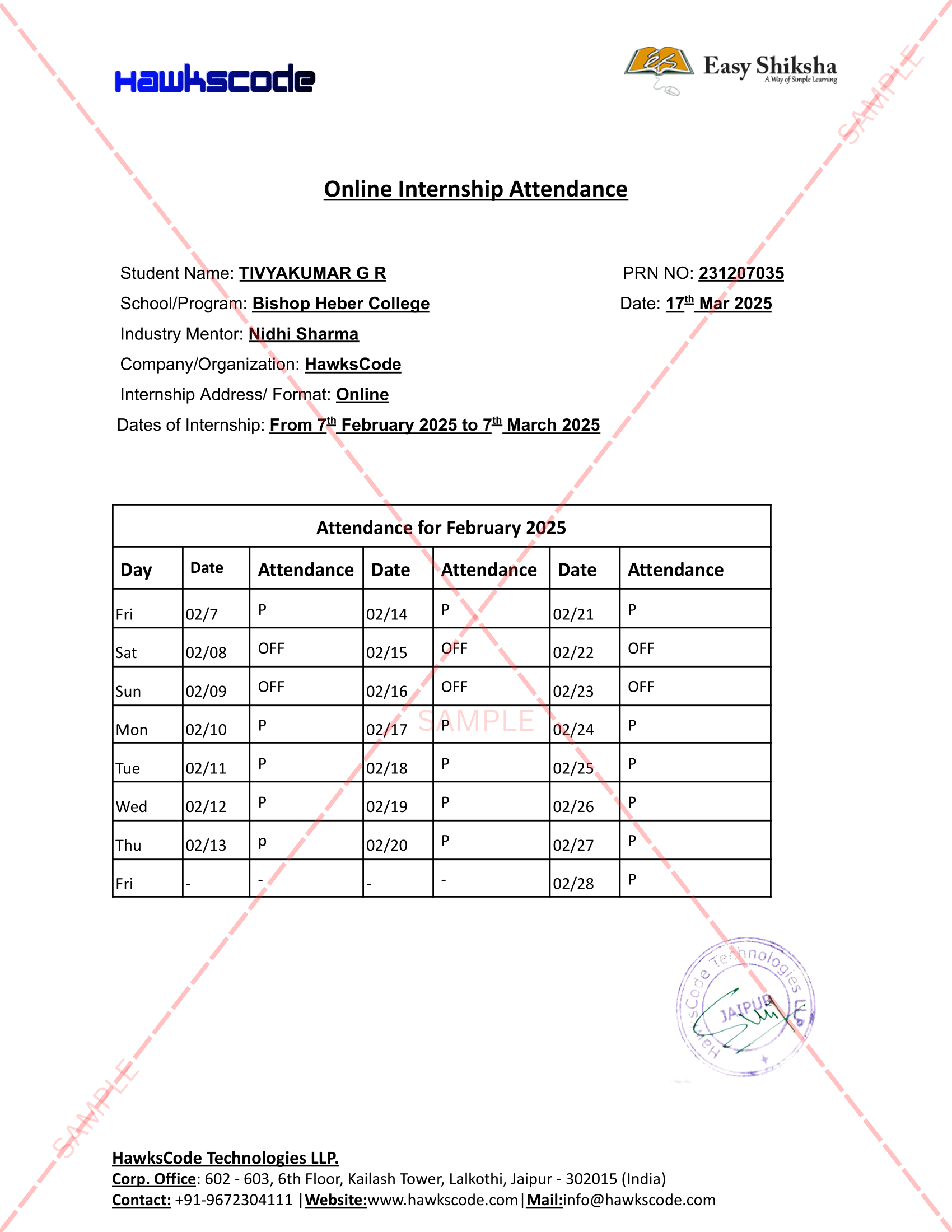
From Internship Certificates to Internship Evidence
The future of internships may also involve a shift in how experiences are documented.
Instead of simply stating that a student completed an internship, a digital learning record could potentially capture the nature of the experience, the skills practised, the project undertaken, the role performed, and the outcomes achieved.
Such evidence could make professional experiences easier to understand.
For students, it can strengthen career portfolios. For educators, it can provide insights into how academic learning translates into workplace activity. For employers, it can offer additional context when evaluating early-career candidates.
This does not mean that digital records should replace human evaluation. Rather, they can provide a richer foundation for conversations between learners, educators, and employers.
Could the Degree Become a Career Platform?
The traditional degree is primarily a qualification. The emerging career-integrated model suggests that a degree could also become a platform for continuous development.
The student would not simply move through a fixed academic sequence. The journey could contain different layers of learning and application.
A university subject might introduce a concept. An online course could provide specialised knowledge. A quiz could test understanding. A project could create evidence of application. An internship could provide workplace exposure. A certificate could document the learning experience. Career guidance could help interpret the experience. A portfolio could bring everything together.
The degree remains an important formal qualification, but it becomes connected to a much broader ecosystem.
This approach could be particularly valuable for online learners because digital platforms can connect experiences that would otherwise remain fragmented.
- Career Helper suggests occupations that correspond to your interests, values, aspirations, and personality.
-
Career Helper consists of:
- IQ Test
- Basic Test
- Advance Test
- Psychometric Test
- Know your talents, skills, strengths, and weaknesses.
- Choose the profession that suits you best.
- Get best career guidance by Experts.
- Explore various career options in India with EasyShiksha.
The Future of Online Higher Education
The future of online higher education may therefore be less about choosing between academic education and career preparation and more about integrating the two.
Students still need conceptual foundations, critical thinking, disciplinary knowledge, academic rigour, and recognised qualifications. At the same time, they need opportunities to practise, experiment, collaborate, build, analyse, communicate, and solve problems.
A career-integrated degree attempts to bring these dimensions together.
Technology makes this increasingly possible. Digital portfolios can document development. Online assessments can provide continuous feedback. AI can support personalised learning. Virtual simulations can create practice environments. Online internships can expand access to professional exposure. Project platforms can allow students to demonstrate work. Career tools can connect learning experiences with potential professional pathways.
The result could be a more connected model of higher education in which students do not have to wait until graduation to begin building evidence of their capabilities.
Conclusion: Designing Degrees Around the Complete Student Journey
The central question is no longer simply whether internships and practical projects should exist within online higher education. A more important question is how deeply they should be connected to the academic journey.
A career-integrated degree does not require universities to abandon traditional academic education. Instead, it encourages a stronger relationship between knowledge and application.
Students can learn concepts through academic programmes and online courses, reinforce them through quizzes, apply them through projects, gain professional exposure through internships, document their achievements through certificates and portfolios, and use career guidance to understand how their growing capabilities connect with future opportunities.
This creates a more continuous pathway from education to employability.
For platforms such as EasyShiksha, the opportunity lies in connecting these experiences rather than presenting them as isolated services. Online courses, university programmes, quizzes, internships, projects, games, certificates, career guidance, and job preparation can become different components of a single learning ecosystem.
The degree of the future may therefore be more than a qualification earned at the end of several years. It could become a structured record of how a learner developed knowledge, practised skills, completed meaningful projects, gained professional exposure, and progressively built career readiness.
The fundamental idea is simple: education should not end where professional preparation begins. A well-designed learning journey can allow the two to develop together.
If online higher education can successfully connect academic knowledge with practical experience, the degree can become not merely evidence that a student studied, but part of the evidence that the student learned how to apply what they studied.