Online education is gradually moving beyond the traditional model in which students watch lessons, complete quizzes, and receive certificates after finishing a course. Although this structure makes knowledge accessible, it does not always demonstrate whether learners can apply what they have studied in practical situations. A student may understand the concepts explained in a course but struggle when asked to complete a project, solve a workplace problem, or perform a task independently. This gap between learning and application creates an important opportunity for educational platforms to rethink how courses are designed.
What if an online course could automatically generate a project brief, an internship task, and a practical assessment from the same learning objectives? Instead of developing course content, projects, assessments, and internship assignments as separate activities, an educational platform could use a shared learning objective as the foundation for all four. The same objective could be translated into a guided project, a realistic workplace assignment, and an assessment that measures whether the learner has achieved the intended competency.
For example, a course that teaches students how to develop responsive websites could include lessons about HTML, CSS, JavaScript, layout design, and browser compatibility. From these learning objectives, the platform could generate a project brief requiring students to build a responsive website, an internship task involving improvements to an existing website, and a practical assessment testing their ability to implement and troubleshoot the relevant features. Each activity would evaluate a different dimension of the same underlying knowledge.
For EasyShiksha, which connects online courses, internships, quizzes, worksheets, projects, educational games, certificates, and university programmes, this model could create a more connected learning ecosystem. It could help students move from understanding concepts to producing practical work and demonstrating their abilities. The broader opportunity is to transform an online course from a collection of learning materials into a structured pathway that automatically connects education with measurable outcomes and workplace readiness.
Understanding the Learning Objective as a Shared Foundation
A learning objective describes what a student should know, understand, or be able to perform after completing a particular learning activity. It provides direction for course content, teaching methods, and assessment design. However, learning objectives are often used mainly to structure lessons and examinations, while projects and internships are developed separately.
This separation can create inconsistencies. A course may teach a particular technical skill, but its final project might focus on a different ability. An internship assignment may introduce responsibilities that students have not practised during the course. Similarly, a practical assessment might test theoretical knowledge without demonstrating whether the learner can perform the actual task associated with the subject.
A shared learning objective model addresses this problem by making the objective the central reference point for every learning activity. The objective becomes the common foundation from which different forms of educational experiences are generated. The project brief describes how the learner can demonstrate the objective through an independent outcome. The internship task shows how the same capability can be applied in a workplace situation. The practical assessment evaluates whether the student can perform the required activity under defined conditions.
Consider a learning objective such as: "Students will be able to analyse website performance and identify opportunities to improve loading speed." This objective could generate a project brief requiring students to audit and improve a sample website. An internship task could ask them to investigate performance issues on an existing company website. A practical assessment could provide a website performance report and ask students to identify the most important issues and recommend suitable improvements.
Although the three activities are different, they share the same competency. This consistency makes the learning journey more meaningful and helps educators determine whether students can transfer knowledge from one context to another.
How One Learning Objective Can Generate Three Different Activities
The central idea behind this model is not to create identical versions of the same assignment. Each generated activity should serve a distinct educational purpose while remaining aligned with the same learning objective. A project, internship task, and practical assessment should therefore use different contexts, levels of independence, and evaluation methods.
A project brief provides a structured opportunity for students to combine knowledge and produce an outcome. It usually includes a problem statement, expected deliverables, relevant constraints, and evaluation criteria. The learner is expected to plan the work, select suitable methods, and demonstrate the result.
An internship task introduces a workplace-oriented situation. It may involve an existing system, a client requirement, a team workflow, or a practical business problem. Unlike a classroom project, the task may require students to follow instructions, document progress, consider operational constraints, and communicate their findings. It introduces the professional context in which the learning objective may be used.
A practical assessment evaluates whether the learner can demonstrate the required competency under specified conditions. It may involve a short coding task, a calculation, a data interpretation exercise, a configuration activity, or a simulated decision-making scenario. The assessment focuses on observable performance rather than simply asking the student to describe the concept.
Generating these activities from the same objective creates a consistent connection between instruction and evaluation. Students learn a concept, practise it through a project, encounter a workplace-oriented version through an internship task, and demonstrate their competence through an assessment. This structure can reduce the disconnect between course completion and practical capability.
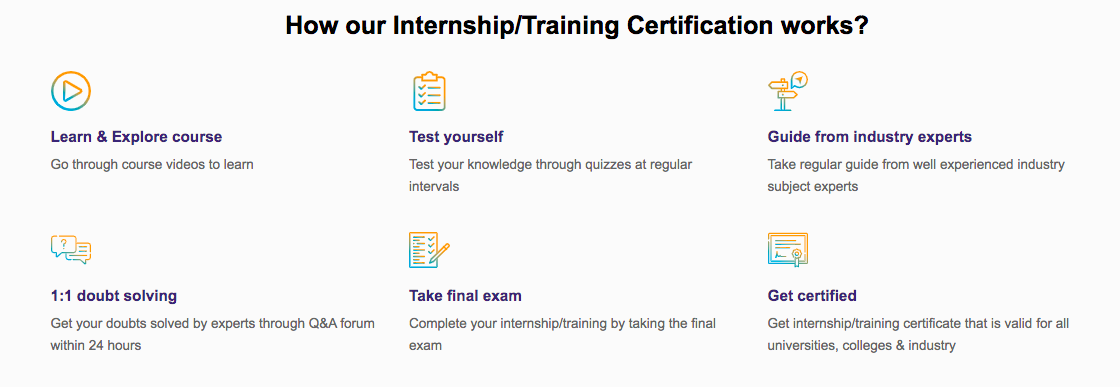
How EasyShiksha Internship/Training Program Works
The Architecture of an Objective-to-Activity Generation System
An automated system requires more than a simple instruction asking AI to create three assignments. It needs a structured process that interprets learning objectives, identifies the competencies involved, determines the expected level of performance, and converts the information into suitable activities.
The first stage involves collecting the learning objectives from the course. These objectives should be written in clear and measurable language. Statements such as "understand digital marketing" are too broad to generate meaningful practical activities. A more specific objective, such as "analyse campaign performance using click-through rate and conversion data," provides clearer direction.
The second stage involves identifying the knowledge and skills required to achieve the objective. A campaign-analysis objective may require students to understand marketing metrics, interpret numerical data, compare campaign performance, and recommend improvements. The system can use this information to determine what the generated activities should measure.
The third stage is activity translation. The system converts the same competency into three distinct formats. The project brief creates an independent deliverable, the internship task introduces a realistic workplace context, and the practical assessment establishes the conditions under which the learner must demonstrate the skill.
The final stage involves creating evaluation criteria. Each activity needs its own assessment structure, but all three should measure the same central competency. The project might be evaluated according to analytical quality and recommendation relevance, while the internship task could include documentation and communication. The practical assessment could focus on accurate interpretation and correct application of the relevant metrics.
For EasyShiksha, this architecture could become part of a course-development workflow. Once educators define the learning objectives, the platform could generate draft activities and evaluation criteria that instructors can review before publishing. This would make the process more efficient while preserving academic oversight.
Automatically Generating Project Briefs From Learning Objectives
A project brief translates a learning objective into a defined piece of work that students can complete. It should explain the problem, expected outcome, available resources, limitations, and criteria for evaluating the result. The quality of the brief determines whether the project gives students a meaningful opportunity to apply what they have learned.
An automated project-generation system could examine the learning objective and identify an appropriate project context. For a web development course, an objective about responsive design could produce a project requiring students to build a website that adapts to mobile, tablet, and desktop screens. For a finance course, an objective about budgeting could generate a project requiring students to prepare a monthly budget using a provided set of income and expense records.
The system should also adjust the complexity of the project according to the learner's level. Beginners may receive a clearly defined task with limited requirements, while advanced students could receive a more open-ended brief involving additional constraints. A beginner web development project might require a simple responsive landing page, whereas an advanced project could involve a multi-page website with interactive components and accessibility considerations.
A useful project brief should not simply repeat the learning objective. It should convert the objective into an achievable outcome. If the objective concerns data analysis, the brief should require students to examine a dataset, identify meaningful patterns, and communicate their findings. If the objective concerns programming logic, the brief should require a working solution that can be tested against defined inputs.
EasyShiksha could generate these briefs within its course environment and connect them with worksheets, learning resources, and submission facilities. Students would be able to move from the lesson directly into a practical project without searching for unrelated external assignments.
Transforming the Same Objective Into an Internship Task
An internship task needs to introduce the professional environment in which a learning objective becomes useful. Although a classroom project allows students to create an outcome independently, workplace assignments often involve existing systems, team expectations, business constraints, and practical responsibilities. The automated system must therefore translate the objective into a task that resembles an appropriate professional activity.
For example, a course objective may require students to understand how to identify and correct basic website performance problems. The project brief could ask them to audit a demonstration website and recommend improvements. The internship task could involve reviewing an existing company webpage, recording its performance issues, identifying possible causes, and preparing a short improvement report for a supervisor.
The task should be realistic without expecting students to perform responsibilities beyond their experience. Beginner interns should receive limited, clearly defined assignments, while advanced learners may be given more complex tasks involving multiple components or coordination with a team. The platform should also make clear whether students are working with simulated data, demonstration systems, or approved real-world resources.
Internship tasks should include professional expectations as well as technical requirements. Students may need to document their approach, communicate findings, follow a specified process, and submit their work within an agreed timeline. These requirements help learners understand that professional competence involves more than completing a technical operation.
For EasyShiksha, automatically generated internship tasks could strengthen the relationship between courses and internship programmes. A learner who completes a relevant course could receive a task aligned with the skills developed during that course. This would make internship preparation more structured and help students understand how their learning connects with actual workplace responsibilities.
Designing Practical Assessments From the Same Objective
A practical assessment provides evidence that a student can perform the required activity. Unlike a project, which may involve several stages and an extended period of work, a practical assessment generally focuses on a more specific demonstration of competence. It can be completed under controlled conditions or through a defined task that produces observable results.
For the website performance objective, the assessment might provide a sample performance report and ask students to identify the most significant issues. They could then select suitable improvements and explain why those changes are appropriate. This would measure whether the student can interpret performance information and make relevant decisions without requiring them to build an entire website.
In a programming course, the practical assessment could provide a short function containing an error and ask the student to correct it. In an accounting course, learners might receive transaction records and be asked to prepare a specific ledger entry. In a data analytics course, students could be asked to interpret a chart and identify the conclusion supported by the available information.
The assessment should be directly connected to the learning objective rather than becoming a smaller version of the project. If the project measures the ability to produce a complete outcome, the practical assessment should examine the specific skill required to produce it. This creates complementary evidence instead of repeating the same activity three times.
EasyShiksha could integrate these assessments into its online quiz and practical evaluation systems. Depending on the subject, students could submit a numerical answer, write code, upload a document, interpret a dataset, or complete an interactive task. The evaluation method should match the actual competency being assessed.
Keeping All Three Activities Aligned Without Making Them Identical
One of the most important design challenges is maintaining alignment across the generated activities. If a project, internship task, and practical assessment are produced independently, they may gradually move away from the original learning objective. A project could test advanced design skills, an internship task could focus mainly on documentation, and a practical assessment could measure basic definitions. Although each activity may be useful, the three would no longer provide consistent evidence of the intended competency.
A shared competency framework can reduce this risk. The system should identify the central skill, supporting knowledge, expected performance, and evidence required for each objective. Every generated activity should reference these elements while translating them into a different educational context.
Consider an objective related to database query optimisation. The project could require students to improve a database query within a sample application. The internship task could ask them to review an existing query and document possible performance improvements. The practical assessment could provide a query and sample execution information, asking students to identify the most appropriate optimisation. All three activities evaluate query optimisation, but they require different forms of performance.
Alignment should also be visible in the evaluation criteria. The system could use a common competency reference while defining activity-specific measures. This would allow educators to compare evidence across the project, internship task, and practical assessment without assuming that the activities are interchangeable.
AI as the Engine Behind Objective-to-Activity Generation
Artificial intelligence could make this model practical at scale by interpreting course objectives and producing structured activity drafts. A generative AI system can transform a clearly written learning objective into different educational formats, create relevant scenarios, suggest deliverables, and prepare evaluation criteria. It could also adjust the language and complexity of activities according to the learner's level.
However, generating meaningful activities requires more than producing natural-sounding descriptions. The system must understand the subject matter and distinguish between different types of competence. For example, an objective about understanding database relationships should not automatically generate a project that requires advanced database administration unless that level of skill is part of the course.
AI could use a structured course knowledge model containing concepts, prerequisites, tools, expected outcomes, and assessment requirements. This information would provide context for generating suitable activities. The system could then check whether the project, internship task, and assessment cover the same objective and whether their difficulty is appropriate.
Another useful capability would be the generation of variations. Two students studying the same objective could receive different datasets, scenarios, or project contexts while being evaluated against the same competency. This could reduce excessive repetition and encourage independent problem-solving.
EasyShiksha could use AI to prepare draft activities for educators, allowing them to review the relevance, difficulty, and accuracy before publication. Human review would remain important, particularly for technical, financial, scientific, and workplace-related assignments where incorrect instructions could create confusion or risk.
A Practical Example: From a Digital Marketing Objective to Three Activities
Consider an online digital marketing course with the learning objective: "Students will be able to evaluate campaign performance and recommend improvements using relevant marketing metrics." This objective requires students to understand performance indicators, interpret campaign data, identify weaknesses, and justify recommendations.
The automated project brief could ask students to analyse a simulated digital advertising campaign. They might receive information about impressions, clicks, conversions, and advertising expenditure. Their task would be to prepare a campaign performance report that identifies strengths, weaknesses, and opportunities for improvement. The final deliverable would demonstrate their ability to interpret metrics and connect them with marketing decisions.
The internship task could introduce a workplace-oriented version of the same competency. Students might be asked to review a sample campaign report prepared by a marketing team, identify areas that require further investigation, and prepare a short recommendation for the supervisor. The task would include professional expectations such as clear documentation, appropriate interpretation, and communication of findings.
The practical assessment could provide a smaller dataset and ask students to identify which campaign requires attention and why. Students might need to calculate a relevant performance measure, interpret the result, and select an appropriate improvement strategy. This would test whether they can apply the core skill independently.
The three activities would share the same learning objective but provide different forms of evidence. The project would demonstrate extended analytical work, the internship task would introduce professional application, and the practical assessment would evaluate focused individual competence. This is the central value of objective-driven activity generation.
A Practical Example: Generating Activities for a Programming Course
A similar approach could be used in a JavaScript course with the objective: "Students will be able to identify and correct logical errors in conditional statements." This objective is specific enough to generate different activities that measure the same competency.
The project brief could require students to develop a small decision-based application, such as a course eligibility checker. The application would need to evaluate user input and display suitable results according to defined conditions. Students would demonstrate their ability to construct and test conditional logic.
The internship task could involve reviewing a simulated existing application in which some eligibility conditions produce incorrect results. Students would inspect the relevant code, identify the logical problem, make a correction, and document the change. This would resemble a small software maintenance assignment.
The practical assessment could provide a short code segment with a conditional error and ask students to correct it. The system could test the revised code against several input cases to determine whether the correction works as expected. This would measure the student's ability to diagnose and repair the relevant logic independently.
For EasyShiksha, this approach could be extended across HTML, CSS, JavaScript, Python, databases, and other technical courses. Students could encounter a consistent progression from guided learning to project development, workplace-style problem-solving, and measurable practical performance.
Personalising Activities According to Student Skill Levels
Not every student should receive the same project, internship task, and practical assessment simply because they are studying the same course. Learners may have different levels of prior knowledge, confidence, and practical experience. An automated generation system could therefore personalise the complexity of activities while preserving the underlying learning objective.
A beginner may receive a project with clear instructions, a limited set of requirements, and access to supporting examples. The corresponding internship task could use a simulated environment with step-by-step guidance, while the practical assessment might focus on one clearly defined operation. This would allow the learner to develop confidence without facing unnecessary complexity.
An intermediate learner could receive a project with fewer instructions and additional constraints. Their internship task might involve analysing an existing problem and preparing recommendations, while the practical assessment could include more than one connected requirement. Advanced learners could receive open-ended projects, less predictable workplace scenarios, and practical assessments involving unfamiliar inputs.
Personalisation should not change the competency being measured. If the objective is to identify logical errors in conditional statements, all students should demonstrate that ability even if the complexity of their code or scenario differs. The platform should also ensure that assessment results remain comparable by using clearly defined performance criteria.
EasyShiksha could use student progress data, earlier quiz results, project performance, and completed course activities to recommend suitable difficulty levels. This would make the generated assignments more responsive to learner development while keeping them connected to the course objectives.
Measuring Competency Across Three Different Forms of Evidence
A major advantage of generating three activities from the same learning objective is the opportunity to evaluate competency from different perspectives. A student may perform well in a short practical assessment but struggle when applying the same skill in a larger project. Another learner may produce an impressive project with considerable guidance but find it difficult to complete a similar task independently.
These differences matter because competence involves more than producing one successful result. It includes understanding the concept, applying it in different situations, and performing the task with an appropriate level of independence. Evaluating students through a project, internship task, and practical assessment can provide a more complete picture of these abilities.
The evaluation framework should distinguish between the evidence produced by each activity. A project could measure planning, execution, quality, and problem-solving. An internship task could evaluate professional communication, following instructions, documentation, and practical application. A practical assessment could focus on accuracy, independent execution, and understanding of the relevant process.
The platform could then combine the results into a competency profile. Rather than simply recording that a student completed a course, the profile could indicate whether the learner has demonstrated the associated skill through different forms of work. Such a profile would be more informative than a course completion score alone, although the credibility of the evidence would depend on clear assessment standards and appropriate verification.
Creating a Connected Learning Pathway on EasyShiksha
EasyShiksha could use this model to connect its educational services through a common learning objective framework. A student enrolling in an online course could begin with structured lessons and practice exercises. Once the relevant learning objectives are introduced, the platform could generate a project brief, a corresponding internship task, and a practical assessment.
The student could complete the project as part of the course, use the internship task to understand how the skill applies in a professional environment, and complete the practical assessment to demonstrate individual competence. The platform could then use the results to recommend the next learning activity, an advanced course, or a suitable internship opportunity.
This approach could also improve the relationship between online courses and certificates. Instead of issuing recognition based only on watching lessons or completing basic quizzes, a course could include evidence of practical application. A certificate could be supported by completed projects and verified assessment results, depending on the programme's requirements.
Educational games and worksheets could also become part of this pathway. A game might introduce a concept through a decision-based challenge, while a worksheet could provide additional practice before the student attempts the project. The same learning objective would therefore connect several learning formats without making them repetitive.
For students, this could create a clearer understanding of why they are learning a concept and how it can be applied. For educators, it could provide a more organised approach to course design and assessment. For the platform, it could create a consistent structure connecting learning, practice, projects, and internships.
Reducing the Gap Between Course Completion and Workplace Readiness
One of the common limitations of online education is that course completion does not always indicate workplace readiness. A learner may complete several courses and collect certificates but still lack experience applying the concepts in practical situations. Employers generally need evidence that candidates can perform tasks, solve problems, follow instructions, and communicate results.
Generating projects and internship tasks from learning objectives could help address this gap. Students would encounter practical assignments throughout their courses rather than waiting until the end of their learning journey to apply their knowledge. This would make practical work an integral part of the course instead of an optional activity.
The internship task is particularly important because it introduces the learner to the context in which professional work takes place. Even when the task is simulated, students can practise interpreting requirements, documenting progress, and producing work that meets defined expectations. When connected to supervised internships, these activities can provide a foundation for more advanced responsibilities.
EasyShiksha could use this model to prepare students for internships across technical, business, creative, and analytical fields. A learner studying graphic design could move from a design project to an internship task involving a real or simulated client brief. A student studying data analytics could progress from a dataset project to an assignment requiring the interpretation of business information. The exact tasks would vary, but the learning objectives would provide continuity.
Empower your team. Lead the industry
Get a subscription to a library of online courses and digital learning tools for your organization with
EasyShiksha
Challenges in Automating Project and Internship Generation
Although automated activity generation offers considerable potential, it also introduces important design challenges. The first is the quality of the learning objectives. Broad or unclear objectives can produce generic assignments that do not measure meaningful skills. If an objective simply states that students should understand a subject, the system may struggle to identify what they should actually demonstrate.
Course designers must therefore create objectives that describe observable outcomes. The system should also identify prerequisites, expected difficulty, required tools, and relevant subject boundaries before generating activities. This information helps prevent assignments from demanding skills that have not been introduced in the course.
Another challenge is maintaining realistic internship tasks. A generated assignment should reflect the responsibilities and constraints of the relevant profession without inventing unrealistic workplace conditions. Tasks involving real company systems, customer data, financial information, or operational processes require suitable permission, privacy protection, and supervision. Simulated environments may be more appropriate for beginners.
Assessment consistency is another concern. Different generated projects may vary in difficulty, even when they are based on the same objective. Platforms need clear rubrics and validation procedures to ensure that students are evaluated fairly. AI-generated tasks should be reviewed for technical accuracy, clarity, accessibility, and alignment with the intended competency.
There is also a risk of over-automation. If every assignment is generated from a fixed template, students may encounter repetitive scenarios that do not reflect the diversity of real problems. The system should introduce variation in context and requirements while preserving the underlying learning outcome. Educators should retain the ability to modify, replace, or reject generated activities when they do not meet academic or professional standards.
The Future of Objective-Driven Learning Systems
The future of online education may involve learning systems that connect course content, practical activities, and assessment through shared competency structures. Instead of treating lessons, projects, quizzes, and internships as separate components, platforms could organise them around what students are expected to achieve.
AI could make this model more flexible by generating activities at different levels, creating new scenarios, adapting assessment conditions, and analysing student performance. A course could evolve from a fixed sequence of lessons into a system that continuously produces suitable learning and application opportunities based on defined objectives.
Such systems could also support the maintenance of course content. When a technology or professional practice changes, educators could update the relevant learning objective and review the activities connected to it. A revised objective could lead to updated project briefs, internship tasks, and practical assessments. This would help maintain consistency between what a course teaches and what its assignments require.
For EasyShiksha, this model could support a more integrated education experience. Courses could introduce competencies, projects could demonstrate their application, internships could provide workplace context, and assessments could verify performance. Student progress could be recorded through evidence rather than relying only on course completion.
The wider possibility is an education platform in which every learning objective has a clear path from instruction to application and evaluation. This could make online learning more practical, transparent, and closely connected to professional development.
Conclusion
Automatically generating a project brief, an internship task, and a practical assessment from the same learning objectives could transform how online courses connect knowledge with real-world capability. Instead of developing lessons, projects, internships, and assessments independently, an educational platform could use a shared competency structure to ensure that every activity supports the same intended learning outcome.
The project brief would allow students to create a meaningful result, the internship task would introduce a workplace-oriented application, and the practical assessment would measure whether the learner can demonstrate the required skill independently. AI could support the generation and personalisation of these activities, while educators would remain responsible for validating their quality, relevance, and fairness.
For EasyShiksha, this approach offers an opportunity to connect online courses, quizzes, worksheets, projects, certificates, and internships into a more coherent learning pathway. Students could understand what they are learning, why the skill matters, how it can be applied, and what evidence demonstrates their progress. The ultimate goal would be to move beyond course completion as the primary measure of achievement and create an education system in which every learning objective leads towards practical capability.
Anshika Jain is an Engineer, Developer, and Educational Content Author known for her dedication to technology and knowledge sharing. With a strong analytical mindset and a passion for innovation, she has consistently contributed to creating meaningful digital solutions and insightful educational articles.
Her ability to simplify complex technical concepts into engaging and easy-to-understand content makes her work valuable for students and learners across various platforms. Along with her technical expertise, Anshika is admired for her creativity, professionalism, and commitment to continuous learning.
She represents a perfect blend of technical excellence and impactful communication, inspiring others through both her development work and educational contributions.