Online education increasingly depends on software platforms, digital tools, interactive applications, simulations, and specialised learning environments. Students may enrol in a course to learn graphic design, programming, data analytics, accounting, engineering, artificial intelligence, or digital marketing, only to discover that completing the learning pathway requires access to a particular software application. In many cases, the software is central to the course structure. Lessons are designed around its interface, practical assignments require its features, and assessments expect students to produce outputs using that specific tool. However, software does not remain available forever. Companies discontinue products, developers abandon applications, subscription services shut down, operating systems stop supporting older programmes, and online tools disappear after acquisitions or changes in business strategy.
This creates a serious educational challenge: what happens when a student's learning path depends on software that no longer exists? A learner may have completed several modules, invested considerable time in practical assignments, and developed confidence using a particular application. If that application becomes unavailable, the student may be unable to continue the course in its original form. Even when alternative software exists, the replacement may have different features, interfaces, file formats, workflows, and technical requirements. As a result, students may lose access to important learning experiences even though the underlying knowledge they acquired remains valuable.
This situation can be described as the course migration dilemma. It occurs when an educational programme becomes dependent on a technology that is discontinued, inaccessible, unsupported, or incompatible with current systems. The problem is not simply replacing one application with another. It involves protecting learning continuity, preserving assessment validity, maintaining project compatibility, and ensuring that students can complete their educational goals without being unfairly affected by technology changes.
For EasyShiksha, this issue presents an important opportunity to rethink how online courses are designed and maintained. Instead of building learning pathways around a single software product, educational platforms can develop software-independent learning objectives, alternative practical environments, portable project formats, and migration strategies. This would help ensure that a student's progress remains meaningful even when the technology used to deliver a course changes.
Understanding the Course Migration Dilemma
A course migration dilemma occurs when the technology required to complete an educational programme becomes unavailable or unsuitable for continued use. The dependency may involve desktop software, mobile applications, browser-based platforms, cloud services, programming frameworks, simulation environments, educational games, or specialised industry tools.
For example, imagine a student enrolled in a digital illustration course that teaches an application which is later discontinued. The student has completed the introductory modules and created several assignments using the application's native file format. However, new students can no longer download the software, and existing users may lose access to important online services. Even if another illustration application provides similar features, the original assignments may not open correctly in the replacement environment.
A similar situation could occur in a programming course built around an outdated development framework. The framework may no longer receive updates, its dependencies may become incompatible with current operating systems, and its installation instructions may stop working. Students who begin the course later could face technical problems before they even reach the main learning objectives.
The dilemma becomes more complicated when a course is designed around a specific tool rather than the transferable skills that the tool is intended to teach. If students learn only how to operate one application's interface, the disappearance of that application can make much of their course experience difficult to reuse. However, if the course teaches underlying concepts, workflows, and problem-solving methods, learners can transfer their knowledge to another environment more easily.
Therefore, the central question is not whether software will eventually change. It is whether educational systems are prepared to manage that change without interrupting student progress.
Why Educational Courses Become Dependent on Specific Software
Software dependency often develops because instructors and course designers want to provide practical, industry-relevant learning experiences. Using real applications allows students to practise skills that may be required in professional environments. A graphic design course may use a popular design application, a data analytics course may depend on a particular visualisation platform, and a programming course may teach a framework used by software development teams.
This approach can make learning more practical, but it also creates a connection between the course structure and the continued availability of the selected technology. Course videos may demonstrate specific interface elements, assignments may require proprietary file formats, and assessment criteria may expect students to use features available only in that application.
The dependency becomes especially strong when the software is integrated into every stage of the learning experience. A student may use it to complete exercises, save projects, receive instructor feedback, collaborate with classmates, and submit final assessments. If the platform disappears, several course components may become unusable at the same time.
Another reason for software dependency is the rapid development of educational content. A course may be created around the latest version of an application because it is widely used at the time. However, maintaining the course requires continuous updates to lessons, screenshots, practical exercises, installation instructions, and assessments. When a product changes significantly or disappears, updating the entire course can become expensive and time-consuming.
Educational platforms must therefore recognise that software selection is not only a teaching decision. It is also a long-term content maintenance and student continuity decision.
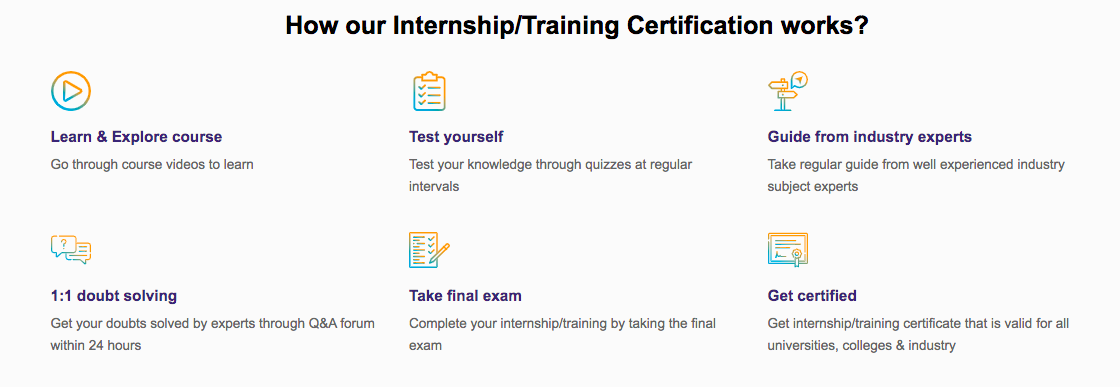
How EasyShiksha Internship/Training Program Works
The Difference Between Software Skills and Transferable Knowledge
One of the most important aspects of course migration is understanding the difference between learning software and learning the concepts behind that software. These two outcomes are related, but they are not identical.
Software-specific skills involve knowing how to operate a particular application. A learner may understand where its tools are located, how to navigate its interface, how to export files, and how to use its specialised features. These abilities can be useful, especially when an employer requires experience with a particular product.
Transferable knowledge focuses on the principles and processes that remain relevant across different applications. A student learning graphic design should understand composition, typography, colour theory, visual hierarchy, and image preparation. These concepts remain valuable even if the design application changes.
Similarly, a data analytics student should understand data cleaning, statistical interpretation, visualisation principles, and analytical reasoning rather than memorising only the steps required by one software platform. A programming student should understand algorithms, data structures, debugging, and software architecture alongside familiarity with a particular framework.
Courses that balance both types of learning are more resilient. Students still gain practical experience with relevant tools, but their progress does not become entirely dependent on one product. If the original application is discontinued, the learner can move to another environment while retaining much of the knowledge already developed.
For EasyShiksha, this distinction could become an important course design principle. Every software-focused programme could identify which learning outcomes are product-specific and which represent broader professional competencies.
What Happens When Essential Software Is Discontinued?
When software is discontinued, the consequences can extend beyond the loss of an application. Students may encounter problems at different stages of their learning journey, particularly when they have already invested time and money in a course.
The first challenge is access. Students may no longer be able to download the application, create new accounts, activate licences, or access cloud-based services. Even learners who previously installed the software may lose functionality if activation servers are shut down or online authentication is no longer supported.
The second challenge is compatibility. An older application may continue to exist, but newer operating systems and hardware may not support it. Students may experience installation errors, performance problems, missing libraries, or security warnings. This makes the software difficult to use reliably, even if an archived installer is available.
The third challenge involves project continuity. Many applications store work in proprietary formats that cannot be opened directly by other programmes. A student may have created months of design work, spreadsheets, simulations, or software projects that become difficult to access after the original product disappears.
The fourth challenge concerns assessment. If a course requires students to complete a task using the discontinued software, the assessment may become impossible or unfair. Students who completed the assignment earlier may have an advantage over those who enrol later, even when both groups are expected to demonstrate the same competency.
These consequences show why software discontinuation must be treated as an educational continuity issue rather than a minor technical inconvenience.
How Software Discontinuation Affects Student Learning Paths
A learning path is generally designed as a sequence of connected educational experiences. Students may begin with introductory concepts, progress through guided exercises, complete practical projects, and eventually demonstrate advanced competencies. When a required software product disappears, this sequence can be interrupted.
Consider a student enrolled in a user interface and user experience design course. The first modules introduce design principles, while later modules require the learner to create interactive prototypes using a particular application. If that application becomes unavailable, the student may be unable to complete the practical modules even though the theoretical lessons remain accessible.
The problem becomes more significant when advanced assignments depend on earlier project files. If the original files cannot be opened in another application, students may have to recreate their work. This can result in duplicated effort and lost learning time.
Students may also lose confidence in the educational platform. They may question whether their certificates, projects, and completed modules will remain useful if the technology supporting the course is not maintained. For learners preparing for employment, this uncertainty can affect their willingness to invest in longer educational programmes.
A well-designed course migration system should therefore protect the continuity of the learning journey. Students should be able to continue from their existing level of progress rather than being forced to restart an entire programme because one application has disappeared.
The Challenge of Replacing One Software Tool With Another
Replacing discontinued software may appear straightforward when another application offers similar functionality. However, two tools that perform comparable tasks may have different workflows, technical limitations, and output formats. A replacement must therefore be evaluated according to the learning objectives of the course rather than simply its product category.
For example, two graphic design applications may both support image editing, but their layer systems, masking tools, export options, and collaboration features may differ. A student who understands the principles of image composition may adapt quickly, while someone who has memorised only the original application's workflow may struggle.
The same issue occurs in programming. A discontinued framework may be replaced by another framework that supports similar development goals but uses different architecture, syntax, dependencies, and conventions. A direct substitution may require substantial changes to lessons and assignments.
In data analytics, one visualisation platform may use a different calculation model or data connection process from another. Students may obtain different results if they do not understand how the tools process information.
Course migration must therefore include a mapping process. The original course's learning outcomes should be compared with the capabilities of the replacement software. Course designers must determine which exercises can remain unchanged, which require modification, and which need to be redesigned entirely.
The objective should be to preserve the educational purpose of an assignment rather than reproduce the exact interface of the discontinued application.
Designing Software-Independent Learning Outcomes
A strong strategy for preventing course migration problems is to define learning outcomes independently of the software used to teach them. This means that a course should describe what students must understand or demonstrate without making every outcome dependent on a particular application's interface.
For example, a data analytics course might define an outcome as the ability to clean a dataset, identify inconsistent values, perform exploratory analysis, and communicate findings through visualisations. The course could initially use one analytics platform, but the learning objective would remain valid if another application became necessary.
A web development course could focus on the ability to build responsive interfaces, connect frontend components to APIs, manage application state, and test user interactions. Students could practise these skills through different development environments depending on the availability of tools.
This approach does not mean removing software from practical education. Instead, it separates the purpose of the learning activity from the product used to complete it.
Educational platforms could maintain a structured relationship between each lesson, assignment, software feature, and competency. If a product becomes unavailable, course designers could identify the affected activities and replace the tool without losing the original educational objectives.
For EasyShiksha, this could create a more sustainable model for online courses across programming, design, finance, artificial intelligence, cybersecurity, and other technical subjects.
Introducing Multi-Tool Learning Pathways
Another way to reduce dependency is to teach selected concepts through more than one software environment. Students could begin with a primary application and later complete a smaller assignment using an alternative tool. This would expose learners to different interfaces while demonstrating that the underlying skill is not restricted to one product.
A spreadsheet course, for example, could introduce formulas, data organisation, and basic analysis through one application before asking students to perform a similar task using another spreadsheet environment. A graphic design course could teach visual principles in one programme and then introduce the process of recreating a design in a different application.
Programming courses could use more than one development environment while keeping the core language and programming concepts consistent. This would help students distinguish between the programming skill itself and the tools used to support development.
Multi-tool learning also prepares students for workplaces where different teams use different technology stacks. Employers may operate legacy systems alongside modern applications, and employees may need to move between tools during their careers.
However, multi-tool teaching should be introduced carefully. Beginners can become confused if they are expected to learn several interfaces before understanding the fundamentals. The most effective approach is to establish a strong foundation in one environment and introduce alternatives when the student has developed sufficient confidence.
The Importance of Portable Project Files and Open Formats
Project portability is one of the most important factors in successful course migration. Students should be able to preserve their work even when the software used to create it becomes unavailable.
Many applications rely on proprietary file formats that store project information in ways that are difficult for other tools to interpret. Although these formats may support advanced features, they can create long-term access problems when a product is discontinued.
Educational platforms could reduce this risk by encouraging the use of open or widely supported formats wherever possible. Text-based programming projects, standard image formats, common document types, structured data formats, and exportable project records can make student work easier to preserve.
For example, students working with datasets could retain copies in CSV or other appropriate open formats alongside the original application files. Developers could maintain source code in accessible repositories with clear dependency information. Design students could export finished work into common image or document formats while retaining editable source files whenever possible.
It is important to recognise that exporting a project does not always preserve every feature. A flattened image may retain its appearance but lose editable layers. A PDF may preserve a document's layout without retaining the original spreadsheet formulas. Course designers should therefore explain what information is preserved and what may be lost during conversion.
A portable project strategy should protect both the final output and, wherever possible, the information needed to continue editing or understanding the work.
Building Course Migration Frameworks
A course migration framework provides a planned method for updating learning materials when the technology supporting them changes. Instead of responding only after a product disappears, educational platforms can identify dependencies and prepare alternative learning environments in advance.
The framework begins with software dependency mapping. Every course should maintain information about the applications, versions, services, plugins, operating systems, and file formats required by its lessons and assignments. This allows course administrators to identify which learning activities may be affected by a change in software availability.
The next stage involves evaluating the risk associated with each dependency. A widely supported application with stable offline functionality may present a different level of risk from a small cloud service operated by a single provider. A course that depends on an online account system may also face different continuity challenges from one that uses locally stored project files.
The third stage is preparing migration alternatives. Course designers should identify replacement tools, open-source options, alternative workflows, and equivalent practical assignments. These alternatives should be tested before being introduced to students.
Finally, the platform should communicate changes clearly. Students need to understand why a migration is happening, which lessons have changed, whether their existing work remains compatible, and how their course progress will be preserved.
A formal framework can make course maintenance more predictable and reduce the disruption caused by sudden technology changes.
Artificial intelligence could become a useful part of course migration by helping educational platforms identify affected content and develop replacement learning materials. However, AI should support expert review rather than automatically determine whether one software product can replace another.
An AI-assisted course management system could examine lesson transcripts, assignment instructions, screenshots, and technical references to identify references to discontinued software. It could highlight modules that contain outdated interface instructions or depend on features that no longer exist.
AI could also assist with learning outcome mapping. If a course originally teaches data visualisation through one platform, an AI system could suggest how the same task might be performed in another environment. Course designers would then verify whether the replacement supports the required analytical operations and whether the assignment remains equally meaningful.
Another application involves student support. During migration, an AI learning assistant could explain differences between the original and replacement interfaces. It could help learners understand how a familiar operation is performed in the new application and direct them to updated course resources.
AI could also analyse student progress and identify assignments that need to be repeated or adapted. For example, if a student has already demonstrated a particular competency through an earlier project, the platform may be able to preserve that evidence while assigning only the activities affected by the software change.
However, AI-generated migration instructions must be tested. Incorrect conversions, missing features, or inaccurate explanations could create new educational problems. Human instructors and technical specialists should remain responsible for approving significant course changes.
Preserving Student Progress During Migration
A successful migration should not force students to lose the progress they have already achieved. Educational platforms must distinguish between completed learning outcomes and activities that are no longer technically available.
Suppose a student has completed five modules of a software-based course and submitted three practical projects. If the required application is discontinued, the platform should evaluate which competencies have already been demonstrated and which still require assessment.
The student may not need to repeat every lesson. If the completed projects provide sufficient evidence of a particular skill, that achievement could remain recognised. The remaining modules could then be delivered through a replacement environment.
This requires a competency-based approach to student progress. Instead of recording only which software exercises have been completed, the platform should also record the knowledge and practical abilities demonstrated through those exercises.
For example, a student who has successfully created a database, written queries, and analysed relationships should retain evidence of those competencies even if the original database application is no longer supported. The replacement course may require the learner to understand differences in the new environment, but it should not automatically invalidate previous achievements.
EasyShiksha could use this model to connect course progress with project submissions, quiz performance, certificates, and internship evidence. This would make learning records more resilient to technology changes.
Course Migration and the Validity of Certificates
Software discontinuation can also raise questions about the long-term value of course certificates. A certificate may mention a particular application or technology that is no longer widely used. Employers reviewing the credential may wonder whether the skills remain relevant.
This does not mean that the certificate automatically loses its value. Many professional competencies remain useful even when the software through which they were learned becomes obsolete. A student who understands database design, visual communication, programming logic, or data interpretation may still possess valuable knowledge.
The challenge is ensuring that certificates communicate the actual learning outcomes accurately. A certificate that focuses entirely on operating a discontinued product may become less meaningful over time. A credential that also recognises transferable competencies provides a clearer representation of the learner's capabilities.
Educational platforms could include course version information, completion dates, software versions, and verified competencies in their learning records. If a course is migrated, the platform could also record whether the learner completed the original version or the updated version.
This would improve transparency and help employers interpret credentials in the context of technological change.
Connecting Course Migration With Internships and Career Preparation
The ability to adapt when software changes is not only an educational requirement. It is also a workplace skill. Employees frequently encounter new applications, updated systems, and discontinued tools. Organisations may replace software because of security concerns, licensing costs, mergers, operational requirements, or changes in technology strategy.
Students who have experienced course migration challenges may be better prepared to handle these situations. They will understand that learning a professional skill does not mean becoming permanently dependent on one application.
EasyShiksha could introduce migration-related internship assignments in which students work with a simulated software transition. For example, a student might receive a project originally developed using an older framework and be asked to move it to a supported alternative. Another learner could be assigned to convert a set of project files into a more portable format while preserving essential information.
These activities would develop technical adaptation, documentation, testing, and communication skills. Students could also learn how organisations evaluate migration risks, train employees, and maintain continuity during software replacement.
Internship supervisors could assess whether learners understand the original system, identify important dependencies, and verify that the replacement environment produces the expected results.
This would connect online learning with practical workplace responsibilities and provide students with project evidence that demonstrates adaptability.
Designing a Software Lifecycle Awareness System for Courses
Educational platforms could go beyond individual course migration by introducing software lifecycle awareness. This would involve monitoring the technologies used in courses and identifying important changes that may affect learning materials.
Software products typically move through different stages. They may be actively developed, maintained, replaced by newer versions, placed into limited support, or discontinued entirely. The availability of updates, security patches, documentation, and technical support can change throughout this lifecycle.
A course management system could maintain a technology record for each major software dependency. This record could include the product name, version, support status, course modules that depend on it, alternative tools, and the last review date.
When a product approaches the end of its support period, the platform could flag the relevant courses for review. Instructors could then determine whether the current materials remain suitable, whether an alternative environment should be introduced, or whether the affected learning activities need to be redesigned.
This would be particularly useful for courses involving programming frameworks, cybersecurity tools, cloud platforms, artificial intelligence services, and rapidly changing design applications.
A software lifecycle awareness system would not eliminate all migration problems, but it could give educational platforms more time to prepare and communicate changes before students are affected.
Challenges in Implementing Course Migration
Although course migration offers a way to protect learning continuity, it can create significant operational and educational challenges. One major difficulty is the cost of updating course content. Replacing software may require new demonstrations, screenshots, practical instructions, assessments, and instructor training. A course with hundreds of lessons and project activities may take considerable time to migrate.
Another challenge is maintaining equivalent learning quality. A replacement application may not support exactly the same features as the original product. Instructors must decide whether the learning objective can still be achieved or whether the course requires a different project design.
Students may also have different levels of access to replacement software. A tool may be free for educational use but require a paid subscription for advanced features. Another application may operate only on certain devices or operating systems. Course migration should therefore consider accessibility and affordability rather than focusing only on technical similarity.
There may also be intellectual property and licensing restrictions. Educational platforms cannot assume that discontinued software can be redistributed or that old installers can legally be provided to students. Migration plans must respect the relevant licensing conditions and software ownership rights.
Finally, migration can create confusion when students receive different instructions depending on their enrolment date. Platforms should maintain clear course versions and ensure that learners understand which environment and assessment requirements apply to them.
Addressing these challenges requires collaboration between instructors, technical teams, course administrators, and educational platform managers.
Empower your team. Lead the industry
Get a subscription to a library of online courses and digital learning tools for your organization with
EasyShiksha
How EasyShiksha Could Build Migration-Ready Online Courses
EasyShiksha could address the course migration dilemma by designing online courses around long-term learning continuity rather than depending entirely on the availability of a single application. This approach could be applied across programming, artificial intelligence, data science, finance, cybersecurity, design, and other technology-related learning areas.
Every software-based course could begin with a clear separation between core competencies and product-specific skills. The core competencies would describe what students should be able to understand or accomplish, while the software component would identify the tools used to practise those skills.
For example, an AI course could focus on model development, data preparation, evaluation, and responsible deployment while using a particular development environment for practical exercises. If that environment changes, the course could be migrated without losing its central learning objectives.
EasyShiksha could also maintain alternative tool pathways. Students might complete a course using the recommended application or an approved alternative that supports the same learning outcomes. This would improve accessibility and reduce the risk of a single product becoming a barrier to course completion.
Project files and student records could be organised in portable formats wherever practical. The platform could also maintain course version histories so learners can identify which tools and instructions were used during their studies.
Quizzes and worksheets could reinforce software-independent knowledge, while projects and internships could provide opportunities to practise migration and adaptation. Course certificates could recognise both technical tool familiarity and transferable competencies.
Through this approach, EasyShiksha could create learning experiences that remain useful even when the technologies supporting them evolve.
The Future of Education: Learning Paths That Survive Technology Changes
The future of online education will depend not only on how effectively platforms introduce new technologies but also on how successfully they manage the disappearance of existing ones. Software innovation creates new opportunities, but it also makes educational content more vulnerable to changes in product availability, licensing, compatibility, and support.
A future-ready learning platform may need to treat every software dependency as something that can eventually change. Courses could be designed with replaceable practical environments, portable project records, version-aware assessments, and competency-based progress tracking.
Students could also be taught to understand software lifecycles as part of their technical education. They would learn how to evaluate whether a tool remains suitable, compare alternatives, migrate projects, and preserve important information.
AI-supported course management could help identify outdated content, suggest replacement workflows, and guide learners through changes. However, the educational objective would remain focused on developing human judgement, technical understanding, and adaptability.
The most important shift would be from product-dependent education towards capability-centred education. Instead of measuring a student's progress only through familiarity with a particular application, platforms would evaluate whether the learner can achieve meaningful outcomes across different tools and environments.
Conclusion
The course migration dilemma highlights an important weakness in technology-dependent online education. When a learning pathway relies heavily on software that no longer exists, students may lose access to practical exercises, project files, assessment environments, and essential course activities. The problem can interrupt learning progress even when the knowledge students have already acquired remains valuable.
Educational platforms can reduce this risk by separating transferable competencies from software-specific operations, introducing alternative tools, supporting portable project formats, maintaining software lifecycle records, and protecting student progress during migration. These strategies would make online courses more adaptable and ensure that technology changes do not unnecessarily invalidate previous learning.
For EasyShiksha, migration-ready course design could become an important part of building sustainable online education. Courses, quizzes, worksheets, projects, certificates, and internships could work together to demonstrate skills that remain valuable beyond the lifespan of any single application.
Ultimately, the most effective online course is not one that teaches students to depend permanently on a particular software product. It is one that prepares them to understand the underlying concepts, adapt to new environments, and continue learning when familiar tools disappear. Technology will continue to change, but a well-designed learning path should not disappear with it.
Anshika Jain is an Engineer, Developer, and Educational Content Author known for her dedication to technology and knowledge sharing. With a strong analytical mindset and a passion for innovation, she has consistently contributed to creating meaningful digital solutions and insightful educational articles.
Her ability to simplify complex technical concepts into engaging and easy-to-understand content makes her work valuable for students and learners across various platforms. Along with her technical expertise, Anshika is admired for her creativity, professionalism, and commitment to continuous learning.
She represents a perfect blend of technical excellence and impactful communication, inspiring others through both her development work and educational contributions.