In many educational games, students can experiment with different strategies, make mistakes, restart a level, and attempt the same challenge again until they achieve the desired result. This flexibility makes games enjoyable and encourages repeated participation. However, it can also create an unrealistic expectation: that every decision can be reversed, every mistake can be corrected through a restart, and every lost opportunity will eventually become available again. In actual professional, economic, scientific, and organisational environments, this is not always possible. Some decisions permanently change the conditions under which future decisions must be made.
A company that spends its research budget on an unsuccessful product may lose the opportunity to invest in another promising project. An engineering team that selects an incompatible technology may face years of additional maintenance and migration work. A government that permits essential infrastructure to deteriorate may eventually discover that restoration is considerably more expensive than preventive maintenance. Similarly, a student who chooses one academic specialisation may gradually lose access to certain advanced subjects because the required prerequisites were not completed earlier. These situations demonstrate that decisions do not simply produce immediate outcomes. They also influence which choices remain available later.
The Game Save-State Problem explores how educational games can teach students about the lasting consequences of earlier decisions. Instead of allowing every mistake to be erased through unlimited restarts, a game could preserve important changes in its environment. Resources may be permanently consumed, relationships may be damaged, opportunities may expire, systems may become difficult to modify, and future pathways may depend on decisions made several stages earlier.
Could students learn to understand these consequences by interacting with educational games that preserve the history of their decisions? Such experiences could help learners develop strategic thinking, responsibility, risk assessment, and long-term planning. They would begin to recognise that a decision should not be evaluated only by its immediate result but also by the opportunities it creates or removes.
For EasyShiksha, this concept offers an opportunity to develop advanced educational games connected with online courses, quizzes, worksheets, practical projects, and internships. These learning experiences could help students understand how decisions influence future possibilities across computer science, finance, business management, engineering, environmental science, and professional development.
Understanding the Game Save-State Problem
A save-state in a digital game records the condition of the game at a particular moment. It may preserve the player's location, completed activities, available resources, unlocked features, and progress through different challenges. In conventional games, save-states often allow players to return to an earlier position after making an unsuccessful decision. This can be useful because it reduces frustration and allows repeated experimentation.
However, real-world systems do not always provide an equivalent reset mechanism. When an organisation commits resources to a project, those resources may not be recoverable. When a company delays a critical security update, the resulting vulnerability may lead to consequences that cannot be undone simply by installing the update later. When a scientific experiment is conducted under unsuitable conditions, the original sample may be permanently consumed. The researcher may be able to repeat the experiment, but the initial opportunity and resources have already been lost.
The Game Save-State Problem emerges when educational games make every decision appear reversible even though the real-world situation being studied involves permanent consequences. If students can repeatedly restart a simulation without losing resources, relationships, opportunities, or progress, they may develop an incomplete understanding of how decisions operate in complex environments.
A more realistic educational game could preserve important consequences throughout the simulation. Students would still have opportunities to learn from mistakes, but they would need to adapt to the conditions created by previous actions rather than simply return to an earlier state. This would make decision-making more meaningful because each action would contribute to the history of the simulated environment.
Why Earlier Decisions Change Future Possibilities
Every complex system contains dependencies. A decision made at one stage can influence the resources, information, relationships, and capabilities available at a later stage. Some decisions expand future opportunities, while others reduce the number of possible pathways.
Consider a student managing a simulated technology company. At the beginning, the organisation has sufficient resources to develop several products. The student chooses to invest most of the available budget in one ambitious product. If the product succeeds, the company may gain a competitive advantage. However, if it fails, the organisation may no longer have enough resources to develop the alternative products that were previously available.
The later decision is therefore not independent of the earlier one. The student's current options are shaped by the financial commitment already made. Even if the student recognises the original mistake, the resources may not be recoverable.
A similar relationship exists in academic learning. Students who skip foundational subjects may find that advanced modules become more difficult or inaccessible because the required knowledge was never developed. Although they can return to earlier topics, the time already spent and the structure of the programme may limit their available choices.
Educational games could represent these relationships through persistent system changes. Instead of treating each level as an isolated challenge, the game would carry forward the consequences of earlier decisions. Students would learn that future possibilities are often determined by the combination of current resources and historical choices.
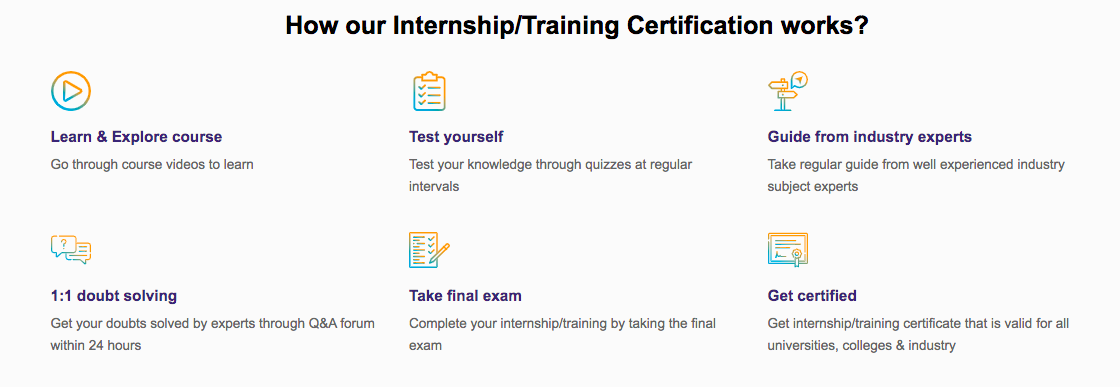
How EasyShiksha Internship/Training Program Works
Designing Educational Games With Persistent Consequences
A game based on persistent consequences would begin with an environment containing resources, objectives, constraints, and several possible development paths. Students would be free to explore the environment and make decisions, but important actions would change the underlying state of the simulation.
For example, a business management game could begin with a fictional organisation that has a limited budget, a small workforce, several potential markets, and an existing technology system. Students could decide whether to expand operations, recruit employees, invest in technology, or develop new products. Each decision would influence the organisation's future financial position, workforce capabilities, and operational flexibility.
If students invest heavily in expansion, they may gain access to new markets but have fewer resources available for employee training. If they postpone technology modernisation, they may save money initially but encounter higher maintenance costs later. If they neglect customer relationships, the organisation may lose market trust that cannot be restored immediately.
The game would preserve these changes across multiple stages. Students could not simply restart after every unsuccessful decision and continue as though nothing had happened. Instead, they would need to evaluate the new conditions and develop a strategy that works within the remaining possibilities.
The educational value would come from understanding how the environment changes, why particular opportunities disappear, and how responsible planning could have produced a different set of future choices.
The Difference Between Reversible and Irreversible Decisions
Not every decision needs to have permanent consequences. In real organisations, some actions can be reversed at relatively low cost, while others involve significant commitments that are difficult or impossible to undo. Educational games should teach students to recognise this difference.
Changing the colour scheme of a website is generally reversible. Replacing the underlying database architecture may be considerably more expensive. Adjusting a marketing campaign can often be done quickly, while losing customer trust after a major privacy failure may take years to repair. Similarly, changing a project's internal schedule may be straightforward, but missing a regulatory deadline could create consequences that cannot be removed through a simple adjustment.
A well-designed educational game could classify decisions according to their reversibility and the resources required to change them. Students would discover that a decision is not necessarily irreversible because the game prevents them from changing it. It may be effectively irreversible because reversing it would require more money, time, expertise, or organisational disruption than the system can reasonably support.
This distinction would introduce the concept of decision flexibility. Learners would understand why some decisions should be tested through small experiments before a large commitment is made. They would also learn why organisations sometimes delay irreversible investments until sufficient information becomes available.
How Opportunity Loss Could Be Represented in Educational Games
One of the most important consequences of persistent decisions is opportunity loss. When students choose one path, they may lose access to another path that was previously available. This does not necessarily mean that their decision was incorrect. It means that selecting one opportunity can create a cost by preventing the pursuit of another.
A financial simulation could demonstrate this through a limited investment budget. Students might choose between funding research, expanding production, hiring specialists, or entering a new market. Each option could produce different outcomes, but committing resources to one project would reduce the ability to pursue others.
If a student invests heavily in production expansion, the organisation may become more efficient but lose the opportunity to fund research into a new technology. Several stages later, competitors may introduce a product based on that technology, leaving the simulated organisation at a disadvantage.
The game could then ask students to examine the opportunity they lost and determine whether the original decision was justified by the information available at the time. This would help them understand opportunity cost as more than a theoretical economic definition. It would become an observable consequence of choosing one direction over another.
For EasyShiksha, such simulations could support economics, finance, entrepreneurship, and business management courses by allowing learners to experience how limited resources influence future strategic choices.
Persistent Consequences in Software Development and Computer Science
Software development offers a particularly useful environment for teaching the Game Save-State Problem because technical decisions often create dependencies that influence future development.
A student could enter a simulated software project containing a codebase, database, third-party libraries, deployment infrastructure, and a limited development team. At the beginning, several architectural options would be available. The student might choose a framework, database, authentication system, or software architecture based on the project's initial requirements.
As the application develops, the original decisions would influence later possibilities. Selecting a technology with limited compatibility could make future integrations more difficult. Choosing a poorly documented dependency could increase maintenance risks. Ignoring automated testing might allow defects to accumulate, making later modifications more expensive.
The game could preserve these consequences across development stages. If a student builds a system around an unsuitable dependency, the later levels might introduce compatibility problems or security vulnerabilities. The learner would need to decide whether to maintain the existing architecture, replace the dependency, or redesign part of the system.
The simulation should not simply punish every early decision. Some choices may be reasonable based on the requirements and information available at the time. The important learning outcome would be understanding how technical commitments create future constraints and why architecture, documentation, testing, and dependency management matter.
Students could also compare different development histories. One version of the project might prioritise rapid delivery, while another invests more time in maintainability and testing. The resulting differences would help learners understand how early development practices influence long-term software quality.
Academic Pathways and the Permanent Effects of Learning Decisions
The Game Save-State Problem could also be applied directly to academic progression. Students often make decisions about subject selection, specialisation, practical training, and career direction without fully understanding how these choices may influence later opportunities.
An educational game could simulate a student's academic journey over several years. Learners would select subjects, complete foundational modules, undertake projects, and choose specialisations. Each decision would influence the knowledge and prerequisites available for subsequent learning.
For example, a student who chooses not to study foundational mathematics may later find it difficult to enter an advanced data science pathway. Another student who avoids programming assignments may struggle to access certain software development projects. These outcomes would not suggest that students can never change their direction. Rather, they would demonstrate that changing direction may require additional time and effort.
The simulation could introduce opportunities for recovery, such as bridge courses, additional assessments, or alternative learning pathways. However, these recovery options would require resources and time, making the consequences of earlier decisions visible without presenting them as permanent personal limitations.
For EasyShiksha, this concept could connect online courses, quizzes, worksheets, university programmes, and career guidance. Students could explore how prerequisite knowledge influences their academic choices and understand the value of building strong foundations before entering advanced specialisations.
Financial Decisions That Cannot Simply Be Reversed
Finance is another discipline in which persistent decisions can produce significant educational insights. Investment choices, borrowing, spending commitments, and financial risk can influence an organisation's future flexibility.
A financial management game could provide students with a company that has limited capital and several possible investment opportunities. They might choose to borrow money for expansion, purchase equipment, invest in research, or maintain a reserve for unexpected expenses.
Once the company takes on a long-term financial commitment, the game would preserve the resulting obligations. Interest payments could reduce future spending capacity, while an unsuccessful investment might leave fewer resources available for other opportunities. Students would need to manage the consequences instead of simply restoring the original budget.
The simulation could also demonstrate the difference between financial losses and lost time. A company may eventually recover money after selling an unsuccessful asset, but it cannot necessarily recover the years spent pursuing an unsuitable strategy. During that period, competitors may have developed new products or entered markets that are no longer accessible.
Students would learn why financial decisions should be evaluated through their impact on liquidity, debt obligations, risk exposure, and future flexibility. They would also understand why maintaining financial reserves can be valuable even when those resources appear underutilised in the short term.
Environmental Decisions and Irreversible Resource Changes
Environmental systems provide some of the clearest examples of decisions that permanently or very slowly change future possibilities. Natural resources, biodiversity, soil quality, groundwater reserves, and ecological relationships may take decades or centuries to recover after serious damage.
An environmental educational game could simulate a region containing forests, rivers, agricultural land, wildlife habitats, and industrial facilities. Students would decide how resources should be used to support economic activity and community development.
If learners permit excessive groundwater extraction, the water table could gradually decline. If they allow large-scale deforestation, the game might reduce biodiversity and increase soil erosion. These changes could affect agricultural productivity, local employment, and the availability of resources for future generations.
Even if students later decide to protect the environment, the previous damage may not disappear immediately. Restoring a degraded ecosystem could require substantial financial investment and a long recovery period. Certain species or ecological relationships might not return within the simulation's timeline.
This would help students understand that environmental decisions can create long-term constraints that cannot be resolved through short-term policy changes. It would also introduce the importance of precaution, resource management, and sustainability.
A particularly advanced version of the game could divide the simulation into multiple generations. Each generation would inherit the system conditions created by previous participants. Students would take responsibility for an environment that already contains historical decisions, accumulated advantages, unresolved problems, and permanent limitations.
For example, the first generation might manage a growing industrial economy. The second generation would inherit its infrastructure, debt, workforce capabilities, and environmental conditions. The third generation would then make decisions based on the opportunities and restrictions created by the first two generations.
Students could examine how different management styles influence the system over time. One generation might prioritise economic expansion, while another focuses on repairing infrastructure and reducing debt. A later generation may discover that some opportunities have already disappeared because earlier decisions consumed the resources required to pursue them.
This design would teach students that responsibility does not begin with the current decision-maker. People often inherit systems they did not create, and their task is to understand those conditions before making further commitments.
Such simulations could be particularly useful for teaching economics, public policy, business strategy, environmental management, and institutional development. They would also encourage learners to consider how present actions affect people who are not involved in making the original decisions.
Could Students Compare Different Versions of Their Decision History?
One effective feature of persistent-state educational games would be the ability to compare alternative decision histories. Students could complete a simulation and then examine how different early decisions might have changed the environment.
For example, a student could compare a software project in which testing was postponed with another version in which automated testing was introduced from the beginning. The comparison could reveal differences in defect rates, maintenance requirements, delivery time, and development costs.
Similarly, a business management student could compare an organisation that spent most of its initial budget on expansion with one that maintained financial reserves and invested gradually. The resulting histories would demonstrate how early decisions influence later flexibility.
However, the game should avoid allowing students to erase the original experience without reflection. An alternative simulation should be presented as a separate comparison, not as a mechanism that removes the consequences of the original decisions. This distinction would preserve the educational importance of the initial decision history.
Students could then prepare a report explaining which decisions had the greatest influence, which opportunities disappeared, and what information they would have wanted before making the original choices.
The Role of Quizzes and Worksheets in Understanding Persistent Decisions
Quizzes and worksheets could reinforce the concepts introduced through persistent-state games. Instead of testing only definitions, assessments could present situations in which an earlier decision changes the choices available at a later stage.
A quiz might describe a company that spends its entire research budget on one product and later discovers a promising alternative technology. Students would need to identify the opportunity cost and explain why the organisation cannot immediately pursue every available option.
Another assessment could present a software project with outdated dependencies, incomplete documentation, and limited testing. Learners would examine how earlier technical decisions created additional maintenance requirements and determine which recovery strategy is most appropriate.
Worksheets could provide more detailed decision-history exercises. Students might receive a timeline containing several stages of a simulated project, including resource allocations, technical commitments, missed deadlines, and changing conditions. They would analyse how each decision influenced later possibilities and identify the points at which alternative actions could have preserved greater flexibility.
EasyShiksha could use these activities to connect theoretical concepts with interactive experiences. Students would first encounter the problem through a game, reinforce their understanding through quizzes, and develop deeper explanations through worksheets.
How AI Could Make Persistent-State Games More Adaptive
Artificial intelligence could improve the design of educational games by analysing decision histories and generating consequences that reflect the student's previous actions. Instead of following a completely fixed sequence, the simulation could respond to the particular combination of choices made during the game.
For example, a learner managing a technology company might repeatedly postpone cybersecurity investments. An AI-supported simulation could introduce increasingly complex security incidents based on the vulnerabilities already present in the organisation. Another learner who prioritises rapid expansion might face resource shortages, operational bottlenecks, or workforce training challenges.
AI could also explain why certain opportunities are no longer available. If a student attempts to introduce a new product after spending the remaining research budget, the system could explain how the previous allocation affected the organisation's current financial position. This would help students connect present limitations with earlier decisions.
Another useful feature would be decision-history analysis. The system could identify repeated patterns, such as excessive short-term spending, delayed maintenance, or dependence on a single technology. It could then ask students to examine whether those patterns reduced future flexibility.
However, AI-generated consequences must be based on transparent simulation rules. If the system produces unpredictable outcomes without explaining their relationship to previous decisions, students may believe that results are arbitrary. Educators should be able to inspect the underlying assumptions, and AI should support reflection rather than replace the learning objectives with unexplained automated decisions.
Measuring Learning Beyond the Final Game Result
A conventional educational game may evaluate students through scores, levels completed, or rewards collected. However, a persistent-state game requires a broader assessment approach because the final result may reflect several decisions made across the entire simulation.
Students should be assessed on their ability to recognise irreversible commitments, evaluate future consequences, and understand the relationship between present actions and later opportunities. Their reasoning should be examined alongside the final outcome.
A decision-history report could record major actions, resources consumed, opportunities gained or lost, and the conditions that emerged after each stage. Students could then explain which decisions were most influential and whether they understood the risks at the time.
Another important assessment area would be recovery planning. When a decision creates an unfavourable situation, students should demonstrate how they adapt to the remaining possibilities. They might identify alternative pathways, reallocate resources, or develop a staged recovery strategy.
The assessment should not automatically penalise students for every unsuccessful outcome. A learner may make a reasonable decision based on incomplete information and still experience an unexpected result. The quality of the decision process, the student's understanding of uncertainty, and their response to new information should all contribute to the evaluation.
Building a Decision-History Portfolio for Career Readiness
Persistent-state games could generate evidence that students can use in their academic and professional portfolios. Instead of presenting only a final project or certificate, learners could document how their decisions influenced a complex system over time.
A computer science student might present a software simulation showing how early architecture and testing decisions affected long-term maintainability. A finance student could document how borrowing and investment choices changed a company's future financial flexibility. An environmental science learner might explain how resource extraction decisions affected ecosystem recovery.
These portfolios could demonstrate strategic thinking, analytical reasoning, risk awareness, and the ability to learn from consequences. Employers may find such evidence useful because professional work frequently involves decisions that influence future projects and organisational capabilities.
For EasyShiksha, this could create a stronger connection between educational games and internships. Students could complete simulations, document their decision histories, and use the resulting evidence to prepare for practical assignments. During internships, they could apply similar reasoning when evaluating project risks, managing resources, and considering the long-term effects of technical or business decisions.
Empower your team. Lead the industry
Get a subscription to a library of online courses and digital learning tools for your organization with
EasyShiksha
Challenges in Designing Games With Permanent Consequences
Designing educational games around irreversible decisions requires careful balance. If every mistake permanently damages the simulation, students may become afraid to experiment. They might avoid challenging decisions and select only the safest available options. This would reduce the game's educational value because experimentation is essential to learning.
The solution is not to make every decision reversible. Instead, the game should distinguish between consequences that can be repaired, consequences that can be reversed at a cost, and consequences that cannot realistically be undone within the simulation. Students should understand the difference between these categories and have opportunities to develop recovery strategies.
Another challenge is ensuring that permanent consequences are educationally justified. A decision should not remove an opportunity simply because the game designer wants to punish the player. The change should follow understandable rules and reflect the system being simulated.
The game must also provide enough information for students to make informed decisions without revealing every future outcome. Real-world decision-makers rarely have perfect knowledge, but they should have access to relevant evidence. Educational simulations should therefore balance uncertainty with fairness.
Finally, developers must avoid making the simulation so complex that students cannot understand the relationships between their decisions and the resulting outcomes. Clear decision histories, contextual explanations, and reflection activities would help learners identify the causes of important changes.
The Future of Educational Games as Persistent Learning Environments
Educational games could become more powerful when they preserve the consequences of student decisions instead of treating every challenge as an isolated activity. A persistent learning environment would allow students to experience how systems evolve, how resources become limited, and how opportunities depend on earlier choices.
This approach could introduce a more realistic understanding of professional responsibility. Students would discover that a decision is not important only because of what happens immediately afterward. It is also important because of the future possibilities it creates, restricts, or permanently removes.
The concept could be applied across computer science, finance, business management, engineering, environmental science, and academic planning. It could also support advanced simulations in which several generations of students inherit the results of previous decisions and work within the conditions created by earlier participants.
For EasyShiksha, persistent-state educational games could become part of a connected learning architecture. Online courses would provide the foundational knowledge, quizzes and worksheets would strengthen analytical understanding, educational games would create realistic decision environments, and internships would provide opportunities to apply the same principles to supervised professional work.
Ultimately, students need to understand that learning from a mistake does not always mean returning to the original position. Sometimes it means accepting the new conditions, recognising the possibilities that remain, and developing a responsible strategy for moving forward.
Conclusion
The Game Save-State Problem raises an important question about how educational games prepare students for real-world decisions. When games allow every mistake to be reversed, they may fail to communicate the lasting effects of financial commitments, technical choices, resource consumption, missed opportunities, and delayed action.
Games that preserve important decision consequences could help students understand that earlier choices influence future possibilities. Through persistent resources, changing system conditions, inherited constraints, and alternative decision histories, learners could experience the relationship between present actions and long-term outcomes.
For EasyShiksha, this concept offers an opportunity to connect educational games with online courses, quizzes, worksheets, projects, and internships. Students could learn theoretical principles, test their decisions in interactive environments, analyse the resulting consequences, and demonstrate their understanding through practical assignments.
The central lesson is that responsible decision-making requires more than choosing an action that produces an immediate benefit. It requires understanding what that action makes possible, what it makes difficult, and what may no longer be available later. By teaching students to work with persistent consequences, educational games could prepare them for professional environments where decisions become part of a history that cannot always be erased.
Anshika Jain is an Engineer, Developer, and Educational Content Author known for her dedication to technology and knowledge sharing. With a strong analytical mindset and a passion for innovation, she has consistently contributed to creating meaningful digital solutions and insightful educational articles.
Her ability to simplify complex technical concepts into engaging and easy-to-understand content makes her work valuable for students and learners across various platforms. Along with her technical expertise, Anshika is admired for her creativity, professionalism, and commitment to continuous learning.
She represents a perfect blend of technical excellence and impactful communication, inspiring others through both her development work and educational contributions.