Regulatory audits are an important part of how organisations demonstrate that their activities comply with applicable laws, industry standards, professional requirements, and internal control procedures. Businesses operating in sectors such as finance, healthcare, education, manufacturing, information technology, pharmaceuticals, and telecommunications must maintain records, follow established processes, protect sensitive information, and demonstrate that their operations meet relevant regulatory expectations. A failure to comply can result in financial penalties, operational restrictions, reputational damage, legal consequences, and loss of customer confidence.
Despite the importance of regulatory compliance, students often encounter the subject primarily through theoretical lessons. They may study data protection, financial regulations, workplace safety, quality standards, or corporate governance without experiencing how an organisation prepares evidence, responds to audit questions, identifies control weaknesses, and addresses findings. Knowing what a regulation requires is different from understanding how an organisation demonstrates that it follows the requirement.
Imagine an internship programme in which students receive an assignment to investigate a fictional company's compliance with a set of regulatory requirements. They are provided with sample policies, transaction records, employee training logs, software access records, internal procedures, and operational documents. Their responsibility is to examine the available evidence, identify missing information, evaluate whether procedures are being followed, and prepare an audit report for a simulated regulatory inspection.
The assignment would introduce students to the practical responsibilities involved in regulatory audits without exposing them to the legal or operational risks of conducting an actual inspection. They would learn how auditors examine evidence, how compliance teams maintain documentation, why organisations need internal controls, and how corrective actions are planned when weaknesses are identified.
For EasyShiksha, this concept offers an opportunity to connect online courses, university programmes, internships, quizzes, worksheets, educational games, and practical projects through a structured compliance learning environment. Students could move beyond memorising regulatory terminology and begin practising the professional skills required to evaluate whether an organisation can demonstrate compliance.
Understanding Regulatory Audits and Their Purpose
A regulatory audit is a structured examination of an organisation's activities, records, systems, or procedures to determine whether they meet applicable regulatory requirements. Depending on the industry and purpose, an audit may examine financial reporting, data protection, cybersecurity, product quality, workplace safety, environmental management, licensing, or other regulated activities.
Regulatory audits are not limited to identifying violations. They also help organisations understand whether their internal controls are effective, whether required records are maintained, and whether employees follow established procedures. A well-managed audit can reveal weaknesses before they become serious compliance failures.
Consider a financial services organisation that must maintain accurate customer records and follow procedures for verifying customer identities. An audit may examine whether the organisation collects the required information, maintains appropriate records, restricts access to sensitive data, and follows its approved processes. The auditor does not simply ask whether the organisation has a written policy. The auditor examines whether the policy is implemented and whether evidence supports the organisation's claims.
A healthcare organisation may face different requirements involving patient information, record management, medical equipment, and operational safety. A manufacturing company may need to demonstrate that its production processes follow applicable quality and environmental standards. Although the regulations differ, the underlying audit principles remain similar: identify the requirement, examine the relevant process, collect reliable evidence, evaluate the findings, and communicate the results.
Students participating in simulated audit assignments would learn that compliance is not established merely because an organisation claims to follow the rules. It must be supported by appropriate evidence and functioning procedures.
Why Students Need Practical Experience With Regulatory Audits
Regulatory knowledge is valuable across many professional roles, including finance, management, cybersecurity, human resources, healthcare administration, engineering, quality assurance, and information technology. Even employees who do not work directly in compliance departments may be responsible for maintaining records, following procedures, protecting information, or reporting potential violations.
Traditional academic learning often explains regulations through definitions, legal provisions, and textbook examples. These methods establish foundational knowledge but may not prepare students to examine real organisational evidence. A student might understand the importance of access controls without knowing how to verify whether an organisation has implemented them correctly.
Simulated audit assignments can bridge this gap by giving learners structured responsibilities that resemble professional compliance work. They would examine sample documents, compare actual practices with stated requirements, identify inconsistencies, and prepare findings supported by evidence.
The experience would also introduce students to the importance of accuracy and professional judgement. An auditor cannot assume that a company is compliant simply because its documentation appears complete. Similarly, a missing document does not automatically prove that a regulatory violation occurred. Students must understand what the available evidence establishes and what remains uncertain.
Practical audit simulations can therefore develop more than regulatory awareness. They can improve research, analytical thinking, documentation, communication, attention to detail, and responsible decision-making.
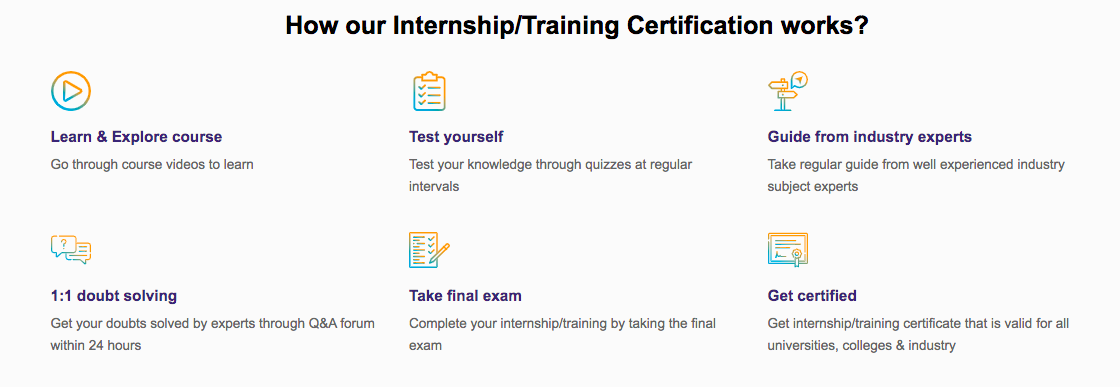
How EasyShiksha Internship/Training Program Works
Designing a Fictional Organisation for an Audit Simulation
An effective regulatory audit simulation should begin with a fictional organisation that operates in a clearly defined industry. The organisation should have a realistic business structure, relevant regulatory responsibilities, documented processes, and enough operational complexity to create meaningful audit challenges.
For example, EasyShiksha could support a fictional online education company that provides courses, assessments, student accounts, internships, and certificate programmes. The organisation could have departments responsible for technology, student support, finance, marketing, data management, and academic operations.
Students would receive an organisational profile explaining the company's services, internal structure, major processes, and relevant compliance responsibilities. They might also receive fictional policies, sample student records, employee training logs, access permissions, payment records, and complaint-handling procedures.
The audit assignment could focus on a defined area rather than attempting to examine every aspect of the organisation. A cybersecurity group might review access controls and incident reporting, while a data governance group examines how student information is collected, stored, and accessed. A finance group could examine transaction documentation and approval procedures.
The fictional organisation could also contain carefully designed inconsistencies. A policy might require regular access reviews, while the sample records show that some reviews were not documented. An employee training policy might exist, but the training register could contain incomplete entries. Students would need to identify these gaps and explain why they matter.
The simulation should make clear which requirements are based on actual regulatory principles and which are fictional teaching scenarios. This distinction helps prevent learners from confusing educational examples with authoritative legal guidance.
Understanding the Audit Scope Before Beginning an Investigation
Every audit should have a clearly defined scope. Without it, students may examine irrelevant information, overlook important requirements, or make conclusions that extend beyond the evidence they were authorised to review.
The scope identifies the organisation, department, process, records, period, and regulatory requirements being examined. It also establishes what is excluded from the investigation. A simulated cybersecurity audit, for example, may focus on user access management, security policies, and incident documentation without attempting to evaluate the entire technology infrastructure.
Students should learn to translate the audit scope into specific questions. If the assignment concerns employee access to sensitive information, they may need to determine whether access is authorised, whether permissions reflect job responsibilities, whether access changes are documented, and whether inactive accounts are handled appropriately.
A well-defined scope also helps learners understand the limits of their authority. An intern participating in a real workplace assignment should not independently access restricted records, interview employees about confidential matters, or make legal determinations without approval. Their responsibilities must remain within the supervision and permissions provided by the organisation.
The scope-setting stage is therefore an important part of the educational experience. It teaches students that professional investigations must have clear objectives, defined boundaries, and appropriate authorisation.
Collecting and Examining Audit Evidence
Evidence is central to regulatory audits. An organisation may have policies explaining how a process should operate, but auditors need to determine whether the process actually works as described. Students must therefore learn to distinguish between documented intentions and evidence of implementation.
A simulated audit could provide learners with different forms of evidence, including written policies, system logs, employee training records, approval documents, transaction histories, incident reports, and process descriptions. Each source would provide a different perspective on the organisation's activities.
For example, a company policy might state that access to confidential information must be approved by an authorised manager. A sample access register could show who has permissions, while approval records could demonstrate whether those permissions were authorised. If the records do not match, students would need to investigate the difference rather than immediately assume that a violation occurred.
Evidence quality also matters. A document may be outdated, incomplete, or unrelated to the period being audited. A screenshot may show a particular system setting but fail to establish how the system was configured throughout the audit period. A verbal explanation may provide useful context but may require additional documentation.
Students should learn to evaluate whether evidence is relevant, reliable, sufficient, and connected to the requirement being examined. This develops a disciplined approach to professional research and reduces the risk of unsupported conclusions.
Identifying Compliance Gaps and Control Weaknesses
A compliance gap occurs when an organisation's actual practices do not fully meet an applicable requirement or established control expectation. A control weakness may exist when the organisation has a procedure intended to prevent errors or violations but the procedure is incomplete, ineffective, inconsistently followed, or poorly documented.
In a simulated audit, students could discover that an organisation requires employees to complete data protection training but has no reliable record showing whether all relevant employees completed it. This does not necessarily establish that every employee failed to receive training. It does, however, reveal a documentation and verification weakness that requires investigation.
Another example could involve a company that requires managers to approve financial transactions above a specified amount. The sample records may contain transactions without corresponding approval evidence. Students would need to examine whether the approval occurred through another authorised process or whether the control was bypassed.
Students should also understand the difference between a compliance gap and an operational improvement opportunity. Not every inefficient process represents a regulatory violation. A procedure may be slower than necessary without breaching a legal requirement. Audit findings should therefore identify the relevant requirement and explain precisely how the evidence relates to it.
This distinction is essential for developing professional judgement. Students should learn to describe what they have established, avoid exaggerating the seriousness of findings, and recommend further investigation when evidence is incomplete.
Introducing Different Types of Regulatory Audit Simulations
Regulatory audit simulations can be developed across several academic and professional disciplines. Each type can introduce students to different compliance responsibilities while using the same underlying investigation structure.
A financial compliance simulation could examine transaction approvals, financial records, reporting procedures, expense documentation, and internal controls. Commerce and finance students would learn how organisations demonstrate the accuracy and consistency of financial processes.
A cybersecurity audit could focus on access permissions, password policies, incident records, software updates, backup procedures, and security awareness training. Computer science and information technology students would gain experience in examining technical controls and documenting potential weaknesses.
A data protection simulation could examine how an organisation collects personal information, defines access permissions, manages retention, and responds to data-related requests. Students would learn why privacy obligations must be reflected in everyday business processes.
A workplace safety audit could involve fictional inspection records, employee training documentation, equipment maintenance logs, and incident reports. Engineering, operations, and human resources students could examine how organisations document safety procedures and identify potential hazards.
Environmental compliance simulations could introduce students to waste management records, resource consumption, pollution monitoring, and environmental reporting. Learners would understand how operational activities connect with environmental responsibilities.
These simulations would make regulatory education more relevant to different careers. Students would not need to become professional auditors to benefit from understanding how organisations establish and demonstrate compliance.
Simulating the Audit Interview and Professional Communication
Regulatory audits frequently involve communication between auditors and employees responsible for different organisational processes. Documents provide important evidence, but conversations may help explain how a procedure operates and why certain records are maintained.
A simulated internship assignment could introduce role-based interviews. One student might represent the auditor, another could act as the finance manager, and a third could represent the employee responsible for maintaining records. The auditor would prepare relevant questions, examine the answers, and determine whether additional evidence is needed.
For example, the auditor might ask how a company approves changes to user access permissions. The employee could explain the approval process, while the auditor compares that explanation with the sample access records. If the two sources appear inconsistent, the student would need to request clarification.
Professional communication is important because audit discussions can become sensitive. Employees may interpret questions as criticism, especially when the investigation identifies weaknesses in their work. Students should learn to ask neutral questions, listen carefully, avoid making premature accusations, and document responses accurately.
The simulation could also require students to present preliminary findings to a fictional management team. They would need to explain the evidence, identify uncertainties, and communicate why a particular issue requires attention.
This would develop communication skills that are useful not only in auditing but also in project management, consulting, quality assurance, finance, and corporate operations.
Preparing an Audit Report With Evidence-Based Findings
The final report is one of the most important outputs of an audit assignment. It communicates the investigation's scope, methodology, evidence, findings, limitations, and recommendations. Students should learn that an effective audit report must be clear, accurate, and supported by documented information.
A simulated report could begin by explaining the purpose and scope of the investigation. It would identify the relevant business process and the requirements being examined. The methodology section would describe the documents reviewed, sample records examined, and procedures followed.
Each finding should explain the relevant requirement, the evidence observed, and the gap identified. For example, if the organisation's policy requires periodic access reviews but the records do not demonstrate that reviews occurred during the specified period, the report should explain that the evidence was insufficient to confirm compliance with the documented process.
Recommendations should address the identified weakness. They might involve improving documentation, introducing automated reminders, reviewing access permissions, assigning responsibility for approvals, or establishing a more reliable monitoring process.
Students should also learn to distinguish recommendations from mandatory regulatory requirements. An organisation may choose a particular improvement method, but the exact method should not be presented as legally compulsory unless the applicable requirement establishes that obligation.
The report should identify limitations. If students examined only a sample of records, they should not claim that every record was reviewed. If the available documents were incomplete, the report should explain how that affected the findings.
This exercise teaches learners how to communicate professional conclusions without making claims that exceed the available evidence.
Identifying a compliance gap is only one part of the audit process. Organisations must also determine how to address the underlying weakness and prevent similar problems from recurring. This creates an opportunity for students to learn how corrective action planning works.
A corrective action plan should explain the issue, identify its likely cause, establish the action required, assign responsibility, and define how completion will be verified. It should also include a realistic timeline and consider whether the proposed solution introduces new risks.
For example, a simulated audit may identify that employee access permissions are not reviewed consistently. A corrective action could involve assigning responsibility for periodic reviews, introducing an approval workflow, and maintaining records of completed checks. The organisation would then need to verify whether the revised process operates effectively.
Students should understand that correcting an individual record does not always solve the underlying problem. If the weakness exists because responsibilities are unclear or the organisation lacks an effective monitoring system, the corrective action must address those conditions.
The simulation could introduce a follow-up audit in which students examine whether the organisation has implemented the agreed improvements. They would determine whether the evidence demonstrates that the control is operating as intended.
This creates a complete learning cycle, taking students from initial investigation to finding identification, corrective action, and follow-up verification.
How Educational Games Can Make Regulatory Audits More Engaging
Educational games could transform regulatory audit training into an interactive investigation. Students might enter a fictional organisation and receive access to selected records, policies, employee explanations, and system reports. Their objective would be to determine whether the organisation has followed the relevant procedures.
The game could introduce incomplete documentation, conflicting information, and unexpected developments. A student might discover that a policy has been updated but an older version is still being used by one department. Another learner might find that a transaction record is missing an approval reference and must decide what additional information is needed.
Different decisions could produce different outcomes. If a student makes an unsupported accusation, the simulated organisation might challenge the finding. If the learner accepts every employee explanation without examining the records, an important control weakness could remain undetected.
The game could reward evidence quality, accuracy, professional communication, and appropriate prioritisation. It could also demonstrate the consequences of overlooking significant issues or presenting conclusions that are not supported by the available information.
An advanced version could introduce a limited audit budget or time constraint. Students would need to decide which records and processes require greater attention based on the audit scope and potential risks. This would introduce the concept of risk-based auditing without encouraging superficial box-checking.
The Role of Quizzes and Worksheets in Audit Preparation
Quizzes can help students develop the foundational knowledge required for simulated audits. Questions could test their understanding of compliance requirements, internal controls, audit evidence, documentation, confidentiality, and corrective actions. Scenario-based assessments could ask learners to distinguish between an actual compliance gap, an incomplete record, and an improvement opportunity.
Worksheets could provide a structured way to examine evidence. A student might receive a fictional policy and a collection of sample records, then identify which documents support the requirement and which areas require further investigation. Another worksheet could help learners connect a regulatory requirement with the business process responsible for meeting it.
More advanced worksheets could introduce audit sampling. Students would examine a selected group of fictional records and explain the limitations of drawing conclusions from that sample. They would also prepare a preliminary findings register and propose corrective actions.
These activities would help learners practise the individual stages of an audit before participating in a complete simulation. They would also give educators opportunities to evaluate whether students understand how evidence supports professional conclusions.
When quizzes, worksheets, and simulations are connected to the same fictional organisation, students can gradually build a more complete understanding of regulatory audits rather than studying isolated concepts.
Could AI Support Simulated Regulatory Audits?
Artificial intelligence could make regulatory audit simulations more dynamic by generating fictional records, helping students organise evidence, and creating realistic scenarios involving different compliance challenges.
An AI-supported learning environment could present a simulated organisation with several departments, policies, and operational records. Students might ask questions about a process, compare different document versions, or identify inconsistencies between written procedures and sample evidence.
AI could also act as a fictional employee or department manager during audit interviews. Learners would need to ask appropriate questions, evaluate the answers, and determine whether additional documentation is necessary. This could provide valuable practice in professional communication.
Another possible application is automated feedback. After students submit a findings report, an AI system could identify unsupported conclusions, missing evidence references, unclear recommendations, or inconsistencies in the stated audit scope.
However, AI-generated audit information should not be treated as authoritative legal guidance. Regulatory requirements can vary by country, sector, organisation, and activity. Students must learn to verify legal information through appropriate official sources and understand that AI systems may produce incomplete or incorrect interpretations.
Confidentiality is equally important. Real customer records, employee information, financial documents, and internal audit materials should not be uploaded to external AI systems without appropriate authorisation. Educational simulations should rely on fictional or properly anonymised data.
AI should therefore support investigation and feedback while students remain responsible for evidence evaluation and professional judgement.
Evaluating Students Through Audit Performance and Professional Behaviour
A simulated audit should not be assessed only by counting the number of issues identified. Finding many weaknesses does not necessarily demonstrate a strong investigation. Students must show that their findings are relevant, supported by evidence, and connected to the defined audit scope.
Assessment should examine whether the learner understood the applicable requirement, selected appropriate evidence, identified inconsistencies accurately, and explained the significance of each finding. Students should also demonstrate that they can distinguish confirmed facts from assumptions and acknowledge limitations.
Professional behaviour should form another part of the evaluation. Auditors must respect confidentiality, maintain impartiality, communicate carefully, and avoid making accusations without sufficient evidence. These responsibilities are especially important when students participate in workplace assignments.
The quality of the final report should also be considered. It should communicate the investigation clearly and provide practical recommendations. A student who identifies a problem but cannot explain its relevance or propose an appropriate response may need further development.
For team-based simulations, individual contributions should remain identifiable. Students could take different responsibilities, such as evidence collection, process mapping, interview preparation, technical review, or report preparation. This would allow educators to assess both individual competence and collaborative performance.
The objective is to evaluate whether learners can approach a compliance problem methodically, not whether they can memorise a list of audit terminology.
Connecting Simulated Audits With Real Internship Responsibilities
Simulated audits can prepare students for supervised workplace activities by introducing them to the methods and professional behaviour expected in compliance-related assignments. However, students should not be treated as independent auditors or given unrestricted access to confidential organisational records.
A real internship might involve assisting a compliance team with document organisation, reviewing approved process documentation, checking whether training records are complete, preparing summaries of publicly available regulatory information, or helping maintain a corrective action tracker.
A technology intern might support documentation of security controls, while a finance intern could assist with organising authorised transaction records. A human resources intern might help review employee training documentation, and an operations intern could support process mapping and quality checks.
These activities should be assigned according to the student's knowledge, supervision, and authorised access. Any formal audit, regulatory communication, legal interpretation, or compliance certification must remain with appropriately qualified and authorised professionals.
The transition from simulation to workplace experience would help students understand how academic knowledge is applied within real organisational processes. It would also provide employers with interns who already understand basic evidence handling, documentation, and professional communication.
Empower your team. Lead the industry
Get a subscription to a library of online courses and digital learning tools for your organization with
EasyShiksha
How EasyShiksha Can Develop a Complete Regulatory Audit Learning Pathway
EasyShiksha can connect this concept with its education ecosystem by creating a structured pathway that begins with foundational knowledge and progresses towards practical audit simulations and supervised internship activities.
Online courses could introduce students to business compliance, corporate governance, financial controls, cybersecurity, data protection, quality management, workplace safety, and audit fundamentals. Learners could select courses according to their academic background and career interests.
Quizzes could assess their understanding of regulatory terminology, evidence evaluation, internal controls, and risk identification. Worksheets could provide practical exercises involving sample policies, transaction records, access logs, training registers, and audit findings.
Educational games could simulate a fictional organisation undergoing a regulatory inspection. Students would examine documents, conduct role-based interviews, identify inconsistencies, and prepare findings. Different scenarios could be developed for finance, technology, healthcare, manufacturing, education, and environmental management.
Practical projects could require students to prepare an audit plan for a fictional organisation, examine a selected set of records, and produce a structured findings report. University programmes could integrate these projects into courses related to management, finance, cybersecurity, business administration, engineering, and quality assurance.
Internship programmes could then provide supervised opportunities to support approved compliance activities in real organisations. Students could maintain documentation, assist with process reviews, organise evidence, and participate in internal training exercises.
Certificates could recognise completed learning pathways, while student portfolios could demonstrate practical experience in evidence analysis, risk identification, audit documentation, and corrective action planning.
This structure would help EasyShiksha connect theoretical learning with workplace capabilities. Students would understand not only what compliance means but also how organisations demonstrate it through documented processes and verifiable evidence.
Challenges in Implementing Regulatory Audit Simulations
Creating realistic audit simulations requires careful attention to accuracy. Regulatory requirements differ across industries and jurisdictions, and an educational scenario should not present fictional rules as actual legal obligations. Course designers must clearly identify the purpose of each scenario and ensure that references to real regulations are accurate and appropriately contextualised.
Another challenge involves balancing complexity. Beginner students may struggle if the simulation contains too many documents, departments, and technical requirements. Advanced learners, however, need more complicated scenarios that involve conflicting evidence, multiple controls, and competing priorities. Different levels of difficulty can make the learning experience appropriate for a wider range of students.
Confidentiality must also be addressed. Real regulatory audits can involve highly sensitive financial, employee, customer, and technical information. Educational simulations should use fictional or appropriately anonymised records, while real internship assignments must follow the organisation's access and data protection rules.
Assessment consistency is another consideration. Educators should use clear criteria to evaluate evidence quality, accuracy, reasoning, reporting, and professional behaviour. Students should not be rewarded simply for identifying a large number of possible violations or making dramatic claims about organisational failures.
Finally, simulations should explain that regulatory compliance is an ongoing responsibility rather than a one-time event. Policies, systems, risks, and legal requirements can change. Students should understand that organisations need continuous monitoring, employee awareness, periodic reviews, and corrective action to maintain effective compliance.
Conclusion: Turning Regulatory Knowledge Into Practical Professional Capability
Regulatory audits provide a valuable opportunity for students to understand how organisations demonstrate that their operations follow applicable requirements. Studying regulations is important, but professional competence also requires the ability to examine evidence, identify control weaknesses, communicate findings, and understand how corrective actions improve organisational processes.
Simulated internship assignments can introduce students to these responsibilities in a controlled learning environment. By investigating fictional organisations, reviewing sample documents, conducting simulated interviews, identifying compliance gaps, and preparing audit reports, learners can experience the practical stages of an audit without being exposed to the responsibilities of conducting an actual regulatory inspection.
The benefits extend across several academic disciplines. Finance students can explore transaction controls and financial documentation, technology students can investigate cybersecurity and data protection, management students can examine organisational processes, and engineering students can study quality and operational compliance.
For EasyShiksha, this approach creates an opportunity to connect online courses, university programmes, quizzes, worksheets, educational games, practical projects, internships, and certificates through a unified compliance learning pathway. Students can move from understanding regulatory principles to demonstrating practical investigation and documentation skills.
Ultimately, organisations need professionals who can recognise compliance risks, examine information objectively, maintain reliable records, and communicate problems before they become serious failures. Introducing regulatory audit simulations into internship programmes could help students develop these capabilities before entering professional environments. It would transform compliance education from a subject that is mainly studied in theory into a practical experience built around investigation, evidence, responsibility, and continuous improvement.
Anshika Jain is an Engineer, Developer, and Educational Content Author known for her dedication to technology and knowledge sharing. With a strong analytical mindset and a passion for innovation, she has consistently contributed to creating meaningful digital solutions and insightful educational articles.
Her ability to simplify complex technical concepts into engaging and easy-to-understand content makes her work valuable for students and learners across various platforms. Along with her technical expertise, Anshika is admired for her creativity, professionalism, and commitment to continuous learning.
She represents a perfect blend of technical excellence and impactful communication, inspiring others through both her development work and educational contributions.