Internships are traditionally designed to help students understand professional environments by assigning them practical tasks, introducing workplace tools, and allowing them to contribute to ongoing projects. However, many internship programmes still operate through isolated assignments in which students complete a task, submit a final report, and move on without experiencing what happens to their work afterwards. This structure provides useful exposure to individual responsibilities but does not always prepare learners for one of the most important realities of professional work: maintaining systems that were developed by someone else.
In actual organisations, software applications, websites, databases, business processes, research systems, and digital products rarely remain under the control of their original creators. Employees change roles, teams are reorganised, developers leave organisations, and projects pass between different departments. New team members must understand existing decisions, identify technical limitations, correct previous mistakes, and continue development without disrupting ongoing operations. The ability to maintain unfamiliar work is therefore an essential professional capability.
Could internships introduce operational continuity challenges in which students inherit projects developed by previous learners and become responsible for maintaining them? Such an approach could transform internships from short-term task-completion experiences into structured professional simulations. Instead of beginning every assignment from zero, students would enter an existing project with incomplete documentation, technical dependencies, unresolved issues, and historical decisions. Their responsibility would be to understand the project, preserve its functionality, identify areas requiring improvement, and prepare it for the next learner.
For EasyShiksha, which connects online courses, internships, practical projects, quizzes, educational games, certificates, and career development, this model offers an opportunity to create a more advanced learning environment. Students could progress through a continuous chain of project ownership, where every learner contributes to a shared system and prepares it for future participants. This would help learners understand not only how to build something but also how to keep it functional, reliable, and useful over time.
Understanding the Operational Continuity Challenge
Operational continuity refers to an organisation's ability to maintain essential activities, systems, and services when responsibilities, personnel, technologies, or operating conditions change. In software development, continuity means ensuring that an application remains functional when its original developer is unavailable. In business operations, it involves preserving workflows when employees change positions. In research, it requires maintaining experiments, datasets, methods, and records so that future researchers can continue the work.
An operational continuity internship would introduce students to these situations through inherited projects. A learner might receive a website created by a previous intern, a partially completed data analytics dashboard, a cybersecurity monitoring system, or a digital marketing campaign with existing performance records. The student would not be expected to replace the entire project immediately. Instead, the first responsibility would be to understand its current condition and determine what is required to maintain it.
This approach creates a different learning challenge from conventional internships. Students must work with existing structures rather than designing everything according to their own preferences. They need to recognise why earlier developers selected particular technologies, understand how different components interact, and distinguish between genuine defects and design decisions that simply differ from their personal preferences.
The most important aspect is that the project must continue operating throughout the transition. A student cannot casually remove an existing feature because it appears unnecessary or rewrite an entire application without considering its dependencies. Every modification must account for the possibility that other components rely on the current implementation.
Such an experience introduces students to professional responsibility, where the quality of their work is measured not only by what they add but also by what they successfully preserve.
Why Traditional Internship Assignments Often Miss Continuity Skills
Many internship programmes are structured around individual deliverables. Students receive a task, complete it within a specified period, and submit their work for evaluation. This arrangement is convenient because assignments can be distributed independently and assessed through relatively straightforward criteria. However, it often separates learning activities from the longer lifecycle of professional projects.
When every intern receives a new project, learners rarely experience the difficulties associated with maintaining unfamiliar systems. They may learn how to develop a website but never discover how to identify problems in a website created by another developer. They may build a dashboard but never inherit one containing outdated calculations, undocumented data transformations, or inconsistent reporting methods.
This creates a gap between project creation and project maintenance. Professional environments require both capabilities, but educational assignments frequently emphasise the first. As a result, students may become familiar with development tools without understanding the practical consequences of changing an existing system.
Another limitation is the absence of responsibility across internship cycles. When one learner completes an assignment, the next learner may receive an unrelated task. Previous work becomes a final submission instead of an active foundation for future development. This prevents students from observing how technical decisions made during one stage affect later work.
An operational continuity model addresses this limitation by connecting different internship periods. Each learner becomes responsible for a defined stage of an ongoing project. Their output is not considered complete until another learner can understand, operate, and continue the system. This creates a more realistic relationship between individual performance and collective project outcomes.
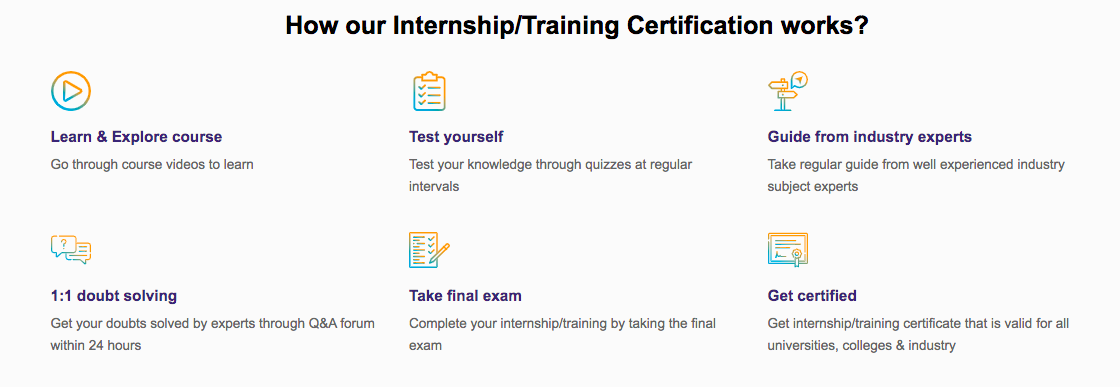
How EasyShiksha Internship/Training Program Works
How a Multi-Generation Internship Model Could Work
A multi-generation internship model would divide a longer project into connected internship cycles. Each cycle would have a specific maintenance or development responsibility, while the overall project would remain active across multiple groups of learners.
The first group might establish the project foundation by developing its initial structure, configuring tools, creating documentation, and completing basic functionality. Their responsibility would include preparing the project for future contributors rather than simply producing a working demonstration.
The second group would inherit the project and perform an operational assessment. Students would examine the existing architecture, review documentation, test important functions, identify technical weaknesses, and resolve selected issues. They would also evaluate whether the original implementation remains suitable for the project's current requirements.
The third group might introduce additional functionality while preserving existing operations. This could involve integrating an API, improving the user interface, adding analytics, or strengthening security. Their work would require an understanding of the previous groups' decisions and an assessment of how proposed changes might affect the existing system.
Later groups could focus on performance optimisation, accessibility, security testing, documentation improvement, deployment reliability, or integration with other services. Each internship cycle would build upon earlier contributions and create new responsibilities for future learners.
The model would require a structured handover between groups. Before completing an internship, students would prepare an updated project record explaining what they inherited, what they changed, which problems remain unresolved, and what the next group should examine. This handover would become part of the assessment process.
The result would be a continuous educational project rather than a collection of disconnected internship submissions.
Inheriting an Unfamiliar Project: The First Professional Challenge
The first major challenge for students would be understanding a project they did not create. This situation is common in professional environments, where employees frequently work with systems developed by former team members or external contractors.
A student inheriting a web application, for example, might discover that the project contains multiple folders, inconsistent naming conventions, outdated dependencies, and limited explanations of how different components interact. The application may work correctly in its original environment but fail when transferred to a new computer. Some features may depend on configuration settings that were never documented.
The student would need to investigate the system before making changes. This could involve examining the folder structure, reading available documentation, reviewing configuration files, testing existing features, and identifying dependencies. In programming internships, learners could use debugging tools, browser developer tools, version control systems, and automated tests to understand the existing implementation.
The same challenge could appear in non-technical internships. A student inheriting a digital marketing campaign might need to understand the target audience, previous advertising decisions, campaign performance, creative assets, and existing reporting structure. A finance intern might inherit a spreadsheet containing formulas, assumptions, and historical calculations that require verification before further analysis.
The learning objective would be to develop investigative thinking. Students should not assume that unfamiliar work is incorrect simply because it differs from their preferred approach. They must gather evidence, understand the project's purpose, and identify the safest way to continue.
Documentation Debt and Knowledge Transfer
Documentation is one of the most important elements of operational continuity. A project may contain functional code, accurate datasets, and useful features but still become difficult to maintain when its development history is poorly recorded.
This problem is commonly described as documentation debt. It occurs when information required for future maintenance is incomplete, outdated, difficult to locate, or dependent on the memory of a particular individual. In an internship environment, documentation debt can develop when students concentrate on completing visible features but neglect explanations of their decisions.
An inherited project could intentionally contain documentation challenges. Students might receive a system with an outdated installation guide, missing API descriptions, unclear database relationships, or incomplete testing instructions. Their first responsibility would be to determine which information is still accurate and which parts require correction.
However, the objective should not be to make documentation unnecessarily lengthy. Students should learn to create useful technical records that answer practical questions. A future contributor should be able to understand how to set up the project, identify important components, reproduce known issues, run tests, and locate the current development priorities.
EasyShiksha could connect this activity with online courses covering technical writing, software documentation, project management, and communication. Students could complete short learning modules before preparing their handover records. Quizzes could assess whether they understand the difference between installation instructions, architecture documentation, issue reports, and change logs.
Documentation would then become a practical professional skill rather than an administrative task performed only at the end of an internship.
Managing Technical Debt Across Internship Cycles
Technical debt develops when a project accumulates shortcuts, outdated components, inefficient structures, or design decisions that make future development more difficult. Some shortcuts may be reasonable under time constraints, but they can create additional maintenance work if they remain unresolved.
An operational continuity internship could introduce students to technical debt through inherited project conditions. A web application might contain repeated code, outdated libraries, unnecessary database queries, or functions that are difficult to test. A data analytics project might include duplicated calculations, inconsistent column names, or transformations that are not properly explained.
Students would need to distinguish between technical debt that creates immediate operational risk and improvements that can be scheduled for later. Not every imperfect component requires an immediate rewrite. Replacing a stable system simply to introduce a newer technology could create additional problems.
This distinction is important because professional maintenance involves prioritisation. Students should learn to evaluate the potential impact of a defect, the likelihood of failure, the effort required to correct it, and the consequences of delaying the improvement.
The previous internship group could record known technical debt in a structured issue register. The next group would review those entries, verify whether the problems still exist, and decide which issues should be addressed during its internship period.
This creates an educational experience in which technical decisions have a history. Students learn that project quality is not determined by a single final submission but by how effectively a system is managed throughout its lifecycle.
Introducing Realistic Maintenance Scenarios Across Different Domains
Operational continuity challenges should not be limited to software development. The same educational model could be applied across different professional disciplines, allowing students from various backgrounds to experience the responsibility of maintaining existing work.
In web development internships, students could inherit an existing website containing pages, forms, database connections, and third-party integrations. Their tasks might include correcting broken features, improving responsive behaviour, resolving accessibility problems, and updating outdated dependencies without damaging existing functionality.
In data analytics internships, students could receive an existing reporting dashboard with historical datasets and established business calculations. They would need to verify the data pipeline, identify changes in source formats, check calculation accuracy, and maintain consistency between earlier and current reports. This would teach learners that a dashboard is not simply a collection of charts but part of a larger information system.
In cybersecurity internships, students could inherit a simulated security monitoring environment containing previous incident records, alert configurations, and documented vulnerabilities. Their responsibility might involve reviewing existing controls, investigating new alerts, updating response procedures, and ensuring that previous security improvements remain effective.
In digital marketing, students could continue a campaign developed by an earlier group. They would review audience segmentation, campaign objectives, historical engagement, creative assets, and conversion data before proposing adjustments. This would demonstrate why continuity matters when marketing decisions depend on accumulated information rather than isolated activities.
Business administration internships could involve maintaining operational spreadsheets, inventory records, customer support workflows, or internal reporting processes. Students would need to understand how information moves between departments and how small changes can affect downstream activities.
By introducing continuity challenges across multiple disciplines, EasyShiksha could create internship experiences that are relevant to technical, creative, analytical, and business-oriented learners.
The Role of Version Control and Project History
Version control systems are essential for maintaining continuity in collaborative development environments. They allow teams to track changes, identify contributors, compare earlier versions, and recover previous work when a modification causes problems.
Students participating in software internships should learn how to examine project history before modifying inherited code. They could review previous commits, understand the purpose of earlier changes, inspect branches, and identify when a particular feature was introduced. This helps them investigate problems more systematically.
For example, a student might discover that a form stopped working after a recent update. Instead of rewriting the form immediately, the learner could examine the version history to identify which change introduced the problem. This approach teaches evidence-based debugging and reduces unnecessary modifications.
Version control also introduces accountability. Each contribution can be associated with a specific change, making it easier for supervisors and future learners to understand what happened during an internship cycle.
EasyShiksha could include Git and collaborative development courses within its learning pathway. Students could first practise version control through guided exercises and then apply those skills to inherited projects during internships. Quizzes could evaluate their understanding of commits, branches, merges, conflict resolution, and repository management.
The important outcome would be the ability to work safely within a shared development environment rather than treating project files as isolated personal documents.
Handling Incomplete Handover and Missing Information
A project handover is not always perfect. In professional environments, employees may leave unexpectedly, documentation may be unavailable, and urgent responsibilities may be transferred without sufficient preparation. Students should understand how to respond when information is missing.
An internship programme could introduce controlled handover gaps as part of its learning design. For example, students might receive a project containing an incomplete issue description, an outdated configuration guide, or an unexplained business rule. They would need to investigate the available evidence, identify assumptions, and determine which questions require supervisor clarification.
This should be implemented carefully. The objective is not to create arbitrary confusion or make students responsible for failures caused by poor programme administration. Instead, the challenge should teach learners how to respond professionally when information is incomplete.
Students could maintain an assumption register that records what they know, what remains uncertain, and which decisions depend on missing information. They could also learn to communicate risks before making changes that might affect important project functions.
This is particularly valuable for students preparing for distributed teams and remote work environments. When colleagues are not physically available, clear communication and structured investigation become essential to maintaining progress.
Measuring Whether Students Actually Maintained the Project
Traditional internship assessments frequently focus on completed assignments, reports, presentations, or supervisor feedback. These measures are useful, but they may not fully demonstrate whether students successfully maintained an existing project.
A continuity-based internship requires a broader evaluation approach. Students should be assessed on how effectively they understood the inherited system, preserved existing functionality, identified operational risks, and introduced improvements without creating unnecessary disruption.
One important measure could be inherited functionality preservation. Supervisors could identify essential features before the internship begins and evaluate whether those features continue working after the student's modifications. Automated tests could support this process by checking whether important functions remain operational.
Another measure could be issue-resolution quality. Instead of counting the number of bugs corrected, evaluators could examine whether students identified the underlying causes, selected appropriate solutions, and documented the results. Resolving several minor issues does not necessarily demonstrate stronger maintenance capability than correcting one significant problem carefully.
Documentation quality could also become part of the assessment. Supervisors could evaluate whether another learner can successfully understand and continue the project using the handover materials. This creates a practical test of knowledge transfer rather than relying entirely on the student's description of their own work.
Students could additionally be evaluated on change impact analysis, testing discipline, communication, prioritisation, and their ability to distinguish urgent defects from optional improvements.
The final assessment would therefore measure not only individual output but also the continuity of the project after the learner's contribution.
How EasyShiksha Could Connect Courses, Quizzes, and Continuity-Based Internships
EasyShiksha could develop a structured learning pathway in which students acquire relevant knowledge before entering an inherited project environment. This would make the internship more accessible to beginners while maintaining meaningful professional challenges.
The process could begin with online courses covering the technical or business foundations of the selected project. A student entering a web development internship might study HTML, CSS, JavaScript, version control, debugging, website performance, and basic security. A data analytics learner might study spreadsheets, SQL, data cleaning, visualisation, and reporting methods.
After completing the relevant courses, students could attempt quizzes that assess their readiness to work with existing systems. These assessments would focus on practical understanding rather than simple memorisation. For example, a question might present a broken application scenario and ask learners to identify the safest first step before changing the code.
Educational games could introduce simulated maintenance environments in which students investigate failures, identify dependencies, and choose between competing solutions. Such activities could help beginners develop confidence before handling more complex internship responsibilities.
The next stage would involve an inherited project. Students would receive access to a controlled project environment with a defined scope, available documentation, and a list of known issues. They would complete an initial assessment before making changes, ensuring that they understand the system's condition.
During the internship, project milestones could connect learning activities with practical responsibilities. A learner might complete a debugging module when facing a relevant issue, study database optimisation before modifying a query, or review technical documentation principles before preparing the handover.
Finally, students could receive certificates supported by evidence of their actual contributions. The certificate could be accompanied by a project portfolio containing approved work samples, maintenance records, issue-resolution summaries, and documentation. This would give learners a more meaningful way to demonstrate their abilities during recruitment.
Creating a Project Lineage and Contribution History
One of the most valuable features of a multi-generation internship model would be a project lineage record. This record would preserve the development history of a project across multiple internship groups.
Instead of treating each internship as a separate experience, the platform could maintain a structured history of project stages. It would identify which group created the initial system, which students maintained particular components, which improvements were introduced, and which unresolved issues were transferred to future participants.
A project lineage record could also distinguish between different contribution types. One student might create a new feature, another might correct a security weakness, and another might improve documentation or testing. All three contributions are valuable, even though they involve different forms of work.
For students, this creates a more detailed professional portfolio. They could demonstrate that they have worked on an existing system, understood previous implementations, resolved maintenance problems, and prepared the project for another contributor.
For supervisors, the record provides visibility into how the project develops over time. They can identify recurring problems, evaluate the quality of previous handovers, and determine whether the programme is producing sustainable outcomes.
For EasyShiksha, project lineage could connect internship participation with verified practical learning. The platform could gradually develop a record of student contributions that demonstrates more than course completion or attendance.
However, the record should remain transparent and accurate. Students must receive recognition only for work they actually completed, and previous contributors should retain appropriate attribution for their original work.
Using AI to Support Project Continuity
Artificial intelligence could make continuity-based internships easier to organise by helping students understand unfamiliar projects and identify areas requiring attention. AI systems could analyse documentation, code structures, issue histories, datasets, and project records to generate explanations that support the investigation process.
For example, an AI assistant could help a student understand the purpose of a particular software module or explain how a database table relates to another component. It might identify missing documentation, highlight outdated dependencies, or suggest test scenarios based on the project's existing functionality.
AI could also support handover preparation. By examining approved project records and contribution histories, an assistant could help students organise their completed work into a structured transition document. It could identify unresolved issues and prompt learners to explain important decisions that have not been recorded.
However, AI should function as a support system rather than an automatic project maintainer. Students must still verify suggestions, test changes, understand the consequences of modifications, and take responsibility for their decisions. An AI-generated explanation may be incomplete or incorrect, particularly when project documentation is outdated.
EasyShiksha could introduce AI-supported learning activities in which students compare automated suggestions with actual project behaviour. This would develop critical evaluation skills and help learners understand the limitations of AI tools in professional environments.
AI could also assist supervisors by identifying patterns across internship cycles. If several groups repeatedly encounter the same problem, the system could highlight a possible weakness in the project structure, documentation, or training material.
The objective would be to use AI to improve learning continuity without removing human judgement and accountability.
Designing Safe and Realistic Project Environments
Operational continuity challenges should provide meaningful professional exposure without placing students or organisations at unnecessary risk. A poorly designed internship could expose confidential information, damage active systems, or create confusion about responsibility.
A safer approach would involve controlled project environments. Students could work with demonstration applications, anonymised datasets, simulated business workflows, or approved development repositories. They would experience realistic maintenance challenges without receiving unrestricted access to sensitive operational systems.
The programme should also establish clear boundaries for student responsibilities. Learners should know which parts of a project they can modify, which changes require supervisor approval, and how to report unexpected failures. Important operations should have backup procedures and testing environments so that students can experiment without damaging the primary system.
Project complexity should match the learner's experience. Beginners could inherit relatively simple systems with limited dependencies, while advanced students could work on applications involving databases, APIs, deployment environments, and multiple connected components.
Supervisors would remain responsible for defining project requirements, reviewing significant changes, and ensuring that students receive appropriate guidance. Operational continuity should not become a method of replacing professional employees with unpaid student maintenance work. Its purpose must remain educational, with meaningful supervision and clearly defined learning outcomes.
Challenges in Implementing Multi-Generation Internships
Although the model offers significant educational value, its implementation would require careful planning. One challenge is maintaining project quality across different student groups. If an earlier group introduces poorly tested changes, the next group may spend most of its internship correcting avoidable problems rather than developing new skills.
To reduce this risk, every internship cycle should include a formal review before project handover. Supervisors could verify essential functionality, review documentation, and identify unresolved risks. A project should only move into the next stage when its condition is sufficiently understood.
Another challenge is managing differences in student ability. Some learners may understand inherited systems quickly, while others may require additional guidance. A structured onboarding process and appropriate preparatory courses could reduce this gap. Students should receive tasks that match their demonstrated capabilities rather than being assigned responsibilities solely according to internship duration.
Project continuity also creates a dependency on long-term programme management. Someone must maintain the project repository, manage access permissions, preserve documentation, and ensure that the project remains relevant. EasyShiksha and participating organisations would need to define these responsibilities before launching a multi-cycle programme.
There may also be challenges in assessing individual contributions when several groups work on the same project. Clear contribution records, version histories, milestone reviews, and supervisor evaluations would help distinguish individual achievements from team-level results.
Finally, some projects may eventually reach a point where they should be retired or redesigned. Continuity does not mean preserving every existing system indefinitely. Students should learn when maintenance is appropriate and when replacement is the more responsible decision.
Empower your team. Lead the industry
Get a subscription to a library of online courses and digital learning tools for your organization with
EasyShiksha
Universities and industry partners could help make operational continuity internships more meaningful by providing projects that reflect actual professional requirements. Academic institutions could identify suitable subjects and learning outcomes, while organisations could contribute realistic project scenarios, technical expectations, and supervision.
For example, a university department might develop an educational portal that passes through several student internship cycles. One group could create its initial functionality, another could maintain the database and user interface, and a later group could introduce analytics and accessibility improvements. Faculty members could evaluate academic understanding while industry mentors review professional practices.
Industry partners could also provide controlled case studies based on common workplace maintenance problems. These projects would allow students to understand how real teams manage inherited systems without requiring access to confidential company information.
EasyShiksha could act as the learning and internship coordination layer by connecting preparatory courses, assessments, project access, milestone tracking, and certificates. Its platform could help students move from foundational knowledge to practical maintenance responsibilities and then into more advanced projects.
Such collaboration would create a stronger relationship between education and employment. Students would experience the responsibilities associated with continuing existing work, while organisations could observe how learners approach unfamiliar systems and professional constraints.
From Internship Completion to Long-Term Project Responsibility
The most important change introduced by continuity-based internships would be the definition of successful completion. In a conventional model, students may consider an internship finished when they submit their assigned work. In a continuity-based model, completion would also depend on whether the project can continue after they leave.
This requires a shift in professional thinking. Students must consider the needs of the next contributor, the reliability of their changes, and the clarity of their documentation. They should understand that a feature is not fully delivered if nobody else can maintain it or determine how it works.
This approach could also create more meaningful learning progression. Beginners might start by testing and documenting an existing project. Intermediate learners could correct defects and improve performance. Advanced students could manage dependencies, redesign weak components, or coordinate the transition between multiple project teams.
Over time, learners would experience increasingly complex forms of responsibility. They would develop technical knowledge alongside communication, investigation, prioritisation, collaboration, and risk management.
A continuous project environment could also encourage students to think beyond short-term achievements. Instead of building something only to complete an assignment, they would understand how their work contributes to a larger system that may continue developing for months or years.
Conclusion
Operational continuity challenges could introduce a valuable new dimension to internship programmes by teaching students how to maintain, improve, and transfer projects created by previous learners. Professional work does not always begin with a blank document or a new application. More often, it involves understanding existing systems, managing inherited responsibilities, resolving historical problems, and ensuring that important activities continue when people and teams change.
A multi-generation internship model would allow students to experience these responsibilities through connected project cycles. Each group would inherit an existing system, investigate its condition, complete defined maintenance or development tasks, and prepare a structured handover for the next group. This would develop skills that are difficult to assess through isolated assignments, including documentation, debugging, change management, technical debt reduction, communication, and project accountability.
For EasyShiksha, the model could connect online courses, quizzes, educational games, practical projects, internships, and certificates into a continuous professional learning pathway. Students could acquire foundational knowledge, practise maintenance decisions through simulations, work on inherited projects, and build evidence of their contributions. AI could support project understanding and documentation, while supervisors and industry partners would maintain oversight and ensure that learning remains safe and meaningful.
Ultimately, the most valuable internship may not be the one in which a student creates the most impressive project from scratch. It may be the one in which a student successfully takes responsibility for something already built, makes it more reliable, and leaves it in a condition that allows someone else to continue. This is the foundation of operational continuity, and introducing it into education could help students become more adaptable, responsible, and workplace-ready professionals.
Anshika Jain is an Engineer, Developer, and Educational Content Author known for her dedication to technology and knowledge sharing. With a strong analytical mindset and a passion for innovation, she has consistently contributed to creating meaningful digital solutions and insightful educational articles.
Her ability to simplify complex technical concepts into engaging and easy-to-understand content makes her work valuable for students and learners across various platforms. Along with her technical expertise, Anshika is admired for her creativity, professionalism, and commitment to continuous learning.
She represents a perfect blend of technical excellence and impactful communication, inspiring others through both her development work and educational contributions.