Students do not learn in exactly the same way. Some understand complex concepts more effectively through structured lectures, while others develop stronger understanding when they solve problems, interact with educational games, complete worksheets, or build practical projects. Even when students study the same subject and follow the same curriculum, their learning progress, engagement, problem-solving abilities, and assessment performance can vary considerably depending on the format through which knowledge is presented.
Most digital education platforms provide multiple learning formats, but these formats are frequently managed and evaluated separately. A student may watch a recorded lecture, complete a quiz, attempt a worksheet, participate in an educational game, and submit a project. However, the platform may not connect the resulting information to understand which activities contributed most effectively to that student's learning progress. As a result, educational recommendations may depend on general assumptions rather than evidence collected across the student's complete learning journey.
This creates an opportunity for cross-product learning analytics. Instead of analysing courses, quizzes, worksheets, games, and practical projects independently, an educational platform could connect performance information across all these services. It could examine how students respond to different learning formats, identify which approaches help them understand particular concepts, and recommend suitable combinations of activities according to their demonstrated progress.
For an integrated educational ecosystem such as EasyShiksha, this concept could become particularly valuable. The platform provides different educational resources, including online courses, quizzes, worksheets, educational games, internships, and university programmes. Connecting the learning data generated through these services could help create a more informed and personalised educational experience. The objective would not simply be to identify whether a student prefers games or lectures, but to understand which learning experiences produce stronger knowledge retention, practical application, problem-solving ability, and long-term academic progress.
Understanding Cross-Product Learning Analytics
Cross-product learning analytics refers to the collection, integration, and interpretation of learning information generated across different educational products and activities. Traditional learning analytics may focus on individual services, such as tracking how many lectures a student watches, how many quiz questions they answer, or how many worksheets they complete. Cross-product analytics expands this approach by connecting these activities to understand the relationship between different learning experiences.
For example, a student studying mathematics might watch a lecture explaining quadratic equations, complete a worksheet containing numerical problems, play an educational game involving mathematical challenges, and finally attempt a practical assignment based on real-world calculations. If these activities operate independently, the platform may know whether the student completed each activity but may not understand how they influenced one another.
A connected analytics system could examine whether the student improved after watching the lecture, whether worksheet practice reduced calculation errors, whether the game improved response accuracy, and whether the student could apply the concept independently in a practical task. This provides a broader picture of learning development than individual completion records.
The central idea is to establish relationships between educational activities and measurable learning outcomes. A lecture may help introduce a concept, while a worksheet may strengthen procedural understanding. A game may encourage repeated practice, while a project may reveal whether the student can transfer knowledge into a new situation. Cross-product analytics can examine these relationships and help the platform understand which combinations are most useful.
Importantly, the system should not assume that one learning format is universally superior. A student may perform well through lectures when studying theoretical subjects but require practical projects to understand technical concepts. Another student may benefit from games during foundational learning but prefer structured worksheets when preparing for examinations. The objective is to identify meaningful patterns within the context of particular subjects, skills, and learning goals.
Why Separate Learning Products Create an Analytics Gap
Educational platforms increasingly offer different learning experiences because students need more than one method of instruction. However, when these products operate through separate systems, the information they generate may remain fragmented.
A course platform might record video completion, viewing duration, and module progress. A quiz system may store correct answers, incorrect responses, and completion time. A worksheet environment may capture submitted solutions, while an educational game may record scores, levels, attempts, and decision patterns. A project submission system may contain documents, source code, designs, or other practical outputs.
Each dataset provides useful information, but none independently describes the student's complete learning journey. A student who performs poorly on a quiz may have already demonstrated strong understanding through a project. Another student may receive high quiz scores because of repeated practice but struggle to apply the same knowledge without guidance. If the platform examines only one product, it may reach an incomplete conclusion about the student's abilities.
This fragmentation can also affect recommendations. A platform may suggest another lecture because a student performed poorly in a quiz, even though the actual problem is insufficient practical practice. Similarly, it may recommend more worksheets to a learner who already understands the procedures but needs experience applying them to unfamiliar situations.
Cross-product analytics addresses this limitation by creating a connected view of educational activity. It allows the platform to interpret individual results alongside information from other learning formats. Instead of asking whether a student completed a particular resource, the system can investigate whether that resource contributed to measurable progress.
Understanding the Different Learning Formats Through Data
Each educational format produces different types of learning evidence. A cross-product analytics system must understand these differences before comparing their effectiveness. Treating all activities as equivalent would create misleading conclusions because a lecture, a game, and a project are designed to support different learning processes.
Lectures and Structured Video Learning
Lectures provide organised explanations of concepts, principles, procedures, and subject knowledge. They are particularly useful when students need a clear introduction to unfamiliar topics or require step-by-step demonstrations. Recorded lectures also allow learners to pause, replay, and revisit difficult sections.
Analytics associated with lectures can include viewing duration, completion patterns, replay frequency, pauses, navigation between sections, and performance on assessments completed afterward. These indicators may help identify topics that students repeatedly revisit or sections that are associated with later difficulties.
However, viewing time should not be treated as direct evidence of understanding. A student may watch an entire lecture without concentrating, while another may understand the material after watching only a short explanation. Therefore, lecture analytics should be connected to follow-up assessments, practical activities, and delayed knowledge checks.
Worksheets and Structured Practice
Worksheets help students practise concepts through questions, calculations, written responses, problem-solving exercises, and structured activities. They are especially useful for developing procedural knowledge and identifying specific mistakes.
A worksheet analytics system can examine answer accuracy, repeated errors, solution attempts, completion time, and improvement after feedback. More advanced systems could analyse the steps used to reach an answer rather than evaluating only the final result.
For example, a student studying accounting may obtain an incorrect final balance because of a calculation error, an incorrect accounting entry, or a misunderstanding of the underlying transaction. These mistakes require different forms of support. Cross-product analytics could connect worksheet performance with lecture engagement and practical accounting projects to identify the likely source of difficulty.
Educational Games and Interactive Learning
Educational games introduce learning through challenges, rules, feedback, rewards, decision-making, and interactive environments. They can encourage students to practise repeatedly while experiencing the consequences of their choices.
Game analytics may include decision accuracy, attempts, progression, time spent on challenges, hints used, repeated strategies, and performance under changing conditions. These indicators can provide insight into how students respond to problems and whether they improve through experimentation.
However, achieving a high game score does not necessarily mean that the intended learning objective has been achieved. Students may discover strategies that allow them to win without understanding the concept. Therefore, game performance should be connected to assessments outside the game environment. A student who performs well in a financial management simulation should also demonstrate the ability to explain relevant financial decisions or apply the underlying concepts in a separate exercise.
Practical Projects and Applied Learning
Practical projects provide opportunities to combine knowledge and demonstrate the ability to solve problems. They may involve creating software, analysing datasets, preparing business reports, developing designs, conducting experiments, or completing industry-oriented assignments.
Project analytics can examine submission quality, requirement coverage, revision history, error patterns, documentation, and performance against assessment criteria. These indicators are particularly useful because they reveal whether students can apply knowledge beyond familiar questions.
Projects also produce more complex evidence than conventional quizzes. A programming assignment, for instance, may demonstrate whether a student can combine logic, syntax, debugging, and application design. A project may therefore provide a stronger indication of applied competence than a high score on a short theoretical assessment.
How a Cross-Product Analytics Engine Could Work
A cross-product learning analytics engine would require a common system for connecting information from different educational products. The first step would be to establish a consistent student learning identity across courses, quizzes, worksheets, games, and project environments. This would allow the platform to associate activities with the correct learner while maintaining appropriate access controls and privacy protections.
The second step would involve mapping educational activities to learning objectives and competencies. For example, a course module on programming loops, a worksheet involving iteration, a game requiring repeated decision cycles, and a project involving automated processing could all relate to the same underlying competency. Without this mapping, the platform would have difficulty comparing results meaningfully.
The third step would involve collecting activity information through standardised data structures. Different products may generate different events, but the system should record essential details such as the activity identifier, associated learning objective, timestamp, assessment outcome, attempt number, and relevant performance indicators. Additional information could be included according to the type of activity.
The fourth step would involve analysing learning progression across formats. The system could examine whether students who complete a particular lecture demonstrate improved performance in a related worksheet, whether repeated game challenges improve assessment accuracy, or whether project performance becomes stronger after completing specific learning activities.
Finally, the analytics engine would use these patterns to generate recommendations. A student who demonstrates difficulty with theoretical understanding might receive a targeted lecture or explanation. A learner who understands the theory but struggles with application could receive a worksheet or practical project. Another student who needs repeated practice may benefit from a suitable educational game.
This process would create a continuous feedback loop in which educational activities generate evidence, analytics interpret the evidence, and recommendations guide subsequent learning.
Identifying Which Learning Format Works Best for Each Student
One of the most attractive possibilities of cross-product learning analytics is the ability to identify which learning formats are associated with stronger outcomes for individual students. However, this should be approached as a context-dependent analysis rather than a permanent classification of learners.
A student should not automatically be labelled as a visual learner, game-based learner, or practical learner because of performance in a small number of activities. Learning effectiveness depends on several factors, including the subject, difficulty level, prior knowledge, motivation, assessment design, and the amount of time available.
A student may understand theoretical concepts more effectively through lectures but develop stronger technical skills through projects. The same learner may use worksheets to improve accuracy in mathematics and games to practise vocabulary. Therefore, an analytics system should identify learning patterns at the level of specific subjects and competencies.
For example, consider a student studying introductory programming. The system may observe that the student performs well after watching explanations of programming concepts but makes repeated errors when writing code independently. This suggests that theoretical understanding may be developing faster than practical application. The platform could recommend coding exercises and small projects instead of simply providing additional lectures.
Another student may perform poorly in conventional worksheets but demonstrate stronger understanding during interactive simulations. The system could investigate whether the student benefits from immediate feedback and repeated decision-making opportunities. It could then introduce additional interactive practice while still checking whether the knowledge transfers to independent assessments.
The goal is to create a flexible learning profile that evolves as students gain experience. Recommendations should change when new evidence becomes available rather than treating early performance as a permanent indicator of ability.
Measuring Learning Effectiveness Instead of Product Popularity
A major challenge in cross-product analytics is distinguishing between engagement and actual learning effectiveness. A student may spend more time playing an educational game than reading a lecture because the game is entertaining. However, higher engagement does not automatically indicate better understanding.
Similarly, a student may complete worksheets quickly because the questions are easy, while another may spend more time because the exercises involve complex reasoning. Comparing completion time without considering task difficulty could lead to incorrect conclusions.
An effective analytics system should therefore measure outcomes across several dimensions. Immediate assessment performance can indicate whether students understood the material shortly after completing an activity. Delayed assessments can provide evidence about knowledge retention. Transfer assessments can examine whether students can apply the same concept in unfamiliar situations. Practical projects can reveal whether knowledge can be used to produce a meaningful outcome.
For example, students could be introduced to a cybersecurity concept through a lecture, a worksheet, and a simulation game. An immediate quiz might evaluate their understanding of the concept, while a later scenario-based assessment could examine whether they can identify the same risk in a different context. A practical assignment could then require them to recommend an appropriate security measure.
If a particular format produces strong immediate results but weak delayed performance, the system should not automatically classify it as the most effective learning approach. It may be useful for initial understanding but insufficient for long-term retention. Another format may produce slower initial progress but stronger practical transfer.
This distinction is essential because the purpose of education is not merely to increase activity completion. It is to develop knowledge and capabilities that students can use independently.
Using Cross-Product Analytics to Detect Learning Difficulties
Connected learning data can help educational platforms identify learning difficulties earlier. A student may appear to be progressing normally in one product while struggling in another. When these signals are analysed together, the platform may identify patterns that would remain hidden in isolated reports.
Consider a student studying mathematics who watches every lecture and completes most activities but repeatedly makes errors in worksheets. The student may also perform poorly in a game that requires applying the same mathematical operations. If the system connects these results, it may identify a persistent misunderstanding rather than interpreting each incorrect answer as an isolated incident.
Another example involves a student learning web development. The learner may receive strong scores in quizzes covering HTML and CSS but struggle when building a responsive website. The analytics system could identify that the difficulty appears during practical implementation rather than theoretical understanding. It could recommend focused layout exercises, debugging activities, or a guided project.
Cross-product analysis can also help distinguish between different types of mistakes. A student may misunderstand a concept, forget a procedure, misinterpret an instruction, or struggle to transfer knowledge into a new context. These difficulties require different interventions.
By connecting assessment responses, project submissions, and interactive activity patterns, an educational platform can provide more targeted feedback. Instead of repeatedly recommending the entire course, it can direct students toward the specific concepts and activities that address their learning needs.
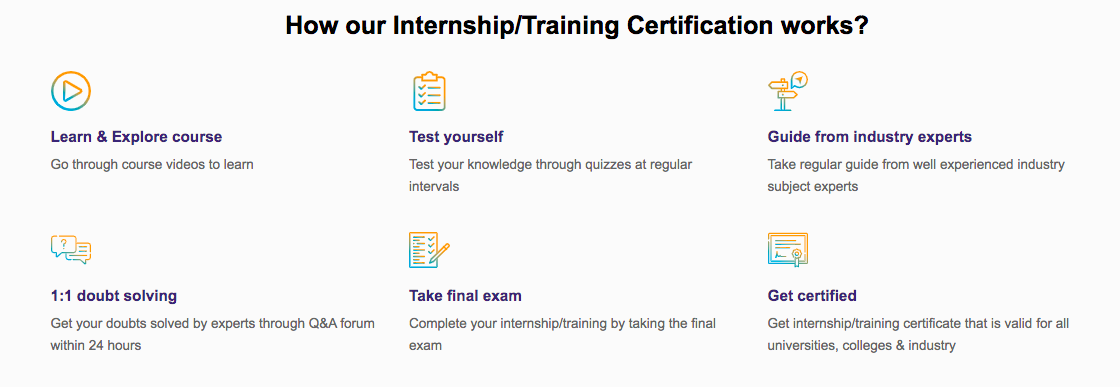
How EasyShiksha Internship/Training Program Works
AI-Powered Recommendations Across Educational Products
Artificial intelligence could make cross-product learning analytics more useful by identifying complex relationships between different learning activities and outcomes. Traditional analytics often relies on predefined indicators and reporting rules. AI-supported systems may examine larger collections of learning events and identify patterns that are difficult to detect manually.
For example, an AI system could analyse how students with similar starting knowledge perform after following different learning sequences. It may identify that a particular combination of a short lecture, a worksheet, and a practical activity is associated with better performance in a specific topic. It could then recommend that sequence to other learners who demonstrate similar needs.
AI could also generate adaptive learning pathways. If a student repeatedly makes errors in a worksheet, the system could identify the relevant concept and recommend a suitable explanation. If the student improves after completing a game, the platform could introduce a more challenging activity. If the learner demonstrates strong theoretical understanding but weak project performance, AI could recommend practical assignments designed to strengthen application.
Another application involves predicting potential learning difficulties. A combination of repeated incorrect responses, incomplete activities, and declining performance may indicate that a student needs additional support. The system could alert an instructor or provide appropriate learning resources before the student falls significantly behind.
However, predictive analytics must be used carefully. A student's temporary inactivity does not necessarily indicate a lack of motivation, and low performance may be influenced by external circumstances. Automated systems should avoid making definitive assumptions about students based on incomplete data. Human educators should be able to review important recommendations, and students should have opportunities to understand and correct inaccurate interpretations.
AI should therefore function as a decision-support system that improves the relevance of learning recommendations rather than replacing teachers, mentors, or academic judgement.
Subject-Specific Learning Analytics: Why One Model Cannot Fit Every Discipline
A major limitation of generic learning analytics is the assumption that the same performance indicators can be applied to every subject. Different disciplines require different forms of knowledge, reasoning, and practical application. A system designed for language learning may not be appropriate for evaluating engineering projects or financial analysis.
In mathematics, analytics may focus on procedural accuracy, reasoning steps, error patterns, and the ability to solve unfamiliar problems. Lectures can introduce methods, worksheets can develop accuracy, games can encourage repeated practice, and practical projects can connect mathematical concepts to real-world situations.
In programming, the platform may examine code correctness, debugging behaviour, algorithmic reasoning, project structure, and the ability to implement requirements. Quizzes can test foundational concepts, while coding projects and practical challenges provide evidence of application.
In business education, analytics may examine decision-making, interpretation of financial information, strategic reasoning, communication, and the ability to analyse business scenarios. Educational games can simulate business decisions, worksheets can develop numerical understanding, and projects can require students to prepare business plans or analyse market information.
In language learning, the system may evaluate vocabulary retention, reading comprehension, grammar application, writing quality, and communication. Lectures may explain grammar, interactive games may support vocabulary practice, worksheets may reinforce sentence construction, and practical projects may involve writing reports or preparing presentations.
For cybersecurity education, learning analytics could connect conceptual lessons with scenario-based games, security worksheets, and practical laboratory assignments. A student might understand common attack types in a lecture but need hands-on exercises to identify vulnerabilities and apply appropriate protective measures.
This subject-specific approach allows educational platforms to develop more accurate performance models. It recognises that different formats may be effective for different learning objectives rather than trying to identify one universally superior method.
Creating a Unified Student Learning Profile
Cross-product analytics becomes more useful when the information generated across educational services is organised into a unified student learning profile. This profile would provide a structured view of the learner's progress, demonstrated competencies, learning preferences, and areas requiring further development.
Unlike a conventional dashboard that displays course completion percentages and quiz scores, a unified learning profile would connect activities to specific educational outcomes. It could show which concepts a student has understood, which skills have been demonstrated through projects, and which learning formats have been associated with improved performance.
For example, a student studying data analytics might have completed a course covering spreadsheets, statistics, and data visualisation. The profile could connect quiz results to foundational understanding, worksheet performance to numerical accuracy, and a practical project to the ability to interpret and present data.
The profile could also show development over time. A student who initially struggled with data interpretation may demonstrate improvement after completing targeted worksheets and practical assignments. This progression provides a more meaningful picture of learning than a single final score.
A unified profile could eventually support academic guidance, internship recommendations, and career preparation. Students could identify which competencies they have demonstrated and which ones require further development before pursuing a particular opportunity.
For EasyShiksha, this could create a stronger connection between online courses, quizzes, worksheets, games, internships, and university programmes. The platform could use a shared learning profile to help students understand how their participation in different services contributes to their educational progress.
How EasyShiksha Could Introduce Cross-Product Learning Analytics
EasyShiksha has an opportunity to connect its different educational services through a common analytics framework. The first requirement would be to establish consistent learning objectives across courses, quizzes, worksheets, games, and projects. Activities should be mapped to the concepts and competencies they are designed to develop.
For example, a course in digital marketing may contain modules on search engine optimisation, content strategy, keyword research, and performance measurement. Related quizzes could evaluate conceptual understanding, worksheets could involve keyword analysis, educational games could simulate marketing decisions, and projects could require students to prepare a complete campaign strategy.
The analytics framework could then connect the results of these activities. If a student performs well in quizzes but struggles with the campaign project, the system could identify a gap between theoretical understanding and practical application. It might recommend a guided project or additional exercises rather than repeating the entire course.
A student studying programming could follow a similar pathway. Course modules would introduce concepts, quizzes would assess foundational understanding, worksheets would develop coding logic, interactive games could reinforce problem-solving, and practical projects would demonstrate the ability to build working applications. The analytics engine could evaluate progress across all these formats and recommend suitable next steps.
EasyShiksha could also connect learning analytics with internship preparation. Students who demonstrate particular competencies through projects could receive recommendations for relevant internship opportunities. Their learning profiles could help them identify which skills they need to strengthen before applying.
The system should also provide useful insights to instructors and content developers. If a large number of students struggle with the same concept after completing a particular lecture, the platform could review the explanation or introduce additional practice material. If a worksheet consistently produces strong results but students fail to apply the same concept in projects, the platform could examine whether the exercises are sufficiently realistic.
This creates a feedback loop not only for individual students but also for improving educational content across the platform.
Using Analytics to Improve Course and Content Design
Cross-product learning analytics can benefit educators and content developers as much as students. Learning data can reveal whether educational materials are supporting the intended outcomes and where improvements may be required.
For instance, a course developer may discover that students complete a particular video module but frequently perform poorly in related assessments. This could indicate that the explanation is too complex, the examples are insufficient, or the assessment requires knowledge that was not adequately introduced.
Similarly, students may perform well in worksheets but struggle with project assignments. This could indicate that the worksheets focus too heavily on predictable question patterns and do not prepare learners for unfamiliar problems. Educators could respond by introducing more open-ended exercises and realistic scenarios.
Game analytics may reveal that students repeatedly use a particular strategy to achieve high scores without demonstrating the intended concept. Developers could revise the game mechanics so that success depends more directly on the targeted learning objective.
Project analytics may also reveal that assignment requirements are unclear or that students lack the foundational knowledge needed to complete the task. Course developers could adjust prerequisite content or divide the project into smaller stages.
The important advantage is that content improvements would be informed by evidence from multiple learning formats. Instead of evaluating a course only through completion rates or student feedback, educators could examine how its concepts are understood, practised, and applied across the platform.
Challenges in Implementing Cross-Product Learning Analytics
Although cross-product learning analytics offers significant potential, implementation involves technical, educational, and ethical challenges. One major difficulty is data integration. Different educational products may use separate databases, assessment systems, and activity structures. Connecting these systems requires common identifiers, consistent event definitions, and reliable data processing.
Another challenge is ensuring that performance indicators are comparable. A quiz score of 80 percent and a project score of 80 percent do not necessarily represent the same level of achievement. Quizzes may contain straightforward questions, while projects may involve complex tasks evaluated through multiple criteria. Analytics systems must account for these differences rather than combining scores without considering assessment design.
The risk of oversimplifying learning preferences is equally important. Students should not be permanently categorised according to one format. Learning effectiveness can change according to subject, task complexity, prior knowledge, and the student's development. Recommendations must remain flexible and responsive to new evidence.
Privacy and data protection are also essential. A connected analytics platform may collect detailed information about student activity, assessment performance, and learning behaviour. The platform should clearly explain what data is collected, why it is required, how long it is retained, and who can access it. Students should have appropriate control over their information, and sensitive learning records should not be shared without a legitimate purpose and suitable safeguards.
There is also a risk of using analytics to measure students unfairly. A learner who takes longer to complete an activity should not automatically be considered less capable. Students may have different schedules, accessibility needs, devices, or internet conditions. Performance comparisons should account for relevant circumstances and avoid penalising learners for factors unrelated to understanding.
Finally, analytics must lead to meaningful educational improvements. A sophisticated dashboard has limited value if students and educators cannot use its insights to make better decisions. Recommendations should be understandable, relevant, and connected to actual learning activities.
Empower your team. Lead the industry
Get a subscription to a library of online courses and digital learning tools for your organization with
EasyShiksha
Measuring the Success of a Cross-Product Analytics System
The success of cross-product learning analytics should be evaluated through improvements in learning outcomes rather than the quantity of data collected. A platform may record thousands of student interactions, but the real question is whether those records help learners understand concepts, retain knowledge, and apply skills more effectively.
One important measure is learning progression across different formats. The system can examine whether students demonstrate improved performance after moving from lectures to worksheets, games, or projects. Another measure is knowledge retention, which can be evaluated through assessments conducted after a period of time rather than immediately after instruction.
Transfer of learning is equally important. Students should be able to use knowledge in situations that differ from the original teaching examples. A student who learns programming through guided exercises should eventually be able to solve a new problem independently. A learner who studies business strategy should be able to apply relevant concepts to an unfamiliar business scenario.
The platform can also examine whether personalised recommendations reduce repeated difficulties and improve the relevance of learning activities. If students receive targeted practice based on their performance, the system should assess whether they make measurable progress compared with their previous results.
At the institutional level, analytics can help identify which educational resources require revision, which activities produce stronger practical outcomes, and where students need additional support. These findings can guide future content development and programme design.
Any evaluation should distinguish correlation from causation. If students who complete more projects achieve higher assessment scores, it does not automatically prove that projects alone caused the improvement. Students who choose to complete more activities may already have higher motivation or prior knowledge. More careful evaluation, including controlled comparisons where appropriate, is needed before making strong claims about the effectiveness of a particular learning format.
The Future of Data-Driven Personalised Education
The future of digital education may involve a shift from recommending content based mainly on course categories to recommending learning experiences based on demonstrated progress. Cross-product analytics could become an important part of this development by connecting the different activities students complete throughout their educational journeys.
An advanced educational platform may eventually identify which explanation, exercise, game challenge, or practical task is most suitable for a learner at a particular stage. It could adapt the sequence of activities according to performance and provide additional support when students encounter difficulties. This would create learning pathways that are responsive to both subject requirements and individual progress.
Artificial intelligence may further improve this process by examining patterns across large groups of learners. It could help identify which combinations of learning formats are associated with stronger results for specific topics and skill levels. These findings could support educators in designing more effective learning sequences.
However, the future of personalised education should not depend entirely on automated recommendations. Students need opportunities to explore different learning formats, develop independent study habits, and challenge the system's assumptions. Teachers and mentors should remain involved in interpreting important results and providing guidance that automated systems cannot fully replicate.
The most effective approach will combine data-driven insights with educational expertise. Analytics can identify patterns, but educators must help determine what those patterns mean and how they should influence teaching and learning.
Conclusion
Cross-product learning analytics could transform how educational platforms understand student progress. By connecting information from lectures, worksheets, educational games, quizzes, and practical projects, platforms can move beyond isolated activity reports and develop a more complete understanding of how students learn and apply knowledge.
The most important benefit is the ability to identify which learning formats support particular educational outcomes. Lectures may strengthen conceptual understanding, worksheets may improve procedural accuracy, games may encourage interactive practice, and projects may demonstrate practical application. Their effectiveness should be evaluated through meaningful outcomes such as knowledge retention, independent problem-solving, and the ability to transfer skills into unfamiliar situations.
For EasyShiksha, this approach offers an opportunity to connect its online courses, quizzes, worksheets, educational games, internships, and university programmes through a shared learning analytics framework. A unified student profile could help learners understand their progress, identify skill gaps, and receive more relevant educational recommendations. The same insights could help educators improve course content, assessment design, and practical learning experiences.
Ultimately, personalised education should not be based on assumptions about how students prefer to learn. It should be informed by evidence of what helps them understand, practise, retain, and apply knowledge. Cross-product learning analytics can help create that evidence and turn separate educational services into a connected learning environment that responds more effectively to individual student needs.
Anshika Jain is an Engineer, Developer, and Educational Content Author known for her dedication to technology and knowledge sharing. With a strong analytical mindset and a passion for innovation, she has consistently contributed to creating meaningful digital solutions and insightful educational articles.
Her ability to simplify complex technical concepts into engaging and easy-to-understand content makes her work valuable for students and learners across various platforms. Along with her technical expertise, Anshika is admired for her creativity, professionalism, and commitment to continuous learning.
She represents a perfect blend of technical excellence and impactful communication, inspiring others through both her development work and educational contributions.