Affordable education is often presented as one of the most promising ways to expand access to knowledge and professional opportunities. Online courses, digital learning platforms, short-term certifications and flexible training programmes allow students to develop skills without paying the high fees associated with many traditional degrees. For learners who cannot afford expensive universities or relocate to major educational centres, these alternatives can create valuable opportunities to continue studying and prepare for employment.
However, reducing the price of education does not automatically make the entire learning experience accessible. Students may be able to enrol in an affordable course but still lack reliable internet access, suitable devices, professional networks, practical experience, career guidance or the credentials employers recognise. Some may complete several online programmes without receiving meaningful opportunities to demonstrate their abilities. Others may discover that expensive qualifications continue to influence recruitment decisions, even when they possess relevant skills.
This creates a deeper challenge for the future of affordable education. Can low-cost learning compete with expensive degrees without reproducing the hidden barriers that have traditionally limited access to educational and professional opportunities?
The issue is not simply whether an online course costs less than a university programme. It is whether affordable education can provide the complete conditions necessary for meaningful progress. These conditions include reliable instruction, recognised achievements, practical application, access to professional experiences, fair assessment and credible pathways into employment.
For an education ecosystem such as EasyShiksha, this question is particularly important. Its combination of online courses, quizzes, internships, certificates, university programmes, games, career guidance and job-related learning creates an opportunity to connect affordable learning with practical development. Instead of treating affordability as a matter of reducing course fees, the platform could explore how to reduce the total cost of becoming employable.
The future of affordable education may therefore depend on a fundamental shift in perspective. The goal should not be to reproduce an expensive degree at a lower price. It should be to create an educational pathway that provides meaningful knowledge, demonstrable capability and access to opportunities without requiring students to overcome the same financial and social barriers in a different form.
The Difference Between Low-Cost Education and Accessible Education
Affordable education and accessible education are closely related, but they are not identical. A course may have a low enrolment fee and still be difficult for many students to complete. Accessibility depends on the conditions surrounding the learning experience, including technology, language, time, academic preparation and the availability of support.
Consider a student who enrols in an affordable online programming course. The course may be inexpensive, but the student may have limited access to a computer, inconsistent internet connectivity or no quiet place to study. If the programme assumes that every learner has access to advanced software and high-speed internet, its low price may not translate into genuine accessibility.
Another student may have the necessary technology but struggle because the course assumes prior knowledge that has not been explained. A third may understand the content but lack the confidence to ask questions or obtain feedback. These students face barriers that are not reflected in the advertised course fee.
Traditional universities also provide services beyond classroom instruction. Depending on the institution, students may receive access to libraries, laboratories, faculty support, peer communities, academic advising, career services and alumni networks. Affordable digital education does not automatically provide equivalent support.
This does not mean that every online platform must reproduce the complete infrastructure of a university. It means that educational providers should understand which forms of support are essential for the learning outcomes they promise.
For EasyShiksha, affordability could be approached as a broader accessibility objective. Courses should be designed with different levels of prior knowledge and technical access in mind. Learning resources should be usable across appropriate devices, while quizzes, guidance and practical activities should help students progress rather than assuming that every learner begins with the same advantages.
The Hidden Costs Behind Expensive Degrees
The cost of a traditional degree is rarely limited to tuition fees. Students may also need to pay for accommodation, transportation, textbooks, examination charges, equipment and other academic expenses. Those who relocate for higher education may face additional costs related to housing, food and daily living.
There are also indirect costs. A student attending a full-time programme may have fewer opportunities to earn an income while studying. Someone supporting their family may find it difficult to participate in unpaid internships or additional professional training. Students living far from major educational centres may need to spend significant amounts simply to access institutions and career opportunities.
These costs can make higher education inaccessible even when tuition fees appear manageable. They also influence the choices students make. A learner may select a programme based on affordability rather than suitability, avoid an internship because it is unpaid or discontinue education because financial responsibilities become more urgent.
Affordable digital learning can reduce some of these expenses by allowing students to study remotely and combine education with other responsibilities. However, it should not be assumed that online education eliminates all costs. Devices, connectivity, software, assessments and time remain important considerations.
The real opportunity is to reduce the total financial and practical burden of learning. For EasyShiksha, this could involve offering flexible learning pathways that allow students to develop skills without unnecessary travel, expensive equipment or repeated enrolment in unrelated courses.
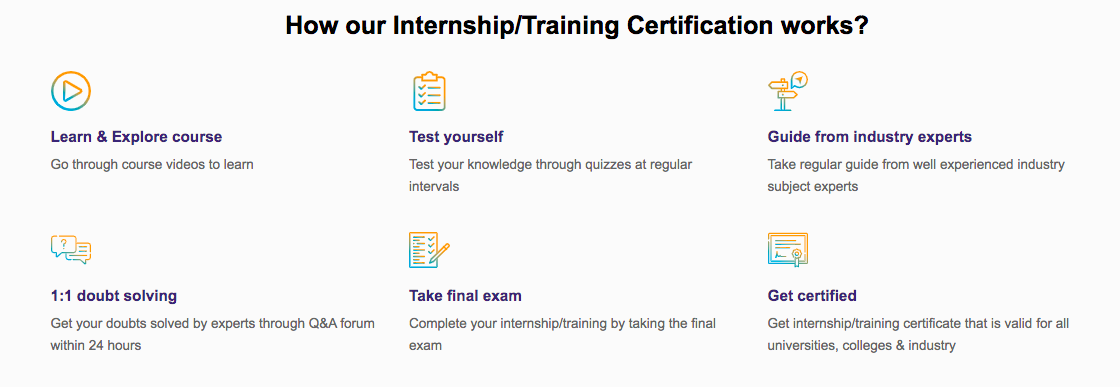
How EasyShiksha Internship/Training Program Works
The Hidden Barrier of Institutional Prestige
One of the most persistent barriers in education is the influence of institutional reputation. A degree from a highly recognised university may carry advantages beyond the knowledge and skills developed during the programme. Its reputation can influence employer perceptions, access to alumni networks and opportunities to connect with established organisations.
This creates a difficult situation for students who cannot afford prestigious institutions. Even when they complete relevant courses and develop practical capabilities, they may find that employers use university names as convenient indicators of candidate quality.
Institutional reputation is not entirely meaningless. Established universities may have strong academic standards, experienced faculty, research facilities and valuable professional networks. However, the assumption that a graduate from a prestigious institution is automatically more capable than a student from a less expensive educational pathway can overlook individual differences.
Affordable education needs to address this problem without pretending that reputation has no influence in the employment market. It must provide alternative forms of credibility.
Practical projects, independently evaluated assessments, internships, verified credentials and transparent learning outcomes can help students communicate their capabilities. These forms of evidence may not replace every advantage associated with an established university, but they can give employers additional information beyond the institution listed on a resume.
EasyShiksha could potentially strengthen this approach by connecting course achievements with projects, quizzes and practical experience. The objective would be to make learning outcomes visible and verifiable, allowing students to demonstrate what they can do rather than relying entirely on the reputation of the institution through which they studied.
Why Affordable Education Must Not Become a Second-Class Learning System
A major risk in expanding low-cost education is creating a separate category of learning that offers fewer opportunities to students who already face financial disadvantages. If affordable courses provide limited feedback, outdated content, weak assessments or minimal practical experience, they may become cheaper alternatives without providing comparable educational value.
This can create a two-tier education environment. Students who can afford expensive programmes receive structured teaching, professional networks and career support, while learners using low-cost alternatives receive access mainly to recorded content and basic certificates.
The difference is not simply about the price of education. It is about the quality of the opportunities available after enrolment.
Affordable education should not mean that students receive fewer chances to ask questions, practise skills or demonstrate their abilities. It should mean that providers find efficient ways to deliver valuable learning without transferring unnecessary costs to students.
For example, recorded lessons can make instruction affordable, but they should be supported by appropriate assessments and opportunities for practical application. Peer-based learning can provide interaction, but it should not replace expert feedback where specialist guidance is necessary. Automated tools can assist students, but they should not become substitutes for meaningful academic support.
For EasyShiksha, this distinction could become an important principle. Low-cost learning should maintain clear learning outcomes, useful assessments and practical opportunities. The platform should aim to make educational quality more accessible rather than simply making course content cheaper.
The Digital Divide: When Internet Access Becomes an Admission Requirement
Online education depends on technology, but access to technology is not equally distributed. Students may have different devices, internet speeds, data limits and levels of digital confidence. These differences can influence whether learners can participate effectively.
A course that uses high-resolution videos, large downloads or complex software may be difficult for students with limited connectivity. A learner who relies on a shared smartphone may struggle with activities designed primarily for desktop computers. Students who are unfamiliar with digital learning tools may also need guidance before they can focus on the academic content.
This creates a paradox. Digital education can reduce geographical barriers while introducing technological barriers.
An affordable platform should therefore consider the practical conditions under which students access learning. Where possible, content should be designed to work across appropriate devices, provide clear navigation and avoid unnecessary technical requirements. Downloadable materials or lower-bandwidth alternatives may also help in suitable contexts.
For EasyShiksha, designing around varied access conditions could make its courses and learning activities more inclusive. The aim should be to ensure that students are evaluated on their understanding and capabilities rather than on the quality of their internet connection or the specifications of their devices.
Language and Communication as Invisible Educational Barriers
Language can influence access to education just as strongly as financial resources. Many professional courses are delivered primarily in English, while students may have developed their foundational education in other languages. Even when learners understand the subject, unfamiliar terminology and complex explanations can slow their progress.
The problem becomes more serious when language proficiency is treated as a substitute for subject knowledge. A student may understand programming logic but struggle to explain it in formal English. Another may have strong financial knowledge but find technical course material difficult to interpret.
This does not mean that communication skills are unimportant. Professional environments often require clear communication, and students should have opportunities to develop those abilities. However, language difficulty should not unnecessarily prevent learners from acquiring technical knowledge.
Affordable education can address this barrier through clearer explanations, carefully structured terminology and appropriate language support. Where feasible, learning resources can include multilingual explanations while preserving the professional vocabulary students may encounter in their chosen fields.
EasyShiksha could potentially explore language-inclusive learning experiences across its courses and assessments. The objective would be to help students understand concepts first and gradually develop the communication skills required to apply that knowledge in academic and professional settings.
The Prerequisite Gap: Why Students Cannot Always Start at the Same Level
Expensive degree programmes often assume that students have already developed certain academic foundations. Affordable online courses can make similar assumptions, particularly when they are designed for a broad audience.
A beginner may enrol in a course on data analytics without sufficient knowledge of spreadsheets, statistics or basic mathematics. Another may start learning web development without understanding fundamental programming concepts. When the course moves too quickly, the student may conclude that the subject is too difficult, even though the real problem is a missing prerequisite.
This creates an invisible barrier because the advertised course price does not reflect the additional learning required before the student can benefit from it.
An accessible education system should recognise that learners enter with different levels of preparation. Diagnostic quizzes and introductory modules can help identify missing foundations. Students who need additional support could be directed towards relevant preparatory material rather than being expected to follow the same learning sequence.
For EasyShiksha, this could become part of a more flexible course architecture. Quizzes could identify existing knowledge, introductory learning resources could address gaps and advanced courses could build on verified understanding.
The purpose would be to prevent students from paying for learning experiences that are poorly matched to their current preparation.
Practical Experience: The Opportunity That Affordable Education Often Misses
One of the strongest advantages associated with established educational institutions can be their access to practical environments. Depending on the programme, students may receive laboratory exposure, industry projects, internships, research opportunities and interaction with professionals.
Affordable online learning can provide excellent theoretical instruction, but students may still struggle if they have no opportunity to apply their knowledge. This becomes especially important in fields where employers expect candidates to demonstrate practical capability.
A learner who completes a programming course may understand the concepts but have little experience building a complete application. Someone studying marketing may know the terminology but lack exposure to campaign planning or performance analysis. A student studying finance may understand accounting principles but have limited experience interpreting practical business information.
The absence of practical experience can reproduce the same employment barriers associated with expensive education. Students may save money on tuition but still need to pay for external training or struggle to obtain their first professional opportunity.
EasyShiksha's combination of courses, quizzes, projects and internships creates an opportunity to connect learning with practical development. A course could introduce concepts, a quiz could assess understanding and a project could require the learner to apply those concepts. An internship could then provide exposure to workplace expectations.
The important point is that practical experience should not be treated as an optional extra available only to students who can afford additional programmes. It should be considered an essential part of many learning pathways.
The Internship Access Problem: Who Can Afford to Work Without Pay?
Internships are frequently presented as valuable ways to gain professional experience, but access to them is not always equal. Some opportunities are unpaid or provide compensation that does not cover transportation, accommodation and other expenses.
Students with financial support may be able to accept these opportunities because they can afford to prioritise experience over immediate income. Learners who need to support themselves or their families may not have the same flexibility.
This means that unpaid internships can unintentionally favour students who already possess greater financial resources. The opportunity to gain experience becomes dependent on the ability to work without adequate compensation.
Affordable education should not reproduce this barrier by treating unpaid experience as the only route to professional readiness. Practical learning can also be developed through structured projects, simulations, supervised assignments and appropriately designed remote experiences.
Where internships are offered, their expectations, duration, responsibilities and compensation arrangements should be communicated clearly. Students should be able to understand the actual value of the experience before committing their time.
For EasyShiksha, internship opportunities could be connected with course learning while maintaining transparency about the nature of each opportunity. The broader goal should be to help students gain practical exposure without assuming that everyone can afford to work without income.
Educational opportunities are not distributed only through formal admissions and course enrolments. Personal networks also influence access to internships, mentors, industry information and employment opportunities.
Students attending established universities may have access to alumni communities, professional events, faculty connections and recruitment relationships. These networks can make it easier to discover opportunities that are not widely advertised.
Learners studying independently or through affordable online platforms may not have equivalent access. Even when they possess relevant skills, they may struggle to identify organisations, contact recruiters or obtain guidance on professional expectations.
This creates a hidden advantage that is difficult to measure through course fees or academic results. Two students with similar capabilities may encounter very different career opportunities because one has access to a stronger professional network.
Digital education platforms could help reduce this gap by making career information and professional guidance more accessible. They could connect students with relevant opportunities, provide structured preparation and help learners understand how to communicate their capabilities.
EasyShiksha could potentially strengthen its career guidance and internship ecosystem by helping students move from learning achievements towards practical opportunities. Such support should complement skill development rather than promise employment simply because a learner has completed a course.
Why Certificates Alone Cannot Replace the Advantages of Expensive Degrees
Certificates can help students demonstrate that they completed a learning programme, but they cannot automatically reproduce every benefit associated with a formal degree.
A university qualification may involve several years of structured study, academic supervision, examinations, research, peer interaction and institutional recognition. Certain professions also require specific accredited qualifications or legal licences. Short-term certificates cannot replace these requirements simply because they are less expensive.
The challenge is therefore not to claim that affordable online courses can replace every degree. It is to identify where alternative educational pathways can provide genuine value and where formal qualifications remain necessary.
For example, a student may use online courses and projects to develop frontend development skills without requiring a postgraduate degree. However, someone entering a regulated profession may need a recognised academic qualification and professional registration.
A responsible education platform should communicate these differences clearly. Students need to understand whether a course provides foundational knowledge, professional development, preparation for further education or a credential recognised by a particular organisation.
For EasyShiksha, this means positioning online learning as part of a wider educational ecosystem rather than suggesting that every course can replace a formal degree. Courses, certificates, university programmes, internships and career guidance can serve different purposes within a student's development.
Affordable Education and the Problem of Credential Recognition
A student may complete an affordable course and develop useful skills, but employers and educational institutions may not know how to evaluate the resulting certificate. Recognition depends on factors such as the issuing organisation, curriculum, assessment quality, credential verification and relevance to the opportunity.
This creates a credibility challenge for alternative education pathways. Students may accumulate several certificates without knowing whether external organisations consider them meaningful.
The solution is not simply to issue more credentials. It is to make the achievements behind those credentials easier to understand and verify.
A well-designed certificate should communicate what the student completed and what was assessed. Where practical competence has been evaluated, the record should distinguish that achievement from basic participation or course completion. Supporting project evidence can provide further information about the learner's capabilities.
EasyShiksha could potentially strengthen the value of its credentials by connecting certificates with clearly defined learning outcomes, relevant assessments and practical work. This would help students communicate their achievements more accurately when applying for further education, internships or jobs.
The goal should be to build trust through transparent evidence rather than relying entirely on the number of certificates issued.
The Risk of Creating a Low-Cost Credential Market Without Real Learning
Affordable education can expand access, but it can also create incentives for providers to compete mainly through low prices and rapid certification. If courses are designed primarily to attract enrolments, students may receive simplified content, weak assessments and certificates that provide little evidence of competence.
This creates a dangerous cycle. Students purchase affordable courses because they want to improve their employment prospects. They complete the programmes and collect certificates, but employers find little evidence of practical capability. Students then enrol in more courses to strengthen their profiles.
The result is a low-cost version of the same qualification accumulation problem found in expensive education.
A responsible platform should therefore avoid treating the number of enrolments and certificates as the only indicators of success. Course quality, student understanding, practical application and the relevance of learning outcomes should remain central.
For EasyShiksha, this could mean evaluating courses according to the capabilities they aim to develop and the evidence students can produce after completion. Affordable learning should reduce financial barriers without lowering the standard of meaningful educational achievement.
How AI Could Make Affordable Education More Personalised
Artificial intelligence could help affordable education provide some forms of support that have traditionally required significant institutional resources. AI-assisted systems may help students identify knowledge gaps, receive explanations, practise concepts and explore relevant learning pathways.
A learner who struggles with a particular topic could receive additional examples or targeted practice. A student who demonstrates strong foundational knowledge might be directed towards advanced material. Career guidance systems could help learners compare their existing capabilities with the requirements of different roles.
These possibilities could make learning more responsive without requiring every student to receive continuous individual instruction from a human tutor.
However, AI should not be treated as a complete replacement for teachers, mentors or professional guidance. Automated explanations can be inaccurate, recommendations can reflect biased data and students may need human support when dealing with complex academic or career decisions.
For EasyShiksha, AI could potentially operate as a support layer across courses, quizzes and career guidance. Its purpose should be to improve the relevance and accessibility of learning rather than reduce the quality of human interaction wherever expert guidance is necessary.
Measuring the True Cost of Becoming Employable
One of the most important changes in affordable education is the need to measure cost beyond the price of a course. Students are ultimately interested in what it takes to develop the knowledge, experience and credibility required for their intended opportunities.
A low-cost course may become expensive if students need to purchase several additional programmes, pay for separate assessments and seek external practical training. Similarly, a free course may have significant indirect costs if it requires expensive software or extensive unpaid study time.
A more useful approach would examine the total cost of developing a particular capability. This could include course fees, assessment charges, required equipment, connectivity, project expenses and the time needed to complete the learning pathway.
Such an approach would help students compare educational options more realistically. It would also encourage platforms to identify unnecessary costs and design more efficient pathways.
EasyShiksha could potentially connect course information with career-oriented learning pathways so that students understand what additional skills, projects or experiences may be needed for their goals. This would help learners make more informed decisions about their educational investments.
Designing an Affordable Learning-to-Opportunity Pathway at EasyShiksha
EasyShiksha could explore a learning-to-opportunity model that treats affordability as a complete journey rather than an individual course price. The pathway would begin by helping students identify their existing knowledge and career interests. Diagnostic quizzes could provide an initial understanding of their preparation, while career guidance could help them explore relevant fields.
Students could then follow structured courses that develop the necessary foundations. Assessments would help them evaluate their understanding, while projects would provide opportunities to apply concepts and create evidence of capability.
Where suitable, internships could introduce students to professional responsibilities and workplace expectations. Certificates could document completed learning, while project records and internship evidence could help students communicate their practical experience.
The final stage would connect these achievements with career preparation. Students could receive guidance on presenting their skills, building portfolios and identifying relevant opportunities.
This model would not guarantee that every learner obtains employment, nor would it eliminate the advantages associated with formal university education. Its purpose would be to reduce unnecessary gaps between learning, practice and opportunity.
The approach could also support different educational starting points. Some students may need foundational courses, while others may already possess relevant skills and require advanced projects or specialised training. A flexible pathway would allow learners to build on what they know rather than repeatedly paying for content they have already mastered.
Empower your team. Lead the industry
Get a subscription to a library of online courses and digital learning tools for your organization with
EasyShiksha
Fairness Should Be Built Into Affordable Education
Affordable education should be evaluated not only by how many students can enrol but also by whether those students receive fair opportunities to learn and progress.
Fairness includes transparent course information, realistic learning outcomes, appropriate assessments and clear credential descriptions. It also requires that students understand the conditions attached to internships, certificates and other opportunities.
Platforms should avoid presenting course completion as a guarantee of employment or suggesting that a short programme provides the same recognition as a formal professional qualification when that is not the case. Students deserve accurate information about what a learning experience can and cannot provide.
Accessibility also requires attention to different learning conditions. Students may need varied explanations, flexible schedules, suitable device compatibility and reasonable opportunities to obtain support.
For EasyShiksha, fairness could become a guiding principle across its educational ecosystem. The platform could aim to make learning opportunities more transparent and ensure that affordability does not come at the cost of meaningful assessment, practical development or student trust.
Conclusion: Affordable Education Must Remove Barriers, Not Repackage Them
Affordable education has the potential to expand access to knowledge and professional development, particularly for students who cannot afford expensive degrees or relocate to major educational centres. However, reducing tuition fees is only the first step. If students continue to face barriers involving technology, language, practical experience, credential recognition, professional networks and employment access, affordable learning may reproduce many of the disadvantages associated with traditional education.
The real challenge is to make the entire learning journey more accessible. Students need quality instruction, appropriate assessments, opportunities to practise, credible evidence of achievement and guidance that helps them connect their capabilities with future opportunities.
For EasyShiksha, this creates an opportunity to connect online courses, quizzes, projects, internships, certificates, university programmes and career guidance into a more complete educational pathway. Each component can contribute to a different stage of development, helping students move from foundational knowledge towards practical capability and professional readiness.
Affordable education should not attempt to imitate expensive universities through cheaper versions of the same structures. It should identify which educational experiences create genuine value and find effective ways to make those experiences available to more learners.
The objective is not to promise that a low-cost certificate can replace every degree. It is to ensure that students who cannot afford expensive qualifications are not automatically denied opportunities to develop and demonstrate their abilities.
Education becomes genuinely affordable when students can access not only the learning itself, but also the support, evidence, experience and opportunities needed to turn that learning into meaningful progress.
Anshika Jain is an Engineer, Developer, and Educational Content Author known for her dedication to technology and knowledge sharing. With a strong analytical mindset and a passion for innovation, she has consistently contributed to creating meaningful digital solutions and insightful educational articles.
Her ability to simplify complex technical concepts into engaging and easy-to-understand content makes her work valuable for students and learners across various platforms. Along with her technical expertise, Anshika is admired for her creativity, professionalism, and commitment to continuous learning.
She represents a perfect blend of technical excellence and impactful communication, inspiring others through both her development work and educational contributions.