




12
Articles published

Join thousands of students achieving their dreams with expert-led courses.
Join free and unlock everything on EasyShiksha.
Takes less than 3 seconds — no password needed
Please enter a valid email address.
Checking your email…
Almost done — just verify your number so we can send course updates and certificates.
Used only for verification & updates
Incorrect OTP. Please try again.
Takes less than 10 seconds
Please select your country.
Please select your state.


Optometry is a healthcare field concerned with examining vision, identifying certain visual problems, assessing eye health and supporting the correction of refractive errors. Optometry education may cover the structure and function of the eyes, vision testing, optical instruments, lenses and patient communication.
A vocational programme focused on optometry may introduce learners to visual acuity testing, basic eye examination procedures, spectacle lens measurements, optical dispensing, contact lens fundamentals and the use of equipment in eye-care settings. Depending on the curriculum, students may also learn about ocular conditions, patient records, infection prevention and referral procedures.
Optometry is different from ophthalmology, which is a medical specialty practised by qualified medical doctors. An optometry-related qualification does not automatically authorise a graduate to perform every clinical procedure or practise independently; professional scope depends on the qualification, applicable regulations and required registration.
Students interested in this field should verify the exact programme title, clinical training arrangements, eligibility criteria and professional recognition requirements before applying. They can explore B.Voc programmes on EasyShiksha to compare available vocational options in healthcare and related fields.
| Particular | Details |
|---|---|
| Study Area | Optometry and vision care |
| Programme Type | B.Voc, if offered under this exact specialisation |
| Level | Undergraduate |
| Main Focus | Vision assessment, optical services and eye-care support |
| Related Areas | Visual acuity, optical instruments, lenses and patient communication |
| Eligibility | Depends on the specific programme and institution |
| Duration | Confirm through official programme details |
| Learning Mode | Depends on the programme offered by the institution |
| Practical Learning | May include laboratory sessions, demonstrations and supervised clinical training |
Editorial note: This is a general overview of optometry education. A dedicated EasyShiksha listing for a B.Voc specifically titled “Optometry” has not been confirmed. Students should verify the exact qualification before applying.
A programme in optometry may aim to develop foundational knowledge of vision and optical systems, alongside practical skills relevant to eye-care environments.
Possible learning objectives include:
The actual learning outcomes depend on the curriculum and supervised practical components of the selected programme.
Admission requirements vary by institution and qualification. Students should check the official programme information before applying.
Key requirements to verify include:
Students should not assume that eligibility for a general healthcare B.Voc programme is identical to the requirements for an optometry qualification.
The following are common areas associated with optometry education. They are illustrative topics, not a confirmed syllabus for a specific B.Voc programme.
Students may learn about the major structures of the eye and how they contribute to vision. This provides a foundation for understanding visual function and eye health.
This area introduces the behaviour of light, lenses, refraction and optical principles relevant to vision correction.
Learners may study how visual acuity is assessed, how results are recorded and why appropriate testing procedures are important.
Students may be introduced to conditions such as myopia, hyperopia and astigmatism, along with the principles used to assess and correct refractive errors within their authorised scope.
This subject area may cover the purpose and basic use of instruments used in vision assessment and optical practice.
Learners may explore spectacle lenses, lens measurements, frame selection, fitting considerations and the basics of optical dispensing.
Depending on the programme, students may learn introductory concepts related to contact lenses, lens types, hygiene and safe handling.
Students may be introduced to common eye conditions and warning signs that require referral to an appropriately qualified eye-care professional.
This area may cover patient interaction, recording examination information, explaining routine procedures and maintaining professional records.
Where included, supervised practical training may help learners understand clinical workflows, hygiene, patient safety, confidentiality and professional responsibilities.
A relevant optometry curriculum may help students develop:
Clinical competence requires appropriate education and supervised practice. Students should confirm the practical training and professional eligibility associated with the exact qualification.
Depending on the qualification, practical training and applicable professional requirements, graduates may explore opportunities in optical retail, eye-care support and related service settings.
| Career Role | Typical Responsibilities |
|---|---|
| Optical Assistant | Helps customers with optical products and routine service activities. |
| Optometry Assistant | Supports authorised eye-care professionals with routine tasks. |
| Vision Testing Assistant | Assists with basic vision-testing workflows under appropriate supervision. |
| Optical Dispensing Assistant | Supports spectacle selection, measurements and fitting-related service tasks. |
| Ophthalmic Clinic Assistant | Helps with patient coordination, documentation and routine clinic operations. |
| Optical Store Associate | Assists customers, maintains product information and supports store operations. |
| Eye-Care Service Coordinator | Helps coordinate appointments, records and patient communication. |
| Optical Equipment Support Assistant | Supports routine equipment handling and service coordination, subject to training. |
| Optical Business Assistant | Supports inventory, customer service and daily operations in an optical business. |
| Further-Study Candidate | May pursue additional education in optometry or a related field, subject to eligibility requirements. |
These are potential career directions, not guaranteed job outcomes. The title “optometrist” and clinical responsibilities may be subject to specific educational and regulatory requirements. A general vocational qualification should not be assumed to confer independent clinical practice rights.
Students interested in further education may investigate options related to vision science and eye care, subject to the entry requirements of each institution.
Possible areas include:
Students should confirm whether their undergraduate qualification is accepted by the intended institution. Clinical programmes may have specific subject prerequisites and practical requirements.
The application process depends on the institution and the exact programme. The following steps provide a general guide.
Search the EasyShiksha B.Voc programme directory and review relevant healthcare or vision-care options. Confirm that the programme is specifically offered in optometry before proceeding.
Check the required school qualification, subjects, minimum marks and any additional requirements for practical or clinical training.
Examine the subjects, practical sessions, supervised training, qualification awarded and any professional eligibility information provided by the institution.
Enter the requested personal, contact and academic information accurately and submit the form according to the institution's instructions.
Provide the requested marksheets, certificates, identity documents and other supporting materials specified by the institution.
Follow the institution's instructions regarding application review and enrolment. Before accepting a place, verify the programme's clinical training arrangements and whether the qualification meets the requirements for your intended career.
Before applying, consider the following factors.
Qualification title: Confirm whether the course is a B.Voc in Optometry, a Bachelor of Optometry or another related qualification. These titles should not be treated as interchangeable.
Curriculum: Check for relevant coverage of optics, visual assessment, lenses, eye anatomy, ocular health and professional practice.
Clinical training: Review the availability of supervised practice, clinical facilities and opportunities to develop practical competencies.
Eligibility: Confirm the required academic subjects and minimum marks.
Professional requirements: Investigate any applicable registration, recognition or scope-of-practice requirements for the career you intend to pursue.
Future study: Check whether the qualification supports admission to the postgraduate or advanced programme you are considering.
Students can also explore the EasyShiksha university programme directory to compare available study pathways.
Optometry education focuses on vision, optical principles, visual assessment and eye-care support. Relevant study areas may include eye anatomy, optics, refractive errors, optical instruments, lenses, patient communication and clinical practice.
Students interested in this field should verify the exact qualification offered, curriculum, eligibility criteria, supervised clinical training and professional requirements before applying. Choosing a programme based on verified academic and professional details can help learners make an informed decision about their future in vision care.
Optometry is a healthcare field concerned with assessing vision, identifying certain visual problems and supporting appropriate vision correction and eye-care referrals. The scope of practice depends on the professional's qualification and applicable regulations.
A dedicated EasyShiksha programme listing specifically titled B.Voc in Optometry has not been confirmed. Students should check the current B.Voc directory and verify the exact qualification before applying.
Requirements vary by programme. Applicants may need Class 12 or an equivalent qualification, and some programmes specify science subjects or minimum marks. Always check the official admission criteria.
Common study areas include eye anatomy and physiology, optics, visual acuity assessment, refractive errors, optical instruments, ophthalmic lenses, ocular health, patient communication and professional ethics.
Depending on the programme, students may develop knowledge of visual assessment, optical instruments, lenses, patient communication, documentation, hygiene and referral procedures. Clinical competence requires appropriate supervised training.
Possible entry-level opportunities include optical assistant, optical dispensing assistant, optical store associate, vision testing assistant and ophthalmic clinic support roles. Clinical positions may require specific qualifications and authorisation.
No. Optometry and ophthalmology are distinct professions with different educational pathways and scopes of practice. Ophthalmologists are medical doctors specialising in eye care, while optometrists follow their own prescribed professional education and practice requirements.
The answer depends on the qualification, professional registration and applicable regulations. Students should verify the authorised scope of practice for the specific qualification rather than assuming all optometry-related courses grant the same rights.
Further study may be possible in optometry, vision science or related healthcare fields, depending on eligibility. Students should confirm that their existing qualification meets the entry requirements of the intended programme.
Students can explore the B.Voc programme directory on EasyShiksha and the wider university programme directory. They should verify the exact course title, syllabus, eligibility and practical training details before applying.
More News Click here








Discover thousands of colleges and courses, enhance skills with online courses and internships, explore career alternatives, and stay updated with the latest educational news..

Gain high-quality, filtered student leads, prominent homepage ads, top search ranking, and a separate website. Let us actively enhance your brand awareness.
Download EasyShiksha Mobile Apps from Android Play Store, Apple App Store, Amazon App Store, and Jio STB.
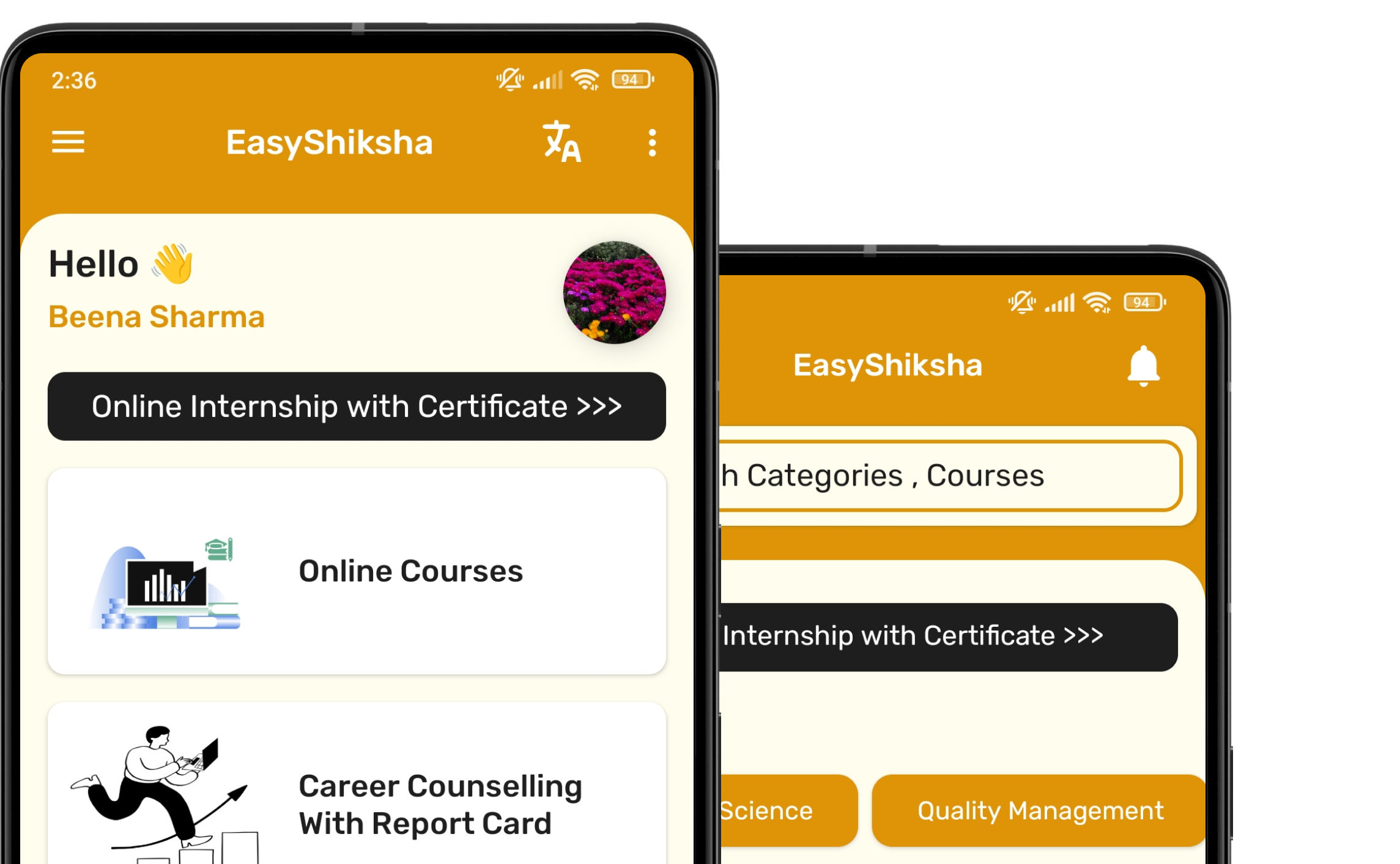


1 million+ learned on the EasyShiksha App
Trusted by Standards & Global Compliance Frameworks





Built under internationally recognized standards for quality, information security, educational excellence and business continuity.
ISO 9001:2015 | ISO/IEC 27001:2022 | ISO 21001:2018 | ISO 22301:2019 | DPIIT Recognized Startup | MSME Registered