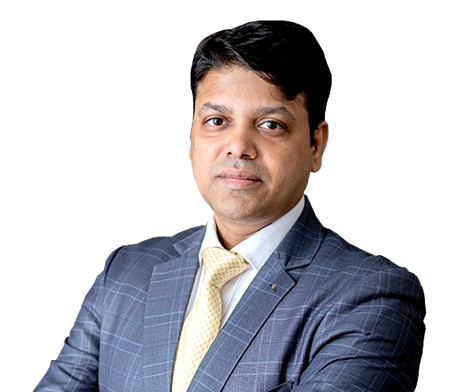
Vivek Varshney, Founder & CEO, SpeEdLabs
For decades, India's competitive examination ecosystem has been viewed through the lens of a few education hubs. Cities such as Kota, Hyderabad, Delhi, and Chennai became synonymous with engineering and medical entrance preparation, drawing students from every corner of the country. Yet, this model has also highlighted one of the biggest inequities in Indian education access.
Today, talent is no longer concentrated in metropolitan cities. Aspirational students are emerging from Tier II and Tier III towns in unprecedented numbers, driven by greater awareness, improved school enrollment, digital connectivity, and rising household aspirations. India's school education system today serves more than 25 crore students across over 14.7 lakh schools, making it one of the largest education systems in the world. What continues to vary, however, is access to quality academic support.
Over the past decade, India has made significant progress in improving digital access. Affordable smartphones, expanding internet penetration, and digital learning platforms have brought educational resources closer to millions of students. With over 95 crore internet subscribers and one of the world's lowest mobile data costs. However, the digital divide today is less about connectivity and more about capability. Having access to online content does not necessarily translate into meaningful learning outcomes. Students continue to differ in the quality of guidance they receive, the consistency of their learning environment, access to mentors, and their ability to identify and address learning gaps.
This is why the conversation around competitive exam access needs to move beyond content availability. Preparing for examinations such as JEE, NEET, or other national entrance tests requires far more than recorded lectures or practice questions. Every year, more than 20 lakh students register for NEET-UG, while JEE Main attracts over 15 lakh registrations, making them among the largest entrance examinations in the world. It demands structured learning, regular assessments, personalised feedback, performance benchmarking, and timely academic interventions, elements that have traditionally been concentrated within specialised coaching ecosystems.

As a result, geography often continues to influence opportunity. Many students outside metropolitan centres still face limited access to structured academic ecosystems, despite having access to digital learning resources. Bridging this gap requires strengthening the systems that support learning, rather than simply expanding the volume of available content.
Schools can play an increasingly important role in this transformation. By integrating technology-enabled assessments, personalised learning pathways, and continuous academic support into the school environment, they have the potential to make high-quality exam preparation more accessible without requiring students to relocate or depend entirely on parallel coaching structures. This opportunity is particularly significant considering that nearly 70% of India's schools are located in rural areas.
Technology, too, is entering a new phase. The first wave of digital education focused on democratising content. The next phase is centred on improving outcomes through adaptive assessments, personalised practice, and actionable insights for both students and teachers. Technology is becoming less about replacing traditional learning models and more about strengthening them.
Equally important is the role of teachers. Even as artificial intelligence and analytics become more sophisticated, the classroom teacher remains central to the learning journey. Technology can identify learning patterns and recommend interventions, but motivation, conceptual clarity, and mentorship continue to rely on human expertise. The most effective education models will therefore be those that combine strong classroom instruction with personalised, technology-enabled academic support.
- Career Helper suggests occupations that correspond to your interests, values, aspirations, and personality.
-
Career Helper consists of:
- IQ Test
- Basic Test
- Advance Test
- Psychometric Test
- Know your talents, skills, strengths, and weaknesses.
- Choose the profession that suits you best.
- Get best career guidance by Experts.
- Explore various career options in India with EasyShiksha.
There is also a broader economic dimension to this discussion. As India seeks to build a globally competitive workforce, ensuring equitable access to quality academic preparation becomes more than an education challenge, it becomes a national priority. With nearly 65% of India's population below the age of 35, every capable student, regardless of geography, should have an equal opportunity to compete.
Bridging the competitive exam access gap will not be achieved through a single institution or technology platform. It will require stronger collaboration between schools, educators, policymakers, and technology providers to build learning ecosystems that are accessible, measurable, and responsive to individual student needs.
India has made remarkable progress in expanding educational access. The next milestone is ensuring that opportunity is no longer determined by a student's location, but by their potential.