Digital education has become increasingly capable of measuring what students do. Learning platforms can record which lessons students complete, how frequently they log in, how they perform in quizzes, how long they spend on learning activities, where they stop watching a lesson, and how their assessment scores change over time. These capabilities have created the field of learning analytics, giving educators and platforms unprecedented visibility into student activity.
Yet measurement is not the same as understanding.
A platform may identify that a student is repeatedly failing a quiz, abandoning lessons, spending unusually long periods on a particular topic, or progressing more slowly than expected. These signals are valuable, but they do not automatically explain why the learner is struggling. The student may have a conceptual gap, insufficient foundational knowledge, difficulty transferring theory into practice, a lack of confidence, poor time management, an unsuitable learning sequence, confusing instructional material, or a temporary change in personal circumstances.
The next evolution of digital education therefore requires moving beyond learning analytics toward learning intelligence capable of reasoning about possible causes.
This is where the question becomes particularly important for connected education ecosystems such as EasyShiksha. When courses, quizzes, internships, projects, certificates, games, career guidance, and other learning experiences are connected, a platform can potentially understand student progress from multiple perspectives rather than relying on a single score.
The goal should not be to build a system that claims to know exactly why every student struggles. Human learning is too complex for such certainty. Instead, the objective should be to create an intelligent educational environment that can identify patterns, investigate possible causes, ask better questions, and recommend appropriate support.
The difference is significant. A traditional analytics system might say, “This student is struggling with mathematics.” A more intelligent system might ask, “Is the problem mathematical understanding, missing prerequisites, difficulty interpreting the questions, insufficient practice, or the way the material is being taught?” That shift could fundamentally change how personalised education works.
The Difference Between Learning Analytics and Learning Understanding
Learning analytics primarily focuses on collecting and interpreting data about learning activity. It can reveal patterns in performance, engagement, completion, and behaviour. These insights are useful because they allow educators to identify students who may require attention.
However, learning analytics often operates at the level of observable behaviour.
A student receives a low quiz score. The system records it. A student stops completing lessons. The system records that too. A student takes significantly longer than expected to complete a module. Again, the activity becomes data.
But educational decisions require interpretation.
A low score does not necessarily mean a student lacks ability. A student may understand the concept but misunderstand the question. A learner may have the necessary knowledge but lack sufficient practice. Another student may have missed an earlier foundational concept that has now become a barrier to advanced learning.
Therefore, a system that only measures outcomes can identify symptoms without identifying likely causes.
Moving beyond analytics means creating a deeper relationship between data and educational reasoning. The platform needs to connect multiple signals, compare them with the learner's previous experiences, examine the structure of the learning journey, and determine which explanations are plausible.
This does not mean replacing human educators with algorithms. It means giving students and educators better information about what may be happening beneath visible performance.
Why Knowing That a Student Is Struggling Is Not Enough
Imagine a learner enrolled in a programming course who repeatedly performs poorly in coding assessments. A conventional learning analytics dashboard might classify the student as a low performer.
But that classification does not answer the most important question: what should happen next?
If the learner lacks basic programming concepts, they need foundational revision. If the learner understands syntax but cannot solve problems independently, they may need more practice. If the learner understands programming but struggles with the assessment format, the intervention should be different. If the student is capable but has not practised enough, additional exercises may be more useful than another lecture.
Giving the same intervention to all struggling students can therefore create another form of standardisation.
True personalisation requires understanding differences among learners who appear to have the same problem.
This is why the future of learning technology may depend less on detecting struggling students and more on diagnosing the nature of the struggle.
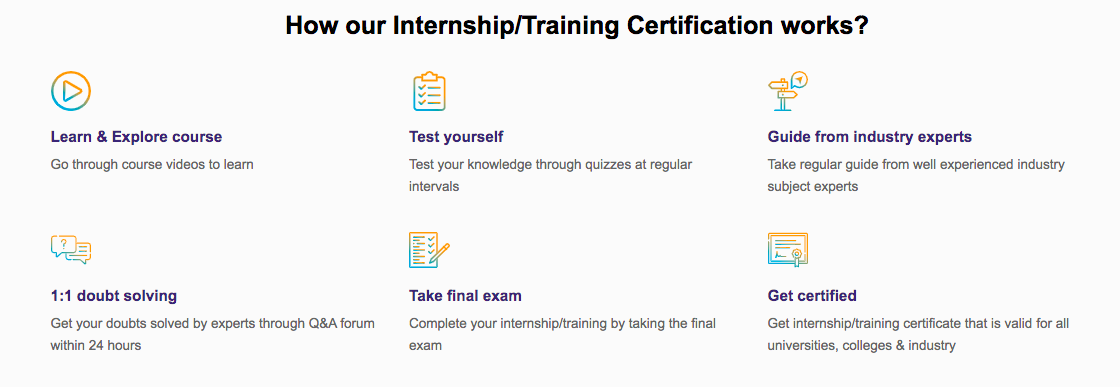
How EasyShiksha Internship/Training Program Works
The Many Reasons a Student Can Struggle
Academic difficulty rarely has one universal explanation. A student may struggle because they lack prerequisite knowledge. They may have progressed to advanced content without fully mastering foundational concepts. In such cases, the problem exists earlier in the learning journey than the current lesson.
Another learner may have sufficient theoretical knowledge but insufficient practical experience. They can recognise an answer in a quiz but cannot independently apply the concept to a project. Here, the issue is not necessarily knowledge acquisition but knowledge transfer. Some students may struggle because the learning material does not match their current level. Content that is too advanced can create cognitive overload, while content that is too basic can reduce engagement.
Learning sequence can also matter. A learner may encounter a difficult topic before developing the concepts required to understand it. A different sequence could produce a different outcome. Assessment design can create another source of difficulty. Students may understand the material but perform poorly because they are unfamiliar with a particular question structure or application format.
Motivation, confidence, time constraints, inconsistent practice, and uncertainty about career relevance can also influence learning behaviour. A sophisticated education platform therefore needs to treat struggle as a multidimensional phenomenon rather than a single metric.
The Prerequisite Problem: When the Real Gap Is Earlier
One of the most important reasons students struggle is an unnoticed prerequisite gap. Consider a student learning machine learning who struggles with model evaluation. The immediate assumption may be that the student needs more machine learning content. But perhaps the deeper problem is insufficient understanding of statistics.
Similarly, a student studying advanced accounting may struggle because foundational concepts were never fully mastered. A learner studying web development may find JavaScript difficult because the underlying programming concepts are still weak.
A Learning Intelligence system can investigate these relationships by looking at performance across connected concepts. If a learner repeatedly struggles with advanced topics while also showing weakness in prerequisite areas, the system can identify a potential foundational gap. This allows intervention to happen at the correct level.
Instead of repeatedly explaining the advanced concept, the platform can temporarily move backward, strengthen the missing foundation, and then return to the original learning pathway. This creates a more intelligent form of adaptive learning.
From Scores to Learning Patterns
A single score rarely tells the complete story. A learner scoring 40 percent on one quiz may not necessarily have a persistent problem. The student may have been distracted, unfamiliar with the assessment format, or encountering an unusually difficult topic.
However, if similar errors appear repeatedly across multiple assessments, projects, and practice activities, the evidence becomes stronger. This means intelligent platforms should focus on patterns rather than isolated events.
A Learning Intelligence Layer can potentially combine assessment results with learning progression, practice behaviour, project performance, and previous knowledge. Over time, these signals can help establish whether a difficulty is temporary or persistent. The system can also examine the direction of change.
A student who initially scores poorly but improves consistently after practice may simply be in the normal process of learning. Another student whose performance continues to decline despite additional content may require a different intervention. The important insight is that struggle should be understood as a trajectory, not merely a score.
The Role of Diagnostic Quizzes
Quizzes can become much more powerful when they are designed for diagnosis rather than simple evaluation. A conventional quiz asks whether the student knows something. A diagnostic quiz can be designed to investigate what the student knows, what they misunderstand, and which concepts may be causing difficulty.
For EasyShiksha, quizzes can therefore play a deeper role within the connected learning ecosystem. A learner's responses can contribute to a broader understanding of their current capability.
Suppose a student answers several advanced questions incorrectly but performs well on related foundational questions. The problem may be advanced application. If both foundational and advanced questions are weak, the system may need to investigate prerequisite understanding. The same quiz can therefore produce different educational actions for different students. This is an important shift from assessment as measurement toward assessment as intelligence.
Understanding the Difference Between Knowledge Gaps and Skill Gaps
Another important distinction is between knowledge gaps and skill gaps. A knowledge gap means the learner may not understand a concept or principle. A skill gap means the learner may understand the concept but cannot apply it effectively. This difference matters because the appropriate intervention is different. A knowledge gap may require explanation, examples, revision, or additional instructional content. A skill gap may require practice, projects, simulations, or repeated application.
For example, a learner may know the principles of digital marketing but struggle to create an actual campaign. The learner does not necessarily need another theoretical lecture. They may need a realistic project in which they plan, execute, analyse, and improve a campaign.
An intelligent platform should therefore ask not only, “What does the student not know?” but also, “What can the student not yet do?” This supports the transition from knowledge-centric education toward capability-centric education.
Learning Difficulty Versus Engagement Difficulty
Student struggle can also emerge from engagement patterns. A learner may understand the material but fail to progress because the learning experience is too long, repetitive, or disconnected from their goals. Another student may stop participating because the content appears unrelated to their intended career.
This creates an important distinction between inability and disengagement. If a platform interprets every instance of low activity as low academic ability, it risks making incorrect assumptions. A student who leaves a course may not be struggling with the subject. They may simply need a different learning format or a clearer connection between the subject and their career goals.
EasyShiksha's combination of courses, quizzes, games, projects, internships, and career guidance creates an opportunity to address this problem through multiple learning experiences. A student who disengages from long-form content might respond better to shorter practice activities or interactive experiences. A learner who needs stronger career relevance might benefit from seeing how the skill connects with projects or internships. The platform can therefore investigate engagement rather than merely measuring it.
Could AI Understand Learning Friction?
Artificial intelligence introduces the possibility of analysing complex patterns across learning activity.
AI can potentially compare performance across multiple topics, identify recurring mistakes, detect unusual changes in behaviour, and connect those patterns with the learner's previous history.
This could help identify what might be called learning friction.
Learning friction occurs when something in the learning journey repeatedly prevents progress. It could be a missing prerequisite, confusing material, inadequate practice, an unsuitable pace, poor sequencing, or a mismatch between the learner's current capability and the task.
An AI system could potentially detect where friction occurs and investigate possible causes.
However, AI should not present these conclusions as unquestionable facts. Educational behaviour is complex, and algorithmic interpretation can be wrong.
A responsible system should communicate uncertainty. Instead of saying, “You are struggling because you lack mathematical ability,” it could say, “Your recent performance suggests that statistical foundations may be affecting your progress. Would you like to try a short diagnostic assessment?”
This is a much safer and more supportive approach.
The Importance of Asking Students
One of the most overlooked aspects of intelligent education is that students themselves can provide information that data cannot reveal.
A platform may detect that a learner is struggling, but the learner may know why.
Perhaps the student is balancing studies with work. Perhaps the content is understandable but the examples feel irrelevant. Perhaps the student is confused about where to start a project. Perhaps they understand the topic but lack confidence.
An intelligent platform should therefore not attempt to infer everything silently.
It can use data to ask better questions.
For example, when a student repeatedly struggles with a topic, the system could offer a short diagnostic interaction asking whether the difficulty comes from understanding the concept, applying it, remembering previous material, or finding enough time to practise.
This creates a partnership between machine intelligence and learner self-awareness.
The platform becomes more intelligent not by assuming more, but by asking better questions at the right time.
Learning Intelligence as a Continuous Diagnostic System
The future of learning may involve continuous diagnosis rather than occasional testing.
Traditional education often assesses students at predefined checkpoints. A final examination determines whether a learner has achieved sufficient understanding.
Digital education can operate differently.
Every meaningful interaction can contribute to an evolving picture of learning. Quizzes, practice activities, project work, course progression, and internship experiences can continuously update the learner's profile.
This creates the possibility of a continuous diagnostic system.
Instead of waiting until the end of a course to discover that a student is struggling, the platform can identify emerging difficulty earlier and intervene before the problem becomes larger.
Early intervention is particularly valuable because learning gaps often compound over time. A small misunderstanding in one topic can become a major barrier when later concepts depend on it.
Another advantage of a connected learning platform is the ability to detect patterns across different courses.
A student may appear to struggle separately in programming, data analysis, and machine learning. If each course operates independently, these difficulties may be treated as unrelated.
A connected Learning Intelligence Layer can look for shared underlying capabilities.
Perhaps the learner repeatedly struggles with mathematical reasoning. Perhaps problem decomposition is consistently weak. Perhaps the learner understands concepts but has difficulty applying them to unfamiliar situations.
Identifying cross-course patterns can lead to more effective interventions.
Instead of recommending three separate courses, the platform may recognise a common underlying capability that needs development.
This is one of the strongest arguments for connected education ecosystems. The learner becomes the central unit of understanding rather than the individual course.
Projects as Diagnostic Evidence
Projects can reveal aspects of learning that quizzes cannot.
A learner may perform well in multiple-choice assessments but struggle when asked to create something independently. This can indicate that the student has acquired declarative knowledge but needs stronger application skills.
Projects also reveal how learners approach ambiguity.
Real-world tasks rarely provide perfectly structured questions with clearly defined answers. Students must interpret requirements, select tools, make decisions, solve problems, and evaluate results.
When project performance is incorporated into learning intelligence, platforms can develop a richer understanding of capability.
For EasyShiksha, project-backed learning can therefore become an important bridge between educational analytics and career readiness.
Internships as Real-World Learning Signals
Internships provide another layer of evidence because they place students in more realistic environments.
A student may perform well in structured learning but encounter challenges when dealing with workplace expectations. This does not necessarily mean the learner has failed. It may identify new areas for development.
An intelligent learning ecosystem can treat internship experience as another learning signal.
The skills used during an internship, the types of tasks completed, and the areas in which the student required support can inform future learning recommendations.
This creates a powerful feedback loop between education and experience.
Instead of education ending before the internship begins, the internship becomes part of the educational intelligence system.
Career Goals Can Explain Learning Behaviour
Students often behave differently depending on whether they understand why they are learning something.
A learner who sees a clear connection between a course and a career goal may be more motivated to practise. Another learner may disengage because the purpose of the material is unclear.
Career context can therefore help explain learning behaviour.
If a student repeatedly skips theoretical modules but actively participates in career-oriented projects, the system should not immediately classify the learner as disengaged. It may indicate a preference for applied learning.
Similarly, a student changing career goals may suddenly abandon a course that was previously important. This may represent a legitimate career pivot rather than academic failure.
Connecting learning intelligence with career guidance allows the platform to interpret behaviour in a broader context.
Personalised Intervention Instead of Generic Remediation
Traditional remediation often means giving struggling students more of the same material.
If a student fails a test, they may receive another set of lessons. If they struggle with a subject, they may be told to study more.
But more content is not always the solution.
If the problem is a missing prerequisite, the learner needs foundational support. If the issue is application, they need practice. If the problem is engagement, they may need a different learning experience. If the problem is uncertainty, they may need mentoring or career context.
Intelligent platforms can therefore move toward personalised intervention.
The intervention should match the diagnosis.
This principle is central to meaningful adaptive education.
EasyShiksha and the Move Beyond Learning Analytics
EasyShiksha can be positioned within this broader transition from activity tracking toward intelligent learning support.
Its combination of online courses, quizzes, internships, certificates, projects, games, career guidance, university opportunities, and job-oriented experiences creates multiple sources of educational evidence.
The opportunity lies in connecting these signals.
A quiz can reveal a conceptual gap. A course can provide structured learning. A project can test application. An internship can provide workplace experience. Career guidance can provide context. A certificate can document completion and achievement.
When these experiences are connected, the platform can begin to understand the learner as a whole rather than evaluating isolated activities.
This is where a Learning Intelligence Layer becomes valuable.
It can function as the connective intelligence between the different parts of the EasyShiksha ecosystem, helping determine what a learner may need next and why.
The Student as More Than a Performance Score
One of the most important principles for future learning systems is that students should never be reduced to scores.
A student is not a 62 percent learner or a 78 percent learner. Performance changes across subjects, contexts, time, and experiences.
A student may struggle today and succeed tomorrow. A learner may perform poorly in theory but excel in practical work. Someone may require additional support in one subject while demonstrating exceptional capability in another.
Learning intelligence should therefore describe development rather than permanently classify students.
The system should be designed around growth.
This means tracking improvement, recognising effort, identifying emerging strengths, and understanding challenges within context.
Such an approach can make educational technology more supportive and less judgmental.
Explainable AI and Trust in Educational Decisions
If AI begins influencing educational decisions, explainability becomes essential.
Students should understand why a particular recommendation was generated. If a system recommends prerequisite learning, it should ideally provide a meaningful explanation. If it suggests a project, the learner should understand how that project connects with their skills or goals.
Explainability creates trust.
It also gives students an opportunity to correct the system.
A learner might respond, “I already understand this concept; I am struggling with application instead.” Such feedback can improve the system's understanding and give the student greater control over the learning process.
The best intelligent learning systems will therefore not simply make decisions. They will make educational reasoning more visible.
Privacy and the Ethics of Understanding Student Struggle
Understanding why a student is struggling requires more data and deeper interpretation, which creates ethical challenges.
A platform must be careful about collecting sensitive behavioural information. It should avoid creating permanent labels or making high-impact decisions based solely on automated predictions.
There is also a danger of overinterpreting student behaviour.
A learner's inactivity may have many explanations. A sudden drop in performance may be temporary. An unusual learning pattern does not automatically indicate a problem.
Therefore, educational intelligence should be probabilistic, transparent, and supportive.
Students should have meaningful control over their learning data, and human educators should remain involved when decisions have significant consequences.
The goal should be to help students understand themselves better, not to create an invisible system that judges them.
Empower your team. Lead the industry
Get a subscription to a library of online courses and digital learning tools for your organization with
EasyShiksha
The Future of Learning Platforms: From Analytics to Educational Reasoning
The evolution of digital education can be understood as a progression.
First, platforms digitised educational content. Then they began tracking activity. Learning analytics introduced dashboards, performance monitoring, and data-driven insights. The next stage may involve educational reasoning.
Educational reasoning means connecting evidence with possible explanations and appropriate actions.
A future learning platform could potentially recognise that a student is struggling, investigate whether the issue is conceptual, practical, motivational, sequential, or contextual, ask the learner for confirmation, and then recommend a targeted intervention.
The process could continue after the intervention. The platform could measure whether the student improved and update its understanding accordingly.
This creates a continuous cycle of detection, investigation, intervention, evaluation, and adaptation.
Such a system would move significantly beyond passive analytics.
Conclusion: The Future Is Not Just Knowing Who Is Struggling
The most important question in digital education is no longer simply whether technology can identify struggling students. Modern learning platforms are already increasingly capable of detecting changes in performance and engagement.
The deeper question is whether technology can responsibly help understand why those struggles are happening.
That requires moving beyond isolated scores and activity metrics. It requires connecting quizzes with courses, projects with skills, internships with experience, career goals with learning behaviour, and current performance with previous learning.
It requires understanding that a learning gap can be conceptual, practical, motivational, sequential, contextual, or temporary. It requires asking students rather than assuming everything from data. It requires AI that can identify patterns while remaining transparent about uncertainty.
For EasyShiksha, this approach can strengthen the idea of a connected learning journey. Courses can provide knowledge, quizzes can provide diagnostic signals, projects can provide evidence of application, internships can provide real-world experience, certificates can document achievements, games can support engagement, and career guidance can provide direction. A Learning Intelligence Layer can connect these experiences and help transform them into meaningful educational decisions.
The ultimate goal is not to build a system that knows everything about a student. It is to build a system that helps students and educators understand learning better.
The future of education may therefore move from asking, “Did the student complete the course?” to asking, “What happened during the learning journey, what does it mean, and what should happen next?”
That is the real promise of moving beyond learning analytics: not simply measuring student struggle, but creating an intelligent educational environment capable of responding to it with greater precision, context, and humanity.
Anshika Jain is an Engineer, Developer, and Educational Content Author known for her dedication to technology and knowledge sharing. With a strong analytical mindset and a passion for innovation, she has consistently contributed to creating meaningful digital solutions and insightful educational articles.
Her ability to simplify complex technical concepts into engaging and easy-to-understand content makes her work valuable for students and learners across various platforms. Along with her technical expertise, Anshika is admired for her creativity, professionalism, and commitment to continuous learning.
She represents a perfect blend of technical excellence and impactful communication, inspiring others through both her development work and educational contributions.