Examinations have traditionally been one of the most important ways to evaluate student learning. Schools, colleges, universities and online education platforms use tests to determine whether learners understand academic concepts, remember important information and can apply what they have studied. Examination scores influence academic progression, qualifications, admissions and, in many cases, employment opportunities. However, an important question deserves greater attention: do assessments genuinely measure what students know, or do they sometimes measure how familiar students have become with the patterns used to examine them?
A student may achieve excellent marks by recognising frequently repeated questions, memorising expected answers and practising familiar formats. Another learner may understand the underlying concepts but perform less effectively because an examination uses unfamiliar wording, strict time limits or a format that does not reflect how the student can demonstrate their knowledge. In both situations, the final score may provide an incomplete picture of actual capability.
This creates what can be described as an Assessment Validity Crisis. The problem is not that examinations have no value. It is that educational systems may place too much confidence in assessment results without examining whether the tests accurately measure the intended learning outcomes. When students become skilled at predicting question patterns but are not equally capable of applying knowledge independently, assessment can gradually become a measure of examination familiarity rather than meaningful understanding.
The issue becomes even more significant in digital education, where students have access to previous question papers, online answer banks, automated summaries, AI-generated explanations and repeated practice tests. These resources can support learning, but they can also encourage preparation focused primarily on recognising likely questions and reproducing expected responses.
For EasyShiksha, which connects online courses, quizzes, internships, projects, certificates, university programmes, games and career guidance, this challenge presents an opportunity to rethink how learning achievement is evaluated. A stronger assessment approach could examine whether students can explain concepts, solve unfamiliar problems, transfer knowledge into practical situations and demonstrate independent capability.
The future of educational assessment should not be defined only by how accurately students reproduce what they have practised. It should also measure how effectively they can use what they have learned when the questions, conditions and situations change.
Understanding Assessment Validity
Assessment validity refers to the extent to which the evidence and interpretations produced by an assessment support the conclusions being made about a learner's knowledge or ability. In simple terms, if an examination is intended to measure conceptual understanding, its results should provide meaningful evidence that students actually understand the concepts being tested.
Validity is not determined simply by whether a test contains correct questions or produces consistent scores. An examination can be carefully organised, accurately marked and consistently administered while still measuring a narrower ability than the one it claims to evaluate.
For example, a programming assessment may ask students to reproduce code structures that have appeared repeatedly in practice exercises. The answers may be marked accurately, but the assessment may provide limited evidence about whether students can design a solution independently. If the intended learning outcome is independent programming ability, the examination must include opportunities to demonstrate that capability.
Similarly, a language assessment based heavily on memorised grammar exercises may not establish whether students can communicate effectively in unfamiliar situations. A business examination focused entirely on definitions may not reveal whether learners can analyse decisions or respond to practical challenges.
Assessment validity therefore depends on the relationship between the learning objective, the assessment design and the conclusions drawn from the results. When these elements do not align, high scores can create a misleading impression of student capability.
How Examination Familiarity Can Replace Genuine Understanding
Students naturally become familiar with the formats through which they are assessed. They learn how questions are worded, which topics are frequently repeated, how marks are distributed and what type of answer is expected. This familiarity can make examinations less intimidating and help learners organise their preparation.
However, a problem emerges when familiarity with the assessment pattern becomes the primary route to achieving high scores. Students may begin focusing on likely questions rather than developing a connected understanding of the subject. They may memorise answer structures, practise predictable problem types and learn to identify keywords that suggest which formula or explanation should be used.
Consider a student preparing for a statistics examination. The learner may practise several questions involving averages, percentages and probability. If the examination repeats similar formats, the student may achieve a high score by recognising the question type and following a familiar procedure. Yet when presented with an unfamiliar dataset or a real-world situation, the same student may struggle to decide which statistical method is appropriate.
The student has developed examination competence, but the assessment may not have established whether the underlying statistical understanding is transferable.
This distinction matters because academic learning is expected to prepare students for more than the next examination. Knowledge should remain useful when students encounter unfamiliar problems, new information and practical responsibilities.
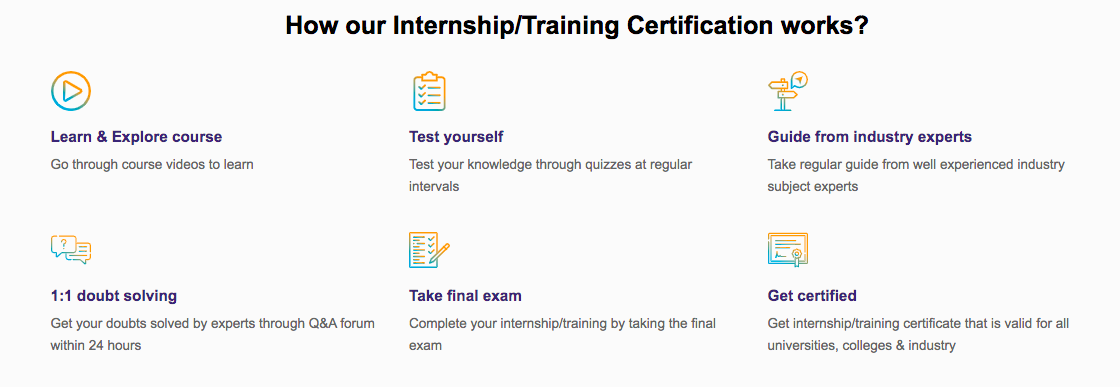
How EasyShiksha Internship/Training Program Works
The Difference Between Knowledge, Recognition and Reproduction
A major challenge in assessment design is that knowledge can be demonstrated in different ways. Recognising a correct answer, reproducing a memorised explanation and independently applying a concept are related abilities, but they are not interchangeable.
Recognition occurs when a learner identifies familiar information. A multiple-choice question may allow students to recognise the correct definition among several options. This is useful for checking certain forms of knowledge, but it does not necessarily demonstrate that the student can explain the concept independently.
Reproduction involves recalling information or repeating a method that has been practised. A student may write a textbook definition, reproduce a formula or follow a demonstrated sequence of steps. This can demonstrate memory and procedural familiarity, but it may not reveal whether the learner understands the reasoning behind the information.
Independent application requires a deeper level of understanding. Students must identify which concept is relevant, interpret the conditions of the problem and decide how to use their knowledge. They may need to explain their reasoning, compare possible solutions or modify an existing approach.
A strong assessment system should recognise the importance of all these abilities while ensuring that its final conclusions match the evidence available. A test designed to measure recall should not be interpreted as complete proof of independent problem-solving capability.
For EasyShiksha, this distinction could guide the design of quizzes and course assessments. Knowledge checks can evaluate recognition and recall, while application-based questions, projects and practical tasks can provide additional evidence of deeper understanding.
The Examination Pattern Familiarity Trap
The examination pattern familiarity trap develops when students become increasingly successful at navigating a particular assessment format without achieving equivalent improvement in the underlying subject knowledge.
This can happen when previous examination papers are repeatedly reused, question structures remain predictable or coaching materials focus heavily on expected questions. Students may discover that learning the most frequently tested topics is sufficient to obtain acceptable marks. Over time, their preparation becomes increasingly aligned with the examination structure rather than the complete learning objectives.
The trap can also affect educators and institutions. When examination results become the most visible measure of teaching effectiveness, there may be pressure to prepare students specifically for the assessment. Lessons can gradually become organised around likely questions, model answers and marking schemes.
This creates a circular system. Students prepare for predictable assessments, assessments reward familiar responses and institutions interpret the resulting scores as evidence of educational success.
The difficulty is that the system may continue producing positive results even when its ability to measure deeper understanding has weakened. Students become better at performing within the assessment environment, but their performance outside that environment may remain uncertain.
The solution is not to eliminate examination preparation. Familiarity with question formats can improve confidence and reduce unnecessary anxiety. The challenge is to prevent examination preparation from becoming a substitute for learning.
Why Repeated Question Patterns Can Distort Assessment Results
Repeated question patterns can influence student performance because learners become increasingly familiar with the structure and language of expected questions. They may learn which keywords are associated with particular answers and which steps are likely to receive marks.
This familiarity is not always harmful. Repeated practice can strengthen memory, improve fluency and help students develop reliable procedures. In mathematics, programming and technical subjects, practising standard problem types is often necessary.
However, repeated patterns become problematic when the assessment relies too heavily on them. If students can achieve high scores by memorising the relationship between a question format and an expected response, the examination may provide limited information about their ability to reason independently.
For example, a student may learn that a question beginning with a particular phrase requires a specific formula. The learner may apply the formula correctly whenever that phrase appears but struggle when the same mathematical relationship is presented through a different scenario.
A valid assessment should therefore include a balance between familiar practice and unfamiliar applications. Students need opportunities to demonstrate that they can identify the underlying concept even when the surface structure of a question changes.
The Role of Memorisation in the Validity Crisis
Memorisation is often criticised when discussing examination-focused education, but it is important to recognise that memory is an essential part of learning. Students need to remember terminology, mathematical relationships, scientific principles, historical information and procedural knowledge. Without a reliable knowledge base, advanced reasoning becomes difficult.
The problem is not memorisation itself. It is the assumption that memorised information automatically represents complete understanding.
A student may remember the definition of artificial intelligence without understanding how machine learning systems are trained. A learner may memorise financial ratios without knowing when different ratios are useful. Another student may remember the stages of a scientific process but struggle to design an investigation using those principles.
A valid assessment should distinguish between the ability to recall information and the ability to use it. Depending on the subject and learning objective, both may be necessary, but they should not be treated as identical achievements.
EasyShiksha courses could potentially support this distinction by combining knowledge checks with activities that require students to explain, compare and apply what they have learned. The goal would be to make memorisation a foundation for deeper learning rather than the final measure of success.
AI and the New Challenge of Assessment Validity
Generative AI has introduced another dimension to the assessment validity crisis. Students can now obtain explanations, summaries, sample answers, code and solutions quickly. These tools can support revision and improve access to information, but they also make it easier to produce responses that appear knowledgeable without demonstrating independent understanding.
A student may submit a well-structured explanation generated with AI assistance but struggle to explain the same concept during a discussion. Another learner may use an AI tool to complete a programming assignment without being able to modify the code or identify errors.
This does not mean that every use of AI represents academic dishonesty. AI can be a legitimate learning assistant when students use it to clarify concepts, explore examples or receive feedback. The assessment challenge is to understand what the learner can do independently and what was produced with external assistance.
Assessment design therefore needs to evolve. Instead of relying entirely on a final written response, educators could examine how students approach a task, ask them to explain important decisions, introduce a small change to the problem or request that they apply the same concept in a different context.
For EasyShiksha, AI-aware assessments could focus on the quality of student reasoning and application rather than attempting to identify AI use through unreliable detection alone. The important question is whether the learner has developed the intended capability.
Measuring Understanding Through Unfamiliar Questions
One effective way to investigate whether students understand a concept is to present it in a new context. An unfamiliar question changes the surface details while preserving the underlying academic principle.
For example, a student who learns percentages through shopping discounts could be asked to apply the same reasoning to salary changes or population growth. A learner who studies database relationships through a library example could be asked to design relationships for an unfamiliar business application.
The objective is to determine whether the learner can recognise the concept beneath the changed context. If students perform well only when questions resemble their practice exercises, their knowledge may be strongly connected to familiar examples rather than transferable understanding.
Unfamiliar questions should not be designed to confuse students through obscure language or irrelevant information. They should preserve the learning objective while requiring the learner to interpret a different situation.
This approach can also reveal whether students understand the conditions under which a concept applies. A student may know a mathematical rule but fail to recognise when its assumptions are not satisfied. Another learner may understand a scientific principle in a textbook example but struggle when one experimental condition changes.
For EasyShiksha, contextual variation could become an important feature of quiz design. Students could encounter different versions of a question that assess the same concept without repeating the same wording or scenario.
The Importance of Transfer-Based Assessment
Transfer-based assessment examines whether students can apply knowledge in situations different from those in which they originally learned it. It is an important way to distinguish deep understanding from familiarity with classroom examples.
Near transfer involves applying knowledge to a situation that is similar to the original learning context but contains some changes. Far transfer involves using knowledge in a substantially different context, where students must recognise the relevant principle without obvious clues.
Both forms can provide useful evidence, depending on the learning objective. A beginner learning spreadsheet formulas may first need to apply them to a different spreadsheet problem. An advanced learner may be expected to use analytical reasoning to interpret information from an unfamiliar business scenario.
Transfer-based assessment is particularly relevant to career-oriented education. Professional tasks rarely reproduce textbook questions exactly. Employees must interpret requirements, adapt methods and combine knowledge from different subjects.
A student who completes a digital marketing course, for example, should eventually be able to analyse a campaign that contains unfamiliar data. A learner studying cybersecurity should be able to evaluate a new security scenario rather than simply identify definitions from a quiz.
EasyShiksha could potentially use projects and internships to provide transfer-based evidence. These activities can reveal whether academic knowledge remains useful when students encounter more realistic tasks.
How Assessment Design Can Reward the Wrong Capabilities
An assessment influences what students consider important during preparation. If examinations consistently reward memorised definitions, students may prioritise memorisation. If marks are awarded mainly for following a fixed procedure, learners may focus on reproducing that procedure. If speed is heavily rewarded, students may prioritise rapid completion over careful reasoning.
This creates a connection between assessment design and student behaviour. The capabilities that are easiest to measure may receive more attention than the capabilities that are most important for long-term learning.
For example, a business examination may reward students for reproducing established management theories. However, the intended educational outcome may also include evaluating decisions, identifying risks and adapting strategies to changing conditions. If the examination does not assess these abilities, students may receive a misleading signal about what they need to develop.
Similarly, a programming assessment that rewards only the final output may overlook whether students understand the code, can maintain it or can explain why a particular solution works.
Assessment validity therefore requires more than correct marking. It requires careful alignment between what an educational programme promises and what its examinations actually measure.
A Multi-Dimensional Assessment Validity Framework for EasyShiksha
A proposed Assessment Validity Intelligence Framework for EasyShiksha could help evaluate student capability through different forms of evidence rather than relying on a single examination result.
The first dimension would examine foundational knowledge. It would establish whether learners can recall important information, recognise concepts and understand essential terminology. This would remain an important part of assessment because advanced learning depends on a reliable knowledge base.
The second dimension would evaluate conceptual explanation. Students would be asked to explain why a principle works, identify its assumptions and distinguish it from related concepts. This would help reveal whether learners understand the relationships behind the information they remember.
The third dimension would focus on application. Students would solve problems, interpret scenarios and use knowledge in unfamiliar situations. This would provide evidence of whether their understanding extends beyond familiar question patterns.
The fourth dimension would examine transfer and independence. Learners would complete tasks that require them to adapt their knowledge, make decisions and explain their reasoning without relying entirely on guided examples.
Finally, the framework would connect academic assessment with practical evidence. Projects and internships could help establish whether students can use their knowledge in more complex environments.
These dimensions would complement one another. No single measure would be treated as a complete representation of student ability. Instead, educators could examine the consistency of evidence across different learning experiences.
AI-Powered Assessment Auditing
AI could potentially help educational platforms examine whether their own assessments are valid. Instead of using AI only to evaluate student answers, institutions could use it to review the relationship between questions, learning objectives and expected capabilities.
An assessment auditing system could examine whether a quiz contains too many questions that test the same narrow skill. It could identify whether an examination relies heavily on memorisation when the stated objective involves application. It could also flag questions that are ambiguous, overly dependent on familiar wording or insufficiently connected to the course material.
For example, if a programming course claims to develop independent problem-solving but its final assessment consists mainly of questions asking students to identify syntax definitions, the system could flag a possible mismatch between the learning objective and assessment design.
AI could also compare question variations to determine whether students are being tested on the underlying concept or simply on repeated wording. However, automated analysis should remain a support mechanism. Subject experts must review the findings because educational quality cannot be established through text patterns alone.
For EasyShiksha, assessment auditing could become part of a broader quality-improvement process. It could help ensure that quizzes and examinations provide meaningful evidence of the capabilities courses are designed to develop.
From Examination Scores to Capability Evidence
An examination score is useful, but it should not be interpreted as a complete record of what a student can do. Two students may receive the same score while having very different strengths. One may be strong in factual recall but weak in practical application, while another may demonstrate excellent reasoning but struggle with time-limited examinations.
A capability-oriented assessment approach would examine multiple forms of evidence. Course quizzes could provide information about foundational knowledge. Written explanations could reveal conceptual reasoning. Projects could demonstrate independent application, while internships could provide evidence of professional behaviour and practical performance.
This approach would create a more detailed picture of student development. It would also help students understand which capabilities they have developed and which require further attention.
For EasyShiksha, certificates could continue to recognise course completion and assessed achievements. However, they could be supported by richer evidence of learning, such as completed projects, demonstrated skills and practical experience. The value of an educational record would then extend beyond the final score.
The purpose is not to make assessment unnecessarily complicated. It is to ensure that the conclusions drawn from assessment are proportionate to the evidence collected.
The Role of Projects and Internships in Validating Knowledge
Projects and internships can help address the limitations of examination-based assessment because they require students to use knowledge in situations that are less predictable than standard tests.
A student completing a web development project must combine programming concepts, debugging, design decisions and practical problem-solving. A learner working on a marketing project may need to interpret an audience, select an appropriate strategy and evaluate campaign results. An internship may require students to communicate with colleagues, work with professional tools and respond to changing requirements.
These experiences can reveal whether students have developed the capabilities that their courses claim to teach. A learner may perform well in a written examination but struggle to complete an independent project. Another may achieve average examination marks but demonstrate strong practical judgment and problem-solving ability.
Neither result should be ignored. Each provides different information about the learner's development.
For EasyShiksha, connecting courses with projects and internships could make assessment more comprehensive. Students would not be evaluated only through their ability to answer questions but also through their ability to use knowledge to produce meaningful outcomes.
Preventing Assessment From Becoming a Game of Prediction
Students often try to understand what an examination is likely to contain. This is a normal part of preparation, and educators should not discourage students from practising previous questions or becoming familiar with examination formats.
The problem arises when prediction becomes the dominant strategy. If students can identify a limited set of likely questions and prepare standard answers without understanding the broader subject, the assessment may no longer provide reliable evidence of learning.
A stronger assessment system would use a carefully designed balance of question types and contexts. Some questions could test essential knowledge, while others could require explanation, application and reasoning. Questions could also be varied across equivalent versions to reduce dependence on memorised answer patterns.
The goal is not to make examinations unpredictable for the sake of difficulty. Excessive unpredictability can create anxiety and undermine fairness. Instead, assessments should be varied enough to test the intended capability without rewarding superficial familiarity alone.
Students should know the learning objectives and the standards by which their work will be evaluated. What should change is not the clarity of expectations, but the range of evidence required to demonstrate genuine understanding.
Fairness, Accessibility and the Risk of Misinterpreting Performance
A more comprehensive assessment system must also consider fairness. Students may perform differently because of language proficiency, disability, access to technology, time constraints or unfamiliarity with a particular assessment format. These factors can influence results without necessarily reflecting the learner's understanding of the subject.
For example, a student may understand a scientific concept but struggle to express it in a language-intensive written examination. Another learner may have strong practical skills but find a strict time limit difficult. A digital assessment may create barriers for students using older devices or unreliable internet connections.
Assessment validity therefore requires attention to the conditions under which evidence is collected. A test should measure the intended capability rather than unrelated barriers whenever possible.
Alternative ways of demonstrating knowledge may be appropriate in some situations. Written explanations, oral responses, practical demonstrations and accessible digital activities can provide different opportunities for students to show what they know.
AI-based assessment systems must also be monitored for bias. Automated scoring may favour particular writing styles or response patterns. Human review and transparent evaluation criteria remain essential.
A valid assessment should be rigorous without being unnecessarily restrictive.
Empower your team. Lead the industry
Get a subscription to a library of online courses and digital learning tools for your organization with
EasyShiksha
The Future of Assessment: From Predictable Testing to Adaptive Evidence
The future of educational assessment could move toward a more adaptive approach in which the system selects tasks based on the capability being examined and the evidence already available. Students may encounter different question variations that test the same learning objective, while practical activities provide additional opportunities to demonstrate understanding.
AI could help identify when a learner is relying heavily on familiar question patterns and recommend assessments that require deeper application. It could also detect when a particular concept is consistently misunderstood across a group and help educators review the relevant course material.
However, adaptive assessment should not become an opaque system in which students do not understand why they receive particular questions or how their performance is interpreted. Transparency, accessibility and human oversight must remain central.
For EasyShiksha, the opportunity is to connect assessment with the complete learning journey. Students could move from foundational lessons to quizzes, from quizzes to practical challenges, and from projects to internships. Each stage could contribute evidence about knowledge, understanding and capability.
This would make assessment less dependent on one examination event and more connected to the development of skills over time.
Conclusion: Measure What Students Can Understand and Do, Not Just What They Can Predict
The Assessment Validity Crisis emerges when educational systems place too much confidence in examination scores without examining what those scores actually represent. Students may become highly familiar with question formats, repeated patterns and expected answers while remaining less capable of explaining concepts, solving unfamiliar problems or applying knowledge independently.
The solution is not to eliminate examinations or memorisation. Both remain valuable parts of education. The challenge is to ensure that assessments measure the capabilities they claim to evaluate. This requires a better balance between recall, conceptual explanation, application, transfer and practical performance.
AI can help audit assessment design, generate varied questions, identify recurring misconceptions and connect evidence across different learning activities. However, educational experts must remain involved in interpreting results, ensuring fairness and deciding whether assessment methods genuinely reflect learning objectives.
For EasyShiksha, a broader assessment approach could connect online courses, quizzes, games, projects, internships, certificates and career guidance. Instead of measuring success only through course completion or examination marks, the platform could explore how reliably students retain, explain and apply what they learn.
Ultimately, an examination should not reward students merely for predicting what the question setter expects. It should provide meaningful evidence that they understand the subject and can use that knowledge beyond the examination hall.
The real purpose of assessment is not to discover who has become best at answering familiar questions. It is to understand who can think, explain, adapt and apply knowledge when the questions are no longer familiar.
Anshika Jain is an Engineer, Developer, and Educational Content Author known for her dedication to technology and knowledge sharing. With a strong analytical mindset and a passion for innovation, she has consistently contributed to creating meaningful digital solutions and insightful educational articles.
Her ability to simplify complex technical concepts into engaging and easy-to-understand content makes her work valuable for students and learners across various platforms. Along with her technical expertise, Anshika is admired for her creativity, professionalism, and commitment to continuous learning.
She represents a perfect blend of technical excellence and impactful communication, inspiring others through both her development work and educational contributions.