












program icon
Explore

Economics

Explore Economics courses and programmes on EasyShiksha. Learn about economic theory, data analysis, subjects, career opportunities and further study.

4 Programmes
3 University Partners
4.8โ˜… Avg. Rating
UGC-Recognised Degree
Industry-Aligned Curriculum
UGC-DEB Approved Online/ODL
Flexible Learning Options
Understanding Economics

What Is Economics?

Economics is a social science specialization that examines how individuals, businesses, governments, and societies make decisions about resources, production, consumption, markets, and economic activity. In higher education, it combines economic theory with analytical and quantitative approaches to understand how economies function and how economic decisions influence society.

Common areas associated with Economics include microeconomics, macroeconomics, statistics, econometrics, international economics, development economics, public economics, financial economics, and economic policy. Depending on the university and programme, students may also encounter areas such as behavioural economics, environmental economics, business economics, and applied economic analysis.

Studying Economics can help students develop analytical thinking, quantitative reasoning, research, interpretation, and problem-solving skills. These capabilities may be relevant across areas such as finance, banking, business, research, policy, development, consulting, and data analysis. Students can also pursue postgraduate education, research, or advanced specialisation. The exact curriculum, programme structure, practical components, and academic requirements vary by university and programme.

UGC Degree-Level Recognition
What You Get

A program that pairs recognition with real skills

UGC-Recognised Degree

Same institutional recognition as a conventional Bachelor's degree.

Industry-Aligned Curriculum

Built with Sector Skill Councils, not just academic departments.

Direct Employability

Hands-on skill components designed for job-readiness, not just theory.

Student Voices

What learners say

โ˜…โ˜…โ˜…โ˜…โ˜…

"I liked how the course connects statistics and programming with actual data problems. It made the concepts much easier to understand."

A
Ananya Sharma Data Science
โ˜…โ˜…โ˜…โ˜…

"The program gave me a good balance of management concepts and practical business knowledge. The structure was easy to follow."

V
Vivek Mehta Business Administration
โ˜…โ˜…โ˜…โ˜…โ˜…

"I was looking for something that would help me understand digital marketing beyond just social media. The specialization covered a lot of useful areas."

P
Priya Verma Digital Marketing
Career Opportunities

Explore career opportunities

Economist and Economic Analysis

Students with relevant Economics education may explore economic analysis roles involving the study of economic trends, markets, indicators, policies, and data. Professional responsibilities can include interpreting evidence, preparing analysis, conducting research, and supporting economic assessments. Some advanced economist or research positions may require postgraduate qualifications or specialised training.

Research and Data Analysis

Economics graduates can consider research and data-oriented career areas where statistical information and economic datasets are analysed. Work may involve identifying trends, interpreting quantitative evidence, preparing reports, and communicating findings. Additional technical or statistical skills may be useful for particular roles.

Banking and Financial Services

Knowledge of Economics can be relevant to certain roles in banking and financial services because the discipline develops an understanding of markets, economic conditions, financial concepts, and decision-making. Specific roles may require additional professional knowledge, qualifications, or experience depending on the organisation and position.

Business and Market Analysis

Economic concepts can be applied to business research, market analysis, forecasting, and assessment of economic conditions. Professionals in these areas may examine market trends, consumer behaviour, business environments, or economic information to support organisational decision-making.

Public Policy and Development

Economics can also provide a foundation for work related to public policy, development, social research, and economic assessment. Professionals may analyse policies, economic indicators, development issues, or public programmes. Certain positions, particularly specialised or senior roles, may require further education or relevant experience.

Academia and Further Study

Students interested in teaching, research, or advanced economic analysis can pursue postgraduate education and potentially research-oriented or doctoral pathways. Further specialisation may include econometrics, development economics, public economics, financial economics, or related fields.

Career opportunities are not automatic outcomes of the specialization. They depend on the student's qualification level, programme, university, analytical and technical skills, experience, additional training, specialisation, and applicable requirements for the role.


Common Questions

Frequently asked questions

What is Economics as a university specialization? +

Economics is a social science specialization focused on resources, markets, production, consumption, economic behaviour, policy, and broader economic systems. University programmes may combine theory with quantitative and analytical study.

What subjects are generally studied in Economics? +

Programmes may include microeconomics, macroeconomics, statistics, econometrics, international economics, development economics, public economics, financial economics, and economic policy. The exact subjects vary by university and programme.

What skills can students develop through Economics? +

Students may develop analytical reasoning, quantitative interpretation, research, critical thinking, data analysis, economic modelling, problem-solving, and communication skills, depending on the programme and its curriculum.

What career opportunities are available after studying Economics? +

Depending on their qualification and skills, students may explore economic analysis, research, data analysis, banking and financial services, business and market analysis, policy-related work, development, and academic pathways.

Can students pursue higher studies after Economics? +

Yes. Students with relevant qualifications may explore postgraduate study and further specialisation in areas such as Economics, econometrics, development economics, financial economics, public policy, applied economics, or related disciplines. Entry requirements depend on the university and programme.

What is Economics?

Economics is an academic discipline concerned with the study of how scarce resources are allocated and how economic decisions affect individuals, organisations, markets, and societies. It examines relationships between production, consumption, income, employment, prices, trade, investment, public policy, and economic growth.

As a university specialization, Economics can combine conceptual understanding with quantitative and evidence-based analysis. Students may learn how to interpret economic behaviour, evaluate policies, analyse markets, and understand broader economic developments. The depth and focus of study depend on the university, programme level, and specific academic structure.

Key Areas of Study

Programmes in Economics may cover microeconomics, which examines individuals, firms, markets, demand, supply, pricing, and resource allocation. Macroeconomics focuses on broader economic issues such as national income, inflation, employment, economic growth, monetary conditions, and fiscal policy.

Quantitative areas such as mathematics, statistics, and econometrics may help students analyse economic relationships and interpret data. Other commonly associated areas include international economics, development economics, public economics, financial economics, economic history, and economic policy.

Depending on the programme, students may also encounter applied areas such as business economics, behavioural economics, environmental economics, labour economics, or data-oriented economic analysis. Emerging applications may involve the use of statistical tools and computational methods for examining economic data.

Skills Developed

Economics education can help develop analytical reasoning, quantitative interpretation, critical thinking, research skills, and structured problem-solving. Students may learn to evaluate evidence, interpret datasets, understand economic indicators, compare alternative explanations, and communicate analytical findings.

Depending on the programme, learners may also develop skills in statistical analysis, economic modelling, research methodology, report writing, and presentation. These skills can be useful in academic, business, financial, policy, and research environments.

Practical and Industry Relevance

Economic knowledge can be applied to business decision-making, market research, financial analysis, public policy, development programmes, research, and analysis of economic trends. Organisations may use economic information to understand markets, assess business conditions, evaluate policies, or support planning.

The specialization can therefore connect academic study with sectors such as banking and financial services, business and consulting, government and public policy, research, development, education, and data-driven analysis.

Who Should Consider Economics?

Economics may interest students who enjoy understanding markets, business activity, finance, public policy, social issues, statistics, research, and data. It can suit learners who are comfortable developing analytical and quantitative skills and want to understand economic decisions at individual, organisational, or societal levels.

Students should review the specific curriculum, academic structure, learning approach, and requirements of individual programmes before making an academic choice.

Higher Education and Further Study

After relevant undergraduate study, students may explore postgraduate education in Economics or related fields. Depending on their academic interests, further study may focus on econometrics, development economics, financial economics, public policy, international economics, applied economics, or related quantitative and social science areas.

Students interested in academic research can also consider research-oriented postgraduate pathways and, where appropriate, doctoral study. The available progression routes depend on the qualification held, university requirements, programme structure, and individual academic goals.

Ready to apply?

Browse all programmes above and start your application in minutes.

View Economics Programmes
Whatsapp Email Support

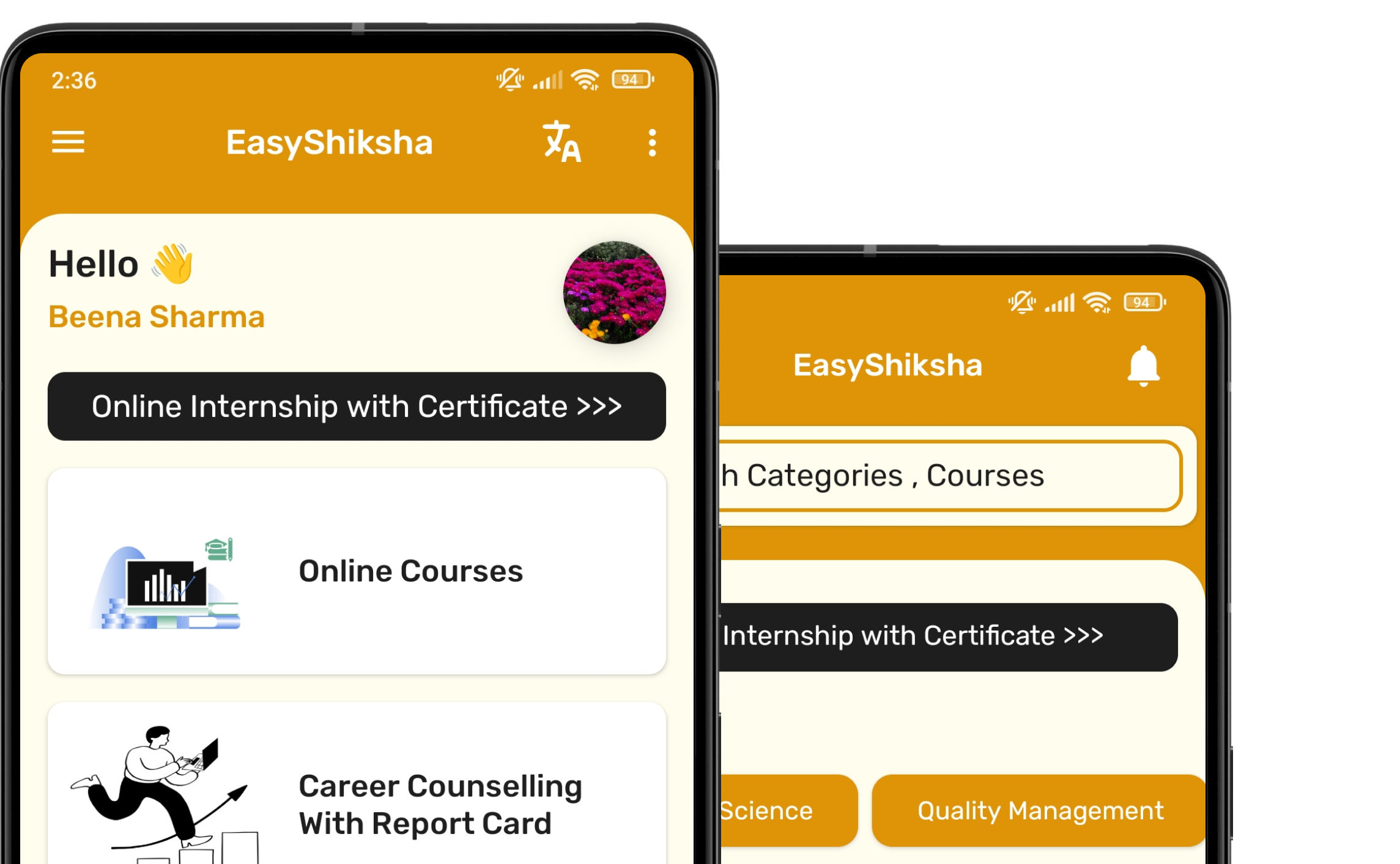
Experience the Speed: Now Available on Mobile!

Download EasyShiksha Mobile Apps from Android Play Store, Apple App Store, Amazon App Store, and Jio STB.

Curious to learn more about EasyShiksha's services or need assistance?

Our team is always here to collaborate and address all your doubts.

Message should be at least 50 characters long.