


















B.Voc (Degree) in BBA in Event Management
Program Overview
The BBA in Event Management at Mangalayatan University is a three-year undergraduate management program focused on the planning, production, promotion, execution and evaluation of different types of events. The curriculum combines core business education with specialized event-management subjects, allowing students to study areas such as Business Economics, Basic Accounting, Principles of Management, Computer Applications, Business Communication, Advertising Management, Business Finance, Marketing Theory and Practices, Management and Cost Accounting, Organisational Behaviour, Human Resource Management and Business Environment.
The specialized component of the program covers several important areas of the event industry. Students study Special Events – Wedding Planning, Event Production and Logistics, Event Planning and Catering, Special Events – Corporate Events, Marketing Communication, Legal Aspects of Event Management, Event Training and Business Development, Event Safety and Risk Management, Public Relations, Hospitality Management, Experiential Marketing, Special Events – Celebrity Management, Digital and Social Media Marketing, Special Events – Sports Events and Event Concepts and Designing. This provides exposure to social, corporate, entertainment, sports and other event formats.
The curriculum also emphasizes practical and industry-oriented learning. Students complete Project Report – I, Project Report – II, Project Report – III and Project Report – IV, followed by Minor Internship and Project Report – V and Industrial Training and Project Report – VI. Practical learning includes event production, logistics, catering, safety and risk management, event design, marketing, public relations and business development.
The program additionally develops professional capabilities through Soft Skills and Interpersonal Communication, Business Ethics and Governance, Sales and Marketing, Business Policy and Goods and Service Tax. Overall, the curriculum supports the development of management, communication, planning, budgeting, coordination, marketing, client servicing, risk-management, creative-design and business-development skills relevant to event-management environments.
Eligibility Criteria
The minimum eligibility for admission in B.Voc is 10+2 (in any stream) or equivalent or a two-year ITI Diploma after Class 10th or a three-year Polytechnic Diploma after Class 10th.
Approval Details
MHRD, Government of India and UGC
Curriculum
Semester I introduces students to fundamental business concepts, management, communication, computer applications and the basics of specialized event management. The semester carries 24 credits.
1. Business Economics
This subject introduces economic concepts and explains how economic principles support business and event-management decisions.
Key Topics:
- Nature and scope of Business Economics
- Micro and Macro Economics
- Scarcity, choice and opportunity cost
- Demand and elasticity
- Demand forecasting
- Production and cost analysis
- Market structures
- Pricing strategies
- National income
- Inflation
- Business cycles
- Economic environment of the event industry
2. Basic Accounting
Basic Accounting develops an understanding of accounting principles, transaction recording and financial-statement preparation, with applications to budgeting in event management.
Key Topics:
- Accounting concepts and principles
- Accounting cycle
- Double-entry bookkeeping
- Journal and ledger
- Trial balance
- Subsidiary books
- Trading Account
- Profit & Loss Account
- Balance Sheet
- Depreciation
- Inventory valuation
- Ratio analysis
- Cash flow and fund flow
- Accounting in event budgeting
3. Principles of Management
This course introduces management theories and functions and explains how planning, organizing, staffing, directing and controlling support event operations.
Key Topics:
- Nature and importance of management
- Management levels and functions
- Managerial roles and skills
- Evolution of management thought
- Planning
- Decision-making
- Organizing
- Delegation
- Staffing
- Leadership
- Motivation
- Coordination
- Control
- Management of event teams
4. Computer Applications
This subject develops fundamental computer and digital skills needed in business and event-management environments.
Key Topics:
- Computer fundamentals
- Hardware and software
- Operating systems
- Database concepts
- MS Access
- MS Word
- MS Excel
- MS PowerPoint
- Internet and email
- Google Workspace
- Microsoft Teams
- Zoom
- E-business
- Digital marketing basics
- Event-management software
- Budgeting and scheduling tools
5. Business Communication
Business Communication develops written, oral, non-verbal and interpersonal communication skills for business and event environments.
Key Topics:
- Communication process
- Formal and informal communication
- Communication barriers
- Business letters
- Emails and notices
- Report writing
- Resume and cover letter
- Public speaking
- Meetings and interviews
- Group discussions
- Listening and empathy
- Event proposals
- Press releases
- Crisis communication
6. Special Events: Wedding Planning
This specialized subject introduces wedding planning and covers the creative, financial, logistical and promotional aspects of wedding events.
Key Topics:
- Wedding planning industry
- Types of weddings
- Role of a wedding planner
- Client requirements
- Wedding concepts and themes
- Venue selection
- Décor and lighting
- Budgeting
- Vendor management
- Guest management
- Transportation and accommodation
- Crisis management
- Digital promotion
- Sustainable weddings
- Professional ethics
7. Project Report – I
This is identified in the curriculum as a project/practical component associated with Semester I.
Download Syllabus
Semester II builds business knowledge while introducing students to event production, logistics, catering and event-planning operations. It carries 26 credits.
1. Advertising Management
This subject introduces advertising strategy, creative communication, media planning and campaign evaluation.
Key Topics:
- Advertising concepts
- Advertising objectives
- Advertising planning
- Advertising budgets
- Target audiences
- Market segmentation
- Creative strategy
- Copywriting
- Slogans and taglines
- Media planning
- Digital and social media
- Influencer marketing
- Advertising effectiveness
- ASCI guidelines
2. Business Finance
Business Finance introduces financial-management concepts and their application to investment and business decisions.
Key Topics:
- Business finance
- Financial management
- Time value of money
- Sources of finance
- Equity and preference shares
- Debentures
- Retained earnings
- Banks and financial institutions
- Venture capital
- Crowdfunding
- Capital structure
- Cost of capital
- WACC
- Capital budgeting
- NPV and IRR
- Working capital
3. Marketing Theory and Practices
This course introduces marketing principles, market segmentation, positioning, marketing mix and contemporary marketing practices.
Key Topics:
- Marketing concepts
- Needs, wants and demand
- Marketing environment
- Segmentation
- Targeting and positioning
- Product and pricing
- Branding
- Distribution
- Promotion
- Public relations
- Direct marketing
- Digital marketing
- Integrated Marketing Communication
- Event marketing
- Experiential marketing
- Sustainable marketing
4. Management and Cost Accounting
This subject develops knowledge of cost accounting and its application to event and hospitality operations.
Key Topics:
- Cost and management accounting
- Cost concepts
- Job costing
- Contract costing
- Batch costing
- Process costing
- Service costing
- Event operating costs
- Material and labour costs
- Overheads
- Budgetary control
- Standard costing
- Variance analysis
- Marginal costing
- Break-even analysis
- Activity-Based Costing
5. Event Production and Logistics
This specialized course covers the production process from event concept through execution and post-event evaluation.
Key Topics:
- Event production
- Types of events
- Production teams
- Event planning
- Production schedules
- Resource allocation
- Budget control
- Venue selection
- Stage and seating layouts
- Lighting and sound
- Audiovisual arrangements
- Logistics and transportation
- Vendor coordination
- Inventory management
- On-site operations
- Event evaluation
6. Event Planning and Catering
This course develops knowledge of event planning, concept development, catering, service coordination and event-day operations.
Key Topics:
- Event planning process
- Event categories
- Client requirements
- Theme development
- Budgeting
- Venue selection
- Catering operations
- Menu planning
- Food safety
- Catering logistics
- Buffet and plated service
- Cocktail and live counters
- Table setting
- Vendor management
- Guest management
- Post-event evaluation
7. Project Report – II
The curriculum identifies Project Report – II as a practical component associated with Semester II.
Semester III combines organizational and human-resource knowledge with specialized corporate-event planning, marketing communication and business analysis. It carries 26 credits.
1. Organisational Behaviour
This subject examines individual and group behaviour and its relevance to teamwork and event organizations.
Key Topics:
- Organizational behaviour
- Psychology, sociology and anthropology
- Individual behaviour
- Personality
- Perception
- Learning
- Attitudes
- Emotional intelligence
- Motivation
- Leadership
- Group dynamics
- Team building
- Organizational change
- Conflict management
- Stress management
2. Human Resource Management
Human Resource Management introduces workforce planning, recruitment, training, performance management and employee relations.
Key Topics:
- HRM concepts
- HR planning
- Job analysis
- Recruitment
- Selection
- Employee induction
- Training and development
- Career planning
- Performance appraisal
- Compensation
- Incentives
- Industrial relations
- Employee welfare
- HR analytics
- Diversity management
3. Special Events: Corporate Events
This subject focuses on conferences, product launches, seminars, trade shows, award functions and other corporate events.
Key Topics:
- Corporate-event types
- Event life cycle
- Client objectives
- Event proposals
- Budgeting
- ROI measurement
- Vendor selection
- Contracts
- Venue management
- Technical setup
- Hospitality arrangements
- Risk assessment
- Sponsorship
- Media management
- Stakeholder relationships
- Event evaluation
4. Marketing Communication
Marketing Communication develops understanding of advertising, sales promotion, public relations, direct marketing and digital communication.
Key Topics:
- Marketing communication
- Integrated Marketing Communication
- Advertising
- Media planning
- Creative strategy
- Sales promotion
- Public relations
- Media relations
- Corporate communication
- Direct marketing
- Email marketing
- Social media
- SEO
- Influencer marketing
- Content marketing
- Campaign evaluation
5. Business Environment
This subject examines economic, political, legal, socio-cultural, technological and global factors affecting businesses and event management.
Key Topics:
- Business environment
- Environmental scanning
- Indian economy
- Economic indicators
- Fiscal and monetary policies
- Political and legal environment
- Business regulations
- CSR
- Technology and innovation
- Globalization
- International trade
- FDI
- Environmental sustainability
- Digital economy
- Start-up ecosystem
6. Business Statistics
Business Statistics introduces statistical techniques used for analyzing business information.
Key Topics:
- Business data
- Classification and tabulation
- Graphical presentation
- Mean, median and mode
- Measures of dispersion
- Variance and standard deviation
- Correlation
- Regression
- Time-series analysis
- Index numbers
- Probability
- Sampling
- Hypothesis testing
7. Project Report – III
Project Report – III is included as a practical component in Semester III.
Semester IV focuses strongly on professional event management through consumer behaviour, entrepreneurship, legal compliance, event training, risk management and public relations. It carries 26 credits.
1. Consumer Behaviour
This course examines the factors influencing customer decisions and their relevance to event marketing and services.
Key Topics:
- Consumer behaviour
- Consumer decision-making
- Needs and motivation
- Personality
- Perception
- Learning
- Attitudes
- Family and reference groups
- Culture and subculture
- Social media influence
- Consumer decision models
- Customer loyalty
- Online consumer behaviour
- Customer experience
- Consumer insights
2. Entrepreneurship and Small Business Management
This course develops understanding of entrepreneurship and the management and growth of small businesses.
Key Topics:
- Entrepreneurship
- Entrepreneurial characteristics
- Business opportunities
- Idea generation
- Feasibility analysis
- Start-up ecosystem
- Forms of business ownership
- Small-business operations
- Project formulation
- Business finance
- MSME
- Startup India
- Working capital
- Growth strategies
- Social entrepreneurship
3. Legal Aspects of Event Management
This specialized subject covers contracts, permissions, licenses, intellectual property and legal compliance in event operations.
Key Topics:
- Event-management law
- Indian legal system
- Event contracts
- Service agreements
- Vendor contracts
- Sponsorship agreements
- Artist agreements
- Event permissions
- Police and municipality permissions
- Fire and excise permissions
- Noise restrictions
- Insurance
- Copyright and trademarks
- Media and broadcasting rights
- Labour and environmental laws
4. Event Training and Business Development
This course focuses on professional development, event operations, client acquisition and business growth.
Key Topics:
- Event training
- Experiential learning
- On-the-job training
- Live event exposure
- Event logistics
- Vendor coordination
- Client coordination
- Teamwork and leadership
- Business development
- Proposal writing
- Event pitching
- Sales and promotion
- Client acquisition
- Sponsorship sales
- Business models
- Event-company growth
5. Event Safety and Risk Management
This subject develops understanding of safety planning, risk assessment, emergency response and security management.
Key Topics:
- Event risk management
- Physical and financial risks
- Legal and environmental risks
- Safety standards
- Crowd management
- Fire and electrical safety
- Stage safety
- Risk assessment
- Safety audits
- Venue inspection
- Emergency planning
- Evacuation
- Medical emergencies
- Crisis communication
- Event insurance
- Security management
- Sustainability
6. Public Relations
Public Relations introduces communication with media, stakeholders and audiences and explains the role of PR in event promotion.
Key Topics:
- Public Relations
- PR ethics
- PR planning
- Target audiences
- PR campaigns
- Media relations
- Press releases
- Press kits
- Press conferences
- Corporate communication
- Reputation management
- Crisis communication
- Stakeholder engagement
- Sponsorship communication
- Digital PR
7. Project Report – IV
Project Report – IV is included as a practical component in Semester IV.
Semester V introduces hospitality operations, business law, experiential marketing, celebrity management, professional communication and digital marketing. It also includes a minor internship. The semester carries 26 credits.
1. Hospitality Management
This course introduces hospitality operations and their relationship with event management.
Key Topics:
- Hospitality industry
- Hospitality-management concepts
- Lodging and food service
- Travel and recreation
- Front Office
- Guest relations
- Reservations
- Check-in and checkout
- Food and beverage
- Event catering
- Housekeeping
- Facility management
- VIP and special-guest management
- Sustainable hospitality
2. Business Law
Business Law introduces the legal framework governing business transactions and organizations.
Key Topics:
- Business law
- Indian legal system
- Contracts
- Indian Contract Act, 1872
- Sale of Goods Act, 1930
- Negotiable Instruments Act, 1881
- Partnership Act, 1932
- Companies Act, 2013
- Consumer Protection Act, 2019
- Intellectual Property Rights
- Event contracts
- Vendor management
3. Experiential Marketing
Experiential Marketing explores customer experiences, brand engagement and event-based marketing.
Key Topics:
- Experiential marketing
- Consumer engagement
- Brand experience
- Storytelling
- Brand identity
- Exhibitions
- Trade shows
- Live brand activations
- Digital engagement
- Guerrilla marketing
- AR and VR
- Target-audience analysis
- Campaign budgeting
- ROI measurement
- Experiential marketing case studies
4. Special Events: Celebrity Management
This specialized subject focuses on managing celebrities and talent for events, brand campaigns and entertainment activities.
Key Topics:
- Celebrity management
- Talent management
- Film, music and sports celebrities
- Influencers and public figures
- Celebrity branding
- Endorsements
- Brand-celebrity fit
- Celebrity events
- Backstage management
- Travel and hospitality
- Crowd management
- Security
- Celebrity contracts
- Image rights
- Risk management
- Crisis management
5. Soft Skills and Interpersonal Communication
This course develops communication, interpersonal and professional skills required in event and service environments.
Key Topics:
- Soft skills
- Personality development
- Professional etiquette
- Emotional intelligence
- Verbal and non-verbal communication
- Listening
- Feedback
- Business correspondence
- Public speaking
- Team building
- Leadership
- Conflict resolution
- Time management
- Professional image
- Cross-cultural communication
- Interview skills
6. Digital and Social Media Marketing
This course develops knowledge of digital marketing, SEO, social media, online advertising, content marketing and analytics.
Key Topics:
- Digital marketing
- Digital marketing channels
- Website planning
- User experience
- SEO
- Keywords and meta tags
- Social media platforms
- Audience engagement
- Social media advertising
- Google Ads
- PPC
- Content marketing
- Email marketing
- Influencer marketing
- Web analytics
- Digital strategy
- Cyber laws
- AI in marketing
- AR/VR in events
7. Minor Internship and Project Report – V
The curriculum includes Minor Internship and Project Report – V (Practical) in Semester V, providing an industry-oriented practical component alongside the academic subjects.
Semester VI is the final semester and focuses on specialized sports-event management, event concepts and designing, strategic business management, taxation, ethics, sales and marketing. It also includes industrial training and a project report. The semester carries 26 credits.
1. Special Events: Sports Events
This subject focuses on planning, marketing, operating and evaluating sports events.
Key Topics:
- Sports-event management
- Local, national and international sports events
- Sports-industry stakeholders
- Feasibility studies
- Sports-event budgeting
- Venue and facility management
- Scheduling
- Team coordination
- Sports marketing
- Sponsorship
- Brand activation
- Ticketing
- Merchandising
- Media rights
- Crowd management
- Safety and security
- Event evaluation
2. Event Concepts and Designing
This course develops creative and technical understanding of event concepts, themes, décor, layouts and production design.
Key Topics:
- Event concept development
- Theme and purpose
- Audience analysis
- Creative event planning
- Storytelling
- Event design principles
- Colour theory
- Lighting
- Spatial arrangement
- Stage and set design
- Multimedia
- Décor
- Branding and visual identity
- Floor planning
- Production design
- Mood boards
- Client presentations
3. Business Policy
Business Policy introduces strategic management and policy formulation for organizations and service industries.
Key Topics:
- Business policy
- Strategic management
- Business environment
- SWOT analysis
- Vision and mission
- Core competencies
- Competitive advantage
- Corporate governance
- Business-level strategy
- Corporate-level strategy
- Porter's Five Forces
- Growth and diversification
- Strategy implementation
- Change management
- Strategic evaluation
- KPIs and benchmarking
4. Goods and Service Tax
This subject introduces GST and its application to business transactions, including event-management businesses.
Key Topics:
- GST concepts
- Indirect taxation
- CGST
- SGST
- IGST
- UTGST
- Supply under GST
- Place and time of supply
- GST registration
- Input Tax Credit
- Reverse charge mechanism
- Tax invoices
- GST returns
- Tax payments
- Refunds
- GST administration
- GST implications for event-management businesses
5. Business Ethics and Governance
This course develops an understanding of ethical decision-making, corporate responsibility and governance.
Key Topics:
- Business ethics
- Values and integrity
- Ethical theories
- Ethical decision-making
- Corporate Social Responsibility
- Triple Bottom Line
- Ethics in marketing and HR
- Corporate governance
- Board and stakeholder roles
- SEBI guidelines
- Risk management
- Internal controls
- Transparency
- Whistleblower mechanisms
- ESG reporting
6. Sales and Marketing
Sales and Marketing introduces sales management, marketing strategy, customer relationships, promotion and emerging digital sales practices.
Key Topics:
- Sales and marketing concepts
- Marketing environment
- Buyer behaviour
- STP
- Marketing mix
- Event marketing
- Experiential marketing
- Marketing planning
- Personal selling
- Sales organization
- Sales forecasting
- CRM
- Customer loyalty
- Integrated Marketing Communication
- Event sponsorship
- Sales analytics
- E-commerce
- Influencer marketing
- AI in sales
- Omnichannel marketing
7. Industrial Training and Project Report – VI
The final semester includes Industrial Training and Project Report – VI (Practical), providing an extended practical and project-oriented component at the end of the program.
Fee Structure
Admission Process
Students can apply for the BBA in Event Management programme through EasyShiksha. The complete application process is designed to make admission simple and convenient for eligible students.
Step 1: Click on Apply Now
Click the Apply Now button on the BBA in Event Management programme page and begin your application through EasyShiksha.
Step 2: Complete Personal Information
Fill in the required personal, contact and academic details accurately in the application form.
Step 3: Upload Required Documents
Upload the required documents for eligibility and admission verification as specified during the application process.
Step 4: Pay Application Fee
Pay the applicable application fee through the available online payment options to submit your application and initiate the admission process.
Step 5: Application Review
The EasyShiksha team reviews your application and submitted documents to verify your eligibility and ensure that the required information and documents have been provided.
Step 6: University Enrollment
Once the application is successfully reviewed and the student is found eligible, EasyShiksha facilitates the enrollment process with Mangalyatan University.
Step 7: LMS Access
After successful enrollment, the student is provided access to the Learning Management System (LMS) to begin their academic journey and access the available learning resources.
Start Your Application
Ready to begin your journey in Software Development? Click Apply Now to submit your application through EasyShiksha.
Career & Placements
The BBA in Event Management curriculum combines event planning and production with business management, marketing, public relations, hospitality, digital media, safety, legal compliance and entrepreneurship. Based on these areas, graduates can explore opportunities in different segments of the event and service industries.
Event Planning and Production
- Event Planner – Plan and coordinate events according to client requirements, budgets and timelines.
- Event Coordinator – Support the execution and coordination of event activities.
- Event Production Executive – Work with production schedules, technical requirements and event-day operations.
- Event Operations Executive – Assist with on-site coordination, teams, vendors and event logistics.
- Event Logistics Executive – Coordinate transportation, equipment, inventory and event-site logistics.
- Event Project Executive – Support planning, execution, documentation and evaluation of events.
Wedding and Social Events
- Wedding Planner – Coordinate wedding concepts, vendors, venues, budgets and guest arrangements.
- Wedding Event Coordinator – Assist with schedules, décor, hospitality and on-site coordination.
- Social Event Executive – Support planning and execution of social and cultural events.
- Wedding Vendor Coordinator – Coordinate with caterers, decorators, photographers and entertainment providers.
Corporate Events
- Corporate Event Executive – Assist with conferences, seminars, product launches, trade shows and corporate functions.
- Conference Coordinator – Support planning, venue arrangements, guest coordination and event execution.
- Corporate Event Planner – Work with corporate clients on proposals, budgets, vendors and event delivery.
- Sponsorship Executive – Support sponsorship proposals, partnerships and stakeholder relationships.
Sports Events
- Sports Event Coordinator – Support planning and execution of sports events.
- Sports Event Operations Executive – Work with venue, logistics, scheduling and event-day operations.
- Sports Marketing Executive – Support sports-event promotion, sponsorship and audience engagement.
- Sports Sponsorship Executive – Work with sponsorship proposals, partnerships and brand activations.
Celebrity and Entertainment Events
- Celebrity Event Coordinator – Assist with celebrity appearances, concerts, launches and award events.
- Talent Management Executive – Support coordination with artists, celebrities and talent representatives.
- Celebrity Event Operations Executive – Work with backstage, travel, hospitality and security arrangements.
- Entertainment Event Executive – Support event planning and production for entertainment-oriented events.
Event Marketing and Digital Media
- Event Marketing Executive – Develop and coordinate marketing activities for events.
- Digital Marketing Executive – Apply SEO, social media, content and online advertising concepts.
- Social Media Executive – Manage event-related social media content and audience engagement.
- Experiential Marketing Executive – Support brand activations, exhibitions and experience-based campaigns.
- Public Relations Executive – Work with media communication, press releases, PR campaigns and stakeholder relations.
Hospitality and Guest Services
- Hospitality Executive – Support hospitality services associated with events.
- Guest Relations Executive – Manage guest communication and service requirements.
- Event Hospitality Coordinator – Coordinate catering, accommodation and hospitality arrangements.
- VIP Guest Relations Executive – Support the management of VIPs, artists and special guests.
Event Safety and Risk Management
- Event Safety Executive – Support safety planning and compliance activities.
- Event Risk Management Executive – Assist with risk identification, assessment and mitigation.
- Event Security Coordinator – Support security planning, crowd management and surveillance arrangements.
- Emergency Operations Coordinator – Assist with emergency-response planning and event crisis procedures.
Event Design and Creative Services
- Event Design Executive – Develop event concepts, themes and visual designs.
- Event Décor Coordinator – Coordinate décor, floral arrangements, furniture, lighting and ambience.
- Event Production Designer – Support stage, set, spatial and production design.
- Creative Event Coordinator – Work on event concepts, storytelling and creative execution.
Business Development and Entrepreneurship
The curriculum includes Entrepreneurship and Small Business Management and Event Training and Business Development, including proposal writing, client acquisition, sponsorship sales, business models and growth strategies. Students can therefore also explore entrepreneurship and business-development opportunities within event-management and related service activities.
Mangalayatan University, Aligarh
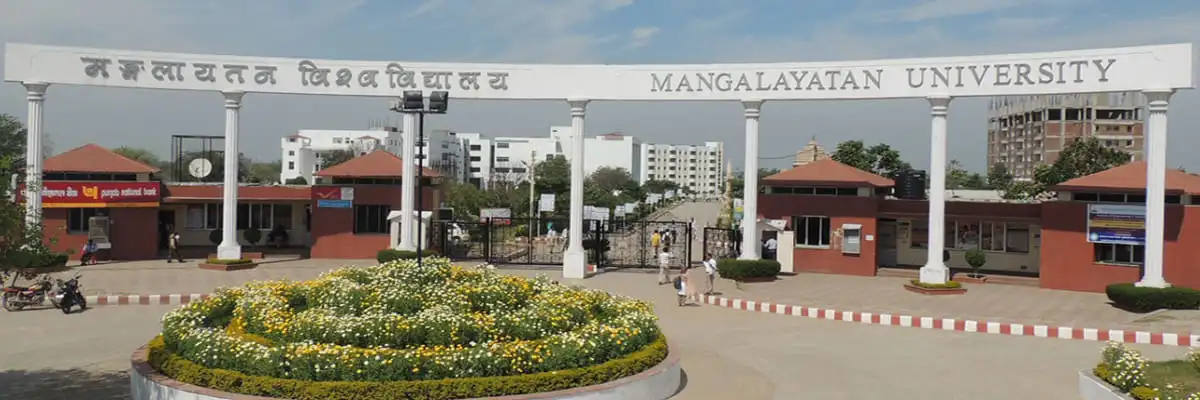
Mangalayatan University is a UGC-recognized private university located in Aligarh, Uttar Pradesh, India. Known for its strong industry connections, cutting-edge curriculum, and commitment to technology-driven education, Mangalayatan University has established itself as one of central India's premier higher education institutions.
The university's vision is to foster academic excellence, industry readiness, and global competitiveness among its graduates — making it an ideal partner for EasyShiksha's mission of accessible, quality online education.
EasyShiksha has signed an MoU with Mangalayatan University to facilitate applications for various university programs and jointly offer B.Voc programs. All degrees and certifications under these programs will be awarded by Mangalayatan University. The EasyShiksha team will provide complete assistance and support throughout the admission and program process.
Mangalayatan University, Uttar Pradesh
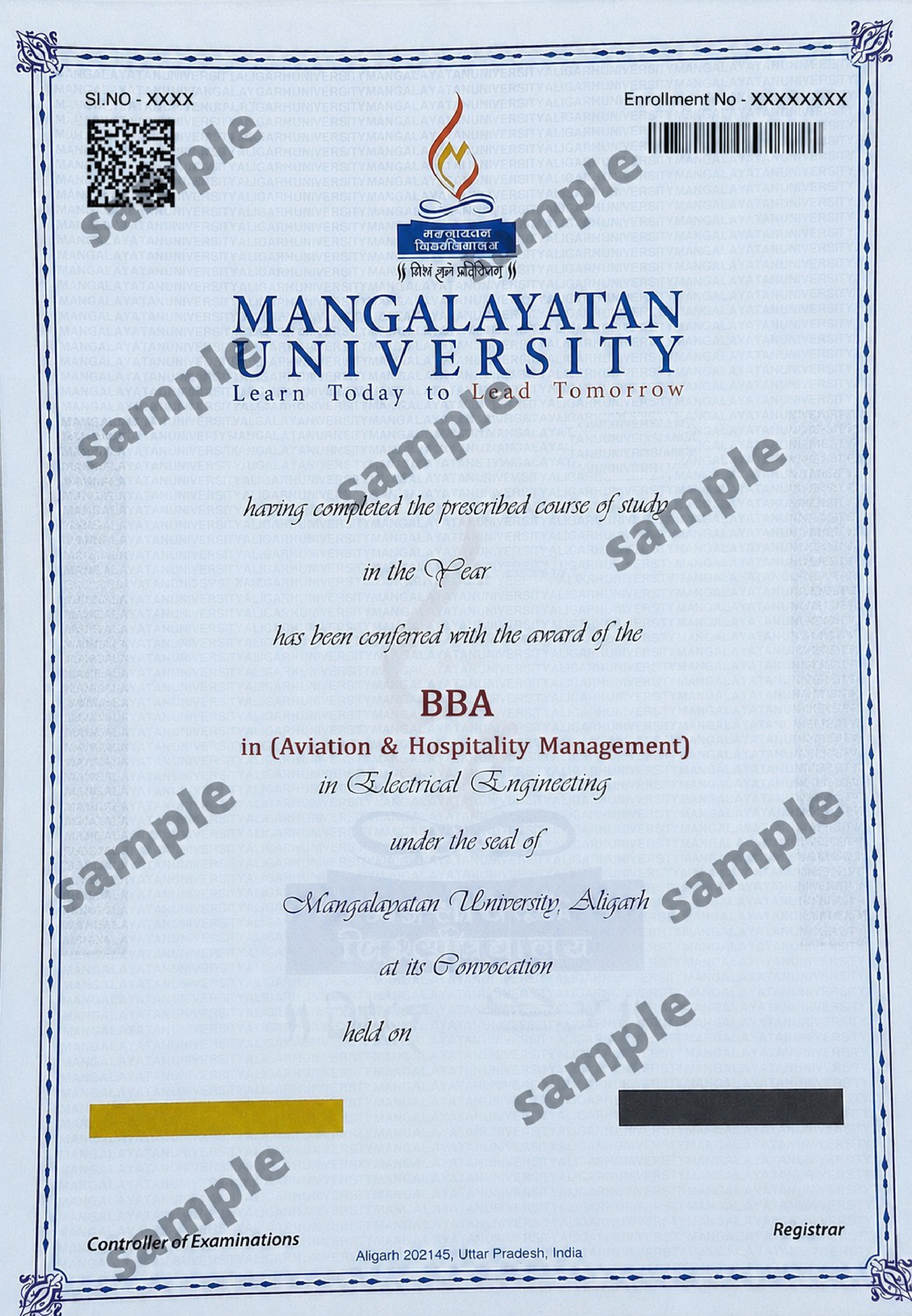
Sample Degree
Documents
Media Gallery
Frequently Asked Questions
Mangalayatan University is located at 33rd Milestone, Aligarh-Mathura Highway, Beswan, Aligarh, Uttar Pradesh, India. The campus is situated in close proximity to the Yamuna Expressway and the cities of Aligarh and Mathura.
Mangalayatan University was established in 2006 under the Mangalayatan University, Uttar Pradesh Act, 2006. The University states that it has the right to confer degrees under Sections 2(f) and 22(1) of the UGC Act.
Yes. Mangalayatan University states that it is recognized by the University Grants Commission (UGC) and was established through an Act of the Uttar Pradesh State Legislature. The University also lists NAAC A+ accreditation among its recognitions.
Yes. The University states that it is recognized by UGC-DEB for Open and Distance Learning (ODL) and is entitled by the UGC to offer online degree programmes. It also states that its online programmes are approved by AICTE.
Mangalayatan University offers programmes across multiple academic levels, including UG, PG, Diploma, PG Diploma and PhD. Its programme portfolio covers areas such as Engineering & Technology, Computer Applications, Management, Agriculture, Biotechnology, Pharmacy, Physiotherapy, Nursing, Journalism & Mass Communication and other disciplines.
Depending on the programme, applicants may be required to provide Class 10 and Class 12 certificates and marksheets, graduation/post-graduation marksheets where applicable, competitive examination rank card where applicable, migration/transfer certificate and recent passport-size photographs. Original documents may be required for verification.
Yes. The University states that students can apply for an education loan through banks, subject to the bank's eligibility criteria.
The BBA in Event Management is a three-year undergraduate program that combines business administration with specialized education in event planning, production, logistics, marketing, public relations, hospitality, safety, event design and specialized events such as weddings, corporate events, celebrity events and sports events.
The curriculum includes business subjects such as Business Economics, Basic Accounting, Principles of Management, Business Finance, Marketing Theory and Practices, Organisational Behaviour, Human Resource Management, Business Environment, Business Policy and Sales and Marketing. Specialized subjects include Special Events: Wedding Planning, Event Production and Logistics, Event Planning and Catering, Special Events: Corporate Events, Legal Aspects of Event Management, Event Safety and Risk Management, Experiential Marketing, Special Events: Celebrity Management, Digital and Social Media Marketing, Special Events: Sports Events and Event Concepts and Designing.
Yes. The curriculum includes Project Report – I, Project Report – II, Project Report – III, Project Report – IV, Minor Internship and Project Report – V, and Industrial Training and Project Report – VI. These components provide practical and industry-oriented exposure throughout the program.
The curriculum supports development of skills in event planning, production, logistics, budgeting, vendor coordination, client servicing, marketing, public relations, digital marketing, event design, hospitality, communication, teamwork, leadership, risk management, legal compliance, business development and entrepreneurship.
Graduates can explore opportunities in event planning and production, wedding planning, corporate events, sports events, celebrity and entertainment events, event marketing, public relations, digital marketing, hospitality, event design, sponsorship, event logistics and business development. The actual career path may vary according to individual skills, experience and professional interests.