















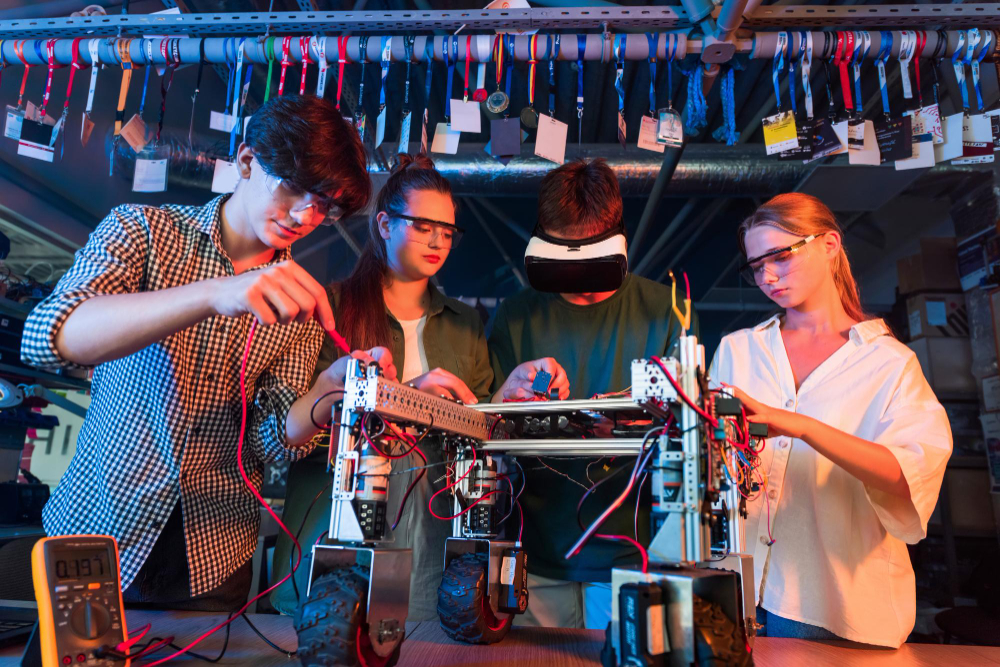
Raspberry Pi in Education: Global Impact, Access & Innovation
Master Raspberry Pi to create, teach, and innovate globally—unlock affordable, hands-on computing for projects, education, and community impact.
#1 Most Popular Online Course & Internship in Hardware You can enroll today & get certified from EasyShiksha & HawksCode.
 Build real-world projects
Internship with certificate
Resume-ready experience
Beginner to advanced
Lifetime access
Interview prep included
Build real-world projects
Internship with certificate
Resume-ready experience
Beginner to advanced
Lifetime access
Interview prep included
 Updated September 28, 2026
Join 5,00,000+ students already enrolled worldwide
No risk — 30-day full refund guarantee
Start instantly after payment — access in seconds
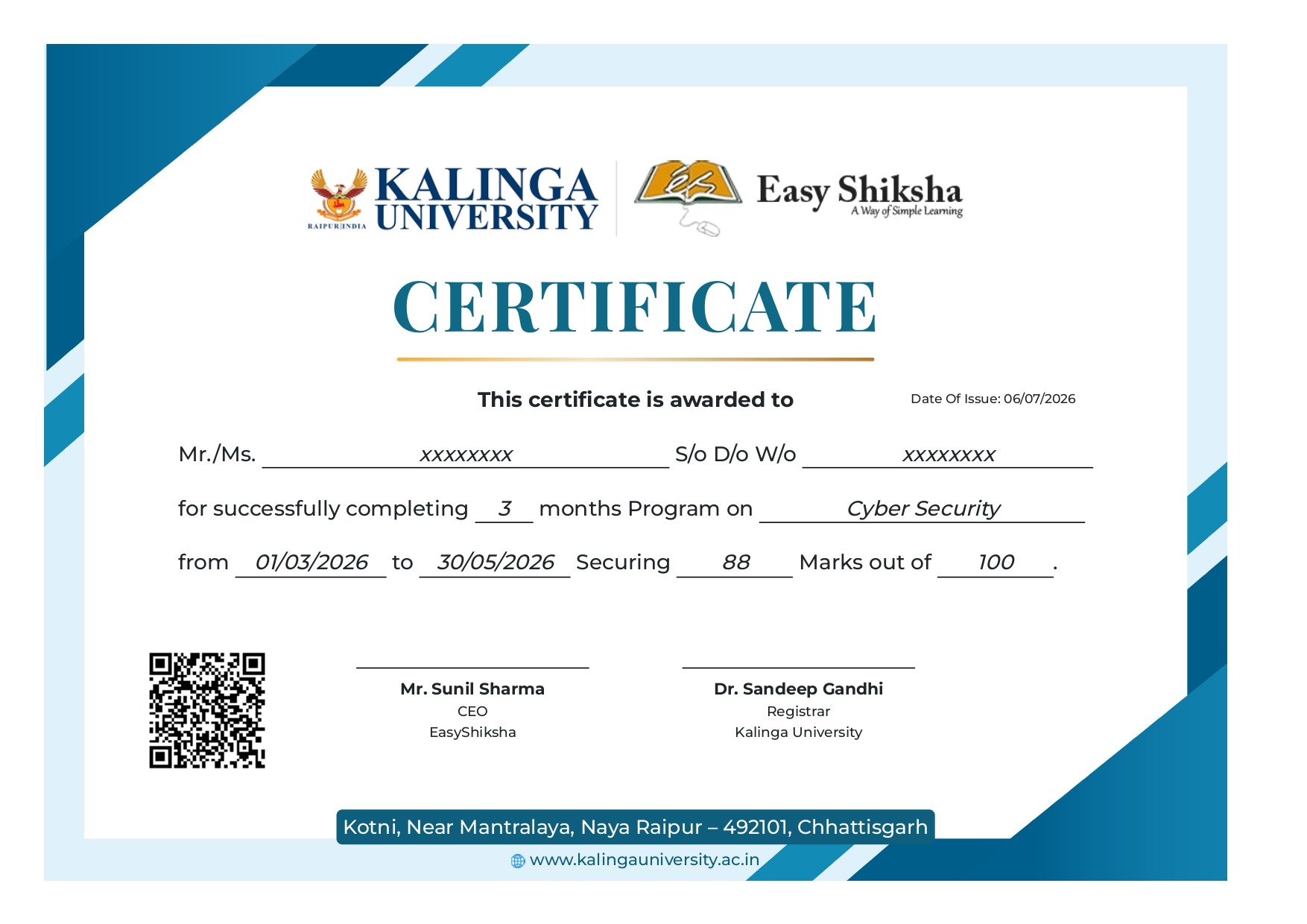
Certificate + Internship Joining Letter included
Updated September 28, 2026
Join 5,00,000+ students already enrolled worldwide
No risk — 30-day full refund guarantee
Start instantly after payment — access in seconds
Certificate + Internship Joining Letter included
 Free Preview
 92 On-demand Videos
 Internship Joining Letter
 2 Certificates (Course + Internship)
 Lifetime Access
 1 Quiz + Assignments
 Mobile & Desktop Access



Why This Course and Internship Stands Out
See exactly what separates EasyShiksha students from everyone else
 Watching scattered YouTube
videos with no structure
No certificate — nothing to show
employers
No internship experience on
resume
Wasting months without clear
direction
Struggling to stand out in job
applications
No proof of practical skills
Structured, beginner-to-advanced
learning path
Verified certificate — shareable
on LinkedIn
Real internship offer letter for
your resume
Go from zero to job-ready in one
programme
Resume-ready experience before
graduation
Practical projects you can show
any recruiter
Watching scattered YouTube
videos with no structure
No certificate — nothing to show
employers
No internship experience on
resume
Wasting months without clear
direction
Struggling to stand out in job
applications
No proof of practical skills
Structured, beginner-to-advanced
learning path
Verified certificate — shareable
on LinkedIn
Real internship offer letter for
your resume
Go from zero to job-ready in one
programme
Resume-ready experience before
graduation
Practical projects you can show
any recruiter
Internship Opportunity Included With This Course
"This is not just a course — it's real career experience. Walk away with documents that prove your skills to any employer."



This Course is Perfect For
Whether you're starting from scratch or switching careers — this course is designed with your success in mind.







This course uses elements of Artificial IntelligenceHave you ever wondered how a tiny, affordable computer could spark a worldwide revolution in education, innovation, and creativity? The Raspberry Pi isn’t just a device—it’s a movement empowering millions of people globally to tinker, invent, and learn. Whether you’re an educator, curious student, nonprofit leader, or lifelong learner, unlocking the full potential of Raspberry Pi could open doors you never knew existed.
In this dynamic, expertly crafted course, our team offers the most comprehensive and current guide to using Raspberry Pi in today’s learning environments. Our background spans hands-on teaching, educational technology research, and direct engagement with global Raspberry Pi communities. We’ve synthesized not only the essential theory but also the wisdom gathered from real classrooms, institutions, and grassroots initiatives worldwide. This course is your essential roadmap to meaningful, future-ready computing education—one rooted in openness, accessibility, and real-world impact.
Why Raspberry Pi, and Why Now?
Digital skills are no longer optional. As the world accelerates toward more technology-integrated learning and workspaces, the challenge is not just to teach computing, but to make that knowledge accessible—for everyone. The Raspberry Pi has emerged as a transformative tool in bridging the digital divide—forging new pathways in schools, libraries, youth clubs, community centers, and homes from Nairobi to Nashville. It democratizes computing, inspires creativity, and supports learners of every age.
As education grapples with rising costs and inequitable access, Raspberry Pi’s affordability, open ecosystem, and sheer versatility make it more relevant than ever. But understanding how and why to integrate this platform—navigating strengths, limitations, and best practices—can be daunting without expert guidance. That’s where we come in. Our course doesn’t just show you “how to use a Raspberry Pi”; it takes you through the entire ecosystem, empowering you to make smart decisions that will enrich your teaching, studies, or community impact.
What You’ll Experience in This Course
You’ll embark on a captivating journey—one that goes far beyond the basics. We begin by exploring the foundational vision behind Raspberry Pi: its origins, philosophy, and the global educational and technological movements it has ignited. You’ll see not only how the Raspberry Pi was created to lower barriers to computing, but also the social and educational shifts that have followed its adoption worldwide. By understanding its roots and real-world influence, you’ll gain critical context for everything that comes next.
Moving inward, we dive into the vibrant global ecosystem that surrounds the device. You’ll get a front-row seat to case studies where Raspberry Pi has made a measurable difference—transforming classrooms, sparking grassroots tech clubs, and bridging gaps in digital access. We map the open-source philosophy that drives innovation and fosters diverse contributions, from hobbyist makers to major government partners. Our practical approach draws on stories, interviews, and published data, giving you both the “why” and “how” of Raspberry Pi’s worldwide reach.
Technical literacy sits at the heart of computing education, and this course offers deep, yet accessible explorations into the hardware and software that power the Raspberry Pi. You’ll master the essentials of computer architecture—including systems-on-a-chip, memory, input and output, and the thoughtful hardware design choices that make Pi perfect for hands-on learning. We lay out the evolution of different models and help you match hardware features to learning outcomes, projects, and the realities of your own educational context.
On the software side, you’ll become comfortable with the world of operating systems—demystifying Linux-based environments, command-line versus graphical user interfaces, and the philosophy of open-source. We showcase real classrooms and institutions where software flexibility has transformed teaching and learning, highlighting practical deployments that range from beginner explorations to advanced curriculum integration.
But technical know-how is only the beginning. Our course is unique in rooting every lesson in the most effective teaching and learning methodologies. You’ll see how Raspberry Pi empowers constructivist, project-based, and collaborative learning across ages and disciplines. We draw on educator testimonials and evidence-based research to reveal the advantages—and challenges—of real classroom implementation. You’ll discover how to design lessons, foster interdisciplinary collaboration, and make learning both equitable and inspiring.
Breaking Down Barriers: Equity, Access, and Impact
Addressing the digital divide is central to this course. You’ll explore how Raspberry Pi’s low-cost, open nature tackles barriers that have long excluded too many from foundational digital skills. Our real-world stories bring to life how educators and communities have localized hardware and software solutions to reach remote and underserved populations. We compare single-board computers with traditional classroom technology—clarifying cost, customization, and social impact through side-by-side analysis and inspiring field reports.
Openness and Adaptability: More Than a Device
We believe in open-source as a game-changer for education. This course clarifies how open hardware and software drive sustainable innovation—not just for the tech-savvy, but for educators, artists, scientists, and entrepreneurs of all backgrounds. You’ll see how the Raspberry Pi ecosystem supports experimentation, fosters global collaboration, and seeds creativity across disciplines—from coding and robotics to art, data science, and environmental projects.
Engagement is not one-size-fits-all, so we navigate how Raspberry Pi adapts across age groups and learning contexts. You’ll see detailed pathways for introducing technology to primary learners, bridging theory and application for teens, supporting university and vocational education, and even empowering adult learners to build skills and confidence from scratch. With this foundation, you’ll be ready to tailor the platform to your unique setting—creating portfolio-worthy projects whether you’re a novice or seasoned educator.
Versatility Without Compromise
From prototyping to production, the course unpacks Raspberry Pi’s astonishing flexibility. You’ll learn to use it as a gateway device in maker spaces, as a lightweight server in STEM labs, or as a core computer powering media centers and home automation. Through compelling case study reviews, we illustrate how organizations and individuals have harnessed this versatility and made tangible impact.
Yet versatility can also be confusing—especially for beginners. We tackle this head-on, helping you understand not just when Raspberry Pi is the right tool, but also when specialized hardware or traditional computers make more sense. You’ll gain confidence making practical, cost-effective, and context-sensitive choices—always with clear comparisons, real-life adoption stories, and expert evaluation frameworks.
Boundaries, Best Practices, and Institutional Strategies
No tool is perfect for every job. In this course, you’ll gain crystal-clear understanding of where Raspberry Pi excels and where its boundaries lie—performance, reliability, longevity, and security included. We guide you through the often overlooked considerations that matter for institutional adoption: curriculum integration, supporting diverse learners, procurement and ongoing management, and inclusion. Drawing from public and private school settings, higher education, and grassroots projects, you’ll learn what works, what doesn’t, and how to innovate responsibly.
As part of your journey, you’ll also explore the Raspberry Pi’s unique role in the maker and DIY culture—unleashing creativity, hacking, and hands-on skills at every level. We take you inside global hackathons, youth clubs, social forums, and more, offering models you can replicate for community engagement and empowerment.
Comparing Educational Technology Platforms
As the education landscape evolves, how does Raspberry Pi stack up against desktops, laptops, and other microcontroller and single-board platforms? Our course guides you through clear, actionable comparisons—unpacking strengths, weaknesses, and task suitability for everyone from early learners to advanced users. You’ll gain the insight to make smart migration decisions, skillfully transition learners to professional hardware when needed, and maximize your tech investments.
Staying Ahead: Trends, Sustainability, and Your Future
Education technology is changing fast. We keep you ahead of the curve with deep-dives into the latest hardware and software updates, open educational resources, and the growing library of tools for every learning level. You’ll see how Raspberry Pi continues to influence educational technology adoption in both developed and emerging markets. Sustainability is never an afterthought: we address device lifecycle, repair and reuse, and environmental responsibility with action-ready guidance and green computing best practices.
Social Impact in Context
Raspberry Pi is more than a technology—it’s a social and cultural catalyst. We equip you to understand and navigate gender diversity, economic constraints, and the need for local adaptation. Through stories of nonprofit and community-led initiatives, you’ll see how tailored educational solutions are transforming lives and creating opportunity.
Security, Ethics, and Responsible Computing
Accessible technology demands that we teach and model responsible digital citizenship. You’ll acquire practical strategies for ensuring security, privacy, and data protection in diverse educational environments. Real-life case studies lay out both successes and missteps, empowering you to avoid pitfalls and foster a culture of ethical computing—no matter your audience.
A Journey of Reflection and Lifelong Growth
Every module in this course is designed to do more than teach—it encourages you to reflect, synthesize, and adapt. With structured portfolio projects, practical assessments, and opportunities for guided self-evaluation, you’ll finish the course not only with confidence in your Raspberry Pi skills but with an informed, future-ready perspective on technology selection, curriculum design, and lifelong learning.
What Sets This Course Apart
- Unmatched Depth and Breadth : Spanning foundational theory, technical mastery, social context, and actionable strategies, our course stands alone in its completeness.
- Evidence-Based, Instructor-Tested : Lessons draw on real classroom and community practice, global research, and ongoing engagement with Raspberry Pi leaders and innovators.
- Portfolio-Ready, Practical Outcomes : Hands-on projects and case-based assessments build expertise you can showcase—no matter your background or career stage.
- Inclusive, Accessible, Global : We spotlight approaches that work in diverse environments—rural, urban, well-funded, and resource-limited alike.
- SEO-Rich and Future-Focused : Touching on educational equity, open-source, digital literacy, affordable computing, maker culture, environmental impact, and beyond—this course ensures you’re not just learning about Raspberry Pi, you’re learning to navigate the future of tech in education.
Take the Next Step
Technology is only as powerful as the purpose behind it. Whether you seek to enrich a classroom, expand access in your community, or launch personal projects that fuel lifelong curiosity, this course gives you the tools, insight, and inspiration to make a difference—with Raspberry Pi as your launchpad. Join us and become part of the global movement redefining what’s possible in accessible, responsible, and transformative education.
 Unlock 90 More Lessons + Internship Access

 Missing this = losing the internship credential Missing this = losing your early-access advantage Missing this = falling behind candidates who did enroll



.svg?v1)
 Chat with us first →
 UPI
UPI
 Wallets
 Debit/ Credit card
 NetBanking
 EMIs
92 On-demand Videos Course Completion Certificate
Internship Certificate
Internship Joining/Offer Letter
Letter of Appreciation (LOA)
Internship Attendance Report
Internship Evaluation Report
Internship Certificate Hard Copy
Project Report Assitance
Internship Project Assitance
1:1 Live Mentor Call
Course Certificate in Elegant Wooden Frame
2 Certificates (Course + Internship) Lifetime Access Projects & Assignments 1 Quiz + Assignments
EMIs
92 On-demand Videos Course Completion Certificate
Internship Certificate
Internship Joining/Offer Letter
Letter of Appreciation (LOA)
Internship Attendance Report
Internship Evaluation Report
Internship Certificate Hard Copy
Project Report Assitance
Internship Project Assitance
1:1 Live Mentor Call
Course Certificate in Elegant Wooden Frame
2 Certificates (Course + Internship) Lifetime Access Projects & Assignments 1 Quiz + Assignments
Why Start Now?
The Opportunity Won’t Wait.
Every day you delay is a missed opportunity to grow your skills. Learners who start today gain the advantage — whether it's building skills, improving careers, or unlocking new opportunities.
Still Thinking?
Here's everything that makes this a no-brainer:
No prior experience needed — start from absolute zero Beginner friendly — explained step by step Risk-free — 30-day full refund guarantee One-time payment — access forever Student-friendly pricing — see details at checkout Real internship certificate includedWhat Happens After You Enroll?
From payment to certificate — here's exactly what to expect
 Secure Payment
 Instant Access
30-Day Refund
2 Certificates
Instant Access
30-Day Refund
2 Certificates
Imagine After Completing This Course
Picture yourself 30 days from now — with skills, experience, and credentials that open real doors.



 Includes Internship


















