Digital education has made learning materials more accessible than ever before. Students can attend online classes, watch instructional videos, read digital textbooks, complete interactive quizzes, participate in virtual discussions and access AI-powered explanations from almost anywhere. These possibilities have expanded the reach of education, but they have also created a new challenge. Modern learning environments frequently present information through several channels simultaneously, expecting students to process spoken explanations, written instructions, animations, notifications, visual demonstrations and interactive controls within the same experience.
The assumption behind many digital learning environments is that more information and more interaction will produce better learning. However, the human sensory system has biological limitations. Vision, hearing and other sensory processes do not operate as unlimited information channels. They receive, filter and organise signals before those signals can contribute to conscious understanding. Attention is selective, sensory information competes for processing resources, and the brain cannot give equal priority to every stimulus appearing in the environment.
These biological constraints have important implications for educational design. A student watching an instructional video while reading subtitles, interpreting animated diagrams and responding to notifications may be exposed to more information than they can effectively process at that moment. The problem is not necessarily the difficulty of the subject. It may be the way the learning environment distributes information across the student's sensory systems.
This raises an important question: what if educational environments were designed around the biological limits of human sensory processing rather than the technological capacity to display information?
The idea introduces a proposed framework called Biologically Aligned Learning Environments. It would organise educational information according to how human sensory systems receive, filter and interpret signals. Instead of maximising the number of visual elements, audio explanations and interactive features, learning platforms would consider sensory competition, attentional capacity, information density, processing time and individual differences.
For EasyShiksha, this approach could provide a new direction for designing online courses, quizzes, educational games, projects and virtual learning experiences. The objective would be to create learning environments that respect how students actually process information, making digital education more understandable, accessible and effective without unnecessarily increasing sensory demands.
Understanding the Biological Limits of Human Sensory Processing
Human sensory processing begins when specialised receptors detect information from the surrounding environment. The visual system responds to light, the auditory system responds to sound vibrations, and other sensory systems provide information about touch, body position, movement and internal physiological conditions. These signals are transformed into neural activity and processed through interconnected networks that help the brain interpret the environment.
Although sensory information can arrive continuously, conscious attention is limited. The brain does not process every available signal with equal depth. It prioritises some information, filters other signals and uses previous experience to interpret incoming stimuli. This selective processing is essential because the environment contains far more information than a person can consciously examine at once.
In education, this means that a student cannot necessarily understand a complex explanation more effectively simply because it is accompanied by additional animations, colours, sounds and text. Each element may create another demand on attention. If several elements compete for priority, the learner may find it difficult to determine which information is essential.
Sensory processing is also influenced by context. A quiet environment may make spoken instructions easier to follow, while a visually cluttered screen may make it harder to locate an important diagram. Similarly, a student who is already concentrating on a difficult calculation may find unexpected audio notifications particularly disruptive.
A biologically aligned educational environment would therefore begin by recognising that sensory capacity is not unlimited and that the organisation of information can influence how effectively students engage with learning material.
The Visual System: Why More Information on a Screen Does Not Always Improve Learning
Vision plays a central role in digital education. Students read text, examine diagrams, interpret charts, watch demonstrations and navigate interfaces primarily through visual information. However, visual processing has several limitations that educational platforms should consider.
The human visual system does not perceive every part of a scene with equal clarity. Detailed visual processing is strongest around the area of central vision, while peripheral vision is more useful for detecting broader movement and environmental changes. Eye movements help direct attention toward relevant details, but students must continually decide where to look when a screen contains multiple competing elements.
A digital lesson may display a paragraph, an animated illustration, a progress indicator, a sidebar, highlighted keywords and a moving cursor simultaneously. Although each element may appear useful individually, their combined presentation can create unnecessary visual competition. Students may spend time searching the screen instead of understanding the concept.
Visual complexity also affects reading. Small text, low contrast, excessive decoration and inconsistent spacing can increase the effort required to locate and interpret information. When students must repeatedly adjust their attention to understand the interface, fewer resources remain available for engaging with the actual subject matter.
EasyShiksha could potentially apply biologically informed visual design across its courses and learning dashboards. Important explanations could receive clear visual priority, while decorative animations and unrelated interface elements could remain secondary. Diagrams could appear close to the explanations they support, and complex visual demonstrations could reveal information progressively instead of presenting every detail at once.
The goal would not be to make educational interfaces visually empty. It would be to ensure that visual information has a clear purpose and does not compete unnecessarily with the concept being taught.
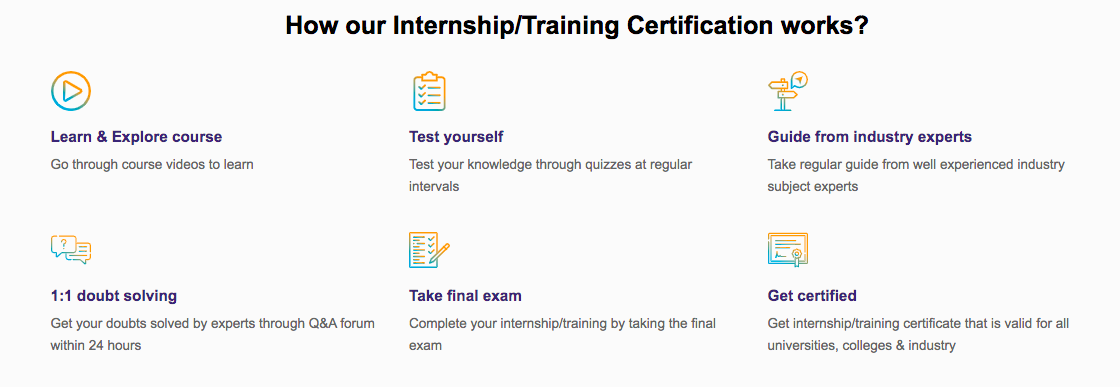
How EasyShiksha Internship/Training Program Works
The Auditory System: Managing the Limits of Listening and Interpretation
Audio is another important channel in education. Recorded lectures, spoken explanations, pronunciation exercises, podcasts and instructional videos allow students to learn without continuously reading. However, listening requires more than simply receiving sound. The brain must distinguish relevant speech from background noise, identify words, interpret meaning and connect the information with existing knowledge.
When multiple sounds occur simultaneously, the auditory system must organise competing signals. A student attending an online lecture may hear the teacher's explanation while receiving notification sounds, background music or audio instructions from another application. Even when these sounds are individually understandable, they may interfere with concentration.
Speech also unfolds over time. Unlike written information, which students can often revisit visually, spoken explanations move forward at a particular pace. If a learner misses an important sentence, they may need to replay the recording or reconstruct the missing information from context. Rapid explanations containing unfamiliar terminology can therefore create additional processing demands.
Educational platforms should consider the relationship between speaking speed, conceptual complexity and opportunities for review. A lecturer explaining a difficult scientific mechanism may need pauses, repetition and visual support. However, visual support should complement the spoken explanation rather than force students to divide their attention between unrelated information.
For EasyShiksha, audio lessons could potentially include adjustable playback speed, clear chapter divisions, transcripts and carefully timed pauses. These features would give students greater control over how they receive information while respecting differences in listening ability and learning conditions.
Sensory Competition: When Different Channels Demand Attention at the Same Time
Multisensory learning can be valuable because information presented through complementary channels may help students understand complex ideas. A diagram accompanied by a relevant explanation, for example, can connect visual structure with spoken reasoning. However, using multiple sensory channels does not automatically improve learning.
The important distinction is between complementary information and competing information. When a visual demonstration and an audio explanation communicate related aspects of the same concept, they may support understanding. When the screen displays unrelated text, decorative movement and additional audio instructions, the channels may compete for attention.
Consider a student learning how a computer network transfers information. An animation could show how data moves between devices while narration explains the role of routers and network protocols. If the animation follows the explanation, both channels contribute to the same mental model. If unrelated pop-ups, moving advertisements or unnecessary sound effects appear during the demonstration, the student may struggle to identify the information that matters.
A biologically aligned platform would therefore examine not only which sensory channels are being used but also how their information relates to one another. The objective would be to coordinate sensory input rather than maximise simultaneous stimulation.
This principle could be particularly useful in EasyShiksha's educational games, where visual effects, sounds, timers and interactive controls are often combined. Each sensory element should reinforce the learning objective instead of simply increasing activity on the screen.
Attention Is Selective, Not Unlimited
Attention is the process through which certain information receives priority for further processing. It helps students concentrate on a teacher's explanation, identify important details in a diagram and ignore irrelevant environmental signals. However, attention is not an unlimited resource that can be distributed equally across every activity.
A student solving a difficult programming problem may need to concentrate on variable values, execution order and logical conditions. If the learning platform simultaneously displays unrelated notifications, animated rewards and additional instructions, the learner must repeatedly redirect attention.
Such interruptions can create task-switching costs. Each shift requires the student to disengage from one activity and reorient toward another. Returning to the original task may require reconstructing the previous line of reasoning, particularly when the activity involves several connected steps.
This is especially important for advanced learning. Understanding a complex concept often requires maintaining several relationships in mind while following an explanation. Unnecessary interruptions can make it harder to preserve that reasoning sequence.
EasyShiksha could potentially use attention-aware interface design to reduce avoidable interruptions during demanding activities. Notifications could be delayed during assessments, interactive explanations could maintain a consistent visual focus, and supplementary information could appear only when relevant.
The objective would not be to eliminate all stimulation. It would be to protect the continuity of attention when students are performing tasks that require sustained reasoning.
Information Density and the Biological Cost of Processing Complex Material
Information density describes how much information is presented within a particular space or period. A lesson containing many unfamiliar terms, diagrams, formulas and explanations may create a substantial processing demand even when every element is accurate.
The challenge becomes more significant when students encounter unfamiliar concepts. They need to interpret new terminology, connect it with existing knowledge and understand how different elements relate to one another. If too many unfamiliar elements appear together, the learner may struggle to establish a meaningful structure.
This does not mean that complex subjects should always be simplified. Advanced knowledge sometimes requires detailed explanations and the integration of several ideas. The important question is how the information is organised and introduced.
A learning system could divide complex explanations into meaningful stages while preserving the relationships between them. For example, a lesson on artificial intelligence could first explain the problem being addressed, then introduce the relevant data structures, describe the model's operation and finally examine its limitations. Students would still encounter the complete subject, but the information would be organised into a sequence that supports comprehension.
For EasyShiksha, this approach could influence course structure, video lessons, digital reading material and interactive assessments. The aim would be to reduce unnecessary information density without reducing academic depth.
Temporal Processing: Why the Timing of Information Matters
Sensory processing is not determined only by the amount of information presented. Timing also matters. Students need sufficient time to perceive a signal, interpret its meaning and connect it with previous information.
A video that introduces several diagrams in rapid succession may leave little time for students to examine each one. A spoken explanation that moves immediately from one technical concept to another may make it difficult to understand the relationship between them. Similarly, a quiz that provides only a brief response window may measure reaction speed rather than conceptual understanding.
Different learning activities require different processing times. A familiar vocabulary question may be answered quickly, while a complex scientific diagram may require careful examination. A student working through a multi-step mathematical problem needs time to maintain and evaluate the sequence of reasoning.
A biologically informed learning environment could adjust the timing of instructional events according to the nature of the task. It could allow students to pause demonstrations, revisit explanations and control the pace of non-timed practice. Where time limits are necessary, such as in specific examination simulations, the system should distinguish between the intended assessment of speed and the assessment of conceptual understanding.
EasyShiksha could potentially use adaptive pacing to make learning activities more responsive without assuming that every student requires the same amount of time.
Cross-Sensory Integration: How the Brain Combines Different Forms of Information
Human perception often involves combining information from different sensory systems. A person may use visual and auditory information together to understand speech, interpret an event or recognise an object. In educational settings, this ability can support the understanding of processes that are difficult to explain through a single medium.
For example, a chemistry lesson may combine an animation of molecular movement with narration explaining the interactions between particles. A language lesson may connect written words with pronunciation recordings. A geography lesson may combine a map with spoken descriptions of physical features.
However, cross-sensory integration is most useful when the information is coordinated. If a spoken explanation refers to a diagram that appears several seconds later, students may need to remember the earlier information while searching for the relevant visual. If subtitles contain a different explanation from the narration, the learner may have to resolve an unnecessary conflict.
Educational platforms should therefore coordinate the timing and meaning of information across sensory channels. Visual labels should correspond with the spoken explanation, and important diagrams should appear when they are being discussed.
For EasyShiksha, this could become an important design principle for multimedia courses. The platform could encourage instructional content in which audio, text and visual demonstrations work together as parts of one explanation rather than as independent streams of information.
Individual Differences in Sensory Processing
Not all students experience learning environments in the same way. Visual clarity, hearing ability, sensory sensitivity, attention patterns and environmental conditions can influence how learners interact with educational material.
A student studying in a noisy household may rely more heavily on written explanations. Another learner may find long blocks of text difficult to process and benefit from carefully structured audio or visual demonstrations. Students with visual, auditory or other disabilities may require specific accessibility features to participate effectively.
Sensory preferences should not be confused with fixed learning-style categories. A student who prefers videos does not necessarily learn every subject better through video. The most appropriate format depends on the nature of the concept, the quality of the instructional material and the learner's circumstances.
A responsible learning system should therefore provide flexible ways to access information without assuming that one sensory format is universally superior. Captions, transcripts, screen-reader compatibility, adjustable text sizes, keyboard navigation and alternative representations can make educational environments more accessible.
EasyShiksha could potentially strengthen its digital learning experience by treating accessibility as a core design requirement rather than an additional feature. The aim would be to give students meaningful control over how they interact with educational content while maintaining the accuracy and depth of instruction.
Sensory Overload and the Difference Between Engagement and Understanding
Digital platforms often use animation, sound effects, progress indicators, rewards and interactive notifications to increase engagement. These features can make learning more inviting, particularly when students are completing repetitive activities. However, engagement should not be measured only through visible activity or the number of interactions.
A student may spend considerable time interacting with a colourful educational game without developing a strong understanding of the underlying concept. Similarly, a video may attract attention through rapid editing and visual effects while making the actual explanation difficult to follow.
Sensory overload can occur when the combined demands of a learning environment exceed what a student can comfortably process at a particular moment. The experience may involve difficulty concentrating, confusion about where to direct attention or fatigue during prolonged interaction. These responses vary between individuals and should not be diagnosed solely from digital behaviour.
For EasyShiksha, the important opportunity is to distinguish educational engagement from unnecessary stimulation. Game mechanics should reinforce learning objectives, and rewards should not interrupt the explanation of a difficult concept. Visual effects should provide useful feedback rather than exist only to make the interface appear active.
A successful learning environment should help students remain engaged with the subject, not simply with the interface.
Designing Courses Around Sensory Processing Constraints
The biological limits of sensory processing could influence how online courses are structured from the beginning. Instead of treating text, audio, video and interaction as separate content formats, instructional designers could examine how each element contributes to the student's understanding.
A course introducing a difficult technical concept could begin with a clear explanation of the problem before presenting detailed diagrams and terminology. The visual demonstration could reveal the process gradually, while narration explains the relationship between its components. After the explanation, a short activity could allow the learner to retrieve and apply the concept.
This structure would help coordinate information across different stages of processing. Students would not be expected to interpret several unfamiliar elements simultaneously without guidance.
Course designers could also examine the visual and auditory demands of each lesson. A screen containing dense text might benefit from clearer spacing and a more organised hierarchy. A long audio explanation might benefit from chapter markers and a transcript. An interactive demonstration might need controls that allow students to pause or repeat a specific stage.
EasyShiksha could use these principles to develop a more consistent instructional design approach across its online courses. The objective would be to make the learning experience easier to navigate while retaining the complexity required for serious academic and professional development.
Quizzes Should Measure Knowledge Rather Than Sensory Processing Speed
Assessments sometimes introduce sensory and attentional demands that are unrelated to the knowledge being tested. A question may contain a complicated visual layout, unclear instructions or unnecessary background information. A student could understand the concept but still lose time interpreting the presentation.
This creates a risk that the assessment measures interface navigation or rapid information processing rather than the intended learning outcome.
A biologically aligned assessment system would separate the concept being evaluated from unnecessary presentation difficulty. Questions would use clear language, consistent visual organisation and appropriate time allowances. Diagrams would be readable, and essential information would not be hidden among decorative elements.
This does not mean that every assessment should be untimed or visually simple. Some professional and academic tasks genuinely require rapid interpretation of information. The important point is that speed and sensory processing should be measured deliberately when they are part of the intended competency.
EasyShiksha quizzes could potentially provide different assessment modes for knowledge recall, conceptual reasoning, visual interpretation and time-sensitive problem-solving. This would make the purpose of each assessment clearer and help students understand which capability is being evaluated.
Educational Games Should Respect Sensory Limits
Educational games frequently combine movement, sound, visual feedback, timers and decision-making. These elements can create engaging experiences, but they can also introduce unnecessary cognitive and sensory demands if they are not carefully coordinated.
A game designed to teach mathematics, for example, might require students to solve a problem while responding to moving objects, sound effects and a countdown timer. If the educational objective is mathematical reasoning rather than reaction speed, these additional demands may make the activity less effective.
A better design would connect sensory stimulation directly with the learning task. Visual movement could represent a mathematical relationship, sound could provide meaningful feedback, and interactive controls could help students explore different outcomes. The game would remain engaging because its mechanics support the concept.
EasyShiksha could potentially use sensory-aware game design to create experiences that adapt their visual complexity, audio intensity and interaction pace according to the educational purpose. Students could also receive options to reduce motion, mute non-essential sounds or simplify visual effects.
This would make games more inclusive while keeping the learning objective at the centre of the experience.
AI as a Sensory-Aware Learning Design Layer
Artificial intelligence could help educational platforms analyse how instructional environments are structured and identify potential sources of unnecessary sensory competition. It could examine the timing of captions, the density of visual elements, the pace of narration and the frequency of interruptions.
For example, an AI-supported content review system could identify a video in which several unfamiliar diagrams appear within a very short period. It could recommend adding pauses, separating the explanation into stages or aligning the narration more closely with the visual demonstration.
AI could also support personalisation by allowing students to adjust presentation formats. A learner might choose to read a transcript instead of listening to audio, increase text size or reduce animation. The platform could remember permitted accessibility preferences and apply them consistently across learning activities.
However, AI should not attempt to infer medical or neurological conditions from ordinary learning behaviour. A student who pauses frequently or changes playback speed should not automatically be assigned a sensory or cognitive diagnosis. Such signals may reflect personal preference, environmental conditions or the difficulty of the subject.
For EasyShiksha, AI would be most useful as a tool for improving content organisation, accessibility and learner control rather than making unsupported assumptions about individual biology.
Measuring Sensory Load Without Reducing Students to Data
A future educational platform might attempt to estimate the sensory demands created by a learning activity. This could involve analysing the number of simultaneous visual elements, the speed of information presentation, the amount of spoken material and the frequency of interface interruptions.
Such measurements could help content designers compare different versions of a lesson. A version with fewer competing visual elements might allow students to locate key information more easily. Another version might coordinate diagrams and narration more effectively.
However, sensory load cannot be measured reliably through screen activity alone. The same interface may feel comfortable to one learner and overwhelming to another. A student's environment, fatigue, accessibility needs and familiarity with the subject can all influence the experience.
Evaluation should therefore combine design analysis with learner feedback and educational outcomes. Students could report whether explanations were easy to follow, whether the interface was distracting and whether they could access the information in an appropriate format.
The platform should also protect privacy. Sensory-related data should not become an unnecessary form of behavioural surveillance. Information should be collected only when it has a clear educational purpose and should be handled transparently.
Empower your team. Lead the industry
Get a subscription to a library of online courses and digital learning tools for your organization with
EasyShiksha
EasyShiksha could potentially explore a sensory-aware learning architecture in which instructional content is organised around the relationship between information, attention and processing time. Such an architecture would not require every course to use the same format. Instead, it would provide design principles that help content creators select the most appropriate presentation for each learning objective.
A theoretical framework could examine three connected dimensions. The first would be sensory clarity, which considers whether visual, auditory and interactive information can be perceived without unnecessary competition. The second would be processing alignment, which examines whether the timing, sequence and density of information are appropriate for the complexity of the concept. The third would be learner control, which considers whether students can adjust presentation settings and access alternative formats when needed.
These dimensions could influence course development, quiz interfaces, educational games and project environments. A science lesson might prioritise coordinated diagrams and narration, while a programming exercise might use a visually clear code editor with minimal interruptions. A language course might provide synchronised text and audio, while a career simulation could introduce controlled sensory complexity when it is genuinely relevant to the task.
This architecture would allow EasyShiksha to consider sensory processing as part of instructional quality rather than treating interface design as a separate technical concern.
The Future of Education: From Information-Rich to Biologically Intelligent
The next stage of digital education may not be defined by how much information a platform can display at once. It may be defined by how effectively that information is organised for human understanding.
As AI makes content generation faster and digital interfaces become more interactive, educational platforms will have increasing opportunities to introduce additional information channels. However, technological capacity should not be confused with biological capacity. The ability to display ten visual elements does not mean that ten elements will improve comprehension.
A biologically intelligent learning environment would recognise that students need clear signals, meaningful relationships, appropriate pacing and opportunities to control how information is presented. It would use technology to coordinate learning experiences rather than simply increase the quantity of stimulation.
This approach could become especially important as students move between online courses, university programmes, professional training and workplace learning. A consistent understanding of sensory accessibility and information organisation could make transitions between different educational environments easier.
For EasyShiksha, the opportunity lies in building learning experiences that combine technological capability with a realistic understanding of human perception. The platform could explore how courses, assessments, games and practical activities can be designed to support attention and comprehension without unnecessarily increasing sensory demands.
Conclusion: Education Should Be Designed for the Human Brain, Not Just the Screen
Modern educational technology has expanded what students can access, but greater access to information does not automatically produce better understanding. Human sensory systems operate within biological limits. Visual attention is selective, auditory information unfolds over time, sensory signals can compete and complex information requires sufficient time for interpretation.
The proposed idea of Biologically Aligned Learning Environments offers a way to rethink educational design around these realities. It encourages platforms to consider how much information is presented, how different sensory channels interact, how quickly concepts are introduced and whether students have sufficient control over their learning experience.
For EasyShiksha, this approach could influence the design of online courses, quizzes, educational games, projects and AI-supported learning tools. Clear visual hierarchies, coordinated audio and visual explanations, accessible content formats, appropriate pacing and reduced interruptions could help create more supportive digital learning environments.
The objective is not to make education less challenging or remove the complexity of advanced subjects. Students still need to engage with demanding ideas, solve unfamiliar problems and develop sophisticated professional skills. The challenge is to ensure that difficulty comes from the knowledge itself rather than from unnecessary sensory competition or poorly organised information.
The most effective educational environment may therefore not be the one that presents the greatest amount of information in the shortest time. It may be the one that understands how human beings receive, organise and interpret information, and designs every learning experience accordingly.
The future of intelligent education should not be measured only by what technology can display, but by how effectively the human mind can understand what it receives.
Anshika Jain is an Engineer, Developer, and Educational Content Author known for her dedication to technology and knowledge sharing. With a strong analytical mindset and a passion for innovation, she has consistently contributed to creating meaningful digital solutions and insightful educational articles.
Her ability to simplify complex technical concepts into engaging and easy-to-understand content makes her work valuable for students and learners across various platforms. Along with her technical expertise, Anshika is admired for her creativity, professionalism, and commitment to continuous learning.
She represents a perfect blend of technical excellence and impactful communication, inspiring others through both her development work and educational contributions.