Higher education is increasingly becoming interconnected. Students can enrol in online degree programmes, complete professional courses through digital platforms, participate in international internships, and earn qualifications from universities operating in different countries. This expanding educational environment creates opportunities for learners to access specialised knowledge without being restricted to a single institution or geographical location. However, it also introduces an important challenge: two universities may offer the same specialisation while following significantly different academic standards, assessment methods, curriculum structures, and expectations of student competency.
Consider two universities offering a specialisation in data science. Both programmes may advertise subjects such as machine learning, statistical analysis, Python programming, data visualisation, and artificial intelligence. However, one university may require students to build independent machine learning models, interpret complex datasets, and defend their analytical decisions, while the other may primarily evaluate students through theoretical examinations and guided assignments. Although the programme titles appear similar, the knowledge and practical abilities demonstrated by graduates may differ considerably.
This problem becomes more complicated when students transfer between universities, apply for postgraduate programmes, seek employment, or combine qualifications from multiple educational providers. A student who has completed advanced coursework at one institution may discover that another university does not recognise the credits because the learning outcomes, academic depth, or assessment standards do not align. Similarly, employers may find it difficult to compare graduates who hold qualifications with identical titles but have developed different levels of practical competence.
This situation can be described as the academic standards incompatibility problem. It raises an important question about the future of higher education: how can universities maintain academic independence while ensuring that qualifications representing the same specialisation communicate a reasonably consistent level of knowledge and capability?
For EasyShiksha, this issue is particularly relevant because its educational ecosystem connects online courses, university programmes, online degrees, quizzes, worksheets, internships, educational games, projects, and career preparation. Students increasingly combine learning experiences from different providers, making it important to understand how educational achievements can be compared, recognised, and connected.
The solution is not to force every university to teach identical content. Academic diversity encourages innovation and allows institutions to develop specialised approaches. Instead, the challenge is to create transparent competency frameworks, comparable learning outcomes, reliable assessment evidence, and better mechanisms for recognising learning across institutions.
Understanding Academic Standards Incompatibility
Academic standards define the expectations that students must satisfy to successfully complete a programme or subject. They influence curriculum design, teaching methods, assessment difficulty, grading systems, practical requirements, research expectations, and the competencies graduates are expected to demonstrate.
Two universities may use the same programme name while interpreting its academic requirements differently. One institution may consider an introductory understanding of a subject sufficient for a particular course, while another may expect students to demonstrate advanced theoretical knowledge and independent application. Both universities may follow their internal academic procedures, but their graduates may leave with substantially different learning experiences.
Academic incompatibility does not necessarily mean that one university is academically weak and the other is academically superior. Differences may result from programme objectives, institutional priorities, teaching philosophies, available infrastructure, faculty expertise, industry relationships, or national education requirements. A research-oriented university may prioritise theoretical depth and independent investigation, while a professionally oriented institution may emphasise applied projects, workplace experience, and industry tools.
The problem emerges when these differences are not clearly communicated. Students may assume that identical specialisation titles represent comparable qualifications. Employers may make the same assumption when reviewing academic credentials. Universities accepting transfer applications may discover that the completed subjects do not cover the competencies required by their own programmes.
Therefore, academic standards incompatibility is not simply a disagreement about teaching methods. It is a problem of educational transparency, qualification comparability, student mobility, and trust in academic credentials.
Why Identical Specialisation Titles Can Represent Different Learning Experiences
University programme titles often provide only a broad description of the subject being taught. A specialisation such as artificial intelligence, cybersecurity, finance, business analytics, or digital marketing can contain many different areas of knowledge. Universities have considerable flexibility in deciding which topics to prioritise and how deeply to teach them.
For example, two universities may offer a cybersecurity specialisation. The first programme might focus on network security, cryptography, ethical hacking, operating systems, and security architecture. The second might place greater emphasis on cyber law, risk management, governance, compliance, and organisational security policies. Both programmes are connected to cybersecurity, but their graduates may have different professional capabilities.
A similar difference can occur in finance. One university may emphasise corporate finance, investment analysis, financial modelling, and quantitative methods. Another may concentrate on banking operations, taxation, accounting, financial regulations, and business management. The programme titles may appear comparable, but the learning outcomes are not necessarily interchangeable.
Even when two institutions teach the same subjects, the depth of instruction can differ. One may introduce a concept through definitions and basic exercises, while another requires students to apply it to unfamiliar problems, interpret complex information, and defend their decisions. The difference may not be visible through the subject title or the number of credits alone.
This creates a major challenge for students comparing programmes. A course catalogue may indicate that both universities teach machine learning, but it may not reveal whether students are expected to understand the mathematics behind algorithms, evaluate model performance, manage data quality, or simply use existing software tools.
A more meaningful comparison must examine what students are expected to know and demonstrate by the end of the programme.
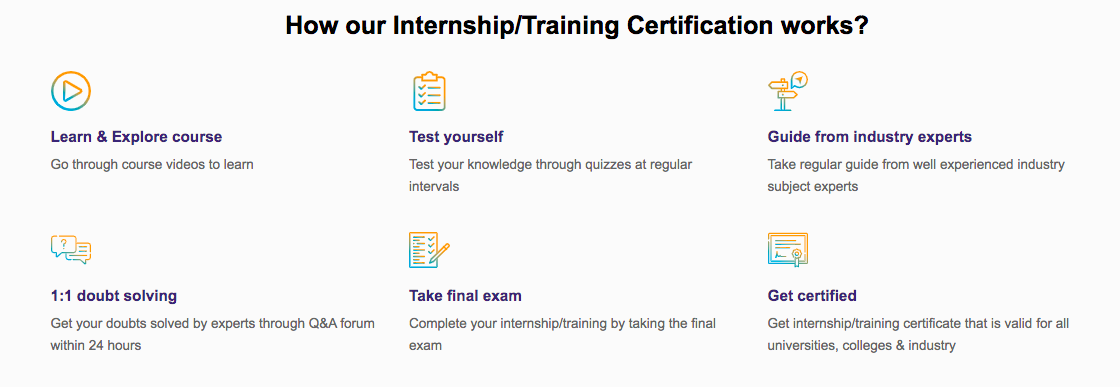
How EasyShiksha Internship/Training Program Works
The Curriculum Alignment Problem Between Universities
Curriculum alignment refers to the relationship between programme objectives, subject content, teaching activities, and assessment requirements. When two universities offer the same specialisation, their curricula do not need to be identical. However, their academic expectations should be sufficiently clear for students and other institutions to understand what each programme provides.
Problems arise when subject structures appear similar but cover different levels of knowledge. A data analytics programme at one university may introduce probability and statistics before advanced predictive modelling. Another programme may move directly towards software-based analytics without requiring students to demonstrate the same mathematical foundations.
These differences can create difficulties when students transfer between institutions. A learner who has completed a course in predictive analytics may expect to receive credit for an equivalent subject at another university. However, the receiving institution may determine that the student's previous programme did not cover the statistical methods or analytical reasoning required by its own curriculum.
The reverse situation can also occur. A student may have completed extensive theoretical coursework at one university but discover that another institution requires practical laboratory work, industry projects, or software-based assignments that were not included in the previous programme.
Curriculum alignment becomes even more complicated in multidisciplinary specialisations. Artificial intelligence, for example, combines programming, mathematics, statistics, data engineering, machine learning, ethics, and domain-specific applications. Universities may select different combinations of these subjects based on their institutional strengths.
For students, this means that programme titles should not be treated as complete descriptions of academic content. They need access to detailed learning outcomes, subject descriptions, prerequisite requirements, practical expectations, and assessment structures.
Assessment Standards: The Hidden Source of Academic Differences
One of the most significant sources of incompatibility between universities is assessment design. Two institutions may teach similar material but evaluate student understanding in very different ways.
A university may rely heavily on written examinations, requiring students to explain definitions, solve theoretical problems, and reproduce established methods. Another may evaluate students through practical projects, research reports, laboratory exercises, presentations, and independent problem-solving tasks.
Neither approach is automatically sufficient on its own. Written examinations can evaluate conceptual understanding and individual knowledge, while projects can demonstrate application and practical reasoning. However, when assessment methods are substantially different, comparing student achievement becomes difficult.
Consider two graduates of artificial intelligence programmes. Both receive high grades in machine learning. The first student has completed examinations involving algorithm definitions, mathematical concepts, and theoretical questions. The second has developed machine learning models, prepared datasets, compared performance metrics, investigated model errors, and presented a practical research report.
Their grades may appear equally strong, but the evidence supporting those grades represents different capabilities. An employer recruiting for a practical machine learning role may need to understand whether the candidate can independently build and evaluate models. A research institution may be more interested in mathematical foundations, experimental design, and theoretical reasoning.
Assessment incompatibility also affects grading systems. One university may award high marks for meeting specified academic requirements, while another may apply stricter grading criteria or require independent research at a higher level. A score of 85 percent at one institution may not represent exactly the same level of performance as the same score elsewhere.
This does not mean grades are meaningless. It means that grades should be interpreted alongside assessment methods, learning outcomes, and evidence of student achievement.
The Problem of Credit Transfer and Academic Mobility
Credit transfer allows students to carry recognised academic achievements from one institution to another. It is an important part of flexible higher education because learners may change universities, relocate, pursue further studies, or combine academic experiences from different providers.
However, credit transfer becomes difficult when universities use incompatible academic standards. A receiving institution must determine whether the student's previous learning is sufficiently similar to the requirements of the programme into which they want to transfer.
The number of credits alone may not provide enough information. Two universities may assign the same credit value to a subject while expecting different levels of academic work. One course may involve extensive laboratory practice, while another may be based primarily on lectures and examinations.
For example, a student transferring from one university's cybersecurity programme to another may have completed a subject called Network Security. The receiving university may offer a subject with the same title but require practical experience in network monitoring, vulnerability assessment, incident response, and security configuration. If the student's earlier course focused mainly on theoretical explanations, the institution may decide that the credits are not fully equivalent.
This can create additional costs and delays for students. They may need to repeat subjects, extend the duration of their degree, pay additional tuition fees, or complete supplementary assessments. Students who believed that their previous academic achievements would be recognised may experience frustration when they discover that their qualifications are not directly transferable.
The problem is particularly important for online learners because they may complete courses and academic modules from several institutions over time. Without clear recognition frameworks, the flexibility of digital education can become limited by administrative and academic incompatibility.
A stronger system would evaluate the actual learning outcomes and evidence of achievement rather than relying exclusively on subject names and credit values.
How Academic Standards Incompatibility Affects Employers and Recruitment
Employers often use academic qualifications as an initial indicator of a candidate's educational background. A degree title and specialisation can suggest that an applicant has studied a particular discipline and developed relevant knowledge.
However, when universities apply significantly different standards, employers may struggle to determine what a qualification actually represents. Two candidates may hold the same specialisation but have completed very different academic and practical experiences.
For instance, a company hiring data analysts may receive applications from graduates of several business analytics programmes. One graduate may have extensive experience in SQL, statistical analysis, dashboard development, and data interpretation. Another may have studied the same subjects primarily through theoretical examinations and guided assignments. Both may hold similar degrees, but their readiness for a practical analytical role may differ.
This can increase the burden on recruitment teams. Employers may need to conduct additional technical tests, portfolio reviews, practical interviews, and skill assessments to establish whether candidates possess the required capabilities.
The problem is not limited to technical roles. Business management graduates may have different levels of experience in strategic planning, financial analysis, project management, and organisational decision-making. Law graduates may have studied different areas of legal research, drafting, interpretation, and professional practice. Marketing graduates may differ in their exposure to digital advertising, consumer research, campaign analytics, and brand strategy.
Employers therefore benefit from qualifications that provide clearer evidence of student competencies. Universities can support this by describing learning outcomes transparently and including practical achievements alongside traditional academic results.
For EasyShiksha, this creates an important connection between education and employability. Students should not only know the title of their qualification but also be able to demonstrate what they can do with the knowledge acquired through it.
Could Universities Use Shared Competency Frameworks Without Teaching Identical Curricula?
One possible solution is the development of shared competency frameworks. These frameworks would identify the knowledge, skills, and capabilities that students should demonstrate within a particular specialisation, while allowing universities to retain flexibility in how they teach them.
For example, universities offering a cybersecurity specialisation could agree on broad competency areas such as security fundamentals, network protection, vulnerability analysis, incident response, risk assessment, and ethical responsibilities. Each institution could then design its own curriculum to address these areas according to its academic approach.
A research-oriented university might introduce advanced technical investigation and security experimentation. A professionally focused institution might prioritise incident response, organisational risk, and practical security operations. Both could demonstrate that their students have achieved the core competencies while offering different areas of specialisation.
Shared frameworks should not become rigid universal syllabuses. Their purpose would be to establish common reference points for comparing academic achievement. Institutions could identify which competencies are compulsory, which are optional, and which represent advanced specialisation.
A framework could also describe different levels of achievement. Beginner-level understanding might require students to explain fundamental concepts. Intermediate competence could involve applying those concepts to familiar problems. Advanced competence might require independent analysis, evaluation of unfamiliar situations, and the ability to justify complex decisions.
This structure would help universities communicate what their programmes deliver without removing academic diversity. It would also provide students and employers with a clearer understanding of the knowledge associated with a specialisation.
The Role of Independent Academic Benchmarking
Independent academic benchmarking can help universities understand how their programmes compare with those offered by other institutions. It involves evaluating curriculum structures, learning outcomes, teaching approaches, assessment requirements, and graduate competencies against recognised reference standards.
Benchmarking does not necessarily mean that one university must copy another. Instead, it provides an opportunity to identify areas of similarity, differences in academic depth, and potential gaps in programme design.
Suppose two universities offer online degrees in financial technology. One programme includes digital payments, banking systems, financial regulations, blockchain, and cybersecurity. The other includes financial modelling, data analytics, algorithmic trading, and digital investment platforms. Benchmarking could reveal that both programmes provide valuable but different forms of expertise.
The universities might then clarify their specialisation pathways and identify the competencies shared by both programmes. Students could use this information to make better enrolment decisions, while institutions could develop supplementary modules for areas where their curricula differ.
Benchmarking could also identify differences in assessment difficulty. If one programme expects students to conduct independent research while another relies primarily on guided assignments, this information can help explain why the qualifications should not automatically be considered identical.
For EasyShiksha, academic benchmarking is relevant to the way students compare university programmes and online learning opportunities. Clear programme information can help learners understand not only what subjects are offered but also what level of work and practical competence they are expected to achieve.
How Digital Learning Platforms Could Help Compare Academic Standards
Digital education platforms can play an important role in making academic standards more transparent. They can organise course information, learning outcomes, assessment evidence, and student achievements in ways that are easier to compare across educational providers.
A digital comparison system could examine two programmes within the same specialisation and identify differences in their learning objectives. Instead of comparing only subject names, it could map the concepts and competencies covered by each programme.
For example, two artificial intelligence programmes may both include machine learning, but their learning outcomes could differ. One may focus on selecting and using existing algorithms, while another may require students to understand mathematical foundations, evaluate model performance, investigate bias, and design experiments. A structured comparison would make these distinctions visible.
Digital systems could also connect individual courses with broader competency frameworks. A student completing an online course in data visualisation could receive evidence of specific skills, while a university subject might demonstrate more advanced abilities in statistical interpretation and research analysis.
However, automated comparisons should be treated carefully. Similar terminology does not always mean equivalent learning, and different terminology does not necessarily indicate different competencies. Human academic review remains important when evaluating complex subjects.
The strongest digital systems would combine structured information, clear competency definitions, assessment records, and expert oversight. This could make academic comparison more efficient without reducing education to automated subject matching.
How EasyShiksha Could Support Academic Comparability
EasyShiksha's educational ecosystem creates opportunities to address academic standards incompatibility through more transparent learning information and connected evidence of student achievement. Since the platform covers online courses, university programmes, online degrees, quizzes, worksheets, internships, games, and career preparation, it can support a broader understanding of how students develop knowledge across different educational experiences.
One important opportunity is to present university programmes through clearly structured learning outcomes. Students should be able to understand what a specialisation covers, what level of knowledge is expected, how practical learning is organised, and what kinds of assessments are used. This information would help learners compare programmes based on educational substance rather than titles alone.
Online courses could provide supplementary learning when students discover gaps between different academic standards. For example, a learner transferring into an advanced data science programme may need additional preparation in statistics or programming. A targeted EasyShiksha course could help strengthen the missing knowledge before the student begins more advanced subjects.
Quizzes and worksheets could provide evidence of conceptual understanding and practical application. Educational games could introduce decision-making challenges, while projects could help students demonstrate independent work. Internships could provide evidence of professional exposure, although workplace experience would need to be evaluated according to clearly defined learning outcomes.
EasyShiksha could also explore a structured learning evidence record that connects each completed activity with the competencies it supports. Rather than displaying only a list of certificates, such a record could show the subjects studied, practical tasks completed, skills demonstrated, and assessment outcomes achieved.
This would not automatically make qualifications from different universities equivalent. Formal academic equivalence and credit transfer must remain subject to the relevant universities and applicable regulations. However, clearer learning evidence could help students explain their academic backgrounds and help institutions evaluate previous learning more accurately.
Creating a Cross-University Learning Evidence Architecture
A more advanced solution would involve creating a structured evidence architecture that connects academic achievements from multiple institutions. Such a system would focus on what students have learned and demonstrated rather than treating each certificate as an isolated document.
Imagine a student who completes an online foundation course in programming, studies computer science at one university, completes an advanced cybersecurity module through another educational provider, and gains practical experience through an internship. These achievements may come from different institutions, but they can still contribute to a connected record of learning.
The evidence architecture would identify the competency associated with each achievement. A programming course might demonstrate coding fundamentals, while a university subject could establish knowledge of algorithms and computational theory. A cybersecurity project might provide evidence of vulnerability assessment, and an internship could demonstrate the application of security procedures in a professional environment.
The system would also need to record the level of assessment. A course certificate based on participation should not be treated as equivalent to a qualification requiring supervised examinations, independent research, or practical demonstrations. The evidence should explain how the competency was assessed and what level of achievement was established.
This approach could support academic mobility by making previous learning easier to evaluate. Universities would still make formal decisions about credit recognition, but they would have more detailed information than a programme title or certificate alone.
For EasyShiksha, such an architecture could connect different learning products into a unified student development journey. It would help learners understand how courses, quizzes, worksheets, projects, internships, and university education contribute to their broader academic and professional capabilities.
The Importance of Standardised Assessment Descriptions
Shared competency frameworks are useful, but they cannot provide meaningful comparison unless universities also explain how students are assessed. Two programmes may claim to develop the same skill while using very different assessment methods.
Consider analytical reasoning. One university may assess it through multiple-choice examinations, while another requires students to analyse an unfamiliar dataset and defend their conclusions. Both may list analytical reasoning as a learning outcome, but the evidence of achievement is different.
Standardised assessment descriptions could clarify whether students are evaluated through examinations, individual projects, group assignments, research reports, laboratory work, presentations, or practical demonstrations. Institutions could also explain whether assessments are supervised, open-resource, collaborative, or individually completed.
The purpose would not be to force all universities to use the same assessment methods. Different methods are appropriate for different learning outcomes. Instead, a transparent description would allow students, employers, and receiving institutions to understand what a grade represents.
Assessment descriptions could also identify the complexity of tasks. A beginner-level project involving guided instructions is different from an advanced project requiring independent problem definition, research, implementation, testing, and evaluation.
When universities communicate these distinctions clearly, academic comparison becomes more reliable. Students can make informed decisions, and institutions can evaluate transfer applications with a better understanding of the work already completed.
Can Artificial Intelligence Detect Incompatibilities Between University Programmes?
Artificial intelligence could help identify differences between university curricula by analysing course descriptions, learning outcomes, assessment criteria, and competency frameworks. A digital system could compare large volumes of programme information and highlight areas where two specialisations appear similar or different.
For example, an AI-supported comparison tool could examine two business analytics programmes. It might identify that both cover statistics, data visualisation, and business intelligence but differ in programming requirements, predictive modelling, and independent research. The system could then present these differences in a structured format.
AI could also assist students in identifying potential knowledge gaps when moving between programmes. If a receiving university requires advanced statistical modelling and the student's previous programme focused mainly on descriptive analytics, the system could recommend relevant supplementary courses or diagnostic assessments.
Another application could involve mapping assessment evidence to competencies. A project report, quiz result, or internship evaluation could be analysed to identify which learning outcomes it supports. However, the system should not assume that a document proves competence simply because it contains relevant terminology.
AI-generated comparisons can be inaccurate when course descriptions are vague, outdated, or written using different academic language. They may also overlook differences in teaching depth, assessment difficulty, and institutional context. Therefore, AI should support academic evaluation rather than replace university-level judgement.
For EasyShiksha, AI-supported curriculum comparison could eventually help students explore educational pathways more intelligently. It could identify differences between programmes, suggest supplementary learning, and explain why two qualifications with similar names may offer different learning experiences.
Academic Standards and the Risk of Educational Inequality
Academic standards incompatibility can create inequality when students are unable to understand or navigate differences between institutions. Learners with access to academic advisers, professional networks, and detailed programme information may find it easier to identify suitable qualifications and plan transfers. Others may rely primarily on programme titles, promotional descriptions, or incomplete information.
This can lead students to enrol in programmes that do not match their expectations. A learner may assume that a specialisation will provide advanced practical training but later discover that most assessments are theoretical. Another may expect that completed credits will be recognised by a different university, only to face additional academic requirements.
Students with limited financial resources may be particularly affected because repeating subjects or extending degree duration can create additional expenses. Incompatible academic standards can therefore influence not only learning quality but also the affordability and accessibility of higher education.
Transparent programme descriptions can reduce this problem. Universities should communicate learning outcomes, assessment methods, practical requirements, credit structures, and recognition policies in accessible language. Students should be encouraged to examine these details before enrolling.
Digital education platforms can contribute by presenting programme information in a structured and comparable manner. EasyShiksha can support informed student decisions by helping learners understand programme features, available learning pathways, and the relationship between academic study and practical skill development.
Empower your team. Lead the industry
Get a subscription to a library of online courses and digital learning tools for your organization with
EasyShiksha
Maintaining Academic Diversity Without Creating Confusion
A major concern with standardising academic standards is the possibility of reducing institutional diversity. Universities should be able to develop programmes that reflect their research strengths, regional priorities, faculty expertise, and educational philosophies.
A university specialising in artificial intelligence research should be able to offer a programme with extensive mathematical and experimental depth. Another institution with strong industry partnerships may focus on applied AI systems, product development, and deployment. Both approaches can provide valuable education, even though their graduates may have different specialisations.
The objective should therefore be comparability, not complete uniformity. Universities can share broad competency expectations while maintaining distinctive curricula and teaching methods.
A common framework could identify the essential capabilities associated with a specialisation, while allowing institutions to add advanced electives, research pathways, industry projects, and regional areas of focus. Programme descriptions could distinguish between core competencies and institution-specific strengths.
This would make it easier for students to understand what is common across programmes and what makes each university different. It would also help employers identify the specific capabilities associated with individual qualifications.
Academic diversity becomes a strength when differences are transparent. It becomes a problem when students and institutions cannot determine what those differences mean.
Building a More Comparable Higher Education Ecosystem
A more connected higher education system would require cooperation between universities, accreditation bodies, employers, educational platforms, and students. No single institution can solve academic incompatibility independently because qualifications are evaluated across multiple educational and professional environments.
Universities could improve comparability by publishing detailed learning outcomes and assessment descriptions. Academic bodies could develop reference frameworks for broad subject areas. Employers could communicate the practical competencies expected in different professional roles. Educational platforms could connect learning resources and evidence of achievement across different stages of student development.
Technology could support this ecosystem through structured academic records, digital credentials, competency mapping, and secure verification. However, the underlying standards must be academically meaningful. A digital certificate cannot establish equivalence if the learning outcomes and assessment quality remain unclear.
Students should also become active participants in managing their learning records. They should understand what their qualifications represent, what competencies they have demonstrated, and where additional preparation may be required.
For EasyShiksha, this creates an opportunity to connect educational discovery with long-term learning progression. A student could explore university programmes, strengthen foundational knowledge through online courses, assess understanding through quizzes, practise through worksheets and games, and build professional experience through projects and internships.
Such a connected model could help students navigate an education environment in which learning increasingly takes place across multiple institutions and platforms.
Conclusion
When two universities teach the same specialisation using incompatible academic standards, the consequences extend beyond differences in curriculum design. Students may face difficulties transferring credits, comparing qualifications, accessing postgraduate education, and demonstrating their capabilities to employers. Institutions may struggle to determine whether previous learning satisfies their academic requirements, while recruiters may find it difficult to understand what similar degree titles actually represent.
The solution is not to make every university teach identical subjects or use the same assessment methods. Academic diversity is essential for innovation, research, and specialised education. However, universities need clearer ways to communicate what students are expected to learn and what they must demonstrate before receiving a qualification.
Shared competency frameworks, independent academic benchmarking, transparent assessment descriptions, diagnostic evaluations, and structured learning evidence could make qualifications more comparable without removing institutional independence. Digital platforms and artificial intelligence could further support curriculum comparison and identify gaps between different academic pathways, provided that expert evaluation remains central.
EasyShiksha can contribute to this development by connecting online courses, university programmes, quizzes, worksheets, educational games, projects, internships, and career preparation through a competency-focused educational experience. By helping students understand what they have learned and how their achievements relate to practical capabilities, the platform can support more informed academic decisions.
Ultimately, the future of higher education should not depend on making every university identical. It should depend on making academic differences understandable. When students, employers, and institutions can clearly identify the knowledge, skills, and standards represented by a qualification, educational mobility becomes more meaningful and academic trust becomes stronger.
Anshika Jain is an Engineer, Developer, and Educational Content Author known for her dedication to technology and knowledge sharing. With a strong analytical mindset and a passion for innovation, she has consistently contributed to creating meaningful digital solutions and insightful educational articles.
Her ability to simplify complex technical concepts into engaging and easy-to-understand content makes her work valuable for students and learners across various platforms. Along with her technical expertise, Anshika is admired for her creativity, professionalism, and commitment to continuous learning.
She represents a perfect blend of technical excellence and impactful communication, inspiring others through both her development work and educational contributions.