Digital education has made learning more accessible than ever. Students can begin a course from almost anywhere, study at flexible times, access recorded lectures, attempt quizzes, complete projects and earn certificates without following the rigid structure of a traditional classroom. Yet greater access does not automatically guarantee continuous progress. Many learners begin with strong motivation and gradually lose momentum somewhere between starting a course and completing it.
The interesting question is not simply why students drop out. The more important question is where and why momentum begins to weaken.
A learner may enthusiastically enrol in a course, complete the first few lessons and then begin spending less time on the platform. Another learner may continue logging in but repeatedly postpone difficult modules. A third learner may attempt quizzes several times without improving performance. Someone else may complete lessons quickly but stop when the course requires a project or practical application. These behaviours may look different on the surface, but they can all represent forms of learning friction.
The concept of a Learning Friction Index offers a possible way to understand this hidden problem. Rather than measuring learning only through completion rates or final scores, a Learning Friction Index could attempt to identify points where learners experience increasing difficulty, confusion, disengagement, cognitive overload or loss of motivation. Technology, particularly artificial intelligence and learning analytics, could potentially analyse these signals and help platforms intervene before temporary friction becomes permanent disengagement.
For an education ecosystem such as EasyShiksha, this concept is particularly relevant. A platform that connects courses, quizzes, projects, internships, certificates, games and career guidance has access to multiple stages of the learner journey. The challenge is to understand not only what learners complete but also where they struggle to maintain momentum and what support could help them continue.
What Is Learning Friction?
Learning friction refers to the obstacles that make it harder for a learner to continue progressing through an educational experience. It does not necessarily mean that the learner lacks ability. Friction can occur because a concept is difficult, a lesson is poorly sequenced, an assessment is confusing, the workload becomes overwhelming, the learner lacks prerequisite knowledge or the connection between the learning activity and the learner's goal becomes unclear.
This distinction is important because traditional educational systems often interpret reduced progress as a problem with learner motivation. A student who stops completing lessons may be labelled distracted or inconsistent. However, the real cause may be a difficult transition within the learning journey.
Imagine a student completing an introductory programming course. The first modules may explain basic concepts in simple examples. The learner progresses comfortably until the course introduces complex problem-solving tasks. At that point, lesson completion begins to slow, quiz attempts increase and the learner spends longer periods away from the platform. If the system only records completion, it may conclude that the learner is losing interest. A deeper analysis might reveal that the learner has encountered a specific capability gap.
This is the difference between measuring behaviour and understanding friction.
Why Momentum Matters in Digital Learning
Momentum plays an important role in learning because education is cumulative. New concepts often depend on previously understood concepts. When learners maintain steady progress, they are more likely to build upon existing knowledge and develop a coherent understanding of the subject.
When momentum breaks, however, the learner can begin accumulating unresolved difficulties. Missing one concept may make the next lesson harder. Avoiding a difficult assessment may delay progress. Falling behind can create psychological pressure, making it increasingly difficult to return.
Digital platforms are particularly well positioned to detect changes in learning momentum because they can observe patterns over time. They can potentially identify changes in lesson completion, assessment performance, session frequency, practice behaviour and interaction with learning resources.
The objective should not be to monitor students continuously for the sake of surveillance. The purpose should be to recognise when a learner may need support and offer that support at the right moment.
This creates an important shift from reactive education to proactive education.
Traditional learning analytics often focuses on measurable activities. Platforms can determine how many lessons a student completed, how many quizzes were attempted, how long the learner spent on a page or whether an assessment was passed.
These metrics are useful, but they do not always explain what happened between them.
A student may complete fewer lessons because the content became difficult. Another may complete fewer lessons because the learner has already understood the material and does not need to spend additional time on it. A third may stop because the learning path no longer appears relevant to the student's career goals.
The same behavioural signal can therefore have multiple explanations.
A Learning Friction Index would need to move beyond isolated metrics and examine patterns. The system could look for changes from the learner's previous behaviour rather than comparing every student against a universal standard.
For example, if a learner normally completes three modules per week but suddenly begins spending significantly more time on one module, repeatedly revisits the same concept and performs poorly on related quizzes, the pattern may indicate learning friction. The system could then investigate whether the difficulty is conceptual, technical, motivational or structural.
The goal is not simply to assign a score. The goal is to make the score meaningful.
What Could a Learning Friction Index Measure?
A Learning Friction Index could potentially combine several forms of learning evidence. Course behaviour could provide information about how learners move through content. Quiz performance could reveal conceptual difficulties. Practice activity could indicate whether learners are able to apply concepts. Project progress could reveal where learners struggle when multiple skills must be combined.
Time can also provide valuable context. A learner spending more time on a challenging topic is not automatically experiencing negative friction. Deliberate effort is an important part of learning. Friction becomes more concerning when increased effort is accompanied by repeated errors, avoidance or declining progress.
This means that the index should not simply reward speed. A system that interprets slower learning as failure could encourage superficial learning rather than mastery.
The more useful approach would be to distinguish productive effort from unproductive friction.
Productive friction occurs when a learner is challenged, makes mistakes, receives feedback and gradually improves. Unproductive friction occurs when the learner encounters an obstacle without sufficient support and begins losing the ability or motivation to continue.
Technology could potentially help distinguish between these two patterns.
Detecting the Moment When Students Begin to Struggle
One of the most valuable applications of learning intelligence is early detection. By the time a student officially drops a course, the underlying problem may have existed for weeks.
A student might first begin skipping optional practice. Then quiz performance may decline. Next, the learner may postpone difficult lessons. Eventually, the learner may stop logging in.
If technology can identify the earlier signals, intervention can happen before disengagement becomes permanent.
For example, EasyShiksha could theoretically analyse a learner's progression across courses and identify a sudden change in behaviour. Instead of waiting for the learner to abandon the course, the platform could present a more appropriate intervention, such as a simpler explanation, prerequisite revision, targeted practice or a different learning format.
This is where AI becomes particularly useful. Rather than responding to one event, an intelligent system can examine patterns across multiple signals.
The system might recognise that a learner is not generally disengaged. The difficulty may be concentrated in one topic. That distinction could lead to a much more useful intervention.
Learning Friction Is Not Always a Learner Problem
One of the biggest risks in friction analysis is assuming that every obstacle exists inside the learner.
Sometimes the learning design itself creates friction.
A course may introduce advanced concepts too quickly. Instructions may be unclear. Examples may not reflect the learner's context. Assessments may test information that was not adequately explained. A project may require skills that the learner was never taught.
If many learners experience difficulty at the same stage, the issue may be with the learning experience rather than individual capability.
This creates an important opportunity for technology. A Learning Friction Index could potentially identify recurring friction points across large numbers of learners. If thousands of students consistently struggle with the same transition, educators can investigate the course structure.
The index therefore becomes useful not only for personalisation but also for improving educational design.
The Role of AI in Understanding Learning Friction
Artificial intelligence can potentially transform learning friction analysis from simple measurement into educational reasoning. Traditional analytics might identify that a student has spent more time on a particular module. AI could potentially examine the broader context and suggest possible explanations.
For example, repeated mistakes in a specific concept combined with high engagement could indicate a conceptual difficulty. A sudden decline in activity after an assessment failure could indicate confidence-related friction. Strong performance across lessons followed by difficulty with a practical project could suggest a transition from knowledge to application.
These interpretations must remain probabilistic rather than being treated as unquestionable diagnoses. Human behaviour is complex, and technology should not pretend that every learner's motivation can be inferred perfectly from digital activity.
Instead, AI should identify patterns that deserve attention and support educators and learners in understanding them.
This makes the system more useful as a learning assistant rather than an automated judge.
The Learning Friction Index and Personalised Learning
Personalisation is often presented as recommending different courses to different students. A more advanced form of personalisation would respond to friction dynamically.
Two students studying the same course may need completely different interventions. One may need more examples. Another may need additional practice. A third may benefit from moving to a more advanced challenge because the current material is too easy.
A Learning Friction Index could help determine which response is appropriate.
For EasyShiksha, this could support a more adaptive learning journey. A learner who struggles with a quiz topic could receive targeted practice. A learner who understands the concept but cannot apply it could be directed toward a project. A learner experiencing difficulty because of prerequisite gaps could be guided back to foundational material.
The learning journey becomes responsive rather than fixed.
Quizzes as Friction Detection Tools
Quizzes can provide some of the clearest signals about learning friction when they are designed appropriately. A single incorrect answer does not necessarily indicate a problem. However, repeated errors around related concepts can reveal a pattern.
The sequence of attempts can also matter. If a learner makes mistakes, receives feedback and improves, the friction may be productive. If repeated attempts produce similar errors without improvement, additional intervention may be necessary.
EasyShiksha's quiz environment can therefore be viewed as more than an assessment feature. Quizzes can contribute to an evolving understanding of learner capability.
This becomes especially valuable when quiz data is connected with course progress and practical activities. The platform can begin to distinguish between learners who are progressing smoothly and those who are encountering specific obstacles.
The objective is not to punish learners for incorrect answers. It is to use mistakes as signals that help improve the next learning experience.
Projects Reveal Deeper Forms of Friction
Projects introduce a different kind of learning friction because they require learners to integrate knowledge.
A learner may perform well in isolated quizzes but become uncertain when asked to create something independently. This does not necessarily indicate poor academic performance. It may reveal the gap between conceptual knowledge and practical capability.
Project friction can occur at several levels. A learner may not understand the task, may not know how to begin, may lack one prerequisite skill or may struggle to combine multiple concepts.
Technology can potentially detect some of these patterns through project milestones and learner interactions. If a learner repeatedly starts and abandons a project, requests assistance at the same stage or spends unusually long periods on one task, the system may identify a potential friction point.
This creates an opportunity for timely support before frustration becomes disengagement.
Games and Interactive Learning as Friction Reduction
Learning games can also contribute to the management of learning friction. Interactive experiences can make practice more engaging and provide learners with immediate feedback.
However, gamification should not be treated as a universal solution. A game cannot automatically make difficult learning easy. Its value depends on whether the interaction helps learners understand concepts, practise skills or remain engaged with meaningful challenges.
For platforms such as EasyShiksha, games can become one component of a larger learning ecosystem. If a learner repeatedly struggles with a concept, an interactive simulation or game-based exercise may offer an alternative way to practise it.
This provides another dimension of learning personalisation: changing not only what the learner studies but also how the learner experiences the learning process.
Career Relevance Can Create or Remove Learning Friction
Not all learning friction is cognitive. Sometimes learners lose momentum because they cannot see why the material matters.
A student may continue studying a subject when the relationship between the learning activity and a career goal is clear. When that connection becomes uncertain, motivation can decline even if the content itself is manageable.
This makes career guidance an important part of friction management.
If EasyShiksha can connect learning activities with potential career pathways, students may better understand why particular skills matter. A difficult module can become more meaningful when learners can see how the capability relates to a future internship, project or professional role.
Career goals can also change. A learner may discover that an initially selected pathway does not match their interests. Instead of interpreting the resulting decline in engagement as simple failure, an intelligent platform could recognise that the learner may need career exploration.
The solution may therefore be a pathway change rather than additional motivation to continue the original one.
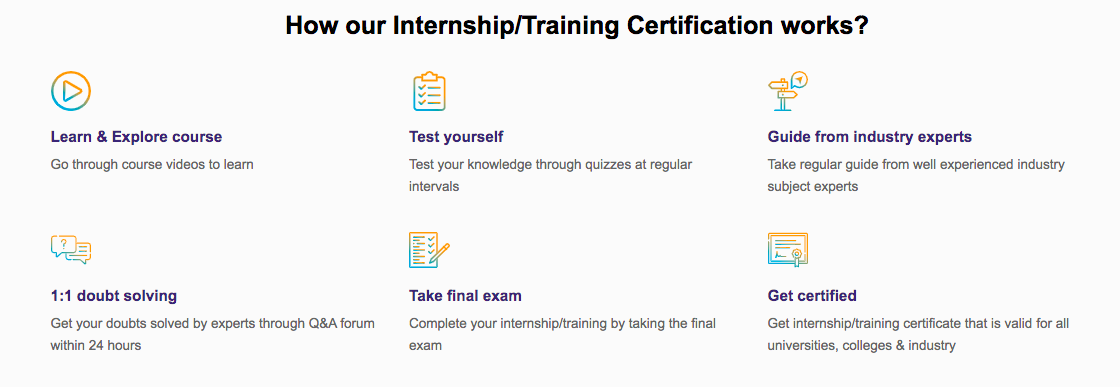
How EasyShiksha Internship/Training Program Works
Learning Friction and the Nonlinear Student Journey
Traditional education often assumes a linear journey. Students begin a course, complete each module in sequence, pass an assessment and move forward.
Real learning is rarely so simple.
Students revisit topics, change interests, discover gaps, pause because of personal responsibilities, return to previous concepts and shift career goals. A modern digital learning platform should accommodate these nonlinear journeys.
A Learning Friction Index can support this model by identifying where the learner is struggling without assuming that returning to an earlier stage represents failure.
Sometimes going backward is exactly what allows learning to move forward.
For example, a student struggling with advanced data analytics may need to revisit statistics. Another learner preparing for an internship may realise that foundational communication skills require improvement. A flexible platform can treat these transitions as part of learning rather than deviations from the expected path.
From Friction Score to Learning Intervention
The most important question is what happens after friction is detected.
A score by itself does not improve learning. If a platform tells a student that their friction level is high but does not provide useful support, the measurement has limited value.
The real opportunity lies in connecting detection with intervention.
If the system identifies a conceptual gap, it could recommend targeted revision. If the learner is struggling with application, it could provide guided practice. If the learner is overwhelmed by workload, the platform could help reorganise the learning schedule. If the learner's career objective has changed, career guidance could help redesign the pathway.
This creates a closed learning loop in which technology observes, interprets and supports.
The ideal system does not simply say, “You are struggling.” It helps answer, “What is making this difficult, and what can we do next?”
Protecting Student Privacy and Autonomy
Any technology capable of analysing learning behaviour must be designed carefully. Learning data can reveal sensitive information about educational performance, habits and potential weaknesses.
Students should understand what data is being collected, why it is being used and how it contributes to their learning experience. A friction index should not become a hidden ranking system that labels learners as weak, unmotivated or problematic.
The purpose should be assistance rather than surveillance.
Students should also retain meaningful control over their learning journey. AI can provide recommendations, identify patterns and suggest interventions, but learners should be able to understand and question those recommendations.
Transparency is particularly important when technology interprets behaviour. A learner should not be told that an algorithm has determined they are unmotivated when the actual reason may be unknown.
The most responsible approach is to treat AI-generated interpretations as signals for discussion rather than absolute conclusions.
Human Teachers and AI Working Together
Technology can identify patterns at a scale that would be difficult for individual educators to monitor manually. However, teachers and mentors bring contextual understanding that algorithms may lack.
A teacher may know that a student is balancing multiple responsibilities. A mentor may understand that a learner is preparing for an upcoming internship. An educator may recognise that an entire class is struggling because a particular explanation was unclear.
The strongest model therefore combines machine intelligence with human judgement.
AI can help surface potential friction points, while teachers can investigate their causes and decide how best to respond. This can make educational support more proactive without eliminating the human relationship at the centre of learning.
For EasyShiksha, such a model could strengthen the connection between digital learning and career-oriented guidance.
Designing Education Around Momentum Rather Than Completion
The idea of learning momentum changes how educational success is measured. Instead of asking only how many students completed a course, platforms can begin asking whether students maintained meaningful progress and what happened when progress slowed.
This does not mean that completion becomes irrelevant. Completion remains useful. But it becomes one part of a larger understanding of learner development.
Momentum can reveal whether learners are progressing confidently, struggling productively or becoming stuck. These distinctions can help education platforms design better experiences.
A learner who pauses because they are deeply practising a difficult skill should not be treated the same way as a learner who has become disengaged. A learner who revisits a concept intentionally should not be classified as falling behind.
The goal is therefore not to eliminate every form of friction. Learning requires challenge. The goal is to distinguish productive challenge from unnecessary obstacles.
Frequently Asked Questions
Q. How can I apply for an internship with EasyShiksha?
You can apply by visiting our website, browsing available internships, and following the application instructions provided.
Q. What types of internships are available through EasyShiksha?
EasyShiksha offers a wide range of internships across technology, business, marketing, healthcare, and more.
Q. Will I receive a certificate upon completing an internship?
Yes, upon successful completion, you will receive a certificate recognizing your participation and achievements.
Q. Are EasyShiksha's certificates recognized?
Yes, the certificates are recognized by universities, colleges, and employers worldwide.
Q. When can I start the course?
You can choose any course and start immediately without delay.
Q. What are the course and session timings?
These are fully online courses. You can learn at any time and pace that fits your schedule.
Q. What will happen when my course is over?
After completion, you will have lifetime access to the course for future reference.
Q. Can I download the notes and study material?
Yes, you can access and download course materials and have lifetime access for future reference.
Q. What software/tools would be needed?
All necessary software/tools will be shared during the training as needed.
Q. I’m unable to make a payment. What should I do?
Try using a different card. If the problem persists, email us at info@easyshiksha.com.
Q. Do I get the certificate in hard copy?
No, only a soft copy is provided, which can be downloaded and printed if required.
Q. The payment got deducted but shows “failed”?
The deducted amount will be returned to your account in 7-10 working days automatically.
Q. Payment successful but dashboard shows ‘Buy Now’?
Reflection may take 30 mins. If longer, email info@easyshiksha.com with your screenshot.
Q. What is the refund policy?
Refunds are available for technical issues. No refunds once a certificate is generated.
Q. Can I enroll in a single course?
Yes, select any course, complete the details, and start learning immediately.
Q. Need further help?
Contact us at info@easyshiksha.com for any other questions.
The Future of the Learning Friction Index
The Learning Friction Index could eventually become part of a broader learning intelligence architecture. Instead of existing as a single number, it could represent a dynamic understanding of where a learner is experiencing difficulty across different dimensions.
Future learning systems may combine course activity, assessment patterns, practice behaviour, project progress, internship experience and career objectives to identify friction across the entire student journey.
Such systems could potentially recognise friction before it becomes visible through course abandonment. They could identify when a learner needs a prerequisite, a different explanation, more practice, a practical project or a change in career direction.
This would represent an important transition from reactive education to predictive and adaptive education.
The objective would not be to create a perfect algorithm for predicting student behaviour. Human learning is too complex for that. Instead, the objective would be to create an intelligent support layer that helps learners and educators understand where progress is becoming difficult.
EasyShiksha and the Future of Friction-Aware Learning
The Learning Friction Index represents a natural extension of the broader transformation taking place in digital education. As platforms evolve beyond simple course libraries, their value will increasingly depend on how intelligently they understand the learner's journey.
EasyShiksha already brings together multiple components of that journey through courses, quizzes, practical learning, internships, certificates, games and career-oriented experiences. Connecting these components through learning intelligence could make it possible to understand not only what students are doing but also where their progress becomes difficult.
A learner's journey should not be evaluated only by the number of courses completed. The more meaningful question is whether the learner is continuously moving toward greater understanding, stronger capability and clearer career direction.
The Learning Friction Index could become one mechanism for supporting that objective. It could help identify moments when learners need additional explanation, targeted practice, practical experience, career guidance or simply a more flexible learning path.
The most powerful version of this idea would not attempt to remove difficulty from education. Difficulty is part of meaningful learning. Instead, it would help distinguish between productive struggle and unnecessary friction.
That distinction could fundamentally change how digital learning platforms support students.
The future of education may therefore move from systems that wait for learners to fall behind toward systems that recognise when momentum is beginning to weaken and respond intelligently. Instead of asking only whether a student completed a lesson, technology could help ask whether the learner understood it, whether the learner can apply it and whether the learner is still moving confidently toward a meaningful goal.
For EasyShiksha, this creates an opportunity to build a more responsive education ecosystem in which learning data becomes useful educational intelligence. Courses provide knowledge, quizzes reveal understanding, projects demonstrate application, internships create experience and career guidance connects learning with opportunity. A Learning Friction Index can sit across these stages, helping identify where the journey becomes difficult and what might help the learner continue.
Ultimately, the purpose of measuring learning friction is not to measure students more aggressively. It is to support them more intelligently. When technology can recognise the difference between a learner who is productively challenged and one who is quietly becoming stuck, digital education can move closer to its most important promise: creating learning experiences that adapt to people rather than forcing people to adapt to rigid learning systems.
Anshika Jain is an Engineer, Developer, and Educational Content Author known for her dedication to technology and knowledge sharing. With a strong analytical mindset and a passion for innovation, she has consistently contributed to creating meaningful digital solutions and insightful educational articles.
Her ability to simplify complex technical concepts into engaging and easy-to-understand content makes her work valuable for students and learners across various platforms. Along with her technical expertise, Anshika is admired for her creativity, professionalism, and commitment to continuous learning.
She represents a perfect blend of technical excellence and impactful communication, inspiring others through both her development work and educational contributions.