For generations, education has followed a relatively linear structure. Students attend classes, complete subjects, pass examinations, earn certificates or degrees, and eventually begin searching for employment. Progress is usually measured through marks, grades, credits, semesters, and qualifications. While these measures remain important, the digital transformation of education is creating new ways to understand how a learner develops.
One emerging concept is the digital skill tree. Inspired by progression systems used in games and digital platforms, a skill tree can represent learning as a connected structure in which foundational capabilities unlock more advanced knowledge, practical experiences, projects, and career possibilities. Instead of viewing education as a collection of unrelated courses, the learner can see how one skill contributes to another and how different learning milestones gradually expand professional possibilities.
The idea becomes particularly relevant for online education. Digital platforms can connect courses, quizzes, projects, internships, certificates, university programmes, games, career guidance, and job preparation in ways that traditional educational systems may find difficult to organise into a single learner experience.
For an ecosystem such as EasyShiksha, the digital skill tree could provide a framework for bringing these elements together. A student could begin with foundational learning, test understanding through quizzes, develop practical capabilities through projects, complete internships, earn certificates, explore university programmes, and gradually build toward career-oriented opportunities.
The goal would not be to turn education into a game or reduce learning to points and rewards. Instead, the digital skill tree can be understood as a visual and structural model for helping students understand where they are, what they have developed, what they can learn next, and how their capabilities connect with possible career pathways.
What Is a Digital Skill Tree?
A digital skill tree is a structured representation of connected skills and learning milestones. Each skill can act as a node within a larger learning system, with relationships between foundational and advanced capabilities.
For example, a student interested in data science may begin with mathematics and statistics. Those foundations can lead toward data analysis, Python programming, data visualisation, machine learning, and eventually specialised areas such as predictive modelling or artificial intelligence.
The tree does not necessarily need to be completely linear. Students can branch into different directions depending on their interests and goals.
A learner who starts with programming may move toward web development, data science, artificial intelligence, cybersecurity, or software engineering. Another learner may combine programming with design and move toward user experience or product development.
The digital skill tree therefore provides a map rather than a single prescribed route.
This distinction is important because modern careers are increasingly interconnected. Skills can overlap across professions, and individuals may combine capabilities from different disciplines to create unique professional profiles.
Why Learning Milestones Matter
A milestone represents a meaningful point of progress in a learner's development.
Traditional education already contains milestones such as completing a semester, passing an examination, or earning a degree. However, a digital skill tree can introduce smaller and more skill-specific milestones.
A learner might complete an introductory programming course, demonstrate understanding through a quiz, build a small application, complete a practical project, and then move toward an internship. Each stage represents a different form of development.
The value of milestones is that they make progress visible.
Students often struggle to understand how much they have actually learned, particularly when studying online. A large course can feel overwhelming, while a long-term career goal can seem distant. Breaking development into meaningful milestones can make the journey easier to understand.
Instead of thinking only about becoming a software developer, a student can see the individual capabilities that contribute to that broader objective.
The career goal becomes connected to a series of achievable learning experiences.
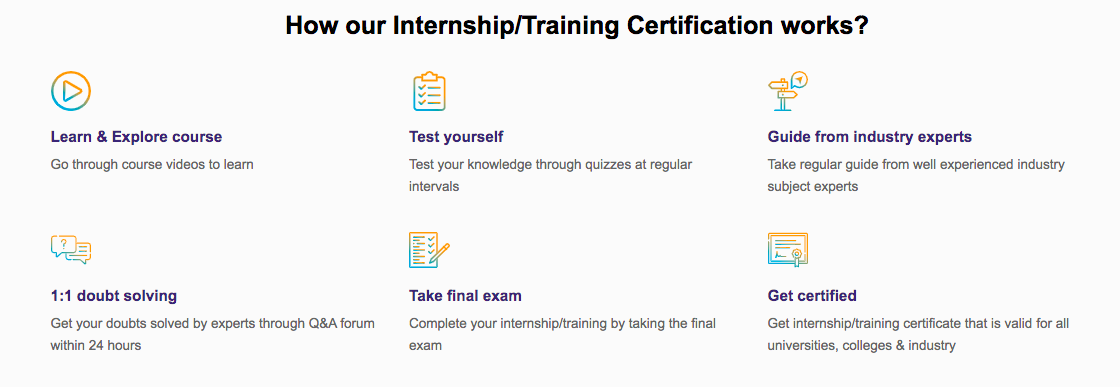
How EasyShiksha Internship/Training Program Works
From Course Libraries to Learning Pathways
One of the biggest challenges in online education is the sheer volume of available content.
A learner can find thousands of courses covering programming, marketing, finance, artificial intelligence, cybersecurity, design, business, communication, and other subjects. Access is no longer the primary problem. The challenge is knowing what to learn, in what sequence, and for what purpose.
A digital skill tree can address this problem by transforming a course library into a learning pathway.
Instead of presenting courses as isolated options, a platform can show how they connect.
A student who wants to explore cybersecurity might begin with computer fundamentals and networking before moving toward security concepts, ethical hacking, threat analysis, and advanced security practices. The learner can understand why a particular course is recommended rather than selecting content randomly.
This creates context.
The platform becomes less like a digital library and more like a navigation system for learning.
The Foundation Layer: Starting With Core Skills
Every skill tree requires foundational capabilities.
These foundations may include communication, digital literacy, mathematics, logical reasoning, research, problem-solving, basic computer skills, or subject-specific concepts.
The exact foundation depends on the learner's chosen direction.
A student interested in digital marketing may need communication, content creation, audience understanding, and basic analytics. A cybersecurity learner may require networking and operating-system fundamentals. A data science learner may benefit from statistics, mathematics, programming, and data handling.
The digital skill tree can make these relationships visible.
This can prevent a common problem in online learning: jumping directly into advanced topics without understanding the foundations required to make sense of them.
When students can see prerequisites, they can build knowledge more systematically.
Courses as Skill-Building Nodes
Within a digital skill tree, online courses can function as structured learning nodes.
The course itself is not necessarily the final objective. Instead, it contributes to the development of one or more capabilities.
For example, an online Python course can contribute to programming fundamentals. A subsequent data analysis course can build upon that knowledge. A machine-learning course can then use programming and data concepts as prerequisites.
This creates relationships between courses.
For EasyShiksha, such a model could help students understand how individual online courses contribute to broader learning pathways.
Instead of asking only, "Which course should I take?" students can begin asking, "Which skill does this course unlock, and where can that skill take me next?"
That shift can make online learning more purposeful.
Quizzes as Skill Verification Milestones
Quizzes can provide an important checkpoint within the skill tree.
Completing a course does not always mean that the learner has fully understood its concepts. A quiz can provide evidence of conceptual understanding and identify areas that require further practice.
In a digital skill tree, successful assessment can become a milestone that indicates readiness to move forward.
For example, a student learning SQL may first study database concepts, complete exercises, and then take a quiz covering queries, filtering, joins, and basic database operations. Once the learner demonstrates sufficient understanding, the next stage could introduce more advanced SQL applications.
This creates a progression based not simply on course completion but on demonstrated understanding.
The approach can also make learning more interactive.
Students can see which areas they have mastered and which areas need additional attention before moving to a more advanced branch.
Projects as Capability Milestones
Projects add another dimension to the skill tree because they demonstrate application.
A student may understand programming concepts through courses and quizzes, but building a functioning application represents a different level of capability.
Projects can therefore serve as major milestones within the digital skill tree.
A beginner project might require students to apply one or two concepts. An intermediate project can combine multiple skills. An advanced project can involve a complex problem requiring research, design, implementation, testing, and communication.
This progression can create a visible development pathway.
The learner does not simply accumulate completed courses. They gradually produce evidence of what they can do.
For career preparation, this distinction is significant.
Internships as Real-World Unlocks
Internships can represent one of the most important transitions within a digital skill tree because they connect learning with professional environments.
After developing foundational knowledge and completing relevant projects, students can move toward internship experiences that allow them to apply their capabilities.
The internship does not necessarily represent the final level of the skill tree. Instead, it can reveal new branches.
A student may discover a particular area of work they enjoy. Another student may discover a skill gap that requires additional learning. Someone else may realise that their original career interest needs to be reconsidered.
The internship therefore becomes both an achievement and a source of information.
This is particularly valuable because career decisions are often made with incomplete information. Practical exposure can provide students with a more realistic understanding of professional roles.
Certificates as Recognised Milestones
Certificates can provide formal recognition of completed learning experiences.
Within a digital skill tree, certificates can be connected to the specific skills and milestones they represent.
This creates more context around the credential.
Instead of simply showing that a student completed a particular course, the learning record can indicate what capability the course contributed to and what subsequent experiences were completed.
For example, a certificate in digital marketing can be connected to a project involving campaign planning and an internship involving practical marketing work.
The credential becomes part of a larger evidence structure.
This does not make the certificate itself proof of professional mastery. Rather, it provides additional documentation within the learner's overall development record.
Career Opportunities as Branches of the Skill Tree
The most interesting aspect of a digital skill tree is the connection between learning milestones and career exploration.
A student may begin with a broad interest and gradually unlock multiple possible directions.
For example, foundational programming skills can lead toward software development, data analysis, artificial intelligence, cybersecurity, automation, or other technology-related pathways. Additional skills can create intersections between these areas.
Career opportunities therefore become branches rather than destinations that students must select at the beginning.
This reflects the reality that career development is often nonlinear.
Students may discover new interests through projects, internships, courses, and interactions with different fields. A digital skill tree can represent this evolution without forcing every learner into the same path.
The Role of Career Guidance in the Skill Tree
A skill tree can show possible pathways, but students still need context to understand them.
Career guidance can provide that context.
A platform such as EasyShiksha can potentially connect learning milestones with career information, helping students understand how particular skills relate to different professional roles.
For a student considering data science, for example, career guidance can explain the relationship between statistics, programming, data analysis, machine learning, and related professional roles.
For someone interested in digital marketing, the platform can help connect content, SEO, analytics, advertising, social media, and communication skills with different career possibilities.
The purpose is not to tell students which career they must choose. It is to help them understand the relationships between skills and professional opportunities.
Personalised Skill Trees for Different Students
One of the strongest possibilities of digital skill trees is personalisation.
Two students pursuing the same broad career objective may begin with very different capabilities.
One student may already understand programming but lack communication skills. Another may have strong communication abilities but limited technical knowledge.
A fixed curriculum may require both students to follow the same sequence.
A personalised digital skill tree can potentially identify their different starting points and recommend different learning paths.
The first learner may move toward advanced technical projects while receiving communication-focused development. The second may receive additional technical foundations before progressing toward advanced application.
This creates a more adaptive learning experience.
AI and the Intelligent Skill Tree
Artificial intelligence could make digital skill trees considerably more dynamic.
An AI-enabled education platform can potentially analyse course performance, quiz results, project completion, interests, and learning behaviour to recommend the next relevant milestone.
The tree could therefore evolve with the learner.
If a student demonstrates strong performance in one area, the platform may surface advanced opportunities. If repeated assessments indicate difficulty with a foundational concept, the system can recommend additional practice.
AI could also help identify connections between skills that learners may not immediately recognise.
For example, a student with strengths in communication, data analysis, and business may discover pathways that combine these capabilities.
The skill tree becomes a dynamic learning map rather than a static diagram.
Gamification Without Turning Education Into a Game
The digital skill tree naturally resembles progression systems found in games, but educational gamification needs to be designed carefully.
The purpose should not be to make students chase meaningless points.
Instead, game-inspired elements can make progress visible and motivating. Students can see which milestones they have completed, which capabilities they are developing, and which branches remain available.
A learner might progress from foundational skills to intermediate capabilities and eventually to advanced projects or internship opportunities.
The emphasis should remain on meaningful learning.
Games can support engagement, but they should not replace academic depth, practical experience, or genuine assessment.
The Digital Skill Tree and Student Motivation
Students can sometimes lose motivation when the relationship between today's learning and future goals is unclear.
A digital skill tree can make that relationship more visible.
Consider a student learning basic statistics. Without context, statistics may feel like another academic subject. Within a data science skill tree, however, the learner can see that statistics contributes to data analysis, which supports machine learning and other advanced areas.
The learner can therefore understand why the foundational concept matters.
This can create a sense of progression.
The objective is not simply to make learning feel easier. It is to make the structure of learning more understandable.
Building a Skill-Based Digital Identity
Over time, a digital skill tree can contribute to a learner's broader digital identity.
Instead of representing a student only through marks, degrees, and certificates, the learner can have a richer profile showing capabilities, projects, internships, assessments, and areas of interest.
This profile can evolve continuously.
A school student may have a relatively small skill tree. A university student may have multiple branches connected to academic and professional interests. A graduate may continue expanding the tree through certifications, projects, and professional development.
The digital identity therefore becomes a living record of learning.
From Resume to Skill Graph
Traditional resumes are usually chronological documents. They show education, experience, and achievements in a linear format.
A skill tree offers a different representation.
Instead of focusing only on when something was completed, it focuses on how different capabilities are connected.
A student might have learned Python through a course, applied it in a data analysis project, used it during an internship, and then developed machine-learning capabilities. A skill graph can connect these experiences.
This can provide a richer representation of development.
It also supports the broader movement toward evidence-based career profiles, where employers and institutions can potentially understand not only what someone studied but how their capabilities developed.
The Connection Between Skills and Job Readiness
Job readiness is rarely based on a single skill.
A professional role often requires a combination of technical knowledge, communication, problem-solving, collaboration, digital tools, and domain understanding.
A digital skill tree can represent these combinations.
For example, a digital marketing pathway may combine SEO, content strategy, analytics, communication, advertising, and campaign management. A software development pathway may combine programming, databases, version control, testing, problem-solving, and collaboration.
This makes the learning journey more realistic.
Students can see that career readiness is often multidimensional.
University Programmes and the Digital Skill Tree
University programmes can also become part of the skill tree.
A degree can provide deep academic foundations while online courses and practical experiences allow learners to develop specialised capabilities.
For example, a computer science degree can sit at the centre of a broader tree containing branches for artificial intelligence, cloud computing, cybersecurity, software engineering, data science, and other areas.
Similarly, a business degree can connect with branches such as finance, marketing, entrepreneurship, analytics, human resources, and digital business.
This does not mean replacing the university curriculum. Instead, it creates a broader framework around it.
The university programme becomes one major component of a student's overall learning architecture.
The Role of EasyShiksha in a Digital Skill Tree Ecosystem
The digital skill tree concept aligns closely with the broad range of educational experiences available through EasyShiksha.
Online courses can introduce and develop specific capabilities. Quizzes can provide assessment checkpoints. Projects can demonstrate practical application. Internships can provide workplace exposure. Certificates can document completed learning experiences. University programmes and degrees can provide structured academic pathways. Games can support exploration and engagement. Career guidance can help students understand potential directions, while job-oriented resources can help connect developed capabilities with professional preparation.
The opportunity lies in connecting these experiences.
Instead of treating each service as a separate destination, EasyShiksha can be understood as an environment where learners move between different forms of learning according to their evolving skill development.
A student might begin with a beginner course, validate understanding through quizzes, complete a practical project, receive a certificate, move into an internship, discover a new interest, and then branch into another course.
The tree grows as the learner grows.
Learning Milestones Beyond Course Completion
A major advantage of the digital skill tree is that it changes what counts as progress.
Completion is one milestone, but it is not the only one.
A learner can progress through understanding, practice, application, feedback, improvement, and professional exposure.
This creates a more nuanced picture of development.
For example, completing an artificial intelligence course is one milestone. Successfully completing a practical AI project represents another. Applying related skills during an internship represents another. Developing an advanced project can represent another.
The learning journey becomes cumulative.
The Skill Tree as a Career Navigation System
Students often struggle with the question, "What should I learn next?"
A digital skill tree can transform this into a more structured question.
If a student knows their current skills and their broad career interests, the platform can show possible next steps.
This does not require predicting a student's future. Career development remains uncertain, and interests can change. Instead, the system can provide possible pathways based on current learning and goals.
The learner remains in control of the direction.
This makes the skill tree a navigation system rather than a prescription.
Challenges of Building Digital Skill Trees
Creating a meaningful digital skill tree is not simply a matter of connecting courses with lines.
The underlying skill relationships must be carefully designed.
A course may develop several skills, while a single skill may contribute to multiple careers. Some capabilities may be foundational across many fields. Others may be highly specialised.
Assessment is another challenge. A learner completing a course does not necessarily demonstrate mastery. Practical projects and assessments can provide stronger evidence, but evaluating them consistently requires thoughtful design.
There is also a risk of oversimplification. Human learning is complex, and career development cannot always be represented perfectly through a fixed tree.
For this reason, the digital skill tree should function as a flexible map rather than an absolute representation of a student's abilities.
Empower your team. Lead the industry
Get a subscription to a library of online courses and digital learning tools for your organization with
EasyShiksha
The broader trend behind the digital skill tree is a movement toward more visible and evidence-based learning.
Students increasingly need to understand what they can do, not simply what they have completed.
Milestones can help make development visible. Projects can provide evidence. Internships can add experience. Certificates can document learning. Degrees can provide formal academic recognition. Career guidance can help interpret the overall journey.
Digital platforms can connect these components in ways that create a more continuous learning experience.
The result is an education model in which progress is measured through the accumulation and application of capabilities.
Conclusion: Unlocking Possibilities Through Learning
The digital skill tree offers a new way to think about student development.
Instead of viewing education as a sequence of unrelated courses, semesters, examinations, and certificates, learners can see their development as an interconnected network of skills and experiences.
Foundational learning can lead to advanced knowledge. Courses can lead to quizzes and projects. Projects can lead to internships. Internships can reveal new learning opportunities. Certificates can document achievements. University programmes can provide academic depth. Career guidance can help learners understand possible directions, while job-oriented preparation can support the transition into professional life.
For EasyShiksha, this concept fits naturally into an ecosystem that brings together online courses, quizzes, internships, university programmes, games, certificates, degrees, career guidance, and job preparation.
The most valuable feature of a digital skill tree is not the visual tree itself. Its real value lies in helping learners understand that every meaningful learning experience can contribute to a larger capability profile.
A student does not have to know their entire career path from the beginning. They can start with curiosity, build foundational skills, test their understanding, complete projects, gain experience, discover new interests, and branch into new areas.
Anshika Jain is an Engineer, Developer, and Educational Content Author known for her dedication to technology and knowledge sharing. With a strong analytical mindset and a passion for innovation, she has consistently contributed to creating meaningful digital solutions and insightful educational articles.
Her ability to simplify complex technical concepts into engaging and easy-to-understand content makes her work valuable for students and learners across various platforms. Along with her technical expertise, Anshika is admired for her creativity, professionalism, and commitment to continuous learning.
She represents a perfect blend of technical excellence and impactful communication, inspiring others through both her development work and educational contributions.