Education platforms have become increasingly effective at helping learners access courses, develop knowledge, complete assessments, and earn certificates. Yet an important challenge remains after a student demonstrates a skill: what should happen next? A learner may complete a web development course, demonstrate proficiency in HTML and CSS, and build a basic website, but still struggle to identify the next skill to acquire, the project to undertake, or the internship for which they may be prepared. Another learner may complete a digital marketing programme and demonstrate the ability to analyse campaign data without knowing how to turn that achievement into a relevant professional opportunity.
This gap between demonstrated capability and meaningful next steps creates an opportunity for a new educational architecture: the Skill-to-Opportunity Compiler. The concept describes a system that interprets verified competencies and converts them into actionable recommendations for further learning, practical experience, internships, projects, and career development. Instead of simply displaying a list of completed courses, the system would examine what a learner can demonstrate, what requirements a potential opportunity involves, and which actions could help connect the two.
The word compiler is particularly relevant because a conventional software compiler transforms one representation into another. A Skill-to-Opportunity Compiler would similarly transform structured competency evidence into a sequence of practical actions. It would interpret the learner's demonstrated skills, compare them with the requirements of possible opportunities, identify gaps, and generate a pathway that helps the learner progress. The result would not simply be another recommendation list. It would be a structured connection between what a learner has already achieved and what they could reasonably pursue next.
For EasyShiksha, this concept could connect online courses, quizzes, certificates, projects, internships, university programmes, career guidance, and job opportunities within a more continuous learning ecosystem. The platform could help students understand how their achievements relate to future possibilities and what they should do to become better prepared for them. The central objective would be to make every verified competency useful beyond the assessment in which it was demonstrated.
What Is a Skill-to-Opportunity Compiler?
A Skill-to-Opportunity Compiler is a proposed digital system that translates verified competency information into relevant, explainable next steps. Its starting point is not a learner's stated interest alone, nor is it simply the latest job advertisement. Instead, it considers the capabilities the learner has demonstrated, the context in which those capabilities were assessed, the requirements of potential opportunities, and the actions that could bridge any remaining gaps.
Consider a student who has completed a beginner-level Python course and passed assessments covering variables, functions, lists, dictionaries, and basic file operations. These achievements provide evidence of foundational programming knowledge, but they do not automatically establish readiness for every Python-related role. The learner might be well positioned to attempt a guided automation project, a structured data-processing exercise, or an intermediate course. A software development internship requiring database knowledge, version control, testing, and collaborative development may require additional preparation.
A Skill-to-Opportunity Compiler would distinguish these possibilities rather than treating all Python-related opportunities as equivalent. It could identify a suitable next project, explain which additional competencies are required for a particular internship, and recommend a learning sequence that addresses the most relevant gaps.
The system would therefore perform three connected functions. It would interpret the learner's current evidence, determine how that evidence relates to potential opportunities, and produce an actionable pathway. The pathway could include immediate opportunities, preparatory activities, and longer-term learning goals.
This architecture would not guarantee admission to an internship or selection for a job. Its purpose would be to improve the quality of decisions learners make about their next steps by connecting demonstrated capabilities with realistic opportunities and transparent requirements.
Why Verified Competencies Matter More Than Course Titles Alone
Course titles provide a convenient way to organise educational content, but they reveal relatively little about what an individual learner can actually do. Two students may complete the same course while demonstrating very different levels of understanding and practical ability. One may have followed examples successfully but struggle to solve unfamiliar problems, while another may independently apply the concepts to a new project.
A Skill-to-Opportunity Compiler must therefore distinguish course participation from verified competency. A completed course can indicate exposure to a subject, while an assessment or project may provide evidence of particular capabilities. These forms of information can complement one another, but they should not be treated as interchangeable.
Verified competency does not necessarily mean that a skill has been assessed under perfect or identical conditions. It means that the system has enough relevant evidence to support a clearly defined claim about what the learner demonstrated. The strength of that claim depends on the assessment method, the task's difficulty, the degree of assistance permitted, and the criteria used to evaluate the result.
For example, a learner may have demonstrated the ability to build a responsive webpage using HTML, CSS, and JavaScript in a guided environment. That evidence may support recommendations for further frontend practice, but it should not automatically be interpreted as proof of advanced production experience. A compiler should preserve this distinction when matching the learner with projects or internships.
For EasyShiksha, competency verification could provide a stronger foundation for recommendations than course completion alone. Quizzes could establish conceptual understanding, practical tasks could demonstrate application, and projects could provide broader evidence of capability. By interpreting these sources together, the platform could generate recommendations that reflect what learners have demonstrated rather than relying solely on the labels attached to their courses.
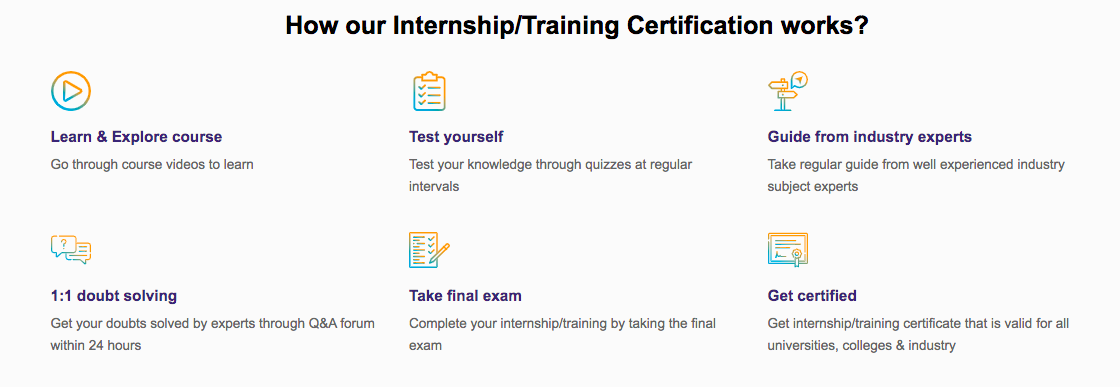
How EasyShiksha Internship/Training Program Works
The Core Architecture: From Competency Evidence to Action
The Skill-to-Opportunity Compiler can be understood as a sequence of transformations. First, it receives structured information about the learner's demonstrated capabilities. Next, it interprets the meaning and reliability of that evidence. It then compares the resulting competency profile with the requirements of potential opportunities. Finally, it generates a set of recommended actions that explain how the learner could proceed.
This process begins with a competency representation. A learner's profile might record that they have demonstrated basic JavaScript functions, DOM manipulation, event handling, or responsive interface development. Each competency would include relevant context, such as the assessment method, level of difficulty, evidence source, and date of demonstration where applicable.
The system would then interpret these competencies in relation to a structured model of opportunities. A frontend project, for example, might require HTML, CSS, JavaScript, accessibility awareness, and the ability to interpret a design specification. An internship could require those technical capabilities alongside communication, teamwork, and familiarity with collaborative development tools.
The compiler would compare the learner's evidence with these requirements. It could identify capabilities that appear sufficiently demonstrated, capabilities that need stronger evidence, and capabilities that have not yet been established. These distinctions would inform the next-step recommendation.
The final output might be an immediate project suitable for the learner's current level, a short course addressing a specific knowledge gap, or an internship for which the learner appears to meet the published requirements. Where the evidence is incomplete, the system could recommend a low-risk assessment or practical exercise before suggesting a more demanding opportunity.
The important principle is that recommendations should emerge from a traceable relationship between evidence, requirements, and actions. The learner should be able to understand why a particular next step has been suggested and what completing it could make possible.
Building a Structured Competency Profile
A compiler cannot reliably translate information that it does not understand. The first major requirement is therefore a structured competency profile that represents skills in a consistent and interpretable format.
Traditional learner profiles often record course names, certificates, marks, and completion dates. These details remain useful, but a competency profile would add information about the actual capabilities demonstrated. Instead of recording only that a learner completed a web development course, the profile could indicate which technologies were used, which tasks were completed, and which assessment criteria were satisfied.
The profile should also distinguish between different levels of capability. Understanding the purpose of a programming function is different from writing one independently, debugging an unfamiliar implementation, or designing a reusable software component. These activities involve related but distinct capabilities, and the compiler should avoid treating them as a single undifferentiated skill.
Context is equally important. A learner may demonstrate a capability in a guided exercise but not yet have evidence of applying it independently. Another learner may demonstrate the same skill across several different projects. Both profiles can record the competency, while preserving the differences in evidence strength and demonstrated independence.
A structured competency profile should remain open to revision. Skills develop through practice, and evidence can become outdated or be superseded by stronger demonstrations. The system should therefore allow new assessments and projects to update the learner's profile without treating earlier achievements as permanently definitive.
For EasyShiksha, such a profile could connect the results of quizzes, course assessments, projects, and internships. With appropriate privacy controls, it could become a reusable foundation for learning recommendations and opportunity matching across different stages of a student's development.
Translating Competencies Into Opportunity Requirements
The next challenge is to represent opportunities in a form the compiler can interpret. A job title alone is not sufficient because similar titles can involve different responsibilities, technologies, and levels of independence. The same problem applies to internships and projects.
A useful opportunity record would describe the actual tasks involved, the competencies required, the expected proficiency level, the prerequisites, and the conditions of participation. A beginner-friendly frontend project might require learners to create a responsive interface from a supplied design. An internship might require students to work with an existing codebase, use version control, fix defects, and collaborate with other developers.
The compiler could then compare the opportunity's requirements with the learner's competency profile. It would not merely search for matching keywords. It would evaluate whether the demonstrated capability is relevant to the task and whether the evidence supports the expected level of performance.
For example, a learner may have demonstrated JavaScript event handling through a small interactive webpage. That competency could be relevant to an interface project requiring interactive controls. However, an internship requiring complex state management and testing may demand additional skills. The compiler should recognise the relationship between these opportunities without assuming that evidence of a foundational skill proves readiness for a more advanced one.
Opportunity requirements must also be kept current. Internships change, project specifications evolve, and employers revise their expectations. If the underlying information is inaccurate, even a technically sophisticated matching system may produce poor recommendations. The compiler therefore needs reliable opportunity data and a mechanism for identifying incomplete or outdated requirements.
For EasyShiksha, structured descriptions of courses, projects, internships, and jobs could make it easier to connect learner capabilities with relevant opportunities. The value would come not from the number of opportunities listed, but from the accuracy and usefulness of the relationships established between them.
The Competency Gap Engine: Identifying What Comes Next
The competency gap engine would compare the learner's demonstrated capabilities with the requirements of a selected opportunity. Its purpose would not be to produce a generic list of missing skills, but to identify which gaps matter for the learner's next realistic step.
Suppose a learner wants to pursue a data analytics internship. The learner has demonstrated spreadsheet formulas, data cleaning, and basic chart creation, but has not yet demonstrated SQL querying or the ability to explain analytical findings. The compiler could identify these gaps in relation to the internship's requirements.
However, not every missing competency should automatically trigger another course recommendation. Some requirements may be essential prerequisites, while others may be desirable but not mandatory. A learner may be able to complete an introductory project immediately while continuing to develop skills required for a more demanding internship.
The engine should therefore distinguish between blocking gaps and development gaps. A blocking gap prevents the learner from meeting a clearly stated requirement. A development gap identifies a capability that would strengthen the learner's performance but may not prevent participation in a suitable opportunity.
The system could also recognise alternative routes. If a learner has not studied a particular tool but has demonstrated a transferable underlying competency, a practical assessment may be more appropriate than requiring an entire introductory course. Similarly, if the learner has already acquired a skill through previous experience, the compiler should provide a way to establish that capability rather than forcing unnecessary repetition.
For EasyShiksha, this approach could make recommendations more efficient. Students could focus on the capabilities that matter for their next goal instead of completing a long sequence of courses that may contain material they already understand.
From a Gap Analysis to an Actionable Learning Pathway
Identifying a missing competency is only the beginning. Learners also need to know how to develop it and how that development relates to a future opportunity.
A Skill-to-Opportunity Compiler could translate each significant gap into a sequence of practical actions. These might include a targeted lesson, a short assessment, a guided exercise, an independent project, or an opportunity to apply the skill in a simulated workplace environment. The sequence would depend on the learner's existing knowledge and the level of evidence required.
Consider a learner preparing for a frontend development internship. The compiler may identify that the learner has demonstrated HTML, CSS, and basic JavaScript but lacks evidence of working with APIs and handling asynchronous requests. Instead of recommending an unrelated collection of frontend courses, it could suggest a focused learning module, followed by a project that retrieves and displays data from an API. The project would then provide evidence relevant to the internship's requirements.
This pathway should remain flexible. Students may have different time constraints, access to tools, prior experience, and preferred learning formats. A learner with limited time might choose a compact assessment and project sequence, while another may prefer a more comprehensive course before attempting independent work.
The pathway should also explain its purpose. Learners should understand which requirement each activity addresses and what evidence they are expected to produce. This transparency can help prevent recommendations from becoming an endless sequence of course enrolments without a clear destination.
Within EasyShiksha, learning pathways could connect existing educational resources with projects, internships, and career guidance. The platform could help students move from a demonstrated competency to a relevant next action, while preserving their ability to choose a different route.
Not every recommendation should point directly toward a job or internship. Some learners are ready to act immediately, while others need a period of preparation before pursuing a larger opportunity. A useful compiler would organise next steps according to their purpose and readiness requirements.
Immediate opportunities are those that appear compatible with the learner's current demonstrated capabilities. These may include a practical challenge, a small portfolio project, an advanced quiz, or a beginner-level internship whose stated requirements the learner appears to meet. Such opportunities allow students to put their existing skills to use without unnecessary delay.
Near-term opportunities require a limited amount of additional development. A learner may need to complete one project, demonstrate a missing tool, or strengthen a foundational concept before attempting them. The compiler could identify the shortest credible pathway to readiness without promising that completing the recommended steps guarantees selection.
Long-term opportunities may require a broader combination of skills, experience, and independent performance. These could include more specialised internships, advanced projects, or career pathways that demand deeper technical or professional capability. The system could break these goals into achievable milestones so that the learner can see how present actions relate to a future direction.
This layered approach helps avoid two common problems. The first is recommending only easy activities that do not advance the learner. The second is presenting demanding opportunities without explaining how the student could prepare for them.
For EasyShiksha, different time horizons could make the learning experience more actionable. Students could see what they can try now, what they could prepare for next, and which longer-term capabilities may expand their options.
Connecting Learning With Projects and Internships
Projects and internships occupy an important position in the Skill-to-Opportunity Compiler because they can serve both as opportunities and as sources of new evidence. A learner may pursue a project to apply existing skills, while the completed project can demonstrate capabilities that were not previously verified.
This creates a developmental cycle. A learner begins with a competency profile, receives a project recommendation, completes the project, and generates additional evidence. The compiler then updates its understanding of the learner's capabilities and identifies further opportunities.
For example, a student who has completed a course in data visualisation may be recommended a project involving a real-world dataset. The project could require data preparation, chart selection, interpretation, and a written explanation of findings. Successful completion would provide more meaningful evidence than course completion alone.
Internships can extend this process into professional environments. An internship may expose the learner to collaboration, deadlines, tools, and tasks that are difficult to reproduce fully in a course. The resulting experience can reveal new strengths and development needs. With appropriate verification and consent, relevant internship tasks and supervisor feedback could contribute to the learner's competency profile.
The system must nevertheless distinguish between practice opportunities and actual employment experience. A simulated task can provide valuable evidence of performance, but it should not be represented as equivalent to a workplace internship unless the equivalence is supported by clear criteria.
For EasyShiksha, connecting courses, projects, and internships could create a more continuous relationship between education and practical development. Every opportunity could help learners apply what they know while generating evidence that supports the next stage of their journey.
AI as the Interpretation and Planning Layer
Artificial intelligence could support the Skill-to-Opportunity Compiler by interpreting relationships between competencies, learning resources, and opportunity requirements. It could help identify related skills, detect missing prerequisites, compare alternative learning pathways, and explain why one next step may be more suitable than another.
For instance, a learner who demonstrates spreadsheet analysis and basic statistics may have several possible development routes. Depending on their interests and goals, the compiler might suggest business analytics, financial analysis, or introductory data science. AI could help explain how the existing skills connect to each route and identify the additional capabilities each pathway requires.
However, AI recommendations should be grounded in structured evidence rather than generated solely from plausible-sounding associations. A system might incorrectly infer that a learner is ready for a role because the learner has completed a related course. It might also overlook a prerequisite or recommend a tool that is not actually required for the opportunity.
A robust architecture would therefore combine AI interpretation with explicit competency definitions, reliable opportunity data, assessment records, and transparent rules. Where information is incomplete, the system should acknowledge uncertainty rather than present a recommendation as definitive.
Human oversight would remain important, particularly for consequential decisions involving access to employment or educational opportunities. The compiler should help learners explore options and prepare for requirements, not make unsupported judgments about their potential or determine their future on their behalf.
EasyShiksha could use AI as a planning assistant that explains relationships between learning and opportunity while leaving the learner in control. The system's value would depend on how well it supports informed decisions, not on how confidently it produces recommendations.
Explainability: Showing Why an Opportunity Was Recommended
A recommendation is more useful when the learner can understand its reasoning. If a platform suggests an internship without explaining the relationship between the learner's skills and the role's requirements, the recommendation may feel arbitrary. Students may also find it difficult to determine whether they should apply immediately or prepare further.
A Skill-to-Opportunity Compiler should therefore provide an explanation that connects demonstrated evidence with the opportunity's requirements. It might identify the competencies that match, describe the evidence supporting those matches, and clarify which requirements remain unverified.
For example, a learner could be told that a particular project is suitable because they have demonstrated responsive layout development and basic JavaScript interactions. The explanation might also indicate that accessibility testing is a new requirement and recommend a short practical exercise before the learner attempts a more demanding assignment.
This form of explainability is different from simply listing keywords shared by a course and a job description. It should show why the relationship is meaningful and what the learner can do with the information.
The system should also allow learners to challenge or correct its interpretation. If a student has acquired a skill outside the platform, they should have an appropriate way to submit evidence for consideration. If a recommendation relies on outdated information, the platform should provide a route for reporting the problem.
For EasyShiksha, explainable recommendations could help build trust and make career guidance more educational. Instead of being told what to do, students would gain a clearer understanding of how their demonstrated capabilities relate to different possibilities.
Fairness, Access, and Learner Choice
A Skill-to-Opportunity Compiler could expand access to relevant learning and work opportunities, but it could also reproduce existing inequalities if designed carelessly. Students who have access to expensive tools, strong internet connections, professional networks, or previous internships may produce more visible evidence than learners who have developed similar skills under different conditions.
The system should not automatically interpret a lack of platform-generated evidence as a lack of ability. It should distinguish between a competency that has been assessed and one for which sufficient evidence is unavailable. This distinction is particularly important for students entering the platform with prior knowledge or experience.
Opportunity matching should also consider accessibility and practical constraints where the learner chooses to share them. A recommendation that requires unavailable software, an unaffordable certification, or an unrealistic time commitment may be technically relevant but practically unusable. The compiler should offer alternatives when possible and avoid treating financial or geographic limitations as indicators of capability.
Learner choice must remain central. The system may identify a strong match between a student's skills and an opportunity, but the student may prefer a different career direction. A useful compiler should present options, explain trade-offs, and support exploration rather than forcing the learner into the pathway that an algorithm considers optimal.
For EasyShiksha, responsible design would mean combining relevant recommendations with transparency, privacy, accessibility, and meaningful control. The goal should be to expand the opportunities learners can realistically explore, not narrow their future based on incomplete information.
Measuring Whether the Compiler Actually Helps
The effectiveness of a Skill-to-Opportunity Compiler cannot be established simply by counting recommendations, course enrolments, or clicks. A system may generate many recommendations without helping students make meaningful progress. Its performance should therefore be evaluated according to the quality and usefulness of the actions it supports.
One important measure would be recommendation relevance: whether the suggested opportunity genuinely matches the learner's demonstrated capabilities and stated goals. Another would be pathway completion, examining whether learners can complete the recommended preparation and reach the next milestone. The quality of newly generated evidence would also matter because a successful project or assessment should strengthen the learner's competency profile.
Longer-term measures could examine whether students become better prepared for internships, progress into more advanced projects, or demonstrate competencies required for particular roles. These outcomes should be interpreted carefully because hiring decisions and career progress depend on many factors beyond the learning platform.
The system should also monitor whether recommendations repeatedly favour the same learners, institutions, locations, or educational backgrounds. Such patterns could reveal biases in opportunity data or matching logic. Regular review would help ensure that the compiler improves access rather than reinforcing existing differences.
EasyShiksha could begin with a limited pilot focused on a specific skill area, such as frontend development or data analytics. The platform could define competency requirements, map selected courses and projects to those competencies, and evaluate whether the recommendations help learners complete meaningful next steps. Evidence from the pilot could guide broader implementation.
Empower your team. Lead the industry
Get a subscription to a library of online courses and digital learning tools for your organization with
EasyShiksha
The Future of Education: From Course Discovery to Opportunity Navigation
Education platforms have traditionally helped learners discover and complete courses. As competency evidence becomes more structured, platforms could evolve into systems that help learners navigate the possibilities that open up after learning.
In this model, the learner's profile becomes more than a record of completed activities. It becomes an evolving representation of demonstrated capabilities, the evidence supporting them, and the opportunities for which those capabilities may be relevant. Each new course, project, or internship can strengthen the profile and change the next set of available pathways.
The Skill-to-Opportunity Compiler provides a conceptual bridge between these stages. It transforms evidence into possible actions and uses the results of those actions to update the learner's development pathway. Instead of recommending another course simply because it belongs to a related category, the system would ask what additional capability the learner needs and which opportunity could help them develop it.
This could also change how students think about education. Rather than viewing a course as an isolated product that ends with a certificate, they could see it as one stage in a longer process of building capabilities, testing those capabilities, and applying them in new contexts.
For EasyShiksha, this offers an opportunity to connect educational content with practical development and career exploration. The platform could help students move from knowing a subject to demonstrating a skill, from demonstrating a skill to pursuing an opportunity, and from that opportunity to the next stage of learning and work.
Conclusion: Every Verified Skill Should Open a Clearer Next Step
The Skill-to-Opportunity Compiler proposes a new way to connect education with action. It begins with verified competencies, interprets the evidence behind them, compares those capabilities with relevant opportunities, and generates a pathway that helps learners move forward. Its purpose is not to promise employment or determine a student's future. It is to make the relationship between learning and opportunity more transparent, practical, and responsive to individual progress.
For EasyShiksha, the concept could connect online courses, quizzes, projects, internships, certificates, and career guidance through a shared competency framework. Students could understand what they have demonstrated, identify which requirements remain unmet, and discover practical ways to prepare for their next goal. AI could help interpret these relationships, while reliable evidence, transparent explanations, and human oversight would help keep recommendations meaningful.
The most important shift is from asking what a learner should study next simply because they have finished something to asking what action would help them progress from their current capabilities toward a worthwhile goal. Sometimes the answer may be another course. In other cases, it may be a project, a practical assessment, an internship, or an opportunity to apply an existing skill.
A verified skill should not remain a static entry on a learner's profile. It should become a starting point for the next meaningful opportunity. By translating demonstrated competencies into clear and achievable actions, EasyShiksha could help make education a more continuous pathway between learning, practical capability, and professional growth.
Anshika Jain is an Engineer, Developer, and Educational Content Author known for her dedication to technology and knowledge sharing. With a strong analytical mindset and a passion for innovation, she has consistently contributed to creating meaningful digital solutions and insightful educational articles.
Her ability to simplify complex technical concepts into engaging and easy-to-understand content makes her work valuable for students and learners across various platforms. Along with her technical expertise, Anshika is admired for her creativity, professionalism, and commitment to continuous learning.
She represents a perfect blend of technical excellence and impactful communication, inspiring others through both her development work and educational contributions.