Professional workplaces rarely operate exactly according to plan. Even well-managed organisations experience unexpected failures, including software outages, cybersecurity incidents, incorrect financial records, delayed deliveries, communication breakdowns, equipment malfunctions, customer complaints, and sudden changes in project requirements. These situations can interrupt operations, affect customers, create financial losses, and require employees to make decisions under pressure. Professionals are therefore expected not only to perform their regular responsibilities but also to recognise problems, understand their causes, communicate with relevant stakeholders, and help restore normal operations.
Traditional education generally prepares students by explaining concepts, teaching procedures, and evaluating their ability to complete planned assignments. These methods are important for developing foundational knowledge, but they may not fully prepare learners for situations in which information is incomplete, deadlines are approaching, or an unexpected event changes the original task. A student may understand software testing but struggle when a critical application feature suddenly stops working. A finance learner may understand reconciliation procedures but find it difficult to respond when an important transaction does not match the available records. The ability to apply knowledge during an unexpected failure requires practical judgment that cannot always be developed through theoretical lessons alone.
Incident-based learning offers a structured way to introduce these professional situations into internship programmes. Instead of limiting students to predictable assignments, this approach uses carefully designed workplace incidents to help learners understand how problems emerge, how professionals investigate them, and how organisations recover from disruption. Students participate in realistic scenarios where they must interpret available information, identify priorities, communicate with relevant teams, and recommend or implement appropriate solutions under supervision.
For EasyShiksha, incident-based learning creates an opportunity to make online courses, practical assessments, virtual internships, and career development more closely connected to real workplace expectations. Students can first acquire subject knowledge through structured learning and then apply it to simulated incidents related to their chosen fields. This approach can help them develop technical competence, professional communication, analytical thinking, and the ability to respond responsibly when work does not proceed as expected.
Understanding Incident-Based Learning in Professional Education
Incident-based learning is an educational approach in which students develop practical capabilities by analysing and responding to specific events that represent challenges encountered in professional environments. An incident may involve a technical failure, operational disruption, incorrect information, an unexpected customer request, a security concern, or a breakdown in communication between teams. Students receive information about the situation and are expected to investigate what happened, determine what requires immediate attention, and identify an appropriate response.
Unlike conventional exercises with predetermined instructions and predictable outcomes, incident-based activities introduce uncertainty. Students may receive incomplete information, conflicting reports, changing requirements, or evidence that becomes available gradually. They must decide which information is reliable, what additional details are needed, and whether an issue should be escalated to a mentor or specialist. This creates an environment in which knowledge must be applied through reasoning rather than simply repeated from memory.
For example, a student participating in a virtual software development internship may be informed that a newly released feature is causing errors for some users. The student could receive application logs, a description of user complaints, and details about recent code changes. The assignment would involve investigating possible causes, reproducing the issue in a controlled environment, documenting findings, and recommending a correction. The student would learn how debugging connects with communication, prioritisation, testing, and release management.
Incident-based learning does not require students to experience actual organisational failures or take responsibility for business-critical operations. Educational providers can create realistic simulations using synthetic data, sample systems, case studies, and controlled environments. The objective is to develop professional judgment without exposing learners, organisations, or customers to unnecessary risk.
Why Traditional Internship Assignments Need More Unexpected Scenarios
Many internship programmes rely on structured assignments because they are easier to distribute, supervise, and evaluate. Students may be asked to create a webpage, prepare a marketing report, analyse a dataset, design a presentation, or complete a predefined research activity. These tasks help learners develop practical skills, but their predictable structure may not reveal how effectively students can respond when unexpected problems arise.
In professional environments, employees often receive assignments that change during execution. A project requirement may become outdated, an external service may stop functioning, a client may report a defect, or a colleague may identify an issue that was not considered during planning. Even routine work can become complicated when several problems occur simultaneously. Employees must understand how to adapt their approach without losing sight of quality, security, deadlines, and organisational priorities.
A student who has completed several guided assignments may be comfortable following instructions but less confident when instructions are incomplete. Another student may know how to use a particular tool but struggle to identify the reason behind an unexpected result. These situations reveal a difference between procedural knowledge and professional problem-solving ability.
Internships should therefore include opportunities to experience controlled uncertainty. Students should understand that unexpected failures are not always signs of poor performance. They are situations that require systematic investigation, responsible communication, and appropriate action. Introducing incident-based learning can help bridge the gap between predictable academic exercises and the changing conditions of professional work.
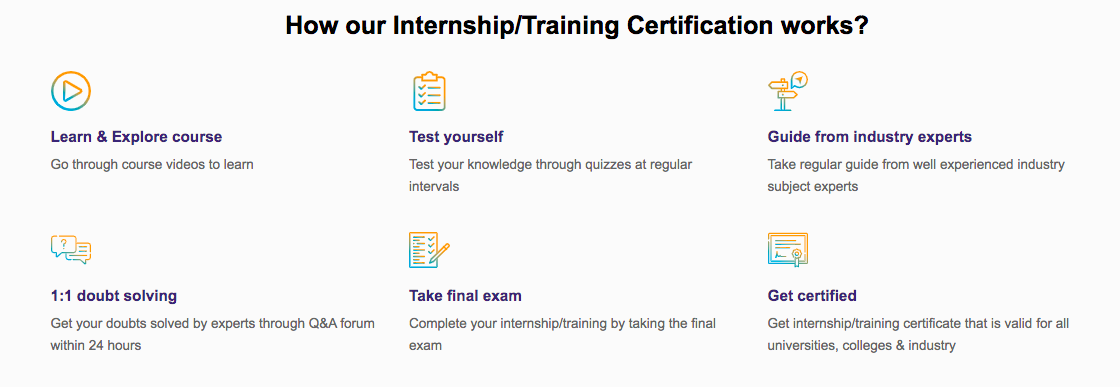
How EasyShiksha Internship/Training Program Works
Designing Realistic Workplace Incidents for Student Internships
The quality of incident-based learning depends on how accurately scenarios represent professional challenges. An incident should have a clear context, a realistic problem, relevant evidence, and an outcome that requires students to apply knowledge. It should be complex enough to encourage investigation but appropriate for the student's current experience.
A software development incident, for example, could involve a feature that works correctly during development but fails after integration with another service. Students may receive a description of the expected functionality, sample error messages, a test environment, and a record of recent changes. Their task is to identify possible causes, determine which component requires investigation, and document the steps needed to resolve the problem.
A digital marketing incident could involve a sudden decline in website traffic after a website update. Students would need to examine available analytics information, review technical and content changes, consider possible indexing problems, and distinguish between evidence-based explanations and assumptions. They might recommend further investigation before suggesting corrective action.
A finance-related scenario could involve a discrepancy between an internal transaction record and an external statement. Students would be expected to examine the available records, identify possible sources of inconsistency, maintain an accurate audit trail, and escalate the issue when necessary. These scenarios help learners understand that professional responsibilities involve accuracy, documentation, and appropriate control procedures.
An effective incident should not simply ask students to find one hidden answer. Real workplace problems may have several possible causes, and available evidence may not support an immediate conclusion. The assessment should therefore consider the quality of the investigation and reasoning, not just whether the student identifies the final cause.
Introducing an Incident Response Lifecycle
Professionals generally need a structured method for responding to unexpected failures. Without a clear process, employees may react too quickly, overlook important information, or make changes that create additional problems. Internship programmes can introduce students to an incident response lifecycle that provides a consistent framework for analysing and managing workplace disruptions.
The process begins with incident recognition. Students must understand what has happened, how the issue was identified, and which activities may be affected. They should distinguish between an isolated error and a problem that could influence several users, systems, or business processes. This initial understanding helps establish the seriousness of the situation.
The next stage involves assessment and prioritisation. Students examine the available information, estimate the potential impact, and determine whether the problem requires immediate attention. A minor formatting issue in an internal document may not need the same response as a security vulnerability or a payment-processing failure. Learners should understand that priorities depend on business impact, safety, data protection, and operational requirements.
Investigation follows, during which students collect evidence, examine possible causes, and identify the systems or activities involved. Depending on the assignment, this may include reviewing logs, checking records, interviewing simulated stakeholders, examining test results, or comparing current behaviour with expected requirements. Students should document their findings and avoid making unsupported assumptions.
The response stage focuses on selecting an appropriate action. In a controlled educational environment, students may be allowed to implement a correction, prepare a recovery plan, recommend escalation, or conduct further testing. The final stage involves reviewing the incident, documenting what was learned, and identifying improvements that could reduce the possibility of similar failures. This complete process teaches students that professional incident handling involves more than fixing an immediate problem.
Teaching Students to Work With Incomplete Information
One of the most challenging aspects of unexpected workplace incidents is the absence of complete information. Employees may initially receive only a customer complaint, a partial error message, or a report that a process is not working as expected. The actual cause may remain unknown until several systems and records have been examined.
Incident-based internships can introduce this uncertainty deliberately. Students might receive a report that a website is loading slowly without being told whether the cause is related to network conditions, server capacity, database performance, or inefficient code. They must identify which information would help narrow down the possibilities and decide what to investigate first.
This teaches learners to separate facts from assumptions. A student should not conclude that a database is responsible simply because a page is slow. They should examine relevant evidence, compare possible explanations, and explain why a particular cause appears more likely than others. If the available information is insufficient, they should identify what additional evidence is required.
The ability to ask useful questions is equally important. Students may need to clarify when the problem started, which users are affected, whether recent changes occurred, and whether the issue can be reproduced. These questions help create a clearer understanding of the situation and reduce the risk of unnecessary corrective action.
For EasyShiksha, this learning method can be integrated into online assessments and virtual internships through progressive case studies. Learners can receive information in stages and submit their analysis before additional evidence is revealed. This encourages systematic thinking and helps students understand that professional decisions should be based on available evidence rather than immediate guesses.
Developing Technical Troubleshooting Skills Through Simulated Failures
Technical troubleshooting is an important capability in software development, IT support, cybersecurity, networking, data engineering, and several other professional fields. Students often learn how individual tools and systems function, but troubleshooting requires them to understand how components interact and why expected behaviour may fail.
A simulated technical incident can provide an opportunity to practise these skills. A student in a web development internship might receive a partially functioning application with a broken form submission. The assignment could involve reviewing browser console messages, checking network requests, inspecting validation logic, and examining the relevant backend response. The student would need to identify the source of the failure before implementing a correction.
A networking internship could introduce a simulated connectivity problem in which one department cannot access an internal service. Students could examine network diagrams, configuration details, and sample diagnostic outputs to identify possible causes. The exercise would help them understand the relationship between network components, access permissions, and service availability.
Cybersecurity internships could use isolated training environments to simulate suspicious login attempts, unauthorised access alerts, or unusual network activity. Students could practise examining logs, documenting evidence, following escalation procedures, and recommending appropriate protective measures. These activities must remain within authorised environments and should not involve attacking real systems.
The educational value lies in teaching students to investigate before acting. Changing multiple configurations without understanding the cause can make a problem worse. A structured troubleshooting approach encourages learners to isolate variables, test explanations, record results, and verify that a proposed correction actually resolves the issue.
Teaching Communication During Workplace Failures
Technical knowledge alone is not enough to manage an unexpected workplace incident. Professionals must communicate the problem to people who may have different responsibilities and levels of technical understanding. A developer may need to explain an application failure to a project manager, a customer support team, or a business stakeholder. A finance employee may need to communicate a transaction discrepancy to a supervisor or external service provider.
Incident-based learning should therefore include communication as an essential part of the response process. Students can be asked to prepare an initial incident report, explain the potential impact, provide progress updates, and document the final resolution. These activities help learners understand how to communicate accurately without exaggerating the seriousness of a problem or hiding important information.
For example, a student investigating a simulated payment failure should be able to explain which transactions may be affected, what information has been verified, what remains uncertain, and which actions are being taken. The communication should avoid unsupported promises about when the issue will be resolved. It should also identify whether the matter requires assistance from another team.
Students should practise adapting their language to different audiences. A technical report may include error details, system behaviour, and diagnostic evidence, while a management update may focus on business impact, current status, and required decisions. Learning to communicate the same incident appropriately to different stakeholders is an important professional capability.
Understanding Escalation and the Limits of Individual Responsibility
Not every workplace problem should be solved independently by the person who first identifies it. Some incidents require specialist knowledge, additional permissions, management approval, or involvement from external service providers. Employees must recognise when a situation exceeds their authority or experience and understand how to escalate it responsibly.
Internship programmes should teach students that escalation is not a sign of weakness. It is an important part of professional risk management. A beginner who discovers a possible data breach should not attempt to investigate unrestricted systems without authorisation. A finance intern who identifies a suspicious transaction should follow the organisation's reporting procedure rather than independently modifying financial records. A developer who encounters a production security vulnerability should notify the appropriate supervisor instead of making unreviewed changes.
Incident-based exercises can introduce escalation decisions through realistic scenarios. Students may need to decide whether an issue can be handled within their assigned responsibilities or whether it requires mentor intervention. The assessment can examine whether they recognise the limits of their access, communicate the concern promptly, and provide useful evidence to the responsible person.
This is particularly important for virtual internships, where students may work remotely and have limited direct supervision. Clear escalation procedures help maintain safety, protect organisational information, and ensure that learners understand the boundaries of their responsibilities.
Learning From Failure Through Root Cause Analysis
Resolving an immediate problem does not necessarily prevent it from happening again. Organisations need to understand why an incident occurred and whether changes to processes, systems, training, or controls could reduce future risk. Root cause analysis helps professionals move beyond temporary fixes and investigate the underlying conditions that contributed to a failure.
Students can learn this approach through post-incident exercises. After resolving a simulated problem, they may be asked to examine the sequence of events, identify contributing factors, and explain which controls failed or were missing. The analysis should distinguish the immediate trigger from deeper process weaknesses.
For example, a website outage may have been triggered by a software update, but the underlying causes could include insufficient testing, missing rollback procedures, poor monitoring, or unclear approval responsibilities. Simply reverting the update may restore the website, but a complete review would consider why the problem reached the production environment and how future releases could be made safer.
In a supply chain scenario, a delayed shipment may result from a transportation problem, while the deeper issue could involve inaccurate inventory information or insufficient communication between the supplier and retailer. Root cause analysis encourages students to examine the wider process rather than assigning blame to the first visible failure.
Educational platforms should present this activity as a learning process rather than a search for someone to punish. Students need to understand that identifying weaknesses is an opportunity to improve systems, processes, and professional practices.
Introducing Cross-Functional Incident Simulations
Many workplace failures affect more than one department. A technical issue may influence customer support, finance, operations, and marketing at the same time. An unexpected supplier delay may affect production, inventory, sales commitments, and customer communication. Students should therefore experience incidents that require coordination across different professional functions.
A cross-functional simulation could involve an online retail company experiencing a sudden increase in failed orders. The technical team may investigate payment integration, the customer support team may receive complaints, the finance team may examine transaction records, and the operations team may review order processing. Students assigned to these roles would need to exchange information and coordinate their response.
The exercise demonstrates that each team sees only part of the incident. The technical team may understand the application error but not the full customer impact. The customer support team may understand user complaints but lack access to technical diagnostics. Successful resolution requires information to move between teams and decisions to be coordinated.
This model can also be extended to multi-organisation scenarios. An external payment provider, cloud service, or logistics partner may contribute to the incident. Students must understand which organisation controls each component, what information can be requested, and how dependencies affect the overall response.
For EasyShiksha, cross-functional simulations can make virtual internships more advanced and realistic. They can also help students understand how different career roles contribute to shared business outcomes, making interdisciplinary learning more meaningful.
Empower your team. Lead the industry
Get a subscription to a library of online courses and digital learning tools for your organization with
EasyShiksha
Assessing Student Performance During Incident-Based Learning
Incident-based assignments require assessment methods that examine how students respond, not just whether they reach a particular solution. In many real incidents, several responses may be reasonable depending on available information, organisational policies, and the potential impact. A student should therefore be evaluated on the quality of their reasoning and actions.
Assessment can examine how accurately the learner identifies the problem, prioritises its impact, collects evidence, and considers possible causes. It should also consider whether the student follows appropriate procedures, communicates clearly, documents decisions, and recognises when escalation is necessary. The final outcome remains important, but the investigation process provides valuable evidence of professional capability.
For example, two students may investigate the same simulated application failure. One may quickly change several settings and eventually restore functionality without documenting the cause. Another may systematically examine the logs, identify a configuration mismatch, test a correction, and record the result. Although both may reach a working outcome, the second student has demonstrated a more structured professional approach.
Mentors should provide specific feedback that explains what the student handled effectively and what could be improved. If a learner makes an incorrect initial assumption but recognises the mistake after reviewing evidence, the assessment should consider the ability to correct reasoning. This encourages students to develop responsible problem-solving habits rather than avoid difficult assignments for fear of making mistakes.
The Role of AI in Incident-Based Internship Programmes
Artificial intelligence can make incident-based learning more adaptive by helping educators create different scenarios, analyse student responses, and recommend additional learning resources. AI-supported learning systems can present incidents at different levels of complexity depending on a student's subject knowledge and previous performance.
A beginner studying web development may first receive an incident involving a simple form validation error. After demonstrating the ability to investigate the issue, the learner may progress to a more complex scenario involving API failures, authentication problems, or database connectivity. This creates a gradual learning pathway in which students develop confidence before handling more complicated situations.
AI can also provide preliminary feedback on incident reports and technical submissions. It may identify missing information, unclear explanations, inconsistent timelines, or possible gaps in a troubleshooting process. In programming exercises, automated tools can assist with test execution and error identification. In data analysis assignments, AI-supported systems may help students examine unusual patterns and consider possible explanations.
However, AI should not independently determine whether a student's response is professionally acceptable. Incident management often involves context, ethical judgment, organisational policies, and safety considerations that automated systems may not fully understand. Human mentors should review critical decisions, especially when scenarios involve security, finance, privacy, or operational risk.
AI should function as a learning assistant that helps students investigate and reflect. It should not encourage learners to accept generated explanations without verification. Students must still demonstrate that they can evaluate evidence, question assumptions, and take responsibility for their decisions.
Integrating Incident-Based Learning With Online Courses and Quizzes
Incident-based learning becomes more effective when students receive the necessary foundational knowledge before entering practical scenarios. A learner cannot be expected to investigate a network failure without understanding basic networking concepts or analyse a financial discrepancy without familiarity with relevant accounting procedures. Online courses can provide the knowledge required to approach incidents systematically.
EasyShiksha can connect subject-specific courses with incident-based exercises through progressive learning pathways. A student studying JavaScript may first learn variables, functions, asynchronous operations, API requests, and error handling. Quizzes can evaluate conceptual understanding, while smaller exercises can help learners practise debugging. The student can then enter a virtual internship scenario involving an unexpected application failure.
A cybersecurity learner may study network fundamentals, security principles, access control, and incident response before working on a simulated suspicious-activity investigation. A marketing student may learn analytics, search engine optimisation, and campaign measurement before analysing a sudden decline in website performance. This connection ensures that practical assignments reinforce knowledge rather than introducing unexplained problems.
Quizzes can also be used after an incident to evaluate whether students understand the reasons behind the failure and the importance of the corrective action. Instead of testing only definitions, these assessments can present short scenarios in which learners must identify appropriate priorities, select relevant evidence, or recognise when escalation is required.
This approach connects theoretical learning with practical decision-making and creates a more coherent educational experience. Students understand not only what a concept means but also when and why it becomes important in professional work.
How EasyShiksha Can Develop Incident-Based Virtual Internships
EasyShiksha can introduce incident-based learning within its internship ecosystem by developing structured scenarios connected to different professional domains. These internships could begin with an orientation module explaining the project environment, student responsibilities, safety boundaries, and expected learning outcomes. Participants would then complete foundational courses and assessments before receiving practical incidents appropriate to their level.
The scenarios could be organised into progressive stages. Initial incidents would focus on identifying straightforward problems and following clear procedures. Intermediate scenarios could introduce incomplete information, multiple possible causes, and communication between teams. Advanced incidents could involve cross-functional dependencies, changing requirements, and decisions that require students to consider business impact and escalation.
For example, a frontend development intern could begin with a simulated interface defect before progressing to an API integration failure. A data analytics intern could investigate inconsistent records before analysing an unexpected change in business performance. A digital marketing intern could examine a campaign underperforming after a website update and determine which technical and content-related factors require investigation.
Mentors could review student submissions, provide feedback, and verify whether the proposed actions are appropriate. Students could maintain a record of the incidents they investigated, the responsibilities they handled, and the lessons they gained. Certificates could recognise internship completion, while project evidence could provide additional information about demonstrated capabilities.
EasyShiksha could also introduce career-oriented incident assessments that help students prepare for interview questions involving problem-solving and workplace situations. Candidates could learn how to explain the problem, their investigation, the decisions they made, and the final outcome. This would help transform internship experiences into meaningful examples for professional discussions.
Protecting Students and Organisations During Simulated Incidents
Incident-based learning must be designed responsibly because realistic scenarios can involve sensitive subjects such as cybersecurity, financial transactions, personal data, and operational failures. Educational providers should ensure that students work only within authorised environments and do not gain access to live systems or confidential records without appropriate permission.
Simulated datasets, isolated software environments, anonymised case studies, and controlled training systems can provide realistic learning experiences without exposing actual business operations. Cybersecurity scenarios should remain within designated laboratories, while finance and healthcare-related exercises should use synthetic or appropriately protected information.
Students should also receive clear instructions about their authority. They must understand that they are participating in an educational exercise and should not attempt to contact real customers, modify external systems, or perform actions beyond the scope of their assignment. If an incident is based on a real organisational process, the responsibilities and access permissions should be defined by the participating organisation.
Psychological safety is equally important. Students should be encouraged to investigate problems without fear that every mistake will lead to punishment. A simulated failure should provide an opportunity to learn, receive feedback, and improve. Mentors should distinguish between a reasonable mistake made during learning and careless behaviour that ignores established safety instructions.
Challenges in Implementing Incident-Based Learning
Developing high-quality incident-based internship programmes requires significant planning. One challenge is creating scenarios that are realistic without becoming unnecessarily complicated. If the incident is too simple, students may solve it through memorised procedures. If it is too complex, beginners may become confused and spend more time understanding the situation than applying their knowledge.
Another challenge is maintaining consistency across assessments. Different mentors may interpret student decisions differently, particularly when several solutions are possible. Educational platforms need clear evaluation criteria that explain what constitutes an appropriate investigation, communication process, escalation decision, and final recommendation.
The scenarios must also remain relevant as technologies and workplace processes change. A software incident based on outdated tools may provide limited professional value, while a marketing scenario may become less useful if it does not reflect current analytics practices. Regular reviews with industry professionals can help maintain the quality and relevance of the programme.
Mentor availability can create another limitation. Incident-based assignments may require more discussion and feedback than routine exercises because students need help understanding complex situations. Platforms can manage this through structured evaluation rubrics, automated preliminary feedback, reusable scenario templates, and scheduled mentor review sessions.
Finally, educational providers must ensure that incident-based learning does not become a substitute for appropriate workplace training. Simulations can prepare students to understand professional responsibilities, but they cannot reproduce every aspect of a live operational environment. Students should be encouraged to view these exercises as preparation for further supervised experience rather than proof that they are ready to manage every workplace incident independently.
Measuring the Long-Term Value of Incident-Based Internships
The effectiveness of incident-based learning should be evaluated through evidence of student development rather than the number of scenarios completed. A learner may finish several incidents without developing a systematic approach, while another may demonstrate significant improvement through a smaller number of carefully structured assignments.
Educational platforms can examine whether students become better at identifying problems, distinguishing evidence from assumptions, prioritising risks, communicating updates, and recognising when to escalate an issue. Mentor feedback can reveal whether students are becoming more independent in their investigations and more accurate in their decisions.
Progress can also be measured through the complexity of incidents students can handle. A learner who initially requires detailed guidance may eventually be able to investigate a multi-stage scenario with limited assistance. This development provides useful evidence of growing professional capability.
Career outcomes can offer additional information. Students who have completed incident-based internships may be better prepared to discuss practical problem-solving examples during interviews. They may also have stronger portfolios because their work includes documented investigations, corrective recommendations, and lessons learned. However, these outcomes should be reported accurately without suggesting that participation guarantees employment.
The Future of Incident-Based Learning in Digital Education
As organisations become more dependent on interconnected technology, distributed teams, external service providers, and complex operational processes, the ability to respond to unexpected failures is likely to remain an important professional skill. Employees across industries will need to understand how to investigate problems, communicate uncertainty, protect information, and coordinate corrective action.
Digital education platforms can respond by creating learning environments that go beyond predictable exercises. AI-supported simulations, virtual project environments, interactive case studies, and role-based internship assignments may allow students to experience a wider range of professional incidents. These systems can adapt the complexity of scenarios based on learner progress and provide opportunities for repeated practice.
Future internship programmes may also connect incidents across several departments or organisations. Students could experience how a technical failure affects customer support, finance, marketing, and operations. This would help them understand the wider consequences of workplace decisions and the importance of coordination across professional boundaries.
For EasyShiksha, the opportunity lies in integrating these experiences with online courses, quizzes, practical projects, virtual internships, certificates, and career guidance. Such a model can help students move from learning concepts to applying them in uncertain situations and reflecting on the quality of their decisions. It can also make internship experiences more meaningful by connecting each assignment to the capabilities employers expect from entry-level professionals.
Conclusion
Incident-based learning introduces an important dimension to internship education by preparing students for the unexpected situations that occur in professional workplaces. Traditional assignments help learners develop subject knowledge and complete planned activities, but real employment also requires the ability to investigate failures, work with incomplete information, communicate effectively, and make responsible decisions when circumstances change.
By introducing controlled workplace incidents, internship programmes can help students practise technical troubleshooting, risk prioritisation, root cause analysis, professional communication, escalation, and cross-functional collaboration. These activities should be designed according to the learner's experience level and supported by clear assessment criteria, mentor feedback, and appropriate safety boundaries.
For EasyShiksha, incident-based learning can strengthen the connection between online education and practical career preparation. Courses and quizzes can establish foundational knowledge, while virtual internships and simulated incidents can help students apply that knowledge to realistic professional challenges. Project records and certificates can then recognise completed learning experiences and provide evidence of practical development.
The most important lesson is that professional readiness involves more than knowing how a system or process should work when everything goes according to plan. It also involves understanding what to do when something goes wrong. By giving students opportunities to practise these situations in controlled learning environments, educational platforms can help prepare them for workplaces where adaptability, accountability, and thoughtful problem-solving are essential.
Anshika Jain is an Engineer, Developer, and Educational Content Author known for her dedication to technology and knowledge sharing. With a strong analytical mindset and a passion for innovation, she has consistently contributed to creating meaningful digital solutions and insightful educational articles.
Her ability to simplify complex technical concepts into engaging and easy-to-understand content makes her work valuable for students and learners across various platforms. Along with her technical expertise, Anshika is admired for her creativity, professionalism, and commitment to continuous learning.
She represents a perfect blend of technical excellence and impactful communication, inspiring others through both her development work and educational contributions.