A professional career is usually viewed as the result of accumulated education, qualifications, experience and practical skills. Individuals complete courses, earn degrees, develop technical abilities and gradually take on more complex responsibilities. Yet professional progress does not always depend on how much a person knows. Sometimes, it depends on whether they have understood a small number of foundational concepts that support everything they learn afterwards.
A software developer may know several programming languages but struggle to understand how memory, data structures or asynchronous execution work. A finance professional may be comfortable using accounting software but lack a clear understanding of cash flow, working capital or financial risk. A digital marketer may know how to operate advertising platforms but struggle to interpret attribution, customer behaviour or conversion economics. In each case, the professional may possess many visible skills while an overlooked foundational gap limits their ability to apply those skills effectively.
This phenomenon can be explored through the idea of Educational Bottleneck Theory. It proposes that a missing or weak foundational concept can restrict progress across multiple advanced subjects, practical tasks and professional responsibilities. The limitation may remain invisible because the learner continues collecting qualifications and learning new tools. However, when tasks become more complex, the same underlying gap repeatedly creates difficulty.
For an education ecosystem such as EasyShiksha, this idea offers an important opportunity to rethink how learning progress is measured. Online courses, quizzes, university programmes, internships, certificates, projects and career guidance could be connected through a system that identifies not only what students have completed but also which foundational concepts support their future development. Instead of recommending another advanced course whenever a learner encounters difficulty, an intelligent learning environment could investigate whether an earlier concept is restricting progress.
The central question is therefore not simply how many skills a student has acquired. It is whether the foundational knowledge supporting those skills is sufficiently strong to sustain long-term professional growth.
What Is Educational Bottleneck Theory?
Educational Bottleneck Theory describes a situation in which one or more foundational knowledge gaps restrict a learner's ability to understand, apply or advance through more complex areas of learning. A bottleneck occurs when progress in several connected activities depends on a concept that has not been adequately understood.
The concept is similar to a physical bottleneck. A pipeline may have a large capacity across most of its length, but a narrow section restricts the amount of material that can pass through it. In education, a learner may have completed many courses and developed several skills, but a weak foundational concept can limit the effective use of those capabilities.
Consider a student learning advanced JavaScript. The student may understand syntax, use modern frameworks and build interfaces, yet repeatedly struggle with asynchronous operations. If the underlying difficulty comes from an incomplete understanding of the event loop, execution order or promises, learning additional frameworks may not resolve the problem. The learner may continue encountering confusing behaviour because the foundational concept has not been properly established.
The bottleneck is not necessarily a lack of intelligence or effort. It is a structural weakness in the learner's knowledge. The student may have learned the advanced material through memorisation or repeated examples without developing a sufficiently clear mental model of the underlying mechanism.
Educational Bottleneck Theory therefore shifts attention from the visible difficulty to the knowledge dependency that may be producing it. Rather than treating every unsuccessful task as an isolated problem, the system examines whether several difficulties share the same underlying cause.
Why Foundational Concepts Have Disproportionate Importance
Not all educational concepts contribute equally to later learning. Some topics are relatively independent, while others support entire networks of advanced knowledge. A foundational concept can influence how a learner understands several related subjects, interprets information and solves practical problems.
In mathematics, an incomplete understanding of fractions can affect algebra, ratios, percentages, probability and financial calculations. In computer science, weak knowledge of algorithms and data structures can limit progress in software engineering, database design and performance optimisation. In finance, an unclear understanding of time value of money can make investment analysis, loan calculations and valuation methods difficult to interpret.
These concepts become educational foundations because advanced knowledge often assumes that learners already understand them. A course may introduce a sophisticated method without revisiting every prerequisite concept. If the learner's foundation is weak, the advanced explanation may appear confusing even when the teaching material itself is well structured.
This creates a cumulative effect. A student may compensate for an early gap by memorising procedures, following examples or relying on external tools. These strategies can produce short-term success, but they may become less effective when the learner encounters unfamiliar situations.
The importance of foundational knowledge therefore extends beyond examination performance. It influences how effectively individuals can adapt to new technologies, understand professional decisions and transfer existing skills into unfamiliar environments.
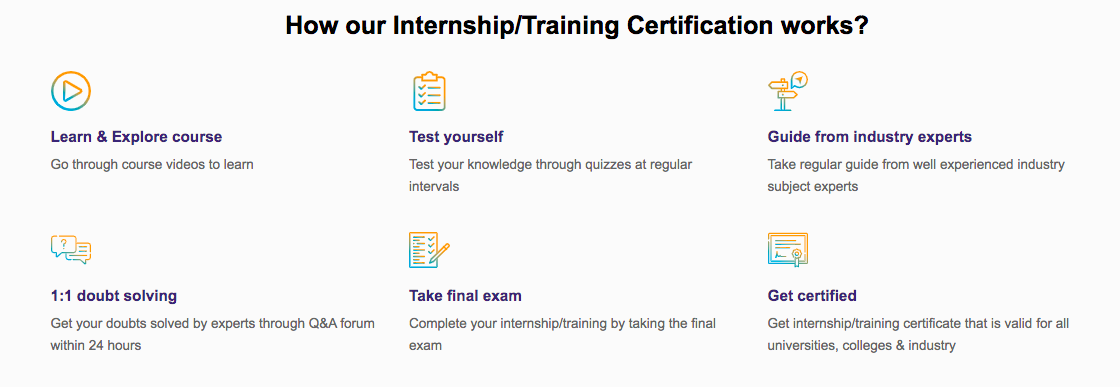
How EasyShiksha Internship/Training Program Works
How One Missing Concept Can Affect an Entire Career
Professional careers involve interconnected capabilities. A person rarely performs every task using one isolated skill. A software engineer combines programming, debugging, architecture, communication and problem-solving. A financial analyst combines accounting, statistics, economics, spreadsheet modelling and business interpretation. A healthcare administrator may need operational knowledge, data interpretation, financial planning and regulatory understanding.
When one foundational concept supports several of these capabilities, a gap can affect multiple responsibilities. The professional may become increasingly dependent on templates, instructions or colleagues for tasks that require independent reasoning.
For example, a junior data analyst may know how to use spreadsheet functions and create dashboards but lack a clear understanding of statistical distributions. The individual can produce charts and reports, yet may struggle to interpret unusual patterns, distinguish meaningful variation from random noise or explain whether a conclusion is justified. As responsibilities increase, the gap becomes more significant because the professional is expected to interpret data rather than simply present it.
A similar pattern can occur in management. An employee may understand project management software but lack a foundational understanding of dependencies and resource constraints. They may create schedules successfully while struggling to identify why delays in one activity affect the entire project.
The bottleneck may not prevent employment or initial career progress. It may become visible only when the professional moves into more complex responsibilities. This explains why some individuals perform adequately at entry level but experience difficulty when expected to demonstrate independent judgement, strategic thinking or technical depth.
The Difference Between a Knowledge Gap and an Educational Bottleneck
Every learner has knowledge gaps. Not knowing a particular definition or procedure does not automatically create a bottleneck. A knowledge gap becomes a bottleneck when it repeatedly restricts progress in several related areas.
A student may not know the details of a particular software tool, but that missing information may affect only one task. By contrast, a weak understanding of database relationships could affect application development, data analysis, backend engineering and system design. The second gap has a wider influence because several capabilities depend on it.
Educational Bottleneck Theory therefore requires an understanding of relationships between concepts. It is not enough to record that a learner answered a question incorrectly. The system must examine which prerequisite knowledge is involved and whether the same weakness appears in other contexts.
It must also distinguish between a genuine conceptual gap and other causes of poor performance. A student may answer incorrectly because of unclear instructions, insufficient practice, language difficulties, anxiety or unfamiliar assessment formats. Treating every incorrect answer as evidence of a missing foundation would produce inaccurate conclusions.
A meaningful bottleneck diagnosis should therefore consider repeated patterns across different questions, learning activities and practical tasks. It should identify whether the learner's difficulty is consistently associated with a particular concept and whether improving that concept leads to better performance elsewhere.
The Architecture of an Educational Bottleneck
A practical Educational Bottleneck Architecture could begin with a structured representation of academic concepts and their dependencies. Each concept would be connected to the knowledge required before it can be understood and the advanced topics that depend on it.
For example, a programming knowledge architecture might connect variables and data types with expressions, functions and control flow. These concepts could then support arrays, objects, asynchronous programming and application development. More advanced areas could connect to debugging, software architecture and performance optimisation.
The architecture would allow an educational platform to understand the consequences of a missing concept. If a learner repeatedly struggles with asynchronous programming, the system could examine related prerequisites rather than immediately recommending an advanced framework course.
A second component would analyse learner evidence. Quiz responses, course assessments, project submissions and practical exercises could provide information about how well the student understands different concepts. The system would look for recurring difficulties and compare performance across activities that require similar knowledge.
A third component would estimate the influence of each possible bottleneck. A concept that supports several important learning pathways may deserve more attention than an isolated topic. However, its importance should be determined by the actual learning objectives and the student's chosen direction rather than by a universal ranking.
Finally, the system would recommend a targeted learning intervention. This might involve revisiting a course section, completing a diagnostic quiz, solving a practical problem or receiving an explanation that connects the foundational concept to an advanced task.
Detecting Hidden Bottlenecks Through Learning Data
One of the most challenging aspects of educational bottlenecks is that students may not recognise them independently. A learner may believe that a topic is difficult because it is advanced, when the actual problem lies in an earlier concept that was never fully understood.
An AI-enabled learning system could help identify these patterns by examining evidence from multiple educational activities. It might analyse incorrect answers, repeated attempts, the types of hints a learner requires and performance on questions that use the same underlying concept in different contexts.
Suppose a student repeatedly struggles with programming questions involving object references, array manipulation and function parameters. These questions may appear unrelated, but a deeper analysis could reveal that they all depend on understanding how values and references behave in JavaScript. The system could recommend revisiting that foundational concept rather than treating each incorrect answer as a separate weakness.
However, automated diagnosis must be cautious. Similar mistakes do not always have the same cause, and a model should not label a student as lacking a concept based on one assessment. The strongest evidence would come from multiple activities that test the same concept through different examples and contexts.
For EasyShiksha, this could support a shift from simple score tracking toward concept-level learning diagnostics. The objective would be to understand why a student is struggling, not merely record that the student has struggled.
The Role of Quizzes in Identifying Educational Bottlenecks
Quizzes can provide useful evidence about foundational understanding when they are designed to test more than memorisation. A conventional question may ask students to recall a definition, while a diagnostic question can require them to apply the concept in a new situation.
For example, a student learning percentages might answer a direct calculation correctly but struggle when the same concept appears in a discount comparison or financial statement. This difference can reveal whether the learner understands the underlying relationship or has only memorised a procedure.
An intelligent quiz system could assess a concept through multiple question types and gradually increase contextual complexity. It could compare the learner's performance across direct recall, application and transfer. If performance declines consistently when the context changes, the system may need to investigate whether the foundational concept is understood deeply enough.
EasyShiksha could potentially connect diagnostic quizzes with its online courses. When a learner demonstrates difficulty in a particular area, the platform could recommend the relevant lesson and provide additional practice before the student moves to more advanced material.
This would make quizzes part of a continuous diagnostic process rather than isolated score-generating activities. Their value would lie not only in measuring performance but also in helping identify the knowledge dependencies that influence future learning.
Educational Bottlenecks in Technology Careers
Technology provides several clear examples of how foundational gaps can influence professional development. Modern technical careers require individuals to combine multiple concepts, tools and problem-solving methods. Learning a framework or software application without understanding its underlying principles may produce short-term productivity but limit adaptability.
In web development, a learner may know how to use a frontend framework but struggle to understand component rendering, state management or asynchronous data handling. The person may be able to reproduce familiar interfaces while finding it difficult to diagnose unexpected behaviour. A deeper understanding of JavaScript execution, browser behaviour and application architecture could make advanced development tasks easier to approach.
In data science, a learner may understand how to run machine learning libraries but lack a strong foundation in statistics, probability or data preparation. This may create problems when selecting models, interpreting performance metrics or identifying data leakage. The professional can operate the tools but may struggle to evaluate whether the results are meaningful.
Cybersecurity provides another example. A student may learn security tools and vulnerability scanning procedures but lack a clear understanding of networking, operating systems or access control. Without these foundations, it becomes harder to understand why a vulnerability exists and how different security controls interact.
For EasyShiksha, technology courses could be organised around these foundational dependencies. Students would not simply move from beginner to advanced courses based on completion. They could receive guidance about the underlying concepts that support their chosen professional pathway.
Educational Bottlenecks in Business and Finance
The same principle applies to business-oriented careers. A marketing professional may know how to create campaigns, manage social media accounts and use advertising dashboards, but a weak understanding of customer behaviour or conversion economics can restrict strategic development.
The professional may focus on clicks and impressions without understanding the relationship between acquisition costs, conversion rates, customer lifetime value and profitability. As responsibilities increase, the ability to connect marketing activity with business outcomes becomes more important.
In accounting and finance, a weak understanding of fundamental financial statements can affect budgeting, taxation, investment analysis and business valuation. A learner may know how to enter transactions into accounting software but struggle to interpret the financial position of an organisation.
Human resource professionals may encounter similar bottlenecks when they understand recruitment procedures but lack foundational knowledge of workforce planning, organisational behaviour or employment analytics. These concepts become increasingly important when moving from administrative responsibilities to strategic decision-making.
A learning ecosystem that recognises these dependencies could help students build more complete professional foundations. Courses and quizzes could develop conceptual understanding, while case studies and projects could test whether students can apply those concepts to realistic business situations.
The Career Bottleneck Effect: Why Progress May Slow at Higher Levels
The impact of a missing foundation may become more visible as a person advances professionally. Entry-level tasks are often structured, repetitive and supported by instructions. More senior responsibilities require individuals to understand unfamiliar situations, make decisions and connect information from different areas.
A professional with a weak foundation may initially compensate through effort, experience or external support. Over time, however, the complexity of the work may increase faster than the person's ability to manage it. The individual may begin avoiding certain responsibilities, relying heavily on established procedures or struggling to explain decisions independently.
This can create what may be described as a career bottleneck effect. The person continues developing in some areas, but progress becomes restricted around tasks that require the missing foundational capability.
It is important not to assume that every career slowdown is caused by education. Workplace conditions, organisational structures, limited opportunities, discrimination, economic circumstances and personal responsibilities can also affect professional progress. Educational Bottleneck Theory should therefore be used as a learning diagnostic framework, not as a complete explanation of career outcomes.
Its value lies in identifying one factor that education and professional development systems can potentially address: foundational knowledge that has not developed sufficiently for the learner's next stage.
Traditional digital learning platforms often organise progress around course completion. Students enrol, watch lessons, complete assessments and receive certificates. This provides a clear record of participation, but it does not necessarily demonstrate that every important concept has been understood.
A learner may complete a course while retaining only a surface-level understanding of its central ideas. Another student may take longer but develop stronger conceptual foundations through practice and revision.
Educational Bottleneck Theory suggests that learning progress should be represented at a more detailed level. Instead of treating a course as a single completed unit, the system could identify the important concepts within it and evaluate how well students can recall, explain and apply them.
This does not mean that every concept requires a separate certificate or examination. It means that course completion should be interpreted alongside evidence of understanding. Students could receive recommendations when an important prerequisite remains uncertain, even if they have technically completed the module.
For EasyShiksha, this could strengthen the relationship between online courses and certificates. Certificates would continue to recognise course completion, while supporting assessments and practical activities could provide additional evidence of the capabilities developed during the learning journey.
AI as an Educational Bottleneck Detection Engine
Artificial intelligence could help make bottleneck detection more scalable by analysing relationships across a learner's educational activities. A traditional assessment system may evaluate each quiz independently, while an AI-enabled system could look for recurring patterns across courses, projects and practical exercises.
The system could compare the concepts involved in different tasks, identify repeated errors and estimate which prerequisite knowledge may be contributing to the difficulty. It could then recommend a targeted intervention rather than offering generic revision advice.
For example, a student struggling with database queries, backend development and data analysis might have difficulty understanding relational data structures. An AI system could identify the common conceptual dependency and suggest a review of database relationships, keys and normalisation before recommending more advanced practice.
The system should also explain its recommendations. Rather than simply telling the learner that a foundational concept is weak, it could show which activities revealed the difficulty and why the concept matters for the next stage of learning. This would help students understand the diagnosis and decide whether the recommendation is appropriate.
AI should not make permanent judgements about a learner's ability. Its role should be to identify possible learning barriers, present evidence and recommend ways to address them. Human educators should remain involved when the diagnosis is uncertain or when a student's circumstances require broader support.
The Importance of Remedial Learning Without Stigma
Students may feel uncomfortable when told that they need to revisit foundational material. They may interpret the recommendation as evidence that they are behind their peers or lack the ability to progress.
An effective educational system should present foundational revision as a normal part of advanced learning. Professionals routinely return to earlier concepts when they encounter unfamiliar problems. Revisiting a foundation is not a failure; it is often a necessary part of developing expertise.
The design of the learning experience matters. Instead of sending a student back to an entire beginner course, the system could provide a focused explanation, a short diagnostic exercise and a practical example connected to the current task. This would make remediation more relevant and less disruptive.
For example, a learner working on an advanced JavaScript project may not need to repeat an entire programming course. They may only need to revisit closures or asynchronous execution through a few carefully designed exercises. Once the learner demonstrates stronger understanding, they can return to the project.
EasyShiksha could explore this approach through targeted learning pathways that connect foundational lessons with advanced courses, quizzes and practical assignments. The objective would be to remove the bottleneck without making students feel that their overall progress has been erased.
Connecting Foundational Knowledge With Projects and Internships
Projects can reveal educational bottlenecks that conventional quizzes may not detect. A student may answer theoretical questions correctly but struggle when several concepts must be combined to complete a practical task.
A web development project, for example, may require the student to understand HTML structure, CSS layout, JavaScript behaviour, data handling and debugging. If the project repeatedly fails because of one foundational misunderstanding, the difficulty becomes visible through practical performance.
Internships can reveal similar patterns in professional environments. A student may understand individual concepts but struggle to apply them under workplace conditions, where instructions may be incomplete and tasks may require independent judgement.
EasyShiksha could potentially connect project and internship feedback with the student's learning record. Where appropriate and with permission, practical observations could help identify concepts that need further development. A student who struggles with interpreting data in an internship might benefit from revisiting statistics or data visualisation before taking on more advanced analytical responsibilities.
This would create a continuous connection between academic foundations and workplace capability. Instead of treating internships as separate experiences, the platform could use them to identify which areas of learning need reinforcement.
Building a Foundational Dependency Map for Every Career Path
A more advanced application of Educational Bottleneck Theory would be a career-oriented foundational dependency map. Such a map would represent the concepts that support different professional pathways and show how they connect to advanced skills and responsibilities.
For example, a data analytics pathway might begin with numerical literacy, statistics, spreadsheet concepts and data organisation. These foundations could support data cleaning, visualisation, querying and analytical interpretation. Further development could lead toward predictive modelling, business intelligence and advanced analytics.
A cybersecurity pathway might connect networking fundamentals, operating systems, programming, authentication and security principles with more advanced topics such as penetration testing, incident response and security architecture.
These maps should not be treated as rigid career requirements. Professionals enter fields through different routes, and not every role requires the same combination of knowledge. A dependency map should represent useful learning relationships rather than impose a single universal sequence.
For EasyShiksha, career guidance could potentially use these maps to help students understand the foundations behind a particular job role. Instead of recommending only the courses associated with a career, the platform could identify the underlying concepts that learners should understand before progressing toward advanced responsibilities.
Measuring the Influence of a Foundational Concept
Not every missing concept deserves the same level of attention. A useful bottleneck detection system would need to estimate how strongly a concept influences the learner's chosen goals.
One possible approach would be to examine how many relevant advanced concepts depend on a particular foundation, how frequently it appears in practical tasks and whether the learner's performance improves after targeted revision. A concept that supports several important capabilities may have a greater influence on the learner's progress than one with a narrow application.
However, dependency count alone is not enough. A concept may be connected to many topics without being equally important for every career. The system should consider the student's intended pathway, current level and practical objectives.
It should also measure improvement after intervention. If revisiting a foundational topic leads to stronger performance across several related activities, this provides evidence that the earlier gap was contributing to the difficulty. If performance does not improve, the original diagnosis may have been incomplete or another barrier may be involved.
This makes bottleneck detection an iterative process rather than a one-time label. The system identifies a possible limitation, recommends an intervention and evaluates whether the intervention improves the learner's ability to progress.
The Risks of Overdiagnosis and Algorithmic Labelling
An automated system that identifies foundational weaknesses could create new problems if its conclusions are treated as unquestionable. A student might be incorrectly classified as weak in a subject because of a poorly designed quiz, unfamiliar language or temporary circumstances.
There is also a risk of narrowing educational opportunities. If a platform repeatedly directs a learner toward remedial material, it could prevent the student from exploring advanced topics or alternative interests. A diagnostic recommendation should support progress, not restrict it.
Privacy is another important consideration. Learning records can reveal detailed information about a student's educational history and performance. Such information should be used transparently, with appropriate access controls and meaningful student choice.
EasyShiksha would need to approach any proposed bottleneck detection system with care. Recommendations should be explainable, open to correction and based on sufficient evidence. Students should be able to understand why a particular foundation has been identified and request alternative learning support where necessary.
The system should also avoid converting educational diagnosis into employability labels. A foundational gap is a temporary learning condition that can change through education and experience. It should not become a permanent judgement about a person's professional potential.
Educational Bottlenecks and Lifelong Professional Development
Foundational knowledge is not important only during school or university. Professionals continue encountering new fields, technologies and responsibilities throughout their careers. A person moving from traditional marketing into marketing analytics, for example, may need to strengthen statistical reasoning. A software developer moving toward cloud architecture may need deeper knowledge of networking and distributed systems.
Career transitions can therefore expose new educational bottlenecks. A concept that was not essential in an earlier role may become important in a new professional direction. This means that foundational knowledge should be understood relative to the learner's current goals rather than treated as a fixed checklist completed once in life.
A lifelong learning platform could maintain a changing map of the learner's capabilities and identify new foundations as professional responsibilities evolve. When a person begins a new course, the system could examine which existing skills transfer and which prerequisite concepts may need attention.
For EasyShiksha, this creates an opportunity to connect student education with professional reskilling. The same learning architecture could support a school student preparing for higher education, a graduate entering employment and an experienced professional changing career direction.
Empower your team. Lead the industry
Get a subscription to a library of online courses and digital learning tools for your organization with
EasyShiksha
The Future of Education: Finding the Small Gap Behind the Large Problem
As educational platforms become more intelligent, they may increasingly focus on diagnosing the reasons behind learning difficulty rather than simply delivering more content. The traditional response to a struggling learner is often to recommend additional lessons or practice. Educational Bottleneck Theory suggests that the more useful response may sometimes be to identify the small foundational concept that is preventing progress across several areas.
This could lead to a more precise form of personalised education. Students would not need to repeat entire courses when only one concept requires reinforcement. Educators could receive clearer information about recurring learning barriers, while learners could understand how foundational knowledge connects to their future professional goals.
The concept may also influence how institutions design curricula. Instead of evaluating subjects only as independent units, educational programmes could examine the dependencies between concepts and identify where students are most likely to experience difficulty. Course designers could use this information to improve prerequisite explanations, assessment structures and practical learning experiences.
The future of education may therefore involve a stronger focus on the architecture of knowledge itself. Learning systems could become better at identifying not only what students know, but also which missing relationships or concepts prevent them from using that knowledge effectively.
Conclusion: Professional Growth Depends on the Strength of Its Foundations
Educational Bottleneck Theory highlights an important possibility: a professional may possess multiple qualifications and practical skills while remaining limited by one or more foundational concepts that were never fully understood. Such gaps can remain hidden during early learning and become more visible when responsibilities require deeper reasoning, independent problem-solving and the ability to work across connected areas of knowledge.
For EasyShiksha, this concept offers a way to connect online courses, quizzes, university programmes, projects, internships, certificates and career guidance through a more detailed understanding of learner development. Instead of measuring progress only through course completion, an intelligent learning environment could examine the foundational concepts supporting a student's future learning and professional goals.
AI could help identify recurring patterns, map knowledge dependencies and recommend targeted revision. Quizzes could test conceptual understanding, projects could reveal practical weaknesses, and internship experiences could provide evidence of how academic foundations translate into workplace performance. These capabilities would need to be implemented with transparency, privacy protection and human oversight.
The most important lesson is that advanced learning cannot always compensate for weak foundations. Adding more courses, tools and certificates may increase the quantity of a learner's educational experience without resolving the underlying limitation. Sometimes, meaningful progress begins by returning to one concept and understanding it properly.
A stronger education system should therefore help students build more than a collection of skills. It should help them develop the foundational knowledge that allows those skills to connect, grow and remain useful throughout an evolving professional career.
Anshika Jain is an Engineer, Developer, and Educational Content Author known for her dedication to technology and knowledge sharing. With a strong analytical mindset and a passion for innovation, she has consistently contributed to creating meaningful digital solutions and insightful educational articles.
Her ability to simplify complex technical concepts into engaging and easy-to-understand content makes her work valuable for students and learners across various platforms. Along with her technical expertise, Anshika is admired for her creativity, professionalism, and commitment to continuous learning.
She represents a perfect blend of technical excellence and impactful communication, inspiring others through both her development work and educational contributions.