Artificial intelligence is rapidly changing how students access information, understand difficult concepts and organise their learning. General-purpose AI assistants can explain academic topics, summarise lengthy documents, generate practice questions and help learners solve problems. However, these systems usually operate with broad knowledge that is not necessarily connected to an individual student's actual educational journey. They may not know which concepts a student has studied, which explanations were provided by their university, which examples appeared in a course or which subjects the learner has already mastered.
This creates an opportunity for a more personalised approach: what if students could train small personal AI models using their own verified learning materials? Instead of relying entirely on a general-purpose AI assistant, a learner could create a specialised educational model based on trusted course content, lecture notes, textbooks, completed quizzes, project documentation and other authorised learning resources. The resulting model would be designed to support a particular student's educational context rather than attempting to answer every possible question.
For a platform such as EasyShiksha, this idea opens an interesting direction for the future of digital education. Its ecosystem of online courses, quizzes, internships, certificates, university programmes, games and career guidance could provide the structured learning materials needed to develop personal AI learning environments. Students could potentially build models that understand the subjects they are studying, refer to the resources they have completed and help them revise or practise concepts within a familiar academic framework.
The important distinction is that a personal educational AI model would not simply be another chatbot. It would represent a learner's own verified knowledge environment, shaped by educational resources and updated as the student progresses. The objective would not be to replace teachers, textbooks or general AI systems. It would be to give students more control over how AI supports their learning, while improving the connection between trusted educational content and personalised assistance.
What Is a Personal AI Learning Model?
A personal AI learning model can be understood as a compact artificial intelligence system configured or adapted to work with a specific learner's educational materials. It may be trained on a carefully selected dataset, adapted through fine-tuning or connected to a verified collection of documents through a retrieval system. These approaches differ technically, but they share a common objective: making AI assistance more relevant to a student's learning context.
A general-purpose AI model is designed to respond to a wide range of subjects and situations. It may know about mathematics, programming, economics, history, science and countless other topics, but it does not automatically know which syllabus a particular student follows or which definitions their instructor expects them to use. A personal learning model could be connected to the learner's approved course materials and use those resources as its primary reference.
For example, a student studying web development through EasyShiksha might collect course lessons, HTML and CSS notes, JavaScript examples, quiz explanations and project instructions in one organised learning environment. A personal AI assistant connected to these materials could explain concepts using the terminology and examples found in those resources. It could also help the student revise a particular module or generate practice questions based on the topics already covered.
The model would not necessarily need to learn everything from scratch. In many cases, a smaller model combined with a structured knowledge collection could provide the desired personalisation without the expense of training a large AI system. The real innovation would lie in combining compact AI technology with trusted educational content and a clear understanding of the learner's progress.
Why Should Students Have Their Own AI Models?
Most students currently use shared AI tools that serve millions of people. These tools can be useful, but their responses may not always align with the learner's curriculum, academic level or preferred learning materials. Students often need to explain their context repeatedly, upload the same documents multiple times or verify whether an answer matches the resources provided by their institution.
A personal AI learning environment could reduce this disconnect. The student would have a dedicated system that works with an organised collection of approved materials. When the learner asks a question, the assistant could search the relevant resources and construct an explanation based on the available evidence. This would make the learning experience more consistent and reduce the need to repeatedly establish academic context.
Another advantage is continuity. Students frequently move between courses, assessments, projects and practical assignments. Their learning materials are often scattered across different platforms, documents and applications. A personal AI environment could bring selected resources together and make them easier to access. As the student completes additional courses or develops new skills, the knowledge collection could expand.
Personal AI models could also encourage educational ownership. Students would no longer be only consumers of AI-generated explanations. They could participate in building, organising and evaluating the knowledge environment that supports their learning. This may help them develop a deeper understanding of how artificial intelligence works, how training data influences model behaviour and why reliable information matters.
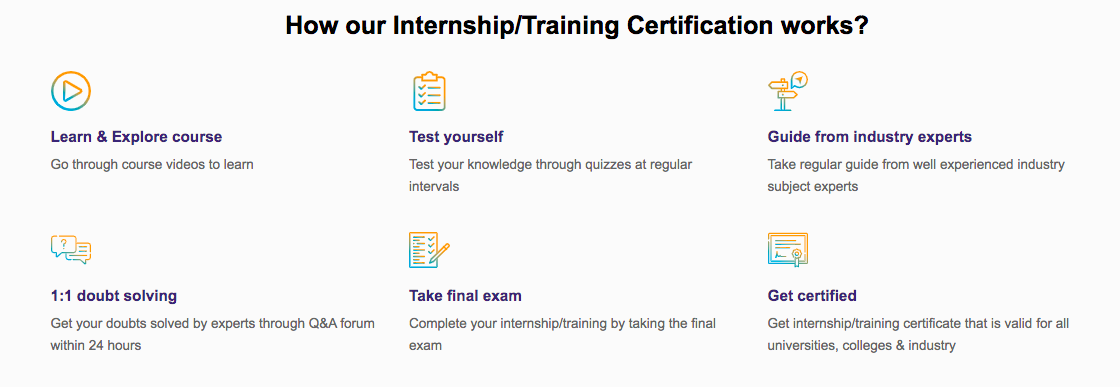
How EasyShiksha Internship/Training Program Works
Verified Learning Materials as the Foundation
The quality of a personal AI learning environment depends heavily on the quality of the information connected to it. If a student trains or configures an AI model using inaccurate notes, outdated explanations, copied material of uncertain origin or incorrect assignments, the system may reproduce those weaknesses. Personalisation alone does not guarantee reliability.
Verified learning materials provide a stronger foundation. These may include approved course modules, institutionally supplied lecture notes, reviewed explanations, authorised textbooks, completed assignments and validated practical exercises. The purpose of verification is to establish where a resource came from, whether it is suitable for the intended subject and whether it remains relevant to the learner's current course.
For EasyShiksha, this could become an important part of the educational content architecture. Online courses could provide structured learning resources, while quizzes could offer reviewed explanations and assessments. University programmes could contribute authorised academic materials, and internship projects could add practical documentation where sharing is permitted. These resources could be organised into a student's personal knowledge collection.
Verification should not be interpreted as a guarantee that every statement in a document is universally correct. Academic knowledge changes, interpretations can differ and some subjects involve legitimate disagreement. A reliable system should therefore preserve information about the source, author, publication date, course context and review status wherever possible. It should also distinguish between established facts, educational interpretations, examples and provisional material.
How Students Could Build Their Personal AI Learning Environment
Creating a personal AI learning model would involve more than uploading a collection of documents. The materials would first need to be organised into a structured knowledge environment. Course notes, lecture documents, quiz explanations and project files could be grouped according to subjects, modules, concepts and learning objectives.
Once organised, the materials could be processed so that an AI system can retrieve relevant information. Documents may be converted into searchable text, divided into meaningful sections and represented through numerical embeddings that help the system identify semantically related passages. When a student asks a question, the system can retrieve the most relevant sections and use them as context for generating an answer.
This approach is commonly associated with retrieval-augmented generation, or RAG. It does not necessarily change the underlying model's internal parameters. Instead, it connects an AI model to an external knowledge collection and supplies relevant information when responding. For many student applications, this may be more practical than training a model from the beginning.
A more advanced version could use fine-tuning to adapt a small model to a particular educational task, such as explaining programming concepts in a consistent style or generating questions that follow a specific assessment format. However, fine-tuning should not be confused with simply adding new facts. It is generally better suited to adapting behaviour, response patterns or task performance than storing a large collection of frequently changing academic information.
Students may not need to manage these technical processes themselves. An educational platform could provide an interface where learners select approved resources, choose the subjects they want to include and configure how the personal assistant should respond. The underlying system could handle document processing, retrieval, model selection and updates.
Small Language Models and Their Role in Personal Education
The idea of personal AI models becomes more practical with the development of small language models. Large language models can contain billions of parameters and require significant computational resources. Small language models are designed to operate with comparatively fewer parameters, making them potentially more affordable and suitable for specialised tasks.
A student does not necessarily need an AI system capable of answering questions about every subject in the world. A learner studying accounting may primarily need support with financial statements, bookkeeping concepts, taxation principles and practical accounting exercises. A programming student may need assistance with syntax, debugging, algorithms and project development. A compact model supported by relevant learning materials could be sufficient for many of these activities.
Small models may also offer advantages in deployment flexibility. Depending on their architecture and hardware requirements, some can run on personal computers or other local devices. This could allow certain educational tasks to be completed without sending every document or question to an external cloud service. However, local operation depends on available memory, processing power, model size and software support.
The objective should not be to assume that a smaller model is automatically more accurate or private. Small models can still generate incorrect information, and local storage does not automatically provide strong security. Their value comes from matching the model's capabilities to a clearly defined educational task and connecting it to reliable resources.
Personal Knowledge Collections Versus Model Training
One of the most important design decisions is determining whether students actually need to train an AI model or simply create a personal knowledge collection connected to an existing model. These approaches may appear similar to learners, but they have different technical implications.
Training changes a model's parameters using data. Fine-tuning adapts an existing model through additional training, while full training attempts to build model capabilities from a much larger dataset and requires substantial computing resources. Neither process is necessary for every personalised learning application.
A retrieval-based system, on the other hand, keeps the learning materials in an external knowledge store. When the student asks a question, the system retrieves relevant passages and provides them to the AI model. This makes it easier to update information, remove outdated documents and show the sources supporting an answer.
For an educational platform, retrieval-based personalisation may be a more practical starting point. Course content changes over time, students enrol in new programmes and academic materials may need to be replaced. Updating a knowledge collection is generally more straightforward than repeatedly fine-tuning a model whenever a document changes.
A hybrid approach could eventually combine both methods. The knowledge collection would provide factual and course-specific information, while a small fine-tuned model could support consistent tutoring behaviour, question generation or structured feedback. This would create a specialised educational assistant without requiring every learner to train a complete AI model independently.
The Role of EasyShiksha in Personal AI Model Development
EasyShiksha could explore this concept through its existing educational ecosystem. Online courses already create structured learning experiences, while quizzes, certificates, university programmes and internships provide different forms of educational evidence. These resources could potentially become the building blocks of personal AI learning environments.
A student completing an EasyShiksha course could select the approved learning materials associated with that course and add them to a personal knowledge space. The learner might include lesson explanations, important examples, revision documents and quiz feedback. An AI assistant could then use these resources to support revision, answer questions and generate additional practice.
As students progress, their personal knowledge collections could expand. A learner who completes several courses in digital marketing might connect materials on search engine optimisation, content strategy, social media advertising and analytics. The AI system could help explain how these topics relate to one another, while keeping the original course sources available for verification.
University programmes could provide another layer of structured material. Where institutions permit the use of their resources, students could add approved syllabi, lecture notes and subject documents. This could help create a more continuous learning environment in which formal education and independent digital learning support one another.
The key opportunity is not to position EasyShiksha as a platform that simply offers another AI chatbot. It is to explore how educational content, learner progress and compact AI systems could work together to create a more personalised and evidence-aware learning experience.
A Personal AI Tutor That Understands the Student's Course
A personal AI learning model could function as a course-aware tutor. Unlike a general assistant that may provide explanations from broad training knowledge, a course-aware tutor would first consult the materials selected by the student or provided through an approved course.
Consider a learner studying JavaScript. The student may ask about promises, asynchronous functions or event handling. The assistant could retrieve the relevant lessons and explain the concepts using the examples included in the course. If the student asks a follow-up question, the system could maintain the immediate learning context and connect the explanation to related concepts.
This could be particularly useful when learners revise difficult topics. Instead of searching through multiple documents, they could ask the assistant to explain a specific concept, compare two related ideas or create a practice problem based on the material they have studied. The assistant could also identify which lesson or resource contains the explanation.
However, a course-aware tutor should not be restricted to repeating source material. It may provide additional explanations and examples when necessary, but it should clearly distinguish between information taken from the student's verified materials and supplementary explanations generated by the AI. This distinction would help learners understand which content belongs to their official course and which content has been added to support comprehension.
Personal AI Models for Quizzes and Assessment Preparation
Quizzes could become one of the most useful applications of personal educational AI. Students frequently revise large collections of notes before examinations, but traditional revision often requires them to manually create questions and identify important concepts.
A personal AI assistant could generate practice questions from the student's approved learning materials. It might create multiple-choice questions, short-answer exercises, scenario-based problems or revision prompts based on the topics covered in a course. The learner could also request questions at different levels of difficulty.
The system could use previous quiz results to identify topics that require further revision. If a student repeatedly makes mistakes in a particular area, the assistant could retrieve the relevant lesson and create additional exercises focused on that concept. It could also compare the student's responses with the learning objectives defined in the course.
This would create a more connected relationship between educational content and assessment. Instead of treating quizzes as isolated activities, the platform could use them to improve the student's personal knowledge environment.
Nevertheless, generated questions must be checked for accuracy and alignment with the intended curriculum. An AI model should not become the sole authority for determining assessment correctness. Reviewed question banks, clear answer explanations and appropriate human oversight would remain important.
Connecting Personal AI Models With Projects and Internships
The value of personal AI models could extend beyond academic revision. Students also need to apply what they learn through projects, practical assignments and internships. These experiences generate new information that may help them understand their strengths and identify areas for improvement.
A learner completing a web development project, for example, could maintain documentation describing the project objective, technologies used, implementation decisions and problems encountered. Where the student has permission to use the material, selected documentation could become part of the personal learning collection. The AI assistant could then help the learner revisit previous decisions, explain technical concepts or prepare for a similar project.
Internship experiences could contribute in a similar way. Students may collect permitted task descriptions, learning reflections, project summaries and supervisor-approved feedback. These materials could help the AI assistant connect academic concepts with workplace applications. A learner studying digital marketing might use approved campaign documentation to understand how theoretical concepts relate to practical decisions.
This approach could also support career preparation. Students could ask their personal assistant to help organise project evidence, explain the skills demonstrated through completed work or prepare for technical discussions. However, confidential employer information, client data and restricted workplace documents must never be added without explicit permission.
The purpose would be to help students learn from their experiences, not to turn every internship document into unrestricted AI training data.
The Student's Personal Knowledge Graph
As a student's learning materials grow, a simple folder structure may become insufficient. A more advanced system could organise information through a personal knowledge graph.
A knowledge graph represents concepts and the relationships between them. Instead of storing documents only by filename, it can connect topics, prerequisites, examples, assessments and practical applications. A student learning web development might have connected concepts for HTML, CSS, JavaScript, browser events, asynchronous programming and application development.
The graph could help the AI system understand how one concept relates to another. If a learner struggles with JavaScript promises, the assistant might identify connections to callbacks, asynchronous functions and event-loop behaviour. It could recommend revisiting prerequisite material before introducing more advanced exercises.
This structure could also help students recognise how skills from different courses complement one another. A learner studying finance and data analytics might discover useful connections between financial reporting, spreadsheets, statistical analysis and visualisation.
For EasyShiksha, a personal knowledge graph could potentially connect course content, quiz performance, project evidence and internship learning. The result would be a more meaningful representation of a student's educational development than a collection of unrelated certificates or completed modules.
Learning Privacy and Student Ownership
Personal AI models introduce important questions about data ownership and privacy. A student's learning materials may include academic records, assessment responses, personal notes, project documentation and information about educational performance. These materials should not automatically become training data for a third-party AI provider.
Students should understand where their documents are stored, which systems can access them and whether the information is used to improve an AI model. They should also have meaningful choices about whether their personal knowledge collection remains private, is shared with an institution or is exported to another compatible platform.
Data ownership should include practical controls. Learners should be able to review the materials connected to their assistant, remove documents that are no longer relevant and correct inaccurate information. If the model uses retrieval rather than permanent training, removing a document from the knowledge collection should also prevent it from being retrieved in future responses, subject to the system's retention and backup policies.
Educational platforms should also consider the rights of content creators and institutions. A student may have access to a textbook or lecture recording for personal study, but that does not necessarily grant permission to upload it to an external service or use it to train a model. Copyright, licensing and institutional policies must be respected.
Trust will be essential. A personal AI learning environment should give students greater control over their education rather than creating another system that collects and uses their information without meaningful transparency.
Preventing AI Hallucinations in Personal Learning Models
Using verified learning materials can reduce the risk of unsupported responses, but it cannot eliminate AI hallucinations. A model may misunderstand a passage, combine unrelated statements or generate an explanation that sounds convincing but is not supported by the source.
A reliable personal AI system should therefore connect its responses to identifiable references. When answering a question, it could show the course module, document section or lesson passage used to construct the explanation. Students could open the original material and check whether the answer represents it accurately.
The system should also be able to acknowledge when the available resources do not contain enough information. If a learner asks a question that falls outside the selected course materials, the assistant should explain that limitation rather than pretending that the answer is supported by the student's documents.
Another important safeguard is source separation. The system should distinguish verified course material from student-created notes, AI-generated summaries and external references. These sources may have different levels of reliability and should not be presented as equally authoritative.
For EasyShiksha, such safeguards could become part of a broader educational trust framework. AI-generated answers would be more useful when students can inspect their supporting material, understand the limitations and decide when additional verification is necessary.
The Challenge of Keeping Personal Models Updated
Education is not static. Courses change, software technologies evolve, university syllabi are revised and professional standards develop. A personal AI system based on old materials may continue producing answers that no longer reflect current learning requirements.
A personal knowledge environment therefore needs a process for managing updates. When a course provider revises a module, the system could identify which student collections contain the older version. It could then inform learners that an updated resource is available and explain what has changed.
Version tracking would be particularly important in technical subjects. Programming libraries, development frameworks and cybersecurity practices can change significantly over time. A student may need to distinguish between an older example used in a previous course and a currently recommended approach.
The platform could maintain information about when a resource was added, which course version it belongs to and whether a newer version exists. Students could also retain historical materials when they remain useful for understanding how a concept has developed.
This would prevent personal AI models from becoming outdated collections of information. Instead, they could evolve alongside the learner's educational journey.
Teaching Students How AI Models Work
Building a personal AI learning environment could also become an educational experience in itself. Students would learn that AI systems do not automatically understand information in the same way humans do. Their behaviour depends on model architecture, training data, retrieval systems, instructions and evaluation methods.
Learners could explore why some documents produce better responses than others, how incomplete information affects an answer and why a model may generate unsupported details. They could compare the behaviour of a general-purpose assistant with a smaller model connected to verified course materials.
This would introduce practical AI literacy. Students could learn about data preparation, embeddings, retrieval, fine-tuning, model evaluation and responsible AI use through controlled educational activities. More advanced learners might experiment with open-source small language models, while beginners could use simplified tools that hide the technical complexity.
EasyShiksha could potentially connect such activities with courses in artificial intelligence, machine learning, data science and programming. Students would not only use AI to learn other subjects; they could also learn how AI systems are developed and evaluated.
This creates an important educational opportunity. Personal AI models could become both a learning tool and a practical project through which students develop technical knowledge.
Challenges of Cost, Computing and Accessibility
Although small AI models can be more efficient than large systems, developing and maintaining personal AI environments still involves costs. Students may need access to suitable hardware, cloud computing, storage, document-processing tools and reliable internet connectivity. Not every learner has the same technical resources.
A platform-based approach could reduce these barriers by managing the infrastructure centrally. Students could create personal knowledge collections through a browser interface without installing complex software or purchasing specialised hardware. The platform could select an appropriate model based on the task, available resources and privacy requirements.
Different levels of access may also be necessary. Basic learners might use a document-based assistant, while advanced users could access more sophisticated customisation features. This would make the experience useful without requiring every student to understand model training.
Accessibility must remain central to the design. The system should work across different devices, support learners with varying levels of digital literacy and avoid making expensive hardware a condition for receiving personalised educational assistance.
Evaluating Whether a Personal AI Model Actually Improves Learning
The success of personal AI learning models should not be measured only by how quickly they answer questions or how many documents they can process. A system that generates fluent explanations may still fail to improve independent understanding.
A stronger evaluation would examine whether students remember concepts over time, apply knowledge in unfamiliar situations and solve problems without depending entirely on the assistant. It could also assess whether learners become better at identifying incorrect AI responses and verifying claims against original materials.
For example, a student might use a personal AI assistant to revise programming concepts and then complete an independent coding task without assistance. If the learner can transfer the knowledge to a new problem, this provides more meaningful evidence of learning than the number of chatbot conversations completed.
EasyShiksha could potentially connect personal AI use with quizzes, practical projects and internship activities. The platform could compare learning progress across these experiences while avoiding the assumption that AI usage alone demonstrates mastery.
The ultimate objective should be to increase student capability. Personal AI systems should help learners become more knowledgeable, independent and confident in applying what they have studied.
Empower your team. Lead the industry
Get a subscription to a library of online courses and digital learning tools for your organization with
EasyShiksha
The Future: A Personal AI Learning Environment That Grows With the Student
The long-term possibility is an educational environment that develops alongside the learner. A student might begin with a small collection of school or introductory course materials and gradually add university resources, professional courses, projects and internship experiences.
Over time, the personal AI environment could become more useful because it understands the learner's selected educational context. It could help connect concepts across subjects, identify missing prerequisite knowledge, organise revision and support practical problem-solving. When a student changes academic direction, relevant knowledge from earlier learning could remain available rather than being lost inside an old course platform.
This could also make learning more portable. Instead of having educational progress distributed across disconnected systems, students might maintain an organised knowledge collection that can be exported or connected to compatible platforms. Such portability would require common data formats, appropriate permissions and clear ownership rules, but it could make lifelong learning more continuous.
For EasyShiksha, the opportunity would be to explore how its courses, quizzes, certificates, university programmes, games, projects and internships could contribute to this evolving personal learning environment. The platform could become part of a wider ecosystem in which learners do not simply access AI tools but gradually develop their own evidence-based educational assistants.
Conclusion: From Using AI to Building Personal Knowledge Intelligence
The possibility of students training small personal AI models using their own verified learning materials represents an important direction for personalised education. It shifts the focus from using a general-purpose chatbot to developing an AI environment that understands a learner's selected courses, academic resources, practical experiences and educational goals.
The most practical approach may not involve training a model from scratch. Small language models connected to verified knowledge collections through retrieval systems could provide a more accessible starting point. Fine-tuning may add specialised behaviour where appropriate, while source references, version tracking and privacy controls could help maintain reliability.
For EasyShiksha, this concept offers an opportunity to connect online courses, quizzes, university programmes, internships, projects and certificates through a more personalised AI learning architecture. Students could use approved educational materials to create assistants that support revision, explain difficult concepts, generate practice activities and connect theoretical knowledge with practical experience.
The most important outcome, however, should not be the creation of another AI chatbot. It should be the development of students who understand their own knowledge, can evaluate the information presented by AI and remain capable of working independently. A personal AI model should extend a learner's ability rather than replace it.
The future of personalised education may therefore move beyond giving every student access to the same intelligent assistant. It could give each learner the opportunity to build an AI learning environment grounded in their own verified educational journey, continuously updated as they acquire new knowledge and develop new capabilities.
Anshika Jain is an Engineer, Developer, and Educational Content Author known for her dedication to technology and knowledge sharing. With a strong analytical mindset and a passion for innovation, she has consistently contributed to creating meaningful digital solutions and insightful educational articles.
Her ability to simplify complex technical concepts into engaging and easy-to-understand content makes her work valuable for students and learners across various platforms. Along with her technical expertise, Anshika is admired for her creativity, professionalism, and commitment to continuous learning.
She represents a perfect blend of technical excellence and impactful communication, inspiring others through both her development work and educational contributions.