Career planning has traditionally encouraged students to choose a profession, acquire the qualifications required for it and follow a relatively predictable path towards employment. A student might study computer science to become a software developer, pursue finance to enter banking or study marketing to build a career in advertising. This approach provides direction, but it can also create a narrow understanding of the value of education. A qualification may prepare a learner for one occupation while leaving them uncertain about what to do if their interests change, the industry evolves or the expected opportunities become difficult to access.
The modern employment environment makes this limitation increasingly important. Job responsibilities change as organisations adopt new technologies, industries develop new business models and employers combine previously separate roles. A person who begins in web development may later move into product development, technical consulting, user experience engineering or technology project management. Someone with a foundation in finance may explore business analytics, fintech operations, risk analysis or financial planning. These transitions are easier when a learner possesses skills that remain useful across several professional contexts. This creates an important question for education: how can students evaluate the number of realistic career pathways their skills may open, rather than focusing only on the first job they hope to obtain?
The Career Optionality Score is a proposed framework for answering this question. It evaluates the breadth of credible future career pathways that a particular combination of skills may support. Instead of measuring only whether a learner is qualified for one target occupation, it examines how many different professional directions remain realistically accessible, what additional learning each direction requires and how resilient the learner’s options may be when employment conditions change.
For EasyShiksha, this concept could create a new way to connect courses, quizzes, internships, projects, certificates, university programmes and career guidance. The objective would not be to recommend that every student pursue as many occupations as possible. It would be to help learners build a purposeful combination of capabilities that supports a clear initial career direction while preserving credible alternatives for future development.
What Is a Career Optionality Score?
A Career Optionality Score can be understood as an estimate of the number, quality and accessibility of professional pathways supported by a learner’s demonstrated skills, qualifications and experience. It focuses on the choices a person could realistically pursue, rather than the number of job titles that appear related to their education.
This distinction is essential because a single skill can be associated with dozens of occupations without making all those occupations accessible. Learning HTML and CSS may introduce a student to web development, website maintenance, interface implementation and some content-management work. However, it does not automatically qualify the student for advanced software engineering, cloud architecture or cybersecurity positions. Those roles may require additional programming knowledge, specialised tools, experience or formal qualifications.
A meaningful optionality framework must therefore distinguish between theoretical possibilities and realistic opportunities. A pathway should count only when the learner possesses enough relevant capability to enter it now or has a reasonably achievable route to acquiring the missing competencies.
For example, a student with HTML, CSS, JavaScript and WordPress experience may have several plausible directions. These could include WordPress development, junior frontend development, website implementation, website support and certain digital production roles. If the student later adds React, API integration, version control, testing and project experience, additional pathways may become accessible.
The score would therefore change as the learner develops. It would not be a permanent label attached to a student or qualification. Instead, it would represent a changing relationship between the learner’s capabilities and the opportunities available in the professional environment.
Career Optionality Score is a proposed analytical concept rather than a universally standardised employment metric. Its value would depend on how carefully the platform defines pathways, verifies skills and evaluates accessibility.
Why Counting Job Titles Is Not Enough
A simple career-counting model might examine a learner’s skills and list every occupation that uses them. Although this can be useful for brainstorming, it often exaggerates career flexibility. Two job titles may describe substantially similar work, while another role may share a skill but require a very different level of expertise.
For instance, a student who understands spreadsheets may discover job descriptions mentioning administration, operations, finance, reporting, sales coordination and business analysis. However, spreadsheet familiarity alone may not provide the analytical reasoning, domain knowledge or professional experience needed for every role.
A credible optionality score should therefore examine the substance of each pathway. It should consider the core tasks performed, the skills required, the level of responsibility, the evidence employers expect and the barriers to entry. Roles that are nearly identical should not automatically be counted as separate options simply because their titles differ.
The system should also distinguish between adjacent career moves and distant career transitions. Moving from WordPress development into junior frontend development may require a manageable expansion of existing skills. Moving from the same starting point into clinical healthcare or regulated financial advice could involve substantial formal education, certification or licensing.
Both transitions may be possible in the long term, but they should not be presented as equally accessible. The first may be a realistic near-term option, while the second represents a longer pathway requiring a significant investment.
For EasyShiksha, this distinction could help students avoid confusing an extensive list of career possibilities with genuine career flexibility.
The Difference Between Career Optionality and Employability
Career optionality and employability are related, but they measure different things. Employability concerns a person’s readiness to obtain, perform and progress in work. Career optionality concerns the number and quality of professional directions that person can realistically pursue.
A learner may be highly employable in one specialised occupation but have limited alternatives outside it. Another learner may possess a broader combination of technical, analytical and communication skills that supports several related roles, even if they still need to improve their overall level of professional readiness.
Consider a student who has advanced expertise in a highly specialised software tool used by a small number of employers. That expertise may be valuable for a particular role, but the student’s immediate career options could be limited if demand changes. By contrast, someone with moderate technical expertise combined with problem-solving, data interpretation, communication and project coordination may be able to consider several professional pathways.
However, breadth does not automatically mean greater employability. A learner who has studied many subjects without mastering any of them may possess a wide range of interests but little credible evidence of competence. Career optionality must be grounded in demonstrable skills rather than course enrolments alone.
An effective model would therefore evaluate both dimensions. It would ask whether the learner can perform relevant work and whether the capabilities demonstrated can transfer into more than one realistic professional direction.
For EasyShiksha, the combination could support better guidance. A student with strong capability in one role but limited alternatives may benefit from learning complementary skills. A student with numerous possible pathways but insufficient depth may need focused practice and project experience before pursuing them.
The Skill Combination Effect: Why Some Skills Create More Options Together
The value of a skill often depends on what other capabilities accompany it. A single competency may support a limited set of tasks, but combining it with complementary skills can create access to additional roles.
For example, HTML and CSS provide a foundation for building website interfaces. Adding JavaScript enables more interactive functionality. React can support component-based frontend development, while API integration makes it possible to work with external data and services. Version control, testing and deployment knowledge strengthen the learner’s ability to participate in professional development workflows.
The combination is more valuable than simply accumulating unrelated skills because the competencies reinforce one another. Together, they may support website development, frontend implementation, interface maintenance and selected application-development tasks.
The same principle applies outside technology. A learner who combines accounting knowledge with spreadsheet analysis, business communication and data visualisation may be able to explore a wider set of finance and operations roles. A marketing student who combines content creation with analytics, search optimisation and campaign reporting may have more options than a learner who understands only one channel.
Career Optionality Score could therefore evaluate skill combinations rather than isolated competencies. It could identify which additional skill would unlock the greatest number of realistic pathways relative to the effort required to acquire it.
This would help students move away from collecting courses simply because they are popular. The more useful question becomes whether a new skill adds a meaningful capability, deepens existing expertise or creates access to a professional direction the learner could not previously pursue.
How a Career Optionality Score Could Be Designed
A practical Career Optionality Score should combine pathway breadth with evidence of readiness. A simple version could count distinct career pathways for which the learner meets defined minimum requirements. A more sophisticated version could assign different weights based on accessibility, skill overlap, opportunity conditions and the effort needed to bridge remaining gaps.
For illustration, a platform could begin by mapping a learner’s verified capabilities against a carefully maintained set of occupational pathways. It would then identify the roles for which the learner meets the essential requirements, those for which the learner is close to meeting them and those that would require substantial additional development.
The score could distinguish between immediately accessible pathways and emerging pathways. An immediately accessible pathway would be supported by sufficient evidence of current capability. An emerging pathway would require additional learning, but the missing skills would be reasonably attainable through a defined course, project, internship or qualification.
A basic model might express the number of accessible pathways as a count. A weighted model could calculate an index in which stronger evidence and lower transition barriers contribute more than distant or speculative possibilities. The precise formula would need to be tested and validated rather than chosen merely because it produces an attractive number.
For example, a student might have four credible near-term pathways and three additional pathways that become realistic after completing specific projects and learning missing technologies. The system could report these separately rather than combining them into a single unexplained score.
The most important principle is transparency. Students should understand why a pathway has been counted, what evidence supports the assessment and what additional capability could open further options.
A Practical Example: From WordPress Development to a Broader Technology Career
Imagine a learner who has experience with WordPress, HTML, CSS and basic JavaScript. The learner can customise website themes, modify page layouts, manage content and implement straightforward interactive elements. This background already supports several related professional directions, but the accessibility of each depends on the depth of the learner’s practical ability and the expectations of employers.
The learner may be suited to WordPress development, website implementation, junior website maintenance and certain content-management roles. With stronger JavaScript knowledge, the learner may become better prepared for junior frontend development. Adding React, API integration, Git and practical testing could strengthen that transition further.
The next stage does not necessarily involve learning every modern framework. The learner could choose a direction based on interest, local and remote job opportunities, current experience and the cost of acquiring new skills. A React-focused project might open frontend opportunities, while deeper WordPress development, custom theme work and performance optimisation might strengthen a specialised website-development path.
Career Optionality Score could make these choices visible. Rather than simply recommending another course, the system could explain that one learning investment deepens the learner’s existing specialisation, while another may create a bridge into a related occupation.
It could also identify prerequisites. If the learner’s JavaScript foundation is weak, moving directly into advanced React development may not be the most effective route. A diagnostic quiz and practical coding task could reveal whether foundational practice is needed first.
In this way, optionality becomes a planning tool. It helps the learner understand how individual learning decisions affect the range of future choices without implying that every possible career should be pursued simultaneously.
Career Optionality and the Value of Transferable Skills
Technical and domain-specific skills are important, but transferable capabilities often help learners move between professional contexts. Communication, analytical reasoning, collaboration, documentation, project planning and problem-solving can contribute to performance in many different roles.
Their value is not that they qualify a person for every occupation. Instead, they help the learner apply specialist knowledge in different settings. A data analyst who can explain findings to non-technical stakeholders may be able to explore a wider range of business-facing roles than someone who can perform analysis but cannot communicate its implications.
Similarly, a developer who understands requirements, documents decisions and collaborates effectively may find it easier to move into technical coordination or product-oriented work over time. These transitions still require relevant experience and domain knowledge, but transferable capabilities can reduce some of the barriers.
EasyShiksha could potentially include these competencies within its broader learning ecosystem. Online courses could introduce concepts, quizzes could assess understanding, projects could test practical application and internships could provide opportunities to demonstrate collaboration and professional communication.
The Career Optionality Score should not treat transferable skills as vague personality labels. It should connect them to observable evidence, such as a completed presentation, documented project, collaborative assignment or demonstrated ability to explain a technical decision.
This would make the assessment more credible while helping students recognise the value of capabilities that may not be visible in a course title.
The Role of Courses, Projects and Internships
Courses can introduce knowledge, but they do not always establish whether a learner can apply it independently. A student may understand a concept during a lesson yet struggle to use it in an unfamiliar situation. Career optionality becomes more credible when educational achievements are supported by practical evidence.
Projects are especially useful because they require learners to combine skills to produce an outcome. A web development project, for example, can demonstrate interface design, programming, debugging, content organisation and problem-solving. The project may also reveal which competencies need further development.
Internships introduce another dimension. They expose learners to professional expectations, collaboration, deadlines, tools and real tasks. They may also help students understand whether a particular occupation suits their interests and working preferences.
For EasyShiksha, these learning experiences could be connected through a pathway-oriented system. After completing a course, a learner might receive recommendations for a project that demonstrates the newly acquired skill. Once the project provides sufficient evidence, the learner could explore related internships or entry-level roles. The experience gained could then inform future learning recommendations.
This sequence could expand optionality in two ways. It could develop new capabilities and produce evidence that makes existing capabilities more credible to employers.
However, certificates and participation records should not automatically increase the score. Their contribution should depend on what they demonstrate. A course certificate may confirm completion, while an independently assessed project may provide stronger evidence of practical capability.
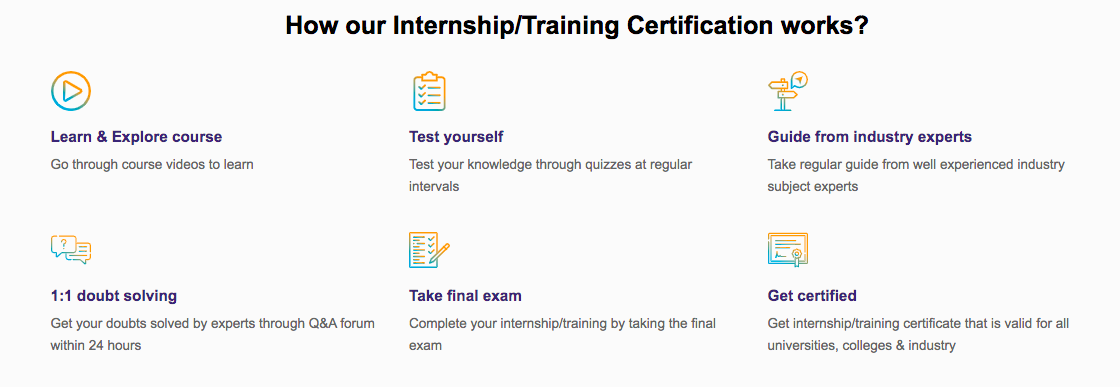
How EasyShiksha Internship/Training Program Works
AI as a Career Optionality Engine
Artificial intelligence could help education platforms analyse complex relationships between skills, occupational requirements and learning pathways. Instead of relying solely on static lists of career options, an AI-supported system could potentially compare a learner’s current capabilities with structured occupational information and identify realistic transitions.
For example, it might recognise that a learner’s existing skills overlap with several roles in website development and digital operations. It could then identify the missing competencies required for adjacent roles and recommend targeted learning activities. The system could also compare alternative pathways according to the time, cost and prerequisites involved.
AI could support scenario planning as well. A learner might ask what would happen to their career options if they learned React, completed a data analytics course or gained experience through an internship. The system could estimate how those choices might change the learner’s potential pathways, provided its occupational data and assumptions are clearly stated.
Such estimates must not be presented as guarantees. Job requirements change, employer expectations vary and labour-market information can be incomplete. A pathway that appears accessible on paper may still be difficult to enter because of competition, location, experience requirements or hiring conditions.
For this reason, AI should function as a decision-support layer rather than an authority that determines a student’s future. It can identify possibilities and explain trade-offs, while learners retain control over their interests, priorities and decisions.
Measuring the Cost of Expanding Career Options
More career options can be valuable, but acquiring the skills needed to access them requires time, effort and sometimes money. Career optionality should therefore be evaluated alongside the cost of expanding it.
A short course might introduce a useful capability at a relatively low cost, while a specialised career transition may require a degree, extensive practical training or a formal licence. The number of new pathways alone cannot determine whether the investment is worthwhile.
A useful model would estimate the learning effort required to unlock each additional pathway and compare it with the learner’s goals. It could distinguish between options that become accessible after a small skill upgrade and those that require a major change in education or professional direction.
This does not mean the system should always recommend the cheapest route. A longer educational programme may be necessary for a regulated profession or a role requiring deep technical expertise. Instead, the objective is to make the trade-offs visible.
EasyShiksha could potentially help students compare course-based progression, project-led learning, internships and formal qualifications according to their target outcomes. The system could explain which pathway offers immediate skill development, which provides formal recognition and which requires additional investment before the learner can realistically enter the target occupation.
Career Optionality and Changing Labour-Market Demand
A set of skills may support several occupations today but offer fewer opportunities if industry demand changes. Career optionality must therefore consider the changing employment environment rather than treating every pathway as permanently available.
Some occupations depend heavily on specific tools, platforms or business models. If those technologies lose relevance, the associated skills may become less valuable. Other capabilities, such as analytical reasoning, communication, software fundamentals and domain understanding, may remain useful across multiple roles, although their application can also evolve.
A robust optionality framework would therefore examine not only the number of pathways available at a particular moment but also how dependent those pathways are on the same industry, employer type or technology. Five closely related job titles in one declining niche may provide less protection against disruption than several credible pathways spanning different but connected areas of work.
This introduces the idea of pathway diversity. A learner might combine a specialist skill with complementary capabilities that support work in adjacent sectors. For instance, technical website skills combined with analytics and business communication may support a broader range of projects than knowledge of one website tool alone.
EasyShiksha could potentially use changing occupational requirements to review pathway recommendations and flag skills that may need updating. Such guidance should communicate uncertainty clearly, since forecasts are estimates rather than guarantees of future employment.
Avoiding the Trap of Excessive Optionality
Although career flexibility is valuable, maximising the number of possible pathways is not always the best strategy. Every additional direction requires attention, and learners have limited time to develop expertise.
A student who continuously switches between programming, design, marketing, finance and artificial intelligence may accumulate introductory knowledge without reaching a level of capability that employers can recognise. This is the difference between useful optionality and scattered learning.
A strong Career Optionality Score should therefore reward meaningful breadth rather than unlimited variety. The objective is to maintain a coherent foundation that supports a primary career direction and a reasonable number of credible alternatives.
This approach resembles building a professional portfolio around a core capability. A learner might develop deep expertise in frontend development while adding user experience principles, API integration and project collaboration. These complementary skills can expand career choices without requiring the learner to become an expert in unrelated disciplines.
EasyShiksha could potentially help students identify this balance. Career guidance could establish a primary target, diagnostic assessments could reveal current strengths and course recommendations could focus on the most valuable gaps. Projects and internships could then test whether the expanded skill combination creates genuine professional flexibility.
The ideal outcome is not a student who can claim to pursue every occupation. It is a learner who has a strong professional foundation and several credible ways to build upon it.
Fairness, Accessibility and Responsible Scoring
Career optionality depends partly on opportunities outside a learner’s direct control. Students may have different access to devices, internet connectivity, internships, professional networks, relocation options and financial resources. A score that ignores these differences could underestimate the potential of learners who have had fewer opportunities to demonstrate their skills.
The system should distinguish between capability gaps and opportunity gaps. A learner may lack evidence of professional experience because no suitable internship was available, not because the learner is incapable of performing the work. In such cases, the appropriate response may be to provide a project-based assessment or an accessible practical opportunity.
The score should also avoid making demographic or background assumptions about which careers a student can pursue. Recommendations should be based on relevant skills, stated interests, formal requirements and available evidence rather than stereotypes.
Transparency is equally important. Students should be able to see which skills support a recommended pathway, which requirements remain unmet and how the system arrived at its assessment. They should also be able to challenge inaccurate information or update their profiles as their capabilities change.
For EasyShiksha, responsible scoring could help ensure that career optionality becomes a tool for expanding access rather than narrowing expectations. Its purpose should be to reveal possible routes forward, including the learning and support needed to make those routes more realistic.
From Career Guidance to Career Portfolio Design
Traditional career guidance often begins with a question about the job a student wants. Career Optionality Score introduces a complementary question: what combination of capabilities would support that goal while preserving useful alternatives?
This changes career planning from a one-time selection into an ongoing process of portfolio design. The learner establishes a primary direction, identifies the capabilities required and chooses complementary skills that create meaningful flexibility. Progress is then reviewed as the learner gains experience and the employment environment changes.
For example, a student aiming for frontend development might begin with JavaScript and React, then add accessibility, testing, API integration and collaborative development practices. These skills deepen the primary specialisation while supporting adjacent pathways such as interface engineering, web application development and certain product-focused technical roles.
The same principle can apply to business, finance, marketing, design and other disciplines. Students can build a coherent professional foundation while choosing complementary capabilities that support additional directions.
EasyShiksha could potentially connect this approach with course recommendations, practical assessments, internship opportunities and career guidance. Instead of asking learners to accumulate as many certificates as possible, the platform could help them build a capability portfolio in which every learning experience has a clear purpose.
Empower your team. Lead the industry
Get a subscription to a library of online courses and digital learning tools for your organization with
EasyShiksha
The Career Optionality Score offers a potential framework for making career guidance more dynamic and evidence-based. It recognises that professional success does not always follow one predetermined route and that a learner’s opportunities can expand as skills, experience and evidence develop.
For EasyShiksha, the concept could connect multiple elements of its education ecosystem. Courses could help students acquire new capabilities, quizzes could establish current understanding, projects could demonstrate practical application, internships could provide workplace exposure and certificates could document specific learning achievements. Career guidance could then interpret this evidence in relation to a range of realistic occupational pathways.
The platform could potentially show students which pathways are currently accessible, which are within reach after a manageable skill upgrade and which require substantial additional preparation. It could also identify the most useful next learning investment according to the learner’s goals, resources and interests.
Over time, this approach could support a more personalised form of career planning. Students would not need to treat every change in the labour market as a reason to start over. They could examine which existing skills remain useful, which adjacent roles may be accessible and which additional capabilities would create new options.
The effectiveness of such a system would depend on the quality of its occupational data, the validity of its assessments and the transparency of its recommendations. Career pathways must be reviewed as professional requirements change, and scores must remain estimates rather than promises of employment.
Conclusion: Build Skills That Create More Than One Future
The Career Optionality Score shifts career planning away from a narrow focus on one job title and towards a broader understanding of professional possibilities. It asks whether a learner’s combination of skills, qualifications and experience supports a range of realistic pathways, how accessible those pathways are and what additional development may be required.
The concept also highlights an important distinction: more possible careers do not automatically mean greater career strength. Meaningful optionality depends on demonstrated capability, relevant experience, complementary skills and credible routes into professional work. A long list of theoretical occupations is less valuable than a smaller set of achievable alternatives supported by clear evidence.
For EasyShiksha, this framework could help connect education with purposeful career development. By linking courses, quizzes, projects, internships, certificates and career guidance, the platform could potentially help learners understand how each educational experience contributes to their current readiness and future options.
The goal is not to make every student a generalist or encourage endless learning without direction. It is to help students build a strong foundation, deepen their expertise and preserve the ability to move into related professional areas when their interests or circumstances change.
In a changing employment environment, a valuable education should do more than prepare someone for a single first job. It should help them develop capabilities that remain useful, create credible alternatives and support future transitions. Career Optionality Score offers one way to make that flexibility more visible, measurable and actionable.
The most resilient career may not be the one with the largest number of possible job titles. It may be the one built on a coherent set of demonstrated skills that allows a learner to pursue a clear goal today while retaining meaningful choices for tomorrow.
Anshika Jain is an Engineer, Developer, and Educational Content Author known for her dedication to technology and knowledge sharing. With a strong analytical mindset and a passion for innovation, she has consistently contributed to creating meaningful digital solutions and insightful educational articles.
Her ability to simplify complex technical concepts into engaging and easy-to-understand content makes her work valuable for students and learners across various platforms. Along with her technical expertise, Anshika is admired for her creativity, professionalism, and commitment to continuous learning.
She represents a perfect blend of technical excellence and impactful communication, inspiring others through both her development work and educational contributions.