Artificial intelligence is changing the way students access information, revise lessons, practise skills, and explore career opportunities. A student can now ask an AI tool to explain a difficult science concept, simplify a mathematical formula, summarise a chapter, or provide examples of a programming language within seconds. What once required searching through textbooks, watching several videos, or waiting for classroom assistance can now begin with a simple question typed into a digital platform.
However, an important question remains: Can AI explain a topic, or can it genuinely understand how an individual student learns?
These two abilities are related, but they are not the same. Explaining a topic involves presenting information in a way that appears understandable. Understanding how a student learns requires deeper awareness of the learner’s existing knowledge, pace, interests, difficulties, confidence, preferred methods, and ability to apply information independently. A student may receive a technically accurate explanation and still fail to understand the concept. Another student may understand the same topic through a practical example, visual demonstration, quiz, or real-world application.
This difference is becoming increasingly important as digital learning develops. Online education is no longer limited to recorded lectures and downloadable study material. Students now interact with quizzes, simulations, AI-based tools, online courses, learning profiles, internships, projects, and career-oriented resources. Platforms such as EasyShiksha, which focus on online learning, certificates, quizzes, internships, and career development, reflect the growing need for learning experiences that connect knowledge with practice.
AI can contribute significantly to this transformation, but its usefulness depends on how thoughtfully it responds to student needs. The future of education may not be determined simply by how quickly AI explains a topic. It may depend on whether technology can help students discover which learning approach enables them to understand, practise, remember, and apply knowledge effectively.
AI Can Explain Information, But Learning Is Personal
An explanation is usually designed to communicate information. It may define a concept, describe a process, provide an example, or simplify complicated language. AI systems can generate explanations in different formats and adjust the level of detail when a student asks follow-up questions. This makes learning more accessible, particularly for students who need additional explanations outside traditional classroom hours.
However, receiving an explanation does not automatically mean that learning has taken place. Students do not enter a learning environment with identical experiences or abilities. They may differ in their vocabulary, educational background, attention span, confidence, motivation, and familiarity with the subject. A concept that is simple for one learner may be confusing for another.
For example, consider two students studying basic programming. One student understands concepts through diagrams and visual logic, while another prefers writing small pieces of code and learning from errors. If both students receive the same written explanation, one may progress quickly while the other continues to struggle. The issue may not be the quality of the explanation itself. The problem may be that the explanation does not match the student’s current learning needs.
AI can offer different explanations when prompted, but meaningful personalisation requires more than changing words. It involves recognising patterns in a student’s responses, identifying misconceptions, observing progress, and selecting suitable learning activities. It also requires caution because student behaviour can be complex. A wrong answer might indicate a lack of understanding, careless reading, language difficulty, anxiety, or insufficient practice.
Therefore, AI should not be treated as a system that automatically understands every learner. It should be viewed as a tool that can support the process of identifying and responding to learning needs.
What Does It Mean to Understand How a Student Learns?
Understanding how a student learns does not necessarily mean assigning the learner a permanent category such as visual learner, auditory learner, or reading-based learner. Learning preferences can change according to the subject, task, environment, and level of difficulty. A student may prefer videos while exploring a new topic but require hands-on practice to develop confidence.
A more useful approach is to understand the learner through observable learning behaviour. This includes how the student approaches a new concept, how long they practise, which mistakes they repeat, whether they can explain an idea in their own words, and how effectively they apply knowledge in unfamiliar situations.
For instance, a student might complete a quiz successfully after memorising definitions but struggle when asked to use the same concept in a real-world situation. This suggests that the student may need application-based activities rather than additional memorisation. Another student may repeatedly select incorrect answers because the questions contain unfamiliar language. In that case, language support and simpler examples may be more helpful than repeating the same lesson.
A learning-support system should therefore consider several dimensions of progress. It should examine understanding, retention, application, confidence, and consistency. It should also recognise that students may need different amounts of time to reach the same learning outcome.
AI can assist in this process by analysing responses and recommending suitable activities. Nevertheless, the recommendations should remain flexible, transparent, and open to correction. A student is more than a collection of quiz scores or completed lessons.
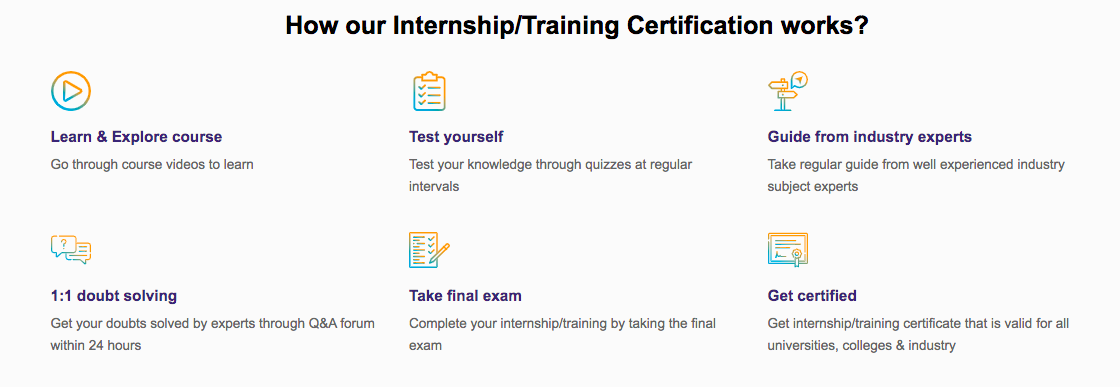
How EasyShiksha Internship/Training Program Works
From One Explanation to Multiple Learning Pathways
Traditional educational content often follows a fixed sequence. Every student receives the same lesson, completes the same assignment, and is evaluated through a similar assessment. This structure can provide consistency, but it may not address the different starting points and learning speeds within a classroom.
AI-supported learning can create more flexible pathways. If a student struggles with a concept, the system may offer a simpler explanation, an example, a visual representation, or a short practice activity. If another student demonstrates strong understanding, the system may provide an advanced question or an application-based challenge.
This does not mean that every learner should receive completely different content at every moment. Excessive personalisation can create confusion, increase dependence on automated recommendations, or prevent students from developing the ability to work through difficulty. Instead, the purpose should be to provide appropriate support while maintaining clear learning objectives.
For EasyShiksha users, this approach can be connected to the relationship between courses, quizzes, practical learning, certificates, and internships. A student may begin with an introductory course, test their understanding through quizzes, practise a skill through a project, and explore internship opportunities when they are ready. AI-based support could help identify which stage requires additional attention.
A student who performs poorly in a quiz might not need to restart the entire course. The learner may need a short revision module, a different example, or a practical task that clarifies the concept. Similarly, a student who completes lessons quickly may benefit from more challenging questions instead of repeating basic information.
The objective is not to make learning effortless. It is to make the learning process more responsive and purposeful.
The Importance of Learning Pace
Students often experience pressure because educational systems operate according to fixed schedules. A chapter may be completed within a particular week, an examination may follow a set timetable, and assignments may have standard deadlines. While structure is important, learning speed is not identical for every student.
Some students understand new ideas quickly but require extensive revision to remember them. Others need more time at the beginning but develop strong understanding through repeated practice. Certain learners may move rapidly through theoretical lessons but need additional time to apply knowledge in projects.
AI can support learning pace by allowing students to revisit concepts, request additional examples, and receive practice activities at different levels. It can also help organise revision based on performance. However, an automated system should not assume that speed always represents ability. Completing a lesson quickly does not necessarily indicate deep understanding, and taking longer does not mean that a student lacks potential.
A responsible digital learning experience should allow students to progress without encouraging unhealthy comparisons. Progress should be measured through meaningful improvement, not simply the number of lessons completed in a short period.
EasyShiksha’s focus on accessible online courses, quizzes, and practical opportunities can support students who need flexibility alongside structured learning. When learning resources are available beyond a fixed classroom schedule, students can revisit difficult topics and build confidence through gradual practice.
AI and the Problem of Misunderstanding
One of the biggest challenges in education is that students may not recognise what they do not understand. A learner might memorise a definition, complete a familiar question, and assume the topic has been mastered. The misunderstanding becomes visible only when the student encounters a new question or practical situation.
AI can help identify certain learning gaps by examining patterns in answers. If a student repeatedly confuses two concepts, the system may recommend a comparison or targeted revision. If the student answers direct questions correctly but struggles with application-based questions, the system may suggest more practical exercises.
However, incorrect answers alone cannot explain the complete reason behind a learning difficulty. A student may make a mistake because of a conceptual misunderstanding, a calculation error, poor concentration, unclear instructions, or limited language comprehension. AI-generated feedback should therefore be framed as guidance rather than an unquestionable diagnosis.
The wording of feedback also matters. Simply telling a student that an answer is wrong may reduce motivation. A more useful response can explain the specific error, offer a small hint, and provide another opportunity to try. This approach supports learning through correction rather than making mistakes feel like failure.
For example, instead of immediately displaying the correct answer in a mathematics quiz, an AI-supported system could ask the student to identify the step where the calculation changed. In a programming activity, it could encourage the learner to inspect the input, logic, and output before presenting a solution. Such interactions can help students develop problem-solving habits.
Learning Through Questions Rather Than Only Answers
AI tools are often used to provide immediate answers. A student asks a question, and the system responds with an explanation. This can be useful, but constant access to answers may also create passive learning habits. Students might begin copying solutions without attempting to reason independently.
A learning-focused AI system should encourage questions that stimulate thinking. Instead of immediately solving every problem, it can ask the student what they already know, request an initial attempt, or offer hints in stages. This method can make the learner an active participant in the process.
The difference between answering and guiding is significant. If a student asks how a particular programming function works, AI can provide an explanation and example. It can then ask the student to modify the example or predict the output. This creates a transition from receiving information to applying knowledge.
Similarly, when a student studies a business topic, AI can explain a concept and then present a realistic scenario. The student might be asked to choose a strategy, justify a decision, or identify a possible risk. Such activities develop understanding beyond memorised definitions.
Quizzes can play an important role in this process. When quizzes are used only for scoring, they may become another form of evaluation. When they are used as opportunities for reflection and revision, they can support deeper learning. Platforms offering courses and quizzes can integrate short practice moments that help students recognise their strengths and areas requiring additional work.
Can AI Recognise Motivation and Confidence?
Learning is influenced not only by knowledge but also by motivation and confidence. A student who believes that a subject is impossible may avoid practising it. Another student may understand the material but hesitate to participate because of fear of making mistakes. These emotional and behavioural factors can influence academic progress.
AI can identify some indirect signals, such as repeated requests for help, skipped activities, long gaps between attempts, or frequent incorrect answers. However, these signals should not be treated as definite evidence of a student’s emotional state. A learner may stop using a platform because of limited internet access, personal responsibilities, technical issues, or a change in schedule.
Technology can respond more appropriately by offering supportive choices instead of making assumptions. It might ask whether the student wants a simpler explanation, a revision activity, a practical example, or a short break. It can also use encouraging language without making unrealistic promises.
Confidence should be developed through achievement and practice rather than empty praise. When students successfully solve a problem after receiving a hint or completing a revision activity, the system can highlight the specific improvement. This gives the learner a clearer understanding of progress.
Teachers, mentors, and counsellors continue to play an important role because they can consider personal circumstances and communicate through human relationships. AI may support these professionals, but it should not be considered a complete replacement for human guidance.
Personalised Learning Must Include Practical Application
A student may understand a topic theoretically but struggle to use it in practice. This is particularly relevant for subjects such as coding, digital marketing, finance, data analysis, electronics, and communication skills. Knowledge becomes more valuable when learners can apply it to meaningful tasks.
AI can support practical learning by generating examples, simulating situations, reviewing drafts, suggesting practice challenges, and helping students identify errors. However, the student must still perform the task. Watching AI produce a project is not the same as building it independently.
For example, a student learning digital marketing might ask AI to create a social media caption. The tool can provide a draft, but the student should also learn how to identify the target audience, select a communication style, evaluate the message, and measure its effectiveness. A student studying coding can use AI for debugging support but should understand why a particular error occurred and how the correction works.
This is where the connection between learning and internships becomes important. Internship-oriented opportunities can expose students to practical expectations such as communication, deadlines, teamwork, documentation, and problem-solving. A course certificate may demonstrate completion, but practical work can provide evidence of how knowledge is used.
EasyShiksha’s learning ecosystem, including online courses, quizzes, certificates, and internship-related opportunities, can be presented as part of a broader journey in which students move from learning concepts to practising skills. AI may help personalise the journey, but the responsibility for meaningful participation remains with the learner.
A learning profile can help students understand their educational journey over time. Instead of focusing only on marks or certificates, a profile may bring together completed courses, quiz performance, project work, interests, developing skills, and areas for improvement.
AI can use information from a learning profile to provide more relevant suggestions. For example, a student who has completed introductory computer courses and shows interest in design may receive recommendations to explore user interface design, basic graphic tools, or web development. A learner who repeatedly engages with communication activities may be encouraged to practise public speaking, writing, or professional presentation.
However, learning profiles must be designed carefully. A recommendation should not limit a student’s future based on previous performance. Students develop new interests, change career goals, and improve through experience. A profile should function as a flexible record of growth, not a permanent label.
Data privacy is also essential. Students should understand what information is collected, why it is collected, and how it is used. Personal learning data should be handled responsibly, particularly when the users are children or young learners. AI systems should avoid exposing sensitive information or using opaque methods to make important educational decisions.
A transparent learning profile can encourage self-reflection. Students can ask themselves whether they are improving in a particular skill, whether they need more practice, and which subjects they want to explore next. In this way, technology can support ownership rather than dependence.
The Danger of Over-Personalisation
Personalisation is often presented as an automatic solution to educational challenges, but it has limitations. If a system continuously gives students content that matches their existing preferences, learners may avoid unfamiliar subjects or difficult tasks. Education should support comfort when necessary, but it should also encourage curiosity and intellectual growth.
For example, a student who prefers short videos may avoid reading detailed explanations. An AI system that always recommends videos might reinforce this preference rather than helping the student develop reading skills. Similarly, a learner who enjoys easy quizzes may continue receiving simple questions and never encounter more challenging problems.
A balanced learning environment should combine personal support with purposeful challenge. AI can recommend resources that address a student’s current needs while gradually introducing new formats and levels of difficulty. Students should also be encouraged to experiment with different learning methods.
The goal of personalisation is not to keep every learner inside a comfortable pattern. It is to help students develop the flexibility required for real-world learning and professional life. Careers often involve unfamiliar tasks, changing tools, collaboration with different people, and continuous skill development.
AI, Teachers, and Human Guidance
The development of AI in education raises questions about the role of teachers. If AI can explain lessons, generate questions, and provide feedback, what remains for educators to do?
In practice, teaching involves much more than delivering information. Teachers observe student behaviour, build trust, provide encouragement, manage classroom interaction, interpret context, and support social and emotional development. They also make professional judgments based on experience and direct engagement.
AI can reduce repetitive tasks and offer additional learning support, allowing teachers to focus on mentoring, discussion, creativity, and individual attention. A teacher may use AI-generated practice questions as a starting point but adapt them according to the class’s needs. They may also review AI feedback to ensure that it is accurate, age-appropriate, and helpful.
A collaborative model is more appropriate than a replacement model. AI can provide immediate assistance, while teachers and mentors provide human understanding and accountability. Students benefit when technology and human guidance work together rather than being treated as competing systems.
For online learning platforms, this balance is especially important. Digital resources can expand access, but students may still need guidance when selecting courses, understanding career options, managing time, or preparing for internships. Career counselling and structured support can help learners connect educational choices with realistic goals.
Making AI-Based Learning More Effective
The effectiveness of AI in education depends on how it is integrated into the learning process. Simply adding an AI chatbot to a course does not automatically create personalised education. The system must be connected to clear learning objectives, useful assessments, appropriate practice, and feedback that students can understand.
A strong AI-supported learning experience should begin by identifying what the student is trying to achieve. Is the learner preparing for an examination, understanding a foundational concept, developing a professional skill, completing a project, or exploring a career? Different goals require different forms of support.
The system should also encourage active participation. Students should have opportunities to answer questions, explain concepts, practise tasks, review mistakes, and apply their knowledge. AI-generated explanations should support these activities rather than replace them.
Progress should be evaluated through multiple forms of evidence. Quiz scores can provide useful information, but they should be combined with project performance, practical tasks, reflection, and consistency. A learner’s development cannot be fully represented by a single percentage.
Finally, the technology should remain understandable and controllable. Students should be able to request clarification, challenge an incorrect response, and choose whether to follow a recommendation. Personalisation should support agency rather than create a system in which learners feel that every educational decision is being made for them.
How EasyShiksha Can Support the Changing Learning Journey
The future of education is increasingly connected to continuous learning. Students may begin with school-level concepts, explore college options, enrol in online courses, practise skills through quizzes, complete projects, earn certificates, and seek internships. These activities can form a connected learning journey rather than separate educational experiences.
EasyShiksha’s range of learning-oriented facilities, including online courses, certificates, quizzes, internships, career-related support, and education discovery resources, aligns with the need for students to explore learning beyond traditional classroom boundaries. AI can add value to this environment by helping learners identify suitable starting points, revise challenging topics, practise skills, and explore possible next steps.
For example, a student interested in technology may begin with a beginner-level course. Based on quiz performance, the learner may identify topics that require revision. After developing foundational understanding, the student may practise through a small project and explore internship-oriented opportunities. A learning profile can help record progress and highlight areas that need further development.
Another student may be uncertain about a career direction. Instead of selecting a course solely because it is popular, the learner could explore different subjects through introductory content, quizzes, and practical activities. This process may help the student understand personal interests and abilities more clearly.
AI should support these decisions by presenting information and learning options, not by deciding a student’s future. Career choices involve personal circumstances, goals, financial considerations, interests, and changing opportunities. Students should be encouraged to compare options, seek guidance, and make informed decisions.
The Need for Digital Learning Responsibility
As AI becomes more involved in education, students must develop the ability to evaluate the information it provides. AI systems can produce inaccurate, incomplete, outdated, or overly confident responses. A well-written explanation is not necessarily a correct explanation.
Digital literacy should therefore become part of the learning experience. Students need to understand how to verify information, compare reliable sources, recognise uncertainty, and identify when expert guidance is required. These skills are relevant across subjects and careers.
Students should also learn how to use AI ethically. Copying an AI-generated assignment without understanding it may create short-term convenience but reduce long-term learning. Using AI to brainstorm ideas, receive feedback, practise questions, or identify errors can be more educational when the student remains actively involved.
Online platforms can encourage responsible use by explaining the purpose and limitations of AI-based tools. Clear instructions can help students understand when they should attempt a task independently and when technology may be used as a learning assistant.
The objective is not to discourage AI use. It is to ensure that students become more capable because of the technology, rather than becoming dependent on it for every task.
Empower your team. Lead the industry
Get a subscription to a library of online courses and digital learning tools for your organization with
EasyShiksha
What the Future of Personalised Learning Could Look Like
The future of personalised learning may involve systems that respond to student progress across different learning activities. Instead of considering a course, quiz, project, and internship as separate experiences, technology may help connect them into a broader picture of skill development.
A student’s learning journey could include a combination of explanations, questions, practice tasks, reflection, and real-world applications. AI might identify when a learner needs revision, suggest an alternative example, recommend a practical challenge, or encourage the student to explore a related subject.
However, the future should not be built around automation alone. Personalised learning must preserve human choice, privacy, fairness, and educational purpose. Students should not be reduced to data points, and AI recommendations should not determine the limits of their potential.
The most useful systems will likely combine technological flexibility with human mentorship. Teachers, parents, career counsellors, and industry professionals can help students interpret their experiences and make decisions that automated systems cannot fully understand.
Personalised learning should also remain inclusive. Students with different languages, learning environments, financial circumstances, and access to technology should have meaningful opportunities to participate. AI can improve accessibility through simplified explanations, translation support, and flexible resources, but these tools must be designed and tested carefully.
Conclusion: AI Should Help Students Understand Themselves as Learners
AI can explain a topic in seconds, provide examples, generate practice questions, and offer immediate feedback. These capabilities can make education more flexible and accessible. Yet explaining information is only one part of learning.
To understand how a student learns, technology must consider the learner’s knowledge, pace, mistakes, practice habits, goals, and changing interests. Even then, AI can only interpret available signals and should not assume that it completely understands a student’s personal experience. Human guidance, student reflection, and practical engagement remain essential.
The future of education should not focus only on faster answers. It should focus on better questions, meaningful practice, deeper understanding, and the ability to apply knowledge in real situations. Courses, quizzes, projects, certificates, and internships can contribute to this journey when they are connected through a purposeful learning experience.
For students using platforms such as EasyShiksha, AI-supported learning can become a useful companion in exploring subjects, revising concepts, developing skills, and preparing for future opportunities. But the most important outcome is not how much information AI can provide. It is whether students become more confident, independent, curious, and capable of learning beyond the platform.
Anshika Jain is an Engineer, Developer, and Educational Content Author known for her dedication to technology and knowledge sharing. With a strong analytical mindset and a passion for innovation, she has consistently contributed to creating meaningful digital solutions and insightful educational articles.
Her ability to simplify complex technical concepts into engaging and easy-to-understand content makes her work valuable for students and learners across various platforms. Along with her technical expertise, Anshika is admired for her creativity, professionalism, and commitment to continuous learning.
She represents a perfect blend of technical excellence and impactful communication, inspiring others through both her development work and educational contributions.