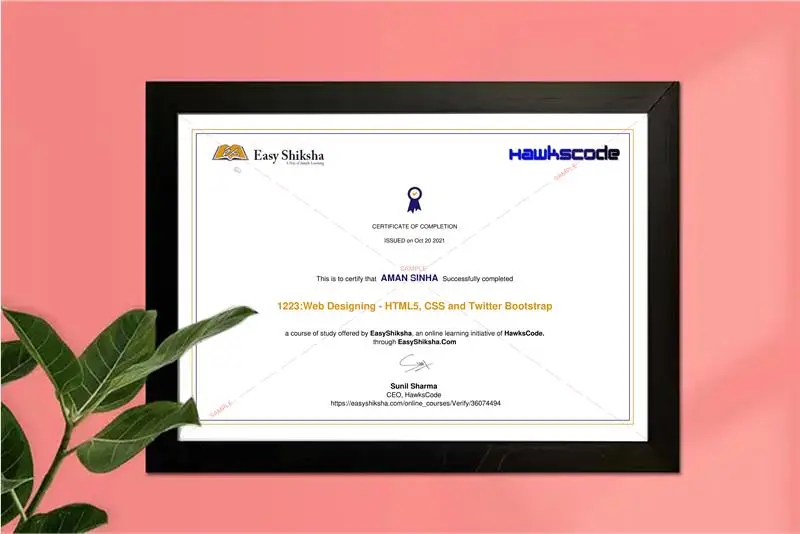



Join thousands of students achieving their dreams with expert-led courses.
Join free and unlock everything on EasyShiksha.
Takes less than 3 seconds — no password needed
Please enter a valid email address.
Checking your email…
Almost done — just verify your number so we can send course updates and certificates.
Used only for verification & updates
Incorrect OTP. Please try again.
Takes less than 10 seconds
Please select your country.
Please select your state.
About Ministry of Education, Science and Technology
The Ministry of Education, Science, and Technology (MoEST - शिक्षा, विज्ञान तथा प्रविधि मन्त्रालय) was established in 1951. It is located on Singha Durbar premises in Kathmandu, Nepal. The MoEST is an apex body of all educational organizations responsible for Nepal's overall education development. It formulates educational policies and plans and manages and implements them across the country through the institutions under MoEST.
The Ministry's Central Level Agencies (CLAs) are responsible for designing, implementing, and monitoring various programs. Five Regional Education Directorates (REDs) are responsible for monitoring the programs undertaken by district-level organizations. It also has Seventy-Seven District Education Offices (DEOs) and One Thousand Ninety-one (1091) Resource Centres (RCs) at the local level, which are mainly the implementing agencies of the educational policies, plans, and programs.
The Ministry of Education coordinates and facilitates the implementation of educational reform programs, the formulation of educational plans, and the country's overall education policy. The University Grants Commission coordinates and facilitates the formulation of policies and programs related to higher education. At the same time, the universities conduct their educational programs.
The Teachers Service Commission has selected, appointed, and promoted teachers at the school level. The National Examination Board has conducted and managed the Secondary Education Examination (Class 10) and Secondary Education Passing Examination (Class 12).
Education and Human Resource Development Center has been established with the responsibility of implementing projects related to school education. Programs associated with coordinating, facilitating, and preparing progress reports of educational programs conducted at the local level and the provinces are being edited from the center. The necessary training courses for teacher professional development, development of training packages, and development of audio and audio-visual learning materials have been done through the center.
The Curriculum Development Center has developed and revised school curricula and worked on textbook development. The Technical Education and Vocational Training Council and provincial offices are conducting technical education and training programs to build the country's middle-level technical manpower.
The Educational Quality Testing Center tests school education achievement and performance and suggests improvements. The National Library (Teachers) is responsible for managing teachers' records. The National Library, Keshar Library, and Dilliraman-Kalyani Regmi Memorial Library operate to develop a reading culture and expand opportunities for continuous learning. Similarly, there is a Janak Shiksha Material Center for printing and distributing school-level textbooks.
Nepal Academy of Science and Technology (NAST), National Forensic Science Laboratory, BP Koirala Memorial Planetarium Observatory, and Science Museum have been established and operational for the latest discovery and research work in science and technology.

Policies, laws, standards, and regulations relating to education
Central University-related policies, laws and standards
Relations with foreign universities, equivalence determination, accreditation, coordination and regulation
Policies, laws, and management relating to central libraries
Human Resource Need Projection, National Education Plan, and Human Resource Development
National Curriculum Format for School Level Core Subject Curriculum Model Textbooks and Regulations
National Policy on Technical Education and Vocational Training, Curriculum Format, Criteria for Eligibility and Skill Testing
Policy and standards of service, conditions, qualifications, and equivalence of school-level teachers
Teacher training policies, standards and grading, curriculum format, qualification determination Standardization of skill testing and coordination with training centers
National standards for school-level exams, management of secondary-level exams, and determination of equivalency
Acknowledgment of educational institutions operating under diplomatic missions
Accreditation and regulation of educational institutions affiliated with foreign educational institutions
Coordination of provincial and local level educational matters
University Grants Commission Central University Open University and Central Level Educational Institutions
policies and standards regarding scholarships and bursaries
Policies, laws, and standards related to educational studies research
National Academic Research and Educational Data Management
Educational quality standards determination, measurement, and regulation
National Examinations Board, Council for Technical Education and Vocational Training
Policies, laws, and standards related to science and technology
Scientific, Astronomical and Astronomical Studies Research
discovery, research, invention, promotion, and development of science and technology
Science and technology data collection, processing, and survey standards
Establishment, management, and regulation of data systems related to nuclear technology, quality, and use of radioactive materials
Use and promotion of biological and nuclear technologies
Ozone Study Solar Radiation Measurement and Information Flow
Scientific instrument calibration and verification
Control and regulation of the use and promotion of chemical substances
Discovery and recovery and management of nuclear materials, waste resources
policies, laws, standards, implementation, and regulation related to nuclear energy
Nepal Academy of Science and Technology, National Institute of Legal Sciences Planetarium Observatory and Science Museum
Treaties, agreements, conventions, contacts, and coordination with national and international organizations related to the Ministry
Operation and regulation of ministry-related public institutions, authorities, committees, foundations, companies, etc.
Operation of Nepal Education Service (except Archeology Group).
Nepal has a Ministry of Education for policy formulation and coordination of all education-related plans and programs. The University Grants Commission coordinates the support and operation of the higher education policy. At the same time, the universities are free to conduct their activities.
Under the Ministry of Education, the Department of Education formulates, implements, and manages the annual school education plan. The Department of Education implements, monitors, and manages the educational plan through the District Education Offices. The management committee in each school is responsible for the operation and management of the school.
There is an educational manpower development center at the central level for teacher development and 34 training centers under it. These training centers conduct various types of teacher training. Arrangements have also been made to support teachers and schools in improving teaching and learning through resource centers established in some groups of schools. At present, 1053 resource centers are operating across the country. The regional education directorates in the five development regions also assist in monitoring and coordinating program implementation.
Under the Ministry of Education, the Examination Control Office for the management of SLC examinations at the central level, the Curriculum Development Center for the development and revision of course textbooks, the Non-formal Education Center for the operation and management of non-formal education programs, the Teachers' Library for the management of teachers' records and the Educational Testing Center for testing and recommending the quality of school education.
The Higher Secondary Education Council administers higher secondary level affiliation and examinations. In contrast, the Technical Education and Vocational Education and Training Council administers technical education and vocational training programs (except university programs), including short-term training, technical entrance and diploma-level programs, and skill testing. Training is provided through the Council.
The Ministry of Education operates two central libraries (the National and Keshar Libraries) and one autonomous library (the Dilliraman-Kalyani Regmi Memorial Library). It also owns the Institute for Printing and Distribution of Textbooks.
Administration Division - 014200356 [email protected]
Staff Administration and Good Governance Promotion Branch - 014211990/4200379
Internal Management Branch - 014200453
Law and Judgment Implementation Branch - 014211960
Economic Administration Branch - 014200360
Planning and Monitoring Division - 014200383, (Fax) [email protected]
Development Assistance Coordination Branch - 014200381
Monitoring and Evaluation Branch - 014200382
Planning and Budget Branch - 014200383
Human Resources, Development Planning and Coordination Branch - 014200383
Statistics, Policy and Research Branch 014211983
Technical and Vocational Education Division - 014200387 [email protected]
Private and Cooperative Organizations Coordination Branch - 014200340
Vocational Training Promotion Branch- 014200559
Quality Accreditation Branch - 014200358
Educational Technology and Electronic Governance Branch 014211985
Division of School Education - 014211985 [email protected]
Early Childhood Education and School Nutrition Branch
School Education Branch - 014211985
Voluntary Mobilization and Visa Branch
Library Coordination and Archives Branch
Alternative and Continuing Education Branch
Higher Education Division - [email protected]
Higher Education Branch -014200340
2 Overseas Study Permit Branch 01-6635419, Sanothimi, Bhaktapur
Academic Counseling and Certification Branch - 016630907, Sanothimi, Bhaktapur
Scholarship Branch -016635442, Sanothimi, Bhaktapur
Science Technology Division - [email protected]
Scientific Research Branch
Innovation and Innovation Branch
Appropriate technology branch
Space and Emerging Technologies Branch
Division of Nuclear Materials Management
Standards, Quality, and Statistics Branch
Licensing, Regulation, and Investigation Branch
Chemicals and Laboratory Management Branch
All courses of the Ministry of Education, Science and Technology are approveded. Candidates should know that the fee schedule of Ministry of Education, Science and Technology is low so that students can easily opt for advanced courses. The most popular courses offered by the Ministry of Education, Science and Technology. These classes are offered on a permanent basis. Ministry of Education, Science and Technology offers a combination of course.
Contact No : Get Contact No. Now
Email : Get Email Contact Now
Website : Get Website link
Address : Singhadurbar, Kathmandu, Nepal
New Courses
Opamp Projects: Design & Simulate Operational Amplifier Based Projects on Proteus & LTSpice Software
Biomedical Project: Design Digital Thermometer with Atmega32, Arduino & LM35 Temperature Sensor
Fusion 360 Learn CAD and Earn Money Online
Analog Electronic Lab Based Course on MOSFETs using MULTISIM








Discover thousands of colleges and courses, enhance skills with online courses and internships, explore career alternatives, and stay updated with the latest educational news..

Gain high-quality, filtered student leads, prominent homepage ads, top search ranking, and a separate website. Let us actively enhance your brand awareness.
Download EasyShiksha Mobile Apps from Android Play Store, Apple App Store, Amazon App Store, and Jio STB.
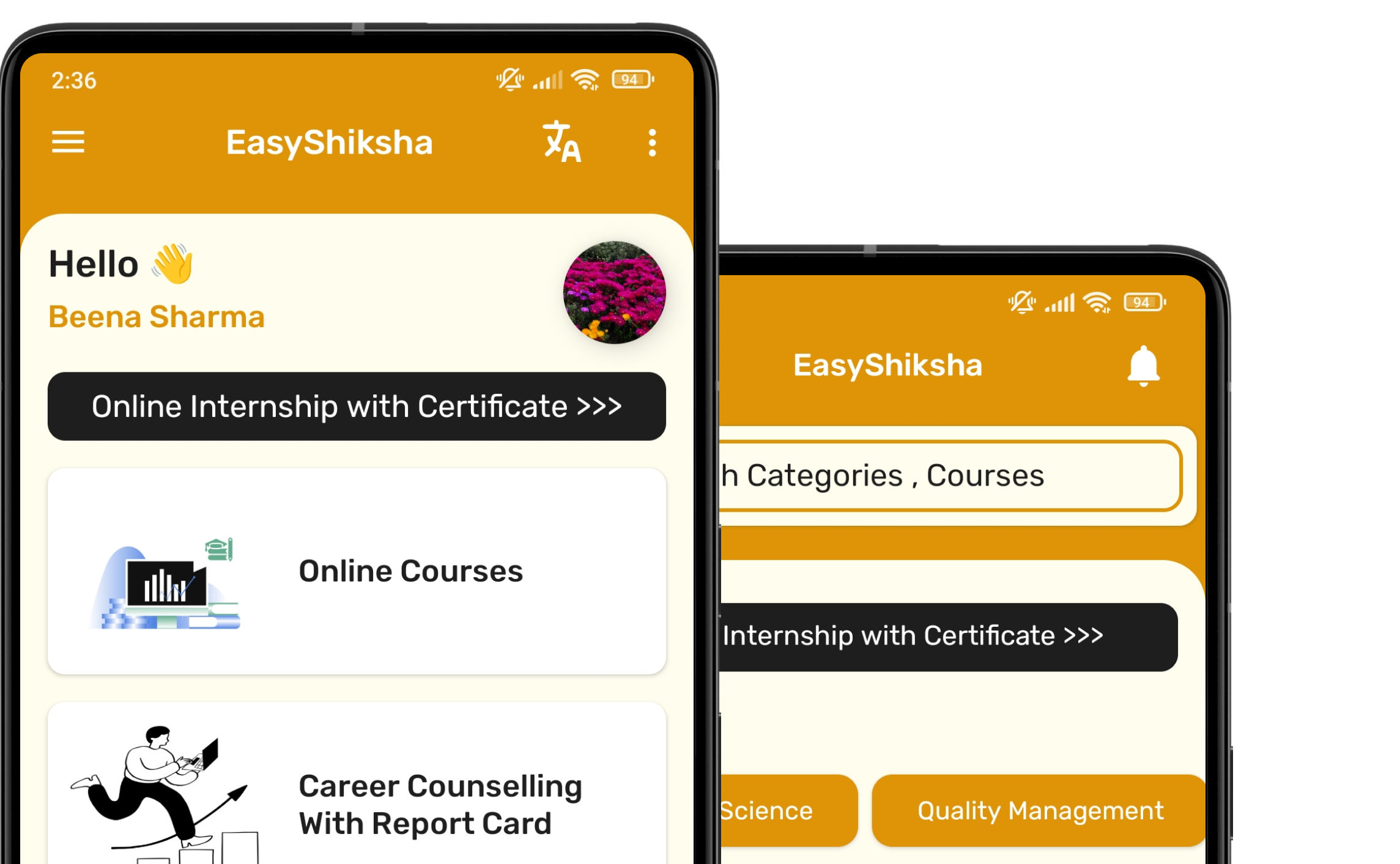


1 million+ learned on the EasyShiksha App
Trusted by Standards & Global Compliance Frameworks




Built under internationally recognized standards for quality, information security, educational excellence and business continuity.
ISO 9001:2015 | ISO/IEC 27001:2022 | ISO 21001:2018 | ISO 22301:2019 | DPIIT Recognized Startup | MSME Registered