program icon
Explore

Leadership

Explore Leadership courses and programmes on EasyShiksha. Learn about leadership, management, team building, organisational skills, careers and further study.

1 Programmes
1 University Partners
4.8โ˜… Avg. Rating
UGC-Recognised Degree
Industry-Aligned Curriculum
UGC-DEB Approved Online/ODL
Flexible Learning Options
Understanding Leadership

What Is Leadership?

Leadership is a management and organisational specialization focused on the principles, practices, and skills involved in guiding individuals, teams, and organisations toward shared goals. In higher education, it examines how leaders make decisions, communicate with stakeholders, manage teams, handle change, resolve challenges, and contribute to organisational effectiveness.

Common areas associated with Leadership include leadership theories, organisational behaviour, team management, communication, decision-making, strategic thinking, conflict management, change management, emotional intelligence, and organisational culture. Depending on the university and programme, students may also explore entrepreneurship, human resource management, business strategy, project leadership, coaching, and leadership development.

Studying Leadership can help learners develop communication, collaboration, critical thinking, problem-solving, decision-making, interpersonal, and strategic skills. The specialization can be relevant across business, management, education, non-profit organisations, public-sector institutions, and other organisational settings. Students may explore undergraduate, postgraduate, professional, executive, or other relevant programmes where available. The exact curriculum, programme structure, practical components, eligibility, and learning mode vary by university and programme.

UGC Degree-Level Recognition
What You Get

A program that pairs recognition with real skills

UGC-Recognised Degree

Same institutional recognition as a conventional Bachelor's degree.

Industry-Aligned Curriculum

Built with Sector Skill Councils, not just academic departments.

Direct Employability

Hands-on skill components designed for job-readiness, not just theory.

Offered By

Universities offering these programs

Compare accreditation and programme count before choosing where to apply.

Student Voices

What learners say

โ˜…โ˜…โ˜…โ˜…โ˜…

"The finance modules were practical and relevant to the kind of work I want to do. I especially liked the focus on applying concepts to real situations."

S
Saurabh Jain Finance
โ˜…โ˜…โ˜…โ˜…

"I chose this program because I wanted to continue studying literature at a higher level. The variety of topics made the learning experience interesting."

M
Muskan Yadav English Literature
โ˜…โ˜…โ˜…โ˜…โ˜…

"The AI specialization was exactly what I was looking for. It gave me a clear path from programming fundamentals to machine learning concepts."

K
Kunal Sharma Artificial Intelligence
Career Opportunities

Explore career opportunities

Management and Team Leadership

Leadership education can support pathways involving team coordination, people management, operational responsibilities, and organisational decision-making. Professionals may supervise teams, coordinate activities, communicate objectives, and contribute to organisational planning.

Human Resources

Students may explore human resource-related career areas involving employee engagement, talent development, organisational culture, learning and development, and people management. Specific HR roles may require additional knowledge or qualifications depending on the position.

Project and Operations Management

Leadership skills can be relevant to project and operations environments where professionals coordinate people, resources, timelines, and organisational objectives. Additional project management or technical knowledge may be useful depending on the role.

Business and Entrepreneurship

Students interested in business may apply leadership skills to entrepreneurship, business development, team building, and organisational growth. Leadership knowledge can complement subject-specific business and industry expertise.

Learning and Development

Leadership can also be relevant to professional training, coaching, mentoring, and learning and development activities. Professionals may support employee development, leadership programmes, or organisational learning initiatives, depending on their role and experience.

Education, Public and Social Organisations

Leadership principles can be applied in educational institutions, public-sector organisations, non-profit organisations, and other settings where teams and programmes require coordination. Specific positions may have additional qualification or recruitment requirements.

Further Study

Students can pursue postgraduate education, professional development, or research in leadership, management, organisational behaviour, human resources, strategy, entrepreneurship, or related fields.

Career opportunities depend on the qualification level, specific programme, university, professional experience, skills, industry knowledge, and requirements of individual roles. Studying Leadership does not automatically qualify a graduate for a particular managerial or leadership position.

Common Questions

Frequently asked questions

What is Leadership as a university specialization? +

Leadership is an academic area focused on guiding people and organisations, decision-making, communication, team dynamics, organisational behaviour, and managing change. It may be offered as a dedicated specialization or within broader management programmes.

What subjects are generally studied in Leadership programmes? +

Depending on the programme, students may study leadership theories, organisational behaviour, team management, communication, decision-making, conflict management, change management, strategy, and organisational culture.

What skills can students develop through Leadership? +

Students may develop communication, teamwork, interpersonal, critical-thinking, problem-solving, negotiation, decision-making, delegation, and strategic-thinking skills.

What career opportunities are available after studying Leadership? +

Depending on their qualification and experience, students may explore management, team coordination, human resources, project and operations management, business development, entrepreneurship, learning and development, and organisational roles.

Can students pursue higher studies after Leadership? +

Yes. Depending on their academic background and goals, students may pursue postgraduate or advanced study in leadership, management, organisational behaviour, human resources, strategy, entrepreneurship, or related disciplines.

Specialization: Leadership

About Specialization – 150 Words

Leadership is a management and organisational specialization focused on the principles, practices, and skills involved in guiding individuals, teams, and organisations toward shared goals. In higher education, it examines how leaders make decisions, communicate with stakeholders, manage teams, handle change, resolve challenges, and contribute to organisational effectiveness.

Common areas associated with Leadership include leadership theories, organisational behaviour, team management, communication, decision-making, strategic thinking, conflict management, change management, emotional intelligence, and organisational culture. Depending on the university and programme, students may also explore entrepreneurship, human resource management, business strategy, project leadership, coaching, and leadership development.

Studying Leadership can help learners develop communication, collaboration, critical thinking, problem-solving, decision-making, interpersonal, and strategic skills. The specialization can be relevant across business, management, education, non-profit organisations, public-sector institutions, and other organisational settings. Students may explore undergraduate, postgraduate, professional, executive, or other relevant programmes where available. The exact curriculum, programme structure, practical components, eligibility, and learning mode vary by university and programme.

Detailed About Specialization – 500 Words

What is Leadership?

Leadership is an academic specialization concerned with understanding how individuals influence, guide, motivate, and coordinate people and organisations to achieve shared objectives. It examines leadership behaviour, decision-making, communication, team dynamics, organisational culture, and approaches to managing change and challenges.

At university level, Leadership may be studied as a dedicated specialization or as part of broader management, business, organisational, or professional education programmes. The emphasis can range from theoretical leadership models to practical approaches for managing people and organisational situations. The exact academic scope varies by university and programme.

Key Areas of Study

Programmes in Leadership may cover leadership theories, organisational behaviour, team dynamics, communication, strategic thinking, decision-making, conflict management, change management, and organisational culture.

Leadership studies can examine different approaches to guiding teams and how leadership styles influence organisational environments. Organisational behaviour may help students understand motivation, collaboration, workplace relationships, and group dynamics.

Depending on the programme, students may also encounter human resource management, coaching and mentoring, entrepreneurship, project leadership, business strategy, negotiation, emotional intelligence, and leadership development. Some programmes may include case studies, projects, presentations, simulations, or other practical learning activities.

Skills Developed

Leadership education can help students develop communication, interpersonal, collaboration, critical-thinking, decision-making, problem-solving, negotiation, delegation, and strategic-thinking skills.

Learners may also develop the ability to communicate objectives, work with diverse teams, evaluate situations, manage disagreements, and consider different approaches to organisational challenges. Depending on the programme, students may gain opportunities to apply these skills through projects, group activities, case studies, or workplace-oriented learning.

Practical and Industry Relevance

Leadership knowledge can be applied in organisations where people, teams, projects, and resources need to be coordinated toward defined objectives. It can be relevant to business management, human resources, project environments, entrepreneurship, education, public administration, non-profit organisations, and other institutional settings.

Leadership skills may complement technical or subject-specific expertise. In many professional environments, leadership responsibilities develop alongside experience, organisational knowledge, and demonstrated capabilities rather than solely through an academic specialization.

Who Should Consider This Specialization?

Leadership may interest students who enjoy working with people, organising teams, solving organisational problems, communicating ideas, and understanding how organisations function. It can also be relevant to learners interested in management, entrepreneurship, human resources, organisational development, project coordination, or professional growth.

Students should consider their existing educational background and intended career direction when comparing Leadership programmes, particularly because programme content can differ considerably across universities.

Higher Education and Further Study

Students may encounter Leadership-focused study within undergraduate, postgraduate, professional, executive, or management-oriented programmes, depending on available academic pathways. Further education may allow learners to develop expertise in leadership, organisational behaviour, management, human resources, strategy, entrepreneurship, or related areas.

Students interested in research can also pursue advanced academic study in leadership, organisational studies, management, or related disciplines. The appropriate pathway depends on the student's existing qualification, university requirements, programme structure, and academic or professional goals.

Ready to apply?

Browse all programmes above and start your application in minutes.

View Leadership Programmes
Whatsapp Email Support

Experience the Speed: Now Available on Mobile!

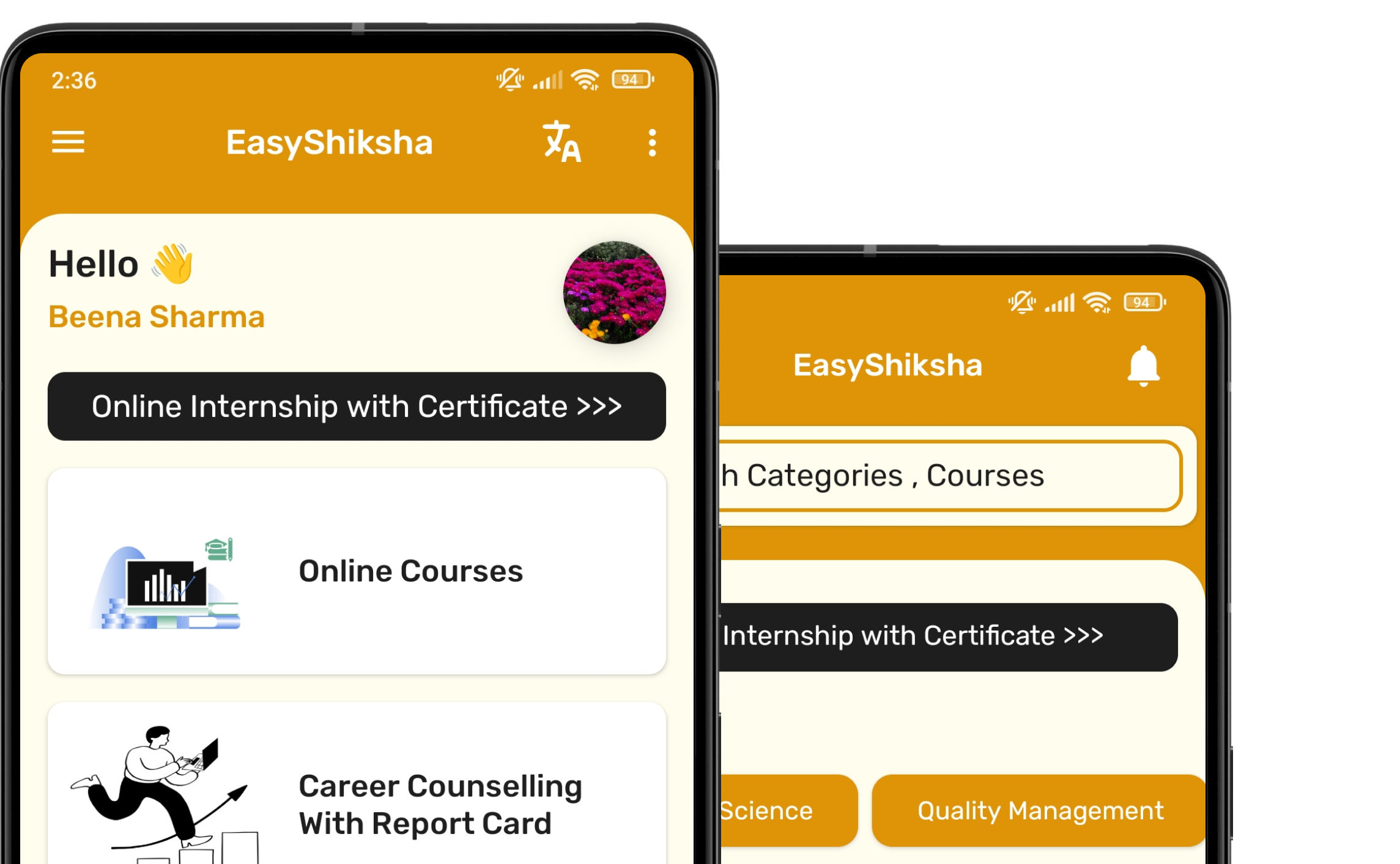
Download EasyShiksha Mobile Apps from Android Play Store, Apple App Store, Amazon App Store, and Jio STB.

Curious to learn more about EasyShiksha's services or need assistance?

Our team is always here to collaborate and address all your doubts.

Message should be at least 50 characters long.