














program icon
Explore

Artificial Intelligence & Machine Learning

Explore Artificial Intelligence & Machine Learning university courses and programs on EasyShiksha, including degree, diploma, UG, PG and professional options for enrollment.

13 Programmes
5 University Partners
4.8โ˜… Avg. Rating
UGC-Recognised Degree
Industry-Aligned Curriculum
UGC-DEB Approved Online/ODL
Flexible Learning Options
Understanding Artificial Intelligence & Machine Learning

What Is Artificial Intelligence & Machine Learning?

Artificial Intelligence & Machine Learning (AI & ML) is a technology-focused specialisation concerned with developing computational systems that can perform tasks involving learning, prediction, pattern recognition, language processing and decision-making. Artificial Intelligence broadly focuses on building systems that perform functions associated with human intelligence, while Machine Learning enables systems to learn patterns from data and improve their performance through algorithms and statistical methods.

Common areas of study may include programming, data structures and algorithms, probability and statistics, machine learning, deep learning, computer vision and natural language processing. Depending on the university and programme, students may also explore neural networks, reinforcement learning, generative AI, robotics, data engineering and responsible AI.

The specialisation develops skills in programming, mathematical reasoning, data analysis, model development, problem-solving and computational thinking. Students may work with technologies and tools used to build, train, evaluate and deploy machine-learning models, although the exact tools and curriculum vary by programme.

AI & ML may interest students who enjoy mathematics, computing, programming, data and solving complex problems. Its applications span areas such as healthcare, finance, manufacturing, retail, transportation, cybersecurity and software development.

At EasyShiksha, students can explore university programmes related to Artificial Intelligence & Machine Learning and compare universities, programme types, programme levels, learning modes, eligibility, duration, curriculum and specialisation options.

UGC Degree-Level Recognition
What You Get

A program that pairs recognition with real skills

UGC-Recognised Degree

Same institutional recognition as a conventional Bachelor's degree.

Industry-Aligned Curriculum

Built with Sector Skill Councils, not just academic departments.

Direct Employability

Hands-on skill components designed for job-readiness, not just theory.

Student Voices

What learners say

โ˜…โ˜…โ˜…โ˜…

"I chose this program because I wanted to continue studying literature at a higher level. The variety of topics made the learning experience interesting."

M
Muskan Yadav English Literature
โ˜…โ˜…โ˜…โ˜…โ˜…

"The AI specialization was exactly what I was looking for. It gave me a clear path from programming fundamentals to machine learning concepts."

K
Kunal Sharma Artificial Intelligence
โ˜…โ˜…โ˜…โ˜…โ˜…

"The HR modules cover much more than recruitment. I found the sections on employee management and organisational behaviour particularly useful."

S
Shreya Gupta Human Resource Management
Career Opportunities

Explore career opportunities

Machine Learning Engineer

Machine Learning Engineers develop and implement machine-learning models and systems. Their work can involve preparing data, training models, evaluating performance and integrating models into software applications or production systems.

AI Engineer

AI Engineers work on developing and integrating AI-based systems for specific applications. Depending on the role, they may work with machine learning, natural language processing, computer vision or other AI techniques.

Data Scientist

Data Scientists use statistical methods, programming and machine-learning techniques to analyse data and generate insights or predictive models. Their work can involve data preparation, experimentation, model evaluation and communicating findings.

AI Researcher

AI Researchers investigate new methods, algorithms and applications in Artificial Intelligence and Machine Learning. Research roles may involve experimentation, mathematical analysis, academic publications and development of new computational approaches.

Deep Learning Engineer

Deep Learning Engineers work with neural-network-based approaches for tasks such as image, audio or language processing. Their responsibilities may include model development, training, evaluation and optimisation.

Computer Vision Engineer

Computer Vision Engineers develop systems that process and interpret visual information such as images and video. Applications can include image classification, object detection, visual inspection and other computer-vision tasks.

Natural Language Processing Professional

NLP Professionals work on computational systems that process and analyse human language. Their work may involve text classification, information extraction, language modelling, conversational systems or other language-related applications.

AI Product Professional

AI Product Professionals help define and manage products or features that use AI technologies. They may work with technical teams, users and business stakeholders to identify requirements, evaluate AI capabilities and support product development.

Robotics and AI Professional

Robotics and AI Professionals work on systems that combine intelligent software with robotic or autonomous platforms. Depending on the role, they may contribute to perception, planning, control, machine learning or system integration.

AI Solutions Consultant

AI Solutions Consultants help organisations identify potential applications of AI technologies and translate business requirements into technology solutions. The role can involve technical understanding, problem analysis, communication and coordination with development teams.

MLOps Professional

MLOps Professionals support the deployment, monitoring and management of machine-learning systems. Their work can involve model pipelines, versioning, testing, infrastructure and maintaining reliable ML workflows.

Career opportunities in AI & ML depend on factors such as qualification, programming and mathematical skills, practical projects, knowledge of algorithms, experience with relevant tools, specialisation and employer requirements. Students can also pursue postgraduate study, research or professional development in machine learning, AI engineering, data science, deep learning, robotics, NLP or computer vision.


Common Questions

Frequently asked questions

What is Artificial Intelligence & Machine Learning? +

Artificial Intelligence & Machine Learning is a technology specialisation focused on developing computational systems that can perform tasks such as prediction, pattern recognition, language processing and decision-making. AI is the broader field, while Machine Learning is an approach that enables systems to learn patterns from data using algorithms and statistical methods.

What does Artificial Intelligence & Machine Learning cover? +

AI & ML can cover programming, algorithms, statistics, machine learning, deep learning, computer vision and natural language processing. Depending on the university and programme, students may also study neural networks, reinforcement learning, generative AI, robotics, data engineering and responsible AI.

What subjects are studied in Artificial Intelligence & Machine Learning? +

Common areas may include programming, data structures and algorithms, probability, statistics, machine learning, deep learning, computer vision and NLP. Depending on the programme, students may also study neural networks, reinforcement learning, generative AI, robotics and AI-related data engineering.

Is Artificial Intelligence & Machine Learning a good choice for a career in technology? +

AI & ML can be relevant for students interested in computing, programming, data and intelligent systems. It develops knowledge that can be applied to areas such as machine learning, AI engineering, data science and software development. Career opportunities depend on skills, qualifications, practical experience and employer requirements.

What skills are required for Artificial Intelligence & Machine Learning? +

Useful skills include programming, mathematics, statistics, logical reasoning, data analysis and problem-solving. Familiarity with algorithms and computational concepts is also valuable. Students can strengthen their preparation through practical projects involving data, model development, evaluation and implementation.

What are the career options after studying Artificial Intelligence & Machine Learning? +

Career pathways can include Machine Learning Engineer, AI Engineer, Data Scientist, AI Researcher, Deep Learning Engineer, Computer Vision Engineer, NLP Professional, AI Product Professional and MLOps Professional. Other opportunities may exist in robotics, AI consulting and software development depending on qualifications and technical skills.

Can I specialise further after studying Artificial Intelligence & Machine Learning? +

Yes. Students can develop further expertise in areas such as deep learning, computer vision, natural language processing, generative AI, robotics, data science, reinforcement learning or MLOps. Further study, research, certifications and practical projects can help learners build expertise in a preferred technical area.

Can I pursue Artificial Intelligence & Machine Learning online? +

Some AI & ML programmes may be available online or through blended learning. Online programmes can cover programming, algorithms, machine learning and AI concepts through lectures, assignments and projects. Students should check the curriculum, programming requirements, practical components, assessment structure and learning resources before selecting a programme.

What is the eligibility for studying Artificial Intelligence & Machine Learning? +

Eligibility varies by university, programme type and programme level. Some programmes may have mathematics, computing or science-related requirements, while others may accept broader academic backgrounds. Postgraduate programmes can require a relevant prior qualification. Students should check the exact eligibility and admission criteria of the selected programme.

How do I choose the right Artificial Intelligence & Machine Learning programme? +

Compare programmes based on university, programme level, curriculum, mathematics and programming requirements, learning mode, duration, practical projects and available specialisations. Consider whether the programme focuses more on machine learning, AI applications, data science, robotics or research. EasyShiksha can help students explore and compare relevant university programmes before making an informed decision.

What is Artificial Intelligence & Machine Learning?

Artificial Intelligence & Machine Learning combines the broader field of Artificial Intelligence with Machine Learning techniques used to develop systems that can learn from data. AI includes approaches for reasoning, perception, language processing, planning and decision-making, while ML focuses on algorithms that identify patterns and make predictions or decisions from data.

The field draws on computer science, mathematics, statistics and data analysis. Depending on the programme, students may study both theoretical concepts and practical approaches to developing computational models.

What Do You Study in Artificial Intelligence & Machine Learning?

Common areas of study may include programming, data structures and algorithms, probability, statistics, machine learning, deep learning, computer vision and natural language processing. Depending on the university and programme, students may also explore neural networks, reinforcement learning, generative AI, robotics, data engineering and responsible AI.

Students can develop skills in data preparation, algorithm selection, model training, evaluation, programming and problem-solving. Some programmes may include projects involving real-world datasets or machine-learning applications.

The curriculum, programming languages, software tools and practical components can vary by university and programme. Students should review the specific syllabus and learning outcomes before selecting a course.

Why Choose Artificial Intelligence & Machine Learning?

AI & ML can be valuable for students interested in combining computing, mathematics and data-driven problem-solving. The specialisation provides an opportunity to understand how intelligent systems are designed and how machine-learning models can be applied to practical problems.

It can also provide a foundation for further development in areas such as deep learning, computer vision, natural language processing, robotics, generative AI, data science and AI engineering. Strong fundamentals in mathematics, programming and algorithms can complement specialised learning.

Artificial Intelligence & Machine Learning and Emerging Technologies

AI and ML are rapidly developing fields with applications across software, business and scientific research. Generative AI, large language models, computer vision, autonomous systems and AI-assisted analytics are examples of areas receiving significant attention.

Students may also encounter topics such as model evaluation, AI safety, data privacy, fairness and responsible AI. Understanding both technical capabilities and the limitations of AI systems is important when developing or applying these technologies.

Who Should Choose Artificial Intelligence & Machine Learning?

AI & ML may appeal to students who enjoy programming, mathematics, statistics, computing and analytical problem-solving. Curiosity, logical reasoning, persistence and willingness to work with data can be useful.

Students interested in machine-learning engineering, AI development, data science, software development, computer vision, natural language processing or research may find this specialisation relevant. Specific roles can require additional technical skills, experience or advanced qualifications.

Explore Artificial Intelligence & Machine Learning Programmes on EasyShiksha

At EasyShiksha, students can explore university programmes related to Artificial Intelligence & Machine Learning and compare options according to their academic and career interests. Learners can review universities, programme types, programme levels, learning modes, eligibility, duration, curriculum, project opportunities and available specialisation options.

Because eligibility, curriculum, programming requirements, duration and programme structure can vary between institutions, students should check the specific details of each AI & ML programme before applying.

Ready to apply?

Browse all programmes above and start your application in minutes.

View Artificial Intelligence & Machine Learning Programmes
Whatsapp Email Support

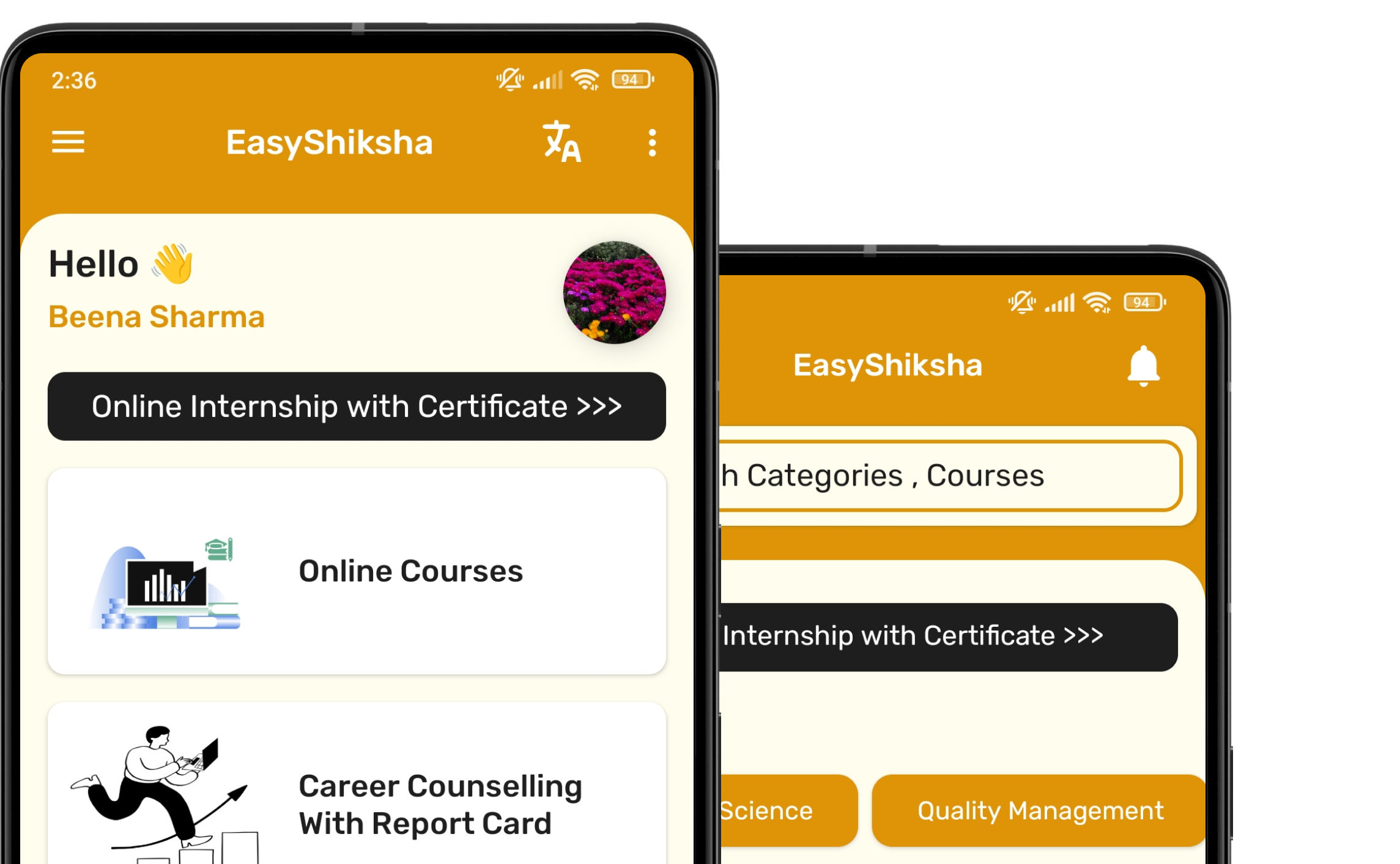
Experience the Speed: Now Available on Mobile!

Download EasyShiksha Mobile Apps from Android Play Store, Apple App Store, Amazon App Store, and Jio STB.

Curious to learn more about EasyShiksha's services or need assistance?

Our team is always here to collaborate and address all your doubts.

Message should be at least 50 characters long.