

















D.Voc in Health & Nutrition
Program Overview
The Diploma in Health & Nutrition is a vocationally oriented diploma program offered by the Institute of Vocational Studies, Mangalayatan University. The curriculum provides foundational knowledge of health, nutrition, food management, dietetics, food science, anatomy and physiology, communication and computer fundamentals. It also includes skill-development components focused on food preparation, regional cuisines, nutrient-rich foods and menu planning. The official curriculum identifies the program as a 1-year program divided into Semester I and Semester II, with 46 total credits.
Semester I builds foundational knowledge and practical skills through Functional English, Development of Foundation Skills, Computer Fundamentals, Fundamentals of Food Management, Introduction to Health & Nutrition, Food Preparation (Lab), Regional Cuisines (Lab), and Nutrients & their rich sources (Lab). The curriculum covers communication, employability skills, computer applications, food science, food adulteration and preservation, nutrients and their functions, along with practical food preparation and menu-based activities.
Semester II advances into Introduction to Dietetics, Professional Communication, Anatomy & Physiology-1, Essentials of Nutrient Food, Basics of Food Sciences, Use of RDA, Nutritive Value Tables (Lab), Gourmet Cooking (Lab), and Menu Planning (Lab). The subjects introduce meal planning, RDA, nutrition throughout the life cycle, human body systems, food composition, food processing and preservation, and practical menu and food preparation activities.
The program combines academic and skill-development learning. Practical components include Food Preparation (Lab), Regional Cuisines (Lab), Nutrients & their rich sources (Lab), Use of RDA, Nutritive Value Tables (Lab), Gourmet Cooking (Lab), and Menu Planning (Lab). The syllabus also includes an induction program conducted according to UGC/Regulatory Body guidelines. The uploaded syllabus does not specify eligibility or admission requirements, and it does not mention an internship, industrial training, elective/specialization, exit option, dissertation or separate project component.
Eligibility Criteria
The minimum eligibility for admission is 10+2 (in any stream) or equivalent or a two-year ITI Diploma after Class 10th or a three-year Polytechnic Diploma after Class 10th.
Approval Details
MHRD, Government of India and UGC
Curriculum
Semester I introduces students to communication, foundation skills, computers, food management and nutrition. It also provides practical exposure through food preparation, regional cuisine and nutrient-rich food activities. The semester carries 22 credits.
1. Functional English
Course Code: DVOCHN-101
Course Type: General Academic Component
Credits: 2
Functional English develops communication and language skills relevant to academic and workplace situations. Students learn verbal and non-verbal communication, listening, vocabulary, grammar and basic workplace communication.
Key Topics:
- Nature, scope, importance and purpose of communication
- Process of communication and encoder-decoder concepts
- Verbal and non-verbal communication
- Personal appearance, gestures, posture, facial expressions and eye contact
- Body language and kinesics
- Interpersonal and intrapersonal communication
- Receptive and productive language skills
- Listening concepts and barriers to effective listening
- Commonly used everyday vocabulary
- Synonyms, antonyms, homonyms, homographs and homophones
- Common grammatical errors
- Prepositions, tenses and modifiers
- Subject-verb agreement
- Articles and word order
- Workplace introductions and greetings
- Basic workplace phrases
- Group discussions
2. Development of Foundation Skills
Course Code: DVOCHN-102
Course Type: General Academic Component
Credits: 4
Development of Foundation Skills focuses on business communication, e-communication, presentations, employability, professional image and teamwork. The syllabus also emphasizes roleplays and team-building activities for practical skill development.
Key Topics:
- Business communication
- Organizational communication networks
- Communication media and information richness
- Email trends and technological advances
- Internal management communication
- Basics of computers and e-communication
- Shortcut keys and printing functions
- Page setup and presentation preparation
- Conversations and interviews
- Speeches and presentations
- Answering questions effectively
- Delivering key messages
- Managing professional image and impressions
- Employability and success skills
- Etiquette and first impressions
- Positive professional image
- Career alignment and goal setting
- Teamwork
- Roleplays and team-building activities
3. Computer Fundamentals
Course Code: DVOCHN-103
Course Type: General Academic Component
Credits: 2
Computer Fundamentals introduces students to computers, internet use, productivity applications, Google tools, Microsoft applications, artificial intelligence and Canva. The subject provides basic digital skills useful for academic and professional activities.
Key Topics:
- Definition and functioning of computers
- Microcomputers and computer-enabled devices
- Computers in everyday life
- Operating a computer
- Practical uses of technology
- Safe internet browsing
- Data organization and folder systems
- Google Mail and Google Meet
- Google Calendar and planning
- Google Forms
- Google To Do
- Google Maps
- Google Drive
- Google Keep
- Microsoft PowerPoint
- Microsoft Excel
- Microsoft Word
- Computer hardware
- Practical computer applications
- Typing speed improvement
- Introduction to artificial intelligence
- Common AI tools
- Using ChatGPT for projects
- Canva and its applications
- Creating designs from templates or from scratch
- Basic Canva animation
4. Fundamentals of Food Management
Course Code: DVOCHN-104
Course Type: Skill Development Component
Credits: 4
Fundamentals of Food Management introduces food science, food and nutrients, food classification, food adulteration, food standards, preservation and food additives.
Key Topics:
- Definition and classification of food
- Food and nutrients
- Food intake and its regulation
- Food patterns
- Definition and types of food adulterants
- Common adulterants in foods
- Food laws and standards
- PFA, FPO, MPO and BIS
- Agmark and Codex Alimentarius
- HACCP norms
- Principles and methods of food preservation
- Evaluation of food quality
- Food additives
- Genetically Modified Foods
- Organic foods
- Dietary supplements
5. Introduction to Health & Nutrition
Course Code: DVOCHN-105
Course Type: Skill Development Component
Credits: 4
This subject establishes the core concepts of health and nutrition. Students study macronutrients, water, energy metabolism, vitamins, minerals, trace elements, phytochemicals and antioxidants, including their sources, functions, requirements and nutritional significance.
Key Topics:
- Definitions of health and nutrition
- Integrated approach to nutrition
- Scope of nutrition
- Balanced diet and nutritional balance
- Preventive health care
- Carbohydrates and their classification
- Dietary fiber
- RDA, functions and sources of carbohydrates
- Carbohydrate metabolism and sweeteners
- Proteins, classification and functions
- Dietary protein requirements and allowances
- Nitrogen balance
- Factors affecting protein requirements
- Protein quality and measurement
- Protein RDA, deficiency, excess and metabolism
- Fats/lipids and their characteristics
- Types and classification of fats
- Hydrogenation
- Functions, sources and RDA of fats
- Water, distribution, functions, sources and requirements
- Fluid balance
- Energy requirements and BMR
- Energy balance
- Vitamins A, D, E, K, C and B-Complex
- Functions, sources, deficiency, toxicity, retention and RDA of vitamins
- Minerals and trace elements
- Electrolytes
- Phytochemicals and antioxidants
6. Food Preparation (Lab)
Course Code: DVOCHN-106
Course Type: Skill Development Component
Credits: 2
Practical
This laboratory component provides practical food preparation experience. Students prepare food along with a menu chart and diet plan based on the assigned question.
Key Practical Activity:
- Food preparation
- Menu chart preparation
- Diet-plan preparation based on the assigned requirement
7. Regional Cuisines (Lab)
Course Code: DVOCHN-107
Course Type: Skill Development Component
Credits: 2
Practical
Regional Cuisines provides practical exposure to preparing food and diets associated with assigned regional cuisines.
Key Practical Activity:
- Preparation of diet and food according to the assigned regional cuisine
- Preparation of the dish allotted as part of practical work
8. Nutrients & their rich sources (Lab)
Course Code: DVOCHN-108
Course Type: Skill Development Component
Credits: 2
Practical
This laboratory subject connects nutritional concepts with practical food preparation. Students prepare dishes according to an assigned nutrient-rich diet.
Key Practical Activity:
- Identification and application of nutrient-rich food concepts
- Preparation of dishes according to the allotted nutrient-rich diet
Download Syllabus
Semester II develops more specialized knowledge in dietetics, professional communication, anatomy and physiology, nutrient-rich foods and food science. Practical work focuses on the application of RDA and nutritive-value information, gourmet cooking and menu planning. The semester carries 24 credits.
1. Introduction To Dietetics
Course Code: DVOCHN-201
Course Type: General Academic Component
Credits: 4
Introduction To Dietetics covers the fundamentals of nutrient requirements, RDA, meal planning, food exchanges and nutrition across different stages of the life cycle.
Key Topics:
- Meaning and scope of dietetics
- Nutrient requirements and recommendations
- Recommended Dietary Allowance (RDA)
- Principles of deriving RDA
- Fundamentals and essentials of meal planning
- Aims of meal planning
- Healthy eating
- Food Guide Pyramid
- Food Exchange List
- Food exchange guidelines
- Nutrition during adulthood
- Pregnancy and physiological changes
- Nutritional requirements during pregnancy
- Complications of pregnancy
- General dietary guidelines and sample diet plans
- Lactation and breastfeeding
- Composition of breast milk
- Nutritional needs during lactation
- Infant nutrition, growth and development
- Weaning and supplementary foods
- Childhood nutrition and meal planning
- Healthy snacking and packed lunch
- Adolescent nutrition
- Nutrition in old age
2. Professional Communication
Course Code: DVOCHN-202
Course Type: General Academic Component
Credits: 2
Professional Communication develops workplace communication skills, written communication, professional networking and emotional management. It also covers appropriate email and telephone etiquette.
Key Topics:
- Understanding professional communication
- Written communication
- Mails and memos
- Letters and business letters
- Professional networking
- Emotional management
- Giving and receiving feedback
- Types of feedback
- Importance of constructive feedback
- Email etiquette
- Telephone etiquette
3. Anatomy & Physiology-1
Course Code: DVOCHN-203
Course Type: General Academic Component
Credits: 4
Anatomy & Physiology-1 introduces the structure and functioning of living systems, cells and selected human body systems. The syllabus covers digestion, excretion, skin and the musculoskeletal system.
Key Topics:
- Characteristics of living and non-living beings
- Introduction to living beings
- Animal and plant cells
- Cell structure and functions
- Diagrammatic representation of cells
- Mitosis and meiosis
- Importance and process of digestion
- Structure and functions of the digestive system
- Organs of excretion
- Parts of the urinary system
- Structure of the nephron
- Urine formation
- Abnormalities of the urinary system
- Structure and functions of skin
- Layers of skin
- Skin and temperature control
- Skin abnormalities
- Anatomy and physiology of bones
- Functions and structure of bones
- Skeletal system
- Types of joints
- Types and functions of muscles
- Muscle disorders
4. Essentials of Nutrient Food
Course Code: DVOCHN-204
Course Type: Skill Development Component
Credits: 4
Essentials of Nutrient Food revisits and develops the core principles of nutrition, including macronutrients, water, energy, vitamins, minerals, electrolytes, phytochemicals and antioxidants.
Key Topics:
- Health and nutrition fundamentals
- Nutritional balance and balanced diet
- Carbohydrates, fiber, sources and functions
- Carbohydrate metabolism and sweeteners
- Proteins and dietary protein requirements
- Nitrogen balance and protein quality
- Protein deficiency and excess
- Fats and lipids
- Types and functions of fats
- Sources and RDA of fats
- Water and fluid balance
- Energy requirements and BMR
- Positive and negative energy balance
- Vitamins A, D, E, K, C and B-Complex
- Vitamin sources, functions, deficiency and toxicity
- Vitamin requirements and RDA
- Minerals and trace elements
- Calcium, phosphorus, magnesium, iron, iodine, zinc and other listed minerals
- Electrolytes including sodium, potassium and chloride
- Phytochemicals and antioxidants
5. Basics of Food Sciences
Course Code: DVOCHN-205
Course Type: Skill Development Component
Credits: 4
Basics of Food Sciences introduces the composition, nutritional value, selection, processing, cooking, preservation and storage of major food groups. It also covers functional foods and methods for improving nutritional quality.
Key Topics:
- Food and nutrients
- Classification of food
- Food intake and regulation
- Food patterns
- Cereals and grains
- Structure, composition and nutritive value of cereals
- Storage of cereal grains
- Cereal cookery and cereal products
- Wheat products
- Fruits and vegetables
- Nutritional composition and pigments
- Selection, cooking changes and storage
- Fats and oils
- Nutritional importance and functions
- Sources of edible oils
- Emulsions and rancidity
- Pulses and their nutritive value
- Toxic constituents in pulses
- Pulse processing and cookery
- Milk and milk products
- Milk composition and physical properties
- Nutritional importance of milk
- Homogenization and pasteurization
- Milk products and substitutes
- Meat, poultry, fish and eggs
- Structure, composition, classification and nutritional importance
- Food preservation and additives
- Food-quality evaluation
- Genetically Modified Foods and organic foods
- Dietary supplements
- Functional foods
- Germination, fermentation, fortification and supplementation for improving nutritional quality
6. Use of RDA, Nutritive Value Tables (Lab)
Course Code: DVOCHN-206
Course Type: Skill Development Component
Credits: 2
Practical
This practical component applies RDA and nutritive-value information to food preparation and menu planning.
Key Practical Activity:
- Dish preparation
- Food presentation
- Menu planning based on RDA
7. Gourmet Cooking (Lab)
Course Code: DVOCHN-207
Course Type: Skill Development Component
Credits: 2
Practical
Gourmet Cooking provides practical experience in preparing and presenting dishes according to the requirements of gourmet cooking.
Key Practical Activity:
- Gourmet dish preparation
- Dish presentation
- Menu planning based on gourmet cooking
8. Menu Planning (Lab)
Course Code: DVOCHN-208
Course Type: Skill Development Component
Credits: 2
Practical
Menu Planning develops practical skills in preparing dishes and creating menus according to assigned requirements.
Key Practical Activity:
- Dish preparation
- Dish presentation
- Menu planning based on the assigned question
Fee Structure
Admission Process
Students can apply for the DIPLOMA Health & Nutrition programme through EasyShiksha. The complete application process is designed to make admission simple and convenient for eligible students.
Step 1: Click on Apply Now
Click the Apply Now button on the DIPLOMA Health & Nutrition programme page and begin your application through EasyShiksha.
Step 2: Complete Personal Information
Fill in the required personal, contact and academic details accurately in the application form.
Step 3: Upload Required Documents
Upload the required documents for eligibility and admission verification as specified during the application process.
Step 4: Pay Application Fee
Pay the applicable application fee through the available online payment options to submit your application and initiate the admission process.
Step 5: Application Review
The EasyShiksha team reviews your application and submitted documents to verify your eligibility and ensure that the required information and documents have been provided.
Step 6: University Enrollment
Once the application is successfully reviewed and the student is found eligible, EasyShiksha facilitates the enrollment process with Mangalyatan University.
Step 7: LMS Access
After successful enrollment, the student is provided access to the Learning Management System (LMS) to begin their academic journey and access the available learning resources.
Start Your Application
Ready to begin your journey in Software Development? Click Apply Now to submit your application through EasyShiksha.
Career & Placements
The Diploma in Health & Nutrition combines nutrition fundamentals, food management, dietetics, food science, anatomy and physiology, communication, digital skills and practical food-related activities. Based on these curriculum areas, students can explore opportunities in nutrition-related support services, food and wellness environments, food preparation and menu-planning activities, hospitality and food-service settings, and related support roles. Career progression and specific job responsibilities may depend on individual skills, experience and employer requirements.
Nutrition & Wellness Support
- Nutrition Support Assistant – Assist with nutrition-related activities using foundational knowledge of nutrients, balanced diets and RDA.
- Health & Nutrition Program Assistant – Support basic health and nutrition initiatives involving food and dietary information.
- Wellness Support Assistant – Apply foundational nutrition and healthy-eating knowledge in relevant wellness environments.
Dietetics & Meal Planning Support
- Dietetics Support Assistant – Apply basic knowledge of nutrient requirements, RDA, food exchanges and meal planning.
- Meal Planning Assistant – Support meal-planning activities using nutritional requirements and food information.
- Diet Planning Support Role – Assist with nutrition-related planning tasks within the scope of the role and applicable workplace requirements.
Food & Nutrition Services
- Food Management Assistant – Apply knowledge of food classification, food quality, preservation and food management.
- Food Service Support – Use practical food-preparation and menu-planning skills in food-service environments.
- Menu Planning Assistant – Support menu preparation using nutritional and food-related considerations.
Food Preparation & Culinary Support
- Food Preparation Assistant – Apply practical experience gained through Food Preparation (Lab).
- Culinary Support Assistant – Use practical skills developed through Regional Cuisines and Gourmet Cooking.
- Food Presentation Assistant – Apply practical experience in food preparation and presentation.
Food Science & Quality Support
- Food Quality Support Assistant – Apply foundational knowledge of food quality, adulteration, preservation and additives.
- Food Processing Support Assistant – Use knowledge of cereals, pulses, milk products, fruits, vegetables and other food groups.
- Food Safety Support Role – Apply academic understanding of food adulteration, food laws, standards and HACCP norms in appropriate support settings.
Hospitality & Food-Service Environments
- Hospitality Food-Service Assistant – Apply food preparation, nutrition and menu-planning skills in relevant hospitality settings.
- Food-Service Operations Support – Assist with food-related operational activities.
- Guest Food-Service Support – Use communication, food knowledge and service-oriented skills in customer-facing environments.
Communication & Digital Support
- Administrative Support Assistant – Apply computer, communication and basic office-technology skills.
- Digital Content/Presentation Support – Use Microsoft Office, Google tools and Canva for basic professional tasks.
- Communication Support Role – Apply Functional English and Professional Communication skills in workplace environments.
The curriculum's practical components in food preparation, regional cuisines, nutrient-rich food preparation, RDA-based menu planning, gourmet cooking and menu planning provide opportunities for learners to apply classroom concepts in hands-on activities.
Mangalayatan University, Aligarh
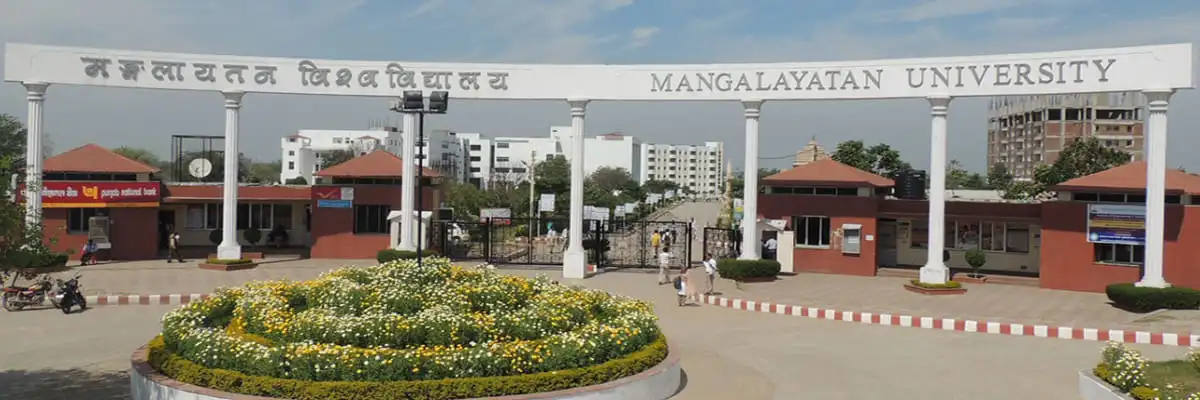
Mangalayatan University is a UGC-recognized private university located in Aligarh, Uttar Pradesh, India. Known for its strong industry connections, cutting-edge curriculum, and commitment to technology-driven education, Mangalayatan University has established itself as one of central India's premier higher education institutions.
The university's vision is to foster academic excellence, industry readiness, and global competitiveness among its graduates — making it an ideal partner for EasyShiksha's mission of accessible, quality online education.
EasyShiksha has signed an MoU with Mangalayatan University to facilitate applications for various university programs and jointly offer B.Voc programs. All degrees and certifications under these programs will be awarded by Mangalayatan University. The EasyShiksha team will provide complete assistance and support throughout the admission and program process.
Mangalayatan University, Uttar Pradesh
Sample Certificate
Documents
Media Gallery
Frequently Asked Questions
Mangalayatan University is located at 33rd Milestone, Aligarh-Mathura Highway, Beswan, Aligarh, Uttar Pradesh, India. The campus is situated in close proximity to the Yamuna Expressway and the cities of Aligarh and Mathura.
Mangalayatan University was established in 2006 under the Mangalayatan University, Uttar Pradesh Act, 2006. The University states that it has the right to confer degrees under Sections 2(f) and 22(1) of the UGC Act.
Yes. Mangalayatan University states that it is recognized by the University Grants Commission (UGC) and was established through an Act of the Uttar Pradesh State Legislature. The University also lists NAAC A+ accreditation among its recognitions.
Yes. The University states that it is recognized by UGC-DEB for Open and Distance Learning (ODL) and is entitled by the UGC to offer online degree programmes. It also states that its online programmes are approved by AICTE.
Mangalayatan University offers programmes across multiple academic levels, including UG, PG, Diploma, PG Diploma and PhD. Its programme portfolio covers areas such as Engineering & Technology, Computer Applications, Management, Agriculture, Biotechnology, Pharmacy, Physiotherapy, Nursing, Journalism & Mass Communication and other disciplines.
Depending on the programme, applicants may be required to provide Class 10 and Class 12 certificates and marksheets, graduation/post-graduation marksheets where applicable, competitive examination rank card where applicable, migration/transfer certificate and recent passport-size photographs. Original documents may be required for verification.
Yes. The University states that students can apply for an education loan through banks, subject to the bank's eligibility criteria.
Mangalayatan University has a 70+ acre campus in Aligarh, Uttar Pradesh.
Mangalayatan University holds an A+ accreditation grade from the National Assessment and Accreditation Council (NAAC).
Yes. Mangalayatan University carries AICTE approval for its technical programmes.
The degree certificate is issued and signed directly by Mangalayatan University, rather than by EasyShiksha or another third-party platform.
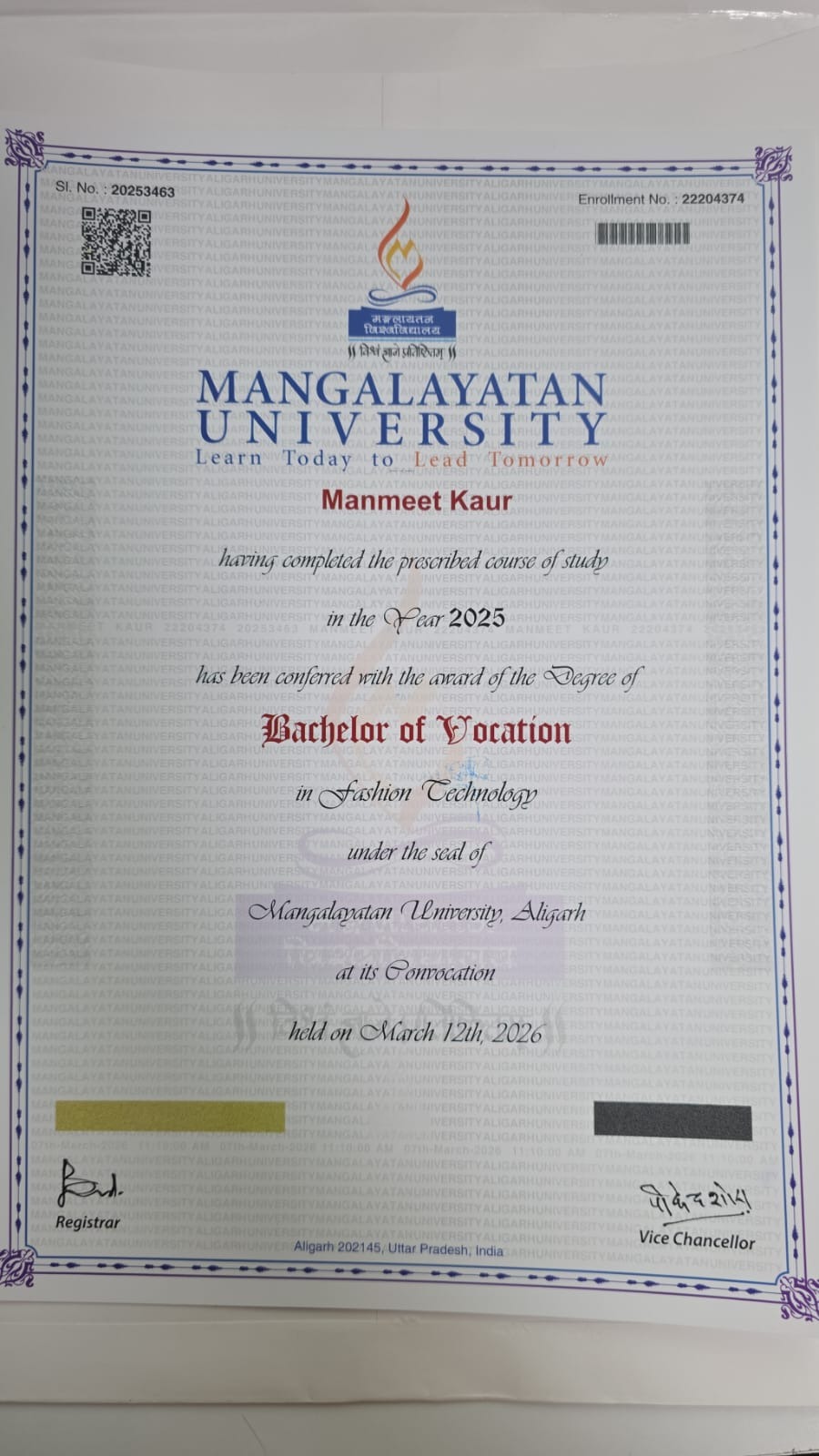
The degree certificate is personalised with the student's name, programme, and completion date and carries the university's official signature and seal.
Yes. The university's campus hosts optional immersion sessions associated with select Executive and Hybrid-mode programmes.
Students can select a Mangalayatan University programme, submit their personal details and required documents, pay the application fee, and proceed through the university's application review process.
Yes. Applications submitted through EasyShiksha can be monitored through the dashboard, where applicants can view status updates such as Under Review and Accepted along with their reference ID.
The Diploma in Health & Nutrition at Mangalayatan University is a 1-year diploma program covering health and nutrition, food management, dietetics, food science, anatomy and physiology, communication and computer fundamentals. It also includes practical subjects related to food preparation, regional cuisines, nutrient-rich foods, RDA-based menu planning, gourmet cooking and menu planning.
The syllabus includes Functional English, Development of Foundation Skills, Computer Fundamentals, Fundamentals of Food Management, Introduction to Health & Nutrition, Introduction To Dietetics, Professional Communication, Anatomy & Physiology-1, Essentials of Nutrient Food, and Basics of Food Sciences, along with six practical/lab components.
Yes, the syllabus includes several practical/lab subjects, including Food Preparation (Lab), Regional Cuisines (Lab), Nutrients & their rich sources (Lab), Use of RDA, Nutritive Value Tables (Lab), Gourmet Cooking (Lab), and Menu Planning (Lab).
Depending on their skills, experience and employer requirements, learners can explore roles related to nutrition support, dietetics and meal-planning assistance, food management, food-service operations, food preparation, culinary support, food-quality support and hospitality food services. The curriculum provides relevant foundations in nutrition, dietetics, food science and practical food preparation but does not guarantee a particular job, professional license or regulated designation.
Students can develop foundational skills in nutrition, dietetics, meal planning, food management, food science, food preparation, menu planning, nutrient analysis, communication, computer applications and professional skills. Practical activities also provide experience in regional cuisines, gourmet cooking, food presentation and RDA-based menu planning.