
















Mastering PLCs: Industrial Automation, Logic, Safety & Reliability
Master PLC-based industrial automation, integrating control logic, safety, SCADA, and IIoT to design secure, scalable, and future-ready systems.
#1 Most Popular Online Course & Internship in Hardware You can enroll today & get certified from EasyShiksha & HawksCode.
 Build real-world projects
Internship with certificate
Resume-ready experience
Beginner to advanced
Lifetime access
Interview prep included
Build real-world projects
Internship with certificate
Resume-ready experience
Beginner to advanced
Lifetime access
Interview prep included
 Updated October 05, 2026
Join 5,00,000+ students already enrolled worldwide
No risk — 30-day full refund guarantee
Start instantly after payment — access in seconds
Certificate + Internship Joining Letter included
Updated October 05, 2026
Join 5,00,000+ students already enrolled worldwide
No risk — 30-day full refund guarantee
Start instantly after payment — access in seconds
Certificate + Internship Joining Letter included
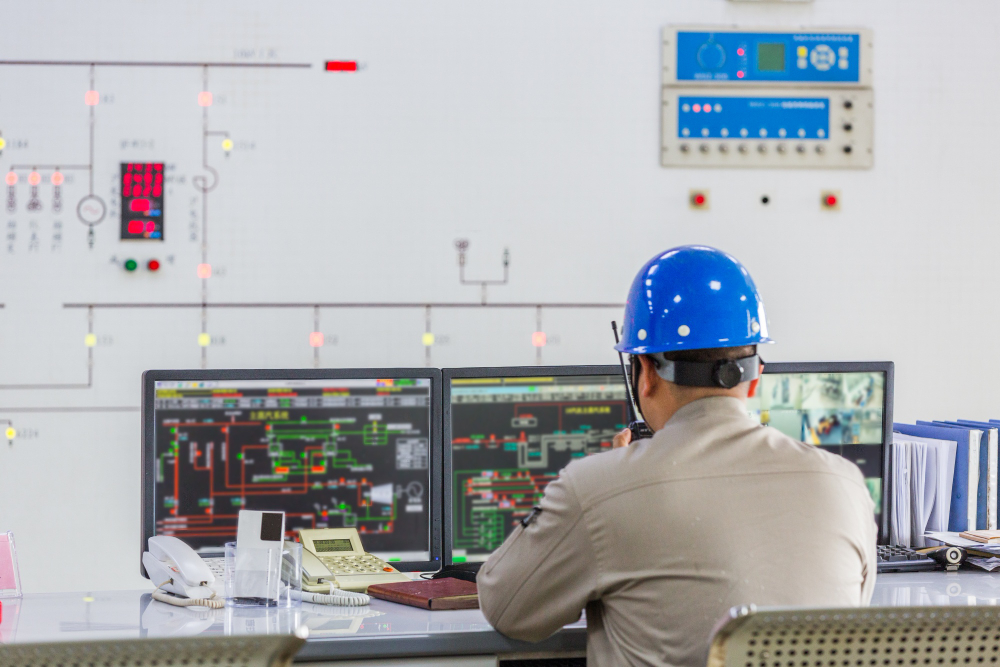
 Free Preview
 101 On-demand Videos
 Internship Joining Letter
 2 Certificates (Course + Internship)
 Lifetime Access
 1 Quiz + Assignments
 Mobile & Desktop Access




Why This Course and Internship Stands Out
See exactly what separates EasyShiksha students from everyone else
 Watching scattered YouTube
videos with no structure
No certificate — nothing to show
employers
No internship experience on
resume
Wasting months without clear
direction
Struggling to stand out in job
applications
No proof of practical skills
Structured, beginner-to-advanced
learning path
Verified certificate — shareable
on LinkedIn
Real internship offer letter for
your resume
Go from zero to job-ready in one
programme
Resume-ready experience before
graduation
Practical projects you can show
any recruiter
Watching scattered YouTube
videos with no structure
No certificate — nothing to show
employers
No internship experience on
resume
Wasting months without clear
direction
Struggling to stand out in job
applications
No proof of practical skills
Structured, beginner-to-advanced
learning path
Verified certificate — shareable
on LinkedIn
Real internship offer letter for
your resume
Go from zero to job-ready in one
programme
Resume-ready experience before
graduation
Practical projects you can show
any recruiter
Internship Opportunity Included With This Course
"This is not just a course — it's real career experience. Walk away with documents that prove your skills to any employer."




This Course is Perfect For
Whether you're starting from scratch or switching careers — this course is designed with your success in mind.








This course uses elements of Artificial IntelligenceAre you ready to unlock the technology powering the world’s most vital industries and critical infrastructure? Imagine mastering the backbone of modern manufacturing, utilities, and smart factories, all while preparing yourself for an in-demand career at the forefront of global innovation. Whether you want to engineer safer chemical plants, streamline bottling lines, optimize water treatment facilities, or revolutionize energy grids, understanding Programmable Logic Controllers (PLCs) and industrial automation will propel you into the future of intelligent production and operational excellence.
In this comprehensive, hands-on course, our team leads you step by step through the landscape of programmable logic controllers and industrial automation systems—the invisible force behind the reliable flow of goods, services, and utilities that power our lives. Developed by experienced engineers with decades of real-world expertise, this curriculum is crafted to give you not just theoretical insight but also practical skills proven to deliver results in the world’s most demanding environments. With digital transformation, Industry 4.0, and the Industrial Internet of Things (IIoT) rewriting the rules of production and infrastructure, there’s never been a more critical time to invest in your automation skillset.
PLC skills are no longer just for factory technicians. Today, mastering control logic, secure automation design, and integrated plant operations opens doors in energy, food and beverage, pharmaceuticals, mining, municipal infrastructure, advanced manufacturing, and beyond. Our carefully sequenced modules transform even first-time learners into confident professionals, able to conceptualize, troubleshoot, and future-proof automated systems that the world depends on. From the evolution of the earliest relays to tomorrow’s AI-powered smart factories, you’ll chart the journey of automation—and be ready to drive what comes next.A Guided Journey from
Foundation to Cutting Edge
We begin with the core concepts that underpin PLCs, from their historical roots and transformation of electromechanical relays into digitally programmed decision-makers. You’ll see how PLCs quietly control everything from conveyor belts to wastewater plants, and why they are globally trusted for their deterministic, reliable, and safe operation in mission-critical environments.
We immerse you in logic fundamentals—exploring binary control, state machines, sequencing, and industrial process representation. Through interactive visualizations, logic diagrams, and hands-on exercises, you’ll map real-world plant operations into programmable decision points, understanding how complex industrial workflows can be tamed with elegant, repeatable logic. Case studies in conveyor sorting, bottling, and water treatment bring theory alive, letting you analyze actual process logic and sequence control.
Your journey continues into the heart of PLC hardware and design—processing units, I/O modules, power supplies, and environmental protections such as electromagnetic noise immunity. We get tactile, reviewing enclosure design, mounting practices, and hands-on wiring (with virtual labs and CAD schematics) so you can confidently commission, maintain, and scale PLC systems.
Architecting for Reliability, Safety, and Scale
Safety and uptime are everything in industry. That’s why our course uniquely integrates industry-proven methods for designing deterministic, predictable, and fault-tolerant automation: everything from redundancy and failover hardware setups to advanced diagnostics and preventive lifecycle maintenance. You’ll master how to architect PLC systems for safety-critical sectors, such as power generation and oil refining, including the nuances of regulatory and compliance planning.
We’ll examine real failure scenarios and show how robust logic design—paired with human factors engineering—can prevent catastrophic outcomes and foster trusted interaction between people and machines. Using a blend of guided walkthroughs and authentic plant case analyses, we give you the tools to ensure safety, eliminate ambiguity, and instill operator confidence at every stage of the automation lifecycle.
Bridging Technology and Operations—Integration, Context, and Human Collaboration
Where many courses stop at basic programming, we guide you into the beating heart of the modern industrial enterprise. Delve deep into system architecture—contrasting centralized and distributed PLC environments, networking controllers plant-wide, and integrating them with data historians, SCADA, MES, and enterprise resource planning systems.
Explore the intricacies of multi-system operation across the full spectrum of industries. From seamless control in food and beverage lines to water utilities, mining, and discrete manufacturing, you’ll see firsthand how complex infrastructure comes together, and how PLCs enable real-time data collection, business insight, and strategic decision-making.
Industrial automation isn’t just about machines; it’s about people. Our unique human–machine interaction modules prepare you to design ergonomic interfaces, build effective alarm systems, optimize real-time monitoring, and craft robust training programs—making operators smarter and more empowered contributors to plant safety and productivity.
Anticipate Tomorrow: Security, Innovation, and Future-Proofing
No exposure to automation is complete without a solid foundation in operational security. We go beyond the basics, equipping you with cyber-physical security strategies to protect PLC-based systems against hacking, tampering, and emerging threats to industrial networks. Real-world breach case studies and incident response scenarios illuminate what’s at stake—and how to defend against it.
Stay at the forefront with the latest trends: edge computing, distributed intelligence, wireless communication, IIoT-ready control, and artificial intelligence for predictive maintenance and process optimization. As industries evolve, you’ll be empowered to interpret new technologies, evaluate their readiness, and architect solutions that continuously improve plant safety, sustainability, and competitive edge.
Authentic Projects, Assessment, and Portfolio-Ready Outcomes
Learning is maximized with structured, purposeful projects at every turn. You’ll annotate process diagrams, simulate logic design, assess failure scenarios, and craft risk-mitigating strategies for hypothetical—but highly realistic—industrial setups. Through system analysis, you’ll design scalable PLC architectures and develop integration plans based on real industry requirements. Each module closes with knowledge checks, troubleshooting challenges, and solution reviews to cement your understanding.
Demonstrate your skills with a portfolio-ready capstone project—integrating logic development, reliability planning, operator interface design, and compliance documentation—showcasing your unique ability to deliver complete, future-ready automation solutions. Receive detailed instructor feedback and peer reviews, ensuring you finish with real-world proficiency and a competitive edge in the industrial job market.
Unique Value That Sets This Course Apart
Designed by practicing automation specialists, this course brings you an unparalleled blend of broad industry context, hands-on practicality, and deep dives into decision logic, safety engineering, and regulatory requirements. You won’t just learn how to program PLCs—you’ll learn how to make them thrive in high-reliability facilities, negotiate project upgrades, collaborate across organizational boundaries, and ensure safety and compliance at every step. Our focus on lifecycle management, security, and integration gives you a 360-degree view, equipping you to lead both today’s plants and tomorrow’s innovations.
No matter your background—engineer, plant operator, systems integrator, or curious technologist—you’ll build not only technical confidence but also a strategic understanding of how automation shapes the fabric of modern industry. Our community forums, resource libraries, and on-demand mentorship ensure you’re supported as you master everything from core logic to advanced system architecture.
Why Now? Why This Course?
As more organizations pivot toward digital, secure, and connected production strategies, skilled professionals who can navigate the intersection of logic, reliability, and industrial context are in higher demand than ever. Regulations tighten, supply chains digitalize, and automation technology advances—making it not only prudent but essential to develop a full-spectrum understanding of PLC-based automation systems.
Future-proof your career in an era defined by digital transformation, resilience, and operational excellence. Join us and harness the power of programmable logic controllers as you build the systems that keep the world running.
Enroll now and start engineering the future—one logic sequence, one safe process, and one groundbreaking solution at a time.
 Unlock 99 More Lessons + Internship Access

 Missing this = losing the internship credential Missing this = losing your early-access advantage Missing this = falling behind candidates who did enroll



.svg?v1)
 Chat with us first →
 UPI
UPI
 Wallets
 Debit/ Credit card
 NetBanking
 EMIs
101 On-demand Videos Course Completion Certificate
Internship Certificate
Internship Joining/Offer Letter
Letter of Appreciation (LOA)
Internship Attendance Report
Internship Evaluation Report
Internship Certificate Hard Copy
Project Report Assitance
Internship Project Assitance
1:1 Live Mentor Call
Course Certificate in Elegant Wooden Frame
2 Certificates (Course + Internship) Lifetime Access Projects & Assignments 1 Quiz + Assignments
EMIs
101 On-demand Videos Course Completion Certificate
Internship Certificate
Internship Joining/Offer Letter
Letter of Appreciation (LOA)
Internship Attendance Report
Internship Evaluation Report
Internship Certificate Hard Copy
Project Report Assitance
Internship Project Assitance
1:1 Live Mentor Call
Course Certificate in Elegant Wooden Frame
2 Certificates (Course + Internship) Lifetime Access Projects & Assignments 1 Quiz + Assignments
Why Start Now?
The Opportunity Won’t Wait.
Every day you delay is a missed opportunity to grow your skills. Learners who start today gain the advantage — whether it's building skills, improving careers, or unlocking new opportunities.
Still Thinking?
Here's everything that makes this a no-brainer:
No prior experience needed — start from absolute zero Beginner friendly — explained step by step Risk-free — 30-day full refund guarantee One-time payment — access forever Student-friendly pricing — see details at checkout Real internship certificate includedWhat Happens After You Enroll?
From payment to certificate — here's exactly what to expect
 Secure Payment
 Instant Access
30-Day Refund
2 Certificates
Instant Access
30-Day Refund
2 Certificates
Imagine After Completing This Course
Picture yourself 30 days from now — with skills, experience, and credentials that open real doors.




 Includes Internship


















