Educational games are traditionally designed to make learning more engaging through challenges, rewards, levels, simulations, and interactive activities. Students use them to practise academic concepts, improve problem-solving abilities, and understand subjects through experiences that are different from conventional lessons. However, educational games could serve a much larger purpose than reinforcing classroom knowledge. What if they became structured pre-internship training environments where students could practise professional decisions, experience realistic workplace situations, and develop essential industry skills before being assigned real projects?
The transition from academic learning to professional work is often difficult for students, particularly those entering their first internship. They may understand theoretical concepts and have completed online courses, but they have limited experience dealing with workplace expectations. A student learning digital marketing might understand campaign terminology without knowing how to respond when an advertisement performs poorly. A programming student may understand coding fundamentals but struggle when a project contains unexpected errors, unclear requirements, or competing deadlines. Similarly, a management student may understand organisational theories but have little experience making decisions when resources are limited and several stakeholders expect different outcomes.
Traditional educational games rarely address this complete transition. Many focus on subject-based questions, memory challenges, or isolated problem-solving activities. Although these formats can strengthen knowledge, they do not always prepare learners for the interconnected decisions required in professional environments. A pre-internship educational game would approach the problem differently. Instead of asking students only to answer questions correctly, it would place them inside simulated professional environments where their decisions influence project outcomes, team performance, customer satisfaction, operational efficiency, and resource utilisation.
For EasyShiksha, this concept creates an opportunity to connect educational games with online courses, quizzes, worksheets, university programmes, practical projects, internships, and certificates. Games could become the preparation stage between learning a subject and applying it in an internship. Students would first understand relevant concepts, then practise professional decisions in a simulated environment, and finally enter real projects with greater awareness of workplace responsibilities. This model could transform educational gaming into a structured system for developing professional readiness.
Understanding the Pre-Internship Training Environment
A pre-internship training environment is a structured learning experience that prepares students for the responsibilities they may encounter during an internship. Its purpose is not to replace workplace experience or reproduce every detail of an actual organisation. Instead, it introduces learners to the types of situations, decisions, communication requirements, and problem-solving activities that commonly occur in professional settings.
An educational game designed for this purpose would combine subject knowledge with realistic workplace scenarios. Students might enter a virtual marketing agency, software development team, financial services department, research laboratory, or business operations unit. Each environment would contain tasks related to the responsibilities of that professional setting. The learner would receive assignments, examine available information, make decisions, and observe the consequences of those decisions.
For example, a student entering a simulated digital marketing agency might be assigned responsibility for a small advertising campaign. The game could provide a limited budget, a target audience, a product description, and a campaign deadline. The student would need to select an appropriate communication strategy, allocate resources, interpret campaign performance, and decide whether adjustments were necessary. The simulation would reveal how these decisions influence the campaign rather than simply marking the student's choices as right or wrong.
The defining characteristic of a pre-internship game is its connection to professional responsibilities. Every major activity should develop a capability that could be useful in a real internship. These capabilities may include task planning, technical problem-solving, professional communication, documentation, prioritisation, teamwork, ethical judgement, and responding to unexpected situations. Students should gradually become familiar with the process of receiving work, understanding requirements, completing tasks, evaluating results, and communicating progress.
Why Students Need Practical Preparation Before Their First Internship
The first internship often introduces students to a working environment that operates differently from academic classrooms. University assignments generally provide defined instructions, learning materials, submission dates, and evaluation criteria. Workplace assignments may involve incomplete information, changing requirements, limited resources, and communication with people who have different expectations. Students who are academically capable may still find these conditions unfamiliar.
One significant challenge is the difference between knowing a concept and using it independently. A student may understand how to write a project report but may not know how to organise an update for a supervisor. Someone who has learned programming may be comfortable solving textbook problems but may struggle to investigate an unfamiliar error in an existing codebase. A marketing student may understand customer segmentation but may have little experience interpreting campaign data and recommending changes.
Another challenge is decision-making under constraints. Professional work rarely allows unlimited time, information, or resources. Interns may need to decide which task should be completed first, when to request clarification, or how to communicate a delay. These decisions require more than subject knowledge because they involve judgement, responsibility, and an understanding of workplace priorities.
Students may also be unfamiliar with the consequences of professional mistakes. In an academic quiz, an incorrect answer may result in a lower score. In a workplace, an inaccurate report, poorly tested software update, or misleading marketing statement can affect other people and ongoing projects. Pre-internship games can introduce controlled consequences that help students understand why accuracy, verification, documentation, and communication matter.
A simulated environment gives learners an opportunity to practise these responsibilities without exposing real clients, organisational systems, or business operations to unnecessary risks. Students can make mistakes, receive feedback, and attempt alternative approaches. This creates a safer preparation stage before they begin working on real assignments.
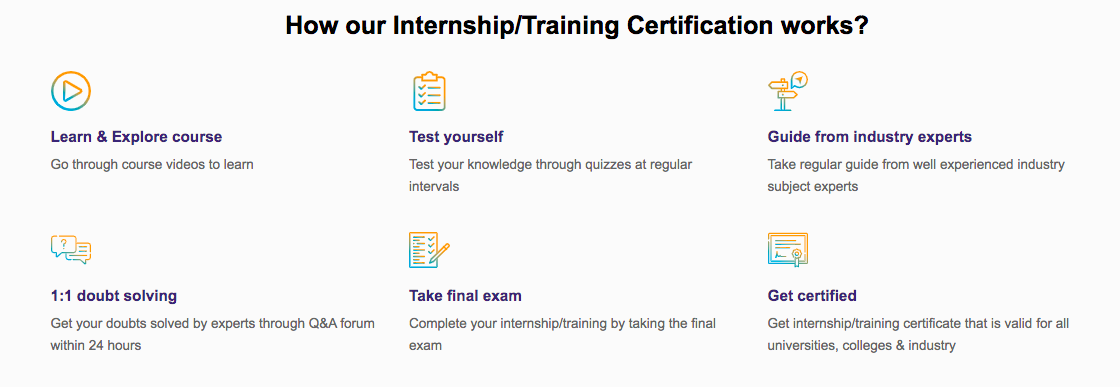
How EasyShiksha Internship/Training Program Works
Designing Games Around Real Industry Decisions
The most important design principle is that pre-internship games should focus on decisions rather than isolated information recall. A game may include quizzes and knowledge checks, but its central activities should require learners to interpret situations and choose appropriate actions. The quality of the learning experience depends on whether these decisions resemble the reasoning required in the relevant professional environment.
A useful simulation begins with a realistic situation. Students receive a professional objective, relevant background information, available resources, and a defined set of constraints. They must examine the situation, identify what matters, and select an appropriate course of action. The game then presents the consequences of their decisions and explains how alternative approaches could have produced different outcomes.
The scenarios should also include uncertainty. In actual workplaces, students rarely receive every detail at the beginning of an assignment. They may discover missing information, conflicting instructions, unexpected technical problems, or changes in project priorities. A realistic educational game should introduce these developments gradually so that learners practise asking questions, checking assumptions, and adjusting their approach.
For example, a simulated software development task could initially appear straightforward. The student receives a feature request and begins implementing it. During the process, the game introduces a technical dependency that creates a compatibility problem. The learner must decide whether to investigate the issue, request guidance, modify the implementation, or document the risk. Each choice can influence the simulated project's progress and quality.
Feedback should explain the reasoning behind the outcome. Simply displaying a score does not provide enough guidance. Students need to understand why a particular decision was appropriate, which risks they overlooked, and what professional principles should influence similar decisions in the future.
Building a Virtual Workplace Inside an Educational Game
A pre-internship educational game could organise its experience around virtual departments or professional environments. Instead of presenting unrelated challenges, it would create a connected workplace in which learners receive tasks, interact with simulated colleagues, manage resources, and contribute to larger objectives. This structure would help students understand how individual responsibilities fit into an organisation.
A virtual workplace might include a project manager who assigns work, a supervisor who provides feedback, a client who communicates requirements, and team members who depend on the student's contribution. These characters could be controlled through predefined scenarios or AI-supported interactions. Their purpose would be to introduce professional communication and decision-making situations rather than create an unrealistic imitation of human relationships.
Students could begin with simple responsibilities and gradually receive more complex assignments. Initially, they might be asked to complete a clearly defined task using provided instructions. Later, they could receive assignments with incomplete information, competing priorities, or unexpected changes. The game would introduce professional expectations progressively rather than overwhelming beginners with advanced scenarios.
The virtual environment should also maintain a record of completed activities. A student who successfully prepares a report, resolves a simulated technical issue, or manages a project deadline could receive evidence of that achievement. This record would help learners understand their progress and could guide recommendations for additional practice before an internship begins.
Pre-Internship Games for Digital Marketing Students
Digital marketing provides an excellent example of how educational games could simulate professional decisions. Marketing internships often involve content planning, audience research, campaign coordination, performance monitoring, and communication with clients or supervisors. Students may understand marketing terminology through online courses but still need opportunities to practise making decisions in a connected campaign environment.
A digital marketing simulation could place learners inside a virtual marketing agency responsible for promoting a new product. The student receives a campaign brief describing the product, target audience, available budget, expected results, and campaign duration. They must interpret the brief and prepare a strategy that aligns with the stated objectives.
As the simulation progresses, the game introduces new information. A selected advertisement may receive low engagement, the campaign budget may become limited, or customer feedback may reveal a problem with the messaging. The student must examine the available performance information and decide whether to modify the audience, adjust the content, change the communication channel, or reconsider the campaign objective.
The simulation could also introduce ethical and professional considerations. For example, the student may be asked to use an exaggerated product claim or collect unnecessary personal information from an audience. The game should explain why such decisions can create reputational, regulatory, or trust-related problems. This would help learners understand that professional marketing requires responsible communication as well as creative thinking.
After completing the campaign, students could receive a performance report showing how their decisions affected simulated reach, engagement, budget utilisation, and campaign objectives. They could then prepare a short campaign review explaining what worked, what failed, and which improvements they would recommend. This final task would connect game-based decision-making with the reporting responsibilities they may encounter during an internship.
Pre-Internship Games for Programming and Software Development
Programming students often need to move from solving individual coding exercises to understanding how software development operates within a project. Real development environments involve requirements, existing code, testing, debugging, documentation, version management, and communication with other team members. A pre-internship game could introduce these responsibilities through simulated software projects.
A learner might enter a virtual development team and receive an assignment to build a small feature for an existing application. The game provides the project requirements, an overview of the application, and a controlled coding environment. Students must understand the expected behaviour, plan their approach, implement the feature, and test whether it works correctly.
The game could introduce realistic complications as the project develops. An existing component might behave unexpectedly, a requirement could be updated, or a test might reveal that the new feature affects another part of the application. The student would need to investigate the problem rather than simply submit the first version of the code.
Professional communication could form another part of the experience. The learner might need to explain a technical limitation to a simulated supervisor, document an unresolved issue, or request clarification about an ambiguous requirement. These interactions would help students recognise that software development involves collaboration and communication in addition to writing code.
A more advanced simulation could introduce code review and maintenance scenarios. Students might be asked to examine an existing implementation, identify possible weaknesses, suggest improvements, and explain the consequences of changing a shared component. Such activities would prepare learners for the reality that internship assignments may involve maintaining or improving existing systems rather than creating entirely new applications.
Pre-Internship Games for Finance and Accounting Students
Finance and accounting internships frequently require accuracy, careful interpretation, responsible handling of information, and the ability to identify inconsistencies. Students may study accounting principles, financial statements, taxation, and business finance without receiving sufficient practice in the decisions that accompany actual financial tasks.
A pre-internship finance game could place students inside a simulated finance department. They might receive fictional transaction records, expense statements, invoices, and budget information. Their first responsibility would be to examine the information, identify missing records, and organise transactions according to the relevant accounting principles.
The simulation could then introduce discrepancies. A transaction may appear twice, an expense may be incorrectly classified, or a reported amount may not match supporting documentation. Students would need to investigate the issue, determine which information requires verification, and prepare a documented explanation. The game could demonstrate how small errors affect financial reporting and why professional accuracy is essential.
Another scenario could involve budget planning. Students might receive a fictional department budget and several competing requests for expenditure. They would need to evaluate priorities, consider available resources, and explain their recommendations. This activity would connect financial knowledge with business judgement and communication.
The game should reinforce the importance of confidentiality and responsible data handling. Financial information is often sensitive, and students must understand that access to records creates professional responsibilities. By practising these principles in a simulated environment, learners can become more aware of the standards expected before handling real organisational information.
Pre-Internship Games for Human Resources and Business Management
Human resource and business management students often study organisational behaviour, recruitment, employee motivation, project management, and workplace communication. However, professional responsibilities in these areas frequently involve situations that cannot be fully understood through definitions or theoretical examples alone.
A human resource simulation could place students inside a virtual recruitment team. They might receive a job description, a group of fictional candidate profiles, and an evaluation framework. Their task would be to assess candidates using relevant criteria, identify missing information, and prepare a structured recommendation. The game could introduce scenarios involving inconsistent evaluation, unsupported assumptions, or potentially unfair selection practices.
An employee onboarding simulation could require students to organise the first week of a new employee's experience. They would need to coordinate documentation, training sessions, communication, and access requirements. If they overlook an important step, the game could show how the employee's ability to begin work is affected. This demonstrates how administrative details contribute to the wider employee experience.
A project management game could introduce resource allocation and deadline challenges. Students would receive a project with several tasks, limited resources, and dependencies between activities. Unexpected developments could require them to revise the schedule or communicate a delay. The simulation would help learners understand that effective project coordination involves monitoring progress, recognising risks, and making informed adjustments.
These activities would be particularly valuable before internships because students could become familiar with workplace processes without being responsible for actual recruitment, employee records, or organisational decisions.
Developing Professional Communication Through Interactive Scenarios
Technical knowledge alone is not sufficient for successful internship participation. Students must also communicate clearly, ask relevant questions, receive feedback, report progress, and explain problems. However, communication skills are difficult to develop through passive learning because they require practice in situations where the audience, objective, and consequences differ.
Educational games could address this challenge through interactive workplace conversations. A student might receive an unclear assignment and need to ask a simulated supervisor for clarification. Another scenario could require the learner to communicate a project delay, respond to constructive criticism, or explain why a proposed solution may not work. The game would evaluate whether the student communicates respectfully, provides relevant information, and identifies the next appropriate action.
Written communication could be integrated into the same environment. Students might prepare an email update, document a technical issue, write a meeting summary, or submit a project progress report. The simulation could assess clarity, completeness, tone, and whether the communication provides enough information for the intended reader.
These activities would also help learners understand when communication is necessary. In a professional environment, remaining silent about an unresolved problem can create larger difficulties. Students should learn that requesting assistance, reporting uncertainty, and documenting decisions are signs of responsible work rather than evidence of failure.
Introducing Teamwork and Cross-Functional Dependencies
Many internships involve tasks that contribute to a larger team project. A student's work may depend on information supplied by another department, and their own output may become the starting point for someone else's assignment. Educational games could prepare learners for these dependencies by introducing team-based simulations.
A virtual product development project could involve marketing, design, programming, and quality assurance roles. Each role would receive different responsibilities, but the final outcome would depend on coordination. A marketing student might need to communicate audience requirements to a design team, while a programming student would need to understand technical specifications before implementing a feature. A quality assurance participant would evaluate whether the completed work meets the agreed requirements.
The game could introduce coordination challenges such as delayed information, conflicting priorities, incomplete documentation, or changes to project requirements. Students would need to communicate with other participants, revise their plans, and consider how individual decisions affect the entire project.
This model could be extended to multiplayer educational games in which students work together to complete a shared objective. However, teamwork assessment should distinguish individual contributions from team-level results. A successful project should not automatically imply that every participant demonstrated the same capabilities. Each learner's decisions, responsibilities, communication, and completed work should be evaluated separately.
The Role of AI in Personalised Pre-Internship Simulations
Artificial intelligence could make pre-internship educational games more responsive to individual learners. Instead of providing every student with the same sequence of scenarios, an AI-supported system could adjust the difficulty, information, and feedback according to the student's demonstrated performance.
A learner who consistently makes accurate technical decisions might progress to more complex scenarios involving incomplete requirements or competing priorities. Someone who understands the technical content but struggles with communication could receive additional activities involving supervisor updates, client discussions, and documentation. This would make the simulation more relevant to the capabilities that each learner needs to develop.
AI could also support simulated workplace interactions. A virtual supervisor might respond to a student's questions, provide additional information, or ask for an explanation of a decision. A virtual client could introduce changing requirements, while a simulated team member might report a dependency or raise a concern. These interactions could help students practise professional conversations in a controlled learning environment.
However, AI-generated scenarios and evaluations require careful oversight. A system may misunderstand a student's response, provide incorrect professional guidance, or reward a decision that is inappropriate for a particular industry. Educators and subject experts should review scenario design, assessment criteria, and important feedback. AI should support the learning process rather than become the sole authority on professional competence.
Privacy and transparency are equally important. Student performance data should be collected only for clear educational purposes, and learners should understand how their decisions are evaluated. Simulated performance should not be treated as a definitive prediction of future workplace success.
Creating a Progression From Educational Games to Real Internships
The value of a pre-internship game increases when it connects with the next stage of a student's learning journey. If students complete a simulation but cannot use the experience in a practical project or internship, the activity may remain an isolated learning experience. A stronger model would establish a progression from academic understanding to simulated practice and then to supervised professional application.
The first stage could involve subject-based learning through university programmes or supplementary online courses. Students develop the foundational knowledge required for their chosen field. The second stage introduces quizzes and worksheets that evaluate whether they understand the relevant concepts. These activities help identify knowledge gaps before learners enter more complex scenarios.
The third stage involves the pre-internship game. Students practise making decisions in a simulated workplace, complete assignments, manage constraints, and receive feedback. Their performance helps them understand which capabilities are developing and which require further practice. The fourth stage introduces a guided project based on similar responsibilities. Students might prepare a marketing plan, develop a small software feature, analyse a financial dataset, or complete a structured research assignment.
The final stage involves an internship or supervised practical experience. Students enter a real professional environment with a clearer understanding of common responsibilities and expectations. They will still need guidance because a simulation cannot reproduce every workplace condition, but they may be better prepared to understand instructions, ask questions, manage tasks, and communicate their progress.
For EasyShiksha, this progression could connect educational games directly with relevant online courses, practical projects, internships, and certificates. A student could complete a pre-internship simulation and then explore internship opportunities related to the same skill area. The platform could also recommend additional learning where the student's performance indicates a need for stronger foundational knowledge.
Measuring Professional Readiness Through Game-Based Evidence
A pre-internship game should measure more than the number of levels completed or rewards collected. These indicators may encourage participation, but they do not necessarily demonstrate professional readiness. A meaningful assessment system must examine the decisions students make, the reasoning behind those decisions, and the quality of the work they produce.
Decision quality is one important measurement area. The system could examine whether students identify relevant information, recognise risks, select appropriate methods, and consider the consequences of their actions. A student who makes a reasonable decision based on incomplete information should be evaluated differently from someone who guesses without examining the available evidence.
Task completion provides another useful measure. The simulation could evaluate whether students follow instructions, meet requirements, test their work, and submit the expected documentation. However, speed should not automatically be treated as the most important indicator. Professional work often requires balancing efficiency with accuracy, responsibility, and quality.
Communication and collaboration can also be evaluated through scenario responses, written updates, and team activities. Students may need to demonstrate that they can explain a problem, request clarification, respond to feedback, and share relevant information. These behaviours are important in internships because even technically strong learners can encounter difficulties when they cannot communicate their work effectively.
The system should generate a detailed learning record rather than relying only on one overall score. A student may demonstrate strong technical reasoning but need more practice in planning and documentation. Another may communicate effectively but require additional subject knowledge. Separate capability indicators would make recommendations more useful and help students prepare for appropriate internship responsibilities.
How EasyShiksha Can Integrate Pre-Internship Games Into Its Learning Ecosystem
EasyShiksha can use this model to connect its educational games with a broader system of academic and professional development. The platform already operates across areas such as online courses, quizzes, worksheets, internships, university programmes, educational games, and certificates. A pre-internship game model could give these resources a more connected purpose by organising them around professional capabilities and practical outcomes.
Subject-based game categories could be developed for fields such as programming, artificial intelligence, finance, digital marketing, management, communication, cybersecurity, and data analysis. Each category could contain simulations designed around introductory professional responsibilities. Students would not simply play a game associated with their subject; they would practise the types of decisions they may encounter when working on relevant projects.
Online courses could provide the theoretical preparation required before entering a simulation. For example, a student interested in a cybersecurity internship could complete a foundational cybersecurity course and then enter a safe virtual security assessment scenario. A marketing learner could study digital marketing fundamentals before managing a simulated campaign. This sequence would make the game a practical extension of the course rather than an unrelated entertainment activity.
Quizzes could be integrated at important decision points to test whether learners understand the principles behind their choices. Worksheets could support reflection and documentation after each scenario. Students might be asked to prepare a report explaining what happened, why they selected a particular approach, and how they would improve their decisions in a similar situation.
EasyShiksha could also connect successful simulation completion with suitable project opportunities. A learner who completes a beginner programming simulation could receive a recommendation for a small application development project. A student who demonstrates introductory marketing capabilities could progress to a campaign planning assignment. These recommendations should consider the student's actual demonstrated abilities and should not automatically treat game completion as proof of advanced professional competence.
Certificates could document participation, completion, or achievement against clearly stated simulation criteria. A certificate might indicate that a student completed a simulated marketing campaign and demonstrated specified introductory skills. This would be more informative than a generic statement that the learner completed an educational game. Project evidence and internship feedback could then provide additional information about the student's development.
Challenges in Making Educational Games Realistic and Educationally Reliable
Although pre-internship games offer significant potential, their design requires careful consideration. One major challenge is simulation realism. A game that is too simple may fail to prepare students for the complexity of professional decisions, while a simulation that is excessively complicated may overwhelm beginners. The design must introduce workplace conditions gradually and ensure that every challenge has a clear educational purpose.
Another challenge concerns industry accuracy. Professional tasks differ across organisations, sectors, and experience levels. A simulated marketing agency may not reflect the responsibilities of every marketing internship, just as a software development game cannot represent every technology team. Educational platforms should avoid presenting one scenario as a universal description of an entire profession. Instead, games should clearly identify the professional context they represent and allow for variations in tasks and expectations.
Assessment fairness is another important concern. There may be several reasonable ways to solve a simulated problem. If the game rewards only one predefined decision, it may discourage creative thinking and incorrectly classify alternative approaches as failures. Assessment should consider the reasoning behind a decision, the information available, relevant constraints, and the quality of the final result.
Accessibility must also remain central. Students may have different levels of digital experience, device access, language proficiency, and learning needs. Pre-internship games should offer clear instructions, adjustable difficulty, accessible interfaces, and alternative ways to engage with important learning content. The objective is to prepare students for professional work, not to exclude them because they are unfamiliar with gaming conventions.
Finally, simulations must maintain a clear distinction between practice and actual workplace experience. Completing a virtual project does not provide the same experience as working with real colleagues, clients, organisational systems, and responsibilities. Educational games should prepare students for internships while making it clear that supervised practical experience remains essential.
Empower your team. Lead the industry
Get a subscription to a library of online courses and digital learning tools for your organization with
EasyShiksha
The Future of Educational Games as Career Readiness Infrastructure
Educational games could gradually evolve from supplementary learning activities into an important part of career preparation. As digital education becomes more connected with professional development, students may expect learning platforms to provide opportunities to practise decisions before they are responsible for real projects. This would change the role of games from simple engagement tools into structured environments for capability development.
Future simulations could become more closely aligned with specific internship pathways. Students interested in software development might complete simulations involving debugging, code review, and requirement interpretation. Finance learners could practise financial analysis and documentation, while management students could experience resource planning and project coordination. These pathways could be connected with additional courses and increasingly complex assignments.
AI-supported simulations may also introduce more adaptive and responsive environments. Instead of following a fixed storyline, a game could change according to the learner's decisions. A student's approach to a project might determine which problems appear next, which information becomes available, and which responsibilities are assigned. This would create a more individual learning experience while allowing students to practise a wider range of professional situations.
Another possibility is the development of cross-functional simulations where students from different academic disciplines work together. A project involving product development could require programming, design, marketing, finance, and management decisions. Students would experience how different professional roles depend on one another and understand why effective collaboration requires shared objectives and clear communication.
For EasyShiksha, the future opportunity lies in creating a connected learning environment where students can move from academic knowledge to simulated professional decisions, practical projects, and internships. Such a system would make educational games relevant not only because they are interactive but because they help learners understand the responsibilities associated with their future careers.
Conclusion
Educational games have the potential to become much more than tools for practising academic concepts. When designed around realistic professional decisions, they can provide students with a structured environment to explore workplace responsibilities before entering an internship. Learners can practise problem-solving, communication, planning, technical work, teamwork, and ethical judgement while receiving feedback in a controlled setting.
The strongest pre-internship games would not attempt to replace real professional experience. Instead, they would reduce the gap between theoretical learning and practical participation. Students would first understand the subject, then apply its concepts through simulated industry decisions, complete guided projects, and finally enter internships with a clearer understanding of professional expectations.
EasyShiksha can support this transformation by connecting educational games with online courses, quizzes, worksheets, university programmes, practical projects, internships, and certificates. Through these connections, a game could become an important stage in a student's professional learning journey rather than an isolated activity. The future of educational gaming may therefore depend on a more meaningful question: not simply how long students play or how many levels they complete, but how effectively they learn to make decisions, solve problems, and contribute when they eventually enter the professional world.
Anshika Jain is an Engineer, Developer, and Educational Content Author known for her dedication to technology and knowledge sharing. With a strong analytical mindset and a passion for innovation, she has consistently contributed to creating meaningful digital solutions and insightful educational articles.
Her ability to simplify complex technical concepts into engaging and easy-to-understand content makes her work valuable for students and learners across various platforms. Along with her technical expertise, Anshika is admired for her creativity, professionalism, and commitment to continuous learning.
She represents a perfect blend of technical excellence and impactful communication, inspiring others through both her development work and educational contributions.