Modern industries rarely operate through the efforts of a single organisation. A software product may depend on an external cloud provider, a payment gateway, a cybersecurity company, a logistics partner, and several independent technology vendors. Similarly, an e-commerce business may rely on manufacturers, digital marketing agencies, payment processors, delivery companies, customer support providers, and data analytics platforms. Each organisation contributes a specialised service, but the overall success of the business depends on how effectively these separate contributions work together. This interconnected business environment creates a professional reality that students do not always experience through conventional internships.
Traditional internships generally place students within one organisation, where they receive assignments from a particular department or team. This arrangement helps learners understand internal workflows, reporting structures, and professional responsibilities. However, it may provide limited exposure to the dependencies that exist between different companies. Students might learn how a website is developed without understanding how external hosting providers, payment systems, security services, and third-party APIs influence its operation. They may study supply chain management without experiencing how manufacturers, warehouses, transport providers, and retailers coordinate their activities.
Virtual internships can introduce a different model by connecting students with multi-organisation projects. Instead of assigning every participant to an isolated company environment, an internship programme can simulate or coordinate projects involving several independent organisations. Students can experience how one company's work affects another company's responsibilities, how delays or technical failures influence connected operations, and how professionals coordinate decisions across organisational boundaries.
This approach introduces the concept of cross-company dependencies into practical education. Students do not simply complete individual assignments; they participate in interconnected project environments where different teams contribute separate components to a shared outcome. For EasyShiksha, this creates an opportunity to connect online courses, practical assessments, virtual internships, industry-oriented projects, certificates, and career development through a more advanced learning structure. It can help learners understand not only how individual jobs function, but also how professional work is coordinated across an interconnected business ecosystem.
Understanding Cross-Company Dependencies in Modern Industries
Cross-company dependencies occur when the successful completion of one organisation's activity relies on the services, information, decisions, or deliverables provided by another organisation. These dependencies are common in technology, finance, manufacturing, healthcare administration, retail, logistics, education, and digital services. A business may own its products and manage its employees, but it frequently depends on external organisations for specialised capabilities that it cannot efficiently develop or maintain internally.
Consider an online shopping platform. Its internal development team may manage the website, product catalogue, and customer interface. However, payment processing could be handled by an external payment gateway, product delivery by logistics providers, cloud infrastructure by a technology vendor, and customer communication by a specialised service provider. If the payment gateway experiences an outage, the shopping platform may be unable to process orders even though its own website is functioning correctly. If a logistics partner fails to update delivery information, customers may receive inaccurate order notifications.
These relationships demonstrate that business performance is not determined exclusively by the quality of an individual organisation's work. It also depends on the reliability and coordination of external partners. A technically successful component may still fail to deliver its intended value when connected systems or organisational processes do not operate as expected.
Students preparing for professional careers need opportunities to understand these relationships. Knowledge of a particular tool or subject is valuable, but employees must also recognise external dependencies, communicate with stakeholders, understand shared responsibilities, and respond when another organisation's work affects their own. Multi-organisation virtual internships can introduce these experiences within controlled educational environments.
Why Traditional Internships May Not Provide Enough Cross-Company Exposure
Conventional internships generally focus on one organisation because this structure makes supervision, task allocation, and performance evaluation easier. Students are introduced to a particular team and receive assignments connected to its activities. They may attend meetings, observe employees, work on internal projects, and learn how the organisation manages its daily responsibilities. This provides useful professional exposure, especially for learners entering the workplace for the first time.
However, the single-organisation structure can limit visibility into external business relationships. An intern working on website development might receive a requirement to integrate a payment gateway, but may not interact with the external provider responsible for payment processing. A marketing intern may prepare a campaign for a product without understanding how inventory availability, logistics capacity, or supplier delays influence the campaign's success. In these situations, the student sees only part of the operational environment.
This limitation can create an incomplete understanding of professional work. Many entry-level employees are expected to collaborate with vendors, clients, agencies, external consultants, technology providers, and partner organisations. They may need to communicate technical requirements, share project updates, document dependencies, and coordinate deliverables with people who follow different organisational processes.
A multi-organisation internship model can introduce these interactions through structured projects. Students can work with simulated company teams, supervised industry contributors, or educational partners representing different parts of a business process. The purpose is not to reproduce every complexity of a real corporate environment, but to expose learners to the coordination challenges that emerge when multiple organisations contribute to one outcome.
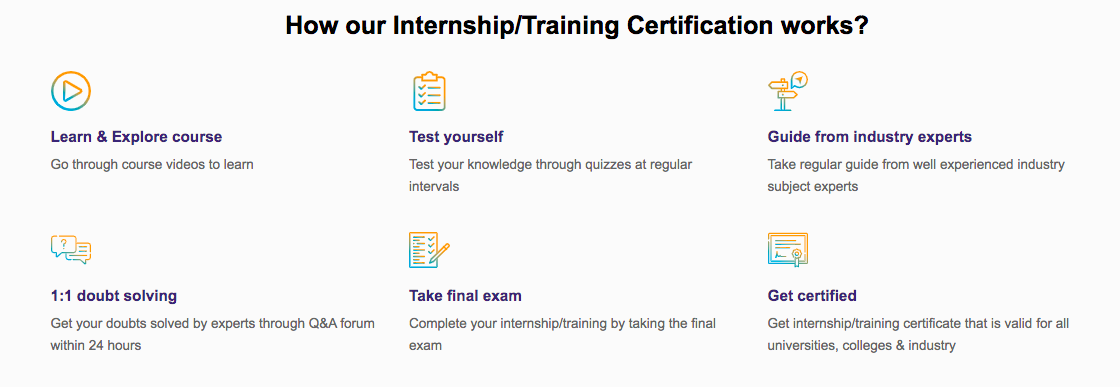
How EasyShiksha Internship/Training Program Works
What Are Multi-Organisation Virtual Internships?
Multi-organisation virtual internships are structured online internship programmes in which students work on projects involving multiple organisations, departments, or independent service providers. Each participating organisation contributes a defined part of the project, while students experience how these contributions depend on one another. The programme may involve real industry partners, simulated organisations, educational project environments, or a combination of these approaches.
Unlike a conventional virtual internship where a student receives assignments from one organisation, this model introduces interconnected responsibilities. A student might work on the frontend of a digital product while another participant develops its backend services. A separate team could manage database design, while another works on security testing and cloud deployment. The successful completion of the project depends on the compatibility, timing, and communication of all these contributions.
The organisations involved do not necessarily need to share the same physical workplace or operate under one management structure. Their teams can coordinate through online collaboration platforms, project management systems, documentation tools, and scheduled review meetings. Students learn how information moves between teams and how decisions made by one participant influence the work of others.
The model can also be implemented without requiring companies to disclose confidential projects. Organisations can contribute anonymised case studies, sample specifications, simulated datasets, technical requirements, or controlled project environments. Students can then experience realistic dependencies while working within clearly defined educational and security boundaries.
Designing a Shared Project Across Multiple Organisations
The foundation of a successful multi-organisation internship is a project that requires meaningful contributions from different participants. A collection of unrelated assignments does not create genuine cross-company experience. The activities must be connected through shared requirements, deliverables, timelines, or technical interfaces. Each participant should understand how their work contributes to the wider project and what other teams require from them.
For example, an educational programme could create a virtual project based on developing an online retail platform. One participating organisation could represent the product development team, another could represent a payment technology provider, and a third could represent a logistics service. Students would receive responsibilities related to the work performed by these different organisations.
The development team might design the shopping interface and manage product information. The payment team could provide an integration specification for processing transactions, while the logistics team could define the information required to generate shipping requests. Students working across these simulated company environments would need to understand how their deliverables connect.
The project coordinator would define common milestones, communication channels, technical requirements, and submission standards. Each organisation would remain responsible for its assigned contribution, but students would need to coordinate across organisational boundaries to complete the shared objective. This makes the internship more representative of modern professional environments, where successful outcomes depend on cooperation rather than isolated performance.
Experiencing Technical Dependencies Through Virtual Projects
Technology provides one of the clearest environments for demonstrating cross-company dependencies. Modern software products frequently depend on external APIs, cloud platforms, identity services, analytics tools, security providers, and third-party libraries. Developers may build individual components successfully, but the overall application can still fail when connected services behave differently from expected.
A multi-organisation virtual internship can reproduce these challenges through a structured software development project. One team may develop a frontend application, another may create backend APIs, and a third may manage database services. A separate simulated organisation can provide authentication or payment functionality. Students must coordinate technical specifications, exchange documentation, test integrations, and resolve compatibility problems.
For instance, the frontend team may expect an API to return a particular response format, while the backend team implements a different structure. The resulting integration failure creates a dependency issue that students must investigate collaboratively. They need to identify where the mismatch occurred, communicate the problem, agree on a correction, and verify that the updated interface works as expected.
Cloud infrastructure can introduce additional dependencies. A development team may complete an application but rely on an external infrastructure provider to configure hosting, deployment pipelines, monitoring, and access permissions. If deployment fails, students must determine whether the issue originates in the application, configuration, network environment, or external service.
These assignments help learners understand that technical work is not limited to writing code. Professional software development also requires interface agreements, version management, documentation, testing, coordination, and the ability to respond when external systems change.
Understanding Business Dependencies Beyond Technology
Cross-company dependencies are equally important in non-technical industries. Manufacturing, finance, marketing, logistics, human resources, and retail rely on relationships between organisations that exchange services, materials, information, or expertise. Students entering these fields benefit from understanding how an organisation's performance is influenced by its partners.
A manufacturing-focused virtual internship could involve a simulated relationship between a product manufacturer, a raw material supplier, a quality inspection company, and a logistics provider. Students might be assigned responsibilities related to production planning, supplier communication, quality documentation, and delivery coordination. If a supplier changes its delivery schedule, the manufacturing team must reconsider its production plan, while the logistics team may need to adjust transportation arrangements.
A digital marketing project could connect a brand, an advertising agency, a content production team, and an analytics provider. Students could work on campaign planning, content preparation, audience research, and performance reporting. A delay in content approval from the brand may affect the agency's publishing schedule, while incomplete analytics information could prevent the team from evaluating campaign performance accurately.
In finance-related projects, students could experience dependencies between a business, a banking service provider, an accounting team, and an external compliance consultant. Assignments could involve preparing transaction documentation, reconciling simulated records, identifying reporting inconsistencies, and coordinating information requests.
These experiences demonstrate that cross-company coordination is not limited to technical specialists. Professionals in many roles must understand how external decisions influence their work and how to communicate when dependencies are delayed, incomplete, or changed.
Introducing Dependency Mapping as a Practical Learning Activity
One of the most useful activities in a multi-organisation internship is dependency mapping. It involves identifying the tasks, information, systems, and decisions that must be available before another activity can be completed. Students learn to recognise which responsibilities are independent, which require external input, and which can affect the progress of an entire project.
For example, a student responsible for developing a product checkout page may depend on the availability of product data, customer authentication, payment integration, and order confirmation services. If the payment interface has not been finalised, the student may be able to develop the visual structure but cannot complete end-to-end testing. Recognising this dependency early allows the student to communicate the issue rather than waiting until the project deadline.
Dependency mapping can be introduced through project diagrams, task relationships, shared schedules, and requirement documentation. Students can identify the organisation responsible for each deliverable, the information required, and the consequences of a delay. They can also examine whether alternative approaches are available when a dependency becomes unavailable.
The educational value of this activity extends beyond project planning. It encourages students to think about systems rather than individual tasks. They begin to understand that workplace responsibilities exist within networks of connected activities, and that a decision made in one part of a project may create consequences elsewhere.
Learning to Manage Delays, Failures, and Changing Requirements
Real-world projects rarely proceed exactly according to their original plans. External providers may deliver information late, requirements may change, systems may become unavailable, and different organisations may interpret the same specification differently. Students who experience only predictable assignments may find these situations difficult when they enter professional employment.
Multi-organisation internships can introduce controlled disruptions to help students practise responding to unexpected events. A project coordinator might simulate an external API becoming unavailable, a supplier changing a delivery date, or a client revising a requirement after development has started. Students would then need to evaluate the impact, communicate with affected teams, and propose a suitable response.
Consider a virtual internship involving an online booking platform. The development team may have completed its interface, but the external payment provider changes its integration requirements. Students must review the new specification, identify the affected components, update their implementation plan, and coordinate testing. The exercise helps them understand that technical completion does not always mean a project is ready for delivery.
A similar situation can be introduced in supply chain projects. If a simulated supplier cannot provide a required component, students may need to investigate alternative sources, assess the effect on production schedules, and communicate revised expectations to the logistics team. The assignment develops analytical thinking and professional communication under changing conditions.
Such disruptions should be carefully designed so that students can learn without experiencing unnecessary pressure or unfair penalties. The objective is to evaluate their ability to identify problems, communicate clearly, and make reasoned decisions rather than simply testing how quickly they can react.
The Importance of Inter-Organisational Communication
When several organisations contribute to a project, communication becomes more complex than communication within a single team. Each organisation may use different terminology, reporting structures, approval procedures, documentation formats, and working schedules. Students must learn how to communicate information in a way that other teams can understand and act upon.
For example, a software development team may describe an issue using technical language, while a business client may be more concerned about customer impact and delivery timelines. A student working between these groups must explain the technical problem clearly without assuming that every participant has the same background. This requires both subject knowledge and the ability to adapt communication to different audiences.
Virtual internships can make communication a formal part of project evaluation. Students may be required to prepare progress updates, document decisions, raise dependency concerns, explain blockers, and participate in cross-company review meetings. These activities provide opportunities to practise professional communication in realistic situations.
Written documentation is particularly important because information exchanged between organisations often needs to remain available after a meeting ends. Clear specifications, issue reports, meeting summaries, and change records reduce misunderstanding and help teams maintain continuity. Students who learn these practices during internships are better prepared to work in distributed and collaborative environments.
Developing Shared Accountability Across Company Boundaries
In a multi-organisation project, responsibility is distributed across different teams. One organisation may complete its own work correctly but still contribute to an unsuccessful overall outcome if its deliverable does not meet the requirements of another participant. This creates a useful learning opportunity around shared accountability.
Students should understand the difference between completing an assigned task and contributing to the success of the wider project. A developer may finish a feature, but the feature still needs to integrate correctly with the backend. A marketing team may prepare a campaign, but its launch may depend on product availability and approval from the brand. A logistics team may schedule transportation, but successful delivery also depends on accurate information from the supplier.
Project evaluations should therefore examine both individual contributions and their compatibility with shared requirements. Students can be assessed on the quality of their deliverables, adherence to agreed specifications, communication with dependent teams, and willingness to help resolve integration problems.
This does not mean that every participant should be held responsible for failures outside their control. The assessment should distinguish between a student's own performance and external factors that influenced the outcome. A transparent accountability structure helps learners understand professional responsibility without encouraging unfair blame.
Using Virtual Collaboration Tools to Simulate Distributed Workplaces
Technology makes multi-organisation virtual internships possible even when participants are located in different cities or countries. Online collaboration platforms can provide shared project spaces, communication channels, document repositories, task boards, code repositories, and review environments. These tools allow students to coordinate activities without requiring all participants to work from the same physical location.
Project management platforms can help students track responsibilities, deadlines, dependencies, and changes. Version control systems can support collaboration on software projects, while shared documentation tools can maintain technical specifications and meeting records. Video conferencing and asynchronous communication channels can support discussions between teams operating in different schedules.
However, introducing collaboration tools should not become the primary objective of the internship. Students need to understand the professional processes behind them. A task management board is useful only when participants know how to define work, update progress, identify blockers, and communicate changes. A shared document becomes valuable when it contains accurate information that other teams can use.
EasyShiksha could support this learning through tool-oriented courses and guided practical exercises before students enter complex virtual projects. Learners could first practise project documentation, version control, task planning, and professional communication. They could then apply these skills in multi-organisation assignments where collaboration tools become part of the actual workflow.
The Role of Standardised Interfaces and Shared Documentation
Cross-company projects require agreed methods for exchanging information. In technology environments, these methods may include API specifications, data formats, authentication requirements, testing procedures, and service-level expectations. In business operations, they may involve purchase orders, delivery schedules, quality standards, reporting templates, and approval procedures.
Students should learn why standardisation matters. When two organisations use different formats or assumptions, information may be misunderstood or become unusable. A logistics provider may expect a standard delivery address format, while the retailer supplies incomplete or inconsistent records. A payment integration may fail because the application sends information in an unexpected structure.
Virtual internships can introduce these problems through carefully designed assignments. Students may receive incomplete documentation and be asked to identify missing requirements before beginning implementation. They may need to prepare an interface specification, define data fields, or agree on a common reporting format with another team.
This teaches learners that documentation is not merely administrative work. It is part of the infrastructure that allows independent organisations to coordinate. Clear specifications reduce ambiguity, improve compatibility, and make it easier to identify responsibility when problems occur.
Assessing Student Performance in Multi-Organisation Projects
Evaluating students in a multi-organisation internship requires more than checking whether the final project was completed. The outcome may depend on several teams, external services, and decisions that are outside an individual student's control. Assessment should therefore consider both personal contribution and the student's ability to work within a connected project environment.
Technical or role-specific quality remains important. Students should demonstrate that they can complete the tasks assigned to them and meet the relevant professional standards. However, the assessment should also examine how effectively they identify dependencies, communicate with other teams, manage changes, document decisions, and respond to integration problems.
A student who identifies a missing requirement before implementation may demonstrate valuable professional judgment, even if the final project is delayed by an external dependency. Similarly, a student who communicates a blocker early and provides a reasonable alternative may demonstrate stronger workplace readiness than someone who completes an isolated task but ignores its effect on other teams.
Mentor feedback should explain the student's contribution in context. It should distinguish between technical performance, coordination, communication, reliability, and problem-solving. This creates a more useful record of professional development and gives students a clearer understanding of their strengths and improvement areas.
How AI Can Improve Multi-Organisation Internship Experiences
Artificial intelligence can support the design and management of multi-organisation virtual internships by helping coordinators identify relationships between tasks, recommend learning resources, and detect possible project risks. When an assignment depends on several deliverables, an AI-supported system could help identify which tasks must be completed first and which teams may be affected by a delay.
For example, a student developing a frontend application may depend on a backend API, authentication service, and database structure. If the backend specification changes, an AI-supported project assistant could help identify related tasks that may require review. It could also recommend relevant documentation or learning resources to help the student understand the technical implications.
AI can also assist with feedback and learning recommendations. If a student repeatedly struggles with API integration, the system may recommend additional JavaScript practice or a course on HTTP requests and error handling. If another student has difficulty preparing project updates, the platform could suggest communication exercises or documentation lessons.
However, AI should not be treated as the final authority on project performance. Cross-company work often involves context, negotiation, and judgment that automated systems may not fully understand. Human mentors should review important decisions, resolve disagreements, and evaluate complex contributions. Data privacy and organisational permissions must also be respected when project information is processed through AI tools.
Protecting Confidentiality and Intellectual Property
Multi-organisation projects introduce additional responsibilities around information security and intellectual property. Different companies may have separate policies governing their data, software, documents, business processes, and customer information. Students must understand that participation in an internship does not give them unrestricted permission to access, copy, publish, or distribute organisational material.
A responsible virtual internship should define what information students can access and how it may be used. Projects can rely on synthetic datasets, anonymised records, simulated systems, and sample business documents when real information is unnecessary. Access should be limited to the resources required for the student's assigned work.
The programme should also establish clear ownership and publication rules for student projects. Some assignments may allow students to publish their work in a portfolio, while others may require confidentiality or formal approval before public sharing. Students should understand these conditions before beginning an assignment.
Security training should form part of the preparation process, particularly when projects involve software development, financial information, customer records, or cybersecurity scenarios. This helps students recognise the importance of access control, responsible data handling, secure communication, and professional confidentiality.
How EasyShiksha Can Support Multi-Organisation Virtual Internships
EasyShiksha can contribute to this emerging internship model by connecting online education with practical assignments that reflect how modern organisations work together. Students often complete courses to acquire knowledge in a particular subject, but professional environments require them to apply that knowledge while coordinating with other people, systems, and service providers. Multi-organisation projects can provide a structured opportunity to develop these wider capabilities.
The learning journey can begin with relevant online courses that prepare students for their selected field. A learner interested in software development may study programming, web technologies, databases, APIs, and cloud fundamentals. Someone preparing for digital marketing may learn search engine optimisation, content strategy, analytics, advertising platforms, and campaign planning. These courses establish the foundational knowledge needed to participate meaningfully in practical projects.
After preparation, students can complete quizzes, guided exercises, and smaller assignments that assess their understanding. Once they demonstrate the required foundation, they can progress to virtual internships involving interconnected projects. These projects may be organised around technology development, business operations, digital marketing, data analysis, finance, or other professional domains.
EasyShiksha could coordinate these experiences through partnerships with companies, agencies, startups, educational institutions, and industry mentors. Each participating organisation could contribute a defined project component, assignment brief, case study, review session, or professional feedback opportunity. Where direct participation from multiple companies is not practical, the programme could use clearly identified simulated organisations and industry-inspired project environments.
Certificates could recognise course and internship completion, while detailed project records could describe the student's responsibilities and demonstrated capabilities. Career guidance resources could help learners explain cross-company project experience during interviews and present their contributions in professional portfolios. This would allow EasyShiksha to support a more connected progression from learning to practical exposure and employment preparation.
Building Industry Partnerships for Cross-Company Learning
The success of multi-organisation internships depends partly on the quality of partnerships established with external organisations. Companies do not need to contribute entire internship programmes to participate. They can provide focused inputs such as realistic project briefs, technical specifications, sample workflows, industry feedback, or mentor reviews.
A technology company could contribute an API integration scenario, while a software agency could review the development work. A logistics provider could explain delivery data requirements, and an e-commerce business could define the customer experience expected from the complete system. These contributions create a more realistic learning environment because students encounter requirements from different professional perspectives.
Partnerships should have clearly defined responsibilities. Organisations should understand whether they are providing simulated information, reviewing student work, mentoring participants, or contributing to live projects. The internship provider should coordinate timelines, protect information, and ensure that students receive appropriate guidance.
A well-designed partnership model can also benefit participating organisations. Companies may gain early visibility into emerging talent, contribute to workforce development, and help shape practical learning experiences around industry needs. However, students must not be treated as substitutes for paid employees, and any productive work performed for an organisation should follow appropriate legal, ethical, and compensation requirements.
Challenges in Implementing Multi-Organisation Virtual Internships
Although this model offers valuable learning opportunities, coordinating projects across multiple organisations can be complex. Each participant may follow different schedules, communication practices, technical standards, and approval procedures. These differences can create delays or misunderstandings if responsibilities are not defined before the internship begins.
Project design is another major challenge. A project involving several organisations must be sufficiently connected to create meaningful dependencies without becoming too complicated for beginner-level students. If tasks are too independent, students may not experience genuine coordination. If the project contains too many external requirements, learners may spend more time waiting for inputs than developing practical skills.
Mentorship also requires careful coordination. Students may receive conflicting feedback from different organisations, particularly when each team prioritises its own requirements. A central project coordinator should help establish shared standards, resolve disagreements, and ensure that feedback remains consistent with the learning objectives.
Assessment fairness must be maintained throughout the programme. A student should not receive a poor evaluation simply because an external organisation delayed a deliverable or changed its requirements unexpectedly. Evaluation should consider the student's response to the situation and distinguish individual performance from factors beyond their control.
Finally, organisations may be reluctant to share operational information or participate in extensive mentoring activities. Simulated environments, reusable project briefs, limited review sessions, and carefully structured partnership agreements can reduce these barriers. A gradual implementation strategy may be more practical than attempting to involve several companies in every internship from the beginning.
Empower your team. Lead the industry
Get a subscription to a library of online courses and digital learning tools for your organization with
EasyShiksha
Measuring the Success of Multi-Organisation Internship Programmes
The effectiveness of a multi-organisation virtual internship should be evaluated through more than enrolment numbers or certificate distribution. Programme organisers need to understand whether students have developed practical capabilities, whether projects have produced meaningful outcomes, and whether participants can explain how their work depended on other organisations.
Assessment can examine the quality of individual deliverables, the accuracy of dependency mapping, the effectiveness of communication, the ability to resolve integration issues, and the consistency of documentation. Feedback from mentors and participating organisations can help identify whether the assignments reflect realistic professional expectations.
Student development should also be evaluated over time. A learner who initially struggles to coordinate with external teams may demonstrate improvement after receiving guidance and completing additional projects. Tracking this progress provides a more meaningful picture of learning than a single final score.
Career outcomes can provide further evidence of programme value, although employment should not be the only measure of success. Internship completion, portfolio development, interview readiness, confidence in professional communication, and the ability to discuss practical projects are also important outcomes. A responsible programme should report these results accurately without suggesting that participation guarantees recruitment.
The Future of Virtual Internships in an Interconnected Business Economy
As businesses increasingly rely on external technology providers, specialist agencies, international suppliers, cloud services, and distributed teams, cross-company coordination is becoming an important part of professional work. Employees may contribute to projects involving organisations they have never physically visited, communicating through digital platforms and shared documentation. Understanding these relationships is therefore becoming relevant across a wide range of careers.
Virtual internships can respond to this development by moving beyond isolated assignments and introducing students to connected project environments. Learners may work on tasks that require coordination between separate organisations, experience how external dependencies influence project delivery, and understand why communication and documentation are essential to professional success.
In the future, digital learning platforms may create more advanced project environments in which students can participate in simulated business ecosystems. AI-supported project assistants could help identify dependencies, while digital competency profiles could record practical contributions and verified feedback. Employer partners could contribute new project scenarios as technologies, business models, and professional requirements change.
For students, this approach can provide a more realistic understanding of how work is organised beyond the boundaries of a single company. For employers, it can produce candidates who understand not only their own responsibilities but also the wider systems in which those responsibilities operate. For education platforms such as EasyShiksha, it represents an opportunity to make virtual internships more connected to the realities of modern employment.
Conclusion
Multi-organisation virtual internships introduce a valuable development in practical education by allowing students to experience projects that depend on contributions from several independent organisations. Rather than completing isolated assignments within one company environment, learners can understand how technology providers, business partners, service agencies, suppliers, and internal teams coordinate their work to achieve shared outcomes.
This model helps students develop capabilities that are difficult to evaluate through theoretical learning alone. Dependency mapping, inter-organisational communication, documentation, collaboration, problem-solving, and change management become part of the internship experience. Students also learn that professional success depends not only on completing individual tasks but on understanding how their work connects with the responsibilities of others.
For EasyShiksha, the concept creates an opportunity to connect online courses, quizzes, practical assignments, virtual internships, certificates, and career guidance through a more advanced learning pathway. By combining foundational education with interconnected projects and structured assessment, the platform can help learners gain a clearer understanding of modern workplace expectations.
The future of virtual internships may therefore involve more than remote access to traditional internship tasks. It may involve carefully designed digital project ecosystems in which students learn how multiple organisations operate together. Such experiences can prepare learners to enter workplaces where collaboration extends beyond company boundaries and where the ability to manage dependencies is as important as individual technical knowledge.
Anshika Jain is an Engineer, Developer, and Educational Content Author known for her dedication to technology and knowledge sharing. With a strong analytical mindset and a passion for innovation, she has consistently contributed to creating meaningful digital solutions and insightful educational articles.
Her ability to simplify complex technical concepts into engaging and easy-to-understand content makes her work valuable for students and learners across various platforms. Along with her technical expertise, Anshika is admired for her creativity, professionalism, and commitment to continuous learning.
She represents a perfect blend of technical excellence and impactful communication, inspiring others through both her development work and educational contributions.