Every digital education platform has students who actively participate in discussions, ask questions during lessons, request explanations, and communicate their difficulties. Their behaviour provides educators with visible signals about their learning experience. However, another group of learners often remains unnoticed. These students attend lessons, read course material, attempt quizzes, and sometimes complete entire programmes without asking a single question. They may appear independent and confident, but their silence does not necessarily mean that they understand everything being taught.
The invisible student is a learner whose educational needs remain difficult to identify because they rarely communicate their confusion, uncertainty, or learning difficulties directly. Some students hesitate to ask questions because they fear appearing unprepared. Others do not know how to describe the problem they are experiencing. A learner may understand the words in a lesson but struggle to apply the concept, recognise an incorrect assumption, or connect new information with previous knowledge. Without an obvious request for help, these difficulties can remain hidden until the student performs poorly in an assessment or abandons the course.
This challenge becomes especially important in digital education, where students may learn independently without the immediate presence of a teacher. In a physical classroom, an educator might notice a confused expression, hesitation during an activity, or repeated difficulty with a task. Online platforms often lack these informal signals, particularly when learners study through recorded lessons and self-paced courses. If a system relies primarily on questions, discussion posts, or requests for assistance to identify learning needs, it may overlook students who need support but never ask for it.
For EasyShiksha, this presents an opportunity to rethink how educational platforms recognise and support learners. With online courses, quizzes, educational games, internships, certificates, degree programmes, and career guidance, the platform can create learning experiences that help students communicate uncertainty in different ways. The objective is not to monitor every learner excessively or assume that silence indicates a problem. Instead, it is to design education that makes asking for help easier, identifies possible learning difficulties responsibly, and gives students multiple ways to receive support without having to announce their confusion publicly.
Understanding the Invisible Student Problem
Traditional educational environments often treat questions as an important indicator of engagement. Students who ask questions appear curious, involved, and willing to participate in their learning. This assumption can be useful, but it becomes incomplete when question-asking is treated as the primary way to identify educational needs. Students have different communication styles, levels of confidence, cultural expectations, language abilities, and previous experiences with teachers. Consequently, their willingness to ask questions can vary considerably even when they face similar academic challenges.
In digital education, the problem can become more pronounced because students frequently learn at their own pace. A learner might watch an entire lesson without understanding a central concept, yet continue because the platform offers no natural opportunity to interrupt the explanation. Another student may recognise that something is unclear but postpone seeking help, hoping that the next lesson will make the idea easier to understand. A third may assume that the problem reflects their own lack of ability rather than a gap in the teaching material.
These students can remain active enough to appear engaged. They may log in regularly, open lessons, and complete basic activities. However, their participation does not necessarily demonstrate meaningful understanding. When the platform records only course access and completion, it may confuse visible activity with educational progress. The result is a learning experience that responds effectively to students who communicate their needs but provides less support to those who struggle silently.
The invisible student should not be understood as a single personality type. Silence can reflect confidence, concentration, uncertainty, discomfort, limited time, or a simple preference for independent study. A responsible education platform must therefore avoid interpreting the absence of questions as automatic evidence of confusion. It should instead create several opportunities for students to express what they understand, what they find difficult, and what kind of assistance they prefer.
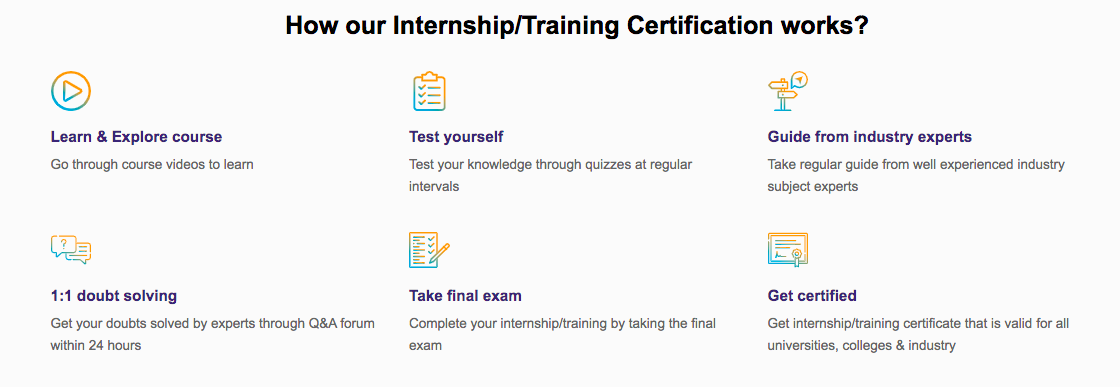
How EasyShiksha Internship/Training Program Works
Why Students Rarely Ask Questions
Fear of Appearing Unprepared
One of the most common barriers to question-asking is the fear of being judged. Students may worry that a basic question will make them appear less intelligent than their classmates or reveal that they have missed something others already understand. This concern can become particularly strong in public discussion forums, live online classes, and group activities where responses remain visible to other participants.
For beginners, even a small uncertainty can become difficult to express. A student learning programming may not understand why a variable changes value, but asking about it in a discussion forum may feel intimidating. Someone studying business concepts may be uncertain about a familiar financial term and hesitate to reveal the gap. If the learning environment rewards confident participation more visibly than careful clarification, students may decide that remaining silent is safer than asking for help.
EasyShiksha can help reduce this barrier by offering private question submission, anonymous clarification options where appropriate, and supportive language that treats confusion as a normal part of learning. Students should not have to disclose their identity to classmates simply to ask for an explanation. By making questions easier to ask and ensuring that responses remain respectful, an education platform can help learners seek support before a small misunderstanding becomes a larger obstacle.
Not Knowing What to Ask
Sometimes students remain silent because they cannot identify the source of their confusion. They may know that a lesson feels difficult without understanding which definition, example, assumption, or step is causing the problem. Asking a useful question requires more than recognising a difficulty; it also requires the ability to describe that difficulty in language another person can understand.
This challenge is especially relevant when a subject builds knowledge progressively. A learner struggling with an advanced mathematics problem may actually have misunderstood an earlier concept. A student having difficulty with a software project may not understand a basic workflow that the instructor assumed was already familiar. Without help identifying the missing connection, the student may describe the entire lesson as confusing rather than recognising the specific point that needs attention.
Digital platforms can make this process easier by helping learners locate the source of uncertainty. A student could select a lesson section, indicate that the explanation is unclear, or choose between simple descriptions such as difficulty understanding a definition, following a sequence, or applying an example. Guided prompts can help transform an unclear feeling into a more specific request. The platform should not require students to diagnose their own learning problems perfectly before they can receive assistance.
The Pressure to Keep Moving
Self-paced education gives students flexibility, but it can also create pressure to continue progressing. Learners may believe they should finish lessons quickly, maintain a course schedule, or complete a certificate within a certain period. When they encounter difficulty, they may move forward rather than spend additional time revisiting an explanation.
This behaviour can produce an accumulation of unresolved misunderstandings. A student may complete several lessons while relying on incomplete knowledge from earlier sections. Later topics become increasingly difficult because they depend on concepts the learner has not fully understood. The student may continue studying in silence until the gap becomes too large to ignore.
EasyShiksha can design learning pathways that treat revisiting a concept as a legitimate part of progress rather than a sign of failure. Short review activities, optional explanations, prerequisite refreshers, and practice questions can help learners return to difficult material without feeling that they have fallen behind. A platform that supports flexible pacing can encourage students to focus on understanding instead of measuring success exclusively through speed.
Language and Communication Barriers
Students may also hesitate to ask questions because they are uncertain about their language skills. A learner who understands a concept in their preferred language may struggle to express the same uncertainty in the language used by the course. Others may understand the lesson but find it difficult to formulate a formal question, especially in unfamiliar technical subjects.
Digital education can unintentionally favour students who are comfortable with the platform's communication style. If assistance requires writing a detailed message using subject-specific terminology, learners with limited confidence may decide not to ask. This can make an educational service appear more accessible to fluent communicators than to students with equally valuable learning potential.
An inclusive platform can offer simple-language prompts, structured question templates, multilingual explanations where available, and opportunities to request help through guided choices. Students should be able to describe a problem without needing advanced vocabulary. The goal is not to reduce the intellectual quality of education but to remove unnecessary communication barriers between a learner and the support they need.
Previous Experiences With Education
A student's willingness to ask questions may also be shaped by earlier educational experiences. Someone who has previously been criticised for making mistakes may avoid drawing attention to uncertainty. A learner who received little useful feedback in earlier classes may believe that asking questions will not make a difference. Others may have become accustomed to memorising information and completing tasks without discussing their understanding.
These habits do not disappear automatically when a student enters a digital course. A platform may provide a discussion board or a question button, but students may still feel uncomfortable using those features if they do not trust the learning environment. Simply adding more communication tools cannot solve a problem rooted in confidence, expectations, or previous experiences.
EasyShiksha can address this challenge through consistent instructional design. Lessons can demonstrate that mistakes are useful information, quizzes can provide constructive explanations, and progress indicators can recognise improvement rather than only perfect performance. Over time, these experiences can help learners understand that seeking clarification is a normal and productive part of developing competence.
Why Traditional Digital Platforms Overlook Silent Learners
Many digital education systems rely on easily measurable actions. They can record whether a learner opened a lesson, completed a video, submitted a quiz, earned a certificate, or visited the platform on a particular day. These indicators are useful for understanding participation, but they provide an incomplete picture of the learner's internal experience.
A completed lesson does not prove that the learner understood its central concepts. A high quiz score may reflect genuine mastery, prior knowledge, or success on questions that test only basic recall. Conversely, a low score may result from unfamiliar wording, technical difficulties, or a misunderstanding that can be corrected with one additional explanation. Behavioural data must therefore be interpreted in context rather than treated as a definitive account of learning.
The absence of a question is even more ambiguous. It could mean that the student understood everything, found the material too easy, did not want to interrupt, or did not know how to request support. A platform that assumes silence means satisfaction risks overlooking students who need assistance. A platform that assumes silence means confusion risks overwhelming independent learners with unnecessary interventions.
The solution is to move beyond a binary distinction between engaged and disengaged students. Education platforms need ways to understand learning progress while acknowledging uncertainty about what their data means. They should combine student feedback, knowledge checks, learning activity, and opportunities for self-assessment to build a more complete picture without pretending to know exactly what a student is thinking.
Designing a Learning Environment Where Questions Feel Safe
Make Help Available Without Public Exposure
A student should not need to publish a question in a public forum to receive clarification. Private support options can be especially valuable for beginners, learners revisiting foundational concepts, and students who are uncomfortable communicating in a group. A platform could allow students to ask an instructor privately, submit a question to a support queue, or request an explanation without displaying their identity to other learners.
The design should also make these options easy to find. If a learner must navigate several pages or complete a lengthy form to request help, the effort may discourage them from proceeding. A simple support option placed near a difficult lesson section can make assistance feel like a natural part of learning rather than an exceptional action reserved for serious problems.
EasyShiksha could connect these support options with its course and quiz experiences. When a student encounters a difficult question, they might request a simpler explanation, revisit the relevant lesson, or submit a clarification request. The student would remain in control of the next step, while the platform would make it easier to seek help at the moment it is needed.
Normalise Uncertainty Through Instructional Design
A supportive learning environment does not wait for students to become comfortable asking questions. It actively communicates that uncertainty is expected during the learning process. Instructors can introduce challenging concepts by acknowledging common misunderstandings, explaining why a topic may initially feel difficult, and demonstrating how to work through an unfamiliar problem.
Course design can reinforce this message. Lessons can include reflection prompts that ask students which part requires more practice, examples that show common mistakes, and explanations that compare incorrect approaches with more effective ones. Such activities help students recognise that misunderstanding a concept is not evidence of permanent inability. It is information that can guide the next learning step.
This approach is particularly useful for EasyShiksha's beginner-oriented courses and skill-building programmes. Students often enter digital learning with different levels of prior knowledge. When a course openly supports different starting points, learners are less likely to feel that they must understand every concept immediately. They can move through the material with greater confidence and seek assistance without treating it as a personal failure.
Offer Multiple Ways to Express Difficulty
Not every student will communicate uncertainty through written questions. Some may prefer selecting a response, attempting another example, listening to an alternative explanation, or indicating that a lesson is difficult. Providing multiple ways to communicate helps make educational support more inclusive.
For example, after a lesson, students could be invited to indicate whether they feel ready to continue, would like another example, or want to review the topic. A student working through a quiz could request a hint before revealing the answer. Someone struggling with a practical activity could choose whether the problem involves understanding instructions, using a tool, or applying the concept.
These options should remain simple and voluntary. The objective is to lower the effort required to ask for help, not to turn every lesson into a lengthy questionnaire. When support is integrated naturally into the learning experience, students can communicate their needs without interrupting their progress or having to formulate a perfect question.
How EasyShiksha Could Identify Learning Difficulties Earlier
Use Formative Quizzes as Learning Signals
Quizzes can do more than assign scores. When designed as formative assessments, they can reveal which concepts students understand and where additional practice may be useful. A carefully structured quiz can test different levels of understanding, from recognising a definition to applying a principle in an unfamiliar situation.
EasyShiksha could use quiz results to offer targeted support when students repeatedly struggle with the same concept. Instead of simply displaying an incorrect answer, the platform could explain the reasoning, identify a relevant lesson section, and offer another example. Students who understand the explanation could continue, while those who remain uncertain could explore a more detailed learning resource.
However, quiz performance should not be treated as a complete measure of understanding. One incorrect response may reflect a careless mistake, confusing wording, or an isolated gap. Repeated patterns across related questions can provide stronger evidence that a concept needs review, but the platform should still allow students to explain what happened. The purpose of assessment is to guide learning, not to label learners as weak or incapable.
Recognise Repeated Difficulty Without Making Assumptions
A platform may notice patterns such as repeated incorrect answers, repeated attempts at the same activity, or a learner returning to a lesson several times. These behaviours can indicate that a student is working hard on a challenging concept, but they can also reflect curiosity, revision, or a desire to achieve a higher score. Responsible systems should treat such patterns as possible signals rather than definitive proof of confusion.
EasyShiksha could respond to repeated difficulty with a gentle offer of assistance. For example, it might suggest reviewing a foundational concept, provide an alternative explanation, or ask whether the learner would like additional practice. Students could accept or dismiss the suggestion without penalty. This approach makes support available while preserving the learner's control over their learning experience.
The system should also avoid intrusive monitoring. It does not need to infer emotions from a student's face or treat every pause as a sign of frustration. Transparent, educationally relevant signals are generally more appropriate than invasive attempts to determine a learner's internal state. The focus should remain on helping students overcome specific learning barriers through practical and respectful interventions.
Create a Private Learning Support Profile
EasyShiksha could offer learners a private support profile that records their preferred learning formats, topics they have chosen to revisit, and assistance options they find useful. A student might prefer step-by-step examples, while another may benefit from visual explanations or additional practice questions. Such preferences could help the platform personalise support without making assumptions about a learner's intelligence or potential.
The profile should remain flexible because learning preferences can change by subject and circumstance. A student who prefers videos for conceptual topics may prefer written instructions when using software. Someone comfortable with independent study in one field may need more guidance when entering an unfamiliar discipline. The platform should therefore let learners update their preferences and decide which information is retained.
This profile should serve the student's learning goals rather than become a permanent label. It should help learners receive useful assistance, understand their own progress, and identify strategies that work for them. Clear privacy controls and transparent explanations would be essential to ensure that students feel supported rather than continuously evaluated.
Empower your team. Lead the industry
Get a subscription to a library of online courses and digital learning tools for your organization with
EasyShiksha
The Role of AI in Supporting Students Who Stay Silent
Artificial intelligence can help make learning support more accessible by responding to questions, simplifying explanations, generating practice examples, and helping students identify relevant resources. For a learner who feels uncomfortable asking a teacher about a basic concept, an AI learning assistant may provide a lower-pressure starting point. The student can ask for a definition, request another example, or explore a topic at a pace that suits their needs.
For EasyShiksha, an AI assistant could be integrated into the course experience so that students can request help without leaving the lesson. If a learner struggles with a quiz question, the assistant might explain the underlying concept, ask a guiding question, or direct the student to an earlier lesson. If the learner cannot explain the problem clearly, the assistant could offer a few possible sources of difficulty and let the student select the closest match.
The quality of this assistance depends on how the AI is designed. A system that immediately provides complete answers may help students finish activities without understanding the concepts involved. A better learning assistant would use scaffolding: it might begin with a hint, provide a simpler explanation, demonstrate a similar example, and offer a more detailed solution when needed. The level of help should reflect the learner's request and the educational purpose of the activity.
AI systems must also recognise their limitations. They can generate incorrect explanations, misunderstand a student's question, or present uncertain information with excessive confidence. This is particularly important in technical subjects, professional training, and career-related guidance. EasyShiksha should encourage verification, connect explanations with approved course materials where possible, and give students a clear way to report an unhelpful or incorrect response.
Most importantly, AI should complement human educators rather than replace them. Some learning difficulties involve complex misunderstandings, personal circumstances, or decisions that require human judgement. A responsible system should make it easier for students to reach an instructor or support team when automated assistance is insufficient. The aim is to ensure that silent learners have more routes to help, not to create a system in which they are left alone with an automated response.
Connecting Silent Learning With Projects and Internships
Understanding a concept becomes more difficult when students cannot see how it applies outside a lesson. A learner may complete several modules and answer introductory questions correctly while remaining uncertain about how to use the knowledge in a real situation. Because the learner may not know what to ask, this uncertainty can remain invisible until a practical task exposes the gap.
EasyShiksha can help identify these gaps by connecting courses with guided projects and practical challenges. After learning a concept, students could complete a small activity that requires them to apply it in a realistic context. A student studying digital marketing might analyse a sample campaign, while a beginner in programming could modify a simple application. The activity would provide evidence of how the learner applies knowledge, rather than relying exclusively on course completion or self-reported confidence.
Projects should be designed with multiple levels of assistance. Students who understand the task can attempt it independently, while those who struggle can access hints, worked examples, or explanations of individual steps. If a learner repeatedly encounters difficulty, the platform could suggest a prerequisite lesson or another practice activity. This creates a supportive progression in which students can receive help without needing to announce that they are confused.
Internships can extend this model into practical experience. Before entering an internship, students could review the skills required for a role, complete relevant introductory activities, and identify areas where they need more preparation. During learning and preparation, accessible guidance could help them understand workplace tasks and seek clarification when necessary. This would support a more connected journey from learning to practice and professional experience.
The purpose is not to monitor every mistake or make students feel that each activity is a test of their suitability for a career. Instead, practical work can help students discover what they understand, where additional learning would be useful, and which support methods help them improve. For learners who rarely ask questions, structured practice can reveal learning needs in a way that feels natural and constructive.
Designing Feedback That Helps Students Speak Up
Feedback is one of the most important ways an education platform can communicate with students who remain silent. However, feedback that merely identifies an answer as correct or incorrect provides limited guidance. Learners need to understand why an answer works, what caused a mistake, and what they can do differently the next time they encounter a similar problem.
EasyShiksha could use explanatory feedback to make these connections explicit. When a student answers a question incorrectly, the platform could explain the relevant concept, show the reasoning behind the correct answer, and offer a similar question for practice. If the student answers correctly but requests further clarification, the system could provide a deeper explanation without requiring another assessment attempt. Such flexibility would support both students who need remediation and those who want to strengthen their understanding.
Feedback should also avoid language that makes students feel judged. Statements that imply a learner is careless, weak, or incapable can discourage future participation. Constructive feedback focuses on the work and the next step, explaining what needs improvement without making assumptions about the student's ability. This distinction matters because students who already hesitate to ask questions may become even less willing to seek support after receiving discouraging responses.
Another useful approach is to invite students to respond to feedback. After an explanation, the platform could ask whether the concept is clearer or whether the learner would prefer another example. This small interaction gives students a direct way to communicate their needs and helps the platform avoid assuming that providing an explanation automatically resolves the problem.
Over time, such interactions can establish a healthier relationship between students and digital learning systems. Feedback becomes a conversation about understanding rather than a one-way judgement of performance. Even when students do not write formal questions, they can indicate what they need and influence how the platform supports them.
Building an Education Platform That Adapts Without Labelling Students
An education platform should respond to different learning needs without placing students into rigid categories. A learner who requests frequent assistance should not automatically be classified as weak, just as a student who rarely asks questions should not automatically be considered independent. Learning behaviour is influenced by the subject, the task, the environment, and the learner's changing circumstances.
For EasyShiksha, adaptive support could operate at the level of individual concepts and activities. A student might receive additional examples for a difficult topic while continuing independently through other sections. Another learner might need language support for technical terminology but require no additional help with practical exercises. This approach would allow assistance to change according to the task instead of assigning a permanent learning label.
The platform should also make support adjustable. Students could request more guidance, switch to independent practice, change explanation formats, or revisit earlier lessons. These choices would help them develop awareness of their own learning needs and gradually become more independent. A system that always intervenes can create unnecessary dependence, while a system that never intervenes can leave students struggling without support.
The ideal balance is responsive assistance. EasyShiksha can make help available at the right moments, explain why a suggestion might be useful, and allow learners to decide whether to follow it. This preserves student agency while making the educational experience more attentive to individual needs.
Measuring Whether Invisible Students Are Being Supported
To improve support for students who rarely ask questions, EasyShiksha would need to evaluate more than the number of questions submitted to instructors. An increase in question volume might indicate that learners feel more comfortable seeking help, but it could also reflect confusing lessons or an ineffective interface. Similarly, a decrease in questions might mean that explanations have improved, or it might mean that students have become less willing to communicate.
A more meaningful evaluation would combine several indicators. These could include whether students use optional help features, improve on related practice activities, successfully apply concepts in projects, and report greater clarity after receiving support. Course continuation and completion could provide additional context, but they should not be treated as proof that every learner has achieved meaningful understanding.
EasyShiksha could also compare the effectiveness of different support methods. Some students may benefit most from worked examples, while others may respond better to hints, short review lessons, or opportunities to ask an instructor. Examining these outcomes would help the platform improve its teaching design instead of assuming that a single intervention works equally well for everyone.
Student feedback should remain part of this evaluation. Learners could indicate whether the support was relevant, whether the explanation answered their concern, and whether they would prefer a different format next time. These responses can help identify problems that behavioural data cannot reveal on its own.
The platform must also be careful about what it concludes from the results. A learner who repeatedly revisits a lesson may be reviewing effectively rather than struggling. A student who completes a course quickly may have strong prior knowledge or may have moved through the material without deep understanding. Metrics should guide investigation and improvement, not become automatic judgements about individual students.
Accessibility, Inclusion, and the Right to Learn Quietly
Not every student wants to participate publicly, and not every student needs the same kind of support. Some learners think carefully before speaking, others prefer to write their questions, and some are more comfortable experimenting independently before requesting help. A well-designed education platform should respect these differences rather than treating visible participation as the ideal learning behaviour.
Accessibility is an important part of this principle. Clear navigation, readable content, captions, transcripts, flexible explanations, and keyboard-friendly controls can reduce barriers that prevent students from expressing difficulties. Multilingual support and simple-language instructions can help learners communicate uncertainty without needing to master specialised terminology first. These features benefit not only students who rarely ask questions but also learners studying in unfamiliar environments or using different devices.
The right to learn quietly also means that students should not be forced to disclose personal information to receive ordinary educational assistance. A learner should be able to request a simpler explanation without explaining why the lesson is difficult. Where private support is available, the platform should communicate how the request will be handled and who can access it.
An inclusive platform recognises that silence is not a defect that must be corrected. The real problem arises when the system makes support accessible only to those who are willing and able to speak up. By offering multiple ways to communicate, EasyShiksha can respect individual learning styles while ensuring that quiet students are not excluded from meaningful guidance.
The Future of Student-Centred Education on EasyShiksha
The future of digital education will depend not only on the availability of courses and learning resources but also on how effectively platforms respond to students whose needs are not immediately visible. Educational technology has made it possible to provide learning opportunities at scale, yet access alone does not guarantee understanding. Students need clear explanations, opportunities to practise, constructive feedback, and accessible support when they encounter difficulties. These requirements become particularly important when learners study independently and rarely communicate their questions.
EasyShiksha can bring these elements together through a connected learning experience. Courses can introduce concepts, quizzes can reveal areas for further practice, games can offer interactive ways to explore ideas, and projects can demonstrate how knowledge works in practical situations. AI-powered assistance can provide additional explanations, while instructors and support teams can help with questions that require human judgement. Internships and career guidance can then connect learning progress with professional development.
This approach would allow EasyShiksha to move beyond measuring whether students access or complete educational content. It could focus more directly on whether learners can understand concepts, apply knowledge, recognise their own difficulties, and choose appropriate next steps. The platform would not need to know everything about a student's internal experience. It would need to provide useful opportunities for students to communicate uncertainty and receive support when they want it.
Ultimately, the invisible student is a reminder that educational success cannot be measured only by the behaviour that platforms can easily observe. Some students demonstrate their engagement through discussion, while others learn quietly and ask for help only when they feel comfortable doing so. Both deserve an educational environment that recognises their needs without making assumptions about their abilities.
Conclusion: Every Student Deserves a Way to Be Heard
Students who rarely ask questions can easily become overlooked in digital education, particularly when platforms rely on visible participation as their primary indicator of understanding. Fear of judgement, difficulty expressing confusion, language barriers, time pressure, and previous educational experiences can all prevent learners from seeking assistance. When these barriers remain unaddressed, students may continue through courses with unresolved misunderstandings that affect later learning and practical performance.
The solution is not to force students to participate more frequently or to interpret every silent moment as a problem. It is to create learning environments in which help is easy to access, uncertainty is treated constructively, and students can communicate their needs in different ways. Thoughtful quizzes, explanatory feedback, private support channels, adaptive learning resources, practical projects, and carefully designed AI assistance can all contribute to this goal.
For EasyShiksha, supporting invisible students means making education more responsive without making it intrusive. The platform can help learners move from confusion to clarity, from theory to practice, and from independent study to guided assistance whenever they need it. By combining student choice with accessible support, EasyShiksha can create an environment where learners do not have to be the loudest participants to receive meaningful educational attention.
The most effective education platform is not necessarily the one that receives the most questions. It is the one that makes sure students have a reliable way to ask, explore, practise, and understand whenever they need help. In digital education, a student's silence should never become a reason for their learning needs to remain invisible.
Anshika Jain is an Engineer, Developer, and Educational Content Author known for her dedication to technology and knowledge sharing. With a strong analytical mindset and a passion for innovation, she has consistently contributed to creating meaningful digital solutions and insightful educational articles.
Her ability to simplify complex technical concepts into engaging and easy-to-understand content makes her work valuable for students and learners across various platforms. Along with her technical expertise, Anshika is admired for her creativity, professionalism, and commitment to continuous learning.
She represents a perfect blend of technical excellence and impactful communication, inspiring others through both her development work and educational contributions.