Personalized learning has become one of the most influential developments in digital education. By analysing a learner’s interests, previous activity, course history, quiz results, and learning preferences, educational platforms can recommend resources that appear relevant to individual goals. For students navigating an increasingly complex academic and professional landscape, these recommendations can make learning more accessible, reduce the time required to find suitable courses, and create a more structured educational experience. However, a system designed to make learning more relevant can also introduce an unexpected problem: it may repeatedly direct students towards familiar subjects while limiting their exposure to unfamiliar disciplines.
This problem can be described as the digital learning rut, a situation in which personalised recommendations gradually narrow a learner’s educational experience instead of expanding it. A student who repeatedly explores marketing courses may continue receiving marketing-related content, while someone interested in programming may see an endless stream of coding tutorials, software courses, and technical quizzes. Although these suggestions may be useful, they can make it difficult for learners to discover fields they have never considered. Over time, personalisation may become less about helping students grow and more about reinforcing what a platform already knows about them.
For an education ecosystem such as EasyShiksha, this challenge creates an important opportunity to rethink how digital learning recommendations should work. A platform offering courses, quizzes, internships, certificates, degree programmes, games, career guidance, and employment-related resources can do more than predict what a student might want to learn next. It can help students discover what they do not yet know they want to learn. The objective should not be to abandon personalised education but to develop a more balanced model that combines relevance with exploration, familiarity with experimentation, and immediate interests with long-term capability development.
Understanding the Digital Learning Rut
The digital learning rut develops when a recommendation system repeatedly uses a student's previous behaviour to determine what they should see next. These systems commonly rely on signals such as courses viewed, subjects searched, lessons completed, quizzes attempted, certificates earned, and the amount of time spent interacting with particular content. Such information can help a platform estimate the learner's preferences and recommend resources that match their apparent interests. The difficulty begins when past behaviour becomes the dominant predictor of future learning opportunities.
Consider a student who enrols in an introductory graphic design course because a college assignment requires a poster. The student completes the course, takes a related quiz, and downloads a design certificate. A recommendation engine may interpret these activities as evidence of a sustained interest in graphic design. It could then recommend advanced design tools, visual branding, illustration, and related creative courses. These recommendations may be relevant, but the student might also have an interest in user experience research, behavioural psychology, product management, or digital accessibility that the original activity never revealed.
The system cannot automatically distinguish between a temporary requirement and a lasting interest unless it has additional information. A student may complete a course because it is mandatory, because a friend recommended it, or because it is the easiest available option. The activity itself does not necessarily represent a deep preference. When platforms treat every interaction as a reliable statement of identity, they risk converting isolated decisions into long-term educational assumptions.
A digital learning rut is therefore not simply a situation in which a student receives repetitive recommendations. It is a deeper problem involving how a platform interprets learning behaviour, how it defines relevance, and how much freedom it gives learners to change direction. The central question is whether recommendations support the development of new interests or quietly make existing interests more difficult to escape.
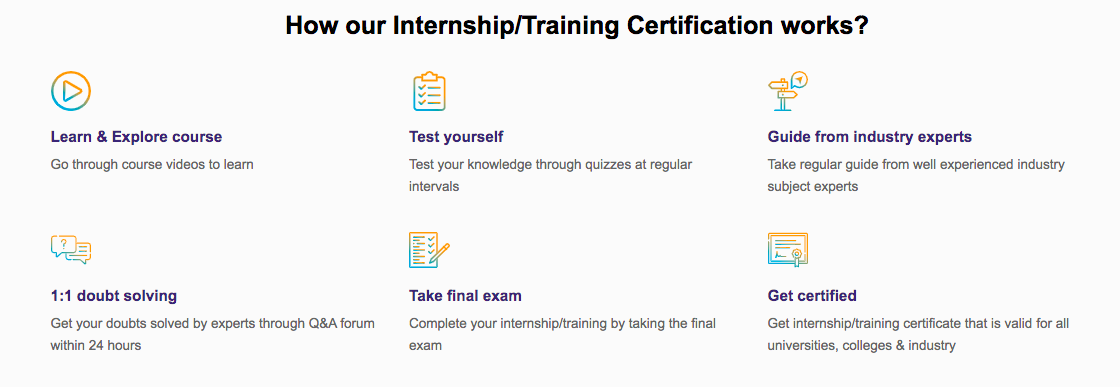
How EasyShiksha Internship/Training Program Works
Why Recommendation Systems Tend to Reinforce Existing Interests
The Influence of Historical Behaviour
Recommendation systems often depend on historical data because it offers a practical starting point for predicting what users may find useful. If a student frequently interacts with financial literacy content, a platform has a reasonable basis for suggesting budgeting, accounting, investment fundamentals, or financial analysis. These recommendations can improve the learning experience by reducing irrelevant choices and helping students continue a subject without repeatedly searching for suitable material.
However, historical behaviour is incomplete evidence of future potential. A learner's previous activity reflects the opportunities they encountered, the resources available to them, their immediate responsibilities, and the limits of their existing knowledge. It does not capture every ability they possess or every discipline they might enjoy. Students cannot express interest in a field they have never encountered, and they may not recognise the relevance of a subject until they see how it connects with a problem they care about.
When a recommendation engine gives excessive weight to past activity, it can create a feedback loop. The student interacts with a particular subject, receives more content about that subject, and continues engaging because it is familiar and accessible. The platform then interprets the additional engagement as stronger evidence of interest, reinforcing the same recommendation pattern. The system appears to be learning about the student, but some of its conclusions are shaped by the content it repeatedly chooses to show.
The Familiarity Effect
Familiar subjects often feel easier to approach than unfamiliar ones. Students already studying programming may be more likely to open another coding course than explore environmental economics or public policy. A learner comfortable with business topics may hesitate to try a course in data visualisation, even when that skill could strengthen their professional capabilities. Familiarity reduces the psychological effort involved in choosing a course, while unfamiliarity introduces uncertainty about difficulty, usefulness, and personal suitability.
Recommendation systems can amplify this preference by prioritising content that resembles previously successful choices. The result is an educational environment in which students repeatedly encounter options that feel safe and understandable. Although this can support continuity, it may also discourage the productive uncertainty that accompanies discovery.
For EasyShiksha, this distinction matters because a learner's next valuable step may not be another course in the same category. A student interested in digital marketing might benefit from learning basic analytics, persuasive writing, consumer psychology, or spreadsheet automation. These subjects may initially appear unrelated, but together they can create a more adaptable professional skill set. A recommendation system should recognise such connections rather than relying exclusively on surface-level similarity.
Engagement Is Not the Same as Educational Value
Digital platforms often use engagement as an indicator of whether a recommendation is successful. Clicks, lesson completion, time spent on a page, and repeat visits can provide useful information about user behaviour. However, engagement does not always indicate that a learner is developing valuable capabilities. A familiar course may attract more clicks than a challenging subject that could eventually transform a student's career direction.
This creates a potential conflict between immediate engagement and long-term educational development. A platform optimising primarily for short-term interaction may favour predictable recommendations because they are more likely to generate another click. Yet an unfamiliar subject might offer greater long-term value by helping the learner identify a new career possibility or recognise a previously hidden strength.
A more educationally meaningful recommendation strategy should consider whether a resource helps students build knowledge, transfer skills, explore opportunities, and make informed decisions. Engagement can remain one signal among several, but it should not become the sole definition of success. The purpose of an education platform is not merely to keep learners interacting with content; it is to help them become more capable, informed, and independent.
How the Digital Learning Rut Limits Career Discovery
Students May Never Encounter Emerging Career Paths
Career opportunities increasingly cross traditional subject boundaries. A professional working in healthcare may need data literacy, while a content creator may benefit from understanding analytics and digital business models. A software developer may need communication and product thinking, and an environmental science graduate may find opportunities in geographic information systems, sustainability reporting, or climate data analysis. These pathways demonstrate that careers rarely depend on a single isolated subject.
When personalised recommendations keep students within familiar categories, they may miss opportunities to discover such combinations. A student interested in commerce may never encounter the practical applications of data analysis in business operations. Someone studying computer science may overlook technical writing, digital product design, or technology policy. These omissions can occur without an obvious failure in the platform because every recommendation may still appear relevant to the learner's existing profile.
EasyShiksha can address this challenge by helping students explore the relationships between academic interests, transferable skills, and career possibilities. Rather than treating career discovery as a separate activity that happens after completing a degree, the platform can introduce career-connected exploration throughout the learning journey. Courses, quizzes, internships, and career guidance resources can collectively reveal how knowledge from one field can create opportunities in another.
Early Decisions Can Become Unnecessarily Permanent
Students often make educational choices before they have enough experience to understand their strengths and preferences. A learner may select a degree because of family expectations, available college options, financial circumstances, or limited awareness of alternative careers. Their initial decisions can provide useful direction, but they should not permanently define the opportunities presented to them.
If digital recommendations repeatedly reinforce these early choices, they may make a temporary decision feel like a fixed identity. A student who initially searches for accounting courses might continue receiving finance-related content even after developing an interest in user research or technology. Without opportunities to explore alternatives, the learner may assume that changing direction would require abandoning previous progress.
A more flexible education model recognises that interests evolve through experience. Students should be able to move between subjects, combine different areas of knowledge, and investigate new possibilities without being treated as inconsistent users. EasyShiksha can support this flexibility by presenting learning as an evolving journey rather than a rigid path determined by the first few courses a student completes.
The Hidden Cost of Missed Discovery
The cost of a narrow recommendation system is not limited to the absence of a particular course. It can also affect confidence, motivation, and the learner's understanding of their own potential. Students may interpret the subjects repeatedly presented to them as the most appropriate options available, even when the system is simply responding to historical activity. They may never realise that alternative pathways exist or that their existing skills could be applied in a different professional context.
This problem is difficult to measure because undiscovered interests leave little direct evidence. A student cannot click a course they never see, and a platform cannot easily record a career possibility that was never presented. Conventional recommendation analytics may therefore overlook the opportunities lost through narrow exposure.
To address this issue, EasyShiksha would need to evaluate not only what learners select but also the range of meaningful opportunities they encounter. Discovery should become a visible part of educational progress. The aim is not to force students into unfamiliar subjects but to ensure that they have enough information and low-risk opportunities to decide whether those subjects deserve further exploration.
From Personalisation to Exploration-Aware Learning
The solution to the digital learning rut is not to remove personalisation or replace relevant recommendations with random suggestions. Students still need guidance that reflects their goals, knowledge levels, time constraints, and current learning needs. The challenge is to introduce exploration as an intentional component of recommendation design, giving learners opportunities to discover new subjects while preserving the continuity and convenience of personalised education.
An exploration-aware system would treat a student's interests as evolving possibilities rather than permanent labels. It could recommend familiar content when the learner wants to build depth, adjacent subjects when the learner is ready to expand, and carefully selected unfamiliar fields when there is a meaningful reason to explore. Such a model would combine personal relevance with intellectual diversity.
For EasyShiksha, this could become a distinctive way to connect its different educational services. A student completing a marketing course could receive a recommendation for a related analytics quiz, followed by an introductory course in consumer psychology and a practical project combining both disciplines. Another student might explore a game-based activity that introduces cybersecurity concepts before deciding whether to pursue a full course. These pathways would not abandon the learner's original interests; they would use those interests as starting points for broader discovery.
The important design principle is that exploration should be purposeful. An unfamiliar recommendation should have a clear connection to a skill, problem, curiosity, or career possibility. When students understand why a new subject might matter, they are more likely to approach it with interest rather than seeing it as irrelevant content inserted into their learning feed.
Designing a Three-Layer Recommendation Model
Layer One: Deepen Existing Knowledge
The first layer should continue to support depth within a student's current learning area. Learners need opportunities to strengthen foundational knowledge, progress to advanced concepts, practise difficult skills, and demonstrate mastery. A student learning Python, for example, may reasonably need recommendations covering data structures, debugging, APIs, and practical application before moving into unrelated subjects.
This layer protects the value of continuity. Without structured progression, exploration can become fragmented, leaving students with a collection of introductory experiences but little meaningful expertise. EasyShiksha can use courses, quizzes, certificates, and project-oriented learning activities to help students develop a strong foundation in their chosen fields.
However, depth should be presented as one part of the recommendation strategy rather than its entire purpose. Students should understand that progressing within a field and exploring beyond it are complementary activities. The platform's role is to help learners build expertise without allowing specialisation to become unnecessary confinement.
Layer Two: Expand Into Adjacent Fields
The second layer should identify subjects that are meaningfully connected to the learner's current interests but introduce different methods, perspectives, or capabilities. For example, a student learning graphic design could explore user experience design, accessibility, visual communication, or basic frontend development. A learner studying finance might discover business analytics, entrepreneurship, or spreadsheet automation.
Adjacent learning is valuable because it reduces the distance between familiarity and discovery. The new subject is different enough to expand the student's knowledge but connected enough to feel understandable. It can also reveal combinations of skills that are useful in real workplaces, where people often need to apply knowledge across multiple functions.
EasyShiksha could build these connections through a structured map of topics, skills, projects, and career applications. Instead of recommending only courses that resemble the learner's previous selections, the platform could explain how an adjacent subject complements an existing skill. This would make recommendations more informative and help students understand the broader purpose of their learning choices.
Layer Three: Introduce Productive Unknowns
The third layer should introduce subjects that are less directly connected to a student's established interests but offer a meaningful opportunity for discovery. These recommendations could come from emerging industries, interdisciplinary problems, practical challenges, or introductory experiences designed for beginners. A business student might explore the basics of geographic information systems, while a programming student might try a course in digital storytelling or behavioural science.
The purpose is not to suggest that every student should learn every subject. Rather, it is to provide structured opportunities to encounter fields that the learner may not have considered. An unfamiliar subject can reveal a new interest, clarify that a particular discipline is not suitable, or expose a skill that strengthens an existing career plan. All three outcomes can be educationally useful.
Productive unknowns should be offered in manageable formats. A short introductory lesson, a diagnostic quiz, a simulation, or a small practical challenge can help students assess their interest before committing to a lengthy course. EasyShiksha's combination of courses, quizzes, and educational games could make this type of low-risk exploration easier to implement.
The balance among these layers should remain flexible. A student preparing for an immediate examination may need greater emphasis on depth, while someone exploring career options may benefit from more adjacent and unfamiliar subjects. The system should adjust to the learner's stated goals instead of applying the same exploration ratio to everyone.
Build an Exploration Mode Into the Learning Experience
EasyShiksha could introduce an exploration mode that gives students a dedicated space to investigate subjects beyond their current learning path. Unlike a conventional recommendation feed, this area would be designed specifically for discovery. It could feature introductory courses, short quizzes, interactive games, cross-disciplinary challenges, and explanations of emerging career fields.
Students should be able to explore without feeling that every activity must contribute directly to a certificate or immediate career outcome. The platform could allow learners to browse unfamiliar categories, test a new skill, and save topics for later consideration. This would make curiosity a legitimate part of the learning process rather than an accidental activity that happens outside the structured curriculum.
An effective exploration mode would also explain why a topic has been suggested. A student might see that data visualisation can complement marketing, or that basic financial literacy can help someone working in technology manage projects and budgets. These explanations would help learners make informed choices rather than relying on recommendation rankings alone.
Use Quizzes to Reveal Interests Beyond Course History
Quizzes can serve purposes beyond assessing knowledge. When carefully designed, they can help learners recognise interests, compare subject areas, and identify concepts they enjoy exploring. A student who performs well in a conventional academic subject may not necessarily find it engaging, while another may discover a strong interest through an unfamiliar question or problem-solving exercise.
EasyShiksha could offer short discovery quizzes that introduce students to different ways of thinking. A logic-based activity might reveal an interest in analytical problem-solving, while a scenario about user behaviour could introduce the foundations of product research. A sustainability challenge might help a learner discover the relationship between science, policy, and business.
These quizzes should not be presented as definitive career tests or personality diagnoses. Their purpose should be to stimulate curiosity and provide a starting point for further exploration. Results could suggest a few introductory learning experiences while encouraging students to make their own decisions about which subjects deserve more attention.
Connect Exploration With Practical Projects
A subject often becomes meaningful when students apply it to a concrete problem. Reading about data analysis may feel abstract, but using a small dataset to identify a pattern can reveal why the skill matters. Learning about user experience design may become more engaging when students evaluate a website and suggest improvements based on user needs.
EasyShiksha could connect exploratory courses with small projects that combine knowledge from different fields. A learner exploring marketing analytics might create a simple campaign performance report, while a student interested in technology and communication could develop a short tutorial explaining a digital tool. These projects would let students experience how a new skill works in practice without requiring them to commit immediately to a full qualification.
Practical projects can also reveal transferable capabilities. Students may discover that they enjoy researching problems, organising information, explaining complex ideas, or designing solutions, even if they eventually decide against pursuing the subject in which they first practised those skills. Such discoveries can inform future course choices, internship applications, and career planning.
Turn Internships Into Discovery Experiences
Internships are often treated as opportunities students pursue after selecting a career direction. However, practical work can also help learners discover what different roles involve before making longer-term decisions. A student may believe they want to work in marketing but discover through a project that they particularly enjoy market research, analytics, or content strategy. Another may enter a technical internship and realise that product coordination or technical communication is a better fit.
EasyShiksha can support this process by connecting learning pathways with realistic descriptions of work activities, introductory projects, and relevant internship opportunities. Students should be able to understand the skills required for a role, practise foundational tasks, and identify areas where they need further preparation. This would make exploration more grounded in practical experience rather than relying exclusively on course titles or general career descriptions.
The platform should avoid suggesting that a short activity can conclusively determine career suitability. Instead, it can help students gather evidence about their interests and capabilities over time. A combination of learning, practice, reflection, and supervised work experience can provide a more reliable basis for decisions than repeated exposure to the same subject category.
The Role of AI in Preventing Recommendation Narrowing
Artificial intelligence can help education platforms identify relationships among subjects, skills, and learning opportunities that may not be obvious from course categories alone. A conventional recommendation system might suggest content based on similarity to a previously viewed course, while a more sophisticated system could identify connections through shared skills, real-world applications, or related career tasks.
For example, AI could recognise that a learner studying presentation design might benefit from storytelling, data visualisation, communication strategy, and audience research. It could also identify that a student interested in coding may find value in logic, software testing, accessibility, or product design. The objective would be to recommend learning opportunities based on meaningful connections rather than simply repeating the same category.
AI could also help generate explanations that make cross-disciplinary recommendations understandable. Instead of presenting a course with no context, the system could explain which capability the learner might develop, how that capability connects with existing knowledge, and what beginner-friendly activity would help test their interest. This approach would turn recommendations into educational guidance rather than a list of predicted preferences.
However, AI should not make discovery decisions entirely on behalf of students. Its suggestions may reflect incomplete information, biased datasets, outdated assumptions, or misleading associations between topics. A learner's behaviour should not be treated as proof of their ability, ambition, or future career suitability. The system should offer possibilities, communicate uncertainty where appropriate, and preserve the learner's freedom to accept, reject, or modify its suggestions.
Measuring Discovery Instead of Only Engagement
A major challenge in developing exploration-aware learning is determining whether the system actually helps students discover valuable new opportunities. Traditional platform metrics, such as clicks, session duration, and course completion, can show how learners interact with recommendations, but they cannot fully capture whether those recommendations broaden understanding or improve decision-making.
EasyShiksha could evaluate discovery through indicators such as the diversity of subjects explored, the number of learners who voluntarily try an unfamiliar topic, and the proportion who continue learning after an introductory experience. It could also examine whether students develop new combinations of skills, complete cross-disciplinary projects, or report a clearer understanding of career possibilities. These measures would need careful interpretation because exploring many subjects does not automatically mean learning deeply.
Another useful indicator would be the quality of progression from exploration to meaningful action. A student might encounter a new field through a quiz, complete an introductory course, practise a related skill, and then decide whether to pursue a larger project or internship. Tracking this progression could help the platform understand which discovery experiences are useful and which need improvement.
The system should also consider the learner's own assessment of the experience. Students could indicate whether a recommendation introduced something genuinely new, strengthened an existing interest, or felt unrelated to their goals. Such feedback would help distinguish productive discovery from random exposure and give learners a greater role in shaping their educational journey.
No single metric should become the ultimate measure of success. The goal is to create a learning environment that balances depth, relevance, autonomy, and exploration. A student who discovers that a subject is not a good fit may still have benefited from trying it, provided the experience helped them make a more informed decision.
Protecting Student Autonomy and Privacy
An exploration-aware platform must balance personalisation with respect for student autonomy. Learners should be able to understand why recommendations appear, change their stated interests, remove outdated preferences, and request content outside their usual categories. These controls are particularly important for students whose interests change as they gain experience or whose earlier choices were influenced by circumstances rather than genuine preference.
Privacy is equally important. Platforms should collect only the information needed to provide useful educational support and explain how learning activity influences recommendations. Sensitive inferences about personality, motivation, or career suitability should not be treated as established facts merely because an algorithm detects patterns in behaviour. Students should retain meaningful control over their learning profiles and should not be penalised for exploring subjects that differ from their previous activity.
Fairness also requires attention. Recommendation systems can reproduce existing inequalities if students are repeatedly directed towards opportunities based on limited historical data or assumptions about their backgrounds. Learners with less prior exposure to technology, for example, may receive fewer advanced technology recommendations precisely because they have not yet had opportunities to explore the field. A system that deliberately provides accessible entry points into unfamiliar subjects can help reduce this form of opportunity gap.
EasyShiksha's approach should therefore make discovery transparent, voluntary, and inclusive. Students should be encouraged to explore, not pressured into a platform-defined path. The system should widen the set of possibilities available to learners while allowing them to decide which opportunities fit their goals, circumstances, and interests.
Balancing Specialisation With Breadth
Specialisation remains essential in education and employment. Students need sustained practice to develop expertise, and many professions require deep knowledge of specific methods, technologies, or subject areas. An exploration-oriented platform should not encourage learners to abandon every subject as soon as something new appears. Excessive switching can fragment attention and prevent students from developing the competence required to use a skill effectively.
The challenge is to distinguish productive exploration from constant distraction. A student preparing for a professional examination may need to focus on a defined curriculum, while someone choosing a degree or considering a career change may benefit from wider exploration. The platform should respond to these different needs by allowing learners to set goals and choose when they want depth, breadth, or a combination of both.
One practical approach is to make exploration a structured stage within a longer learning journey. Students can begin by discovering a subject, test their interest through an introductory activity, and decide whether to continue into deeper study. If they proceed, the platform can offer a progression of courses, quizzes, projects, and relevant practical opportunities. If they decide not to continue, the experience can still contribute to their understanding of available options without creating pressure to finish every pathway.
This model supports a more realistic view of education. Learners do not need to become experts in every field they encounter. They need opportunities to identify meaningful directions, develop relevant capabilities, and understand how different forms of knowledge can work together. Personalisation should make that process easier rather than limiting it to the subjects students already recognise.
Empower your team. Lead the industry
Get a subscription to a library of online courses and digital learning tools for your organization with
EasyShiksha
The Future of Personalised Learning on EasyShiksha
The next stage of digital education will depend not only on how accurately platforms predict student preferences but also on how effectively they help learners expand those preferences. A system that continually recommends familiar content may be efficient, yet it risks becoming an echo chamber for existing interests. A system that balances familiar learning with purposeful discovery can support a more adaptable and self-directed learner.
EasyShiksha has the opportunity to connect exploration with its broader educational ecosystem. Courses can introduce new concepts, quizzes can help learners test their understanding, games can make unfamiliar subjects approachable, projects can turn abstract ideas into practical experience, and internships can expose students to real workplace responsibilities. Certificates and degree programmes can support deeper progression when learners decide to pursue a field more seriously, while career guidance can help them understand how emerging interests relate to professional options.
The value of this approach lies in connecting each activity to a meaningful next step without assuming that every student must follow the same sequence. One learner may discover a new interest and pursue it through a full course. Another may use an introductory project to strengthen an existing career path. A third may explore several fields before choosing a direction. A flexible education platform should be capable of supporting all three journeys.
Ultimately, personalised education should help students become more capable of making their own decisions. The strongest recommendation system is not necessarily the one that predicts the next click with the greatest accuracy. It is the one that helps learners discover useful possibilities, understand their options, and develop the confidence to choose their next step.
Conclusion: Personalisation Should Open Doors, Not Close Them
The digital learning rut reveals a fundamental tension in personalised education. By relying heavily on past behaviour, recommendation systems can make learning convenient while unintentionally narrowing the range of subjects students encounter. This can limit career discovery, reinforce early assumptions, and prevent learners from recognising how skills from different disciplines can complement one another. The problem is not personalisation itself but a version of personalisation that treats historical activity as a fixed definition of a student's future.
EasyShiksha can respond by making discovery an intentional part of the learning experience. A balanced recommendation model can deepen existing knowledge, introduce adjacent disciplines, and offer carefully selected unfamiliar subjects through accessible courses, quizzes, games, and practical activities. AI can help identify meaningful connections, while learner feedback, transparent controls, and privacy safeguards can keep the process responsible and student-centred.
The ultimate goal is not to make every student explore everything. It is to ensure that students have a genuine opportunity to discover what they might otherwise never encounter. When digital education combines personal relevance with intellectual openness, recommendations become more than a mechanism for selecting content. They become a way to help learners expand their horizons, build transferable capabilities, and create educational and professional paths that reflect both who they are today and who they may become tomorrow.
Anshika Jain is an Engineer, Developer, and Educational Content Author known for her dedication to technology and knowledge sharing. With a strong analytical mindset and a passion for innovation, she has consistently contributed to creating meaningful digital solutions and insightful educational articles.
Her ability to simplify complex technical concepts into engaging and easy-to-understand content makes her work valuable for students and learners across various platforms. Along with her technical expertise, Anshika is admired for her creativity, professionalism, and commitment to continuous learning.
She represents a perfect blend of technical excellence and impactful communication, inspiring others through both her development work and educational contributions.