Choosing the right course has become one of the most confusing parts of modern education. Students today have access to thousands of online courses, certificate programmes, internships, university pathways, tutorials, educational games, and professional learning opportunities. Although this abundance creates more possibilities than ever before, it also introduces a new problem: learners must decide what to study, when to study it, which skills to develop first, and how each learning activity contributes to their long-term goals. Many students choose courses based on popularity, recommendations from friends, social media trends, or attractive certificates without understanding whether those courses are appropriate for their current knowledge or career ambitions. As a result, they may complete disconnected programmes while still struggling to develop the capabilities they actually need.
What if students did not have to make every course-selection decision themselves? What if an intelligent educational system could continuously understand their goals, evaluate their current skills, identify missing capabilities, and organise suitable learning experiences into a personalised curriculum? Instead of browsing course catalogues and independently deciding what to learn next, students could receive a continuously updated learning pathway that adapts as they develop. This is the central idea behind a Personal Curriculum Engine.
A Personal Curriculum Engine is a proposed intelligent system that coordinates a learner's educational journey by selecting, sequencing, and adjusting learning experiences according to individual needs. It would go beyond recommending courses based on interests or popularity. It would consider what the learner already knows, what they want to achieve, which competencies they need to develop, and which learning activity would provide the greatest value at a particular moment. The engine could connect courses, quizzes, projects, internships, certificates, and career guidance into a structured progression rather than leaving students to assemble these experiences independently.
For EasyShiksha, this concept offers an opportunity to explore a more connected model of digital education. The platform's learning ecosystem could potentially support a system that helps students move from discovering their interests to developing skills, practising those skills, gaining experience, and preparing for career opportunities. Rather than asking learners to choose from an overwhelming list of courses, EasyShiksha could help them understand the next useful step in their individual learning journey.
The objective would not be to remove students from educational decision-making. It would be to reduce unnecessary confusion, simplify course selection, and make personalised guidance available throughout the learning process. A successful Personal Curriculum Engine would help students spend less time deciding what to learn and more time developing the capabilities that matter to them.
Understanding the Personal Curriculum Engine
A traditional curriculum generally follows a predetermined structure. Students study subjects in a defined sequence, complete prescribed assessments, and progress according to an academic calendar or programme framework. This approach provides consistency and can be essential for formal qualifications, but it may not fully accommodate differences in students' existing knowledge, interests, learning pace, or career objectives.
Online learning has introduced greater flexibility, yet many digital platforms still depend on learners to make most of the important decisions. Students must identify a suitable course, determine whether they meet its prerequisites, select supplementary resources, decide when to practise, and recognise when they are ready to move to a more advanced subject. Recommendation systems may suggest relevant courses, but they often treat each recommendation as an individual product rather than part of a complete learning strategy.
A Personal Curriculum Engine would approach this challenge differently. It would maintain a structured understanding of the learner's educational goals and capabilities, compare that information with the requirements of relevant learning pathways, and organise appropriate activities into a coherent sequence. The system could then adjust that sequence as new evidence becomes available.
For example, a student who wants to enter the field of data analytics may need to develop spreadsheet proficiency, statistical understanding, data cleaning, visualisation, and communication skills. Instead of presenting a long list of unrelated courses, the engine could create a sequence beginning with the learner's current knowledge. It might recommend a foundational course, assess understanding through a quiz, assign a practical data project, and then introduce more advanced analytics when the student demonstrates sufficient readiness.
If the learner already understands spreadsheets, the engine could avoid unnecessary introductory material. If an assessment reveals difficulty with statistical concepts, it could temporarily prioritise those concepts before progressing. The curriculum would therefore respond to the learner rather than forcing every student through the same sequence.
The defining feature of a Personal Curriculum Engine is its ability to coordinate learning decisions over time. It would not simply answer the question, "Which course should I take?" It would continuously address a more important question: "Given what I know, what I want to achieve, and what I have demonstrated so far, what should I learn or practise next?"
Why Students Struggle to Choose the Right Courses
The modern education environment offers a large amount of content, but the availability of information does not guarantee that students can make effective learning decisions. A learner searching for artificial intelligence courses, for example, may encounter introductory programming, machine learning, deep learning, prompt engineering, data science, and advanced mathematical programmes. Without understanding the dependencies between these subjects, the student may choose a course that is either too basic or too advanced.
Another challenge is the difference between an interesting subject and a useful next step. A student may be interested in cybersecurity but still need foundational knowledge of computer networks, operating systems, and basic security principles. Choosing an advanced cybersecurity course too early may produce frustration, while repeatedly studying beginner material may slow progress unnecessarily.
Students also struggle to evaluate the relationship between individual courses. Two programmes may cover overlapping material, while another course may introduce a critical prerequisite that the learner has overlooked. Without a clear view of the entire learning pathway, students can spend time repeating information instead of progressing toward new capabilities.
Career uncertainty makes the problem more complicated. Many students do not have a single fixed professional goal when they begin learning. They may be interested in several industries, uncertain about their strengths, or unfamiliar with the daily responsibilities of different jobs. Selecting courses before exploring these possibilities can result in a collection of certificates that does not support a coherent direction.
Time and financial constraints also matter. Students balancing college, employment, examinations, or family responsibilities may not have the resources to experiment with numerous programmes. They need to understand which learning activities deserve priority and which can reasonably be postponed.
A Personal Curriculum Engine could reduce this decision burden by connecting educational choices with clear objectives. It could explain why a particular course is recommended, identify the capabilities it is intended to develop, and show how it contributes to the learner's broader plan. The result would be a more organised approach to learning, especially for students who need guidance but cannot access frequent one-to-one counselling.
How a Personal Curriculum Engine Could Work on EasyShiksha
A Personal Curriculum Engine for EasyShiksha could operate through a continuous cycle of learner understanding, goal definition, skill mapping, curriculum generation, progress assessment, and pathway adjustment. These stages would not need to appear as separate technical steps in the student's daily experience. They could operate behind a simple interface that explains what the learner should do next and why that activity matters.
The process could begin when a student identifies a goal. The goal might involve learning a new subject, preparing for an internship, developing professional skills, exploring a career, or strengthening an existing academic foundation. If the student is unsure about a career direction, the system could begin with exploration rather than forcing them to select a specific job title immediately.
The engine would then examine relevant information about the learner's current capabilities. This could include diagnostic assessments, previously completed courses, demonstrated project skills, and other educational records that the learner chooses to provide. It should distinguish between verified achievements, self-reported experience, and areas where evidence is missing. A missing record should not automatically be interpreted as an absence of ability.
After estimating the learner's starting point, the engine could compare the student's capabilities with the requirements of the selected goal. It could identify which skills are already supported by evidence, which need improvement, and which have not yet been assessed. These findings would inform the curriculum's structure.
The system could then assemble a learning pathway from suitable resources. A pathway might include an introductory course, targeted quizzes, a project, a more advanced course, and an internship opportunity when the learner is ready. The sequence would depend on the requirements of the goal and the learner's demonstrated progress rather than a fixed rule that every student must follow the same route.
As the student completes activities, the engine could review new evidence and revise the plan. Strong performance might allow the learner to move forward sooner, while repeated difficulties could trigger additional practice or an alternative explanation. If the learner changes career interests, the curriculum could be reorganised around the new objective.
This would turn EasyShiksha's potential role from a course-discovery destination into a more coordinated learning environment. The system would help students understand how different educational activities fit together and which action is most useful at each stage of their development.
From Course Recommendations to Curriculum Generation
A course recommendation system generally identifies learning resources that appear relevant to a user's interests or previous activity. This can be useful, but it does not necessarily explain how the recommended course fits into a broader progression. A Personal Curriculum Engine would need to move beyond matching students with individual courses and begin organising learning experiences into purposeful sequences.
Consider a learner who wants to develop user interface and user experience design skills. A conventional recommendation system might suggest several popular design courses. A curriculum engine would first identify the capabilities required for the learner's goal, such as understanding user needs, information architecture, wireframing, interface design, prototyping, usability testing, and design communication.
The engine would then determine an appropriate sequence. A beginner might start with design fundamentals and user research before moving to wireframes and prototypes. After developing basic familiarity with design tools, the learner could complete a practical project that demonstrates how they solve a design problem. Further activities could focus on usability testing and portfolio development.
The sequence would change if the learner already had relevant experience. Someone who understands visual design but has little knowledge of user research might begin with research methods rather than repeating basic design lessons. Another learner with strong theoretical knowledge but limited practical experience might move directly to a structured project after completing a short diagnostic assessment.
Curriculum generation would also involve choosing the right amount of learning. More courses do not automatically produce better outcomes. The engine should avoid adding activities simply because they are available and should prioritise those that address meaningful gaps or provide useful practice.
For EasyShiksha, this could mean organising existing and future learning resources around skill progression. Instead of requiring students to compare every course independently, the platform could show how each selected activity contributes to a larger objective. This would help learners understand the purpose of the curriculum and recognise when they have developed sufficient foundations to move forward.
Artificial Intelligence as the Decision Engine
Artificial intelligence could help a Personal Curriculum Engine evaluate large numbers of learning resources and identify pathways suited to individual learners. Different AI techniques could contribute to different tasks, including interpreting course descriptions, mapping learning outcomes, identifying prerequisite relationships, estimating knowledge gaps, and recommending suitable activities.
A course catalogue may contain hundreds or thousands of learning resources described using different terminology. Natural language processing could help identify which competencies a course teaches and how those competencies relate to a common skill framework. This would allow the engine to compare courses according to their educational outcomes rather than relying only on their titles.
Machine learning models could help analyse assessment results and identify patterns in how learners respond to different learning activities. However, these models should be used carefully. A pattern observed in previous students does not automatically establish what will work for every new learner, and historical data may reflect differences in teaching quality, access to resources, or external circumstances.
Generative AI could help explain curriculum decisions in plain language. Rather than presenting a complicated list of skills, the system might explain that a learner should practise spreadsheet formulas before beginning a data analysis project because the project depends on those skills. It could also help translate a broad goal, such as preparing for a marketing internship, into a structured learning plan.
A planning component could coordinate the order of activities while respecting prerequisites, estimated time requirements, course availability, and the learner's preferences. A recommendation to complete an advanced course would be less useful if the course requires prior knowledge that the student has not yet developed. The engine should therefore evaluate the entire pathway rather than select each next activity in isolation.
AI should remain a supporting mechanism rather than an unquestionable authority. Students need to understand why activities are recommended, educators should be able to correct inaccurate mappings, and the system should provide alternatives when its confidence is low. The purpose of AI would be to reduce unnecessary decision-making while preserving the learner's ability to question and revise the plan.
The Role of Quizzes and Assessments in Personalising the Curriculum
A Personal Curriculum Engine needs reliable information about student progress. Without assessment, the system may assume that a learner has mastered a subject simply because they completed a course or watched its lessons. Quizzes, practical tasks, and other assessments could provide evidence that helps the engine decide whether the learner is ready to progress.
EasyShiksha could potentially use diagnostic quizzes to estimate the student's starting point before a learning pathway begins. A learner interested in financial analysis, for example, might complete assessments covering spreadsheet fundamentals, percentages, basic statistics, and data interpretation. The results could help the engine identify which areas require attention before recommending a more advanced course.
Assessments during the learning journey could then update the curriculum. If the learner demonstrates strong understanding of a particular concept, the system might reduce repetitive practice. If the student repeatedly struggles with a prerequisite, it could recommend a different explanation, a worked example, or a simpler exercise that develops the missing foundation.
The quality of these decisions would depend on the quality of the assessments. A short multiple-choice quiz may be useful for testing conceptual knowledge, but it cannot establish every aspect of practical competence. A learner who answers questions about web development correctly may still need to demonstrate that they can build and debug a working website.
The engine should therefore use assessment methods suited to the skill being developed. Conceptual knowledge may be evaluated through quizzes, while practical abilities may require projects, simulations, or observed performance. The system should also account for uncertainty and allow students to retake assessments when appropriate.
When assessment is connected to curriculum planning, learning becomes an adaptive process rather than a fixed sequence of completed modules. Each new result can help determine the next useful learning activity and reduce unnecessary repetition.
Connecting Courses, Projects, Internships, and Certificates
A Personal Curriculum Engine should not treat education as a sequence of courses alone. Professional capability often develops through a combination of structured learning, practice, feedback, and experience. A student may understand a concept after completing a course but still need opportunities to apply it before becoming confident in the skill.
EasyShiksha could explore a curriculum model that connects online courses with quizzes, practical projects, internships, and relevant certificates. Each activity would serve a distinct purpose within the pathway. Courses could introduce concepts, quizzes could test understanding, projects could demonstrate application, internships could provide professional exposure, and certificates could document specific learning achievements.
For example, a student pursuing web development might begin with HTML, CSS, and JavaScript fundamentals. After completing relevant lessons and assessments, the engine could recommend building a responsive website. Feedback on the project might reveal that the learner needs more practice with layout design or debugging. The next stage could focus on those areas before the student moves to a more complex application or seeks a suitable internship.
This approach would create a stronger relationship between learning and evidence. Instead of accumulating certificates without a clear direction, students could develop a collection of achievements that demonstrates progression toward a defined capability.
Internships should be recommended according to the actual requirements of the opportunity and the student's readiness, not merely because the learner has completed a particular number of courses. Some internships may require foundational skills, while others may be suitable for learners who have already completed more advanced projects. The engine would need accurate opportunity descriptions to make meaningful recommendations.
Certificates would also need to be presented accurately. Completing a course may demonstrate participation or completion, while an assessed credential may provide stronger evidence of specific knowledge. The curriculum engine should not treat these outcomes as interchangeable.
By connecting learning and practical experience, EasyShiksha could explore a model in which students move from learning concepts to demonstrating capabilities and then applying those capabilities in increasingly realistic situations.
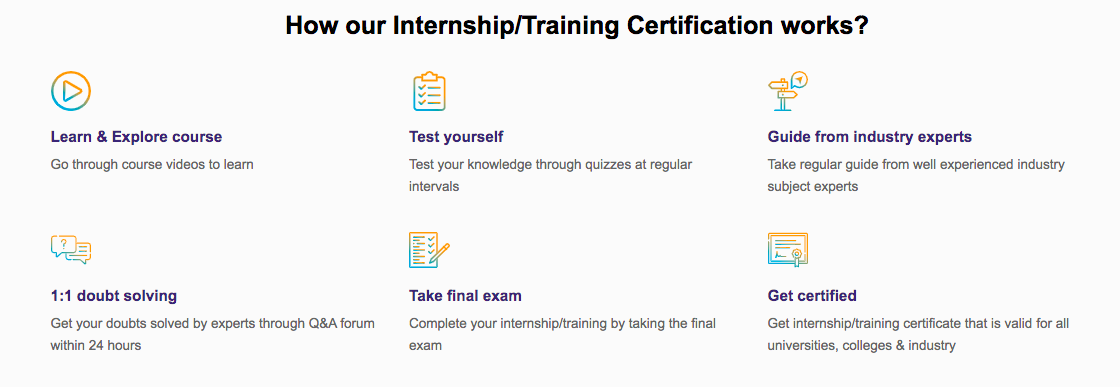
How EasyShiksha Internship/Training Program Works
A Personal Curriculum That Changes With Career Goals
Students do not always know which profession they want to pursue when they begin learning. Their interests may change after completing a course, speaking with a professional, participating in an internship, or discovering an unfamiliar field. A rigid curriculum can become less relevant when the learner's goals change, especially if the student has already invested considerable time in a particular pathway.
A Personal Curriculum Engine could support changing goals by separating transferable capabilities from skills that are specific to a particular career. Communication, analytical thinking, research, and problem-solving may remain useful across several professional fields. Technical skills may also transfer between related roles, although the exact requirements will vary.
Suppose a learner initially wants to pursue digital marketing but later becomes interested in business analytics. The engine could examine the skills already developed and identify which ones remain relevant. Knowledge of campaign performance, audience behaviour, and data interpretation might provide a useful foundation, while additional learning could focus on spreadsheets, statistics, data visualisation, and analytical tools.
Rather than forcing the learner to start from the beginning, the system could reuse relevant evidence and build a revised pathway around the new objective. It could also explain which earlier activities remain useful and which additional competencies may be required.
Career exploration could be incorporated before the student commits to a single long-term goal. The engine might help compare the skills involved in different roles, recommend introductory experiences, or suggest small projects that allow learners to explore their interests. These activities would help students gather evidence about their preferences before making larger educational decisions.
EasyShiksha could use this flexibility to support a more realistic view of career development. Students would not need to treat an early choice as permanent. Their curriculum could evolve as they learn more about themselves, their abilities, and the opportunities available to them.
Reducing Learning Overload and Unnecessary Courses
One of the risks of digital education is the belief that more learning activity always produces better results. Students may enrol in several courses simultaneously, save dozens of tutorials, and collect certificates without allowing enough time to practise what they have learned. This can create a sense of constant activity without meaningful progress.
A Personal Curriculum Engine could help address this problem by prioritising learning activities according to their relevance and timing. Instead of presenting every potentially useful course, it could recommend a manageable sequence that accounts for prerequisites, expected effort, and the learner's available time.
For example, a student preparing for an entry-level programming role may not need to study several overlapping introductory courses. If the learner has already demonstrated the required foundations, the engine could recommend a practical project that applies those skills. If the project reveals a gap, the system could then introduce a focused learning activity rather than adding an entire new programme.
The engine could also help learners balance study with other commitments. A pathway might be divided into manageable stages, with realistic time estimates and opportunities to revise the schedule. These estimates should be treated as guidance because students learn at different rates and may face changing personal circumstances.
Reducing overload does not mean removing depth or encouraging students to avoid challenging material. It means distinguishing between useful learning and unnecessary repetition. A curriculum should give students enough practice to develop durable capabilities without overwhelming them with disconnected recommendations.
For EasyShiksha, the ability to recommend fewer but more relevant activities could become an important part of the platform's educational value. The goal would be meaningful progress, not the maximum number of courses completed.
The Personal Curriculum Engine as a Continuous Learning Loop
A conventional study plan is often created at the beginning of a programme and followed until the next formal review. A Personal Curriculum Engine would instead treat curriculum planning as a continuous process that changes in response to new evidence.
The loop could begin with a goal and an estimate of the learner's current capabilities. The engine would create a pathway, recommend a learning activity, and examine the resulting evidence. Based on that evidence, it would decide whether the learner should progress, practise further, revisit a prerequisite, or explore an alternative activity.
For example, a learner studying data visualisation might initially receive a recommendation for a course on chart selection and dashboard design. After completing the course, the student could work on a project using a sample dataset. If the project demonstrates strong technical execution but weak interpretation of the data, the engine could recommend additional work on analytical reasoning and communicating findings.
Once the learner improves, the system could move to a more advanced project or connect the skill with an internship opportunity where appropriate. If the learner later changes their goal, the pathway could be updated to reflect the new direction.
The continuous loop would help prevent the curriculum from becoming outdated. It would also allow the system to recognise when a student has already mastered a topic and avoid unnecessary repetition.
However, the engine should not change the learning plan unpredictably. Students need to understand what they are working toward and should be able to review upcoming activities. A useful system would combine adaptability with stability, providing a clear overall direction while adjusting the details when new evidence justifies a change.
Privacy, Transparency, and Student Control
A Personal Curriculum Engine may rely on information about learning performance, educational history, goals, preferences, and progress. This information can improve recommendations, but it must be handled responsibly. Students should know what data is being collected, how it influences the curriculum, and whether it is shared with other organisations.
EasyShiksha would need to apply appropriate data protection measures, including secure storage, controlled access, data minimisation, and clear retention policies. Students should be able to correct inaccurate records and understand how their learning information is used. Any sharing with external partners should follow applicable legal requirements and appropriate permissions.
Transparency is especially important when an AI system makes educational recommendations. A student should not be told to complete a particular course without any explanation of why it is necessary. The system could describe the relevant skill gap, explain the course's learning outcomes, and show how the activity supports the learner's stated goal.
The platform should also avoid presenting predictions as permanent judgements. If a student is currently struggling with mathematics, the curriculum engine should recommend suitable support rather than assume that the student will always find quantitative subjects difficult. Learning profiles must remain open to change as new skills are developed.
Students should retain meaningful control over their educational choices. They may want to explore a subject outside their career plan, take a difficult course for personal interest, or reject a recommendation that does not suit their circumstances. The engine should allow such choices and explain their potential implications without using coercive messages or restricting access unnecessarily.
Personalisation is most valuable when it expands the learner's options. It should reduce the burden of navigating a complex education system without turning the student's future into a decision made entirely by software.
Challenges in Developing a Personal Curriculum Engine
Building a reliable Personal Curriculum Engine would require more than connecting a recommendation algorithm to a course catalogue. The platform would need accurate information about course content, learning outcomes, prerequisites, assessments, duration, and the competencies each activity is designed to develop. Without this foundation, the system might create pathways that appear logical but do not prepare learners adequately.
Another challenge is the diversity of educational resources. Courses offered by different providers may use different terminology and assessment methods. A course labelled beginner by one provider may demand more prior knowledge than another programme carrying the same label. EasyShiksha would need consistent skill mapping and regular content review to make reliable comparisons.
The system would also need to handle incomplete information. A student may possess skills gained through independent projects or experience outside the platform. If the engine relies only on EasyShiksha activity records, it could recommend unnecessary introductory courses. Students should therefore have appropriate ways to provide evidence of existing knowledge, with verification where relevant.
AI recommendations can also reproduce biases in historical data. If certain learning pathways have been underused by particular groups, the engine may fail to recommend them even when they are appropriate. The system should be evaluated for unequal outcomes and designed to support exploration beyond its most common recommendations.
Another challenge is balancing personalisation with educational quality. A curriculum should not consist only of activities that match a learner's immediate preferences. Students sometimes need to develop foundational knowledge, practise difficult concepts, or explore subjects they have not yet considered. The engine must account for prerequisites and meaningful learning outcomes rather than optimising solely for short-term engagement.
Finally, maintaining the system would require ongoing coordination between technical teams, educators, course providers, and learners. Curriculum mappings would need updates as courses change, new skills emerge, and professional requirements evolve. A successful implementation would be a continuing educational design process rather than a one-time software launch.
How EasyShiksha Could Introduce the Personal Curriculum Engine
A practical starting point would be a limited pilot focused on a few well-defined learning pathways. EasyShiksha could select categories such as web development, digital marketing, or data analytics, where courses and relevant skills can be mapped into a clear progression. The initial system could identify prerequisite knowledge, recommend suitable courses, and use diagnostic quizzes to adjust the sequence.
The first version would not need to automate every educational decision. It could generate a recommended curriculum based on a student's stated goal and assessment results, while allowing the learner to review and modify the plan. This would provide an opportunity to evaluate whether the recommendations are understandable, relevant, and manageable.
The next phase could connect projects and practical assessments with the curriculum. Learners would receive opportunities to demonstrate their skills before moving to more advanced activities. The system could also begin incorporating internship opportunities where the learner's capabilities align with the stated requirements.
A later phase could introduce more sophisticated AI support for interpreting learning goals, comparing course outcomes, and explaining recommendations. As the platform collects appropriate evaluation data, it could investigate which sequences are most useful for different learning needs. These findings would need careful validation rather than being treated as universally applicable rules.
EasyShiksha should measure success through learning quality and student experience. Useful indicators could include whether learners understand their next steps, whether recommended courses match their goals, whether they complete meaningful projects, and whether the system helps them avoid unnecessary repetition. The platform should also monitor whether students can easily change their plans and whether recommendations remain fair across different learner groups.
The implementation should proceed gradually, with student feedback and educator review informing each stage. This would help EasyShiksha build a system that solves genuine course-selection problems instead of adding another layer of complexity to digital learning.
Empower your team. Lead the industry
Get a subscription to a library of online courses and digital learning tools for your organization with
EasyShiksha
The Future of Education: From Course Catalogues to Personal Learning Systems
The future of digital education may involve a shift from browsing individual courses toward interacting with intelligent systems that coordinate learning experiences. In this model, students would still choose their goals, interests, and preferred direction, but they would receive more support in deciding how to achieve them.
A Personal Curriculum Engine could help organise learning across different formats and providers. It might connect introductory lessons with assessments, practical projects, internships, and career guidance, creating a coherent path that adapts as the learner progresses. Where compatible systems and partnerships exist, it could also incorporate relevant learning records from outside the platform.
The model could support lifelong learning as well. A professional who wants to move into a new field could identify the capabilities required, review existing skills, and receive a personalised pathway for developing missing competencies. A student preparing for an internship could follow a shorter curriculum focused on the role's requirements, while a learner exploring an unfamiliar subject could begin with introductory experiences before committing to a longer programme.
For EasyShiksha, this represents a possible evolution toward a connected learning ecosystem. Courses, quizzes, projects, certificates, internships, and career guidance could become coordinated parts of a learner's journey rather than separate destinations. The engine could help students understand not only what they can study, but also why a particular activity matters and how it supports their future plans.
This future would not eliminate the need for teachers, mentors, or human judgement. Educators provide context, encouragement, feedback, and professional insight that automated systems may not fully reproduce. A Personal Curriculum Engine would be most useful when it supports these relationships and helps learners make better decisions.
The ultimate opportunity is to make personalised education more accessible. Students should not need expert knowledge of curriculum design to build a sensible learning pathway. A well-designed system could handle much of the complexity while keeping the learner informed and in control.
Conclusion: Letting Students Focus on Learning Instead of Course Selection
A Personal Curriculum Engine could transform how students navigate digital education by replacing disconnected course recommendations with a coordinated, adaptive learning pathway. By understanding a learner's goals, estimating current capabilities, identifying skill gaps, and sequencing relevant learning activities, the system could help students decide what to learn next without repeatedly navigating large course catalogues.
For EasyShiksha, the concept offers a potential way to connect online courses, quizzes, projects, internships, certificates, and career guidance into a more unified experience. Diagnostic assessments could establish a starting point, practical projects could demonstrate application, and new learning evidence could help the system adjust the curriculum over time. This would allow the platform to support learners as their knowledge, ambitions, and career interests evolve.
The most important principle is that automated curriculum planning should simplify decisions rather than remove student agency. Learners should understand why activities are recommended, have the freedom to explore alternative subjects, and be able to change their goals when their interests develop. AI should guide the journey, not dictate it.
A successful Personal Curriculum Engine would also require accurate course information, reliable assessments, transparent recommendations, privacy safeguards, and ongoing evaluation. It would need to recognise that students learn differently and that no algorithm can perfectly predict every educational outcome.
If developed responsibly, EasyShiksha could explore a future in which students spend less time searching for the right course and more time building useful capabilities. Instead of treating education as a collection of separate enrolments, the platform could help each learner follow a coherent journey from curiosity to knowledge, from knowledge to practice, and from practice to meaningful educational and career opportunities.
Anshika Jain is an Engineer, Developer, and Educational Content Author known for her dedication to technology and knowledge sharing. With a strong analytical mindset and a passion for innovation, she has consistently contributed to creating meaningful digital solutions and insightful educational articles.
Her ability to simplify complex technical concepts into engaging and easy-to-understand content makes her work valuable for students and learners across various platforms. Along with her technical expertise, Anshika is admired for her creativity, professionalism, and commitment to continuous learning.
She represents a perfect blend of technical excellence and impactful communication, inspiring others through both her development work and educational contributions.